
Zero to 100K followers on a B2B LinkedIn Strategy Playbook yeah, that number looks intimidating when you say it out loud. But here’s the reality: nobody gets there off one lucky viral post. It just doesn’t work that way. What actually gets you there is knowing exactly who you’re talking to, having something worth saying, showing up over and over again, and building some kind of system that slowly turns attention into actual trust.
LinkedIn’s changed a lot too, honestly. Buyers on the B2B side aren’t really impressed by polished, corporate-sounding messaging anymore; they want real expertise, real people they can trust. Even LinkedIn’s own research points this out: video, creators, employee voices, genuine thought leadership all of it’s carrying a lot more weight in B2B marketing than it used to.
That’s exactly why LinkedIn works so well for companies trying to earn credibility first, long before they ever pitch anyone on anything.
Key Takeaways
- Build around one specific audience rather than trying to speak to everyone at once
- Your LinkedIn profile or company page should make it obvious, immediately, who you help
- Focus on insights people can actually use: original opinions, real examples, practical lessons
- Let employees, founders, and subject-matter experts give your brand an actual human voice
- Don’t lean on just one type of post; test different formats and see what lands
- Comments and conversations aren’t an afterthought; they’re part of your content strategy
- Track quality engagement and real business outcomes, not just follower counts
- And hitting 100K followers isn’t a shortcut or some viral trick it’s a long game, plain and simple
Start With a Clear LinkedIn Position
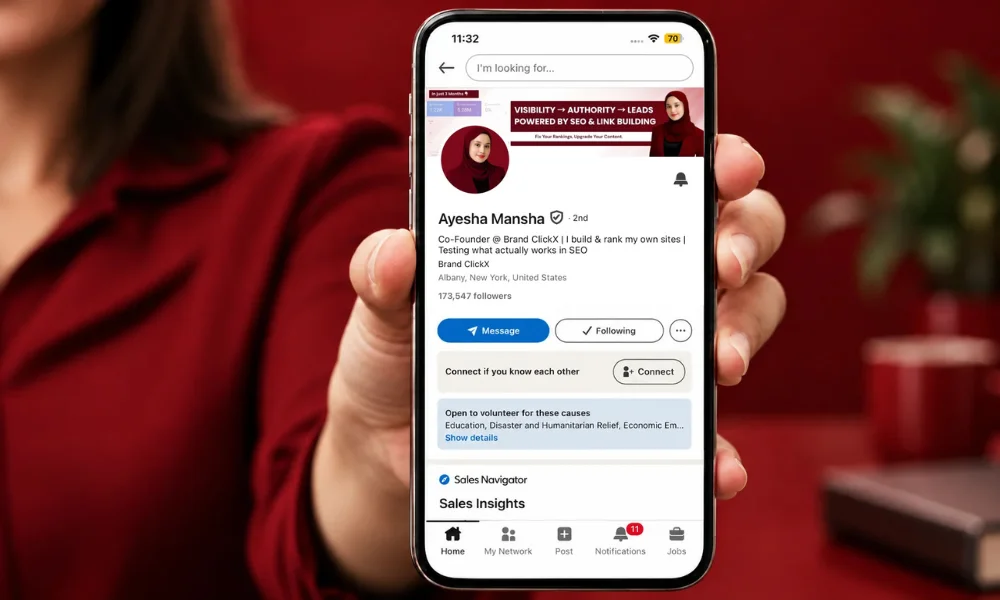
Before publishing your first post, decide what you want people to remember about you. A weak LinkedIn strategy talks about everything. A strong one owns a specific space.
For example, instead of saying, “We provide digital marketing services,” a company could position itself around “practical LinkedIn growth strategies for B2B SaaS companies.”
That difference matters because people should understand your value within seconds.
Start by answering three simple questions:
- Who are you trying to reach?
- What problem do they have?
- What useful perspective can you consistently provide?
Your answers should influence your profile, company page, content topics, visuals, and even the people you connect with.
Create Content Pillars
Choose three to five main subjects that your audience cares about.
For a B2B marketing brand, these could include:
- LinkedIn marketing
- Content strategy
- B2B lead generation
- Founder branding
- Marketing trends
These pillars make content planning easier while helping your audience associate your name with specific expertise.
Build a Profile People Want to Follow
Your content might be what grabs someone’s attention, but your profile is what decides what happens after that. A profile that actually works communicates your role, your expertise, who you help, and what value you bring fast, without making people dig.
Use a real professional photo, a headline that’s actually clear, and an About section that reads like it was written by an actual human, not something copied off a corporate brochure. Your headline, especially, should be built around outcomes, not just your job title sitting there.
So instead of:
“Marketing Manager at ABC Company”
Try something more like:
“Helping B2B teams turn LinkedIn content into visibility, trust, and pipeline.”
Your banner image can back up that same message too. But above everything else make sure your profile actually matches what you post. If you’re constantly talking about B2B growth, your profile better make that expertise obvious the second someone lands on it.
Create Content That Earns Attention
The single biggest mistake companies make on B2B LinkedIn? Turning every single post into a sales pitch. Nobody follows a business because they’re excited to see nonstop promotional content. People stick around because the content actually teaches them something, pushes back on an assumption they held, solves a real problem, or hands them an idea they can actually use.
A pretty reliable formula to follow:
Problem → Insight → Example → Practical takeaway
So instead of writing something like:
“LinkedIn is important for B2B businesses.”
Write about why a company’s posts are racking up impressions but barely sparking any real conversation then break down what actually needs to change to fix that. That’s the kind of thing that gives readers something they can walk away and actually use.
Share Original Opinions
Facts are useful, but opinions make content memorable.
You can discuss:
- What most companies get wrong
- A strategy you disagree with
- A lesson from a campaign
- A failed experiment
- An unexpected customer insight
- A trend that may be overhyped
You do not need a controversial opinion for every post. You simply need a point of view.
Turn Experience Into Content
Real, lived experience might be the single strongest thing you can bring to B2B content it’s genuinely what makes people believe you.
So skip the generic advice like “just post consistently” and instead talk about what actually happened when you switched up your posting schedule, tried a new format, changed who you were talking to, or reworked your messaging entirely. Give people the actual lesson that came out of it not just advice floating on its own with nothing behind it.
This is basically where E-E-A-T comes into play. Google’s whole push is toward content that’s genuinely helpful and written for real people, and strong B2B thought leadership runs on that same logic, backed by actual expertise and credibility. So your content needs to make it obvious why anyone should listen to what you’re saying, especially the moment you start talking numbers, business decisions, or industry trends.
Use More Than One Content Format
Do not build your entire strategy around text posts.
LinkedIn’s B2B research has highlighted video and visual content as important formats, while more recent research shows growing interest in human voices and creator-led thought leadership.
Test formats such as:
Text Posts
Use text when you have a strong opinion, story, lesson, or observation.
Keep the opening strong. The first few lines should give people a reason to continue reading.
Document and Carousel Posts
Turn complex ideas into simple slides.
For example:
“7 LinkedIn Mistakes Killing Your B2B Reach”
Each slide can cover one mistake with a short explanation and practical fix.
Native Video
Video works especially well when the person on camera has something useful to say.
You can create short videos about industry lessons, customer questions, tutorials, opinions, or behind-the-scenes experiences.
Case Studies
Show the situation, action, and result.
Instead of simply saying that your strategy works, explain what changed and why.
Make People the Face of the Brand
A company page is useful, but people often connect more naturally with people.
LinkedIn’s 2026 B2B research says employee networks can be far larger than a company’s own following, making employees an important source of distribution and credibility.
This creates an opportunity for founders, marketers, salespeople, engineers, consultants, and other experts inside the business.
Give them topics and support, but avoid making every post sound like it came from the same corporate template.
The goal is not to turn every employee into an influencer.
The goal is to help knowledgeable people share useful ideas in their own voice.
Grow Your Network Before Chasing Followers
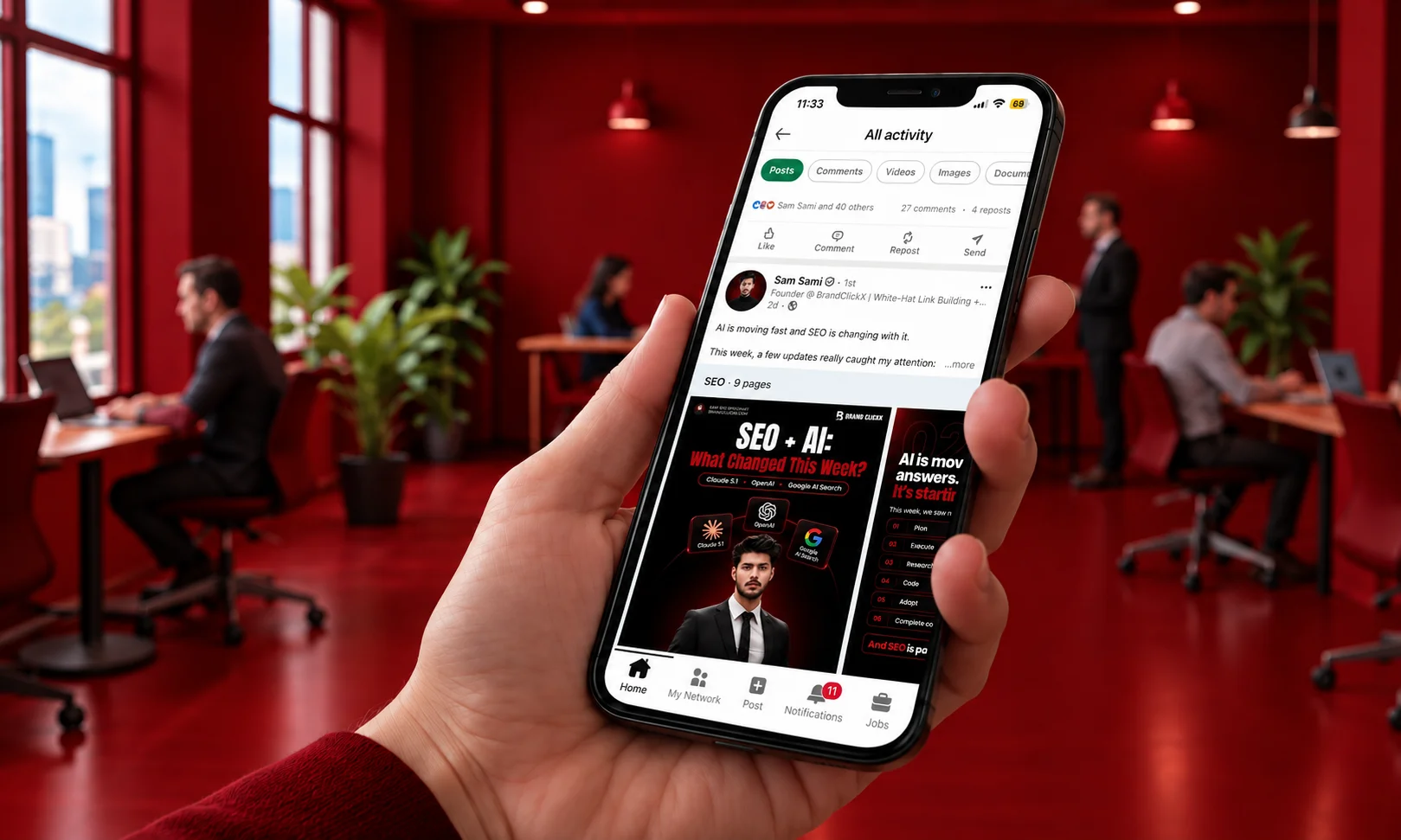
Followers are a result of relevance.
Start by connecting with the people you actually want in your audience.
Search for:
- Industry decision-makers
- Potential customers
- Subject-matter experts
- Relevant creators
- Partners
- Journalists
- Researchers
- Community leaders
Do not send every person the same sales pitch.
A better approach is to engage with their work first, add thoughtful comments, and build a genuine professional relationship.
Comments Are Part of the Strategy
Posting and leaving are not enough.
Spend time in relevant conversations. A thoughtful comment can introduce your expertise to an audience that does not know you yet.
Avoid comments such as “Great post!” or “Absolutely agree.”
Add something useful.
Share an example, explain a different angle, or ask a meaningful question.
Build a Simple Posting System
Consistency matters more than trying to publish ten times one week and disappearing for the next month.
Create a realistic schedule that your team can maintain.
For example:
Monday: Industry insight
Tuesday: Practical how-to post
Wednesday: Founder or employee perspective
Thursday: Case study or lesson
Friday: Opinion, story, or discussion
The exact schedule is less important than having a repeatable system.
Create content in batches when possible. Keep a running list of questions customers ask, problems your team solves, mistakes you see, and interesting industry developments.
Those ideas can become future posts.
Turn Engagement Into Conversations
A large follower count does not automatically create revenue.
The real opportunity comes when attention turns into relationships.
Watch for people who:
- Repeatedly engage with your content
- Ask detailed questions
- Visit your profile
- Mention a business problem
- Share your posts with colleagues
- Start conversations about your topic
Do not immediately push a sales message.
Start with a useful conversation.
Over time, this can move someone from follower to connection, prospect, customer, or advocate.
LinkedIn’s research shows that trusted creator and thought-leadership content can influence buyers throughout the buying journey, including website visits and sales engagement.
Measure What Actually Matters
Do not judge your strategy only by follower numbers.
Track:
- Follower growth
- Post impressions
- Engagement quality
- Comments from your target audience
- Profile visits
- Website traffic
- Content saves and shares
- Qualified conversations
- Leads
- Opportunities influenced by LinkedIn
A post that racks up 20,000 views can honestly be worth less than one that only gets 2,000 if those 2,000 happen to be the actual decision-makers you’re trying to reach.
The goal was never to be famous to everyone. It’s to be known by the people who actually matter for your business.
The Road From 0 to 100K Followers
Nobody can promise you a exact timeline for hitting 100K that’s just not how it works. But here’s the pattern that usually holds: the whole thing gets a lot easier once you shift from hoping your next post blows up to actually building systems that work over time.
Stage 1: 0–1K
This early stage is really about positioning making sure your profile actually says something real, growing your network, and figuring out which topics actually get people to respond in a meaningful way.
Stage 2: 1K–10K
Now it’s time to lean harder into whatever’s already clicking. Pay close attention to which topics are bringing in the right kind of audience, then start building more variations around those winners.
Stage 3: 10K–50K
Start building content series people actually recognize, team up with other relevant experts, go deeper with your insights, and pull more people from inside your own company into the mix.
Stage 4: 50K–100K+
By this stage, staying consistent and being recognizable matter more than ever. Your content shouldn’t be carrying everything alone at this point it should be feeding into a bigger ecosystem: your website, newsletter, events, community, sales team, all of it working together.
The point worth remembering here: 100K should be a byproduct of building an audience that actually matters, not the goal itself.
Mistakes You’ll Want to Avoid
Making every post about your product
Nonstop promotion is exactly what makes people scroll right past you.
Copying what competitors are doing
Use them for research, sure, but don’t just imitate. Your real edge is your experience and how you see things nobody else has that.
Jumping on every trend
Not every trending topic actually fits your audience. Stick to what supports your positioning, even if it means skipping something popular.
Letting AI write without a human touch
AI’s genuinely useful for research and brainstorming, but content that reads generic and repetitive quietly kills your voice. Throw in real experience, original examples, actual opinions the stuff only you can add.
Buying followers
Fake followers might bump up a number, but they don’t build trust, spark conversations, or turn into real business.
A Practical B2B LinkedIn Growth Framework
Use this simple loop every week:
Research → Create → Publish → Engage → Measure → Improve
Research what your audience is discussing. Create content around real problems. Publish consistently. Engage with relevant people. Measure what worked. Then improve the next batch. Repeat that process for months rather than expecting overnight results. That is the real foundation of the B2B LinkedIn Strategy Playbook.
Make Your LinkedIn Content More Trustworthy
Strong B2B content has to prove a lot more than just “yeah, I know marketing.”
Experience shows up when you’re sharing real lessons from actual projects you’ve run, real campaigns, real customers, real experiments. Not made-up scenarios that sound good on paper.
Expertise is when you can take something genuinely complicated and break it down clearly, without butchering the details or oversimplifying it into something useless.
Authoritativeness builds up slowly, over time through research people can actually trust, original data you put together yourself, input from people who genuinely know the space, and sticking to a point of view instead of changing your stance depending on the post.
Trust comes down to being honest about your results, even the ones that weren’t great, avoiding claims that exaggerate what actually happened, and being clear about what’s fact versus what’s just your take on things.
And LinkedIn’s own research keeps landing on this same conclusion credibility, authenticity, and voices people actually trust are playing a bigger role in what works for B2B marketing than ever before.
Conclusion
Going from zero to 100K LinkedIn followers is not about finding a secret posting trick.
It is about becoming worth following. Know your audience. Share what you actually understand. Give people useful ideas. Let real experts speak. Join conversations instead of only broadcasting messages. Then measure what attracts the right people and keep improving.
That is how LinkedIn becomes more than a follower-growth channel. It becomes a long-term B2B trust, authority, and growth engine.
BrandClickX believes the strongest B2B LinkedIn strategy is built around something simple: useful content, real people, clear expertise, and consistent value.
FAQs
How long does it actually take to hit 100K LinkedIn followers?
There’s really no set timeline anyone can honestly give you here. It all depends on your niche, how good the content actually is, your network, how consistent you manage to stay, how far things spread, and how much demand exists for whatever you’re talking about. Some accounts blow up fast, others take years to build and both are perfectly normal.
How often should a B2B company actually be posting?
Pick a schedule you can genuinely keep up with long-term. What matters way more than hitting some arbitrary posting number is whether what you’re putting out is actually good and actually relevant.
Should companies post from personal profiles or the company page?
Honestly, both work best together. Personal profiles carry more weight for showing real expertise and thought leadership, while the company page gives you that official brand presence people expect to see. The strongest strategies tie the two together instead of picking one.
What kind of content actually performs well for B2B on LinkedIn?
There’s no single format that wins every time. Practical advice, original opinions, case studies, industry takes, strong visuals, and video can all work well it really just depends on your audience and what you’re talking about. LinkedIn’s own B2B research points to video, visual content, thought leadership, and case studies as some of the stronger approaches right now.
Do you actually need 100K followers to succeed in B2B?
Not even close. A smaller audience packed with people who actually matter to your business can be worth way more than a massive following that has nothing to do with your market.
Is it okay to use AI for LinkedIn content?
Sure, AI’s genuinely helpful for research, brainstorming, outlines, and cleaning things up. But whatever you actually publish needs real human judgment behind it real experience, real insight, an actual voice not just generic content that sounds like it came off an assembly line.