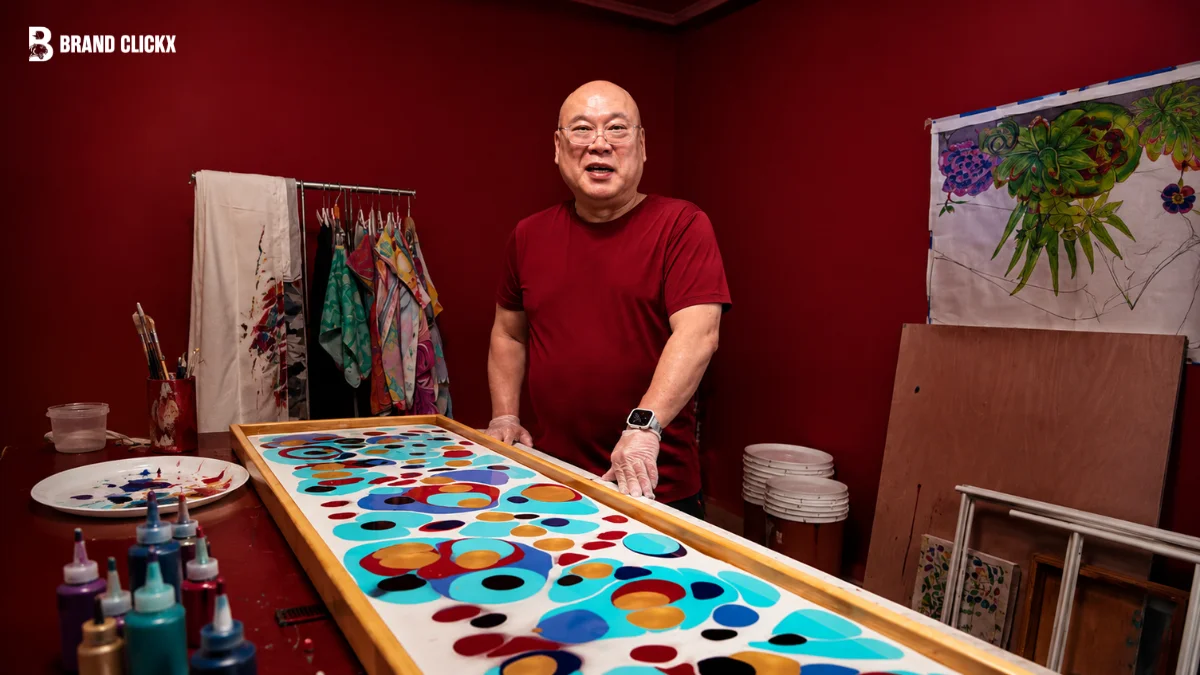
Ask most people what silk art means to them, and they’ll say clothes, scarves, maybe a nice pillowcase. What they probably don’t know is that silk has a whole other side too; it’s been used as an art material for a really long time.
Some artists paint right onto it. Others stitch full pictures using silk thread, or weave patterns straight into the fabric, or use dyes to build up a design. Each way gives a different result.
Silk isn’t the easiest thing to work with, though. It’s thin, soft, and color tends to run through it fast, sometimes quicker than an artist actually wants. But that’s part of what makes it special too. It gives silk painting a look nothing else really has.
And this isn’t something from just one place either. Old Chinese embroidery, Japanese dyeing methods, silk paintings you’d see in galleries today- it shows up everywhere, across many different times and places.
So What Is Silk Art, Really?
At its core, it’s just art made using silk in some form. That could mean a painting done directly on silk fabric. Some lean into bold colors and simple shapes; others spend hours just getting the smallest detail right.
Key Takeaways
- Silk art isn’t just one craft. It’s painting, stitching, weaving, dyeing, all of it, done on the same material.
- Silk catches light on its own and holds dye well. Nothing special is done to it; that’s just how the fiber is.
- Artists use gutta a lot to stop color from running where it shouldn’t.
- China, Japan, and India have all been doing this for generations.
- Art silk is just a fake version made to look similar.
- Just getting started? Keep your first piece small. Test out colors and techniques on real fabric before trying something bigger.
A Short History of Silk Art
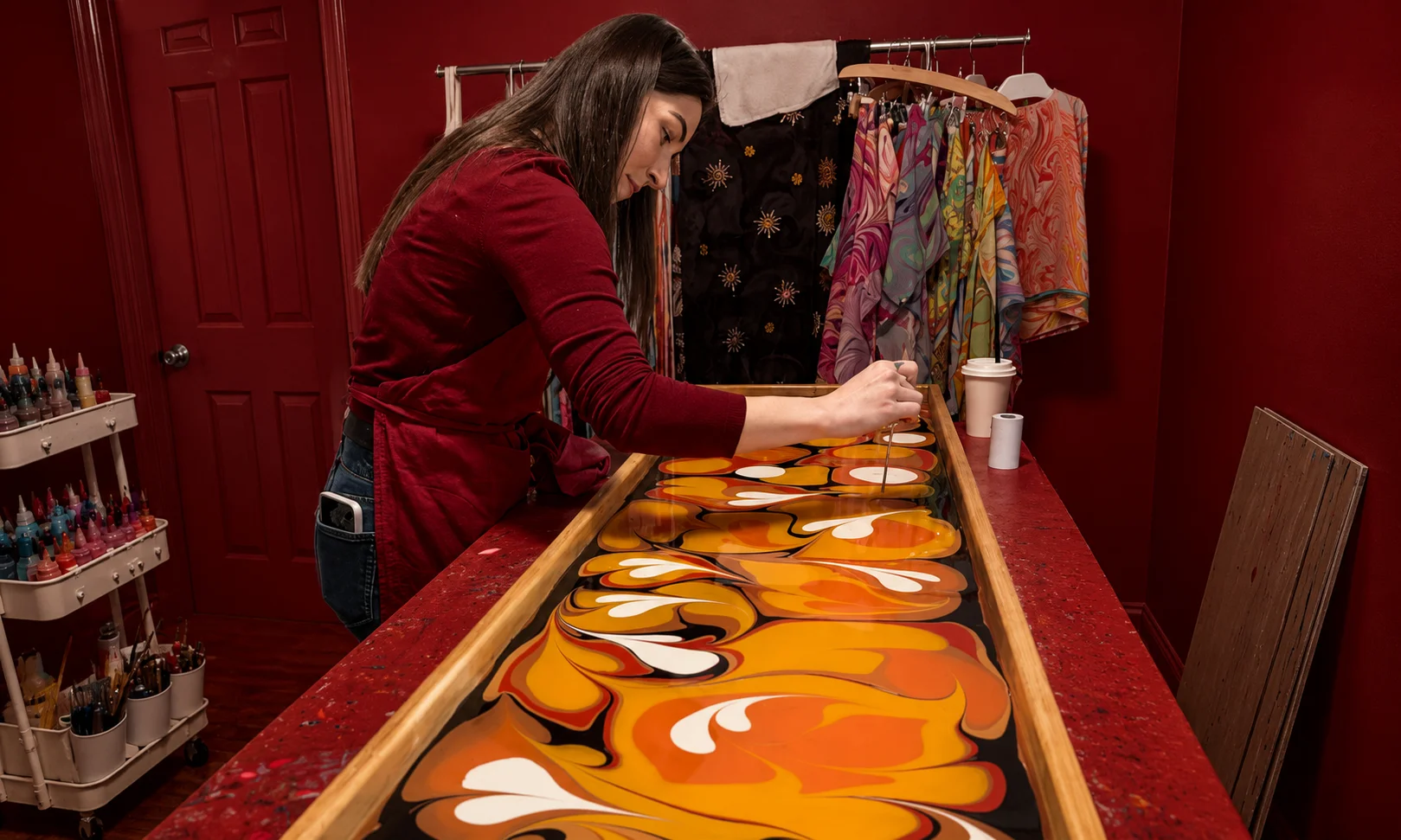
Silk goes back way further than most people think. China’s where it all began. Long ago, people there worked out how to raise silkworms and turn their cocoons into real fabric. It didn’t take long for that fabric to show up in clothes and things around the house. Once people got good at handling it, art was the next natural step. They started painting on it, writing on it, stitching pictures into it, and weaving patterns straight into the cloth itself.
And it didn’t stay put in China for long either. It made its way out along what we call the Silk Roads today, spreading to places far beyond where it first started. Along with the fabric itself, ideas and techniques moved too, spreading into completely different regions. And every place that picked it up made it their own in some way. That’s really why silk art looks so different depending on where you’re looking; each region added its own touch over time.
Main Types of Silk Art
Silk art includes several different types. The most common ones are painting, embroidery, weaving, and dyeing.
Silk Painting
Basically, you’re putting dye or fabric paint straight onto silk. That’s the whole idea. From there, an artist can go anywhere with it: flowers, animals, full landscapes, abstract shapes- whatever they want.
What sets it apart from regular painting is how the color behaves. Hit wet silk with dye, and it spreads on its own, and a lot of artists actually lean into that, using it to create soft, blended color transitions you can’t really get any other way.
If they don’t want that spread, though, there’s a workaround: using a resist to stop the dye from bleeding past where it should stop. Finished pieces end up in different places too; some hang on walls as standalone art, others get turned into scarves or wearable pieces.
Silk Embroidery
This one skips paint entirely, works with thread instead. An artist threads a needle with silk and builds up an image stitch by stitch, slowly, sometimes for weeks or months depending on how detailed the design gets.
Chinese embroidery is probably the best-known version of this, and Suzhou embroidery in particular stands out. Artists there work with silk thread so fine it can create flowers, birds, animals, even full landscapes. What’s genuinely wild is that some Suzhou pieces are stitched so both sides of the fabric look finished, no messy back to hide, both faces equally detailed.
Silk Weaving
Weaving works differently than painting or embroidery. Here, the design gets built while the fabric itself is being made, with different colored threads laid together right on the loom. Nothing’s printed on top afterward; the pattern is woven into the threads themselves.
That’s really the whole trick. It can stay simple, a basic repeating pattern, or get intricate enough to eat up weeks on the loom. Either way, it pulls double duty: clothing, decorative pieces, or standalone art that never gets worn at all.
Silk Dyeing
Dye opens up its own set of possibilities: plain colors, soft gradients, repeated patterns. Shibori’s probably the most recognizable dyeing tradition out of Japan. Fabric gets folded, twisted, tied, or stitched before the dye touches it, and whatever’s covered takes the color differently. That contrast is what actually forms the pattern.
Why Artists Reach for Silk
A few things make silk genuinely useful as a material, not just pretty to look at. It’s got shine built in. Light hits the fibers a certain way and gives off this soft glow, easiest to notice in embroidery, where the thread catches light as you move around the piece. It takes dye well too, being a protein fiber. Get the dye right, and colors come out sharp and clear, though the final result still depends on the silk type, the dye used, and how it’s fixed.
The surface helps as well, smooth and fine enough that a brush glides across it easily, and fine thread can carry small, detailed stitches without a fight. And it’s light, flexible, nothing like painting on wood or stretched canvas. Silk folds, hangs, and moves, which opens up a lot more ways to actually display the finished piece.
Raw Silk vs. Art Silk
These two terms get mixed up constantly, and they’re not the same thing at all. Raw silk is the real deal, natural fiber straight from silkworm cocoons. The term usually points to silk that hasn’t gone through every finishing step used on smoother fabrics, so it can feel a bit more textured or uneven. That said, sellers don’t always use the term consistently, so it’s worth checking the actual fabric details before buying.
Art silk is the opposite, despite the name. It’s artificial, made to look like silk without coming anywhere near a silkworm. Rayon and viscose are the usual suspects here, both made from processed cellulose rather than natural silk fiber. Calling something art silk doesn’t mean it’s real silk; it just means it’s trying to pass for it.
| Feature | Raw Silk | Art Silk |
| Material | Natural silk | Manufactured fiber |
| Source | Silkworm cocoons | Industrial processing |
| Feel | Can feel textured | Usually smooth |
| Look | Natural, slightly uneven | Made to mimic silk |
| From silkworms? | Yes | No |
Silk Art Around the World
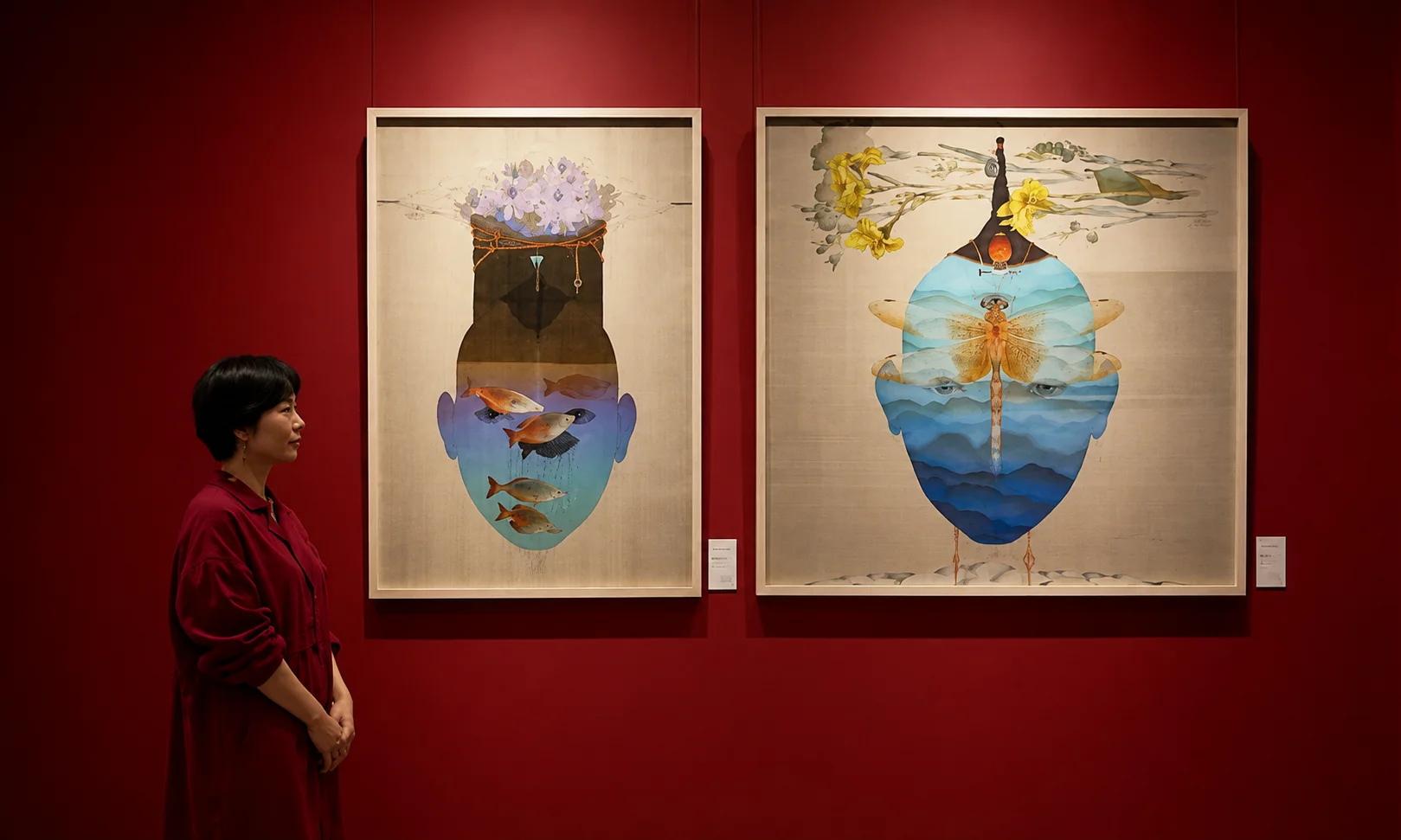
Silk art is not limited to one country. Different cultures have developed their own ways of working with silk.
China
China has one of the strongest links with silk art. Silk has been used there for painting, embroidery, weaving, and other textile work for a very long time. Suzhou embroidery is especially famous. It is known for fine stitches and detailed pictures. China also has other regional embroidery styles. Shu, Xiang, and Yue embroidery are examples of other Chinese traditions.
Japan
Japan is known for several silk dyeing and textile traditions. Yuzen is a well-known method used to decorate kimono with detailed designs. Flowers, birds, landscapes, and other natural subjects are common. Shibori is another Japanese tradition. It uses folding, tying, stitching, or other ways of changing the fabric before dyeing.
India
Silk runs deep in Indian textile history too. India isn’t tied to just one style; there are countless types of silk fabric and weaving traditions across the country. Banarasi silk is probably the one most people have heard of.
It comes out of Varanasi, and it’s known for those intricate woven patterns, sometimes woven with actual metallic thread running through the design. And that’s just one region; plenty of other parts of India have built their own distinct silk traditions over the centuries.
Europe
Silk made its way into Europe through long-distance trade, and once it arrived, it stuck around. It ended up everywhere: clothing, embroidery, woven fabric, even home decor. Over time, European craftspeople put their own spin on it, developing techniques that were distinctly their own. These days, artists well beyond just Asia and Europe are working with silk too, painting it, embroidering it, weaving it into their own designs.
How Does Silk Painting Actually Work?
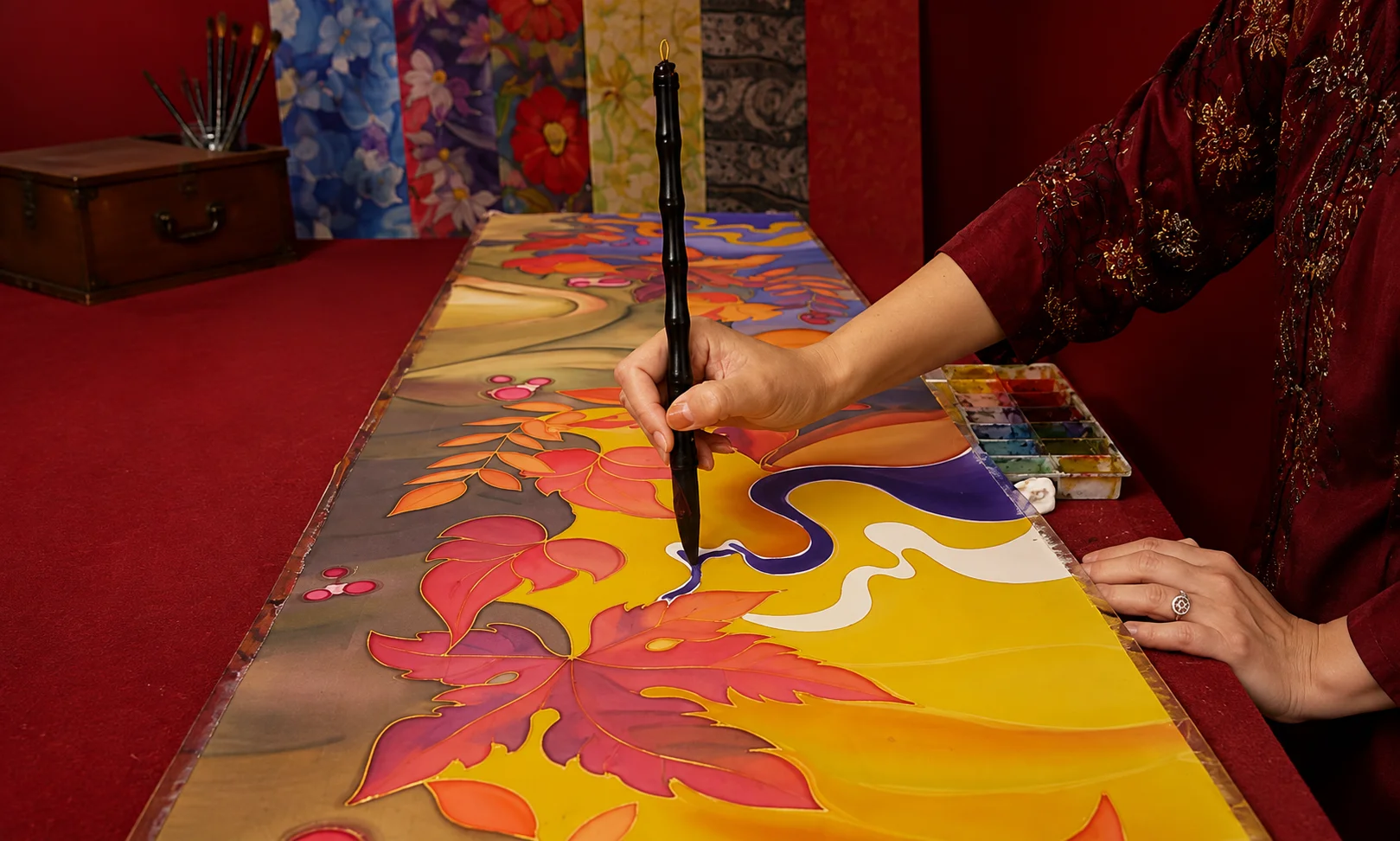
Every artist does it a little differently, but the basic process is simple enough to follow. It usually starts with prepping the silk, stretching it out so it holds still while you work. From there, the artist sketches a design, or sometimes just starts painting freehand, with no plan at all. Then comes the color. This is where silk behaves unlike most other surfaces. Once the dye hits wet fabric, it moves, sometimes more than you’d expect.
An artist can either let that happen naturally, or use something called a resist to keep the color exactly where they want it. Once the painting’s done, the dye has to be set, and how you do that depends entirely on the type of dye used. After that, the silk gets cleaned up and readied, either to hang somewhere or be worn.
Common Silk Painting Techniques
Gutta resist
Gutta is basically a barrier that artists draw with, right onto the silk. They sketch the outline of a design using gutta first, then add the dye. Since gutta blocks the dye from spreading past it, the color stays exactly within the lines instead of bleeding into other parts of the piece. For this to actually work, though, those gutta lines need to form a complete, closed shape; otherwise, the dye just leaks right through the gap.
Serti Technique
The serti technique also uses resist lines. The artist creates closed sections on the silk and adds color inside them. It can be useful for flowers, leaves, animals, and other designs with separate areas.
Salt Technique
Salt can be used to make patterns in wet dye. The salt changes how the dye spreads and dries around it. This can leave interesting marks and textures. The result can change depending on how wet the fabric is and how much dye and salt are used.
Blending Colors
Artists can place different colors close together while the silk is wet. The colors can then flow into each other. This creates soft changes between shades. It can work well for flowers, skies, water, and abstract designs. Artists can also add another layer after the first one has dried.
Famous Silk Artists and Traditions
Silk art has many skilled artists and long-running traditions. Karen Sistek is a modern American artist known for painting on silk. Much of her work features flowers and bright colors. She also teaches silk painting and has developed her own way of preparing silk for detailed work.
Traditional Chinese silk embroidery is another important part of silk art. Suzhou embroidery artists are known for their very fine work and detailed use of silk thread. It is also important to be careful when calling someone a silk artist. Not every artist who has worked with silk is mainly known for silk art. For example, Chu Teh-Chun was a Chinese-French painter best known for abstract art. He worked mainly in painting rather than being known as a silk painter.
Simple Silk Art Tips for Beginners
You do not need to start with a large artwork. A small piece of silk is a better place to learn. Try these simple tips:
- Start with a simple design.
- Use only a few colors at first.
- Test your colors on a small piece of silk.
- Practice resist lines before starting your main design.
- Check that resist lines are closed where you need them to be.
- Watch how wet the silk is while you paint.
- Let areas dry when the technique requires it.
- Follow the instructions that come with your dye or paint.
Do not expect your first piece to be perfect. Silk can behave in unexpected ways. Learning how the color moves is part of learning the art.
Conclusion
Honestly, there’s no one way to make silk art. Some people paint it. Some stitch it thread by thread. Others weave the pattern right into the cloth or work with dye instead.
This isn’t new either, silk’s been part of art for centuries now, especially across Asia. And it hasn’t gone anywhere. Artists today still pick it up, sometimes sticking to the old ways, sometimes doing something nobody’s tried before.
That’s kind of the fun part. Hand someone a plain piece of silk and it could turn into almost anything, a painting, an embroidered scene, some handmade piece you couldn’t really replicate twice.
FAQs
What exactly is silk art?
Pretty much anything made using silk counts, painting, embroidery, weaving, dyeing. It’s a broad category, not one specific technique.
Okay, so what’s silk painting?
An artist puts dye or paint right onto the silk and builds a design from there. Honestly not much more to it than that.
Can a beginner just jump into silk painting?
You can try, but be ready for some frustration at first. Dye spreads across silk fast, faster than most beginners expect, so there’s a learning curve before you can actually control where the color goes.
And art silk, what’s that about?
That one’s not real silk at all. It’s a synthetic stand in, usually rayon or viscose, made to look and feel close to the real thing without being it.
Is raw silk the genuine article?
Yes, it comes from actual natural silk fibers. One thing worth knowing though, sellers don’t always use the term carefully, so it pays to check what you’re actually getting before buying.
Where did silk art come from?
China and Japan are the big names everyone thinks of first. But India’s been doing this for ages too, and a few European countries have their own long-standing traditions with it.