Shopping for a television in 2026 means sorting through more acronyms than ever — OLED, QD-OLED, Mini-LED, VRR, HDMI 2.1, Dolby Vision, HDR10+, ALLM and 144Hz or even 165Hz refresh rates.
The good news is that the TV market has matured considerably. Excellent picture quality is now available well below flagship prices, while mid-range televisions increasingly offer features that were once limited to premium models.
But choosing the right TV is not simply about buying the most expensive screen. A movie enthusiast in a dark room may be better served by an OLED, while someone watching sports in a sunny living room may prefer a high-brightness Mini-LED. A serious gamer has a different checklist again, with refresh rate, HDMI 2.1, VRR and input lag becoming more important.
This guide compares the standout TVs of 2026 by picture quality, technology, gaming capability, brightness, viewing environment, features and overall value.
Quick-Look Table: Best TVs to Buy in 2026
| TV | Best For | Display Technology | Key Strength | Main Weakness |
|---|---|---|---|---|
| LG C6 OLED | Best all-around | OLED | Excellent balance of picture and gaming | Not the brightest choice for direct sunlight |
| Samsung S95H OLED | Best premium OLED | QD-OLED | Brightness and color volume | No Dolby Vision |
| Sony BRAVIA 8 II | Best for movies | QD-OLED | Processing and cinematic accuracy | Gaming features are less extensive than LG/Samsung |
| LG G6 OLED | Best flagship home theater | OLED | Premium picture and brightness | Expensive |
| TCL QM8K / QM8L | Best Mini-LED value | Mini-LED | Bright HDR for the money | Some blooming |
| Hisense U7SG / U8QG | Best mid-range | Mini-LED | Strong specifications per dollar | Processing is less refined than Sony |
| LG B6 OLED | Best affordable OLED | OLED | OLED contrast at a lower price | Lower brightness than premium OLEDs |
| Samsung QN90F | Best for bright rooms | Mini-LED | Brightness and anti-glare performance | No Dolby Vision |
| TCL QM6K | Best budget TV | Mini-LED | 4K 144Hz gaming features | Picture quality below premium models |
| Samsung S90H | Best OLED gaming value | OLED | Fast response and gaming features | Not Samsung’s brightest OLED |
Our Top TV Picks for 2026
1. LG C6 OLED — Best All-Around TV
Why the LG C6 stands out
The LG C6 OLED is one of the strongest all-around televisions of 2026 because it does not require buyers to make a major compromise between movie performance, gaming and everyday viewing.
Its OLED panel provides independently controlled pixels. Unlike an LCD television, an OLED pixel can effectively turn itself off when displaying black. That produces extremely deep blacks and very high contrast without the same type of backlight blooming associated with many LCD-based televisions.
The result is particularly impressive in dark rooms, where black bars around movies and shadows in dark scenes can appear genuinely black rather than gray.
Picture quality
The C6 is designed to deliver the combination OLED buyers generally want:
- Deep black levels
- Excellent contrast
- Strong HDR performance
- Wide viewing angles
- Very fast pixel response
- Precise control over highlights and shadows
OLED also avoids the traditional problem of needing a backlight behind the entire screen. That allows the television to control individual pixels instead of dimming large sections of the screen.
Gaming performance
The C6 is particularly interesting for gamers. Current 2026 testing highlights its high refresh-rate capability, low input lag and HDMI 2.1 connectivity.
For a gaming setup, the important specifications are not simply the maximum refresh rate. Look for the combination of:
- HDMI 2.1
- 4K high-refresh gaming
- Variable refresh rate
- Auto Low Latency Mode
- Low input lag
- Fast pixel response
The C6 checks the important boxes.
Who should buy it?
The LG C6 makes sense for buyers who:
- Watch a mixture of movies, shows, sports and games
- Want OLED picture quality
- Play PlayStation, Xbox or PC games
- Want strong viewing angles
- Prefer a premium TV without paying flagship prices
Who should skip it?
Consider a Mini-LED instead if your television sits in a very bright room with significant direct sunlight.
Verdict
Best overall
The C6 is the most balanced choice in this guide because it combines premium picture quality with serious gaming capability.
2. Samsung S95H OLED — Best Premium OLED
Why Samsung’s QD-OLED matters
The Samsung S95H represents the premium side of Samsung’s OLED strategy.
Its QD-OLED technology combines OLED’s individually controlled pixels with quantum-dot technology designed to improve color volume and brightness.
That distinction matters because conventional OLED and QD-OLED do not necessarily look identical. QD-OLED can maintain stronger color intensity as brightness increases, helping HDR highlights and saturated colors appear more vivid.
Picture quality
The S95H’s strengths include:
- Extremely deep blacks
- High contrast
- Strong HDR brightness
- Excellent color volume
- Wide viewing angles
- Very fast response
- Strong gaming performance
It is particularly attractive to people who want OLED contrast without accepting the lower brightness associated with some older OLED generations.
Bright-room performance
Although Mini-LED remains the safer choice for very bright rooms, premium QD-OLED televisions have narrowed the gap.
That makes the S95H a more versatile OLED than many older-generation sets.
However, direct sunlight is still a different challenge from ordinary room lighting. If the screen faces a large uncovered window, a high-output Mini-LED remains worth considering.
Gaming
Samsung’s premium OLED models are heavily geared toward gaming.
Gamers should look at the entire connectivity package rather than simply the headline refresh-rate figure. HDMI 2.1, VRR, low input lag and high-refresh 4K support are more important than an impressive number on the box by itself.
The major limitation: Dolby Vision
Samsung continues to use HDR10+ rather than Dolby Vision.
That does not mean Samsung has poor HDR. Its premium OLED TVs can produce excellent HDR images.
It simply means buyers who specifically want Dolby Vision should look toward LG or Sony.
Who should buy it?
- Premium OLED buyers
- HDR enthusiasts
- Gamers
- People who want high color volume
- Buyers who watch a mixture of movies and games
Who should skip it?
Skip it if Dolby Vision compatibility is a requirement.
Verdict
Best premium OLED
The S95H is particularly compelling when brightness and color performance are as important as OLED’s black levels.
3. Sony BRAVIA 8 II — Best TV for Movies
Sony’s biggest advantage: processing
Sony approaches television differently from manufacturers that emphasize raw brightness and specification numbers.
The BRAVIA 8 II is designed around Sony’s image-processing expertise, and this becomes particularly noticeable when the source is not perfect.
Streaming compression, older movies, HD broadcasts and lower-resolution content can contain noise, artifacts and other imperfections. Good processing can make this material appear cleaner and more natural.
Picture quality
The BRAVIA 8 II combines a QD-OLED panel with Sony’s processing technology.
Its strengths include:
- Excellent contrast
- Deep blacks
- Strong color accuracy
- Sophisticated image processing
- Strong upscaling
- Excellent motion handling
- Dolby Vision support
Why movie lovers should care
Not every movie is mastered to the same standard.
A premium TV needs to handle:
- 4K HDR movies
- Dolby Vision
- Standard HDR
- HD streaming
- Older content
- Dark scenes
- Fast camera movement
Sony’s processing can become especially valuable when watching mixed-quality content.
Built-in sound
The BRAVIA 8 II also deserves attention for its integrated audio.
Most extremely thin TVs cannot create the same soundstage as a dedicated sound system, but Sony has invested more heavily in using the television itself as part of the audio experience.
For someone who does not want a soundbar immediately, that can be useful.
Who should buy it?
- Movie enthusiasts
- Streaming-heavy households
- Viewers who care about accurate picture processing
- Dolby Vision users
- People who want strong built-in audio
Who should skip it?
Competitive gamers may prefer LG or Samsung if maximum gaming flexibility is their highest priority.
Verdict
Best for movies
The BRAVIA 8 II is a strong choice when cinematic image quality matters more than winning the specification race.
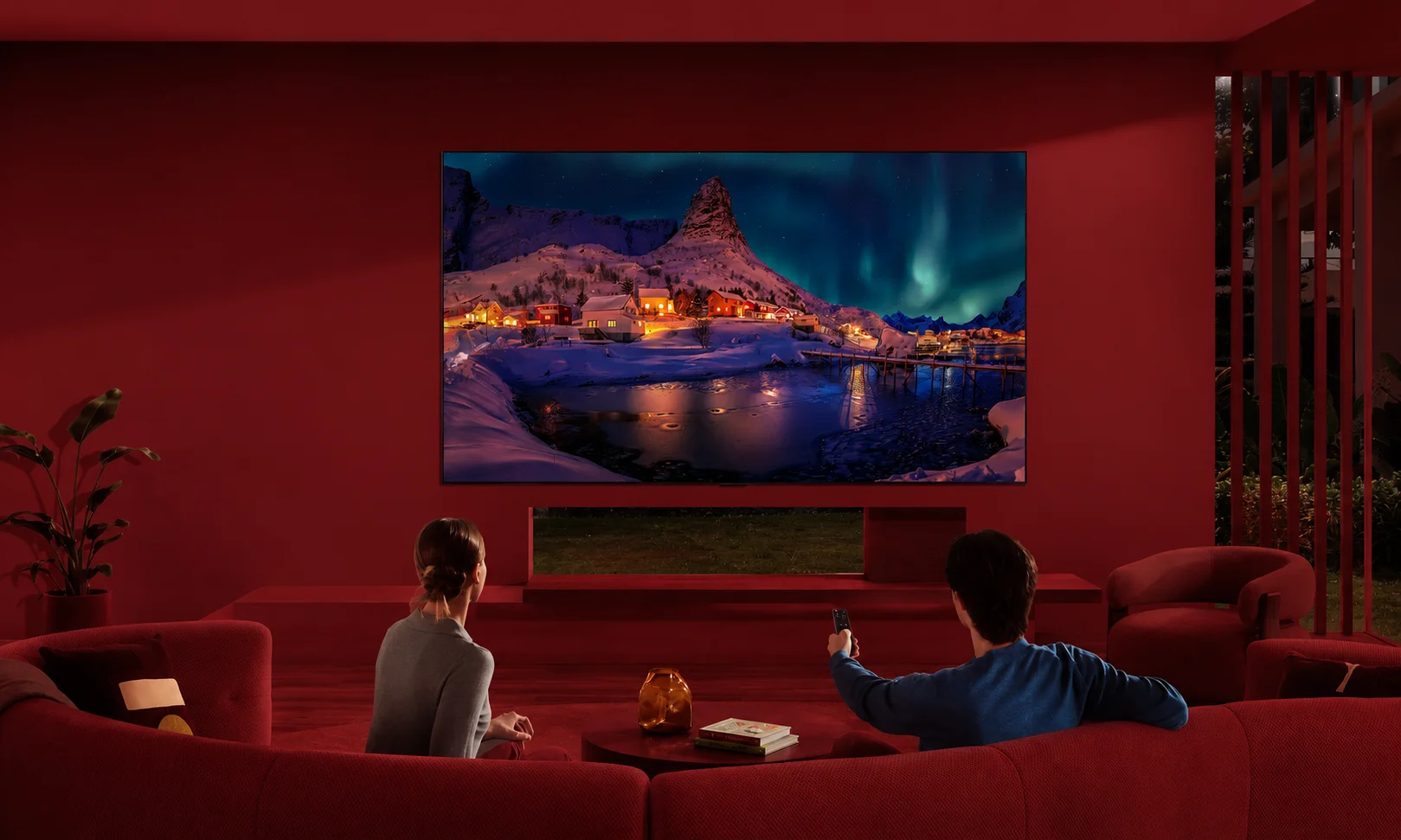
4. LG G6 OLED — Best Flagship Home Theater TV
What makes the G6 different?
The LG G6 OLED sits above the C-series and targets buyers who want a premium home-theater display rather than simply a good television.
The fundamental OLED advantages remain:
- Pixel-level light control
- Excellent black levels
- High contrast
- Wide viewing angles
- Fast response
But the G6 adds a more premium design and higher-end performance.
Best use case: dedicated viewing
The G6 makes the most sense when:
- Picture quality is the top priority
- The TV will be mounted prominently
- The room is designed around entertainment
- You watch a lot of movies
- You want flagship technology
Gaming
The G6 also remains highly relevant to gamers because premium LG OLED models traditionally place significant emphasis on HDMI 2.1 connectivity, high refresh rates and VRR.
That means the G6 is not merely a movie TV. It can also serve as a high-end gaming display.
The major drawback
Price.
For many buyers, the difference between a C-series OLED and a flagship G-series model may not justify the additional expense.
Who should buy it?
Buy the G6 if you want the best premium LG OLED experience and are comfortable paying for it.
Who should skip it?
Casual viewers should save the money and consider the C6 or B6.
Verdict
Best flagship home theater
5. TCL QM8K / QM8L — Best Mini-LED Value
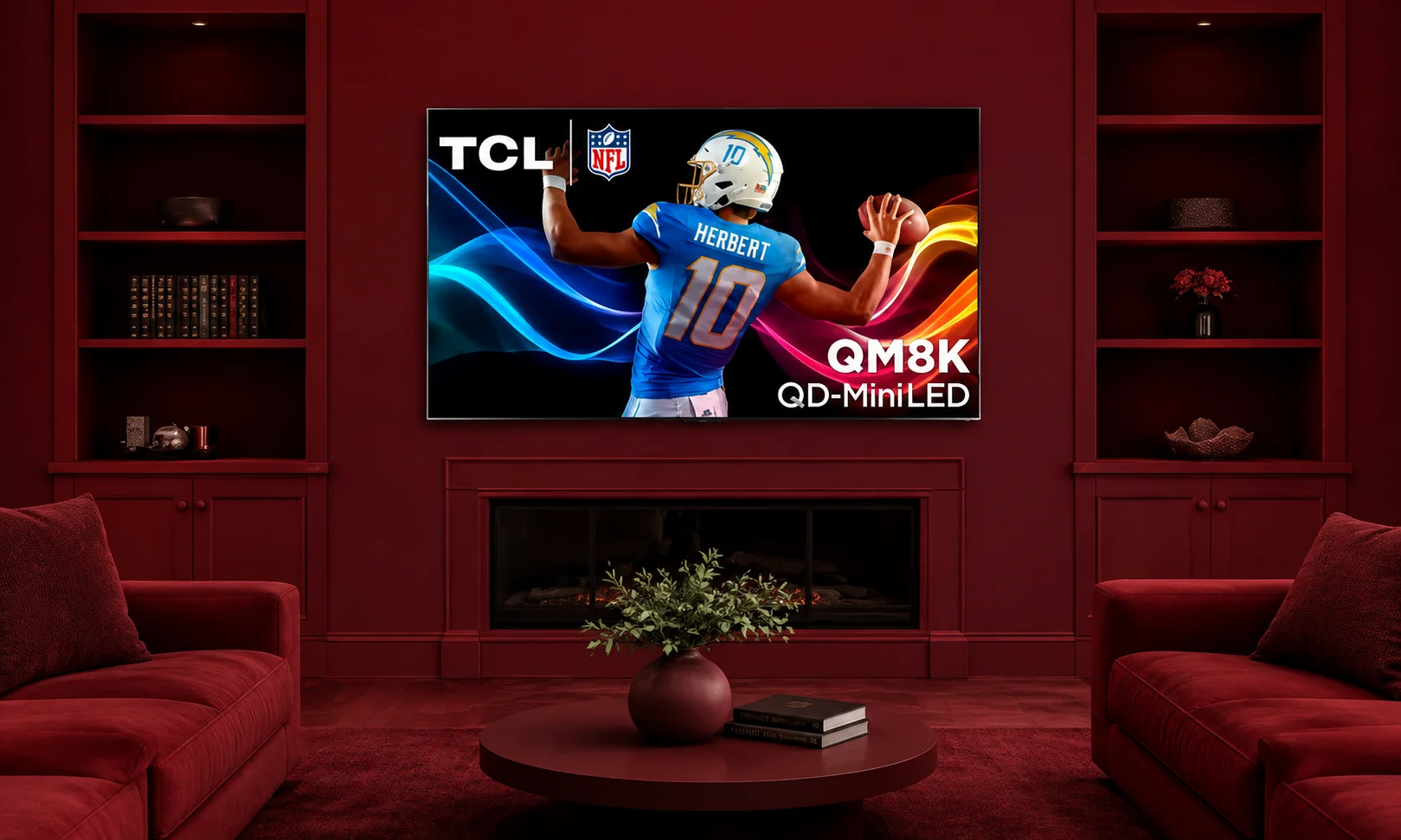
Why Mini-LED is important
Mini-LED is one of the biggest reasons LCD televisions remain highly competitive against OLED.
Traditional LCD televisions use a backlight made from larger LED elements. Mini-LED uses much smaller LEDs, allowing manufacturers to create more precise local-dimming systems.
The television can then brighten certain parts of the screen while dimming others.
Where TCL excels
TCL has aggressively pushed Mini-LED technology into lower price categories.
The QM-series approach is attractive because it combines:
- High brightness
- Strong HDR
- Local dimming
- Large screen sizes
- Gaming features
- Competitive pricing
Why brightness matters
Imagine a dark movie scene containing a bright explosion.
An OLED can precisely illuminate the explosion while leaving surrounding pixels almost completely black.
A Mini-LED television cannot control each pixel individually, but its local dimming system can divide the screen into many zones.
That can create an impressive HDR image while also achieving higher overall brightness.
The trade-off
Mini-LED can still produce blooming.
A bright object against a black background may create a slight halo around the object because the backlight controls zones rather than individual pixels.
OLED has the fundamental advantage here.
Who should buy it?
- Bright-room viewers
- Sports fans
- Large-screen shoppers
- HDR enthusiasts
- Value-conscious buyers
Who should skip it?
Movie purists who watch primarily in dark rooms may prefer OLED’s perfect pixel-level black control.
Verdict
Best Mini-LED value
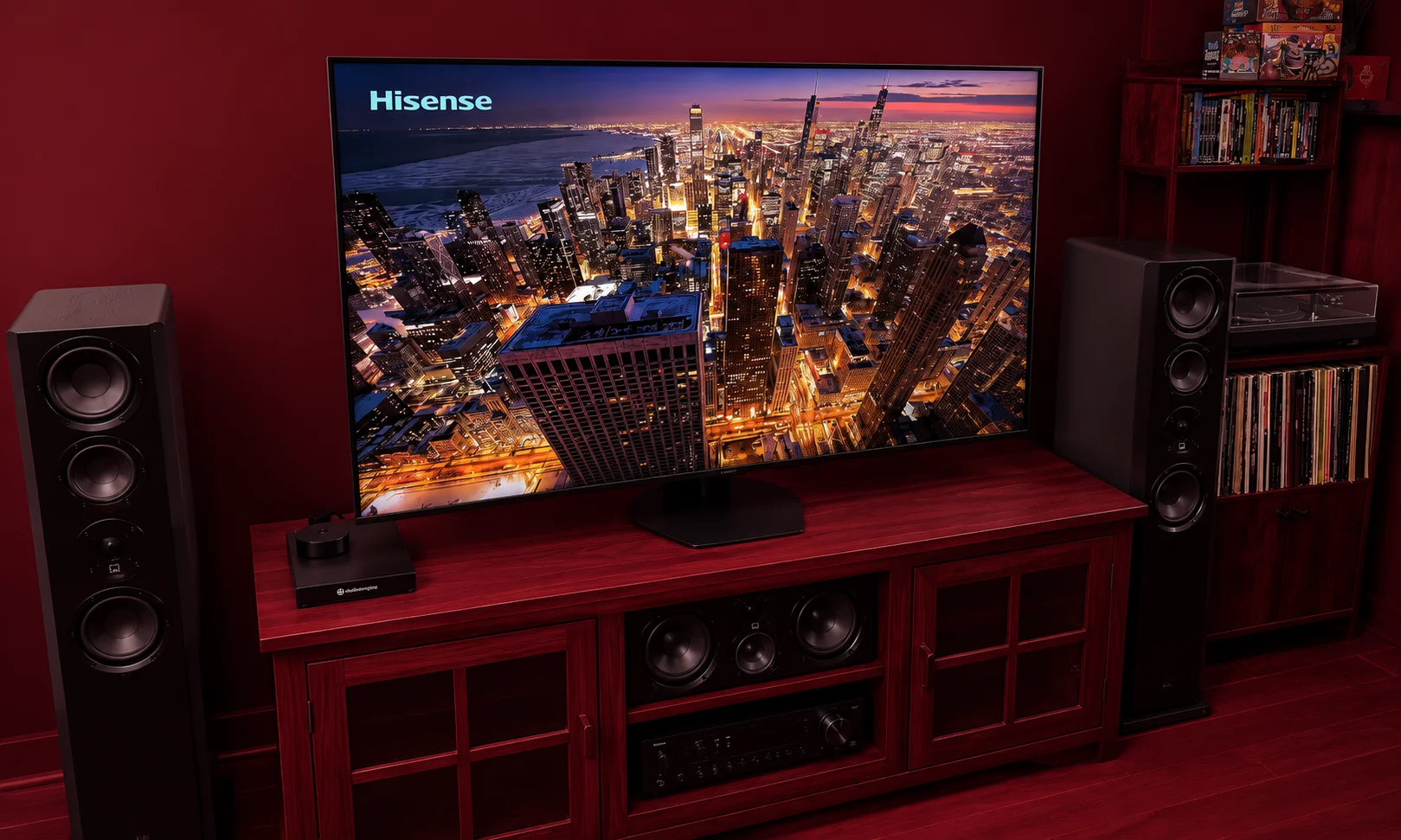
6. Hisense U7SG / U8QG — Best Mid-Range TV
Hisense’s strategy
Hisense has become increasingly aggressive in the mid-range TV market by offering specifications that traditionally belonged to more expensive televisions.
Depending on the model, shoppers can find combinations of:
- Mini-LED backlighting
- High refresh rates
- 4K resolution
- HDR support
- Gaming features
- Local dimming
- Large screen sizes
Why it matters
The mid-range category is arguably the most competitive part of the television market.
You no longer have to choose between a basic 4K television and a $2,000 flagship.
A model such as the U7SG or U8QG can provide many of the features that matter most for modern content without reaching premium OLED pricing.
Where Hisense falls short
The biggest reason to spend more on Sony or another premium manufacturer can be image processing.
Panel hardware is only part of the picture.
Processing affects:
- Upscaling
- Motion
- Noise reduction
- Compression handling
- Color management
- Low-quality source material
Hisense has improved considerably, but Sony remains particularly strong in these areas.
Who should buy it?
- Mid-range shoppers
- Bright-room viewers
- Sports fans
- Gamers
- Buyers who prioritize specifications per dollar
Who should skip it?
Buy another brand if processing quality and cinematic accuracy are more important than value.
Verdict
Best mid-range option
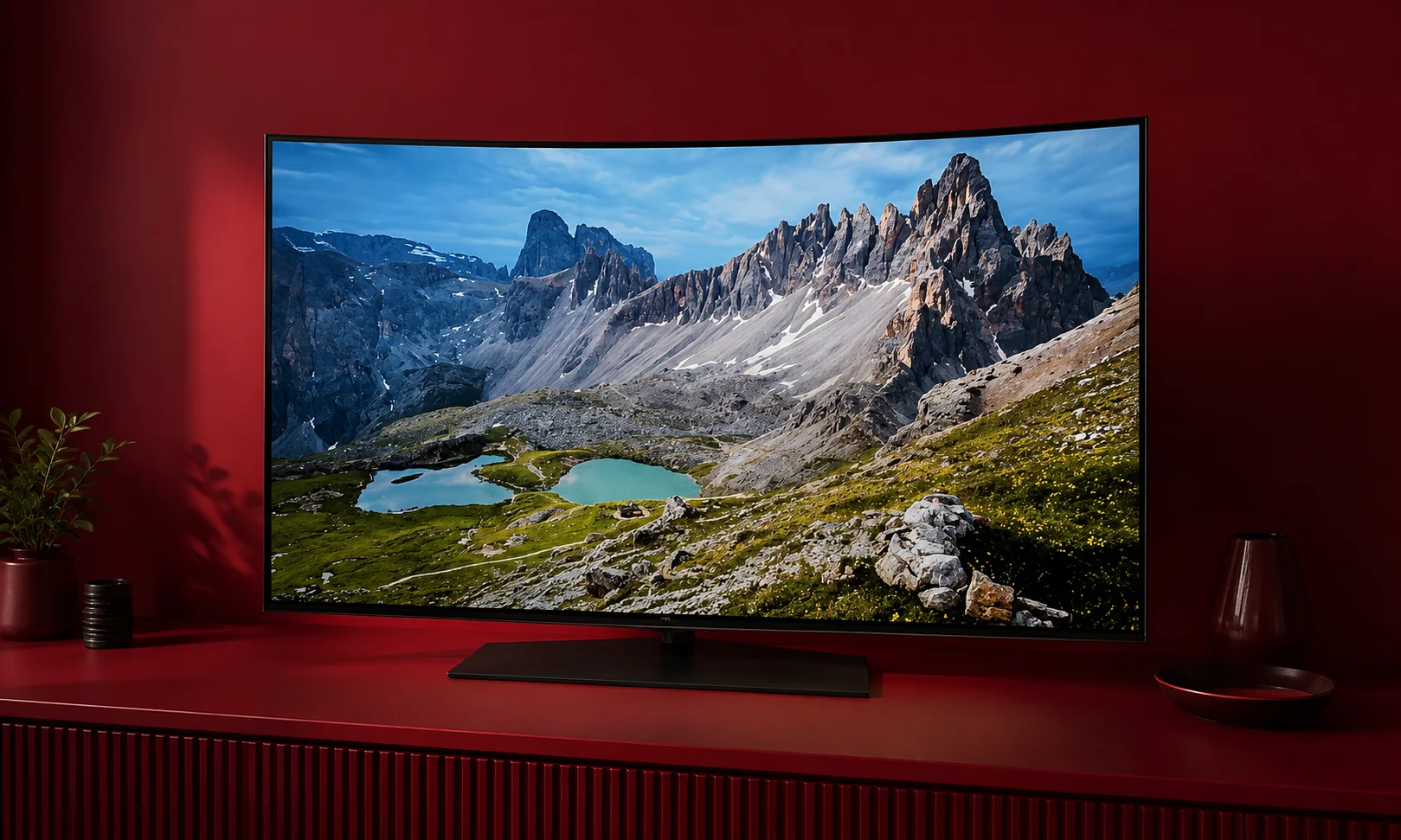
7. LG B6 OLED — Best Affordable OLED
OLED without the flagship price
The LG B6 OLED is aimed at shoppers who want OLED’s defining advantages without paying for the company’s highest-end models.
The core technology remains the same:
- Self-lit pixels
- Deep blacks
- High contrast
- Wide viewing angles
- Extremely fast response
The biggest compromises come in areas such as brightness and premium features.
Who benefits most?
The B6 makes particular sense in a bedroom, apartment or controlled-light living room where maximum brightness is not essential.
If your room is naturally darker, spending more for a substantially brighter flagship OLED may not provide enough benefit to justify the price difference.
Gaming
The fast response of OLED makes it naturally attractive to gamers.
However, buyers should compare the exact model’s refresh rate, HDMI configuration and VRR support rather than assuming every OLED offers identical gaming capabilities.
Who should buy it?
- First-time OLED buyers
- Budget-conscious movie fans
- Gamers
- Bedroom TV shoppers
Who should skip it?
Choose Mini-LED if your room is extremely bright.
Verdict
Best affordable OLED
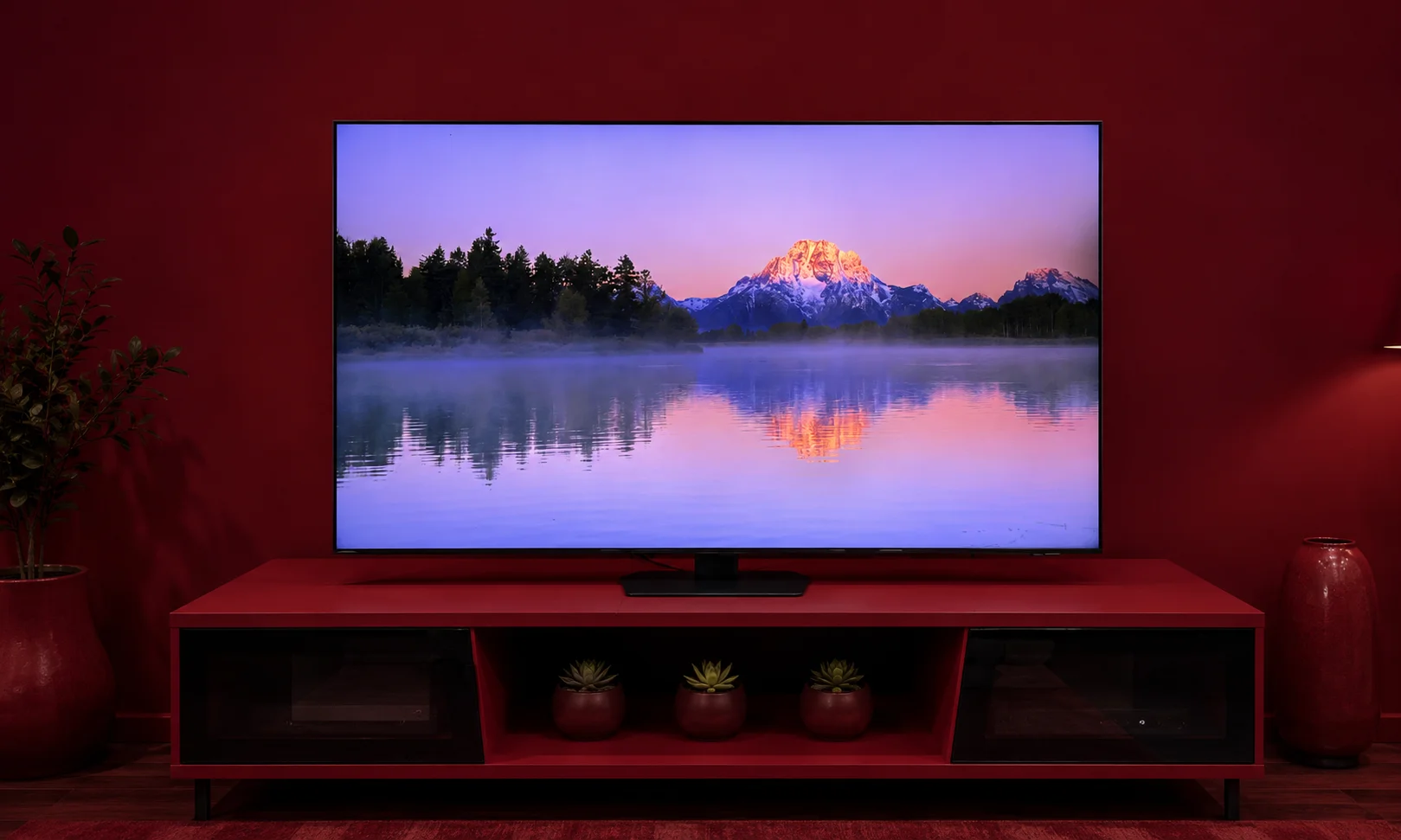
8. Samsung QN90F — Best TV for Bright Rooms
When Mini-LED makes more sense than OLED
A television’s environment can completely change the buying decision.
OLED can look extraordinary in a dark room, but a bright living room presents a different challenge.
The Samsung QN90F is designed for exactly this type of environment.
Its Mini-LED backlighting allows it to produce very high brightness, while an anti-glare treatment can reduce reflections.
Why sports fans may prefer it
Sports are often watched during the day.
A football match, cricket game or Formula 1 race can contain large areas of bright content, fast motion and changing camera angles.
A high-brightness Mini-LED can make this material easier to see in daylight.
Static-content advantage
Because the QN90F uses an LCD-based panel rather than OLED, buyers do not have the same OLED-specific considerations around prolonged static images.
That can be relevant for:
- News channels
- Sports scoreboards
- Stock-market screens
- Desktop PC use
- Digital signage-style applications
Who should buy it?
- Bright-room households
- Sports fans
- Daytime viewers
- PC users
- Buyers who prioritize brightness
Who should skip it?
Choose OLED if you mostly watch movies in a dark room and want the deepest possible blacks.
Verdict
Best bright-room TV
9. TCL QM6K — Best Budget TV
How cheap can a good TV be?
One of the most impressive developments in the 2026 market is how much functionality has moved into affordable televisions.
The TCL QM6K demonstrates this trend by combining:
- 4K resolution
- Mini-LED technology
- High refresh-rate support
- VRR
- Smart-TV functionality
- Large-screen availability
That combination would have been considerably more expensive several years ago.
Who is it for?
The QM6K is particularly suitable for:
- Students
- Bedrooms
- Secondary living-room TVs
- Casual gamers
- Budget-conscious families
- First-time buyers
Where does it compromise?
You cannot expect a budget Mini-LED to match a premium OLED for:
- Black-level precision
- Processing
- HDR refinement
- Viewing angles
- Overall picture consistency
But that is not the purpose of this television.
Its job is to provide the most useful features possible at a lower price.
Who should buy it?
Buy it when keeping the purchase price low is more important than achieving reference-quality picture performance.
Verdict
Best budget TV
10. Samsung S90H — Best OLED Gaming Value
Why gamers should consider it
The Samsung S90H sits below the flagship S95H while retaining the fundamental strengths that make OLED attractive for gaming.
OLED’s extremely fast pixel response can reduce motion blur and produce a crisp image during fast movement.
Combined with high refresh rates and gaming-oriented HDMI features, that makes the S90H a strong console and PC gaming option.
Why it can be better value than the flagship
Not every gamer needs the brightest possible HDR highlights.
If you play mostly in a controlled-light room, the extra brightness of a flagship OLED may have diminishing returns.
The S90H can therefore make sense as a performance-first purchase.
Who should buy it?
- Console gamers
- PC gamers
- OLED buyers on a budget
- Competitive players
- Users who prioritize response time
Who should skip it?
Look elsewhere if Dolby Vision support or maximum OLED brightness is important.
Verdict
Best OLED gaming value
OLED vs. QD-OLED vs. Mini-LED vs. LED
Understanding the panel technology is more useful than memorizing model names.
| Technology | Main Advantage | Main Limitation | Best For |
|---|---|---|---|
| OLED | Perfect pixel-level blacks | Lower peak brightness than some Mini-LEDs | Movies, gaming |
| QD-OLED | OLED blacks plus strong color/brightness | Premium pricing | HDR and premium viewing |
| Mini-LED | Very high brightness and strong HDR | Possible blooming | Bright rooms, sports |
| Traditional LED | Low price | Weaker contrast | Budget buyers |
| QLED | High brightness and color | Still LCD-based | Bright rooms and value |
| MicroLED | Exceptional picture potential | Extremely expensive | Luxury installations |
OLED vs. Mini-LED: Which Should You Buy?
Choose OLED when:
- You watch movies at night
- You want the deepest blacks
- You sit off-axis from the screen
- Gaming response matters
- You want a premium cinematic image
Choose Mini-LED when:
- Your room gets lots of daylight
- You watch sports during the day
- You want maximum HDR brightness
- You want a very large screen
- Price-per-inch matters
How Much TV Do You Actually Need?
Buying the largest television available is not always the smartest decision.
The right screen size depends on:
- Viewing distance
- Room dimensions
- Content resolution
- Personal preference
- Budget
| TV Size | Best For | What to Consider |
|---|---|---|
| 42–48 inches | Bedrooms, small apartments, desk gaming | Best for short viewing distances and compact spaces |
| 55 inches | Smaller living rooms, apartments, mixed viewing | A versatile size for moderate seating distances |
| 65 inches | Most living rooms, movies, sports, mixed viewing | A practical sweet spot for a more cinematic experience |
| 75–85 inches | Large living rooms, dedicated entertainment spaces | Better suited to longer viewing distances and immersive viewing |
| 90 inches and larger | Large rooms, home theaters, sports and movies | Increasingly attractive with affordable large-screen Mini-LED TVs, but requires careful planning |
Refresh Rate Explained: 60Hz vs. 120Hz vs. 144Hz vs. 165Hz
Refresh rate describes how frequently a TV can update the image.
| Refresh Rate | Best For | What It Means |
|---|---|---|
| 60Hz | Cable, news, streaming, most movies, casual viewing | Enough for everyday TV and standard content |
| 120Hz | Sports, console gaming, fast action | The sweet spot for smoother motion and modern gaming |
| 144Hz | PC gaming, high-refresh gaming, enthusiasts | Useful for compatible gaming PCs and higher-frame-rate gameplay |
| 165Hz | High-end PC gaming, enthusiasts | A premium option for TVs that support very high refresh rates |
HDMI 2.1: Who Actually Needs It?
HDMI 2.1 becomes important when connecting modern gaming hardware.
You should prioritize HDMI 2.1 if you own:
- PlayStation 5
- Xbox Series X
- High-end gaming PC
- Next-generation gaming hardware
It can enable features such as:
- 4K high-refresh gaming
- VRR
- ALLM
- Higher bandwidth
You probably don’t need to prioritize it if you mainly watch:
- Netflix
- YouTube
- Cable
- Broadcast television
- Standard streaming services
For those users, picture quality, brightness and viewing comfort should take priority.
HDR Explained: Dolby Vision, HDR10 and HDR10+
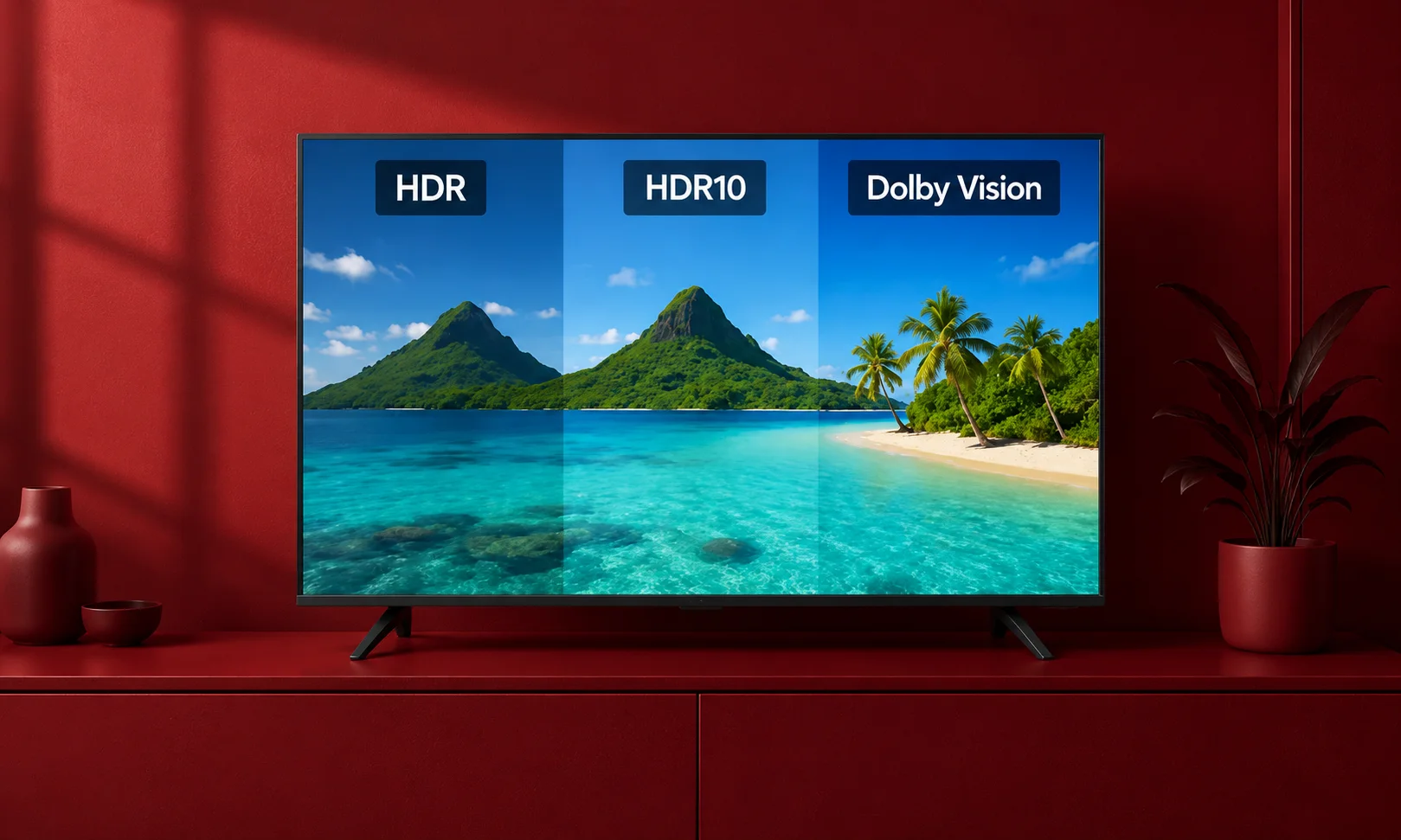
HDR expands the range between dark and bright areas of an image.
But HDR is not one single format.
Dolby Vision
Commonly supported by:
- LG
- Sony
- Many streaming devices
It uses dynamic metadata to adjust HDR presentation scene by scene.
HDR10
The basic HDR standard supported by virtually all modern HDR TVs.
HDR10+
A competing dynamic HDR format strongly associated with Samsung and supported by various streaming platforms.
Which is best?
Do not choose a television based solely on HDR format support.
A TV with excellent brightness, contrast and local dimming can produce better HDR than a poorly performing TV that technically supports every format.
The panel’s actual performance matters more than the logo on the specification sheet.
Gaming Features That Actually Matter
When comparing TVs for gaming, prioritize these specifications:
| Feature | Why It Matters |
|---|---|
| 120Hz+ refresh rate | Smoother gameplay |
| HDMI 2.1 | Higher bandwidth |
| VRR | Reduces screen tearing |
| Low input lag | Faster response |
| ALLM | Automatically switches to low-latency mode |
| 4K gaming | Higher image detail |
| Fast response time | Reduces motion blur |
Do not let a manufacturer convince you that a huge refresh-rate number automatically makes a TV better for gaming.
Which TV Is Best for Sports?
Sports put unusual demands on television.
You want:
- High brightness
- Good motion handling
- Wide viewing angles
- Strong upscaling
- High refresh rate
- Minimal reflection
Best choices
Best premium: Samsung S95H
Best bright-room: Samsung QN90F
Best value: TCL QM8K
Best mid-range: Hisense U7SG/U8QG
For daytime sports viewing, Mini-LED can have an important advantage because of its brightness.
Which TV Is Best for Movies?
Movies benefit from:
- Deep blacks
- Strong contrast
- Accurate colors
- Good processing
- Excellent HDR
- Smooth motion
- Dolby Vision support
Best choices
Best overall: Sony BRAVIA 8 II
Best premium: LG G6
Best value: LG C6
Best budget OLED: LG B6
For a dark home theater, OLED remains extremely difficult to beat.
Which TV Is Best for Gaming?
Gaming changes the priorities.
Best overall gaming TV
LG C6 OLED
Best premium gaming OLED
Samsung S95H
Best OLED gaming value
Samsung S90H
Best budget gaming option
TCL QM6K
Gamers should prioritize HDMI 2.1, VRR, low input lag and a genuine high-refresh-rate panel rather than focusing on resolution alone.
Which TV Is Best for a Bright Room?
If sunlight is a major problem, brightness and reflection handling should be near the top of your list.
Best choices
- Samsung QN90F
- Samsung S95H
- TCL QM8K
- Hisense U8QG
A bright-room buyer should not automatically assume OLED is the best choice simply because OLED has superior black levels.
Which TV Is Best on a Budget?
If you are trying to keep costs down, the most important thing is identifying which features you actually need.
Under $500
Look for:
- 4K resolution
- HDR
- Good smart-TV platform
- Acceptable brightness
$500–$900
You can start finding:
- Better local dimming
- Mini-LED
- Higher refresh rates
- Better HDR
$900–$1,500
This is where the market becomes particularly interesting.
You may find:
- Entry-level OLED
- Strong Mini-LED
- Premium mid-range models
- Better gaming support
TV Budget Guide for 2026
| Budget | Recommended Target |
|---|---|
| Under $500 | Entry 4K LED/Mini-LED |
| $500–$900 | Strong Mini-LED/value models |
| $900–$1,500 | Premium Mini-LED or entry OLED |
| $1,500–$2,500 | High-end OLED/Mini-LED |
| $2,500–$4,000+ | Flagship OLED and large premium screens |
| $4,000+ | Luxury large-format and specialty displays |
Remember that screen size can dramatically change pricing.
A 55-inch flagship and an 83-inch version of the same television can occupy completely different price categories.
LG vs. Samsung vs. Sony vs. TCL vs. Hisense
LG — Best for OLED and Gaming
LG’s biggest strength is OLED.
Its lineup covers the market from more affordable OLED models to premium flagship displays.
LG is particularly attractive for gamers because its OLED televisions typically emphasize:
- HDMI 2.1
- VRR
- High refresh rates
- Low input lag
- Fast response
Best reason to buy LG: OLED plus gaming.
Samsung — Best for Bright OLED and Mini-LED
Samsung has built one of the broadest premium TV portfolios.
Its strengths include:
- QD-OLED
- Mini-LED
- High brightness
- Strong color volume
- Gaming features
- Anti-glare technology
The main drawback for some buyers is its continued lack of Dolby Vision.
Best reason to buy Samsung: brightness, color and gaming.
Sony — Best for Processing and Movies
Sony’s advantage is less about producing the highest specification number and more about how it processes an image.
Its strengths include:
- Upscaling
- Motion processing
- Color accuracy
- Cinematic presentation
- Dolby Vision
- Strong audio integration
Best reason to buy Sony: movies and image processing.
TCL — Best for Value
TCL has become one of the most important value brands in the TV market.
Its Mini-LED strategy allows buyers to access:
- High brightness
- Local dimming
- Large screens
- HDR
- Gaming features
without paying flagship prices.
Best reason to buy TCL: maximum screen and specifications per dollar.
Hisense — Best for Aggressive Specifications
Hisense competes aggressively in the mid-range and upper-mid-range categories.
It often gives shoppers:
- Mini-LED
- High refresh rates
- Strong HDR
- Large screens
- Gaming features
for less money than premium competitors.
Best reason to buy Hisense: specifications and value.
What You Should Not Overpay For
Not every premium specification improves your viewing experience.
Don’t overpay for 8K unless you have a specific reason
Most consumers still have limited native 8K content.
A better 4K television can be a smarter purchase than a weaker 8K TV.
Don’t buy based only on brightness
Extremely high brightness can look impressive in a showroom, but black levels, processing and HDR control also matter.
Don’t assume more refresh rate is always better
A 165Hz TV is not automatically better than a 120Hz TV.
For console gaming, 120Hz is already a very important target.
Don’t ignore viewing angles
A television can look excellent directly in front of it but lose contrast or color when viewed from the side.
This matters in large family rooms.
Don’t buy the biggest TV blindly
An enormous television in a small room can be uncomfortable rather than immersive.
TV Buying Checklist for 2026
Before paying for a television, check these 12 things:
1. Exact model number
Make sure you are comparing the current model rather than an older generation with a similar name.
2. Screen size
Check whether the price applies to the size you actually want.
3. Panel technology
Confirm whether it is OLED, QD-OLED, Mini-LED or standard LED.
4. Native refresh rate
Do not confuse marketing motion numbers with the actual panel refresh rate.
5. HDMI 2.1
Important for serious console and PC gaming.
6. VRR
Essential for many gamers.
7. HDR formats
Check Dolby Vision, HDR10 and HDR10+ compatibility.
8. Brightness
Particularly important in daylight rooms.
9. Viewing angles
Important for wide seating arrangements.
10. Sound
Determine whether you need a soundbar.
11. Warranty
Check the length and what is actually covered.
12. Return policy
A TV can look different in your home than it does in a bright retail showroom.
Final Verdict: Which TV Should You Buy in 2026?
There is no single television that is best for every buyer. The right choice depends on your room, viewing habits, gaming needs, preferred picture technology and budget.
Best Overall: LG C6 OLED
For most people, the LG C6 OLED is the strongest starting point. It combines deep blacks, excellent contrast, fast response and wide viewing angles with the gaming features and versatility needed for movies, sports, streaming and everyday entertainment.
Best Premium OLED: Samsung S95H
If you want a more premium OLED and care heavily about brightness and color, the Samsung S95H is the more ambitious choice. Its QD-OLED technology delivers strong color volume and brightness while maintaining OLED’s deep blacks.
Best for Movies: Sony BRAVIA 8 II
Movie enthusiasts should look closely at the Sony BRAVIA 8 II. Its image processing, upscaling, Dolby Vision support and cinematic presentation make it particularly well suited to film and streaming playback.
Best Flagship Home Theater: LG G6 OLED
For buyers building a premium home theater, the LG G6 OLED is the step-up option. It delivers flagship OLED performance and a more premium design, although its higher price makes the C6 a better value for many shoppers.
Best for Bright Rooms: Samsung QN90F
If your TV sits in a bright room, the Samsung QN90F may be a better choice than OLED. Its Mini-LED backlighting provides high brightness, while its anti-glare performance can help reduce distracting reflections during daytime viewing.
Best Value: TCL QM8K/QM8L and QM6K
For shoppers focused on value, TCL’s QM8K/QM8L and QM6K show how competitive Mini-LED TVs have become. They offer strong brightness, modern gaming features and large-screen options without the price of flagship OLED models.
Best Mid-Range Option: Hisense U7SG and U8QG
The Hisense U7SG and U8QG provide another route to strong specifications without flagship pricing. They are particularly attractive to buyers who want Mini-LED technology, high refresh rates and strong HDR performance at a more accessible price.
Choose Based on Your Room and Viewing Habits
The most important lesson is simple: do not buy the TV with the biggest specification sheet. Buy the TV that matches your room and your viewing habits.
A movie enthusiast in a dark room should prioritize contrast, black levels and image processing. A sports fan watching during the day should focus on brightness, motion handling and reflection control. A gamer should prioritize HDMI 2.1, VRR, refresh rate and input lag. A budget buyer should concentrate on the features that will actually improve the viewing experience.
Frequently Asked Questions About Buying a TV in 2026
What is the best TV to buy in 2026?
The LG C6 OLED is the strongest all-around choice for most buyers because it combines excellent contrast, deep blacks, fast response, wide viewing angles and strong gaming features.
Is OLED better than Mini-LED?
Neither is universally better. OLED is generally better for dark-room movies, deep blacks and viewing angles, while Mini-LED is often better for bright rooms, high brightness, sports and large-screen value.
Is 120Hz enough for a TV in 2026?
Yes. 120Hz is the sweet spot for most buyers, especially for sports, console gaming and fast-moving content. Higher refresh rates such as 144Hz or 165Hz are mainly useful for compatible PC gaming.
Do I need HDMI 2.1?
You should prioritize HDMI 2.1 if you use a PlayStation 5, Xbox Series X, high-end gaming PC or other modern gaming hardware. For basic streaming and cable viewing, it is less important.
What TV size is best for most living rooms?
65 inches is a practical sweet spot for many living rooms. However, the ideal size depends on viewing distance, room layout and personal preference.
Which TV is best for a bright room?
The Samsung QN90F is a strong choice for bright rooms because its Mini-LED backlighting provides high brightness and its anti-glare performance can help reduce reflections.
Which TV is best for movies?
The Sony BRAVIA 8 II is the strongest movie-focused choice in this guide because of its QD-OLED panel, image processing, upscaling, motion handling and Dolby Vision support.
Which TV is best for gaming?
The LG C6 OLED is the best overall gaming choice in this guide. The Samsung S95H and S90H are also strong options, while the TCL QM6K offers a more budget-friendly route.
Is 165Hz better than 120Hz?
Not necessarily. 165Hz can be useful for high-refresh-rate PC gaming, but it does not automatically make a TV better. Panel quality, input lag, VRR, HDMI bandwidth and actual gaming support matter more.
Should I buy a 4K or 8K TV?
For most buyers, 4K remains the better choice. There is still limited native 8K content, so a high-quality 4K TV can provide better value than a lower-performing 8K model.
Does Dolby Vision matter when choosing a TV?
It can, particularly if you watch content mastered in Dolby Vision. However, overall picture quality matters more than HDR format support alone. Brightness, contrast, black levels and processing all affect HDR performance.
How long should a good TV last?
A quality TV can provide many years of use, but lifespan varies by panel technology, usage, brightness settings and operating conditions. Check the manufacturer’s warranty and support policy before buying.