Leak-based reporting. Google has not published images, specifications or pricing for any Googlebook device. Everything below is leaked material or reporting on it, and one set of images is disputed.
Summary
Leaked images have surfaced showing Googlebook laptops from Lenovo and ASUS ahead of an expected autumn debut. The Lenovo material, including a full press render set for the Googlebook 15, appears credible. Android Authority reported that a separate batch presented as ASUS press renders carries signs of AI generation, and that the original report did not acknowledge this.
Key Takeaways
- Android Authority found signs of AI generation in images presented as ASUS Googlebook press renders
- The original report did not acknowledge this; the outlet could not be reached for comment
- A plausible explanation is AI upscaling or watermark removal applied to genuine renders
- The Lenovo Googlebook 15 leak is described as detailed and consistent
- It shows HDMI, two USB-C, one USB-A, an SD reader, a 3.5mm jack and Dolby Atmos branding
- A dedicated Gemini “G” key replaces the traditional Windows key position
- Lenovo material also shows a second laptop size, a 2-in-1 tablet and a mouse
- Googlebooks run Aluminium OS, merging Chrome OS and Android with Gemini
- Acer, ASUS, Dell, HP and Lenovo are the named launch partners
The Problem With Half These Images
Android Authority examined 14 images published by Digital Citizen as “a complete press render set for the ASUS Googlebook” and concluded they were AI-generated.
Its assessment, quoted directly: “The original report doesn’t acknowledge that the images are AI-generated.”
The publication offered a plausible innocent explanation. Somewhere in the chain of custody of genuine press renders, someone may have used an AI upscaler, or an AI tool to remove watermarks. That would leave images derived from real renders but no longer accurate representations of them.
Android Authority said it could not reach Digital Citizen for clarification.
Why this matters beyond one laptop. AI upscaling and watermark removal are now routine steps in how leaked images circulate. An image can begin as a genuine press render and arrive at the reader with fabricated details ports in the wrong place, edges that do not exist, proportions subtly altered.
Anyone reporting hardware leaks now needs to assess not only whether an image is real, but whether it has been through a model on the way.
What Is Credibly Known About the Lenovo Devices
The Lenovo material is described by multiple outlets as consistent, detailed and plausible.
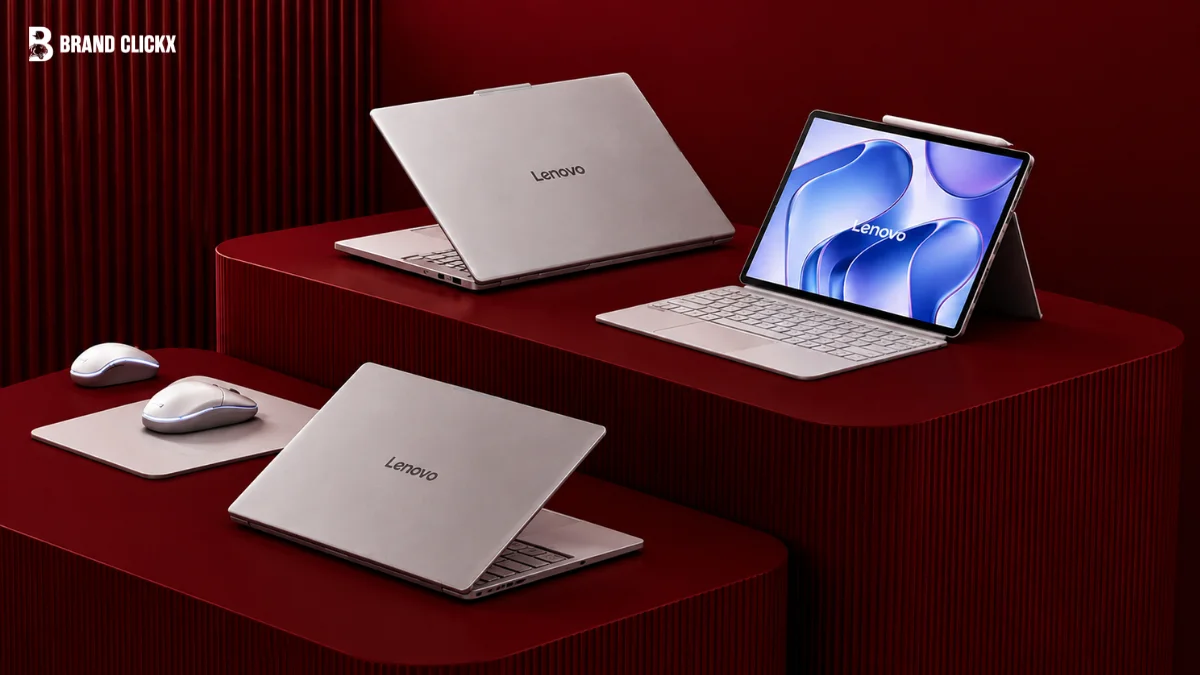
Digital Citizen published what is reported to be the full press image set for the Lenovo Googlebook 15. Android Headlines separately published images of a 2-in-1 tablet and additional Lenovo hardware.
| Feature | Detail |
| Display | 15-inch, narrow bezels, camera privacy shutter |
| Ports | HDMI, 2× USB-C, 1× USB-A, SD card reader, 3.5mm jack |
| Audio | Speaker grilles labelled Dolby Atmos |
| Keyboard | Dedicated Gemini key marked “G” in Google Sans |
| Branding | Googlebook name stamped to the left of the touchpad |
| Chassis | White, minimal aesthetic, blue-lit LEDs |
Engadget reported the leaked images show three devices: two laptop sizes styled like Lenovo’s Chromebook Plus 14, and a 2-in-1 with a kickstand and keyboard resembling the IdeaPad Pro Gen 2. A Googlebook-branded mouse appeared in an earlier leak.
Pricing and availability remain unknown.
What Googlebooks Actually Are
A new laptop category Google announced in May 2026, positioned as the successor to Chromebooks.
They run Aluminium OS, a system merging Chrome OS and Android into a single native platform with Gemini integrated throughout.
Five launch partners were named: Acer, ASUS, Dell, HP and Lenovo. An autumn 2026 debut is expected.
The headline software feature is Magic Pointer. Reported from an earlier leaked video, it is a contextual cursor: hover over a date in an email and Gemini suggests adding it to your calendar; select two photos and it combines them. Wiggling the pointer briefly triggers the AI.
That is the actual proposition. The hardware is a delivery mechanism for a system where AI is present at the cursor rather than in an app.
The Naming Confusion
One leak describes the ASUS device as a “Chromebook CX9406” while reporting it runs Aluminium OS.
The images first appeared in a since-deleted listing on iF Design’s website, surfaced by 9to5Google. The product is labelled a Chromebook but is reported to run the Googlebook operating system.
That inconsistency has a mundane explanation — design award submissions are made months in advance, often before final branding is settled. It is also a reason for caution: a listing predating the product name may predate other decisions too.
How to Read Hardware Leaks Now
Practical signals worth checking:
- Who published first, and did they state the source? A named origin such as a design award listing or a retailer page is stronger than an anonymous image drop
- Do the physical details hold up? Android Authority noted the ASUS images had curved edges that made ports difficult to identify a common artefact of AI generation
- Is the set suspiciously complete? A “complete press render set” from every angle is rarer than a partial leak
- Has a specialist publication assessed it? Outlets that cover the beat daily catch generation artefacts general tech sites miss
- Does the branding match the reported product? A Chromebook-labelled device running a different OS deserves a second look
Frequently Asked Questions
What is a Googlebook?
A new laptop category Google announced in May 2026, positioned as the successor to Chromebooks. Googlebooks run Aluminium OS, which merges Chrome OS and Android into a single platform with Gemini integrated throughout.
Are the leaked ASUS images real?
Android Authority reported that images published as a complete ASUS press render set show signs of AI generation. They may be derived from genuine renders that were run through an AI upscaler or watermark-removal tool.
Is the Lenovo leak credible?
It appears to be. Multiple outlets describe the Lenovo Googlebook 15 renders as consistent, detailed and plausible, with realistic lighting, proportions and materials. The images are reported to be a full press image set.
What are the Lenovo Googlebook 15’s specifications?
Leaked images indicate a 15-inch display with narrow bezels and a camera privacy shutter, HDMI, two USB-C and one USB-A ports, an SD card reader, a 3.5mm jack, Dolby Atmos speaker branding and a dedicated Gemini key.
When will Googlebooks launch?
An autumn 2026 debut is expected. Google has not confirmed a date, and pricing and availability remain unknown for every device that has leaked so far.
Which companies are making them?
Google named five launch partners when it announced the category in May 2026: Acer, ASUS, Dell, HP and Lenovo. Leaked hardware has so far come from Lenovo and, disputedly, ASUS.
What is Magic Pointer?
A reported Aluminium OS feature seen in an earlier leaked video. It is a contextual cursor that triggers Gemini actions suggesting a calendar entry when hovering over a date, or combining two selected photos.
Why is one ASUS device called a Chromebook?
The images came from a since-deleted iF Design listing describing a “Chromebook CX9406” while reportedly running Aluminium OS. Design award submissions are typically made months ahead, often before final branding is decided.
Conclusion
The Lenovo images give a genuine early look at Google’s laptop reset: a white chassis, a Gemini key where Windows put its own, and a full complement of ports on a device meant to replace the Chromebook.
The ASUS images give something else a reminder that leaked hardware now passes through AI tools before it reaches anyone, and that “complete press render set” is a claim rather than a guarantee.
Android Authority caught it. The publication that ran them did not mention it. That is the more useful story for anyone who reads leaks regularly.