

Coffee shops have evolved from neighborhood cafés into some of the world’s most recognizable consumer brands, powered by thousands of stores, sophisticated supply chains, mobile ordering, loyalty programs and expanding international customer bases.
In 2026, Starbucks remains the world’s largest dedicated coffeehouse company by revenue, while China’s Luckin Coffee stands out for its rapid large-scale store expansion. Tim Hortons remains a dominant force in Canada, Costa Coffee maintains a substantial international footprint, and brands such as Dutch Bros, Caffè Nero, Scooter’s Coffee and The Coffee Bean & Tea Leaf continue to grow.
This ranking uses the latest complete financial year available in 2026 primarily FY2025 to maintain a consistent comparison rather than mixing 2024 and 2026 figures. For companies with fiscal years ending on dates other than December 31, store counts correspond to the end of the same fiscal reporting period.
Ranking Methodology
The ranking evaluates each brand across three core measures: financial scale, store network and geographic reach.
Revenue — 60%
Revenue provides the strongest indication of a brand’s overall business scale.
Store Network — 25%
Store numbers show the size and physical reach of each coffeehouse brand.
Geographic Reach — 15%
International markets highlight how widely each brand operates beyond its home market.
Data Standards
The ranking uses company-reported figures wherever reliable data is available.
Financial Comparability
Brand or segment sales are used when standalone company revenue is unavailable.
Store Comparability
Store counts correspond to each company’s relevant 2025 reporting period.
Production Data
Production figures are included only when publicly disclosed, with capacity kept separate from actual output.
Overview: 15 Biggest Coffee Shop Brands
| Rank | Coffee Shop Brand | Latest Full-Year Financial Figure | Store Count for Comparable 2025 Period | Main Market |
| 1 | Starbucks | $37.18 billion revenue | 40,990 | Global |
| 2 | Luckin Coffee | $7.03 billion revenue | 31,048 | China & international |
| 3 | Tim Hortons | Brand revenue not separately reported | 6,232 | Canada & international |
| 4 | Costa Coffee | Brand revenue not separately disclosed | 4,000+ cafés | UK & international |
| 5 | Dunkin’ | Brand revenue not publicly disclosed | 13,000+ | U.S. & international |
| 6 | Dutch Bros | $1.64 billion revenue | 1,136 | United States |
| 7 | Peet’s Coffee | €1.30 billion segment sales | 300+ cafés | U.S. & China |
| 8 | Caffè Nero | £626.4 million sales | ~1,150 | Europe & international |
| 9 | The Coffee Bean & Tea Leaf | Brand revenue not separately disclosed | 1,200+ | International |
| 10 | Caribou Coffee | Brand revenue not separately disclosed | 800+ | U.S. & international |
| 11 | Scooter’s Coffee | Private-company revenue not disclosed | 817 at end-2025 | United States |
| 12 | BIGGBY COFFEE | Private-company revenue not disclosed | 460+ | United States |
| 13 | Gloria Jean’s Coffees | Brand revenue not separately disclosed | Hundreds of locations | International |
| 14 | Second Cup Café | Private-company revenue not disclosed | ~180–200 in Canada | Canada |
| 15 | 7 Brew Coffee | Private-company revenue not disclosed | 600+ | United States |
Brand-by-Brand Ranking
1. Starbucks
Global Coffeehouse Leader: Starbucks is the world’s largest dedicated coffeehouse brand, combining a massive global store network with strong revenue, brand recognition and international reach.
What It Offers: The brand serves brewed coffee, espresso beverages, cold brew, Frappuccino beverages, tea, food and packaged coffee.
2025 Revenue: $37.18 billion
2025 Store Network: 40,990 locations
Founded: 1971
Founded By: Jerry Baldwin, Gordon Bowker and Zev Siegl
Headquarters: Seattle, Washington, USA
Owner: Starbucks Corporation
Why It Ranks: Starbucks ranks #1 because it has the highest revenue and the largest dedicated coffeehouse network among the brands covered in this ranking.
Official Website: Starbucks.com
2. Luckin Coffee
China’s Coffee Growth Powerhouse: Luckin Coffee has transformed China’s coffee market through rapid expansion, mobile ordering, delivery and a technology-focused business model.
What It Offers: The company specializes in espresso beverages, lattes, Americanos, cold drinks, seasonal beverages and food.
2025 Revenue: Approximately $7.03 billion
2025 Store Network: 31,048 locations
Founded: 2017
Founded By: Lu Zhengyao and Qian Zhiya
Headquarters: Xiamen, China
Owner: Luckin Coffee Inc.
Why It Ranks: Luckin ranks #2 because of its more than $7 billion in annual revenue, enormous store network and exceptionally rapid expansion.
Official Website: LuckinCoffee.com
3. Tim Hortons
Canadian Coffee Institution: Tim Hortons is Canada’s most recognizable coffee-and-baked-goods chain and has developed a significant international franchise presence.
What It Offers: The brand serves Original Blend coffee, espresso beverages, iced coffee, Timbits, donuts, sandwiches and breakfast products.
2025 Store Network: 6,232 locations
Founded: 1964
Founded By: Tim Horton and Jim Charade
Headquarters: Toronto, Canada
Owner: Restaurant Brands International
Why It Ranks: Tim Hortons ranks #3 because of its dominant Canadian market position, more than 6,000 restaurants and substantial international franchise network.
Official Website: TimHortons.com
4. Costa Coffee
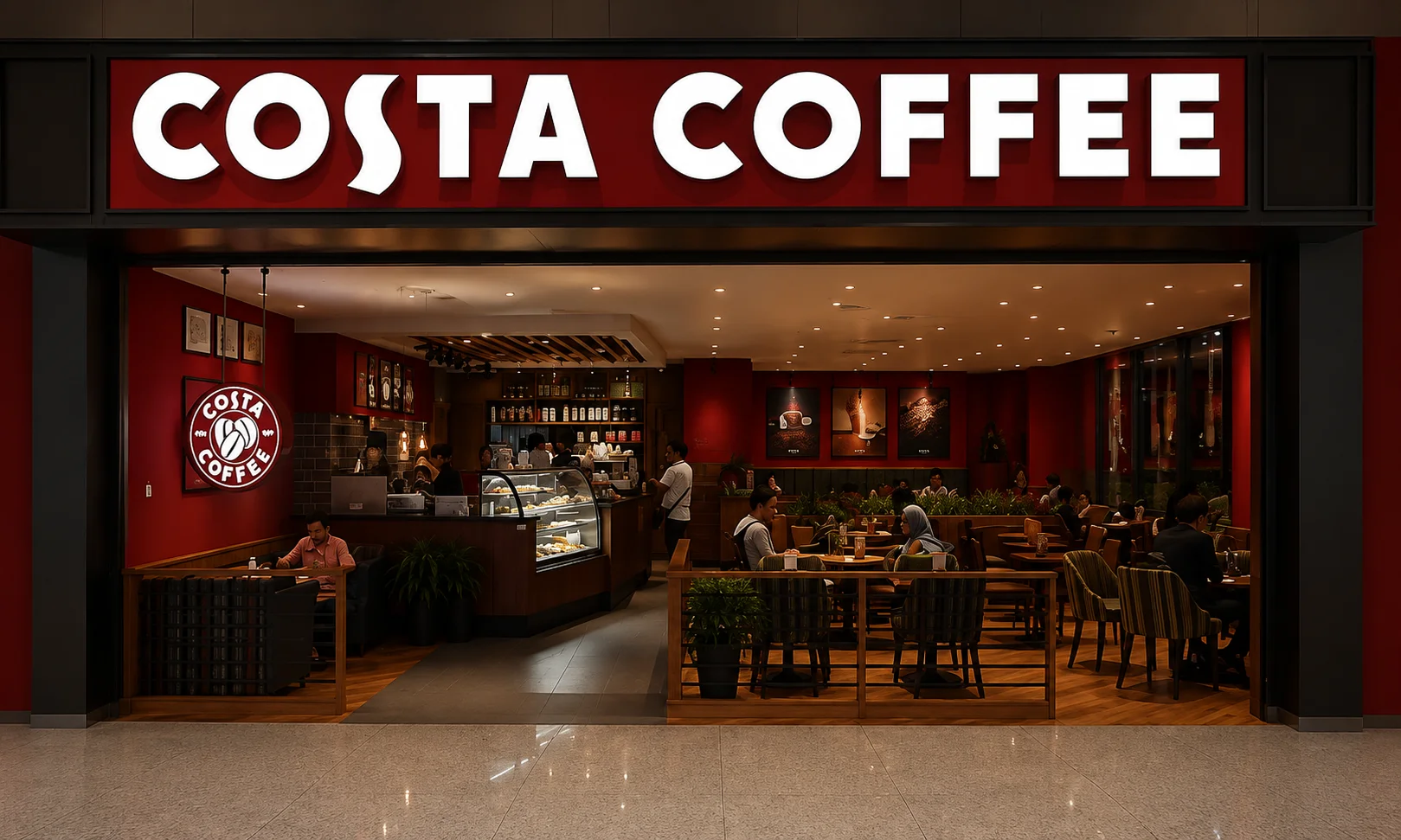
Britain’s Global Coffee Brand: Costa Coffee has grown from a London coffee business into one of the UK’s best-known coffee chains and an international brand owned by The Coca-Cola Company.
What It Offers: Costa is known for espresso drinks, flat whites, cappuccinos, lattes, iced beverages, pastries and its signature Mocha Italia blend.
2025 Revenue: Not separately disclosed
2025 Store Network: 4,000+ cafés
Founded: 1971
Founded By: Sergio Costa and Bruno Costa
Headquarters: London, UK
Owner: The Coca-Cola Company
Why It Ranks: Costa ranks #4 because of its large café network, international reach and the global resources of its Coca-Cola ownership.
Official Website: Costa.co.uk
5. Dunkin
America’s Coffee-and-Donut Giant: Dunkin’ is one of the world’s largest coffee and bakery franchise brands, with coffee remaining one of its most important products.
What It Offers: The chain serves brewed coffee, iced coffee, espresso beverages, donuts, breakfast sandwiches and other bakery products.
2025 Revenue: Not publicly disclosed at brand level
2025 Store Network: 13,000+ locations
Founded: 1950
Founded By: William Rosenberg
Headquarters: Canton, Massachusetts, USA
Owner: Inspire Brands
Why It Ranks: Dunkin’ ranks #5 because its enormous franchise network gives it exceptional scale despite limited standalone financial disclosure.
Official Website: Dunkin.com
6. Dutch Bros Coffee
America’s Drive-Through Coffee Challenger: Dutch Bros has grown from a small Oregon espresso business into one of America’s fastest-growing specialty-coffee chains.
What It Offers: The company serves espresso drinks, cold brew, blended beverages, specialty drinks and Dutch Bros Rebel beverages.
2025 Revenue: Approximately $1.64 billion
2025 Store Network: 1,100+ locations
Founded: 1992
Founded By: Dane Boersma and Travis Boersma
Headquarters: Grants Pass, Oregon, USA
Owner: Dutch Bros Inc.
Why It Ranks: Dutch Bros ranks #6 because of its strong revenue growth, rapidly expanding store network and highly scalable drive-through business model.
Official Website: DutchBros.com
7. Peet’s Coffee
American Specialty Coffee Pioneer: Peet’s Coffee is one of America’s historic specialty-coffee companies and helped shape the country’s modern premium-coffee culture.
What It Offers: The brand focuses on specialty coffee, dark roasts, espresso beverages, cold brew and packaged coffee.
2025 Segment Sales: Approximately €1.30 billion
2025 Store Network: 300+ cafés
Founded: 1966
Founded By: Alfred Peet
Headquarters: Emeryville, California, USA
Owner: JDE Peet’s
Why It Ranks: Peet’s ranks #7 because of its substantial coffee business, specialty-coffee heritage and significant sales across cafés and other channels.
Official Website: Peets.com
8. Caffè Nero
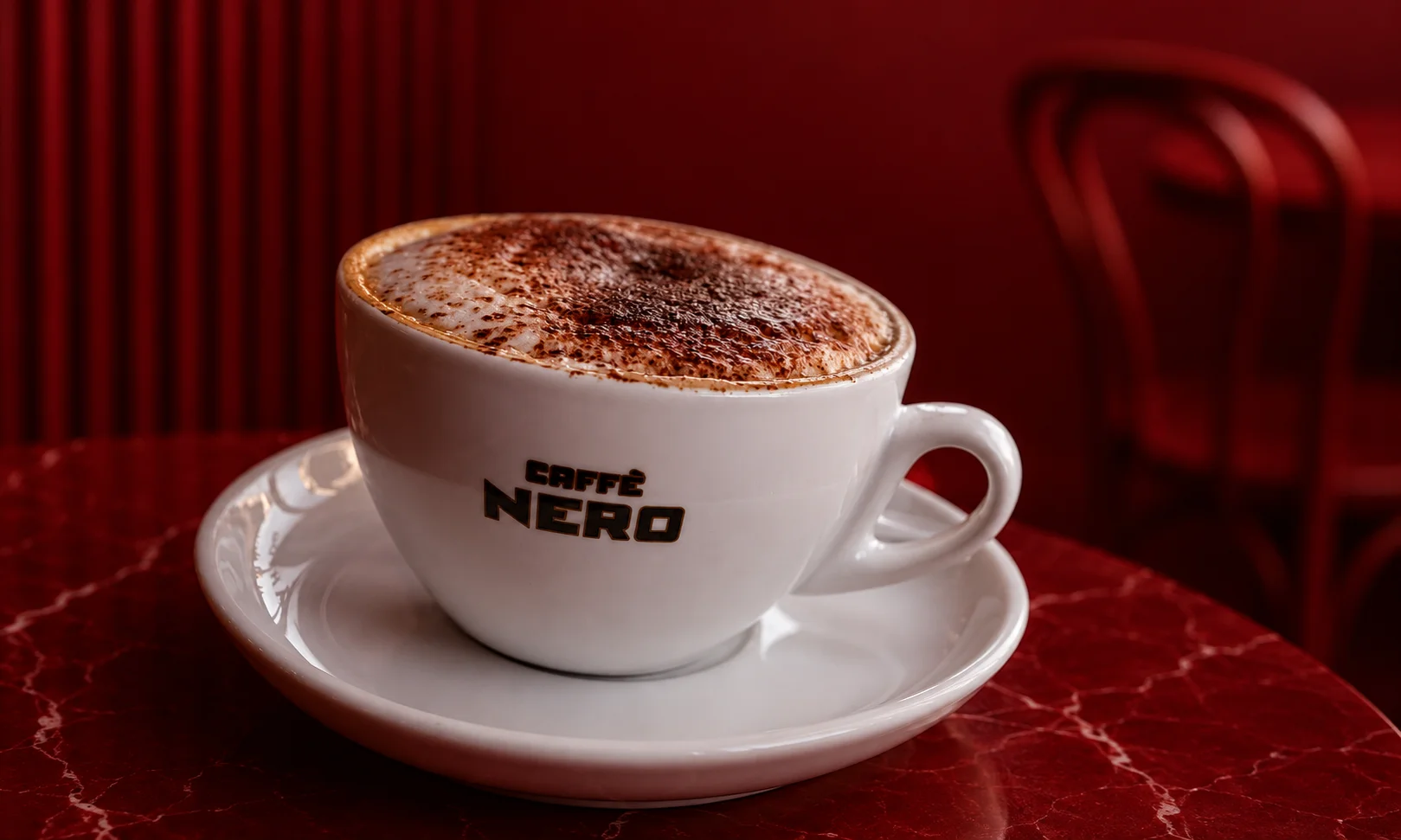
European Premium Coffeehouse Brand: Caffè Nero has built a strong reputation around Italian-style coffee, premium café environments and a growing European store network.
What It Offers: The brand specializes in Italian espresso, cappuccino, latte, flat white, pastries and café food.
2025 Sales: £626.4 million
2025 Store Network: Approximately 1,150 locations
Founded: 1997
Founded By: Gerry Ford
Headquarters: London, UK
Owner: Privately held
Why It Ranks: Caffè Nero ranks #8 because of its substantial annual sales, strong European presence and premium coffeehouse positioning.
Official Website: CaffeNero.com
9. The Coffee Bean & Tea Leaf
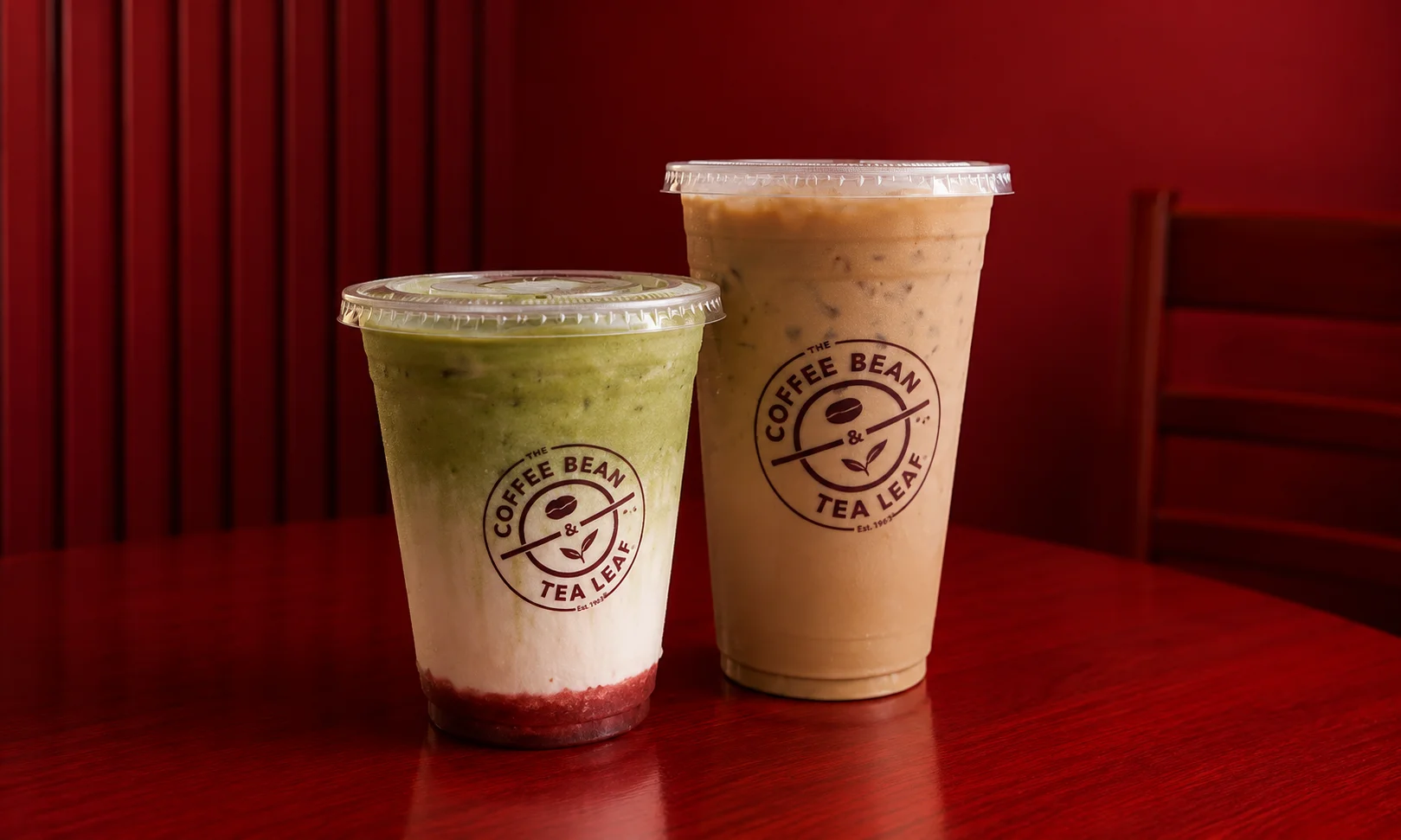
International Specialty Coffee and Tea Brand: The Coffee Bean & Tea Leaf is one of America’s oldest specialty-coffee chains and has developed a particularly strong international presence.
What It Offers: The brand serves specialty coffee, espresso beverages, tea, Ice Blended drinks, pastries and other café products.
2025 Revenue: Not separately disclosed
2025 Store Network: 1,200+ locations
Founded: 1963
Founded By: Herbert and Mona Hyman
Headquarters: Los Angeles, California, USA
Owner: Jollibee Foods Corporation
Why It Ranks: The Coffee Bean & Tea Leaf ranks #9 because of its long history, large international network and particularly strong presence in Asian markets.
Official Website: CoffeeBean.co
10. Caribou Coffee
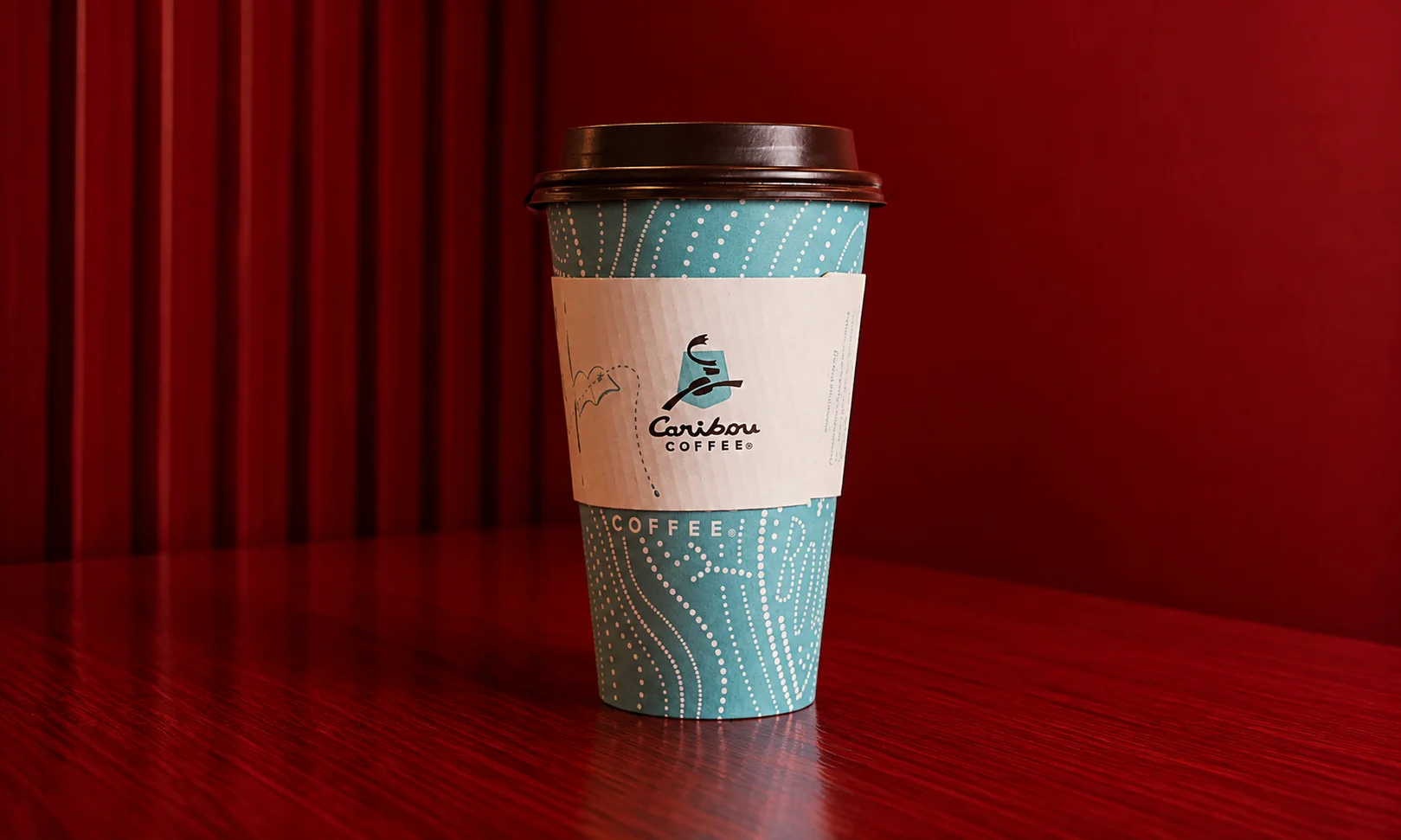
Major American Specialty-Coffee Chain: Caribou Coffee has grown from its Minneapolis roots into an international specialty-coffee company with a substantial U.S. and international presence.
What It Offers: The company serves brewed coffee, cold press, espresso beverages, blended drinks, tea and café food.
2025 Revenue: Not separately disclosed
2025 Store Network: 800+ locations
Founded: 1992m
Founded By: Kim and John Puckett and founding partners
Headquarters: Minneapolis, Minnesota, USA
Owner: Panera Brands
Why It Ranks: Caribou ranks #10 because of its 800-plus-store network, international footprint and established position in specialty coffee.
Official Website: CaribouCoffee.com
11. Scooter’s Coffee
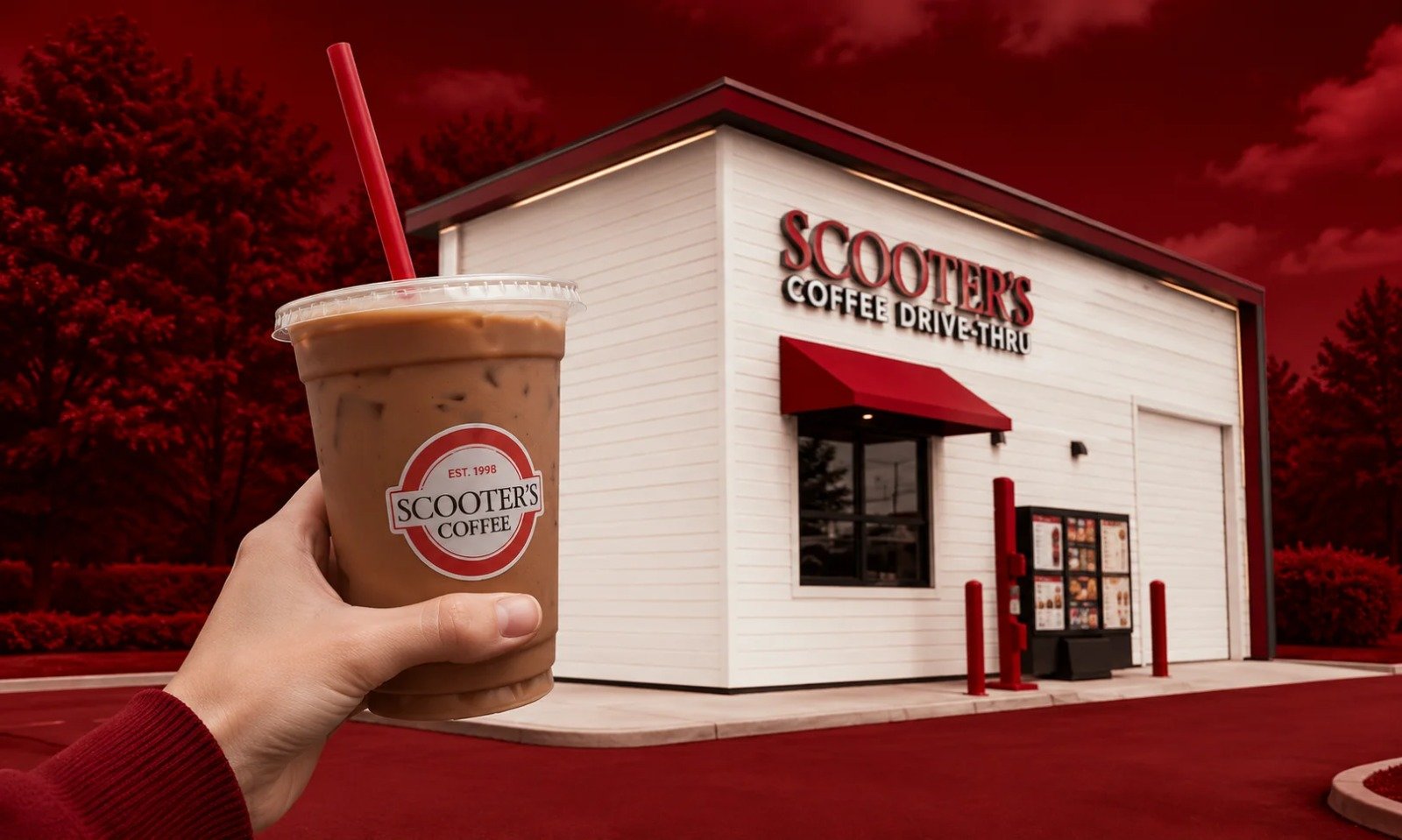
Fast-Growing Drive-Through Coffee Chain: Scooter’s Coffee has become one of America’s largest drive-through specialty-coffee chains through rapid franchise expansion.
What It Offers: The brand serves espresso beverages, brewed coffee, cold brew, blended drinks, flavored beverages and breakfast items.
2025 Revenue: Not publicly disclosed
2025 Store Network: 817 locations
Founded: 1998
Founded By: Don and Linda Eckles
Headquarters: Omaha, Nebraska, USA
Owner: Private company
Why It Ranks: Scooter’s ranks #11 because its 800-plus-store network makes it one of the largest dedicated drive-through coffee brands in the United States.
Official Website: ScootersCoffee.com
12. BIGGBY COFFEE
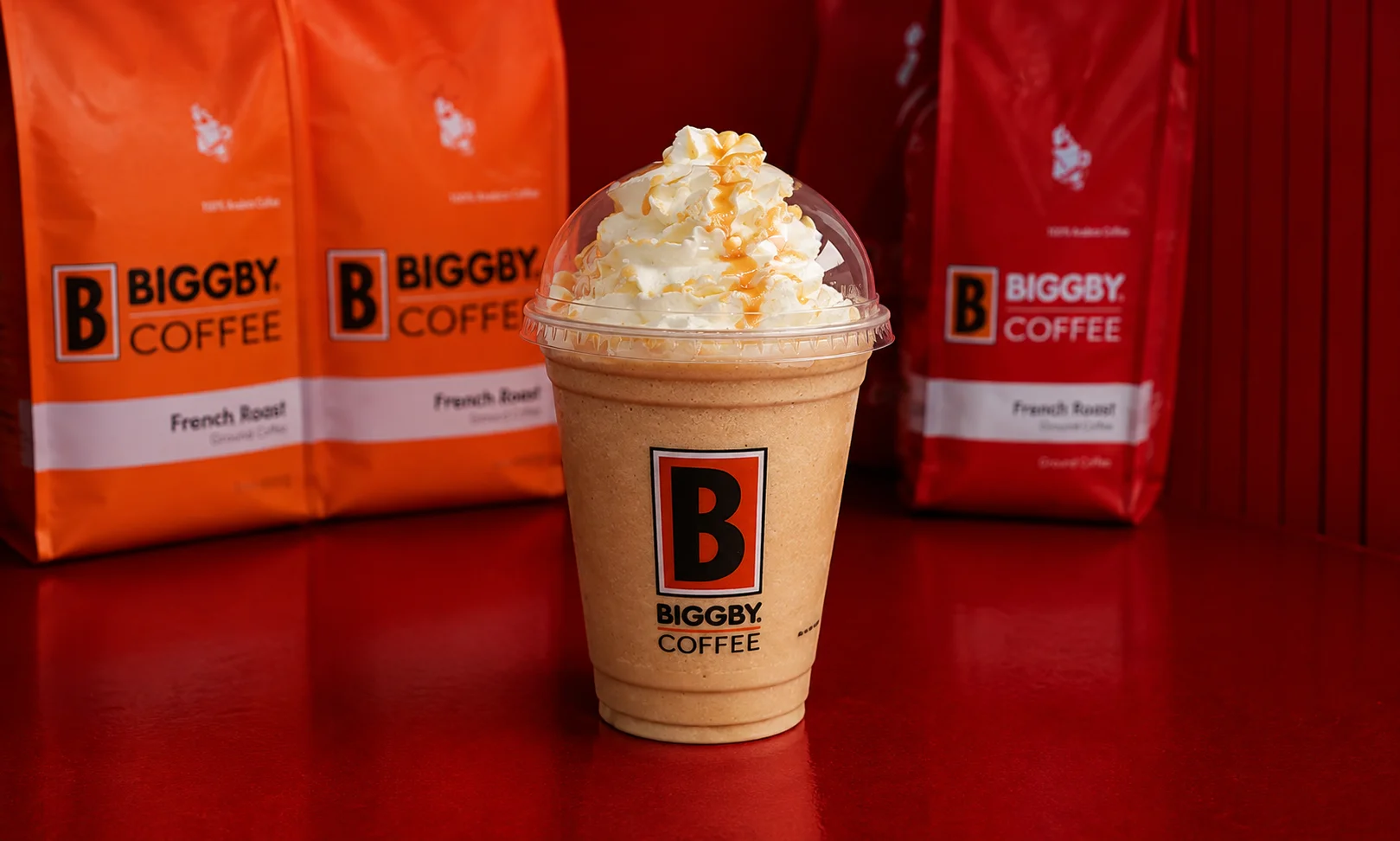
Michigan-Born Specialty Coffee Franchise: BIGGBY COFFEE has developed from a Michigan coffee business into a substantial U.S. specialty-coffee franchise.
What It Offers: The chain serves espresso beverages, brewed coffee, specialty drinks, smoothies and breakfast products.
2025 Revenue: Not publicly disclosed
2025 Store Network: 460+ locations
Founded: 1995
Founded By: Bob Fish and Michael McFall
Headquarters: East Lansing, Michigan, USA
Owner: Private company
Why It Ranks: BIGGBY ranks #12 because of its substantial U.S. franchise network and continued expansion.
Official Website: BIGGBY.com
13. Gloria Jean’s Coffees
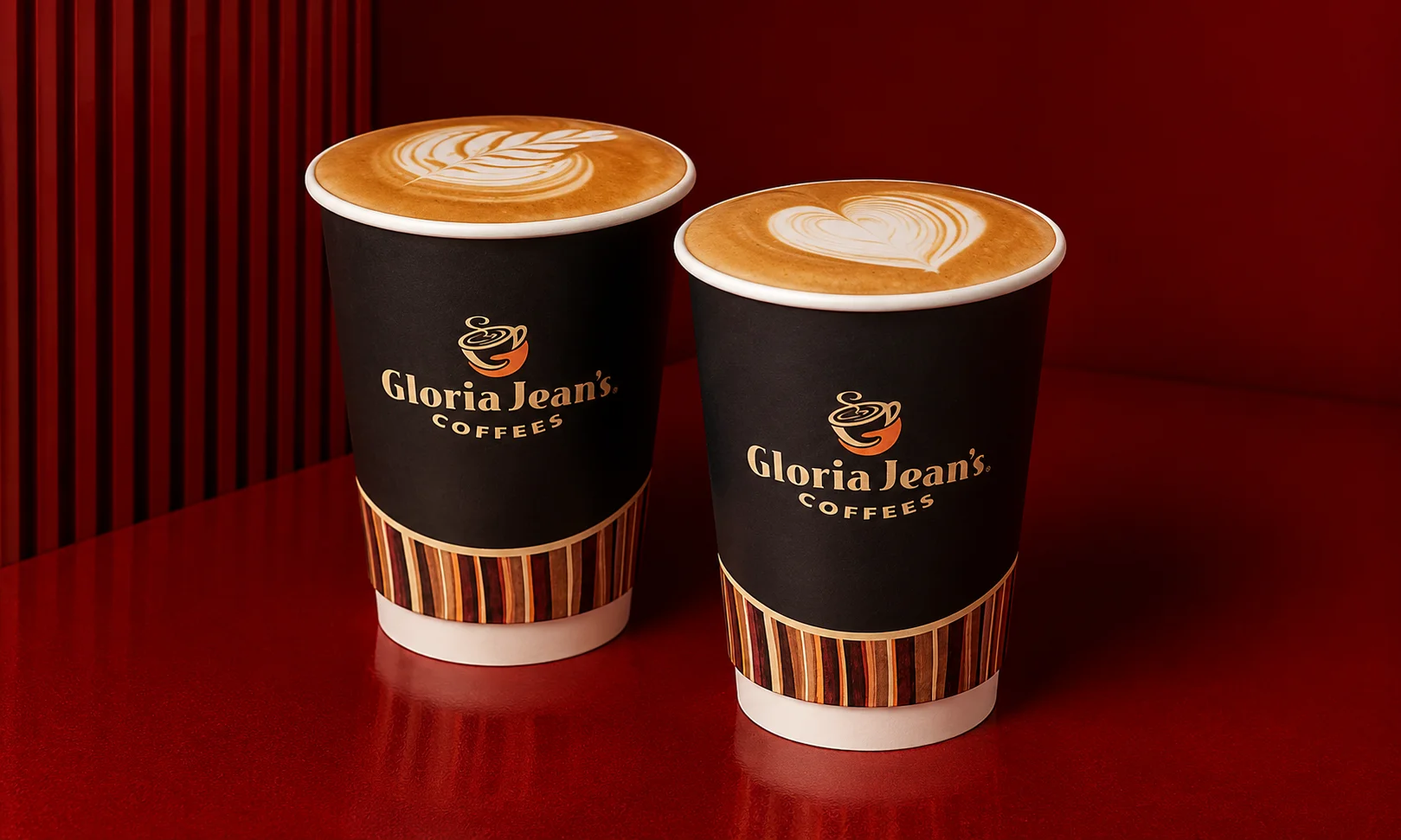
International Franchise Coffee Brand: Gloria Jean’s Coffees developed from an American coffee business into a major international franchise brand with a presence across numerous markets.
What It Offers: Gloria Jean’s specializes in flavored coffees, espresso beverages, iced drinks, specialty beverages and café food.
2025 Revenue: Not separately disclosed
2025 Store Network: Hundreds of locations
Founded: 1979
Founded By: Gloria Jean Kvetko
Headquarters: Australia
Owner: Retail Food Group
Why It Ranks: Gloria Jean’s ranks #13 because of its long operating history and broad international franchise presence.
Official Website: GloriaJeans.com
14. Second Cup Café
Canadian Coffee Heritage: Second Cup Café is a long-established Canadian specialty-coffee brand that became part of Foodtastic and celebrated its 50th anniversary in 2025.
What It Offers: The brand focuses on specialty coffee, espresso-based beverages, cold drinks, pastries and café food.
2025 Revenue: Not publicly disclosed
2025 Store Network: Approximately 180 locations
Founded: 1975
Founded By: Tom Culligan and Frank O’Dea
Headquarters: Canada
Owner: Foodtastic
Why It Ranks: Second Cup ranks #14 because of its 50-year history and established Canadian café network, although its current scale is smaller than the leading global chains.
Official Website: SecondCup.com
15. 7 Brew Coffee
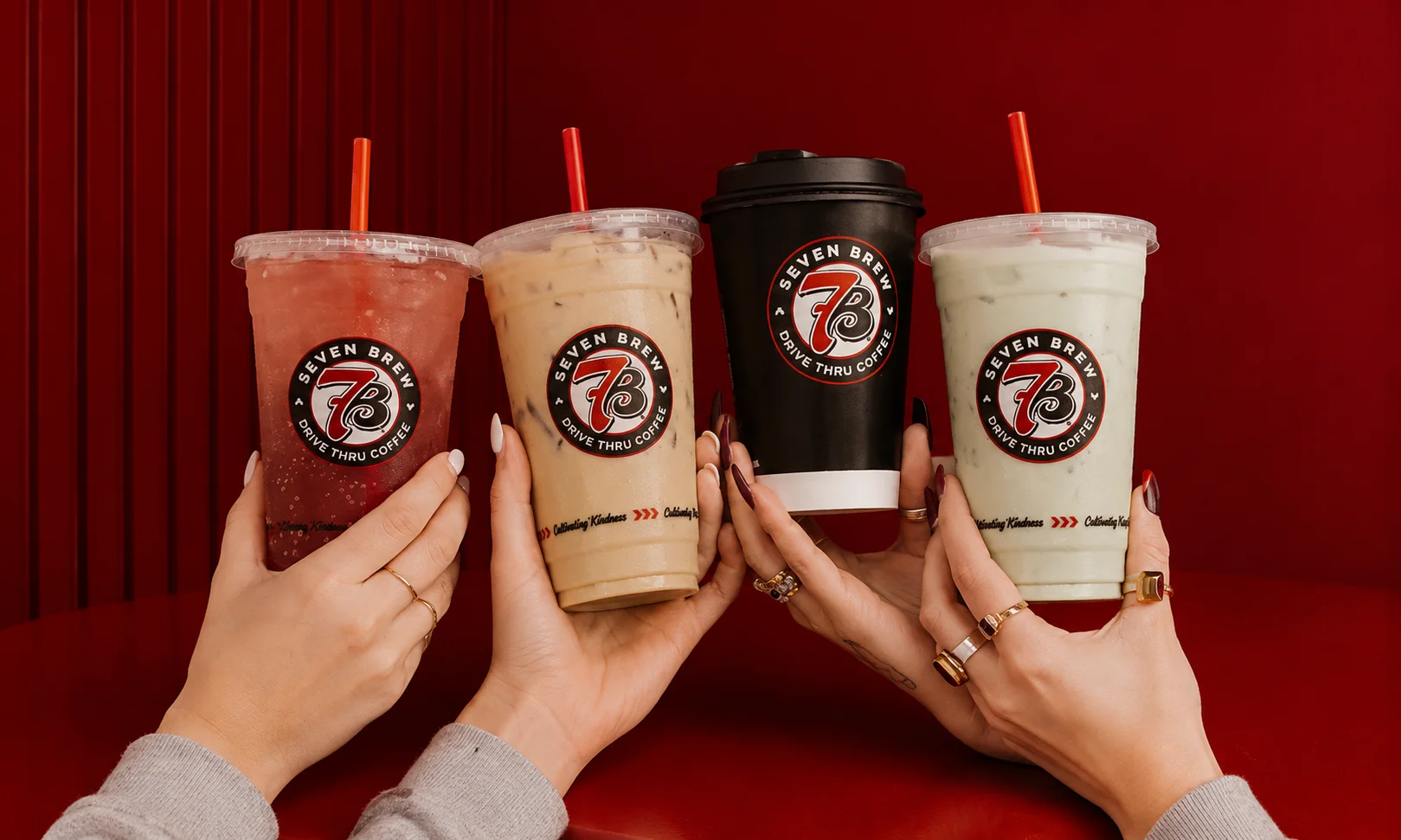
New Generation of Drive-Through Coffee: 7 Brew Coffee represents a newer generation of American coffee chains built around compact drive-through locations, fast service and a broad beverage menu.
What It Offers: The company serves espresso beverages, cold brew, flavored coffee, teas, smoothies and specialty energy drinks.
2025 Revenue: Not publicly disclosed
2025 Store Network: 600+ locations
Founded: 2017
Founded By: 7 Brew founders
Headquarters: Rogers, Arkansas, USA
Owner: Private company
Why It Ranks: 7 Brew ranks #15 because of its rapid store expansion and growing influence in the U.S. drive-through coffee market.
Official Website: 7Brew.com
Which Coffee Company Earned the Most Profit in 2025?
It is important to understand that revenue and profit are different. Private brands such as Dunkin’ and Scooter’s do not publish the same detailed financial data as public companies.
Starbucks reported $37.18 billion in FY2025 revenue and about $2.93 billion in operating income. Luckin Coffee reported about $7.03 billion in revenue and $724 million in operating income.
Coffee Brands Comparison Portfolio
| Company / Brand | Latest Full-Year Financial Period | Revenue / Sales | Profit Measure | Store Count |
| Starbucks | FY2025 | $37.18B | ~$2.93B GAAP operating income | 40,990 |
| Luckin Coffee | FY2025 | $37.03B | ~$724M GAAP operating income | 31,048 |
| Peet’s / JDE Peet’s segment | FY2025 | €1.30B Peet’s sales | €141M adjusted EBIT | 300+ cafés |
| Caffè Nero | FY2025 | £626.4M sales | $80M (£58.5M) Group EBITDA | ~1,150 |
| Dutch Bros | FY2025 | ~$1.64B | $117.3M Net Income | 1,136 |
Conclusion: Starbucks remains the largest coffeehouse company by absolute revenue. Profit comparisons require more caution because accounting structures, ownership models and reporting definitions differ considerably.
Which Company Produces the Most Coffee?
This is one of the most frequently misunderstood questions in the coffee industry.
Coffee-shop companies generally do not publish their annual bean production in tonnes. When they do publish a number, it typically represents theoretical roasting capacity rather than actual, audited coffee produced.
Because of this data gap, the safest baseline comparison relies strictly on publicly disclosed capacity metrics versus undisclosed retail realities:
Brand Sourcing & Roasting Volume Comparison
| Brand / Company | Publicly Disclosed Coffee Volume / Capacity |
| Luckin Coffee | 100,000+ tonnes/year network roasting capacity during the 2025 period |
| Costa Coffee | 45,000 tonnes/year roasting capacity at Basildon facility |
| Starbucks | Actual annual coffee production not publicly disclosed |
| Dunkin’ | Actual annual coffee production not publicly disclosed |
| Tim Hortons | Actual annual coffee production not publicly disclosed |
| Dutch Bros | Actual annual coffee production not publicly disclosed |
| Caffè Nero | Actual annual coffee production not publicly disclosed |
| Peet’s Coffee | Brand-level annual production not publicly disclosed |
Key Operational Context
- Costa Coffee: Official corporate materials state that its flagship Basildon roastery can process 45,000 tonnes of coffee per year. This represents maximum infrastructure capacity, not necessarily actual annual production.
- Luckin Coffee: While Luckin’s rapidly expanding smart roasting infrastructure is considerably larger, the company does not provide a single audited figure for the exact tonnes of coffee actually produced and sold across its coffeehouse brand. Therefore, its massive roasting-capacity figure should not be confused with actual retail consumption.
Frequently Asked Questions
What is the biggest coffee shop brand in the world in 2026?
Starbucks remains the world’s largest dedicated coffeehouse brand by revenue. Its FY2025 revenue reached $37.18 billion, and its comparable FY2025 store count was 40,990.
Which coffee company has the most stores?
Based on the latest complete 2025 reporting period used in this article, Starbucks had 40,990 stores, compared with Luckin Coffee’s 31,048.
Which coffee company is growing the fastest?
Luckin Coffee is one of the clearest examples of rapid large-scale expansion. During 2025 it opened 8,708 net new stores, increasing its network to 31,048.
Which coffee company has the highest revenue?
Starbucks had the highest reported revenue among the dedicated coffeehouse companies covered in this article, with $37.18 billion in FY2025.
Which coffee company produces the most coffee?
There is no reliable universal answer based on actual annual production, because most coffeehouse companies do not disclose their total coffee production in tonnes.
Based on publicly disclosed roasting capacity, Luckin’s network is among the largest in this group, while Costa’s Basildon facility has a capacity of 45,000 tonnes annually. Capacity should not be confused with actual production.
Is Tim Hortons bigger than Starbucks?
Not by revenue or global store count. Starbucks had 40,990 stores at the end of its FY2025 period, while Tim Hortons had 6,232 restaurants at December 31, 2025.
Tim Hortons is nevertheless exceptionally strong in Canada and has significant international expansion.
Is Luckin Coffee bigger than Starbucks?
Luckin had 31,048 stores at the end of 2025, compared with Starbucks’ 40,990. Starbucks also reported much higher FY2025 revenue.
However, Luckin’s growth rate was substantially faster, making it one of Starbucks’ most important global competitors.
Why isn’t McCafé included as a separate company?
McCafé is a major global coffee brand, but it operates within the McDonald’s restaurant system. McDonald’s does not report McCafé as a separate standalone financial company with comparable revenue and store-count reporting.
Including McCafé in a revenue-ranked list alongside standalone coffee companies would therefore create a comparison problem.
Why are some revenue figures missing?
Many major coffee brands are privately owned or are divisions of larger companies.
For example, Tim Hortons is owned by Restaurant Brands International, while Dunkin’ is part of Inspire Brands. Their parent companies do not provide the same standalone revenue disclosure as Starbucks or Luckin.
Rather than creating estimates and presenting them as facts, this article marks those figures as not publicly disclosed.
Why don’t coffee production numbers appear for every company?
Because coffee companies rarely publish their annual bean production in tonnes.
A company may disclose:
- roasting capacity;
- coffee cups served;
- number of stores;
- coffee purchased;
- coffee sales; or
- total company sales.
These are different measurements and cannot responsibly be substituted for one another.
Are the store counts in this article from 2024, 2025 or 2026?
The ranking is designed around 2025, the latest completed full financial year available in 2026.
The article does not combine a 2024 revenue figure with a 2026 store count simply because the latter is newer.
Where a company has a fiscal year ending at a different time—for example, Starbucks’ fiscal year ended September 28, 2025—the store count corresponds to that fiscal reporting period.
Why does this article use 2025 data even though it is written in 2026?
Because FY2025 is the latest completed annual reporting period for most companies as of 2026.
Final Takeaway
The global coffee-shop industry in 2026 is shaped by traditional cafés, specialty-coffee brands, technology-driven chains and fast-growing drive-through models.
Starbucks remains the overall leader in revenue, global scale and store presence, while Luckin Coffee stands out for its rapid expansion. Tim Hortons, Costa Coffee, Dutch Bros, Caffè Nero, Peet’s and The Coffee Bean & Tea Leaf remain important competitors across different markets and business models.
The data also shows that revenue, store count and coffee production measure different forms of scale. Keeping these measures separate creates a more accurate and transparent ranking.
Overall, Starbucks remains the world’s leading coffee-shop brand in 2026, while Luckin’s rapid growth continues to reshape the industry.