


If you are in the world of business to business marketing you know that attracting high quality leads is one of the biggest challenges you face. Unlike business to consumer where large audiences can generate sales quickly the B2B purchase cycle is longer, more complex and requires trust.
That is why b2b seo is one of the most powerful ways to attract the right kind of traffic to your website and convert it into customers. You cannot build sustainable visibility without a strong B2B content marketing strategy that aligns with your sales funnel and buyer journey.
In this article we will explore how to create a b2b seo strategy that drives high quality leads. We will look at data from studies, talk about proven techniques and keep the tone conversational so you can apply what you learn with confidence.
What is B2B SEO and Why It Matters
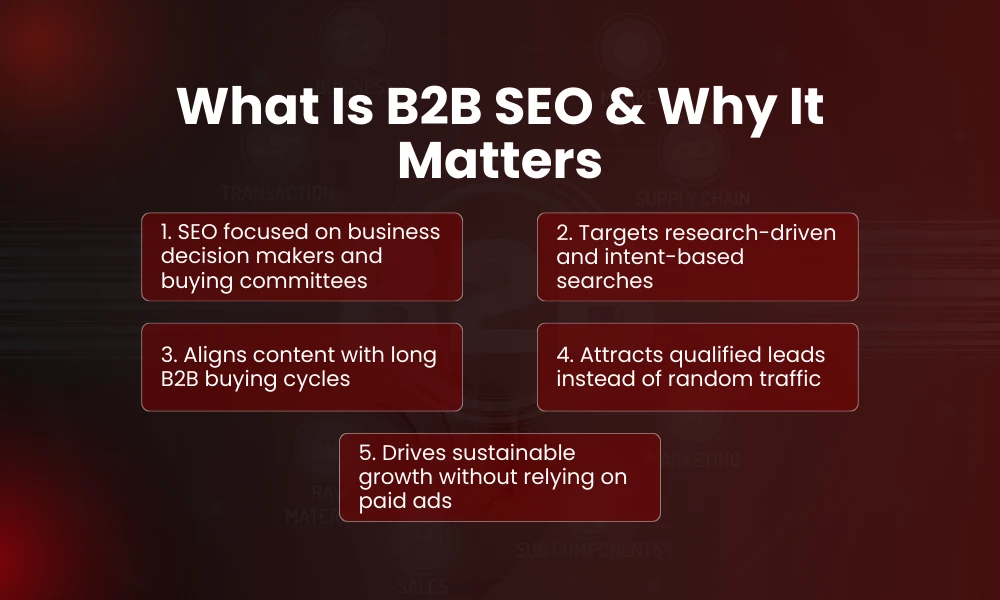
So first let us clarify what b2b seo means. SEO stands for search engine optimization and it is the practice of improving your website so that search engines like Google show your pages to the people who are searching for what you offer. For B2B companies this means showing up when decision makers and buying committees search for solutions, services or answers.
According to HubSpot organic search is the largest driver of traffic for most business websites and accounts for over 53 percent of all traffic for B2B companies. In contrast paid ads account for just 15 percent. This shows how important SEO is compared to other channels when it comes to sustainable traffic growth.
If you think about the B2B buying cycle it often starts with research. A potential buyer might search for phrases like software for lead generation or how to improve supply chain management. If your site appears near the top of search results for these queries you have a much higher chance of attracting a qualified lead who is already interested in what you offer.
So b2b seo matters because it brings you traffic that is already in the mindset of research intent. That traffic converts better than random cold audiences who see banner ads or social media posts.
How Search Engines Work and What Buyers Are Really Looking For
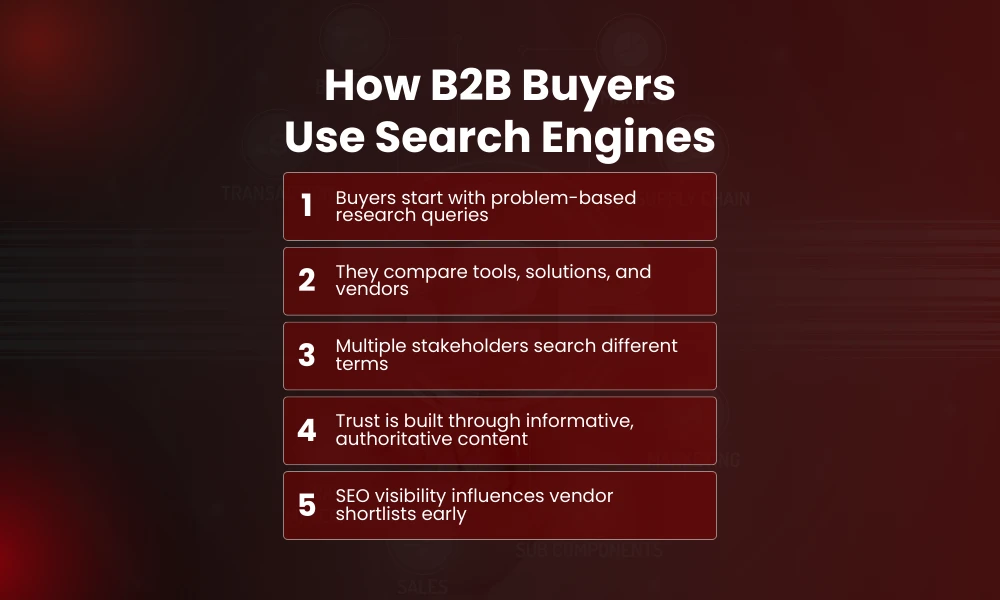
To succeed with b2b seo you need to understand how search engines rank content. Google uses hundreds of signals to decide what pages to show in search results. These signals fall into three broad categories.
Relevance
This means how well your content matches the search query. If your page answers the user’s question it has higher relevance. For example if someone searches for enterprise resource planning tools features then a page on your site that talks about ERP features would be highly relevant.
Authority
This is a measure of trust and credibility. Google looks at things like backlinks from other authoritative websites to decide if your site should be trusted. According to a study by Backlinko websites on page one of Google have an average of 3.8 times more backlinks than those on page two.
User Experience
Google also measures how users interact with your site. Do they stay on the page? Do they click on your links? Do they navigate to other pages? These factors known as engagement signals tell search engines whether users found value in your content.
Understanding these components helps you target the right keywords create content that satisfies searcher intent and optimize your technical SEO to improve rankings.
Setting Goals Before You Start
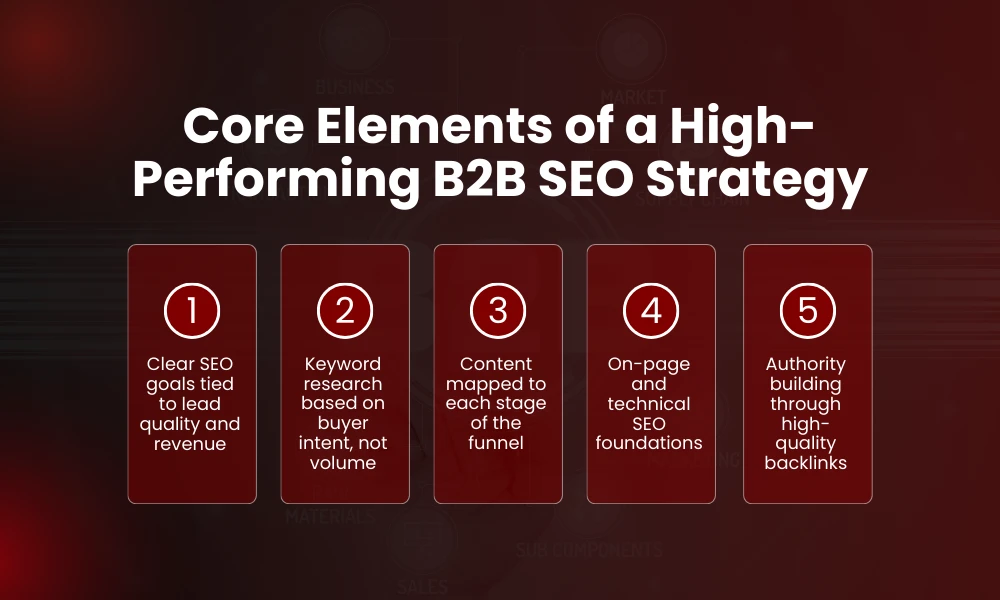
Before diving into keyword research content creation or link building you need to set clear goals for your b2b seo strategy. Good goals should be specific measurable attainable relevant and time bound.
For example you might set a goal to increase organic search traffic by 30 percent in six months or improve conversion rate from organic traffic by 15 percent. These metrics help you focus on the right activities and measure progress.
Some of the key metrics you should track include:
- Organic traffic
- Keyword rankings
- Bounce rate
- Time on page
- Conversion rate
- Lead quality score
Tracking conversion rate and lead quality score is especially important for b2b seo because not all leads are created equal. A lead from a small company that never converts to a sale is less valuable than a lead from a large enterprise that becomes a long term customer.
Keyword Research for B2B SEO
A successful b2b seo strategy starts with keyword research. A structured B2B keyword research process helps you uncover high intent queries that decision makers are actively searching for. This process helps you find the search terms your potential customers are actually using.
When doing keyword research focus on these three types of keywords.
Informational Keywords
These are queries where the searcher is looking for information. Examples are what is cloud computing or how to improve employee retention. These keywords help you attract buyers early in their research phase.
Commercial Keywords
These indicate that the searcher is considering purchase options. Examples include best crm software or comparison of enterprise resource planning tools.
Transactional Keywords
These are bottom of the funnel and indicate readiness to buy. Examples include enterprise crm pricing or contact for a demo.
Tools like Ahrefs SEMrush Moz and Google Keyword Planner can help you identify keywords and measure their search volume and difficulty. You should also analyze how to find competitor keywords to discover gaps and opportunities in your industry. Focus on keywords with good search volume and moderate difficulty. For highly competitive terms look for long tail keywords which are more specific and easier to rank for.
For example instead of targeting crm software your research might show that enterprise crm software for midsize businesses is easier to rank for and more likely to attract qualified leads.
Remember that b2b seo is about relevance not just traffic volume. A keyword with 500 searches a month that leads to high quality enterprise leads is more valuable than a keyword with 5000 searches from people who are not potential buyers.
Creating Content that Ranks and Converts
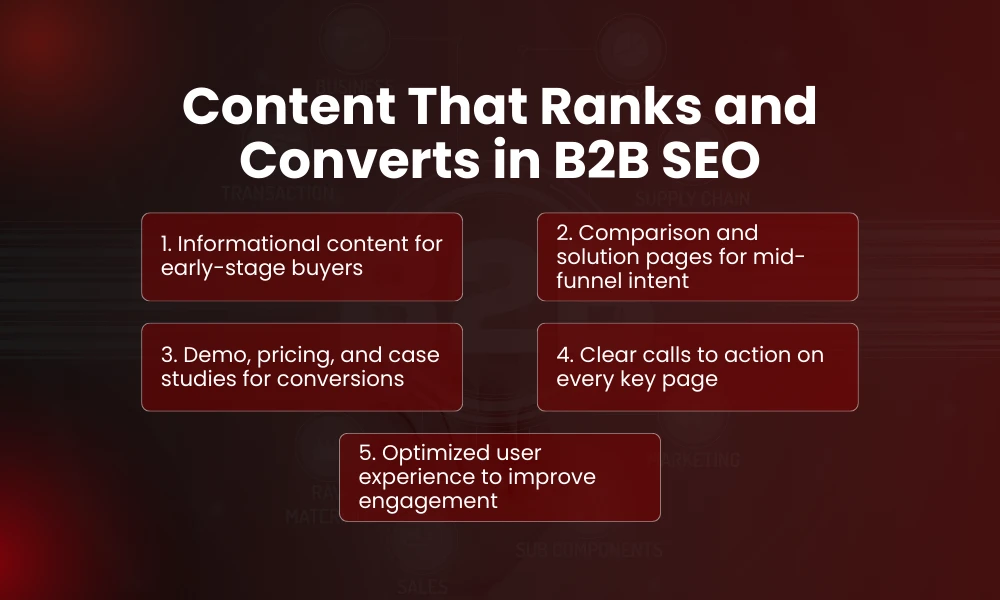
Once you have your keyword list the next step in your b2b seo strategy is content creation. This is where a well planned SEO content strategy ensures every page supports rankings and revenue goals. This content needs to serve two purposes.
- Rank well in search results
- Convert visitors into leads
To achieve both you need to apply two main principles.
Create Content that Answers Search Intent
If your content does not match what the user is searching for it will not rank. For informational keywords you might create blog posts guides or whitepapers that educate. For commercial keywords comparison pages and product features work well. For transactional keywords pricing pages or demos forms work best.
A study by Content Marketing Institute found that B2B buyers consume an average of 13 content pieces before making a purchase. This means your b2b seo strategy should include content at every stage of the buyer journey.
Optimize for Conversion
Ranking is only half the battle. Once you attract visitors you want them to take action. This could be signing up for a newsletter downloading a resource or requesting a demo.
Use clear calls to action relevant forms and value propositions. For example a blog post about cloud security might include a downloadable checklist or an invitation to attend a webinar.
Also consider user experience. Pages that load slowly or are difficult to navigate will lose visitors. Google has said that page speed is a ranking factor and studies show that a one second delay in page load time can reduce conversion rates by up to 7 percent.
On Page SEO Best Practices
On page SEO refers to optimization you do on your website pages. Strong on page SEO optimization ensures that both users and search engines clearly understand your content. For your b2b seo strategy focus on the following elements.
- Title tags that include your target keyword
- Meta descriptions that entice searchers to click
- Header tags that structure your content
- URL structure that is clean and keyword relevant
- Optimized images with alt text
- Internal links that help users find more content
For example if you are targeting enterprise hr software features a title tag like Enterprise HR Software Features That Matter will tell both search engines and users that your page is relevant. Your meta description should add value and invite clicks.
Internal linking also helps distribute authority across your site and keep users engaged. Link related blog posts to pillar pages and service pages to drive traffic deeper into your conversion funnel.
Technical SEO for B2B Websites
Technical SEO is part of your b2b seo strategy that ensures search engines can crawl index and understand your website. Mastering technical SEO fundamentals is critical if you want your content to be properly indexed and ranked. Without proper technical SEO your great content may never rank.
Some key areas to focus on include:
- Site speed optimization
- Mobile friendliness
- XML sitemap
- Robots txt
- Structured data
- Canonical tags
Mobile friendliness matters because Google uses mobile first indexing. This means Google looks at your mobile site version when determining rankings. For B2B buyers whose research often starts on phones and tablets having a responsive site is essential.
Technical SEO also includes fixing crawl errors and broken links. Tools like Google Search Console and Screaming Frog help you identify these issues.
Link Building and Authority Growth
We mentioned earlier that backlinks are a strong ranking factor. For your b2b seo strategy you must build authority by earning links from other sites. Many companies accelerate growth by investing in professional link building services that focus on quality over quantity.
Unlike consumer niches where viral content might attract links quickly B2B link building requires relationship building. Some effective tactics include:
- Guest blogging on relevant industry sites
- Partnering with industry associations
- Creating research or data reports that others will reference
- Participating in interviews podcasts and roundups
- Sharing case studies that showcase real results
Research by Backlinko shows that organic traffic correlates strongly with the number of unique domains linking to a site. The lesson here is not to chase quantity but quality. A link from a respected industry publication is far more valuable than dozens of low quality links.
Measuring What Matters for B2B SEO
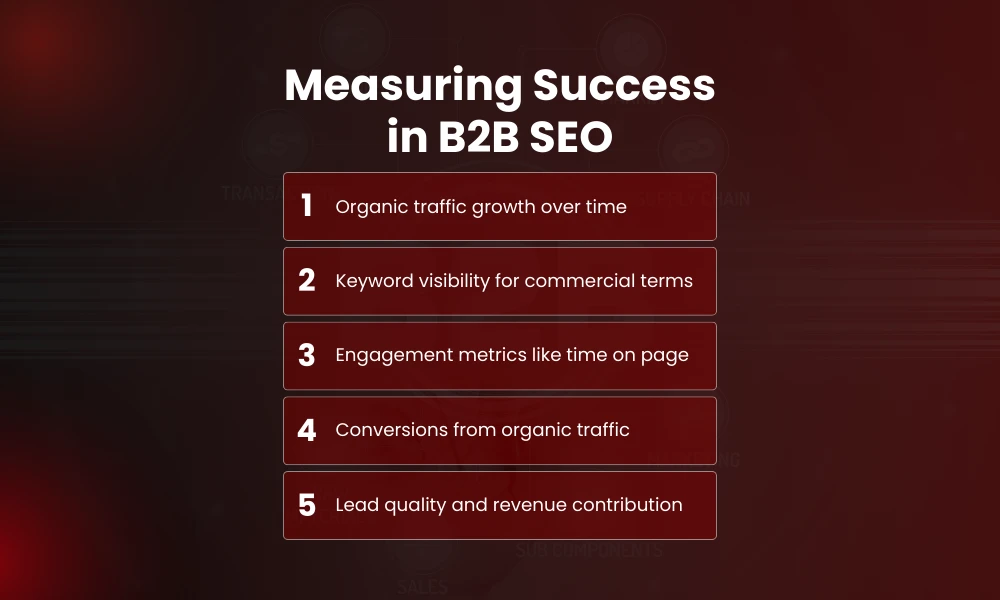
A b2b seo strategy is only as good as your ability to measure and improve it over time. Using advanced content marketing analytics helps you connect traffic metrics directly to revenue outcomes. Some SEO metrics matter more than others when determining whether your work is driving business results.
Here is what to focus on.
Organic Traffic
This tells you how many users are finding your site via search engines.
Keyword Rankings
Tracking keyword positions over time shows whether your SEO work is improving visibility.
Engagement Metrics
Metrics like time on page bounce rate and pages per session show how users interact with your content. High engagement often leads to better rankings and higher conversions.
Conversion Metrics
These show whether SEO traffic is turning into leads. Look at form submissions demo requests downloads and newsletter signups.
Lead Quality
Not all leads are equal. Work with your sales team to assign a quality score and measure how many organic leads turn into opportunities and revenue.
According to a study by HubSpot companies that track ROI are 12 times more likely to see value from their marketing efforts. This means that measurement is not optional it is essential.
Common B2B SEO Mistakes to Avoid
Even experienced marketers fall into some traps that hurt their b2b seo results.
Ignoring Buyer Intent
Too many companies focus on keywords that have high search volume but low relevance to actual buyers. Always prioritize terms that align with your target customer needs.
Writing for Search Engines Instead of People
While SEO signals matter content must be valuable. If content is stuffed with keywords but offers no insight users will leave quickly and rankings suffer.
Neglecting Technical SEO
Great content can fail if search engines cannot access it or if the site has performance issues.
Failing to Align With Sales
SEO should serve the revenue process. Work with your sales team to understand what constitutes a qualified lead and tailor content accordingly.
Putting It All Together Your B2B SEO Plan
Here is a simple step by step roadmap you can follow to build your b2b seo strategy.
- Set clear goals for traffic lead generation and conversions
- Conduct deep keyword research to find relevant terms
- Audit your existing content and identify gaps
- Create high quality content that answers questions at each stage of the buyer journey
- Optimize on page and technical SEO elements
- Build authority through thoughtful link building
- Measure results and iterate based on data
If you commit to this process and refine it over time you will see sustainable traffic growth and more high quality leads coming from organic search.
FAQs About B2B SEO Strategy
What is B2B SEO and how is it different from B2C SEO?
B2B SEO focuses on optimizing websites for business to business audiences. It differs from business to consumer SEO in terms of target keywords buyer intent and the complexity of the purchase process. In B2B the buyer journey is longer and more research oriented.
How long does it take to see results from B2B SEO?
SEO is a long term strategy. Most companies begin to see measurable improvements in organic traffic and lead generation within three to six months. Competitive industries may take longer.
What metrics should I track to measure SEO success?
Track organic traffic keyword rankings engagement metrics like bounce rate and time on page and conversion metrics such as form submissions and demos. Ultimately lead quality and revenue impact matter most.
Can content alone improve SEO rankings?
Content is essential but not enough on its own. You also need technical SEO and link building to improve rankings. The best results come from balancing all elements of SEO.
How can I ensure my SEO strategy generates high quality leads?
Focus on relevant keywords create content for each stage of the buyer journey and align your SEO efforts with sales goals. Tracking lead quality and refining based on feedback is key to success.