
Sometimes the change of brand is a seemingly harmless move. The “Donuts” debut in 2019 was a sign of a larger shift, toward Dunkin becoming more of a beverage-driven, on the go brand. The strategy was represented by the name change, not the change itself.
The most successful rebrands adhere to a similar formula. Their approach starts with a business challenge, makes a conscious decision on strategy, maintains valuable brand assets, and checks if the change was effective. The visual identity is important, but it tends to be more about what’s expressed in the decision than about why it is effective.
The central theme: A rebrand is successful when it clarifies the business, simplifies the selection process or improves the business’s growth prospects.
Key Takeaways
- The best rebrands start with a business question as opposed to a logo change.
- The best rebrands retain meaning and work towards change.
- Re-branding measurement should be linked to commercial outcomes.
- A new CMO, logo or just a feeling of frustration in the company does not warrant a rebrand.
- Rebranding costs do not only involve design, but technology, legal, physical assets, roll-out, and marketing.
What counts as a successful rebrand?
A brand’s successful re-branding increases the value of a significant business or market-based process, and enhances the utility of the brand to its users. Public response is important but it is not the last test.
Even a re-brand at the start can generate criticism and still be successful if the awareness, consideration, recognition, customer behavior, commercial performance and the like improves in comparison to a credible baseline.
That distinction matters because “rebrand” can describe several different strategic decisions.
| Type | What changes | Typical strategic purpose |
| Full rebrand | Positioning, identity, messaging and potentially architecture | Change how the business competes |
| Brand refresh | Selected visual and verbal elements | Modernize without abandoning the core brand |
| Repositioning | Meaning, audience, category or competitive frame | Change what the brand stands for |
| Name change | Brand or company name | Remove a naming barrier or support a strategic shift |
A brand refresh is thus not necessarily a lower cost rebrand. A refresh can maintain the same position but alter the way it is written. Even if the logo doesn’t change all that much, a repositioning can call for much deeper changes.
The difference also impacts the scope of the CMO’s responsibility. Refreshing the visual may largely be in the hands of the marketing team. Re-branding/repositioning may impact product, sales, customer experience, technology, legal, HR, investor communications and operations.
The important question is not “Does the new identity look better? Its answer is, “What business problem does the change make easier to solve?”
What are some successful rebrand examples?
The most successful rebranding successes are those where the business problem, strategic decision and published success/reason for rebranding are all identifiable. Dunkin, Dropbox, WW and Burberry demonstrate four relabeling tactics used to alter or transform a brand.
Dunkin: simplify the name while preserving recognition
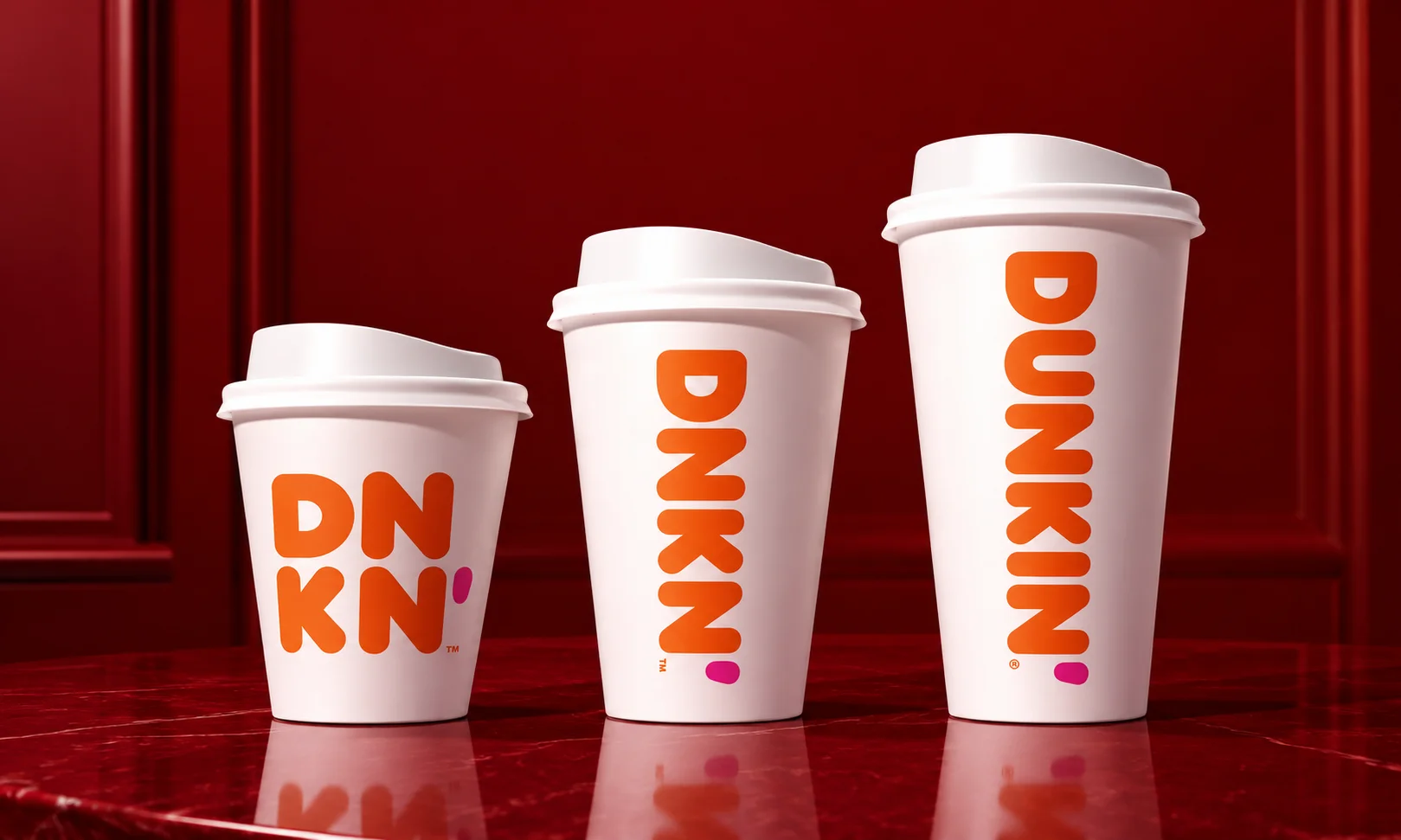
However, Dunkin’ did not eliminate “Donuts” because consumers simply did not know the brand anymore. It was in the process of evolving into a “drinkable on-the-go proposition” and felt that the company name needed to align with this.
In 2018 Dunkin made the announcement that they would officially be Dunkin’. It maintained the same packaging, familiar pink and orange colors, and iconic font, and brought the new identity to packaging, advertising and online and restaurant applications.
The outcome was a more than imperfect trial of the rebrand. Dunkin’ was also overhauling its menu, restaurant design, order-taking and drink selection. Fiscal 2019, however, saw comparable-store sales rise by 2.1% in the U.S. and systemwide sales jump by 5.0%.
Which is why Dunkin is a case study for rebranding – they were replacing what was holding the brand back, but they were keeping the assets that were already recognised.
Dropbox: change the expression as the product expands
Dropbox had another issue. The company had morphed from a file storage firm to one that enabled collaboration and a more comprehensive workspace, but it still conveyed the older message.
In 2017, Dropbox rebranded itself and made it clear that people’s behavior with the product had evolved, but not the brand. The new system had to symbolize a more general role of creativity and collaboration.
Dropbox then saw revenue growth of 26% in 2018 and paying customers grew by 16%. That revenue growth is driven by a higher number of paying users as well as its revenue per paying user, according to its SEC filing.
That distinction matters. The figures show an increase in business after the rebrand, but not that the rebrand caused the increase in business.
WW: make the brand reflect a broader proposition
In 2018, Weight Watchers changed its name to WW when the company expanded its offer beyond weight loss to health and wellness. This transformation took place with a new identity, digital experience, rewards program, partnerships, products and communications.
As of the end of 2019, WW had 4.2 million subscribers, which is 8% more than a year earlier. The rebranding didn’t lead to the “new name equals new revenue” equation, though, since total revenue for the full year was $1.4 billion.
This is the reason why WW is useful: this is because the results were mixed. It’s not an all-or-nothing proposition when it comes to successful rebranding; business metrics don’t necessarily go up straight away. Strategic questions that need to be asked are whether the new brand is better suited to the market and business the company is attempting to pursue.
Burberry: reconnect the brand with its strongest assets
Burberry’s recent makeover is more far-reaching than simply a facelift to its brand. The company’s recognition of poor brand consistency and lack of focus on its key outerwear product type and customers prompted Burberry Forward in 2024. The approach was focused on ‘heritage’, outerwear, scarves and a wider luxury customer base.
The figures for Burberry were: comparable-store sales growth of 2% and adjusted operating profit of £160 million (up from £26 million in 2024/25). These are not intended to show that the turnaround was the direct result of a visual re-brand as such, but rather an improvement as part of the wider Burberry Forward strategy.
The lesson is important: sometimes the right rebrand strategy is not to invent something new. It is to reconnect the brand with what already made it valuable.
What did the successful ones have in common?
The strongest successful rebrand examples began with business problems rather than leadership taste.
Dunkin needed its identity to reflect a broader beverage proposition. Dropbox needed to communicate an expanded product role. WW needed to signal a broader wellness proposition. Burberry needed to reconnect its brand with heritage and categories where it had established authority.
They also made deliberate decisions about what not to change.
That matters because brand equity is accumulated recognition. Distinctive assets such as colors, symbols, typography, sounds, packaging, and other cues can help consumers identify a brand quickly. Removing all of them at once can mean throwing away useful memory structures along with the outdated elements.
The strongest rebranding examples also treated launch as the beginning of implementation. The changes appeared across products, stores, websites, packaging, campaigns, customer experiences, and internal systems.
That matters for category entry points. A brand needs to be recognizable and relevant when customers enter a buying situation, not merely recognizable when they see a redesigned logo.
The same principle applies to long-term brand building. A rebrand can provide a new strategic platform, but consistent investment is still required to build memory, reach customers, and strengthen brand equity over time.
What did unsuccessful rebrands have in common?
Weak rebrands often begin with an identity problem that has never been connected to a business problem.
A leadership team may dislike an old logo. A new CMO may want to make a mark. A brand may look dated beside competitors. None of those observations proves that changing the identity will improve performance.
Another common problem is discarding distinctive assets without measuring their value. A familiar color, symbol, package shape, sound, or naming structure can carry recognition that does not appear in a brand strategy presentation.
Measurement is another weak point. Without a pre-launch baseline, leaders cannot confidently establish whether awareness, consideration, recognition, search behavior, or commercial performance changed.
The launch can also become the finish line. A new identity placed on a website does not automatically create a new market position. Recognition has to be rebuilt through consistent communication and repeated exposure.
Internal adoption matters too. If sales, customer support, product teams, franchisees, and leadership use different messages, the market receives a fragmented version of the brand.
How much does a rebrand actually cost?

There is no reliable universal “average rebrand cost.” The total depends on the scope of the change, company size, geographic footprint, number of locations, products, legal entities, and customer touchpoints.
A small B2B company may mainly need research, strategy, identity, messaging, website work, and launch communications. A multinational consumer company may also need new packaging, retail signage, uniforms, vehicle graphics, product systems, technology interfaces, legal work, trademark work, and major media investment.
The visible design fee can therefore represent only one part of the total investment.
A leadership team should build a total rebrand budget, not simply approve a design budget. That budget can include:
- Research and brand strategy
- Naming and trademark work
- Identity development
- Website and digital systems
- Packaging and printed materials
- Signage and physical locations
- Internal training and rollout
- Marketing and media
- Agency and production costs
- Ongoing brand management
The right cost question is not simply, “How much does a rebrand cost?” It is, “What will it cost to implement the strategic change consistently across every important customer and employee touchpoint?”
How do you measure a rebrand?
A rebrand should be measured against a baseline established before launch. The strongest measurement systems combine brand indicators with commercial outcomes rather than relying on launch-day reactions.
Useful measures include:
- Unaided and aided awareness
- Brand consideration
- Brand associations
- Distinctive asset recognition
- Search volume for the new name
- Branded and direct website traffic
- Customer acquisition and retention
- Conversion and revenue
- Market share where appropriate
- Share of voice
- Longer-term brand equity
Distinctive asset recognition is particularly useful when a visual identity changes. The question is whether customers can still connect the new or retained assets with the correct brand.
Search behavior can also provide an early signal, particularly when a company changes its name. But branded search should not be treated as a standalone measure of success because it can be affected by campaigns, news coverage, seasonality, and changes in media investment.
Commercial outcomes need the same caution. Revenue, customer acquisition, retention, and market share can move because of pricing, distribution, product changes, competition, or economic conditions.
There is therefore no universal 30-, 60-, or 90-day deadline for proving a rebrand. The measurement period should match the business objective and buying cycle.
When should a company not rebrand?
A company should not rebrand simply because the existing identity feels old internally. If customers barely know the brand, the bigger problem may be distribution, media investment, product-market fit, or weak category presence.
A new CMO is also not, by itself, a reason to rebrand. Leadership changes can trigger a strategic review, but that review should establish whether the brand is genuinely creating a business constraint.
The same applies to an outdated logo. A visual identity can look old to an internal team while remaining highly recognizable to customers.
The Rebrand Decision Test
Before approving a major rebrand, leadership should answer these five questions:
- What measurable business problem will the rebrand solve?
- What evidence shows that the current brand is contributing to that problem?
- Which existing brand assets have meaningful recognition or equity?
- What will change beyond the visual identity?
- What baseline metrics will determine whether the investment worked?
If the answers are vague, the organization may need a brand strategy review rather than a rebrand.
This is also where the CMO remit becomes important. A CMO may own the brand, but the problem that triggers a rebrand can sit outside marketing. If the real issue is distribution, product experience, pricing, or customer service, changing the identity may simply make the underlying problem look different.
The read
The current wave of rebrands deserves more scrutiny, not because rebranding is ineffective, but because the visible part of the work is easier to sell than the strategic part.
A new identity is easy to present to a board. A difficult conversation about category position, distribution, product relevance, customer perception, or long-term brand building is harder.
The strongest successful rebrand examples show that the identity usually works best when it expresses a decision the business has already made. The design should help customers understand the change, not substitute for one.
Marketing leaders should therefore be skeptical of rebrands where the business case begins with “we need to look more modern.”
Before approving the work, ask one question: What business problem becomes easier to solve if we change the brand?
FAQ
What makes a rebrand successful?
A rebrand is successful when it solves a defined business or market problem and produces measurable improvement against agreed objectives. Those objectives can include awareness, consideration, recognition, customer acquisition, retention, revenue, or market share. Public approval of the new design is useful feedback, but it is not the final measure of success.
What is the difference between a rebrand and a brand refresh?
A rebrand generally involves a more substantial strategic change, potentially affecting positioning, identity, messaging, architecture, or name. A brand refresh usually updates selected elements while preserving the underlying strategy and recognition. The right choice depends on whether the existing brand remains strategically useful.
How much does a rebrand cost?
There is no universal rebrand price. Costs depend on company size, geographic footprint, number of products and locations, and the scope of change. A complete budget can include research, strategy, identity, legal work, websites, packaging, signage, technology, internal rollout, media, and production.
How long does a rebrand take to show results?
A rebrand can create immediate operational changes, but meaningful market results usually require longer observation. Awareness and recognition can be tracked relatively quickly, while consideration, brand equity, customer behavior, and financial outcomes may require several measurement periods. The timeframe should match the original business objective.
How do you measure a rebrand?
Start with a pre-launch baseline and track awareness, consideration, associations, distinctive asset recognition, branded search, traffic, acquisition, retention, revenue, and other relevant commercial measures. Comparing these measures over time provides a stronger assessment than launch reactions or social-media commentary alone.
Should you keep your logo in a rebrand?
Not necessarily, but the decision should be based on evidence rather than novelty. If a logo, color, symbol, package shape, or other distinctive asset is strongly recognized, removing it can create unnecessary recognition costs. A rebrand should identify which assets have value before deciding which ones to replace.
Subscribe to the Daily Brief
Subscribe to the daily brief for concise analysis of brands, CMOs, marketing strategy, effectiveness, and the business decisions behind the headlines.