

Small Business Tech Adoption: Small businesses aren’t picking up new technology just because it’s new anymore, that phase’s kind of over. Owners are after tools that genuinely save time, cut costs, make customer service smoother, and take some friction out of the everyday work. AI assistants, accounting software, online payments, cybersecurity tools, all of it’s just become part of how a normal small business runs day to day.
“Small business tech adoption” covers more ground than just buying software though. It’s really about how owners pick tools, actually use them, connect them together, and manage all of it across the business. Recent research shows adoption’s moving forward, just at very different speeds depending on the business. The U.S. Chamber of Commerce found 99% of small businesses use at least one tech platform, and 58% are already running four or more tools.
Worth clearing up one thing here too, that “10,000 owners” figure people sometimes throw around actually traces back to Goldman Sachs’ broader 10,000 Small Businesses program, not one single tech survey that happened to poll exactly 10,000 people. The tech research this piece draws on actually comes from a handful of separate surveys, so everything here’s pulled from those combined findings rather than repeating one number that doesn’t really hold up on its own.
What Adoption Actually Looks Like Right Now
Tech’s just part of the daily grind now for most small businesses, not some separate thing bolted on. Website brings in customers, cloud storage holds the files, accounting software keeps the books straight, a payment platform handles revenue, AI helps with marketing or customer support here and there. All running quietly in the background at once.
The Chamber’s 2025 research found almost 60% of small businesses use AI somewhere in the business now, more than double where it was in 2023. Businesses using more tech platforms also tended to report stronger sales, worth saying that’s correlation, not proof one’s causing the other.
Doesn’t mean every business needs a dozen apps though. Too many disconnected tools just creates its own mess, more logins, things that don’t talk to each other, more stuff to manage day to day. Simpler’s usually better, a stack where each tool’s actually got a real job to do.
Key Takeaways
- Tech adoption’s not really a “nice to have” for small businesses anymore, it’s just part of running day to day.
- Business software’s still one of the biggest areas owners are actually investing in.
- AI’s genuinely proving useful now, marketing, communication, customer service, general productivity, it’s showing up everywhere.
- Cybersecurity matters more with every passing year as more of the business moves online.
- Cost and just not knowing how to use these tools well are still real barriers for smaller companies; that hasn’t gone away.
- More software isn’t automatically better either. A stack that’s connected and actually manageable tends to work a lot better than one that’s just big.
- Any tech decision should start with a real problem the business is facing, and end with something measurable, not just adopting a tool because it’s trendy.
- Really, the best tech stack is whatever employees actually use, and whatever genuinely helps the business run better, nothing more complicated than that.
The Core Tools in a Small Business Tech Stack

Business Software Comes First, Usually
Business software’s still one of the most common places small businesses actually put their money. Accounting, payroll, CRM, inventory, project management, scheduling, all the daily-grind stuff that eats time if it’s not automated somehow.
The U.S. Chamber’s 2025 Small Business Index found 60% of businesses focused on tech and software investments were putting their money into business software specifically. Data management and analytics, AI, and cybersecurity rounded out the other big spending areas.
For most owners, the goal’s actually pretty simple, spend less time on repetitive admin work, and more time actually running the business.
AI’s Quietly Becoming Part of the Daily Routine
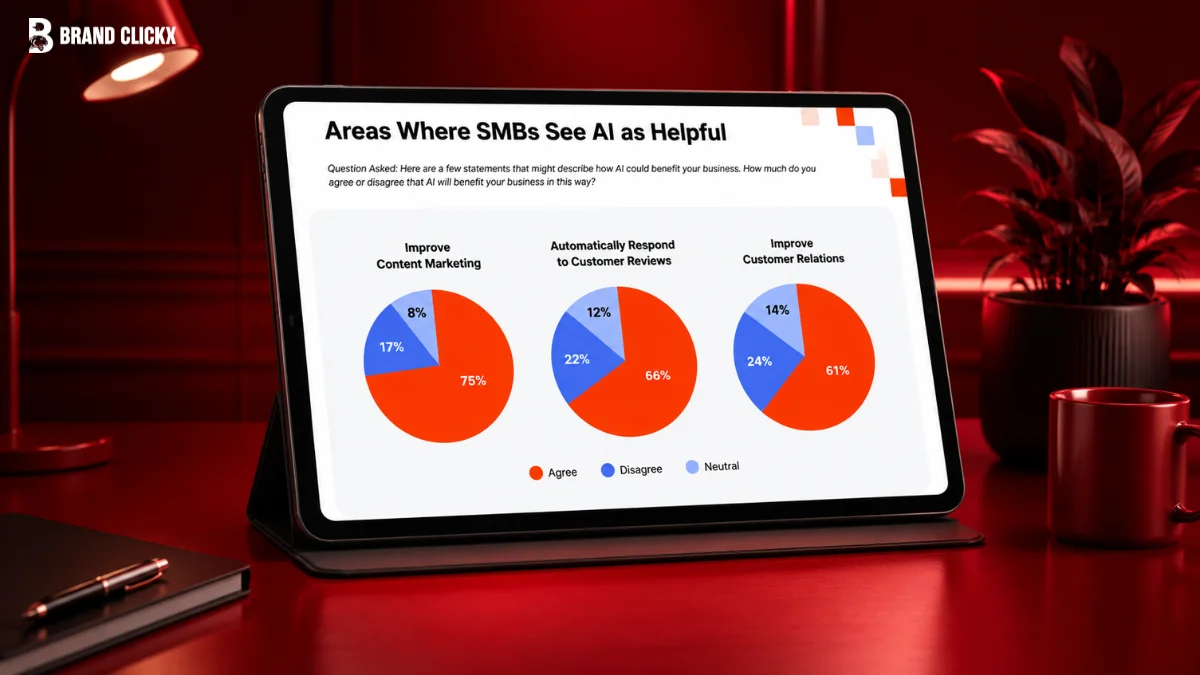
AI’s probably the biggest shift happening in small business tech right now. Owners are using it for writing, marketing, customer communication, research, general productivity, the routine stuff that used to eat up hours.
Verizon’s 2025 small business survey found 38% of SMBs surveyed were already using AI somewhere in the business. Marketing and social media, written communication, customer service, even cybersecurity, all showed up as common use cases.
The real shift here’s that AI’s moving past the “experiment and see” phase and into something businesses actually rely on. That said, owners still need to double-check what AI’s actually producing, protect sensitive data carefully, and make sure employees know how these tools are actually supposed to be used, none of that responsibility goes away just because the tool’s smart.
Cybersecurity’s Not Optional Anymore
As more of the business moves online, security just gets harder to ignore. Customer info, payment details, employee accounts, company files, all of it needs real protection now, not an afterthought.
Verizon found 47% of small businesses had rolled out new tech platforms over the past year specifically to strengthen security, a pretty telling number on its own.
And the basics still matter a lot here, strong passwords, multi-factor authentication, keeping software updated, secure backups, training employees properly, decent endpoint protection, none of that’s flashy, but it genuinely moves the needle.
Digital Payments and Selling Online
Customers just expect convenient ways to buy and pay now, that expectation’s pushed a lot of small businesses toward online stores, payment processors, mobile payments, digital invoicing.
NFIB’s 2025 tech survey found 82% of small businesses had their own website, but only 19% of those sites actually accepted payments directly. Interesting gap.
Which really shows something worth noting, having a website and having a fully connected digital sales process are two very different things. A website introduces the business. Online payments are what actually make the buying part easy.
Why Some Owners Adopt Technology Faster Than Others
Not every business has the same budget, staff, or actual need for new tools. Company size ends up being one of the clearest dividing lines here.
NFIB found 57% of small business owners had brought in new or meaningfully improved technology over the past two years. But that number wasn’t even across the board, 51% among businesses with one to nine employees, compared to 75% among businesses with 50 or more. Bigger small businesses just tend to have more money and more people around to actually manage a tech rollout. Very small operations often need to see a clear payoff before signing up for yet another subscription.
Age and the type of business matter too. The U.S. Chamber found younger owners were more likely than older ones to prioritize technology, digital customer experience, and AI, no huge surprise there, but worth having the data behind it.
The Biggest Barriers Standing in the Way

Cost Still Bites
Technology can save money down the line, sure, but the upfront cost can still be a real hurdle for a small business. Subscriptions, setup, training time, hardware, migration, all of that adds up faster than people expect.
NFIB found that among businesses that hadn’t adopted new tech, 20% said cost was simply too high to justify it.
Which is really why owners should try to actually calculate expected value before buying anything. A cheaper tool that employees end up hating can quietly cost more in wasted time than a pricier one that just works well from day one.
Not Knowing How to Actually Use the Tool
A tool can be genuinely powerful and still be a bad choice if nobody on the team actually knows how to use it. Small businesses often don’t have much IT support to lean on, so complicated systems become a real burden fast.
The best technology’s usually whatever employees can actually understand and use without a headache. A simple setup that people genuinely adopt tends to beat a sophisticated stack that half the team’s confused by.
Too Many Tools Piling Up
Adding another app doesn’t automatically make a business more productive, sometimes it does the opposite. When tools don’t talk to each other, employees end up entering the same information two or three times over, which just creates more work, not less.
A tech stack that’s actually working should reduce effort, not add to it. Worth reviewing the software lineup regularly and cutting anything that’s stopped pulling its weight.
How to Actually Build a Better Tech Stack
Start With the Actual Problem, Not the Tool
The first question shouldn’t be “which AI tool should we buy?” It should be “what problem are we actually trying to fix?” That order matters more than people think.
If invoices are taking forever, fix accounting and billing first. If leads are slipping through the cracks, look at a CRM. If customer questions are eating up too much time, check out customer-service tools. If security’s shaky, start with authentication, backups, and basic protection before anything fancier.
Pick Tools That Actually Talk to Each Other
Connected tools make it way easier to move information across the business instead of re-entering it five times. A CRM, for instance, can tie sales info directly to customer communication, while accounting software handles invoices and the financial side separately but in sync.
Integration matters more the bigger a company gets too. A tool that’s great on its own can turn into a headache fast if it refuses to connect with everything else in the stack.
Actually Measure Whether It’s Working
Technology needs a real reason to be there, not just because it seemed useful at the time. Owners can track things like hours saved, faster response times, fewer errors, more sales, lower costs, whatever’s relevant to what the tool was supposed to fix.
NFIB reported that 65% of small businesses said new technology had genuinely helped them stay competitive, a solid case for measuring results instead of chasing whatever’s trending.
NOTE
A quick note on the numbers here: this draws on recent research from the U.S. Chamber of Commerce, NFIB, Verizon, and the Small Business & Entrepreneurship Council. Each of those surveys ran with different sample sizes, different questions, different methods, so their numbers shouldn’t get treated like they came from one single study just because they’re sitting next to each other in an article. Keeping that separation straight is really just about staying honest, not stitching unrelated stats together and pretending they mean the same thing.
For BrandClickX, the real lesson here comes down to something pretty simple: successful tech adoption was never about who’s got the biggest stack. It’s about picking tools that actually help, connecting them properly, keeping business data protected, and solving problems that were genuinely real to begin with, not just chasing whatever’s trending.
FAQs
What is Small Business Tech Adoption, exactly?
It’s basically using digital tools, software, platforms, hardware, and online services to actually run the business better. Accounting software, CRM systems, AI tools, websites, payment platforms, cloud storage, cybersecurity- all of it falls under this umbrella.
What tech do most small businesses actually use?
Usually a mix, business software, a website, online payment systems, cloud services, communication tools, accounting software, marketing software, and increasingly AI tools too. The exact combination really depends on the type and size of the business.
Is AI actually important for small businesses, or just hype?
It’s becoming genuinely part of day-to-day operations now, not just hype. Businesses are using it for marketing, written communication, customer service, research, general productivity. That said, owners should still be careful, double-checking important outputs before leaning on them fully.
What’s actually stopping small businesses from adopting new tech?
Mostly cost, not knowing how to use the tools well, limited staff to manage rollout, systems that are too complicated, and just being unsure whether it’ll actually pay off. NFIB’s research specifically flagged cost as a big reason a lot of businesses hadn’t adopted anything new.
How should a small business actually pick the right technology?
Start with an actual problem the business is dealing with, not whatever’s trending. Weigh cost, how easy something is to actually use, security, whether it plays nice with the tools already in place, support quality, and what real value it’d bring. Skip buying something just because it’s popular or stuffed with features nobody’s ever going to touch.