

Updated: Tuesday, August 11, 2026
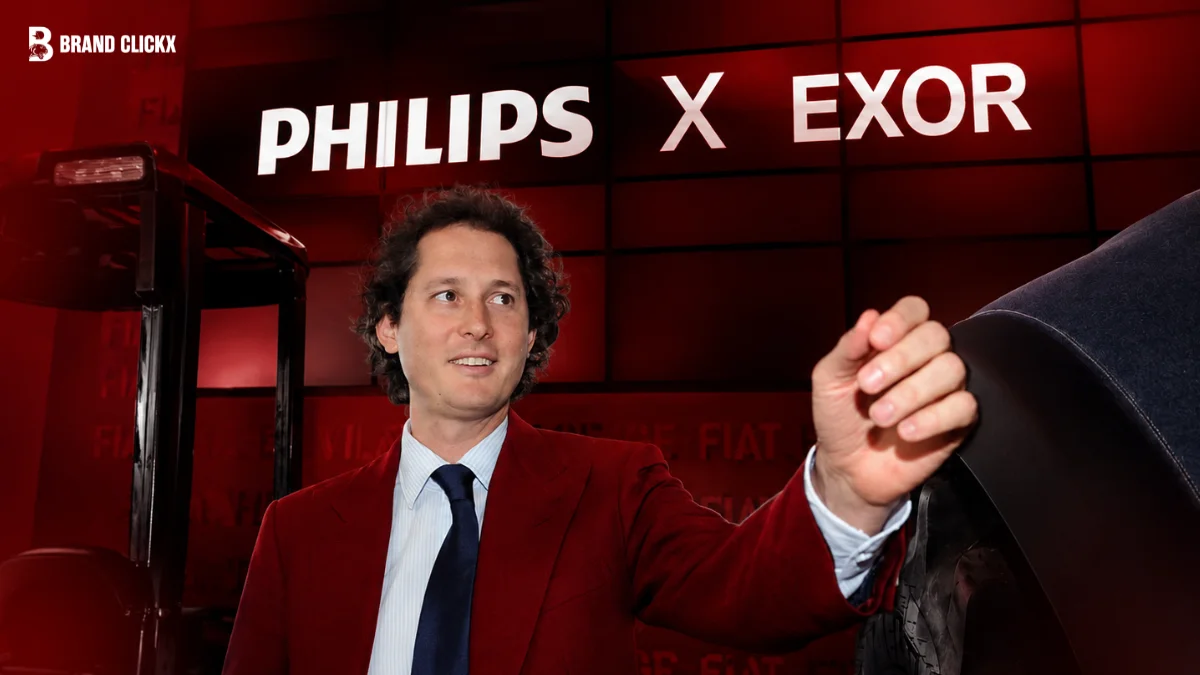
Royal Philips and Exor N.V. announced an updated long-term relationship agreement on Tuesday, August 11, that lets the Agnelli family’s investment company raise its Philips stake to 22% from a previous 20% ceiling. The Amsterdam-based health technology group confirmed the change in a joint statement. Exor is already Philips’ largest shareholder. The deal tightens a partnership that began in August 2023, when Philips was still recovering from a global product recall.
This article is news reporting, not investment advice.
What happened?
Direct answer: Philips and Exor updated the contract that governs their relationship, lifting the cap on how much of the company Exor may own.
The agreement gives Exor flexibility to increase its shareholding to up to 22% of Philips’ issued ordinary share capital and voting rights, up from the previous 20% cap, with the option to go higher if the Philips Supervisory Board approves. GlobeNewswire
Governance terms stay the same, including Exor’s right to nominate one member of the Philips Supervisory Board. GlobeNewswire
The announcement came from Philips’ own newsroom and was distributed through GlobeNewswire a primary source, since both companies signed off on the wording.
Key facts at a glance
- Companies: Royal Philips (NYSE: PHG, AEX: PHIA) and Exor N.V. (AEX: EXO)
- Date announced: August 11, 2026, Amsterdam
- New ownership ceiling: 22%, up from 20%
- Board rights: unchanged one Exor-nominated supervisory director
- Exor’s board representative: Benoît Ribadeau-Dumas
- Philips 2025 sales: roughly EUR 18 billion, with about 63,700 employees GlobeNewswire
What exactly changed in the agreement?
Direct answer: Only the ownership ceiling moved. Everything else in the relationship stayed put.
The original pact dates to 2023. Under that deal, Exor had the right to build its holding up to 20%. Tuesday’s update raises that to 22% and creates a path beyond it, but only with supervisory board consent.
What is a relationship agreement? It is a contract between a company and a large shareholder. It sets limits on how much stock the investor can buy and defines rights such as board seats.
That structure matters. Without a cap, a shareholder could accumulate quietly. With one, the company keeps a say in the pace and scale of any build-up.
Who is Exor and why does it matter?
Direct answer: Exor is the Agnelli family’s listed investment company and one of Europe’s most influential long-term owners.
Its portfolio is built around businesses where it is the largest shareholder, including Ferrari, Philips, CNH and Stellantis. John Elkann serves as chief executive.
The family fortune traces back to Fiat. Exor targets three sectors healthcare, technology and luxury and Philips fits two of them.
Exor manages a portfolio valued at about EUR 37.1 billion. Its net asset value per share fell 8.1% during 2025, while the MSCI World Index gained 5.4%.
The group appointed Benoît Ribadeau-Dumas as deputy chief executive from July 1, 2026, strengthening oversight of portfolio companies. His board seats at Stellantis and Philips make both firms central tests of that expanded role.
Why is Philips attractive to the Agnellis?
Direct answer: Exor bought into Philips at a low point and has stayed through a difficult recovery.
Exor acquired an initial 15.1% stake in August 2023, when Philips was still dealing with a huge product recall dating from 2021. Amsterdam-listed shares jumped almost 50% in the year that followed, helped by a settlement with the US government over its sleep apnea machines. Roughly half those gains later reversed amid persistently weak sales in China.
The original purchase was valued at about $2.84 billion. Exor said at the time it did not intend to exceed 15%, while flagging the possibility of reaching 20% later.
It has moved steadily upward since. Exor raised its holding to 17.5% in May 2024 with a EUR 622 million purchase, then to 18.7% in 2025. Bloomberg valued that stake at around EUR 4.25 billion at the time.
How is Philips performing right now?
Direct answer: Sales are growing modestly and cash flow guidance has improved, but underlying margins remain under pressure from tariffs and cost inflation.
Philips reported second-quarter 2026 sales of EUR 4.4 billion on July 27, with comparable sales growth of 4% across all business segments. Comparable order intake fell 1% due to the timing of certain large orders.
Adjusted EBITA margin reached 16.4%, but that included roughly 420 basis points of benefit from a US tariff refund. Excluding it, the underlying margin slipped 20 basis points to 12.2%.
Guidance moved up on the refund. Philips kept its 2026 comparable sales growth outlook at 3%–4.5%, raised its adjusted EBITA margin range to 13.5%–14% and lifted its free cash flow forecast to EUR 1.5–1.7 billion.
The outlook excludes ongoing Philips Respironics proceedings, including an investigation by the US Department of Justice and State Attorneys General.
At its February 10, 2026 Capital Markets Day, Philips set 2026–2028 targets of mid-single-digit comparable sales growth and a mid-teens adjusted EBITA margin by 2028. A EUR 1.5 billion productivity program supports those goals, delivering EUR 258 million of savings in the first half.
Philips’ quarterly reports and Capital Markets Day materials are regulated disclosures filed with exchanges in Amsterdam and New York, making them the highest-quality source for performance data.
Timeline of the Exor–Philips relationship
| Date | Event |
| 2021 | Philips recalls millions of Respironics sleep apnea devices |
| Aug 14, 2023 | Exor buys a roughly 15% stake; relationship agreement caps ownership at 20% |
| Feb 2024 | Philips nominates Benoît Ribadeau-Dumas to its Supervisory Board |
| May–Jun 2024 | Exor lifts holding to 17.5% with a EUR 622 million purchase |
| Mar 19, 2025 | An SEC filing shows the stake at 18.7% |
| Feb 10, 2026 | Philips announces 2026–2028 targets at Capital Markets Day |
| Jul 1, 2026 | Ribadeau-Dumas becomes Exor deputy CEO |
| Jul 27, 2026 | Philips reports Q2 sales of EUR 4.4 billion |
| Aug 11, 2026 | Ownership cap raised to 22% |
Official response
Direct answer: All three parties framed the update as continuity rather than change.
Exor chief executive John Elkann said: “The updated agreement reflects our continued commitment to Philips as its largest shareholder.”
Supervisory Board Chairman Feike Sijbesma said Exor’s long-term commitment underlines confidence in Philips and its strategy, and praised Ribadeau-Dumas’ contribution.
Chief executive Roy Jakobs tied the agreement directly to execution of the 2026–2028 plan and the company’s focus on profitable growth.
Neither company signalled an immediate purchase of shares.
What does this mean for other shareholders?
Direct answer: A higher ceiling concentrates ownership further, which cuts both ways.
Philips has a broad institutional register. Artisan Investments raised its stake to 10% in July 2024, making it the second-largest holder behind Exor.
A larger anchor investor can stabilise a share register and give management room to execute a multi-year turnaround without short-term pressure. It also means a single owner holds more sway over strategy and board composition.
The 22% figure keeps Exor comfortably below the 30% level at which Dutch takeover rules generally trigger a mandatory offer for the whole company. Any move toward that threshold would raise entirely different regulatory questions.
Expert analysis
Direct answer: The signal matters more than the shares themselves.
Exor did not announce a purchase on Tuesday. It bought the option to buy more — and did so publicly, alongside management endorsements.
That timing is notable. It comes two weeks after a quarter where underlying margins slipped, and roughly six months into a three-year plan whose credibility depends on margin expansion.
Exor has never positioned itself as an activist investor, describing its role as actively supporting Philips’ strategy. Raising the cap while leaving governance untouched fits that pattern: more economic exposure, no additional board power.
The move also lands during a period when Exor faces pressure over net asset value growth and has paused further buybacks.
Latest updates
- The updated agreement was released at 02:00 ET on August 11, 2026, from Amsterdam
- Exor retains one Supervisory Board nomination right; no other governance terms changed
- Philips separately announced an expansion of its open patient monitoring ecosystem on August 6, adding wearable and out-of-hospital monitoring collaborations
- Neither company has disclosed a new share purchase alongside the announcement
What happens next?
Three things to watch.
Whether Exor actually buys. A higher cap is permission, not action. Regulatory filings in the Netherlands and the United States would reveal any move.
Third-quarter results. Philips flagged large North American orders shifting into Q3, which makes that report a real test of order momentum.
The Respironics legal file. The US Department of Justice investigation sits outside current guidance and remains the largest open risk.
Key takeaways
- Exor can now own up to 22% of Philips, up from 20%
- The ceiling can rise further only with Supervisory Board approval
- Governance rights are unchanged: one nominated director
- Exor’s last publicly disclosed holding was 18.7%
- Philips grew comparable sales 4% in Q2 2026, but underlying margin dipped
- The partnership dates to August 2023 and has survived a difficult stretch
FAQ
What did Philips and Exor announce?
On August 11, 2026, the two companies updated their long-term relationship agreement. Exor may now raise its Philips shareholding to 22% of issued ordinary share capital and voting rights, up from 20%.
How much of Philips does Exor own?
Exor’s most recently disclosed holding was 18.7%, reported in a US regulatory filing in March 2025. It remains Philips’ largest shareholder and describes itself as such in the joint statement.
Who are the Agnellis?
The Agnelli family founded Fiat and controls Exor N.V., a listed investment company. Its holdings include Ferrari, Stellantis, CNH and Philips. John Elkann serves as Exor’s chief executive officer.
Does Exor get more board seats?
No. Governance arrangements are unchanged. Exor retains the right to nominate one member of the Philips Supervisory Board, currently Benoît Ribadeau-Dumas, who is also Exor’s deputy CEO.
When did Exor first invest in Philips?
Exor bought roughly 15% of Philips in August 2023 for about $2.84 billion, at a time when
Conclusion
Philips has spent three years rebuilding after a recall that erased most of its market value. Exor has been there for most of that stretch, buying in stages rather than all at once.
Raising the ceiling to 22% does not change who runs the company. It does make clear which shareholder intends to still be there when the 2028 targets come due.