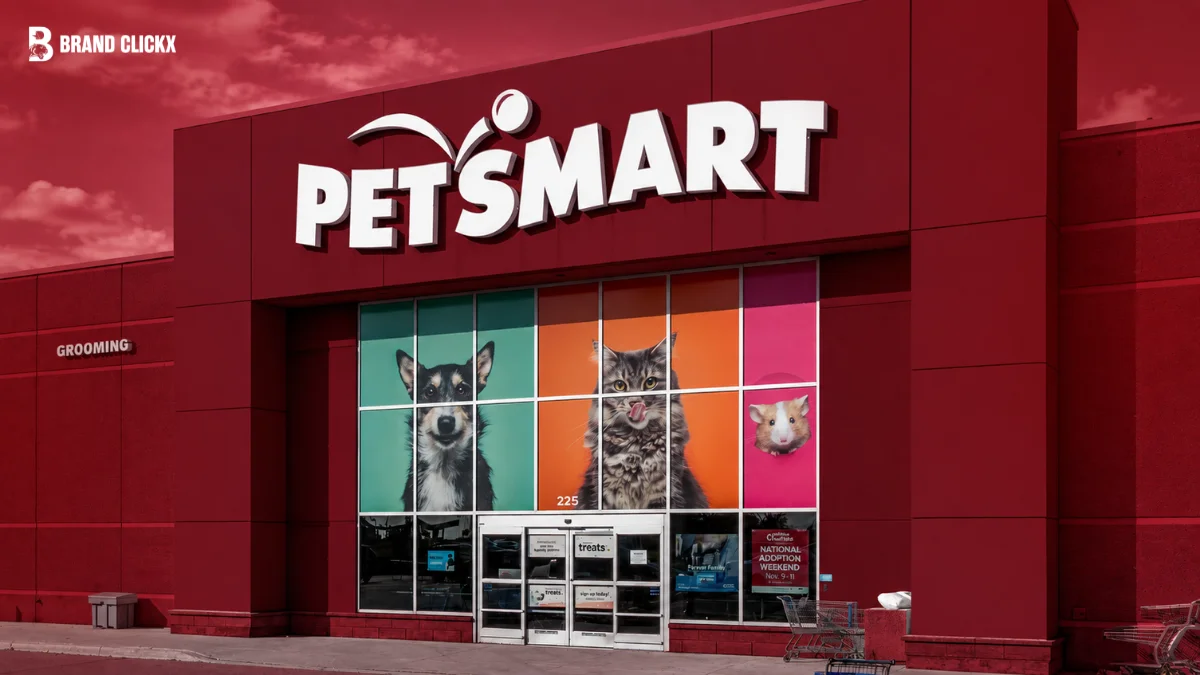
PetSmart is more than a store that sells pet food.
Over the past four decades, the company has changed from a small discount pet food business into a large pet care retailer offering products, grooming, training, boarding, adoption services and access to veterinary care.
Its story also shows how traditional retail has changed.
PetSmart has faced rapid expansion, international setbacks, pressure from online shopping, private equity ownership and major changes in the way people think about their pets.
Today, the company remains one of the best known names in pet retail.
The Quick Overview
PetSmart was founded in 1986 in Phoenix, Arizona, by Jim and Janice Dougherty.
The business originally operated under the name PetFood Warehouse and focused mainly on selling pet food in large quantities at discounted prices.
Over time, the company moved far beyond food.
It developed a broader model built around the idea that customers need products and services throughout the lives of their pets.
Founded in 1986
PetSmart began as a discount pet food concept rather than a full service pet care company.
First Stores Opened in 1987
The first two stores opened in the Phoenix area and introduced a warehouse style approach to pet food retailing.
Public Company in 1993
PetSmart went public on NASDAQ in 1993, giving it additional capital for expansion and acquisitions.
Rebranded as PetSmart
The company adopted the PetSmart name and developed a stronger focus on pet parents, services and the emotional relationship between people and animals.
Private Ownership
In 2015, a private equity consortium led by BC Partners acquired PetSmart for about $8.7 billion.
Chewy Acquisition
PetSmart acquired Chewy in 2017 as part of its response to the growing importance of online pet shopping.
What Is PetSmart?
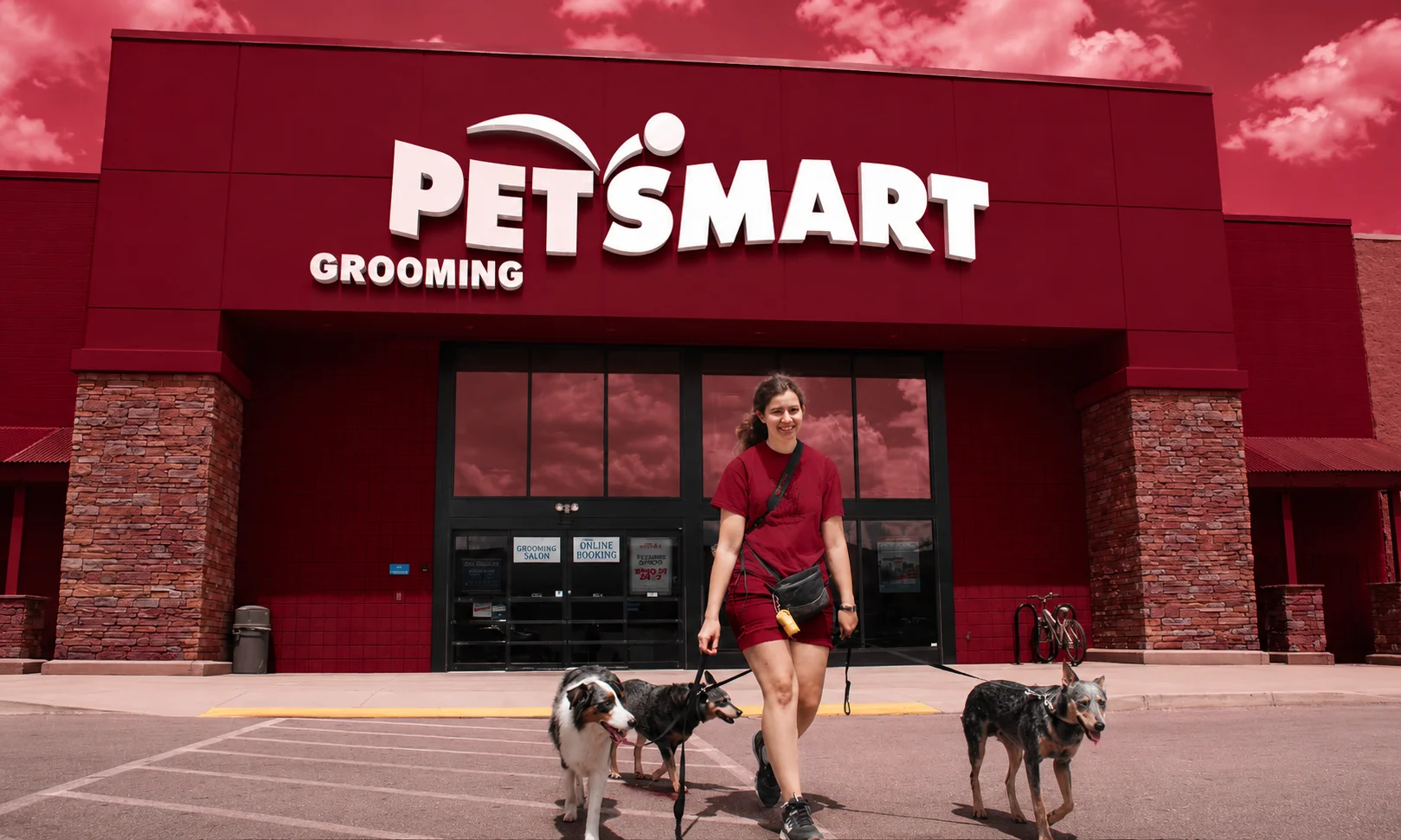
PetSmart is a major pet retailer serving customers primarily in the United States and Canada.
Its business covers both products and services.
Customers can shop for:
- Dog food
- Cat food
- Treats
- Toys
- Beds
- Collars and leashes
- Aquariums
- Small animal supplies
- Grooming products
- Pet health products
The company also provides several services designed to bring customers back to its stores.
These include grooming, dog training, daycare, boarding and access to veterinary services through independent or third party operators.
How PetSmart Started
The origins of PetSmart go back to Phoenix, Arizona, in the 1980s.
Jim and Janice Dougherty saw an opportunity in selling pet food through large warehouse style stores.
At the time, buying pet food in bulk at lower prices was a relatively new retail concept.
The first two PetFood Warehouse locations opened in 1987.
The stores also welcomed customers who brought their pets with them, helping establish a more pet friendly retail experience.
From PetFood Warehouse to PetSmart
The original warehouse model did not remain unchanged.
The company gradually expanded its product range and improved the appearance of its stores.
By the late 1980s, the business was already moving beyond its original discount food concept.
The company adopted the PetSmart name and began introducing new departments and services.
This was an important change.
PetSmart was no longer simply trying to sell cheaper pet food.
It was beginning to build a complete pet shopping experience.
The Early Expansion Strategy
Adding More Pet Categories
PetSmart expanded into products for different types of animals.
Stores began offering products for:
- Dogs
- Cats
- Birds
- Fish
- Small animals
This increased the number of reasons customers had to visit the store.
Introducing Grooming
Grooming services became an important part of the company’s strategy.
Instead of only selling grooming products, PetSmart could also provide the service inside its stores.
Bringing Veterinary Services Into Stores
PetSmart also experimented with veterinary services.
Mobile veterinary clinics were introduced in stores during the early 1990s, followed by relationships with veterinary operators.
This helped establish the idea of the store as a place for both shopping and pet care.
PetSmart Reaches Its First Major Milestones
The company opened its 50th store in 1992.
It also reported a profit for the first time around the same period.
In 1993, PetSmart completed its initial public offering.
Going public gave the company access to capital that could support further expansion.
The company then accelerated its national growth.
PetSmart Goes Public
PetSmart listed on NASDAQ in July 1993 under the ticker PETM.
The IPO marked a major turning point.
The company could now use public market capital to support:
- New store openings
- Acquisitions
- New services
- Distribution infrastructure
- Geographic expansion
Its 100th store opened in 1994.
But rapid growth also created new problems.
PetSmart Charities Changes the Adoption Model
In 1994, PetSmart Charities was created as an independent nonprofit organization.
The organization worked with animal shelters and welfare groups.
One important part of the model was using space inside PetSmart stores for pet adoption.
Instead of selling dogs and cats directly, the company provided space for shelter animals to be presented to potential adopters.
This became a major part of PetSmart’s connection with animal welfare.
PetSmart and Veterinary Care
Veterinary care became another important part of the company’s service strategy.
PetSmart partnered with Banfield Pet Hospital to operate veterinary clinics in many stores.
This arrangement allowed customers to combine shopping with access to veterinary services.
Over time, PetSmart’s relationship with Banfield changed.
The company eventually divested its ownership interest and later began working with independent veterinary operators.
The Problem With Rapid Growth
Rapid expansion brought an unexpected problem.
PetSmart’s inventory and operational systems struggled to keep pace with the growing number of stores.
The company reported significant losses in the late 1990s.
Leadership changed.
Some expansion plans were reconsidered.
The company needed to improve its basic operations before continuing its growth strategy.
A Return to Basics
Samuel J. Parker returned to leadership during the company’s difficult period.
The company launched initiatives designed to improve basic business operations.
The goal was simple.
PetSmart needed better inventory management, stronger operations and more disciplined growth.
The company eventually returned to profitability.
Phil Francis then became CEO in 1998.
Phil Francis Changes the Retail Strategy
Francis pushed PetSmart away from its warehouse roots.
The company began paying greater attention to the shopping experience.
Stores became:
- Brighter
- Easier to navigate
- More attractive
- Better organized
- More focused on customer service
The strategy was increasingly built around convenience.
A customer could buy food, arrange grooming, find training services and explore other forms of pet care during the same shopping trip.
The One Stop Pet Shop Idea
This became one of PetSmart’s most important competitive ideas.
Instead of competing only on product prices, PetSmart wanted to become a destination for pet owners.
The business began combining:
Products + Services + Advice + Convenience
That model helped distinguish PetSmart from traditional discount retailers.
PetSmart’s International Expansion
PetSmart expanded into Canada during the 1990s.
It also entered the United Kingdom by acquiring the Pet City chain.
The UK expansion did not work as planned.
The acquisition proved financially and operationally difficult, and PetSmart eventually sold the UK business at a substantial loss in 1999.
The experience became an important lesson about international expansion.
Why the UK Expansion Failed
The UK business created several challenges.
PetSmart had to manage a different retail market while integrating an acquired chain.
The acquisition was also expensive.
The result was a business that did not produce the expected returns.
PetSmart eventually exited the market.
This allowed the company to concentrate more heavily on North America.
PetSmart Enters Online Retail
The rise of internet shopping created another major challenge.
PetSmart launched an information website and later developed an e commerce operation.
The company eventually acquired control of Petsmart.com and integrated its online business with its physical stores.
This was an early attempt to connect traditional retail with digital commerce.
Why Online Shopping Became a Threat
Pet products are particularly suitable for online shopping.
Customers can easily order:
- Food
- Litter
- Treats
- Toys
- Flea products
- Supplies
Many of these products are purchased repeatedly.
That makes automatic delivery and online ordering attractive to pet owners.
Companies such as Amazon and Chewy therefore created significant pressure on traditional pet retailers.
PetSmart’s Difficult Period Around 2000
By 2000, PetSmart faced a serious challenge.
Sales were increasing, but the company recorded a loss of about $31 million.
Its stock price also fell sharply.
The business needed a new direction.
PetSmart responded by remodeling stores and increasing its focus on services.
The strategy helped create a warmer and more customer focused shopping environment.
The Rise of the Pet Parent
One of the biggest changes in PetSmart’s history came from changing consumer attitudes.
People increasingly began treating pets as members of the family.
PetSmart recognized this trend.
In 2005, the company rebranded itself as PetSmart and placed greater emphasis on the idea of the pet parent.
The shift changed the way the company presented its products and services.
What Does Pet Parent Mean?
The term reflects a simple change in consumer behavior.
People were spending more on their pets and becoming more interested in:
- Better food
- Health care
- Grooming
- Training
- Comfortable sleeping products
- Toys
- Travel products
- Specialty products
Pets were becoming part of household spending rather than simply being animals that needed basic supplies.
PetSmart built its marketing around this change.
PetSmart’s Service Based Model
The company increasingly relied on services to distinguish itself.
Grooming
Grooming became one of the most recognizable PetSmart services.
Customers can use grooming for bathing, haircuts, nail care and other basic grooming needs.
Dog Training
Training services give customers another reason to visit stores.
Classes can focus on basic obedience and other training needs.
Doggie Day Camp
PetSmart also developed daycare services for dogs.
This expanded the company’s role beyond traditional retail.
PetsHotel
PetSmart introduced boarding services for dogs and cats through PetsHotel locations.
The concept allowed customers to leave pets in a dedicated care environment while they travelled or managed other commitments.
Veterinary Services
Veterinary clinics have also operated within or alongside PetSmart stores through various business arrangements.
PetSmart and Exclusive Products
PetSmart has also used exclusive product partnerships to differentiate its merchandise.
Over the years, it introduced product collections connected with recognizable names and brands.
These partnerships helped create products that customers could associate specifically with PetSmart.
PetPerks Loyalty Program
In 2004, PetSmart introduced PetPerks.
The program provided promotional benefits while also helping the company understand customer purchasing behavior.
Loyalty programs are valuable because they can help retailers identify:
- What customers buy
- How frequently they shop
- Which promotions work
- Which categories interest them
This information can support more targeted marketing.
The Growing Threat From Amazon
PetSmart’s traditional retail model faced increasing competition as online shopping became more popular.
Amazon offered convenience and broad product selection.
Customers could order pet supplies from home without visiting a store.
This created a difficult question for PetSmart.
How could a physical retailer compete with online convenience?
The answer increasingly involved services.
PetSmart vs Online Retail
PetSmart had something online retailers could not easily replicate.
Physical stores could provide direct services.
A customer could purchase food and then schedule grooming or training during the same visit.
That combination became a major part of PetSmart’s competitive strategy.
PetSmart vs Petco
Petco is one of PetSmart’s most important competitors.
Both companies operate large pet retail networks and offer products and services.
The competition involves more than price.
It includes:
- Store locations
- Product selection
- Grooming
- Training
- Veterinary services
- Loyalty programs
- Online shopping
- Customer experience
The two companies have competed for the same broad group of pet owners for years.
PetSmart’s Private Equity Buyout
In 2015, a consortium led by BC Partners acquired PetSmart.
The transaction was valued at approximately $8.7 billion.
PetSmart stopped trading publicly on NASDAQ.
The company became privately owned.
The transaction dramatically changed the financial structure of the business.
Why Private Equity Ownership Mattered
The buyout brought a stronger focus on financial performance.
Management worked on:
- Pricing
- Inventory
- Purchasing
- Distribution
- Operating costs
- Profit margins
The company also reorganized parts of its management structure.
But the business continued to face the same major challenge.
Online competition was growing.
The Chewy Acquisition
In 2017, PetSmart acquired Chewy for approximately $3.35 billion.
The deal was one of the most important moves in PetSmart’s modern history.
Chewy had built a strong reputation for online pet shopping.
The acquisition gave PetSmart a major digital business at a time when consumers were increasingly moving online.
Why Chewy Was Important
Chewy offered something PetSmart’s stores could not provide as efficiently.
It allowed customers to order pet products from home.
This was particularly useful for recurring purchases.
Pet owners could order food, litter and other supplies without making frequent trips to a store.
The Chewy Separation
Chewy later became a publicly traded company.
Its IPO took place in 2019.
PetSmart remained connected to Chewy for a period before the two companies ultimately moved toward separate operations.
By late 2020, reports indicated that PetSmart and Chewy would operate as separate companies.
The relationship remains an important chapter in PetSmart’s digital strategy.
PetSmart’s Business Model Today
PetSmart’s business model combines physical retail with pet care services.
Its basic structure can be understood through four areas.
| Area | Role |
|---|---|
| Products | Food, toys, supplies and accessories |
| Grooming | Routine pet care services |
| Training | Education and behavior support |
| Services | Boarding, daycare and veterinary access |
This model creates multiple reasons for customers to interact with the company.
Why Services Matter So Much
Products can be purchased from many retailers.
Services are different.
A customer may compare the price of dog food across several websites, but grooming, boarding and training require a trusted service provider.
This gives physical pet retailers an opportunity to compete beyond product pricing.
PetSmart’s Role in Pet Adoption

Pet adoption has remained an important part of the company’s identity.
Through PetSmart Charities and partnerships with animal welfare organizations, stores have supported adoption events and programs.
This connects the company with a broader social mission.
It also creates an opportunity for shelters to reach people who are already interested in animals.
PetSmart’s Approach to Small Animals
PetSmart has historically sold certain small animals and related supplies.
This part of the business has also attracted scrutiny.
Animal welfare groups have raised concerns about conditions at some suppliers and stores.
PetSmart has responded to individual allegations and has changed relationships with some suppliers following investigations.
Controversies Surrounding PetSmart
PetSmart’s long history has not been free from criticism.
Some of the most serious controversies have involved animal welfare.
Others have involved grooming services and workplace conditions.
These issues matter because PetSmart’s brand promise depends heavily on trust.
Animal Supplier Investigations
In 2016, animal welfare investigations raised allegations involving conditions at suppliers connected with the pet retail industry.
PetSmart subsequently ended its relationship with at least one supplier following scrutiny and regulatory concerns.
The company has also faced allegations involving other animal suppliers.
These cases illustrate the difficulty of managing animal welfare across a large supply chain.
Grooming Controversies
PetSmart has also faced criticism over pet deaths associated with grooming visits.
A 2018 investigation reported numerous cases in which families said their dogs died during or after grooming appointments.
PetSmart rejected claims that the incidents demonstrated a systemic problem.
The controversy highlighted the risks associated with operating services involving live animals.
Workplace and Animal Care Criticism
Reports published in 2021 and 2022 raised allegations about staffing, training and animal care at some PetSmart locations.
Former employees and advocacy organizations made claims involving working conditions and animal deaths.
These allegations should be understood as reported claims rather than proof that every PetSmart location operates in the same way.
The 2025 Groomer Lawsuit
In 2025, Colorado Attorney General Phil Weiser sued PetSmart.
The lawsuit alleged that the company used training repayment agreements that could require prospective dog groomers to remain with PetSmart for a certain period or face repayment obligations.
PetSmart’s legal situation illustrates another challenge for large service based retailers.
Employee training can require substantial investment, but contractual restrictions can also attract regulatory scrutiny.
PetSmart Leadership
PetSmart has had several CEOs throughout its history.
Leadership has changed as the company’s priorities changed.
Notable leaders include:
- Samuel J. Parker
- Mark Hansen
- Phil Francis
- Bob Moran
- David Lenhardt
- Michael Massey
- J.K. Symancyk
- Ken C. Hicks
Each period brought a different emphasis, from expansion and operations to customer experience and financial restructuring.
Ken Hicks and the Current Era
Ken C. Hicks became PetSmart’s CEO in 2024.
His leadership represents another phase for the company.
The modern PetSmart business operates in a market shaped by online shopping, higher expectations for pet care and increasing competition for household spending.
Why PetSmart Remains Relevant
PetSmart has survived several major changes in retail.
It moved from warehouse stores to modern pet superstores.
It expanded from products into services.
It entered online commerce.
It experienced private ownership.
It acquired Chewy.
It later separated from Chewy.
The company’s ability to adapt has been one of its strongest characteristics.
What Makes PetSmart Different?
PetSmart’s strongest advantage is not simply its product range.
It is the combination of physical stores and services.
A typical online retailer can sell a bag of dog food.
PetSmart can sell the food while also providing grooming, training, boarding and other services.
That creates a broader relationship with the customer.
The Biggest Challenges Ahead
PetSmart still faces several major challenges.
Online Competition
Consumers can purchase many pet products online at competitive prices.
Price Competition
Large retailers can compete aggressively on common pet products.
Service Quality
Grooming, daycare and boarding require well trained staff and consistent operating standards.
Animal Welfare
The company must maintain strong standards across stores and suppliers.
Labor Costs
Pet care is a people intensive business.
Higher wages and staffing challenges can affect profitability.
Changing Consumer Expectations
Pet owners increasingly expect convenience, transparency and high standards of care.
How PetSmart Makes Money
PetSmart generates revenue from several different categories.
Product sales remain central.
But services add another important revenue stream.
The company can earn from:
- Pet food
- Supplies
- Toys
- Accessories
- Grooming
- Training
- Daycare
- Boarding
- Other pet care services
This diversified model reduces dependence on a single product category.
Why Pet Food Is So Important
Pet food has one major advantage.
It is purchased repeatedly.
A customer may buy a toy once every few months, but food can be purchased every few weeks.
This creates recurring demand.
Retailers can then use food purchases to introduce customers to other products and services.
PetSmart and the Future of Pet Retail
The future of pet retail will probably combine physical stores with digital convenience.
Customers increasingly expect both.
They want the ability to order products online while still having access to physical services.
PetSmart is positioned around this hybrid model.
The Humanization of Pets Will Continue
Pet owners are spending more attention and money on their animals.
Pets are increasingly treated as family members.
That trend supports demand for:
- Premium food
- Grooming
- Training
- Health care
- Comfortable products
- Boarding
- Daycare
For PetSmart, this creates opportunities beyond traditional retail.
Is PetSmart Still a Traditional Pet Store?
Not really.
Its roots are in pet food retail, but its modern model is broader.
PetSmart is better understood as a pet care retailer that combines products with services.
That distinction explains much of the company’s strategy.
Final Verdict
PetSmart’s history is one of constant reinvention. It started by selling affordable pet food in large stores but grew into a broader business offering products, grooming, training, boarding, daycare, adoption and veterinary services.
The company has faced expansion problems, failed international growth, online competition, private equity ownership and challenges involving animal welfare and workplace practices. Its future depends on balancing price, convenience, services and customer trust.
Today, PetSmart is more than a pet store. It reflects the growing trend of treating pets as an important part of the family and building businesses around their everyday needs.
Frequently Asked Questions
What is PetSmart?
PetSmart is a major pet retailer offering pet products and services such as grooming, training, daycare, boarding and access to veterinary care.
When was PetSmart founded?
PetSmart was founded in 1986 in Phoenix, Arizona.
Who founded PetSmart?
Jim and Janice Dougherty founded the company.
What was PetSmart originally called?
The company originally operated as PetFood Warehouse.
When did PetSmart go public?
PetSmart went public on NASDAQ in 1993.
Who owns PetSmart?
PetSmart became privately owned after an acquisition led by BC Partners in 2015.
Does PetSmart own Chewy?
PetSmart acquired Chewy in 2017, but the companies later moved to separate operations.
Does PetSmart provide grooming?
Yes. Grooming is one of PetSmart’s major in store services.
Does PetSmart offer dog training?
Yes. PetSmart offers dog training programs designed around obedience and other basic skills.
Does PetSmart offer pet boarding?
Yes. PetSmart operates PetsHotel services at selected locations.
Does PetSmart provide veterinary care?
Veterinary services have been offered through clinics operating in or alongside PetSmart stores, with different operating arrangements over time.
What is PetSmart Charities?
PetSmart Charities is an independent nonprofit organization that works with animal welfare groups and supports pet adoption and other animal welfare programs.
Is PetSmart only available in the United States?
PetSmart has historically operated in both the United States and Canada.
Who is PetSmart’s biggest competitor?
Petco is one of PetSmart’s closest direct competitors, while online retailers such as Amazon and specialized digital pet retailers also compete for customers.
Why is PetSmart important in the pet industry?
PetSmart helped popularize the idea of combining pet product retail with services such as grooming, training, boarding and adoption support.