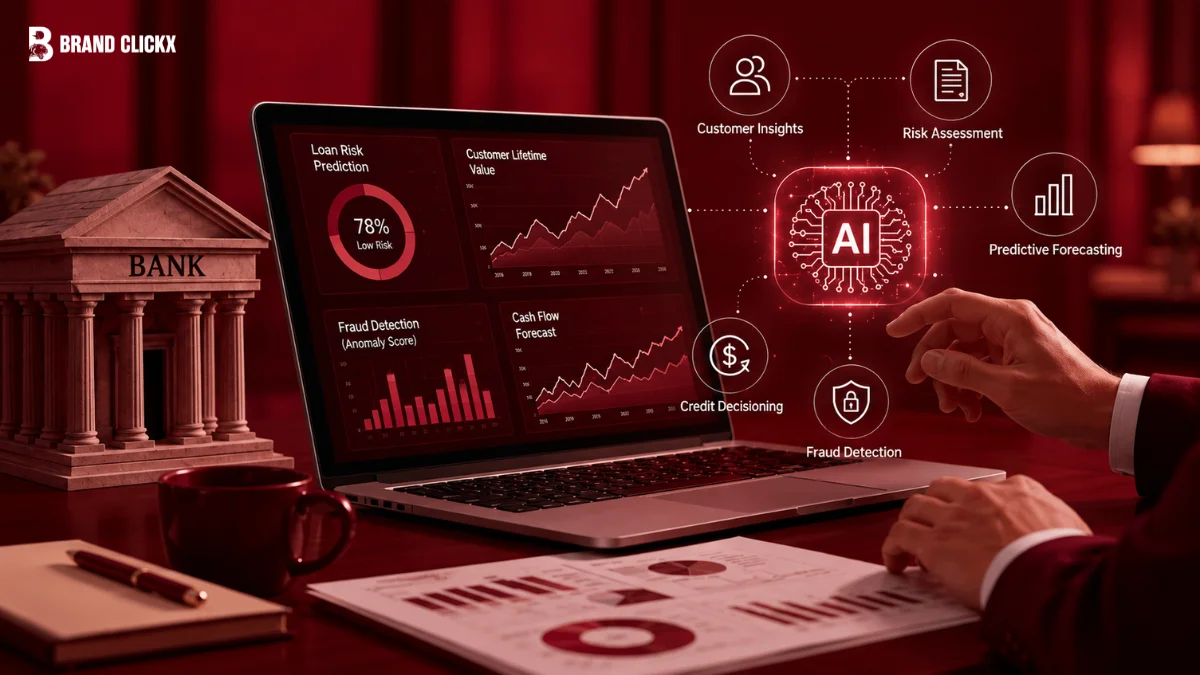
AI Overview: Which AI Is Most Effective for Online Banking?
There is no single best AI platform for every online banking function in 2026. Kasisto KAI and Zowie are strong fits for conversational banking, Feedzai and Featurespace for fraud and financial-crime detection, and Zest AI and Provenir for credit underwriting. The strongest modern systems increasingly combine AI with deterministic policy controls, audit trails, APIs, and human oversight rather than allowing a general-purpose model to make sensitive banking decisions alone.
Key Takeaways
- Kasisto KAI and Zowie are strong choices for conversational banking and policy-controlled customer service.
- Feedzai and Featurespace are better suited to real-time fraud and financial-crime detection.
- Zest AI and Provenir focus on explainable credit and underwriting workflows.
- JPMorgan has reported 400+ AI use cases in production, showing how deeply AI can be integrated into banking operations.
- Feedzai launched IQ Score on June 9, 2026, providing network-derived fraud intelligence through an API.
- The best banking AI is increasingly a hybrid system, pairing language models with deterministic rules and controlled execution.
- Compliance, auditability, data quality, integration, and human escalation can matter more than the AI model itself.
The first time you compare AI banking platforms, the names can make the decision look easier than it really is. One platform may be excellent at customer conversations, while another is built to catch fraud in milliseconds and another focuses on credit decisions.
That is why the most effective AI for online banking is not necessarily one product. It depends on what you need the AI to accomplish, how much risk the bank can accept, and whether the system can operate inside strict banking controls.
In this guide, you’ll see which platforms fit different banking jobs, how modern banking AI works, where it can fail, what current deployments show, and what a bank should check before implementation.
The most effective AI for online banking depends on the task. Kasisto KAI and Zowie are strong options for conversational banking, Feedzai and Featurespace for fraud detection, and Zest AI and Provenir for credit underwriting. Banks should choose based on security, explainability, integration, governance, and the specific workflow they need to automate.
What Is the Most Effective AI for Online Banking?

If you want one name, there is no defensible universal winner.
Banking AI has become specialized. Customer service, fraud detection, underwriting, compliance, identity verification, and financial personalization require different models and controls.
That changes how you should evaluate the market.
A chatbot that handles account questions well is not automatically the right system for fraud detection. Likewise, a powerful fraud engine is not designed to provide conversational financial guidance.
Best AI by banking use case
| Banking need | Strong options | Why they fit |
|---|---|---|
| Conversational banking | Kasisto KAI, Zowie | Banking-specific intents and controlled workflows |
| Fraud detection | Feedzai, Featurespace | Real-time risk and behavioral analysis |
| AML | Feedzai, NICE Actimize | Financial-crime detection and case management |
| Credit underwriting | Zest AI, Provenir | Explainable underwriting and risk analysis |
| Personalization | Personetics, Envestnet | Spending insights and financial guidance |
| KYC / identity | Socure, ComplyAdvantage | Identity, sanctions and fraud screening |
| Agentic workflows | Zowie, Kore.ai | Multi-step workflow automation |
The practical answer is therefore simple: choose the AI that is most effective for your specific banking problem, not the AI with the broadest marketing claim.
How AI for Online Banking Has Evolved
Banking AI did not begin with today’s large language models.
The effectiveness of banking AI depends on how each technology is used. Modern online banking systems typically combine conversational AI, machine learning, deterministic policies, APIs, and human review rather than relying on one model for every task.
During the 1990s and 2000s, banks relied heavily on rule-based systems for transaction monitoring, credit decisions, and basic automated customer interactions.
The 2010s brought machine learning into fraud detection and credit scoring. Chatbots also moved from fixed menus toward natural-language understanding.
Then generative AI changed the interface.
From roughly 2020 onward, large language models made banking assistants much better at understanding natural questions. Between 2024 and 2026, the focus increasingly shifted toward agentic AI that can plan and execute multiple steps.
The important development is not simply smarter language generation.
Modern banking architectures increasingly separate the conversational AI layer from the system that actually executes a sensitive banking action.
That distinction matters because an AI can understand a customer’s request without being trusted to independently decide whether the requested transaction is allowed.
For a broader explanation of how these technologies are evolving, see our guide to the [best AI innovations in digital banking].
How Does AI Work in Online Banking?
A modern banking AI system typically moves through several controlled stages.
1. Data is collected
The system can work with transaction records, customer information, documents, behavioral signals and external data.
APIs connect these sources to the AI environment.
2. The information is processed
Data is cleaned and transformed into useful features.
For fraud systems, this might include transaction behavior, device information and unusual activity patterns.
3. The AI analyzes the request
Different technologies perform different jobs.
An LLM can understand natural language, while machine-learning models can score fraud or credit risk.
4. Banking policies are checked
This is one of the most important safeguards.
Instead of allowing an LLM to freely decide what happens next, deterministic policy engines can apply predefined banking rules before an action is executed.
5. The action is executed through APIs
If the request passes the necessary checks, the AI system can communicate with approved banking services.
Depending on the workflow, this might involve account servicing, dispute processing, identity verification or another controlled action.
6. The decision is logged
Sensitive banking operations need traceability.
The system can record the model output, policy applied, action taken and relevant API responses.
7. Humans handle exceptions
High-risk transactions, unusual fraud cases and complex disputes can be escalated instead of being handled entirely by automation.
This hybrid approach is one of the clearest differences between experimental AI and production banking AI.
Which AI Is Best for Banking Customer Service?
For conversational banking, Kasisto KAI and Zowie stand out in the supplied research.
Kasisto focuses specifically on banking conversations and reports more than 1,800 banking intents. Its KAI-GPT platform is designed around financial terminology and banking use cases.
Zowie takes a different approach by separating natural-language interaction from policy execution through its Decision Engine.
That makes it particularly relevant when a bank wants automation without giving an unrestricted language model control over sensitive workflows.
Who should use conversational banking AI?
Banks and fintechs with high volumes of repetitive customer-service requests are the clearest candidates.
It can help with account servicing, dispute workflows, card-related requests and other routine interactions.
Who should avoid relying on it?
A bank should avoid treating conversational AI as an unrestricted replacement for human judgment.
Complex disputes, unusual financial circumstances and high-risk decisions still need appropriate escalation paths.
Which AI Is Best for Fraud Detection?
For fraud and financial-crime prevention, Feedzai and Featurespace are stronger fits than general conversational AI platforms.
Feedzai focuses on real-time fraud prevention and financial-crime detection.
On June 9, 2026, Feedzai announced IQ Score, an API-based risk-scoring product that provides network-derived intelligence to banks. Feedzai describes the network as covering $9 trillion in transaction volume.
The advantage of this type of system is specialization.
Fraud detection needs to evaluate large numbers of signals quickly, identify abnormal behavior and respond before a suspicious transaction creates additional damage.
Why network intelligence matters
A bank can learn a lot from its own transaction history.
However, fraudsters do not operate inside one institution.
Network-derived intelligence can provide additional signals that a single bank’s internal data may not reveal.
That is the problem Feedzai’s IQ Score is designed to address.
What AI Is Best for Credit Underwriting?
Credit underwriting requires a different type of AI.
Zest AI and Provenir are highlighted in the research because they focus on explainable underwriting and financial risk analysis.
That distinction is important because a credit model needs more than predictive accuracy.
A bank also needs to understand why a decision was reached, monitor the model and maintain appropriate governance around its use.
The regulatory environment also continues to change.
In April 2026, the OCC, Federal Reserve and FDIC issued revised model-risk guidance emphasizing a risk-based approach. The agencies specifically stated that generative and agentic AI models are novel and rapidly evolving and are not within the scope of that particular guidance.
That does not mean banks can ignore governance.
It means banks need to evaluate the risks of different AI systems according to their purpose, complexity and use.
How AI Improves Online Banking Security
AI can strengthen banking security by examining patterns that are difficult to identify through simple rules.
A fraud engine can compare current transactions with historical behavior, device information and broader risk signals.
It can then assign a risk score or trigger additional verification.
AI can also support AML monitoring, KYC processes and identity verification.
The result is not that AI makes banking automatically safe. Instead, it gives security teams more data-driven ways to identify suspicious activity and prioritize cases.
That distinction matters because no AI system eliminates fraud completely.
Real-World Examples of AI in Banking
The strongest evidence comes from banks and financial institutions already putting AI into production.
JPMorgan Chase
JPMorgan has reported more than 400 AI use cases in production, covering areas including marketing, fraud, risk and other business functions.
Its later updates have also highlighted growth in generative AI use cases, including customer service, personalized client insights and software engineering.
Feedzai
Feedzai’s June 2026 IQ Score launch illustrates the industry’s move toward network-level fraud intelligence.
Its system is designed to provide real-time risk scoring through an API rather than requiring banks to replace their entire fraud infrastructure.
MuchBetter and Zowie
The supplied research reports that UK fintech MuchBetter increased automated customer-support handling from 25% to 70% within seven days using Zowie’s technology.
That is an example of where deterministic workflow automation can be more useful than simply deploying a general-purpose chatbot.
Novobanco and Feedzai
The research also identifies Novobanco’s deployment of Feedzai technology to bring fraud and AML workflows together.
This points to another important trend: banks are increasingly interested in connecting separate financial-crime functions rather than treating each alert system as an isolated tool.
The Numbers Behind Banking AI

AI’s banking opportunity is substantial, but the numbers need context.
JPMorgan’s reported 400+ production AI use cases demonstrate how extensively a major bank can deploy AI across different functions.
Feedzai’s IQ Score is built around a network representing $9 trillion in transaction volume, according to the company’s June 2026 announcement.
The supplied research also reports that 74% of U.S. banking customers prefer human agents over chatbots for routine interactions, while 37% have never used a banking chatbot.
Another warning sign comes from European banking apps, where negative app-store reviews blaming AI chatbots reportedly increased 55.49% year over year in the cited June 2026 analysis.
These figures tell an important story.
The technology is advancing quickly, but customer acceptance and execution quality still matter.
The Biggest Weaknesses of AI in Online Banking
The most effective AI is not necessarily the most autonomous.
Banking introduces consequences that ordinary customer-service software does not face.
Hallucinations
Generative AI can produce incorrect information with confidence.
That becomes dangerous if a customer asks about fees, account rules, eligibility or regulatory requirements.
The answer may sound convincing while still being wrong.
Legacy infrastructure
Many banks still operate on older core systems.
Modern AI agents depend on reliable APIs and controlled access to banking functions. Connecting them to fragmented legacy infrastructure can therefore become harder than building the AI itself.
Customer frustration
Automation fails when it creates another barrier between a customer and the resolution they need.
A chatbot that repeatedly refuses to understand a login problem or transaction dispute can make a banking experience worse.
Regulatory complexity
AI used in banking operates inside a changing regulatory environment.
For example, the European Commission states that Article 50 transparency obligations under the EU AI Act apply from August 2, 2026, with a limited transition for certain AI-generated-content marking requirements until December 2, 2026.
For banks, regulatory monitoring therefore needs to be part of AI implementation rather than an afterthought.
Three Things Competitors Often Miss
1. The AI model is only one part of the system
When people compare banking AI platforms, they often focus on the model.
The more important question can be what surrounds that model.
Data quality, policy engines, API access, monitoring, audit trails and human escalation determine whether an AI system can safely operate inside a bank.
2. The best AI may be the least autonomous one
More autonomy sounds impressive.
But a bank does not necessarily want an AI to independently make every decision.
For sensitive workflows, a controlled system that understands the request, checks policies and escalates exceptions may be more useful than an unrestricted autonomous agent.
3. Customer trust is part of AI performance
A technically impressive system can still fail if customers do not trust it.
That makes human handoff, transparent communication and accurate responses important parts of the product rather than optional extras.
Who Should Use AI for Online Banking?
AI makes the most sense when you have a clearly defined, repeatable banking workflow.
Good candidates include:
- Banks handling large customer-service volumes
- Fintechs automating repetitive support
- Institutions needing real-time fraud detection
- Lenders looking for explainable underwriting
- Financial institutions automating KYC and AML workflows
- Banks developing personalized financial-management features
The strongest use cases also have measurable outcomes.
For example, you can measure fraud losses, response time, automation rates, false positives, handling costs or employee productivity.
Who Should Avoid Full AI Automation?
You should be cautious about fully autonomous AI when the workflow has significant financial or regulatory consequences and the system cannot provide adequate controls.
That includes complex credit decisions, unusual fraud cases, high-value transactions and situations where customers need human judgment.
The answer is not necessarily to avoid AI.
Instead, use AI to assist the workflow and establish clear points where a person must take over.
Practical Implementation: How Should a Bank Start With AI?
Start with the problem, not the technology.
Step 1: Choose one measurable workflow
Pick a specific process such as customer support, fraud detection or document processing.
Avoid trying to automate the entire bank at once.
Step 2: Define acceptable risk
Decide which actions AI can perform independently and which require approval.
This creates the boundary between automation and human oversight.
Step 3: Audit the available data
Check whether the necessary transaction, customer and operational data is accessible and reliable.
Poor data can undermine even a strong model.
Step 4: Separate conversation from execution
For customer-facing generative AI, consider using the model to interpret requests while a deterministic policy layer controls sensitive actions.
This reduces the risk of allowing generated text to become an uncontrolled banking decision.
Step 5: Build auditability before scale
Log decisions, model outputs, policies and actions.
The bank should be able to reconstruct what happened when something goes wrong.
Step 6: Test human escalation
Do not measure only how many cases AI completes.
Also measure whether difficult cases reach the right person quickly.
Step 7: Measure the result
Track metrics such as automation rate, fraud detection, false positives, resolution time, customer complaints and operational cost.
Then expand only when the results justify it.
Common Mistakes Banks Should Avoid
The first mistake is choosing a platform because it has the most impressive AI demonstration.
A banking system needs to work with real data, existing infrastructure and regulatory controls.
The second mistake is allowing a general-purpose LLM to make sensitive decisions without a policy layer.
The third is measuring success only through automation.
A 90% automation rate is not necessarily a success if the remaining customers experience serious failures.
Finally, do not treat governance as paperwork added after implementation.
Model monitoring, audit trails, access controls and escalation paths should be part of the architecture from the beginning.
What Should You Check Before Choosing a Banking AI Platform?
Use this shortlist before procurement:
- Primary use case: What exact banking problem does it solve?
- Security: What security and data-protection controls are available?
- Explainability: Can important decisions be understood and documented?
- Auditability: Can the bank reconstruct AI-driven actions?
- Integration: Can it connect to existing banking systems?
- Human oversight: Can risky cases be escalated?
- Policy controls: Can deterministic business rules govern execution?
- Scalability: Can the platform handle real production workloads?
- Vendor risk: How dependent will the bank become on one provider?
- Total cost: What will implementation, integration and ongoing usage actually cost?
This checklist is more useful than asking which platform has the “smartest” AI.
What Is the Future of AI in Online Banking?
The next stage is likely to involve more agentic AI.
Instead of simply answering questions, agents can coordinate multiple steps within controlled workflows.
That could include onboarding, dispute processing, compliance documentation and other operational tasks.
The supplied research cites forecasts from Gartner, Forrester and Accenture pointing toward greater use of autonomous agents and AI-supported banking operations over the next several years.
Those are forecasts, not established outcomes.
The technology still faces constraints from legacy infrastructure, governance requirements, customer trust and regulation.
One regulatory development is already concrete: the European Commission says Article 50 transparency requirements apply from August 2, 2026.
That makes the future of banking AI less about autonomy alone and more about controlled autonomy.
Most Effective AI for Online Banking: Final Verdict
Imagine starting with a simple customer request: a person wants to dispute a transaction, understand what happened and get the problem resolved quickly.
The best system is not necessarily the AI that can write the most convincing answer.
It is the one that can understand the request, check the relevant banking rules, execute the permitted action, record what happened and send the difficult cases to a human.
That is why there is no single winner for the most effective AI for online banking in 2026.
Kasisto KAI and Zowie are strong fits for conversational banking, Feedzai and Featurespace for fraud, and Zest AI and Provenir for underwriting. The right choice depends on the job, the risk and the bank’s existing technology.
The most useful banking AI may ultimately be the one customers barely notice because it simply makes the difficult parts of banking work better.
Frequently Asked Questions
What is the best AI for online banking in 2026?
There is no single best AI for every banking function. Kasisto KAI and Zowie are strong choices for conversational banking, while Feedzai and Featurespace are better suited to fraud and financial-crime detection. Zest AI and Provenir are focused more heavily on credit underwriting and explainable risk decisions.
How does AI improve online banking security?
AI analyzes transaction behavior and other risk signals to identify suspicious activity in real time. Fraud systems can compare current behavior with historical patterns and broader threat intelligence. Banks can also use AI for AML, KYC and identity-verification workflows.
Can AI detect fraud in real time?
Yes, specialized fraud platforms can analyze transactions in real time and assign risk scores. Feedzai’s June 2026 IQ Score launch adds network-derived intelligence through an API, with Feedzai describing its network as covering $9 trillion in transaction volume.
Are AI chatbots replacing human bank customer service?
Not completely. The research provided for this guide reports that 74% of U.S. banking customers still prefer human agents for routine interactions, while 37% have never used a banking chatbot. AI is therefore better understood as an automation and assistance layer, with humans handling exceptions and complex situations.
What are the risks of using AI in online banking?
Major risks include hallucinations, poor customer experiences, data and integration problems, model risk and regulatory compliance issues. Banks can reduce these risks by combining AI with deterministic policies, monitoring, audit trails and human oversight rather than giving unrestricted control to a language model.
How much does AI banking software cost?
Costs vary substantially by platform and use case. The supplied research identifies ComplyAdvantage Starter at $99 per month and usage-based pricing for some identity-verification services, while enterprise platforms such as Kasisto, Feedzai and Zest AI commonly use quote-based pricing. Integration and governance costs can also be significant.
What is agentic AI in banking?
Agentic AI refers to systems capable of planning and carrying out multiple steps instead of simply responding to a question. In banking, those workflows can include onboarding, dispute handling, compliance tasks and account servicing, although sensitive actions still require appropriate controls.
How do banks prevent AI hallucinations?
Banks can use retrieval-augmented generation, controlled knowledge sources and deterministic policy engines. The language model can interpret the customer’s request while a separate rules layer determines what action is permitted. This architecture reduces the chance that generated text becomes an uncontrolled banking decision.
Can AI help with personalized financial advice?
Yes. Personalization systems such as Personetics and Envestnet can analyze financial activity to provide spending insights, savings suggestions and financial-management guidance. The research identifies Personetics as reaching more than 150 million banking customers across 130-plus banks.
What should banks evaluate first when choosing AI tools?
Start with compliance, security, governance and the exact workflow being automated. A platform also needs reliable integration, auditability, human escalation and measurable performance. The smartest model is not useful if the bank cannot safely deploy it in production.