

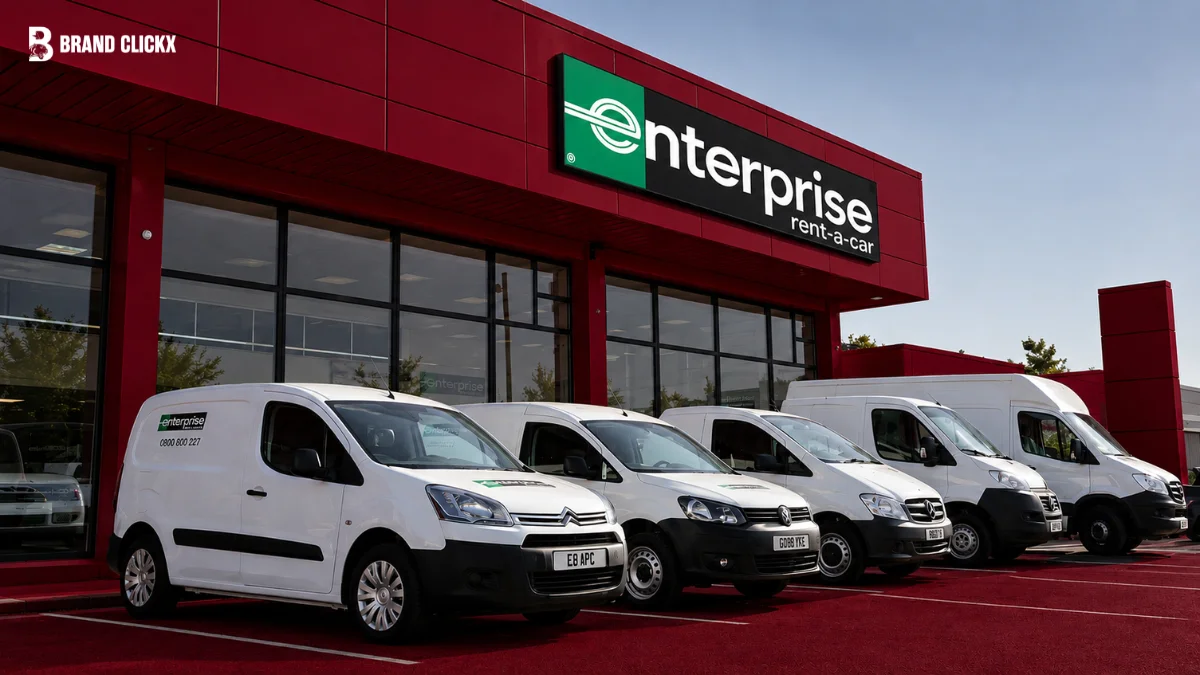
Enterprise Rent-A-Car is one of those companies many people discover when they suddenly need a car. Maybe a family trip is coming up. Maybe a personal vehicle is being repaired. Or perhaps a business traveler needs transportation for a few days.
What began as a small rental operation in 1957 grew into a huge transportation business. Enterprise became especially well known for putting rental branches close to where people live and for its famous “We’ll Pick You Up” approach.
The company has also moved far beyond traditional daily car rentals. Today, its business includes airport rentals, insurance replacement vehicles, corporate services, fleet management and other mobility solutions. In 2026, Enterprise continues to adapt as customers look for easier digital services, more efficient vehicles and greater choice.
What Is Enterprise Rent-A-Car?
Short answer: Enterprise Rent-A-Car is a major vehicle-rental company that provides cars, SUVs, trucks, vans and other vehicles for personal, business, insurance and travel needs. It is part of Enterprise Holdings, the company behind Enterprise, Alamo and National.
Unlike a rental company built mainly around airports, Enterprise developed its business around neighborhood branches. That strategy allowed it to serve people who needed a vehicle close to home, including customers whose cars were being repaired after an accident.
Enterprise at a Glance
| Fact | Details |
|---|---|
| Founded | 1957 |
| Founder | Jack Taylor |
| Original location | St. Louis, Missouri |
| Headquarters | Clayton, Missouri |
| Parent company | Enterprise Holdings |
| Main business | Vehicle rental |
| Sister brands | Alamo and National |
| Business areas | Rental, fleet and mobility services |
| Famous strategy | Neighborhood branches and pickup service |
Who Owns Enterprise Rent-A-Car?
Enterprise Rent-A-Car is part of Enterprise Holdings. The same company operates the Alamo and National rental brands.
This gives Enterprise Holdings a broad presence across different parts of the rental market. Enterprise is strongly associated with neighborhood and everyday rentals, while its sister brands have their own customer focuses.
What Does Enterprise Actually Do?
Enterprise is best known for renting vehicles, but its business is broader than simply handing customers car keys.
Its activities include:
- Daily and weekly vehicle rentals
- Airport rentals
- Insurance replacement rentals
- Business rentals
- Corporate transportation
- Fleet management
- Mobility services
- Long-term vehicle solutions
That wider business model is one reason Enterprise has grown far beyond its original neighborhood-rental concept.
The Story Behind Enterprise Rent-A-Car
How Enterprise Started in 1957
The Enterprise story began in 1957, when Jack Taylor started a small car-rental business in St. Louis.
The rental industry looked very different at the time. Car rental was closely connected with travel, especially airports. Taylor took a different path.
Instead of focusing only on travelers arriving in a new city, the company looked toward people in their own communities.
That simple change would eventually become one of the most important ideas in Enterprise’s history.
Who Was Jack Taylor?
Jack Taylor was the businessman who founded the company that eventually became Enterprise Rent-A-Car.
His approach was practical. Rather than treating car rental only as a travel service, he saw an opportunity to make temporary transportation useful for ordinary customers.
That thinking helped shape the company’s neighborhood strategy.
The First Enterprise Rental Location
Enterprise began with a small operation in St. Louis, Missouri.
The company did not start with the enormous network people associate with Enterprise today. It grew gradually, branch by branch, by focusing on local customers and practical transportation needs.
Why Enterprise Started With Local Customers
Imagine your car breaks down tomorrow.
You may not be standing inside an airport. You may simply be at home, at work or at a repair shop.
Enterprise’s business model was built around customers like that.
The company placed branches in communities rather than relying entirely on major travel hubs. This gave Enterprise access to a different group of customers and helped create a relationship between local branches and their surrounding communities.
From a Small Fleet to a National Business
Enterprise’s growth was not based on one giant leap.
The company expanded its branch network, built relationships with businesses and insurance providers, and gradually entered more markets.
Over time, the small St. Louis’ operation became part of a much larger rental and transportation organization.
How Enterprise Became a Rental Car Giant
The Neighborhood Branch Strategy
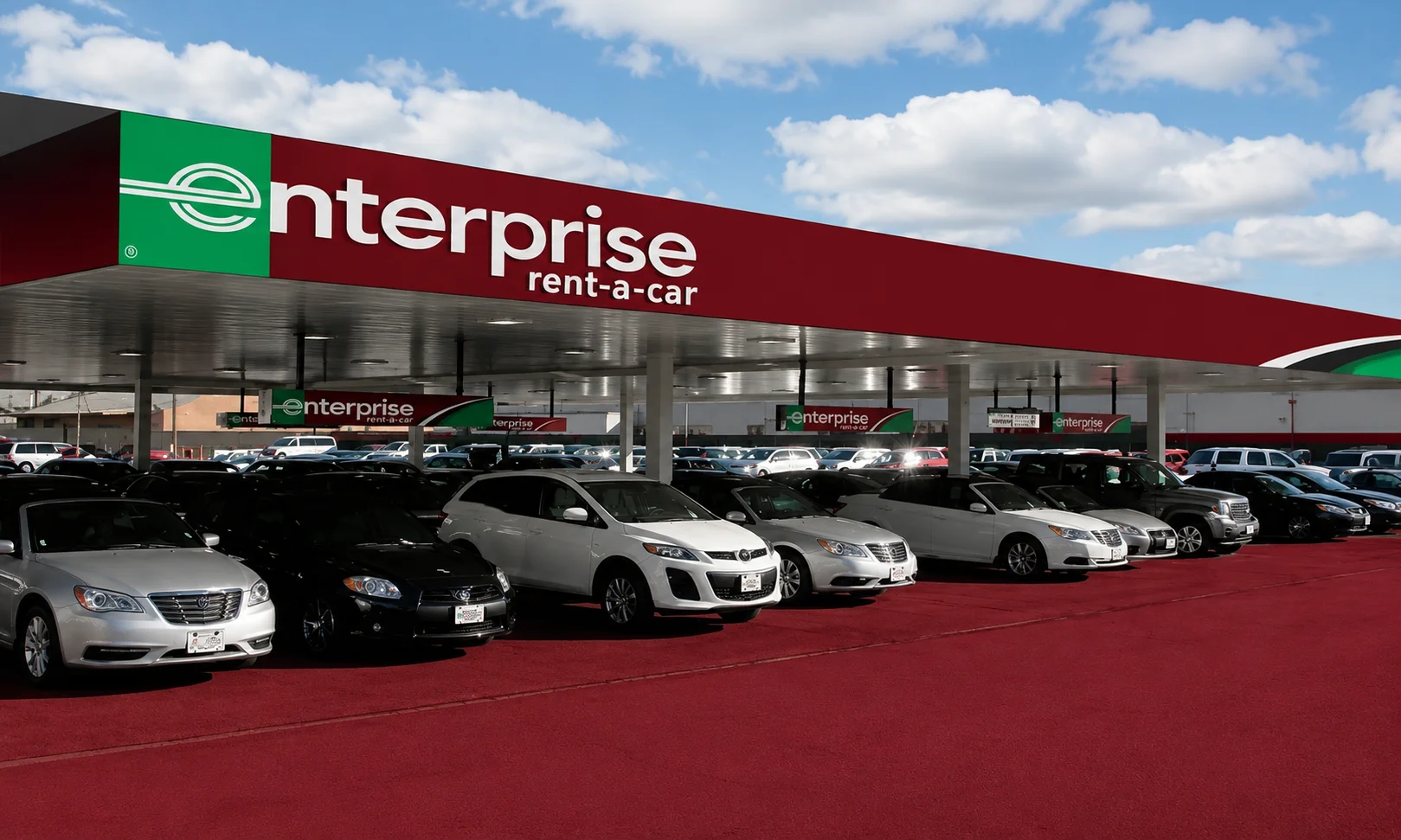
The neighborhood branch became one of Enterprise’s defining ideas.
A customer did not necessarily need to travel to an airport to rent a car. A nearby branch could provide a vehicle closer to home.
This approach also helped Enterprise develop strong local relationships.
The “We’ll Pick You Up” Idea
The phrase “We’ll Pick You Up” became closely connected with Enterprise.
The idea was simple: make getting to the rental branch easier for customers.
For someone whose vehicle was in a repair shop, this could be particularly useful. Instead of figuring out how to reach a rental counter, eligible customers could potentially receive pickup assistance from the local branch.
Building Relationships With Local Customers
Enterprise’s model depended on repeat relationships.
A customer might first rent a vehicle because their car was being repaired. Later, that same person might use Enterprise for a vacation, business trip or weekend journey.
This created a cycle in which a single rental could turn into a longer customer relationship.
Expanding Into Airports
Enterprise did not remain a neighborhood-only company.
As the business grew, airport rentals became an important part of its operations.
That allowed Enterprise to serve both sides of the market: people who needed a car close to home and travelers arriving at major transportation hubs.
Moving Beyond Traditional Car Rentals
Enterprise also expanded into business services, fleet management and broader mobility solutions.
This helped change the company from a simple rental-car operation into a much larger transportation business.
How the Enterprise Business Model Works
The Neighborhood Rental Model
The neighborhood model remains central to Enterprise’s identity.
Branches can serve customers who need a temporary replacement vehicle, a car for a trip or transportation for other everyday needs.
The model is especially useful because many transportation problems happen away from airports.
Insurance Replacement Rentals
Insurance replacement rentals are an important part of Enterprise’s business.
Suppose a customer’s vehicle is damaged in an accident. The vehicle may need several days or weeks of repairs.
The customer still needs transportation.
A rental vehicle can fill that gap.
Enterprise developed strong relationships around this type of need, making insurance replacement a major part of its business model.
Airport Rentals
Airport customers are another major part of the rental market.
Someone flying into another city may need a vehicle immediately. Airport branches allow Enterprise to serve these travelers alongside its neighborhood customers.
Business and Corporate Rentals
Businesses also need temporary transportation.
Employees may travel between cities, visit customers or need vehicles for specific work assignments.
Enterprise provides rental and transportation services for business customers as part of its wider operations.
Fleet Management Services
Enterprise’s business extends beyond short-term rentals.
Fleet services help organizations manage vehicles and transportation needs.
This creates another revenue stream while connecting Enterprise with companies that need transportation for longer periods.
Long-Term Mobility Services
Modern transportation is not always about owning a vehicle.
Businesses and consumers increasingly look for flexible ways to access transportation.
Enterprise has expanded its services to participate in this broader mobility market.
Why the Business Model Is Different
The most important difference is where Enterprise began.
It built its foundation around local branches and replacement transportation, rather than starting primarily as an airport rental company.
That difference still helps explain the company’s identity today.
Why Enterprise Is Famous for “We’ll Pick You Up”
The phrase describes Enterprise’s focus on helping eligible customers reach a rental branch.
It became a simple way of communicating the company’s local-service philosophy.
How the Pickup Service Works
When available, a local Enterprise branch may arrange pickup for eligible customers.
The exact service can depend on the branch, location and circumstances.
That is why customers should check the details for their specific rental.
Why the Strategy Became Successful
The idea solved a very ordinary problem.
If you need a rental car because your own car is unavailable, reaching the rental location can be difficult.
Enterprise turned that inconvenience into part of its customer-service strategy.
Why Local Branches Matter
A neighborhood branch can feel very different from an airport rental counter.
It is closer to where customers live, work and repair their vehicles.
That local connection remains one of Enterprise’s biggest distinguishing features.
How to Rent a Car From Enterprise
The process normally begins by selecting:
- Pickup location
- Pickup date
- Return date
- Vehicle category
- Additional options
The final price depends on the specific booking.
What Information You Need
Customers generally need valid identification, a driver’s license and an acceptable payment method.
Requirements can vary depending on the location and rental.
Choosing Your Vehicle
Enterprise offers different vehicle categories rather than guaranteeing one specific model.
A booking may therefore be for a particular class rather than a particular car.
What Happens at Pickup?
At pickup, the customer completes the rental process, confirms the agreement and receives the vehicle.
It is important to inspect the vehicle and understand the rental terms before leaving.
What Documents Do You Need?
A valid driver’s license is normally required.
Payment and identification requirements can vary, particularly for international renters or customers using different payment methods.
What Happens When You Return the Car?
The vehicle is returned to the agreed location at the agreed time.
The final charge can depend on factors such as fuel, mileage, damage, extensions and other applicable charges.
What If You Return the Car Late?
Late returns can affect the final rental cost.
The exact treatment depends on the rental agreement and location, so customers should contact the branch if their plans change.
Enterprise Rental Requirements
These are some requirements to rent a car:
Minimum Age to Rent
Enterprise generally allows eligible younger drivers to rent vehicles, but age rules vary by location.
Drivers below a certain age may also face an additional fee.
Renting as an Under-25 Driver
Young renters can often use Enterprise, but additional requirements may apply.
The exact rules depend on where the rental takes place and the vehicle category selected.
Driver’s License Requirements
Renters need an acceptable driver’s license.
International visitors may need additional documentation depending on their home country and the rental location.
Credit and Debit Card Rules
Payment requirements can differ between branches.
Customers should check the rules before arriving, particularly if they plan to use a debit card.
Deposit Requirements
A deposit or authorization may be required.
The amount can vary based on location, vehicle and payment method.
Additional Driver Rules
Adding another driver may require additional documentation or a fee.
The extra driver must meet the applicable rental requirements.
International Driver Requirements
International renters should check the documentation requirements for the specific country and location.
An international driving permit may be required in some circumstances.
Enterprise Rental Insurance and Protection
Do You Need Insurance to Rent a Car?
Rental insurance can be confusing because several types of coverage may be involved.
Your existing auto insurance may provide some protection, while a credit card may offer another type of coverage.
That does not mean every rental is automatically fully covered.
Enterprise Protection Options
Enterprise offers different protection products depending on the market.
These can address different risks associated with renting a vehicle.
Collision Damage Protection
This type of protection can relate to damage to the rental vehicle.
Customers should read the terms carefully because coverage, exclusions and costs vary.
Liability Protection
Liability coverage concerns claims involving damage or injury to other people or property.
The exact coverage available depends on the rental location and applicable rules.
Personal Accident Protection
Some rental protection options can provide benefits related to injuries sustained during a rental.
Again, the specific terms matter.
What Your Existing Car Insurance May Cover
Your personal auto insurance may extend to rental vehicles.
However, coverage differs from one policy to another.
Customers should check their policy rather than assume that every rental situation is covered.
What Credit Card Rental Coverage May Cover
Some credit cards provide rental-car coverage when their conditions are met.
There can be important limitations, including the type of vehicle, rental period and type of damage covered.
Why You Should Check the Details
Rental protection is not something to guess about.
Before picking up a vehicle, understand what coverage you already have and what additional protection you may need.
Enterprise Fleet: What Cars Can You Rent?
Economy Cars
Economy cars are designed for customers who want a practical vehicle for everyday driving.
They can make sense for city trips and smaller groups.
Compact and Midsize Cars
Compact and midsize vehicles offer a balance between fuel economy, passenger space and luggage capacity.
They are often suitable for couples, small families and business travelers.
Full-Size Cars
Full-size vehicles generally provide more passenger room and a larger cabin.
They can be useful for longer road trips.
SUVs and Crossovers
SUVs are popular with families and travelers who need more cargo space.
They can also be useful when traveling with several passengers.
Pickup Trucks
Pickup trucks are available in selected locations and can be useful for moving, work and transportation tasks.
Availability varies by market.
Minivans
Minivans remain useful for larger families because they combine passenger capacity with flexible cargo space.
Premium and Luxury Vehicles
Some Enterprise locations offer premium or luxury categories.
These vehicles are aimed at customers looking for additional comfort or a more upscale driving experience.
Electric and Hybrid Vehicles
Enterprise has expanded its availability of electric and hybrid vehicles.
However, customers should not assume that every branch has an EV available.
Enterprise Rental Car Classes Explained
| Vehicle Class | Best For |
|---|---|
| Economy | City driving and budget trips |
| Compact | Everyday travel |
| Midsize | Couples and small families |
| Full-size | Longer journeys |
| SUV | Families and luggage |
| Pickup | Work and moving |
| Minivan | Larger families |
| Premium | Extra comfort |
| Electric | EV-focused travelers |
Can You Choose the Exact Car?
Usually, customers reserve a vehicle class, not a guaranteed individual model.
For example, a reservation may specify a midsize sedan category rather than one exact make and model.
What Does “Or Similar” Mean?
“Or similar” means the company may provide another vehicle in the same general category if the original model is unavailable.
Why the Vehicle You Receive May Differ
Rental fleets are constantly moving.
Cars are being returned, serviced, cleaned and rented again.
That means the exact vehicle available at pickup can change.
Enterprise Rental Prices
How Much Does Enterprise Cost?
There is no single Enterprise rental price.
A small car in one city on a quiet weekday can cost very differently from an SUV rented at a busy airport during a holiday weekend.
On average, a standard Enterprise vehicle costs between $30 and $160+ per day depending on the class, location, and time of year. Below is a breakdown of estimated daily base rates for each vehicle type:
Average Daily Rental Rates
| Vehicle Type | Typical Daily Price (USD) | Popular Examples |
|---|---|---|
| Economy | $30 – $60 | Mitsubishi Mirage |
| Compact | $35 – $65 | Nissan Versa |
| Midsize | $40 – $80 | Hyundai Elantra |
| SUV | $60 – $120 | Ford EcoSport or RAV4 |
| Pickup | $70 – $130 | Chevrolet Colorado |
| Minivan | $80 – $160 | Chrysler Pacifica o |
| Premium | $90 – $200+ | Nissan Maxima or luxury brands |
Core Price Drivers
- Pickup Location: Airport branches typically carry higher concession fees and taxes than local neighborhood offices.
- Seasonality & Demand: Prices spike during summer, holidays, and high-demand local event weekends.
- Age Policies: Drivers aged 21–24 are subject to a “young renter fee” which averages an extra $25 per day.
- Add-on Services: Rates do not include optional insurance coverage, GPS units, or child car seats.
Why Enterprise Prices Change
Several factors influence the final cost:
- Pickup location
- Rental dates
- Rental length
- Vehicle category
- Local demand
- Airport charges
- Taxes
- Optional protection
- Additional drivers
Are Enterprise Prices Higher at Airports?
Airport rentals can include additional charges that do not apply in the same way at neighborhood branches.
That does not mean an airport rental is always more expensive, but it is worth comparing available locations.
Does a Longer Rental Cost Less Per Day?
Sometimes.
Rental companies frequently use different pricing structures for daily, weekly and longer bookings.
The actual saving depends on the market and dates.
What Extra Fees Can Appear?
The advertised base price is not always the final amount.
Customers should check for applicable taxes, location fees, young-driver charges, additional-driver costs, protection products and other rental-specific charges.
How to Save Money on an Enterprise Rental
Book Early
Booking ahead can give you more vehicle choices and may help during busy periods.
Compare Different Pickup Locations
A neighborhood location may have a different total price from an airport location.
Checking both can be worthwhile.
Avoid Unnecessary Extras
Optional products can increase the total cost.
Only choose services you actually need.
Check the Fuel Policy
Understand whether you need to return the vehicle with a full tank or whether another fuel arrangement applies.
Consider Longer Rentals
If your trip is several days long, compare the total cost of different rental periods.
Look for Membership Discounts
Membership programs and eligible discounts can reduce costs for some customers.
Check the Final Price Before Paying
The most important number is the final rental cost, not just the initial daily rate.
Enterprise One-Way Rentals
Can You Return an Enterprise Car Somewhere Else?
Yes, eligible Enterprise rentals can be arranged as one-way rentals.
However, availability and fees depend on the locations involved.
How One-Way Rentals Work
You pick up the car at one location and return it to another participating location.
This can be useful for road trips or moves.
When One-Way Rentals Make Sense
One-way rentals can be useful when:
- You are moving between cities
- You are taking a long road trip
- You do not need to return to your starting point
- Your travel plans are already one-directional
One-Way Fees
Some one-way rentals can include an additional fee.
The amount depends on the rental details.
Cross-State and Long-Distance Rentals
Long-distance rentals may have additional rules.
Customers should confirm where the vehicle can be driven and where it can be returned before booking.
Enterprise Airport Rentals
How Airport Enterprise Locations Work
Airport locations are designed for travelers arriving by air.
They provide access to rental vehicles without requiring customers to travel into the city first.
Airport Pickup Process
The process normally involves reaching the rental facility, completing the agreement and collecting the assigned vehicle.
The exact process depends on the airport.
Airport Fees
Airport rentals can include facility-related charges.
This is one reason comparing an airport branch with a nearby neighborhood location can be useful.
Returning a Car at an Airport
Airport returns normally involve following signs to the designated rental return area.
Customers should allow enough time before their flight.
Airport Rental vs. Neighborhood Rental
| Feature | Airport Location | Neighborhood Location |
|---|---|---|
| Convenient for flyers | Yes | Usually less convenient |
| Local customers | Possible | Major focus |
| Airport-related charges | May apply | Usually different |
| Pickup service | Depends on location | More closely associated with local branches |
| Best for | Air travelers | Local and everyday needs |
Enterprise Plus Loyalty Program
What Is Enterprise Plus?
Enterprise Plus is Enterprise’s customer loyalty program.
It is designed to give eligible customers rewards and benefits based on qualifying rentals.
How Members Earn Rewards
Members can earn rewards through qualifying rentals under the program’s rules.
How Rewards Can Be Used
Rewards can be applied to eligible future rentals according to the program terms.
Who Should Join?
Frequent Enterprise renters are the most obvious candidates.
For someone who rents only once every few years, the benefits may be less important.
Is Enterprise Plus Free?
The basic loyalty program is designed for customers to join without a traditional paid membership requirement.
Enterprise Plus Benefits
The main attraction is simple: frequent customers can get more value from repeated rentals.
Enterprise for Business Customers
Corporate Car Rentals
Businesses often need temporary vehicles for employees.
Enterprise provides services designed around these requirements.
Business Rental Programs
A company may need vehicles for:
- Employee travel
- Customer visits
- Temporary assignments
- Business trips
- Replacement transportation
Fleet Management
Larger organizations may need help managing vehicles rather than renting one car at a time.
Enterprise’s wider business includes fleet-related services.
Employee Transportation
Transportation can become a major operational issue for companies with large workforces.
Mobility services can help businesses manage those needs.
Why Businesses Use Enterprise
The company’s broad branch network and fleet services can make it useful for organizations with employees spread across different locations.
Enterprise and Insurance Replacement Rentals
It is a temporary vehicle provided while a customer’s own car is unavailable because of an insurance-related repair or claim.
The concept is easy to understand.
Your car is in the repair shop, but life does not stop.
You still need to go to work, take children to school or complete everyday tasks.
A rental vehicle fills that gap.
How Enterprise Works With Insurance Customers
Enterprise has built a major part of its business around providing replacement transportation.
This can connect rental branches with insurers, repair businesses and customers.
Who Pays for the Rental?
Payment arrangements can vary depending on the insurance policy, claim and rental agreement.
Customers should confirm the approved rental period and coverage before extending a rental.
How Long Can You Keep the Replacement Car?
The length of an insurance replacement rental depends on the circumstances of the claim and the agreement covering the rental.
Why This Business Is Important to Enterprise
This is one of the clearest examples of how Enterprise differs from a simple vacation-rental company.
Its cars are not only used by tourists.
They also help people continue their normal lives when their own vehicles are temporarily unavailable.
Enterprise’s Other Brands
Alamo
Alamo operates within Enterprise Holdings and has a strong connection with leisure and vacation travel.
National
National focuses heavily on business and frequent travelers.
Enterprise Holdings
Enterprise Holdings is the parent organization behind the three major brands.
How the Brands Serve Different Customers
| Brand | Main Positioning |
|---|---|
| Enterprise | Local, everyday, business and insurance rentals |
| Alamo | Leisure and vacation rentals |
| National | Business and frequent travelers |
This multi-brand structure allows Enterprise Holdings to serve different types of customers without relying on a single rental model.
Enterprise’s Global Reach
Where Is Enterprise Available?
Enterprise operates across a large international network.
Its presence includes neighborhood branches, airport locations and other rental facilities.
North American Network
North America remains an important part of Enterprise’s business.
The company has built a particularly strong network around local transportation needs.
International Operations
Enterprise has expanded beyond its original U.S. market into international locations.
Neighborhood Locations vs. Airport Locations
The company continues to operate both types of locations.
That combination is important because customers use rental cars for very different reasons.
How Large Is Enterprise?
Enterprise Holdings is a large global transportation organization with extensive operations, employees, vehicles and locations.
Because these numbers change over time, the latest annual company figures should be used whenever precise figures are published.
Enterprise’s Fleet and Technology
Adding More Fuel-Efficient Vehicles
Fuel efficiency matters to both customers and rental companies.
Smaller and more efficient vehicles can help reduce fuel consumption and operating costs.
Hybrid Vehicles
Hybrid cars provide another option for customers who want improved fuel efficiency without switching completely to electric driving.
Electric Vehicles
Enterprise has added EVs to selected parts of its fleet.
Availability remains dependent on location, demand and charging infrastructure.
Digital Reservations
Online booking has made it easier for customers to select dates, locations and vehicle categories before arriving.
Mobile and Online Services
Digital tools increasingly allow customers to manage parts of their rental journey without spending as much time at a counter.
Technology at Rental Locations
Technology is becoming an important part of the rental experience, from reservations to vehicle management and customer communication.
The Future of Rental Mobility
The rental business is changing.
Customers increasingly expect transportation to be:
- Fast
- Flexible
- Digital
- Convenient
- More efficient
Enterprise is adapting to those expectations while keeping its traditional rental network.
Enterprise and Sustainability
Electric Vehicle Expansion
Electric vehicles are becoming a larger part of the transportation industry.
Enterprise has responded by adding EVs in selected markets.
Fuel-Efficient Fleet
Fuel-efficient vehicles can reduce fuel use and may help customers lower running costs during a rental.
Environmental Goals
Enterprise has broader sustainability efforts connected to its fleet and operations.
Charging Challenges
EV rentals create a practical issue that gasoline rentals do not have.
Drivers need access to suitable charging infrastructure.
That can make EV rental more complicated in areas with limited charging availability.
Customer Demand for EV Rentals
Some customers actively want electric vehicles, while others still prefer gasoline-powered cars because they are familiar and convenient.
Rental companies therefore have to manage a mixed fleet.
Limits and Challenges of Fleet Electrification
Moving an enormous rental fleet toward electric vehicles cannot happen overnight.
Vehicle supply, charging networks, customer demand, operating costs and local infrastructure all influence the pace of change.
Enterprise Customer Experience
What Customers Usually Like
Enterprise is often associated with:
- Local branches
- Helpful pickup services
- Wide vehicle selection
- Insurance replacement rentals
- Business services
- Large geographic coverage
Common Complaints
Rental customers can also experience problems involving:
- Vehicle availability
- Unexpected charges
- Deposits
- Billing
- Vehicle condition
- Return procedures
- Differences between locations
Vehicle Availability
A reservation does not always mean the exact vehicle you imagined will be waiting.
Rental fleets change throughout the day.
Pickup and Return Experience
The experience can depend heavily on the individual location and how busy the branch is.
Billing and Deposits
Customers should understand the total cost and any authorization placed on their payment method.
Customer Service
Service quality can differ between branches.
That is common with a large network of individual rental locations.
Why Experiences Can Differ by Location
Two customers can rent the same brand in different cities and have very different experiences.
That is why a company’s overall reputation does not always predict what will happen at one specific branch.
Enterprise Rental Car Policies You Should Know
Fuel Policy
Always check how the vehicle should be returned.
Returning a vehicle without following the agreed fuel policy can result in additional charges.
Mileage Policy
Mileage rules can depend on the type of rental.
Customers should check whether their booking includes unlimited mileage or another arrangement.
Smoking Policy
Rental vehicles generally have rules against smoking.
Violating those rules can result in cleaning charges.
Pets and Animals
Pet policies can vary.
Customers should check the rules before bringing an animal into the vehicle.
Late Returns
Returning a car late can change the rental cost.
If your plans change, contacting the branch early is usually better than simply keeping the vehicle longer.
Damage to the Vehicle
Customers should inspect the car before driving away and report any existing damage according to the rental process.
Cleaning Charges
Excessive cleaning may result in an additional charge under the applicable rental policy.
Cancellation Rules
Cancellation conditions vary according to the booking and location.
Always check the terms attached to your specific reservation.
Enterprise vs. Other Major Rental Companies
Enterprise vs. Hertz
Enterprise has historically been particularly strong in neighborhood branches and insurance replacement rentals.
Enterprise vs. Avis
Enterprise combines local branches with airport and business services, giving it a broad customer base.
Enterprise vs. Budget
Budget is positioned around value-focused rental customers, while Enterprise has a broader local-service identity.
Enterprise vs. Alamo
Alamo is part of the same parent organization but has a stronger leisure and vacation focus.
Feature Comparison Matrix
| Feature | Enterprise | Traditional Competitors | Peer-to-Peer Models (Turo) |
|---|---|---|---|
| Neighborhood Branches | Major strength (thousands of local sites) | Moderate (fewer off-airport spots) | High (cars parked in neighborhoods) |
| Insurance Replacement | Major strength (direct billing with insurers) | Weak (limited direct carrier ties) | None (generally manual reimbursement) |
| Airport Rentals | Yes (on-site or quick shuttles) | Yes (heavy airport focus) | Varies (depends on host drop-off) |
| Business Rentals | Strong (custom corporate accounts) | Strong (highly competitive rates) | Weak (limited corporate tools) |
| One-Way Rentals | Available on eligible bookings | Available (usually higher drop fees) | Rarely available (must return to host) |
| Loyalty Program | Enterprise Plus (points for elite tiers) | Tiered programs (Hertz Gold, Avis Preferred) | None (no centralized status tiers) |
| Fleet Variety | Broad range (sedans, trucks, SUVs) | Broad range (similar fleet mix) | Highly unique (individual owner cars) |
Key Takeaways
- Local Dominance: Enterprise relies on its neighborhood footprint to capture drivers who need a car close to home due to an accident or a weekend project.
- Insurance Synergy: Their seamless data integration with major insurance carriers makes them the default choice for collision repair replacement vehicles.
- Fleet Control: Unlike peer-to-peer networks, Enterprise owns, maintains, and cleans its entire fleet uniformly across all corporate branches.
The right company depends on the trip.
A family flying to another city may care about airport convenience. Someone whose car is in a repair shop may care much more about a nearby branch.
Enterprise’s Business Performance
How Much Revenue Does Enterprise Generate?
Enterprise Holdings is a large private transportation company, so its financial reporting differs from a publicly traded rental company.
Precise current figures should always be tied to the most recent verified company information.
How Large Is Enterprise Holdings?
The organization operates a substantial fleet and network across multiple markets.
Its scale extends well beyond the Enterprise Rent-A-Car name because the parent company also operates other brands and mobility services.
Enterprise’s Position in the Rental Market
Enterprise remains one of the most recognizable names in the global vehicle-rental industry.
Its strength comes from a combination of local branches, airport operations, business customers and insurance replacement rentals.
Growth of Mobility Services
Transportation is changing from a simple ownership model toward a mixture of ownership, rental, subscription and other forms of access.
Enterprise is positioned across several of those areas.
Why Exact Figures Can Change
Fleet size, locations, revenue and employee numbers can change from year to year.
That is why older figures should not automatically be presented as current 2026 statistics.
Enterprise’s Biggest Strengths and Weaknesses
Main Strengths
Large neighborhood network:
Enterprise has built a major local branch presence.
Insurance replacement expertise:
This remains an important part of its business.
Broad fleet:
Customers can choose among many vehicle categories.
Business services:
Enterprise serves corporate customers as well as individual renters.
Pickup-focused service:
The “We’ll Pick You Up” idea remains closely connected with the brand.
Multiple brands:
Enterprise Holdings can serve different segments through Enterprise, Alamo and National.
Potential Weaknesses
Prices vary:
A rental can cost very different amounts depending on location and timing.
Vehicle availability changes:
The exact model you want may not always be available.
Additional charges:
The final bill can be higher than the initial advertised rate.
Location differences:
Customer experiences can vary between branches.
EV availability:
Electric vehicles are not equally available everywhere.
Enterprise in 2026
What Is Changing at Enterprise?
Enterprise continues to operate in a transportation market that is becoming more digital and flexible.
Customers want faster reservations, easier pickup and return experiences and more vehicle choices.
Fleet Developments
Fleet modernization remains important as customers become more interested in fuel-efficient and electric vehicles.
Electric Vehicle Strategy
EVs are part of the changing rental landscape, but their availability depends heavily on local charging infrastructure and customer demand.
Digital Rental Experience
Technology is reducing some of the traditional friction involved in renting a car.
Customers increasingly expect to manage reservations and rental information digitally.
Business and Mobility Services
Enterprise is no longer simply about renting a car for one day.
Its broader business includes corporate transportation, fleet management and other mobility services.
Where Enterprise Is Headed
The company’s future will likely be shaped by three basic questions:
- How can rental become easier?
- How can fleets become more efficient?
- How can transportation become more flexible?
Enterprise’s ability to answer those questions will help determine its next stage of growth.
Enterprise Rental Car Timeline
| Year | Milestone |
|---|---|
| 1957 | Enterprise begins operations |
| 1960s | Neighborhood branch strategy expands |
| 1970s | Business grows beyond its original market |
| 1980s | National expansion accelerates |
| 1990s | Airport and broader rental operations grow |
| 2000s | Enterprise expands its wider brand and international presence |
| 2010s | Mobility and fleet services become increasingly important |
| 2020s | Greater focus on technology, mobility and fleet modernization |
| 2026 | Enterprise continues developing its rental and mobility business |
Frequently Asked Questions About Enterprise Rent-A-Car
How Old Do You Have to Be to Rent From Enterprise?
The minimum age varies by location, but younger drivers can often rent if they meet the applicable requirements. Drivers under 25 may face additional fees or restrictions.
Does Enterprise Pick You Up?
Enterprise is well known for its “We’ll Pick You Up” service at eligible neighborhood locations. Availability depends on the branch and local circumstances.
What Is Enterprise Plus?
Enterprise Plus is the company’s loyalty program. Eligible customers can earn rewards through qualifying rentals.
Can You Return an Enterprise Car to Another Location?
Yes, eligible one-way rentals allow customers to pick up a vehicle at one location and return it elsewhere. Additional fees or restrictions may apply.
Does Enterprise Rent to Under-25 Drivers?
Yes, Enterprise rents to eligible younger drivers in many locations. Additional fees and requirements may apply.
Is Enterprise Cheaper Than Other Rental Companies?
Not always. Rental prices depend on the location, dates, vehicle category, demand, taxes, fees and optional services.
Does Enterprise Offer Electric Cars?
Yes, electric vehicles are available in selected markets. The choice is not the same at every Enterprise location.
What Is Enterprise Best Known For?
Enterprise is best known for its neighborhood rental branches, “We’ll Pick You Up” service and insurance replacement business.
Who Owns Enterprise Rent-A-Car?
Enterprise Rent-A-Car is part of Enterprise Holdings, which also operates Alamo and National.
Is Enterprise a Good Rental Car Company?
Enterprise can be a strong choice for people who value local branches, replacement transportation, business services and a broad vehicle selection. The best option still depends on the specific trip and rental location.
Final Thoughts on Enterprise Rent-A-Car
Enterprise Rent-A-Car has a story that is different from the simple image of an airport rental counter. It began in 1957 with a small operation in St. Louis and grew by bringing rental vehicles closer to ordinary customers.
The company’s neighborhood strategy became a major advantage. Its famous “We’ll Pick You Up” idea made the service feel more local, while its strong position in insurance replacement rentals gave it a customer base beyond vacation travelers.
Today, Enterprise is part of a much larger transportation organization. It operates across rental, business, fleet and mobility services while adapting to digital technology and the growing interest in electric vehicles.
In 2026, the company remains a major name in the rental-car industry because its original idea still works: when people need a vehicle, make getting one as simple as possible.