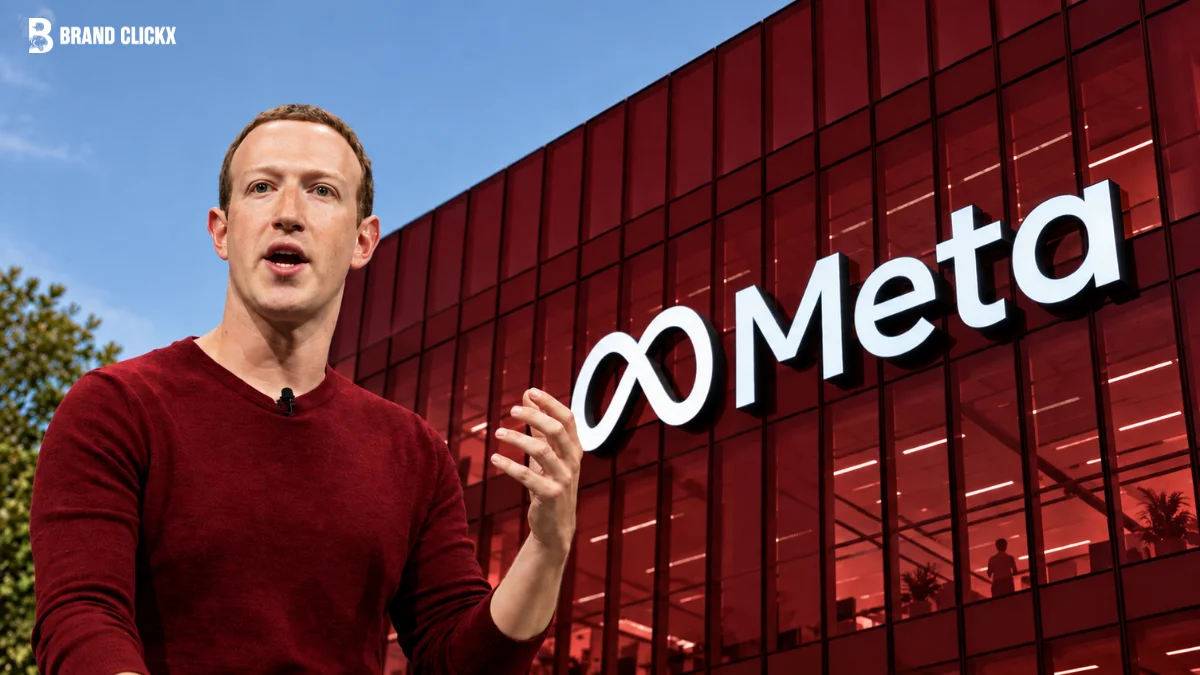
Meta Platforms Inc. recently held talks with European bond investors. This “non-deal roadshow” lasted for about a week.
The goal was to build relationships and explore ways to borrow money globally. Meta needs this extra money to pay for its massive artificial intelligence (AI) projects.
During the trip, Meta leaders discussed the company’s finances and future plans with European investors. Since it was a “non-deal” event, Meta did not announce a specific date to sell bonds.
This setup lets Meta check investor interest safely. It allows them to see if people want to lend them money without making any firm promises right now.
Seeking Money Outside the US
Following Big Tech Rivals
If Meta decides to sell debt in Europe, it will be a big change. Until now, the company behind Facebook and Instagram has only borrowed money in US dollars. Its last big borrowing was in April 2026, when it raised $25 billion.
Other big tech companies are already borrowing globally. For example, Amazon recently borrowed £4.25 billion in the UK. Alphabet, Google’s parent company, has also borrowed money in different currencies like the Japanese yen and Australian dollar.
The High Price of AI
Big Increases in Spending
Meta wants to borrow more money because AI costs are shooting up quickly. The powerful computers and massive data centers needed for AI are very expensive.
Meta now expects to spend between $135 billion and $145 billion on building its infrastructure in 2026. This is nearly double the $72.2 billion it spent in 2025.
| Technology Company | 2025 Actual Spending | 2026 Projected Spending |
| Meta Platforms | $72.2 Billion | $135 Billion – $145 Billion |
| Microsoft | ~$88 Billion | ~$190 Billion |
| Alphabet (Google) | ~$91 Billion | ~$205 Billion |
| Amazon | ~$118 Billion | ~$200 Billion |
Source data compiling infrastructure spending.
Impact on Profits
This heavy spending is already hurting Meta’s cash flow. In the second quarter of 2026, Meta spent $31.08 billion on these projects.
Even though the company made $60.8 billion in revenue, total costs jumped by 55%. Because of this, Meta’s free cash flow dropped by 91% compared to the previous year.
Hidden Debt for Data Centers
Special Financing Tricks
To handle these massive costs without showing too much debt, Meta uses special financing tricks. The company has about $420 billion in “off-balance-sheet” debt. This means the debt doesn’t show up normally on its main financial reports.
For instance, Meta partnered with Blue Owl Capital to build a huge data center in Louisiana. A special company created for this project borrowed $27.3 billion.
Meta promised to pay back the investors if things go wrong. This promise keeps the debt hidden from the main books but still earns the debt a high safety rating.
Rising Costs of Borrowing
However, borrowing is getting more expensive. A recent $12.55 billion bond for a Meta project in Texas had a high interest rate of 7.534%. This shows that investors want higher rewards for funding risky AI projects.
Higher Interest Rates in Europe
The ECB Raises Rates
Meta is looking for money in Europe at a tough time. Borrowing costs are going up across the continent. On September 10, 2026, the European Central Bank (ECB) raised its interest rates.
| ECB Policy Rate | Previous Rate | New Rate (Effective Sept 16, 2026) |
| Deposit Facility Rate | 2.25% | 2.50% |
| Main Refinancing | 2.40% | 2.65% |
| Marginal Lending | 2.65% | 2.90% |
This rate hike happened because inflation is still high. A sudden rise in energy prices made the inflation problem worse.
The ECB expects inflation to stay high for a while. This makes borrowing more expensive for companies like Meta.
Making Money from AI
New AI Products
Investors want to know how Meta will make money from all this spending. Some Wall Street experts worry that Meta is spending too much on free AI tools that don’t bring in money.
To fix this, Meta is starting to charge for AI. In September 2026, the company launched “Muse,” a personal AI helper meant for normal users.
Paid AI Models for Business
More importantly, Meta introduced “Muse Spark 1.1.” This is their very first paid AI model for businesses and programmers.
It costs $1.25 per million input tokens. This price is cheaper than what rivals like OpenAI and Anthropic charge.
Meta’s core ad system is also doing great. The new AI ad system is bringing in over $20 billion a year. It uses AI to target ads much better than before, proving the technology works.
People Also Ask
Why is Meta meeting with European credit investors?
Meta is exploring the European debt market to find new ways to borrow money. They need these global funds to pay for their massive artificial intelligence (AI) projects.
Has Meta ever borrowed money outside the US before?
No, Meta has never sold bonds outside of the US dollar market. If a European deal happens, it would be their very first time doing so.
How much is Meta spending on AI in 2026?
Meta expects its 2026 spending (capital expenditures) to reach between $135 billion and $145 billion. This is a huge jump from the $72.2 billion they spent in 2025.
What is Muse Spark 1.1?
Muse Spark 1.1 is Meta’s new paid AI model for businesses and programmers. This is a big shift because Meta is moving away from only offering free, open-source AI.
How does Meta hide some of its debt?
Meta uses special purpose vehicles (SPVs) and joint ventures to fund its data centers. This allows the company to keep billions of dollars of debt off its main balance sheet, even though it guarantees to pay investors back.