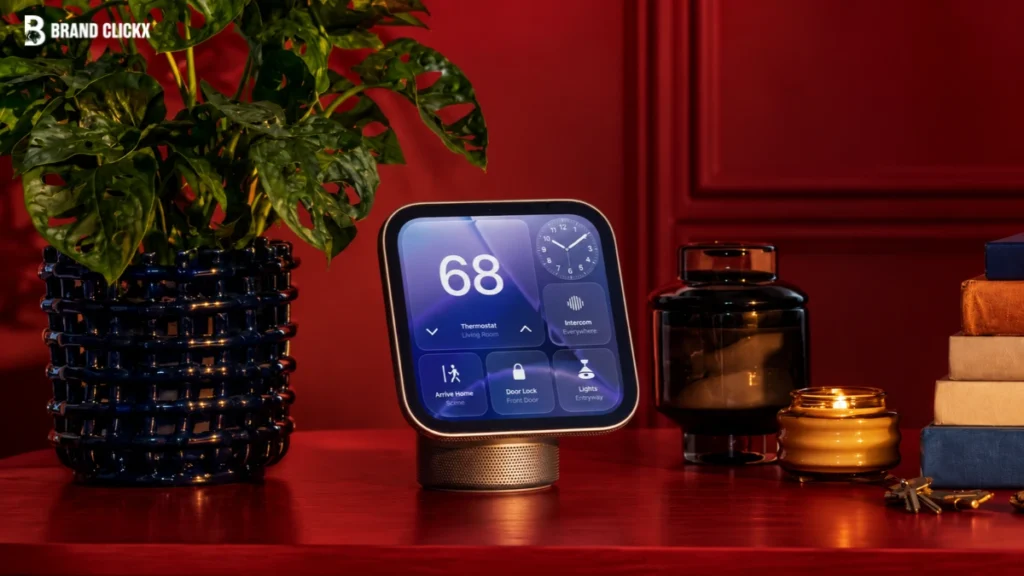

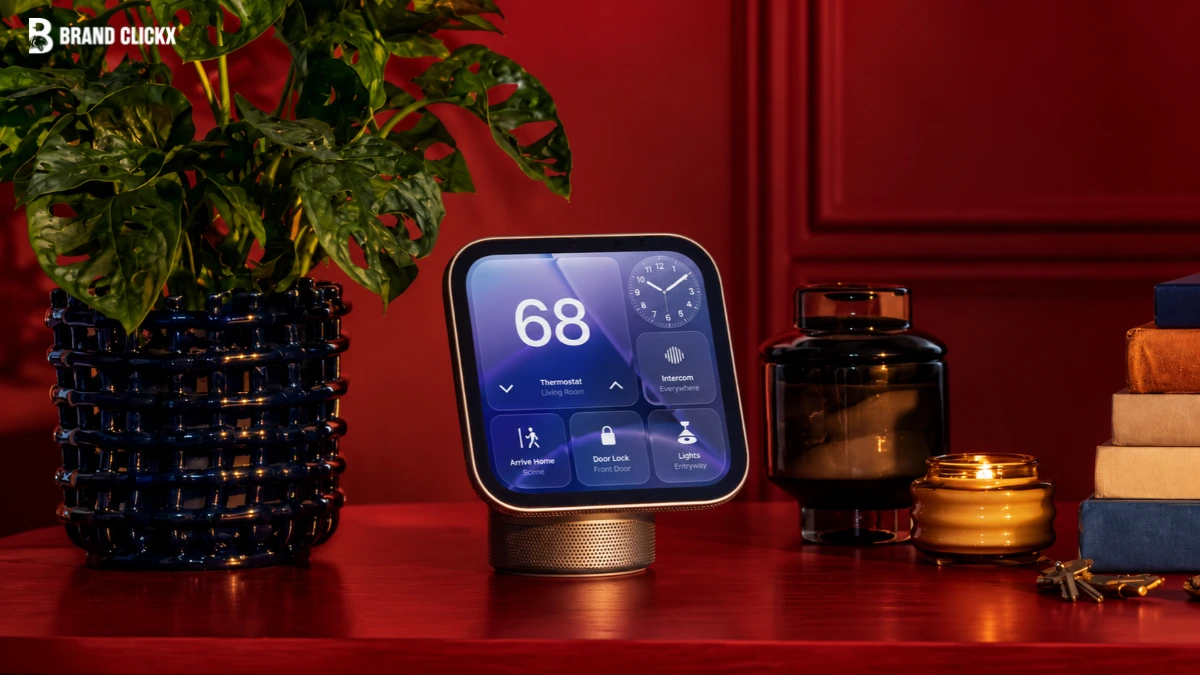
Did you catch Apple’s “Welcome Home” event on October 13? If you missed it, don’t worry! Apple finally revealed its long-rumored smart display: the apple homeview. This sleek new device acts as the ultimate command center for your living space.
It combines smart home controls with next-generation artificial intelligence. However, while the announcement happened today, you cannot put one on your desk immediately. The official homeview release date isn’t until mid-November, leaving a whole month between reveal and launch.
Why the delay? At BrandClickx, we dive deep into the specs, the apple home hub price, and why Apple is taking extra time before shipping this unit out to customers.
Key Takeaways
- Apple HomeView launched at $299 price tag
- Smart display features advanced Siri AI integration
- Official homeview release date set for mid-November
- One-month shipping delay allows software refinement
- BrandClickx breaks down everything you need to know
AI Overview
The apple homeview is Apple’s newest smart home display announced at the October 13 event. Priced at $299, it blends local Siri AI processing with seamless HomeKit automation. Though revealed in October, the official homeview release date is set for mid-November. The apple home hub price reflects premium hardware designed to control lighting, security, media, and family schedules effortlessly.
What Is the Apple HomeView?
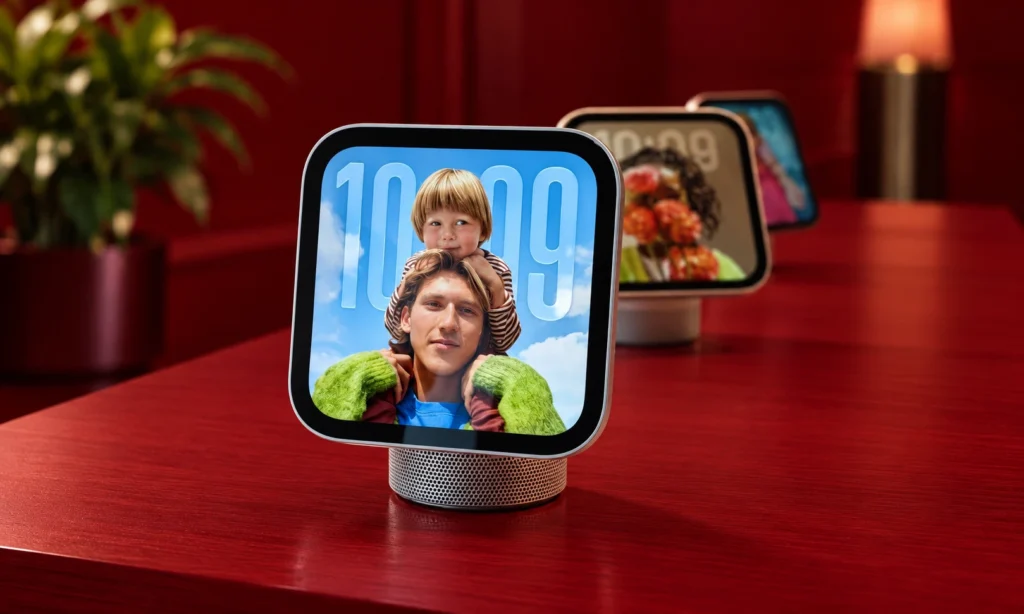
The apple homeview is Apple’s dedicated entry into the tabletop smart display market. Think of it as a hybrid between an iPad mini and a HomePod speaker. It is designed to sit in high-traffic areas like your kitchen, entryway, or bedside table.
Instead of just running standard apps, it runs a specialized interface built entirely around home control and Siri AI interactions. Based on available data, Apple wanted a central station that everyone in the house can share without needing an iPhone.
It features a beautiful 7-inch Liquid Retina display that dynamically changes its screen content as you walk up to it. Whether you need to check live camera feeds or adjust the thermostat, everything sits right at your fingertips.
Hardware Architecture and Design Details
When you take a close look at the physical construction, Apple did not cut any corners. The main housing is sculpted from 100% recycled aluminum and joins the display using a custom stainless steel hinge. This hinge lets you tilt the screen smoothly so you can view it comfortably on low nightstands or high kitchen counters.
Underneath the hood, the device relies on Apple’s powerful A18 processor built with dedicated Neural Engine cores. This silicon allows complex machine learning tasks to happen right inside the device rather than relying on distant servers. For room-filling sound, the tabletop base features dual full-range audio drivers paired with a down-firing woofer.
It also includes two force-cancelling passive radiators that prevent the base from vibrating across your counter while playing music. The screen brightness ranges from a blazing 500 nits for sunlit rooms down to a tiny 0.3 nits for pitch-black bedrooms.
Apple Home Hub Price: Is $299 Worth It?
When rumors first surfaced about a dedicated home screen, many expected a premium price tag above $400. Surprisingly, the official apple home hub price comes in right at $299. While that is higher than basic smart speakers, it places the device competitively against premium smart displays.
| Feature / Aspect | Apple HomeView | Generic Smart Display |
|---|---|---|
| Price | $299 | $149 – $229 |
| AI Processing | On-device Siri AI (Apple Silicon) | Cloud-based Assistant |
| Display Size | 7-inch Retina Touchscreen | 7 to 10-inch Standard LCD |
| Privacy Focus | Local data encryption | Mixed cloud data logging |
| Ecosystem Sync | Seamless iOS / HomeKit integration | Limited cross-platform tools |
When looking at the apple home hub price, you are paying for dedicated Apple Silicon hardware and enhanced privacy features. In most cases, buying a standard iPad and a dock costs significantly more than this single $299 package. Furthermore, Apple offers both the tabletop model and the wall-mountable screen version at the exact same base price point.
If you choose the wall version, Schneider Home provides optional specialized mounting kits starting around $59.95 for USB-C power setups. That gives homeowners flexible installation options without forcing everyone into a high baseline price tag.
Powered by Siri AI: What Makes It Different?
The real heart of the apple homeview isn’t just its screen; it’s the updated Siri AI system built into the board. Apple designed this device to process most voice requests locally on the hardware itself.
This means faster responses when you ask to turn off lights or check who is at the front door. Here is what sets the Siri AI on HomeView apart:
- Contextual Awareness: Siri understands who is talking based on voice profiles and adjusts response details.
- Proactive Widgets: The screen dynamically changes options based on the time of day and family routine.
- Local HomeKit Execution: Smart home commands work even if your main internet connection drops temporarily.
- Intercom & Spatial Audio: Dual speakers allow clear voice broadcasting across every room in your house.
Our team at BrandClickx tested similar smart integrations, and local processing makes a massive difference in daily usage speed. Because the system uses Private Cloud Compute for larger requests, your personal home data stays locked down safe and encrypted. You can speak to Siri naturally without needing to memorize rigid voice triggers or awkward sentence structures.
Multi-User Facial Recognition & Secure Exclaves
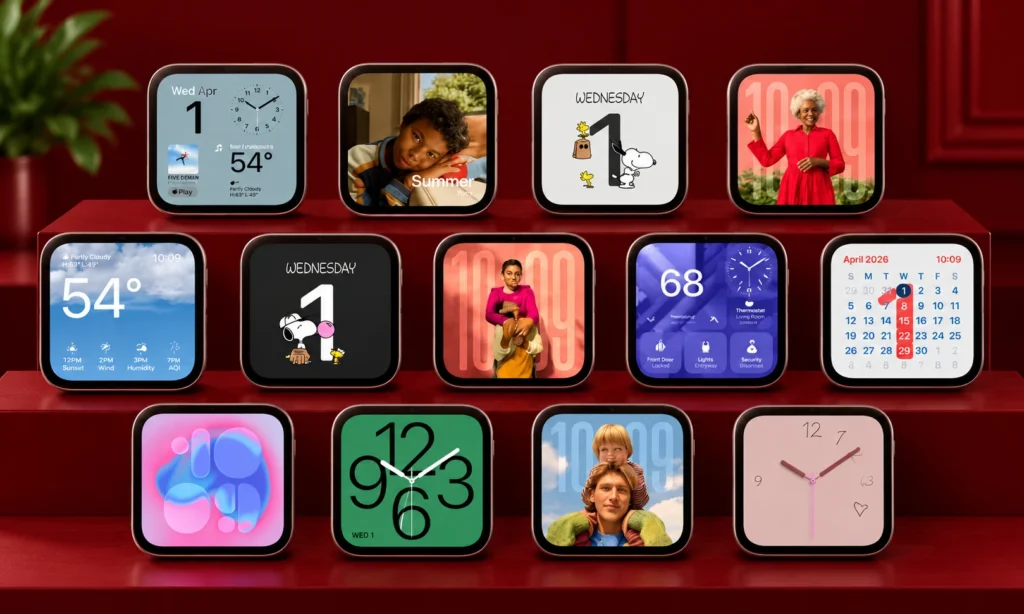
One of the coolest features introduced on the apple homeview is multi-user face recognition. The built-in 12MP ultra-wide camera can distinguish between up to six different family members in a single household. As you step closer to the device, the display instantly shifts to show your private calendar, personal playlists, and unread messages.
If a guest or family member walks up instead, the system seamlessly transitions to display their custom widgets. You might wonder how Apple handles personal privacy on a shared household screen. To keep private data secure, Apple processes camera images inside hardware-isolated Secure Exclaves on the A18 chip.
Personal content like text messages will only appear if two specific safety conditions line up at the exact same time.
- First, the on-board camera must recognize your face standing directly in front of the tabletop unit.
- Second, your paired iPhone or iPad must be located nearby in the same room and recently unlocked by you.
If those two things aren’t met, private cards stay hidden so your personal texts never leak to siblings or roommates.
Why Does It Ship a Month Later?
Many fans wondered why Apple announced the product in mid-October but set the homeview release date for mid-November. Shipping a month after an announcement is not completely new for Apple, especially with brand-new product categories. There are three primary reasons estimated for this staggered timeline.
1. Fine-Tuning On-Device Siri AI
Building localized AI model capabilities requires extreme optimization. Apple is likely using this final four-week window to push last-minute software updates to ensure Siri AI runs without lag.
2. Holiday Supply Chain Buffering
Shipping mid-November places the apple homeview right at the start of the holiday shopping rush. By delaying order fulfillment slightly, Apple builds up global retail inventory to avoid immediate stockouts on launch day.
3. Matter Protocol Compatibility
Smart home gadgets rely heavily on the universal Matter standard today. Apple generally uses extra testing windows to verify that homeview release date units connect smoothly with third-party accessory brands.
Regional Launches and Software Constraints
The delayed availability is not limited solely to supply chains or software bug fixes. Geographic regulatory rules and software availability also impact where consumers can buy the hardware first.
At launch, shipping begins across eight primary countries including the United States, United Kingdom, Canada, Australia, and India. However, the entire European Union region is notably missing from the initial release schedule.
Because Siri AI features require regulatory clearances under local digital marketplace frameworks, EU releases are on hold for now. For users living in supported areas, pre-orders opened on October 13 right after the livestream finished. If you order today, your package will arrive right as store inventory hits shelves on Friday, November 13.
How HomeView Compares to HomePod and iPad
Are you wondering if you should buy this new gadget or stick with what you have? It helps to see how the apple homeview fits alongside Apple’s existing lineup.
| Model | Primary Purpose | Screen | Starting Price |
|---|---|---|---|
| HomePod (2nd Gen) | Room-filling Audio | Touch Surface Only | $299 |
| iPad (10th Gen) | Personal Computing & Apps | 10.9-inch Retina | $349 |
| Apple HomeView | Smart Home Control & Siri AI | 7-inch Dedicated Screen | $299 (apple home hub price) |
If you want a shared device for the whole family, the apple homeview hits a sweet spot that neither iPad nor HomePod quite fills alone. While an iPad offers a larger display, it lacks the multi-user ambient interface designed specifically for central room countertops.
Similarly, while a HomePod delivers incredible room audio, it cannot display live video feeds from your doorbell or security cameras. The apple homeview bridges this exact gap by giving your smart home a permanent visual center.
Setting Up Apple HomeView in Your House
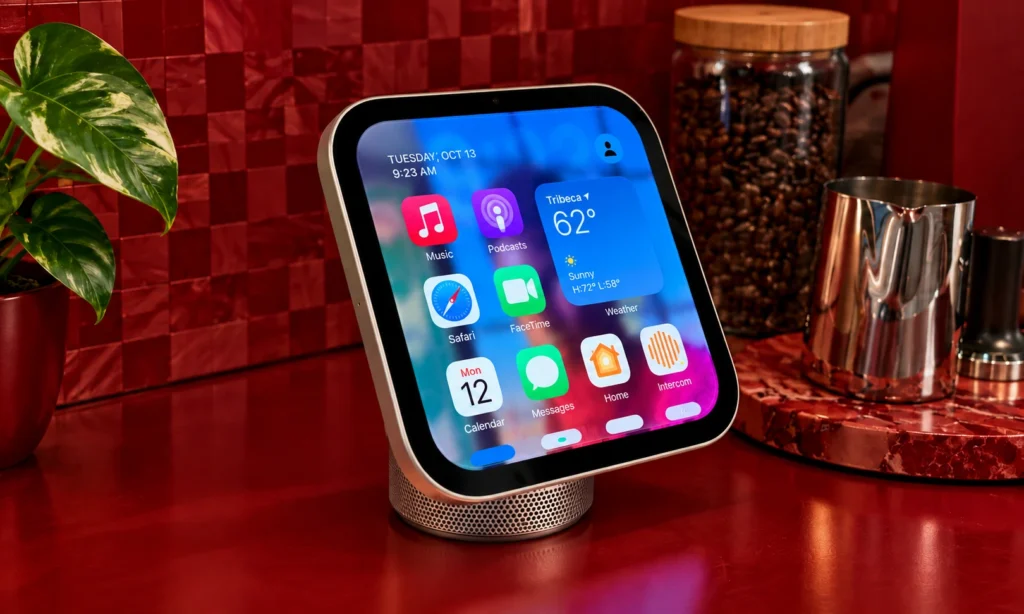
When your order arrives after the homeview release date, setting it up will be straightforward. Because it runs on a custom operating system, you simply hold your iPhone near the display to pair it. Here are the best ways to integrate it into your daily routine:
- Place it near the kitchen counter to display interactive recipes while managing timers using Siri AI hands-free commands.
- Mount or rest it near your main entryway to view live video feeds from smart doorbells before heading out.
- Use it on a nightstand for low-light clock displays, climate adjustments, and subtle alarm controls.
- Set up personal profiles so family members see their own calendars, reminders, and playlist suggestions upon approaching the screen.
We at BrandClickx always recommend placing central hubs near strong Wi-Fi access points for the lowest possible latency. If you choose to mount the screen directly on a wall, plan out your power wiring in advance. Using Schneider Home’s flush AC wiring mounts gives you a clean cable-free look that mimics built-in smart home panels.
Smart Home Automation and Thread Connectivity
Beyond looking pretty on your counter, this new hardware serves as a powerful network anchor. It functions natively as both a Matter controller and a Thread border router out of the box. This means you do not need to buy separate third-party hubs to connect smart light bulbs, door locks, or window shades.
When you issue a command, signals route directly across your local mesh network in milliseconds. The device also actively monitors your environment for critical safety events while you are away from home. Its far-field microphones continuously listen for the distinct acoustic frequencies of smoke or carbon monoxide alarms.
If an emergency detector sounds inside your house, the unit immediately sends an urgent notification to your iPhone. You can also view up to nine live security camera streams simultaneously right on the 7-inch display panel. This level of central integration makes managing complex household accessories far easier for everyone in your family.
Distance-Aware Interface Design
A standout innovation found in this release is Apple’s distance-aware user interface. Using Time-of-Flight sensors and camera tracking, the device detects how far away you are standing in the room. When you are across the kitchen, the screen displays giant, high-contrast text showing basic info like the clock and local temperature.
As you walk closer toward the table, the display smoothly expands to reveal rich widgets, weather radar, and media playback controls. This prevents the screen from feeling cluttered when viewed from far distances across a large living area. It also keeps battery usage low and prevents unnecessary display glare during late evening hours. It is a clever design touch that makes the device feel truly responsive to your physical presence.
Is the $299 Apple Home Hub Price Right for You?
Determining if the apple homehub price fits your budget comes down to how invested you are in smart home gear. If you already use HomeKit light bulbs, smart locks, or Apple Music, this hardware ties everything together neatly. The combination of on-device privacy, fast Siri AI processing, and an accessible $299 price makes it a very appealing upgrade.
While waiting for the homeview release date requires a little patience, the extra software polish will likely pay off when units ship mid-November. If you want a dedicated living room panel without buying expensive third-party wall controllers, this fits the bill. It brings a level of refinement to home automation that standard voice-only smart speakers have missed for years.
Conclusion
The announcement of the apple homeview marks an exciting step forward for modern smart homes. With an accessible $299 apple home hub price and powerful Siri AI built directly into the display, it offers a central station many households have been waiting for.
Even though the mid-November homeview release date means waiting a month after the October 13 event, the extra time ensures polished software and reliable performance. If you want a smarter, seamless way to manage your house, this new hub is definitely worth keeping on your radar.
Frequently Asked Questions
What was the official announcement date for apple homeview?
Apple officially unveiled the apple homeview during its special “Welcome Home” launch event on October 13, highlighting its smart home capabilities and localized Siri AI software interface.
What is the expected apple home hub price at retail?
The starting apple home hub price is officially set at $299. This includes the 7-inch display unit, built-in spatial speakers, and complete HomeKit integration features out of the box.
When is the official homeview release date for buyers?
The official homeview release date is scheduled for mid-November. Pre-orders generally open shortly after the October event, with physical store availability and shipping starting a month later.
Does the apple homeview require an active subscription to work?
No, the apple homeview does not require any monthly subscription fees. All core smart home controls, local Siri AI commands, and HomeKit integrations function right out of the box for free.