

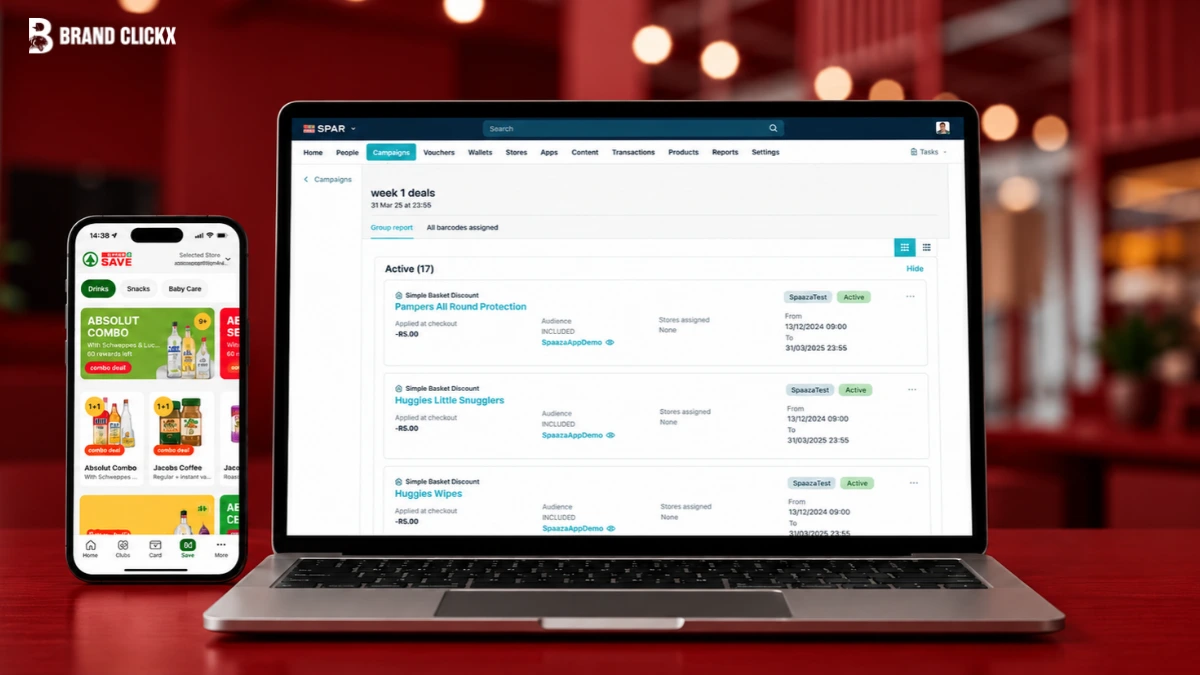
A retailer offers a discount on a popular product. The store displays a special promotion, shoppers see a lower price, and sales begin to rise. But the retailer may not be paying for the entire promotion. The product supplier may cover part or all of the cost.
This arrangement is called supplier funded marketing. It allows suppliers and retailers to work together to promote products, attract customers, and increase sales. However, one important question often gets overlooked: Who really pays for the marketing?
The supplier may provide the money, but the financial impact can spread across the supplier, retailer, and customer. Understanding this relationship helps businesses judge whether a promotion creates real value or simply moves costs from one place to another.
What Is Supplier Funded Marketing?
Supplier funded marketing is an arrangement in which a supplier pays some or all of the costs of promoting its products through a retailer or another sales partner.
A supplier is a business that provides products to another business. For example, a shampoo company may supply its products to a supermarket. The supermarket then sells those products to customers.
The shampoo company might pay for a discount, an in-store display, a special advertisement, or a sponsored product placement on the supermarket’s website. The purpose is simple: help more customers notice, consider, and buy the product. Supplier funded marketing can include:
- Discounts and coupons: The supplier helps cover the cost of reducing a product’s selling price.
- In-store promotions: The supplier pays for displays, signs, product samples, or promotional materials.
- Retail advertising: The supplier funds advertisements on a retailer’s website, app, or other advertising channels.
- Co-op marketing: The supplier and retailer share the cost of an agreed marketing campaign.
- Special sales campaigns: The supplier contributes money to support seasonal offers, product launches, or other promotions.
The exact arrangement depends on the agreement between the two businesses. For a broader explanation of advertising within retail environments, see BrandClickX’s guide to retail media.
How Does Supplier Funded Marketing Work?
Supplier funded marketing usually involves three main steps.
1. The supplier and retailer agree on a promotion
A supplier wants to increase sales of a particular product. The retailer wants to attract shoppers and sell more items. Both businesses agree on a promotion, its duration, and the amount each party will contribute.
For example, a cereal manufacturer may agree to fund part of a discount at a supermarket for two weeks.
2. The supplier provides financial support
The supplier might reimburse the retailer for eligible discounts, pay an agreed advertising fee, or contribute to a shared marketing budget. The retailer then uses that support according to the agreement.
The payment method matters. A supplier may pay the retailer before the campaign, reimburse approved costs afterward, or provide another agreed financial benefit.
3. Both businesses measure the results
After the promotion, the supplier and retailer review the campaign. They may examine:
- How many units the retailer sold.
- How much the promotion cost.
- Whether total profit increased or decreased.
- Whether the promotion attracted new customers.
- Whether customers purchased the product again after the offer ended.
Higher sales alone do not prove that a promotion was successful. The businesses must also consider the cost of the promotion and whether those sales would have happened without it.
Who Pays for Supplier Funded Marketing?

The supplier usually provides the agreed marketing funds. However, the supplier is not necessarily the only party that bears the financial cost.
The retailer may contribute its own money, accept a lower profit margin, or provide valuable advertising space. Customers may also experience changes in prices when businesses adjust their pricing strategies. The costs can be distributed as described below:
The supplier
The supplier may pay for discounts, advertising, displays, and other promotional activities. This spending reduces the money available to cover production, distribution, and other business expenses.
The supplier accepts this cost because the promotion may help increase sales, introduce a new product, or strengthen its position against competitors.
The retailer
The retailer may contribute staff time, store space, advertising inventory, or part of the discount. Even when the supplier pays the main promotional cost, the retailer still has expenses.
For example, employees must arrange displays, update prices, and manage additional stock. The retailer may also earn less profit on each item sold during a discount.
The customer
Customers benefit when a promotion reduces the price they pay. However, customers do not always receive the full financial benefit of supplier funding. A retailer might use supplier support to offer a discount, maintain its existing price, or fund advertising instead of lowering the price.
Customers may also face higher prices at other times if businesses change their pricing to recover costs or protect profits. This is possible, but it does not happen automatically with every supplier funded campaign.
The key distinction is that the supplier may pay the promotional bill, but the economic cost and benefit can be shared across the supply chain.
A Simple Example of Supplier Funded Marketing
Imagine a cereal manufacturer supplies boxes of cereal to a supermarket. The normal selling price is $5 per box. The supermarket buys each box from the manufacturer for $3. The supermarket therefore earns $2 per box before paying its operating expenses.
Now, both businesses agree to run a promotion that reduces the selling price to $4. The manufacturer agrees to contribute $0.75 for each eligible box sold. The arrangement works like this:
| Item | Amount |
| Normal selling price | $5.00 |
| Promotional selling price | $4.00 |
| Supplier contribution | $0.75 |
| Retailer’s original purchase cost | $3.00 |
| Retailer’s effective cost after support | $2.25 |
| Retailer’s amount remaining per box | $1.75 |
In this simplified example, the customer saves $1, while the supplier contributes $0.75 toward the promotion. The retailer receives $4 from the customer and $0.75 from the supplier, giving it $4.75 in total revenue and support against its $3 product cost.
The retailer has $1.75 remaining per box before other expenses. However, the supplier’s $0.75 contribution is not free money. The manufacturer must account for it as a promotional cost or according to the applicable accounting treatment.
This example also assumes the supplier’s contribution is additional to the original wholesale price and that no other fees or expenses apply. Actual agreements can work differently.
Why Do Suppliers Fund Retailer Marketing?
Suppliers fund marketing because retailers control important parts of the shopping experience. They decide how products appear on shelves, which promotions customers see, and where many products appear online.
Supplier funded marketing gives manufacturers a way to work with retailers to influence those decisions.
To increase product sales
A discount or prominent display can encourage shoppers to choose a product. This is especially useful when several brands offer similar products. However, a promotion only creates additional value when the extra sales justify its cost.
To introduce new products
Customers may hesitate to buy a product they have never tried. A temporary discount, product sample, or special display can reduce that hesitation. The supplier can use the campaign to introduce the product to more shoppers.
To compete with other brands
A retailer may stock several competing products. Suppliers can fund promotions to make their own products more noticeable or attractive.
However, frequent discounts can train customers to wait for offers rather than pay the normal price.
To improve product visibility
A product may be available in a store but receive little attention from shoppers.
Supplier funding can support better displays, sponsored placements, and other promotional activities that increase visibility.
For digital campaigns, these activities may overlap with retail media networks, which allow retailers to sell advertising across their websites, apps, stores, and other channels.
Supplier Funded Marketing vs. Co-op Marketing
Supplier funded marketing and co-op marketing are closely related, but they are not the same. Supplier funded marketing is the broader idea of a supplier paying for promotional activity. Co-op marketing usually refers to a more specific arrangement in which a supplier and another business share the cost of marketing.
| Feature | Supplier funded marketing | Co-op marketing |
| Who contributes? | The supplier pays some or all agreed costs. | The supplier and partner share agreed costs. |
| Main purpose | Promote products and support sales. | Run a joint marketing campaign. |
| Retailer contribution | May be financial or nonfinancial. | Usually includes an agreed contribution or shared responsibility. |
| Example | A manufacturer funds a retailer’s product discount. | A manufacturer and retailer split the cost of a seasonal advertising campaign. |
The main difference is how the campaign is funded. A co-op campaign involves shared responsibility, while supplier funded marketing can place most or all of the direct marketing cost on the supplier.
The terms can overlap because co-op marketing is one way suppliers and retailers fund promotional activities together.
Supplier Funded Marketing vs. Retail Media

Retail media is another important part of this discussion. Retail media refers to advertising sold by retailers through their websites, apps, physical stores, and other channels. Suppliers and brands can pay retailers to reach shoppers through these advertising opportunities.
Supplier funded marketing is broader because it can include discounts, displays, coupons, and other promotions that are not necessarily advertising. Consider these examples:
- A manufacturer pays for a temporary price reduction on laundry detergent. This is supplier funded marketing.
- A manufacturer pays for a sponsored product placement on a retailer’s website. This is both supplier funded marketing and retail media.
- A manufacturer and retailer share the cost of a printed seasonal catalogue. This may be co-op marketing and supplier funded marketing.
For more detail, read BrandClickX’s article on retail media networks and how they work.
Understanding this difference helps businesses separate promotional funding from advertising spending and avoid counting the same activity twice.
Does Supplier Funded Marketing Increase Profit?
Supplier funded marketing can improve profit, but it does not guarantee it. A promotion may increase the number of products sold while reducing the profit earned on each unit. Businesses must compare the additional revenue with the full cost of the campaign.
For example, suppose a store normally sells 100 units of a product each week. A promotion increases sales to 140 units.
That sounds positive. However, the retailer and supplier must also consider the discount, funding arrangement, advertising expenses, and any extra costs associated with handling the additional sales. They should ask three questions:
- Did the campaign generate sales that would not otherwise have occurred?
- Did the extra sales produce enough profit to cover the promotional costs?
- Did the promotion help future sales, or did customers simply buy earlier because the price was temporarily lower?
The third question matters because some promotions shift the timing of purchases rather than increase total demand.
For example, a customer who buys three boxes of cereal during a discount may not need to buy cereal again for several weeks. The promotion increased sales today, but it may reduce sales in the following weeks. Businesses should therefore evaluate both short-term results and longer-term effects.
How Should Businesses Measure Supplier Funded Marketing?
Businesses need clear records to understand whether supplier funded marketing delivers value.
Track the full promotional cost
Record supplier contributions, retailer spending, discounts, advertising fees, and other relevant costs. This provides a clearer picture of the campaign’s total financial impact.
Compare sales with a realistic baseline
A baseline estimates what sales might have been without the promotion. If sales increase from 100 units to 140 units, the increase is 40 units. However, the business should not automatically assume that all 40 additional sales came from the promotion.
Seasonal demand, competitor activity, stock availability, and other factors may also affect sales.
Measure profit, not just revenue
Revenue shows how much money a business receives from sales. Profit measures what remains after the relevant costs are deducted.
A campaign can generate more revenue but less profit if the discount and promotional expenses are too high.
Check whether the campaign created additional sales
A campaign may receive credit for sales that would have happened anyway. Where practical, businesses can compare similar stores or customer groups, with one group receiving the promotion and another not receiving it. This helps estimate the campaign’s actual effect.
BrandClickX explains this measurement challenge in its guide to retail media measurement standards.
Review the agreement
The supplier and retailer should agree on the funding amount, eligible products, campaign dates, payment conditions, and reporting requirements before the promotion begins. Clear terms reduce disputes and make it easier to compare campaign results.
Current Examples of Supplier Funded Marketing
1. Camco’s Walmart Advertising Campaign (2025)
RV and camping supplies brand Camco improved its Walmart advertising strategy with sponsored product ads, brand ads, and video advertising.
The campaign increased units sold by 66%, improved return on ad spend by 53%, and increased in-store ad-attributed sales by 103% year over year.
This example shows how brand-funded retail advertising can increase sales both online and in physical stores.
2. Knorr’s TikTok Campaign With REWE (2025)
Food brand Knorr partnered with German supermarket chain REWE to promote its meal products through TikTok advertising.
The campaign achieved a 3.4-times sales uplift at the product level and a 2.1-times return on investment compared with the stated benchmark.
The campaign shows how a supplier can use social media advertising to encourage customers to buy products in supermarkets.
3. Rockstar’s New Flavor Launch (2025–2026)
Energy drink brand Rockstar worked with Giant Eagle and Grocery TV to promote its Hardcore Apple flavor through in-store digital advertising.
The campaign generated an 11% sales lift for the new flavor and an 18% sales lift for the overall Rockstar brand.
This example shows how supplier funded advertising can help launch a new product while supporting sales of the wider product range.
4. Co-op’s In-Store Promotions
UK convenience retailer Co-op used in-store advertising to promote beer, ice cream, and confectionery brands.
The beer campaign recorded a 95% sales uplift in participating Co-op stores. It also generated additional sales in surrounding stores.
This demonstrates how supplier funded retail advertising can encourage purchases and influence shopping beyond the original promotional location.
5. Targeted Food and Beverage Promotions (April 2026)
A global food and beverage company used customer shopping data to reach likely buyers through in-store displays, digital screens, and text messages.
The campaign reached more than 5.8 million customers and generated an 11% sales uplift. Stores using both displays and digital screens recorded a 33% uplift, compared with 15% in stores using displays alone.
The example shows how targeting the right shoppers across several channels can improve promotional results.
6. Mondelēz’s In-Store Advertising Campaign (2026)
Mondelēz promoted Sargento Cheese Bakes through online display advertising, retailer website placements, and digital screens across 116 Albertsons stores.
The campaign delivered a 14% in-store sales lift and a reported $2.41 incremental return for each dollar of advertising spend.
This example demonstrates how brands can combine online and in-store advertising to encourage product purchases.
7. Frito-Lay’s New Product Promotion
Frito-Lay worked with Hy-Vee and Grocery TV to promote a new snack product through in-store advertising.
The campaign generated a 15.2% sales lift and more than 13.2 million advertising impressions.
This shows how supplier funded campaigns can introduce new products to shoppers and increase sales during a launch.
8. A New Supplier’s Walmart Campaign (2024–2025)
A hearing technology supplier used Walmart’s sponsored product, brand, and video advertising to increase its online visibility and support store sales.
The campaign recorded a 212% increase in return on ad spend, while 93% of attributed buyers were new to the brand.
This example shows how a smaller or newer supplier can use retailer advertising to attract customers and build sales.
9. Frozen Food Promotions Through Nectar (2025–2026)
Nectar360 used digital advertising, sponsored search, and promotional activities to encourage shoppers to explore frozen food products.
The campaign generated more than 18,000 incremental customers, a 12.4% increase in units sold, and a 6% rise in frozen-aisle visits.
This example shows how promotions can encourage shoppers to try products and return to a category.
10. Adidas’ In-Store Campaign With DICK’S Sporting Goods (2026)
Adidas partnered with DICK’S Media to promote footwear through interactive displays and digital screens in two flagship sporting goods stores.
The campaign recorded more than 25,000 product pickups and a 39% sales lift compared with matched control stores.
This example shows how suppliers can support retailers with interactive product experiences that encourage shoppers to explore and purchase products.
What These Examples Tell Us
Supplier funded marketing can increase product sales, introduce new customers to brands, and help retailers earn more from their advertising channels. However, these campaigns do not all use the same funding arrangements, and their reported results do not automatically prove that suppliers paid every promotional cost.
To understand who really benefits, businesses must compare the supplier’s contribution, the retailer’s expenses, the additional sales generated, and the profit remaining after costs.
Common Problems With Supplier Funded Marketing
Supplier funded marketing can benefit both parties, but poor planning can create problems.
Unclear costs: A retailer and supplier may disagree about which expenses qualify for reimbursement. Clear records and written terms help prevent this.
Discount dependence: Customers may become less willing to pay the normal price if a product is frequently discounted.
Weak measurement: A campaign may appear successful because sales increased, even when the promotion did not create enough additional profit.
Conflicting goals: The supplier may want to increase sales of one product, while the retailer may want to improve overall store profit or promote a different product.
Short-term thinking: A campaign may boost sales temporarily but damage long-term profitability if the businesses ignore its full cost.
The solution is to treat promotional funding as a business investment rather than simply a way to increase sales figures.
Final Thoughts
Supplier funded marketing connects manufacturers, retailers, and customers through a shared commercial activity. The supplier provides funding, the retailer offers access to shoppers, and the customer may receive a discount or see a product more often.
However, the funding party does not always bear the full economic cost. The final impact depends on the agreement, the pricing strategy, the promotional results, and how each party manages its expenses.
The best supplier funded campaigns create value for both supplier and retailer while giving customers a genuine reason to buy. Businesses should judge success by additional sales, sustainable profit, and long-term customer value rather than by promotional activity alone.
Frequently Asked Questions
Can a supplier lose money even when a retailer sells more products?
Yes. A supplier may sell more units but earn less overall if discounts, promotional payments, and additional production costs exceed the benefit of the extra sales.
What happens when a retailer sells supplier funded promotional stock after the discount ends?
The retailer may earn a higher margin on the remaining stock if it bought the products at a reduced promotional cost but later sells them at the regular price. The supplier’s benefit depends on the agreement and whether the additional sales represent genuine demand.
Who bears the cost when a supplier funded promotion fails to increase sales?
The answer depends on the funding agreement. A supplier may still owe a fixed promotional fee, while a payment based on verified sales may be lower. A retailer may also lose money through its own spending or reduced margins.
Can supplier funded marketing make a retailer look more profitable than it really is?
Yes. Supplier contributions can reduce the retailer’s effective promotional costs. However, a proper profit analysis must also account for the retailer’s own expenses, the supplier’s funding, and the costs of running the campaign.
Should supplier funding be measured against total sales or additional sales?
Businesses should examine both, but additional sales are especially important when evaluating whether a campaign created new demand. Total sales include purchases that might have happened without the promotion.
What happens when a supplier funds a discount but the retailer keeps the regular price?
The customer may receive no immediate price reduction. Depending on the agreement, the retailer might retain the financial benefit or use the funds for another approved promotional activity. The contract determines how the funding must be used.
Can a supplier funded promotion increase sales today but reduce them next month?
Yes. Customers may buy extra products during a discount and delay their next purchase. Businesses should examine sales before, during, and after the promotion to understand whether it increased overall demand or mainly changed purchase timing.
How can a supplier check whether a retailer delivered the marketing it promised?
The supplier can review campaign reports, invoices, promotional dates, sales records, and evidence of agreed advertising placements. These records help confirm that the retailer completed the activities covered by the funding agreement.