

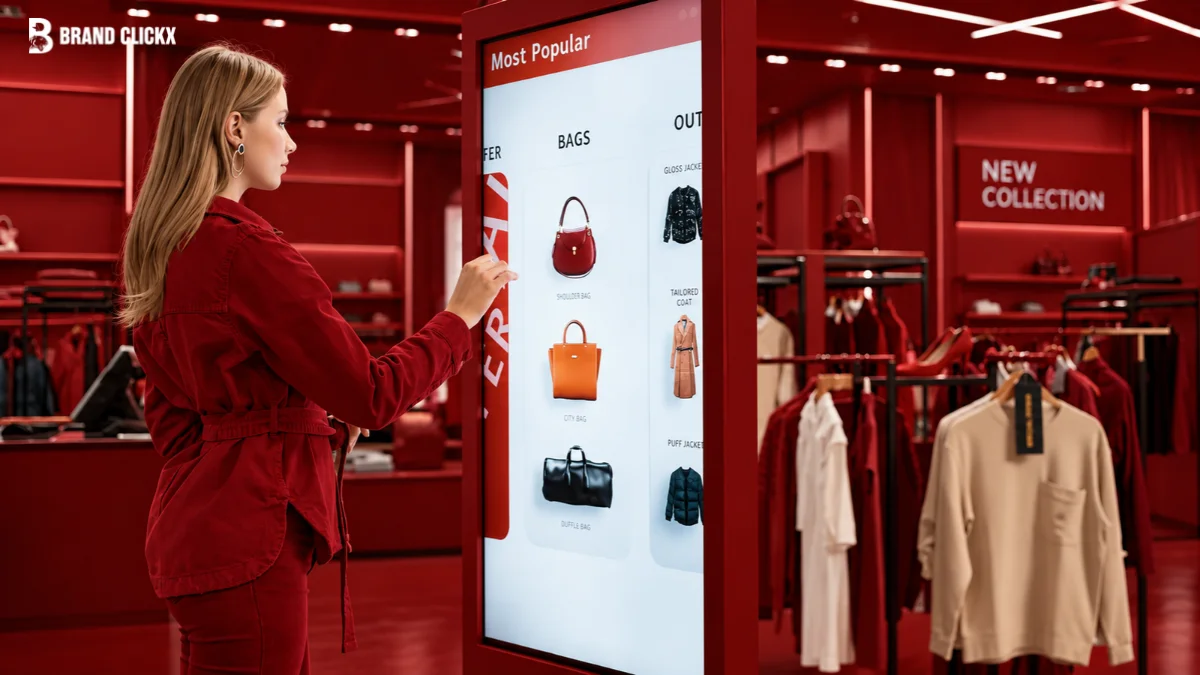
A retailer can hand a buyer an in-store report that looks almost identical to a digital campaign report. It may show impressions, reach, exposure and sales lift in neat columns. The difference is that a screen can tell you an ad played without telling you who actually saw it.
In store retail media covers advertising inside physical stores where retailers can use their own shopper data alongside physical media placements. A screen can record ad delivery. Store traffic can help estimate an audience. Purchase data can then show what happened after the campaign.
The gap sits between those points. Some numbers are counted. Others are inferred. That distinction should be visible before a buyer treats the reported result as proof.
Key Takeaways
- In store media includes screens, audio, shelf-edge placements, sampling and other physical retail formats.
- Ad delivery can be counted directly while shopper exposure usually requires an estimate.
- Opportunity to see means a shopper could have encountered an ad. It does not prove the shopper saw or heard it.
- In store attribution becomes stronger when exposure data can be matched with identified purchase data or controlled store tests.
- Buyers should ask what was counted, what was modelled and whether a matched-store test can support the sales result.
What in store retail media actually covers
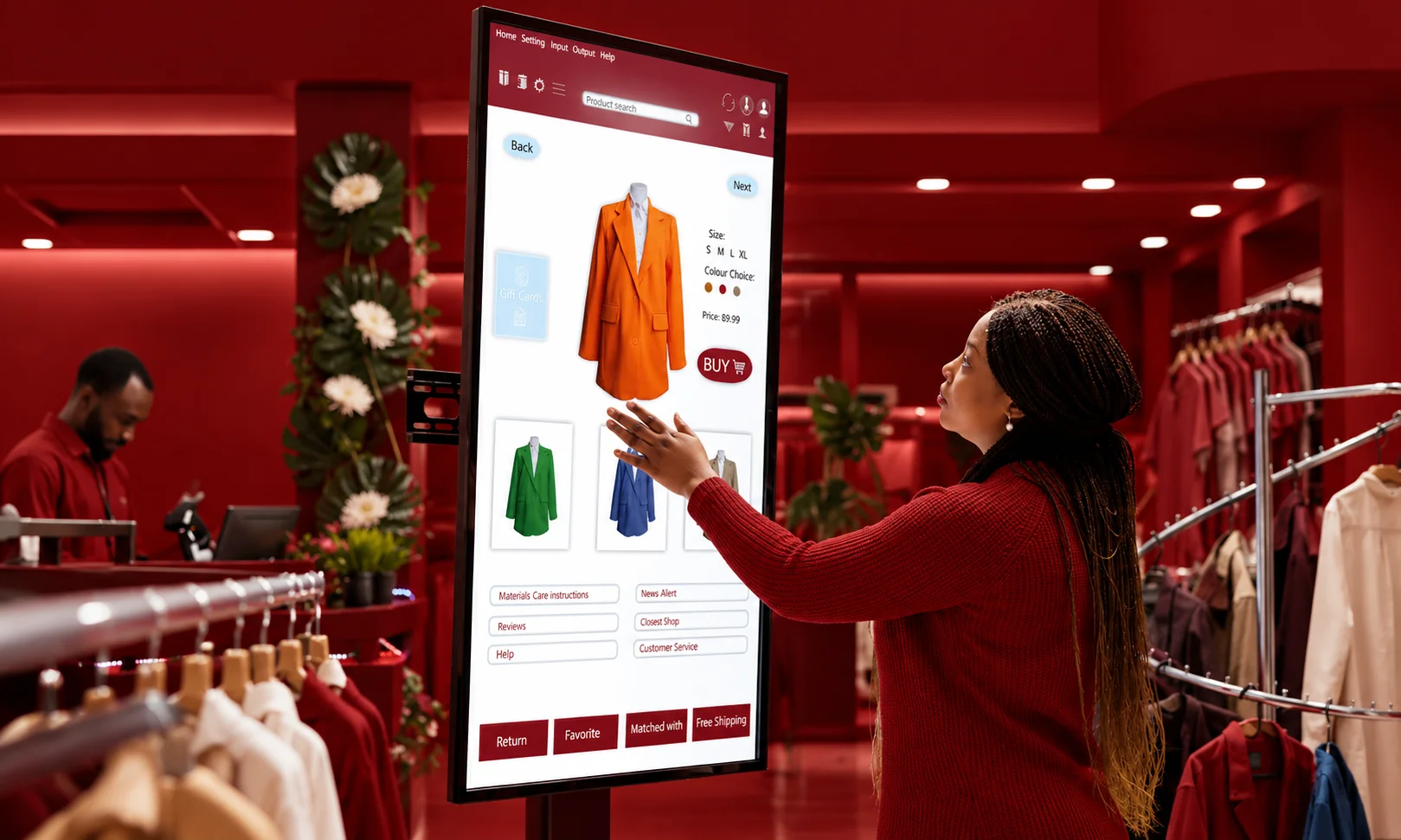
In store retail media covers more than the digital screens appearing in aisles. Current industry standards focus on digital screens, audio and connected shopping formats, while the wider category also includes physical experiences such as sampling and demonstrations. The formats a buyer may encounter include:
- Digital screens near entrances, aisles, shelves or checkout
- Digital shelf-edge displays
- In-store audio
- Product sampling and demonstrations
- Trolley and basket placements
- App-connected activity that links the store visit with a digital experience
Some of this inventory is genuinely new. A digital screen with scheduled ad delivery has a media system behind it. Other formats have existed for years as shopper or trade marketing and are now being sold with a more formal media and measurement layer.
That distinction matters because the media format and the measurement method are separate things. Retail audiences add another layer. Retailers can use first party data from loyalty programs and purchase records to build audiences based on shopping behavior. That can make the audience more specific than simply counting people entering a store.
But knowing that a shopper belongs to a retail audience still does not prove that the shopper saw a particular screen or heard a particular audio message.
What is counted and what is modelled
This is the part a buyer should understand before looking at the sales number. A screen can record an ad play, the campaign timing and the location where the creative ran. Industry standards also distinguish between ad play, gross impressions, opportunity to see and likelihood to see.
Those terms exist because delivery and exposure are different events. The same basic logic applies across formats.
| Format | What can be directly recorded | What may require estimation |
| Digital screen | Ad play, timing, placement and campaign delivery | Shopper opportunity to see and likely exposure |
| Shelf-edge display | Display delivery and placement | Shopper exposure |
| In-store audio | Ad insertion, schedule and duration | Estimated opportunity to hear or audience exposure |
| Sampling | Samples distributed and activity recorded | Sales effect caused by the interaction |
| Store campaign | Participating stores and campaign period | Audience exposure and incremental sales |
The physical inventory is real. The audience number can still be estimated. A shopper walking past a screen creates an opportunity to see. That does not prove the shopper looked at the screen. The same applies to audio. A message can play while a shopper is somewhere in the store without giving the advertiser a direct record that the shopper heard it.
This is also why retail store screen advertising should not be reported in the same way as a directly observed digital action unless the measurement method supports that comparison.
The useful question is simple: Was this number counted by the system or calculated from other information? Traffic, location, timing and other signals can help build an audience estimate. They do not turn an opportunity to see into verified exposure by themselves. That is the distinction the report should make visible.
Audio is the hardest one to prove
Why audio is harder to measure:
In-store audio has a different measurement problem from a screen.
A screen has a fixed physical position. The retailer can record when the creative played and where that screen was located. In-store audio moves through the store environment as part of the wider audio schedule. Current retail media offerings include audio alongside screens and experiential placements.
Being in the store does not prove exposure:
The difficult question is exposure. A shopper can be inside the store while an audio ad is playing. That allows the campaign to reach that shopper. It does not establish that the shopper heard the message or paid attention to it. There is also no simple equivalent of a click.
That leaves buyers relying more heavily on the methodology used to turn campaign delivery and store activity into an audience estimate. Established out-of-home measurement work faces a similar problem because exposure has to be estimated from physical media delivery and audience signals rather than treated as automatically observed.
What sales changes can and cannot prove:
That does not mean in-store audio cannot influence sales. It means the report needs to separate the ad played from the number of people estimated to have heard it. If sales increased during an audio campaign, that is an observed sales change. It does not by itself prove that the audio caused the increase.
How attribution is built in store

How retailers connect media to purchases
In store attribution becomes more useful when the retailer can connect media activity with purchase behavior. The simplest path is store-level sales. A retailer can compare sales in stores where a campaign ran with sales in comparable stores where it did not. A more detailed system can use loyalty information to connect known households with purchases.
That is where closed loop measurement gets its value. Retailers can connect advertising activity with their own transaction data rather than stopping at an impression count.
Where the exposure and purchase gap appears
But the connection has limits. A shopper may see a screen without being identified by a loyalty system. Another shopper may buy the promoted product using a loyalty account without there being a verified record that the shopper saw the screen.
That creates a gap between exposure and purchase. Some retailers have stronger purchase identification than others. One current example reports a high loyalty-card capture rate and uses test and control groups alongside purchase data to assess advertising impact.
Another retailer describes its store advertising measurement using sales lift rather than treating the physical ad exposure as equivalent to a directly observed digital impression.
Attribution is not the same as incrementality.
The important point is that closed loop measurement does not automatically mean causal measurement.
Attribution can connect an exposure with a later purchase. Incrementality asks a different question: what additional sales happened because of the advertising? Those two numbers should never be treated as interchangeable.
What a good in store test looks like
How to build a matched-store test
A matched-store experiment can be useful when individual exposure is difficult to observe. Start with stores that are reasonably comparable on factors that can affect sales. Historical sales, geography, store size, customer mix and other relevant conditions can all matter. The campaign then runs in one group while a comparable control group does not receive it.
The exact number of stores depends on the expected effect, sales variation and the quality of the matching. There is no universal store count that makes every in-store test reliable.
How long should an in-store test run?
The same applies to duration. A short test can produce noisy results when weekly sales move sharply. A longer test gives more observations but can introduce other changes such as promotions, holidays, pricing or distribution shifts.
Those conditions should be agreed before the campaign begins. Industry measurement guidance recognizes test and control approaches alongside other methods for measuring incremental impact. Different methods answer different questions, so the design should match the decision the buyer needs to make.
Why incrementality matters in the test
This is where incrementality belongs in the in-store discussion. The broader argument is covered in our retail media measurement piece, but the practical point here is simple: a controlled store test can tell you more about incremental sales than an exposure number alone.
Retailers may prefer exposure-level attribution because it gives them a direct-looking connection between media and purchase. Store-level testing asks a harder question: did sales change more in the campaign stores than they would have without the campaign?
What a buyer should demand

Use this Counted vs Modelled Checklist before approving an in-store campaign:
- What was counted? Ask for ad delivery, campaign dates, stores and placements.
- What was modelled? Ask how audience and exposure numbers were calculated.
- What does exposure mean? Confirm whether it means opportunity to see or a stronger exposure signal.
- What purchase data was used? Ask whether results use store-level sales, loyalty data or both.
- Can you run a matched-store test? Agree on the control design before the campaign starts.
Those five questions expose most of the important gaps. If a retailer reports 1 million impressions, the buyer should know whether that means 1 million ad plays, 1 million opportunities to see or 1 million estimated exposures. The number alone is not enough.
The read
In-store measurement will probably remain partly modelled for some time because the physical environment makes individual exposure harder to observe than a digital delivery event.
The industry is already moving toward clearer definitions and more consistent measurement. The current standards explicitly separate ad delivery from opportunity to see and set out several approaches for sales measurement and testing.
What would force the next change is buyer pressure. Brands should ask retailers to show the counted event, the modelling step and the sales method in the same report. Once that becomes normal, the quality of the measurement will matter more than the size of the audience number.
Before the next in-store buy, ask one question: Which number in this report was physically counted and which number was calculated? If the answer is unclear, ask for the methodology before treating the result as evidence.