I first understood the appeal of retail media networks when I stopped looking at them as just another place to buy ads. The real advantage is much closer to the checkout: retailers know what shoppers search for, what they buy, and often what they buy repeatedly. That makes an RMN very different from a normal advertising website.
If you are trying to understand retail media networks, the important question is not simply which retailer has the biggest audience. It is whether that network has the right shoppers, useful data, quality inventory, sensible buying options, and measurement you can actually trust.
AI Overview
A retail media network (RMN) is an advertising business operated by a retailer that allows brands to reach shoppers using the retailer’s digital properties, physical stores, shopper data, or a combination of all three.
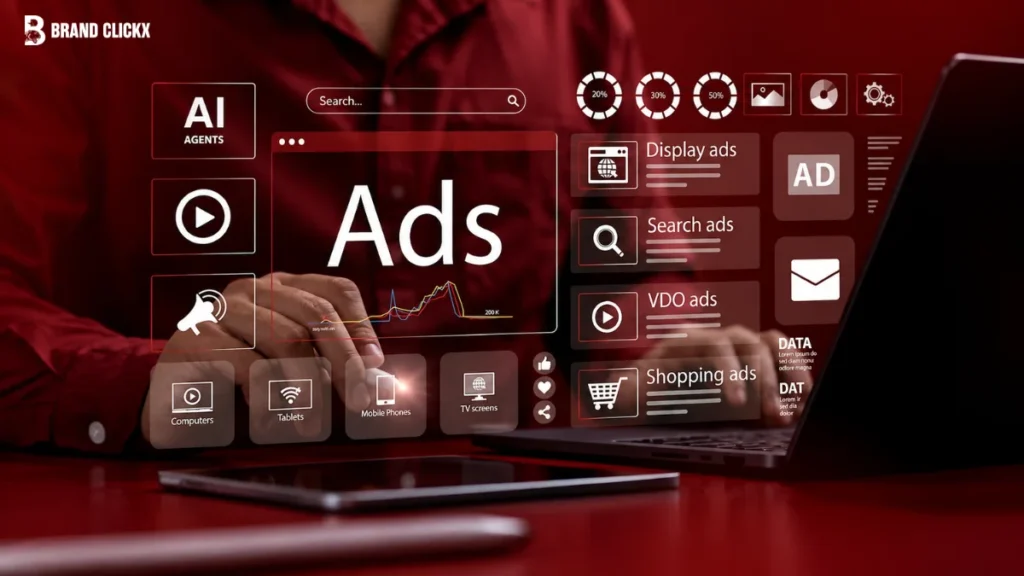
Ads can appear in retailer search results, product pages, apps, email, websites, in-store screens, connected TV and other off-site channels. The retailer can then connect advertising exposure with its own sales data, creating a form of closed-loop measurement.
The biggest advantage is purchase intent. A shopper searching for laundry detergent on a retailer’s website is much closer to buying than someone casually seeing a detergent ad in a social feed.
But RMNs are not automatically better than Google, Meta, or traditional DSPs. Their value depends heavily on the retailer, category, audience, inventory, costs, and quality of measurement.
Key Takeaways
- RMNs turn retailer-owned shopper data and advertising inventory into a media business.
- Amazon Ads and Walmart Connect remain the major players, but many specialist networks are growing.
- RMNs can offer strong purchase intent and closed-loop sales measurement.
- On-site, off-site and in-store inventory serve different marketing goals.
- A retailer’s reported ROAS does not automatically prove incremental sales.
- Fragmentation, rising costs and inconsistent measurement remain major problems.
- The best RMN is usually the one with the strongest connection to your customers and products, not simply the largest network.
What Is a Retail Media Network?
A retail media network is essentially a retailer’s advertising ecosystem.
Think about what a retailer already owns:
- A website
- An app
- Search results
- Product pages
- Loyalty programs
- Purchase records
- Physical stores
- Customer audiences
- Sometimes connected TV or other media inventory
The retailer can package those assets and sell advertising to brands.
For example, a shopper searches for “protein powder” on a retailer’s website. Sponsored products may appear above organic results. Later, the same shopper might see a display ad while browsing another page. The retailer can potentially connect those advertising interactions with a later purchase.
That combination of media + shopper data + commerce + measurement is what makes an RMN different.
WARC expects global retail media spending to reach $223.4 billion in 2027, representing 15.2% of worldwide advertising spend. Growth is slowing as the market matures, however, which means retailers increasingly have to prove that their networks deliver real business value.
How Do Retail Media Networks Work?
The basic process is easier than the industry terminology makes it sound.
1. The retailer collects shopper signals
The retailer may have information from searches, product views, carts, purchases, loyalty programs and other interactions.
This is valuable because the data comes directly from the retailer’s relationship with shoppers.
2. A brand chooses an audience and objective
A brand might want to:
- Increase product sales
- Launch a new product
- Reach existing buyers
- Find new customers
- Defend search visibility
- Build awareness
The campaign objective affects which inventory makes sense.
3. The brand chooses advertising inventory
This could be a sponsored product, display placement, video, off-site programmatic campaign or an in-store screen.
Not every RMN offers all of these options.
4. The ad is delivered
On a retailer’s website, ads may be selected through an auction or ranking system.
The platform considers factors such as the advertiser’s bid, relevance, shopper context and expected value.
5. The retailer measures the outcome
The retailer can compare advertising activity with sales occurring through its own commerce environment.
That is where RMNs have a major advantage over many traditional media channels.
But there is a catch: attributed sales are not always the same as incremental sales.
If someone was already planning to buy your product, an ad appearing shortly before the purchase may receive credit without actually causing the purchase.
That distinction is becoming increasingly important as advertisers demand better measurement. The IAB now recommends approaches such as experiments, counterfactual models and econometric methods for assessing incrementality.
The Main Types of Retail Media Network Inventory
Most RMNs can be understood through three major inventory groups.
On-site retail media
This is advertising on the retailer’s own digital properties.
Common formats include:
- Sponsored Products
- Sponsored Search
- Sponsored Brands
- Display ads
- Product-page placements
- Native recommendations
- Video
This is usually the closest advertising gets to the point of purchase.
Someone searching for “running shoes” is already expressing commercial intent. That makes on-site search particularly valuable for performance campaigns.
Off-site retail media
Off-site advertising takes retailer audience data beyond the retailer’s own website.
A retailer may activate its audiences through:
- Programmatic advertising
- Social platforms
- Connected TV
- Video
- Open-web display
This gives RMNs a way to compete for budgets that would otherwise go to traditional digital advertising.
The trade-off is that measurement becomes more complicated once the advertising and purchase happen across different environments.
In-store retail media
This is the physical side of the business.
It can include:
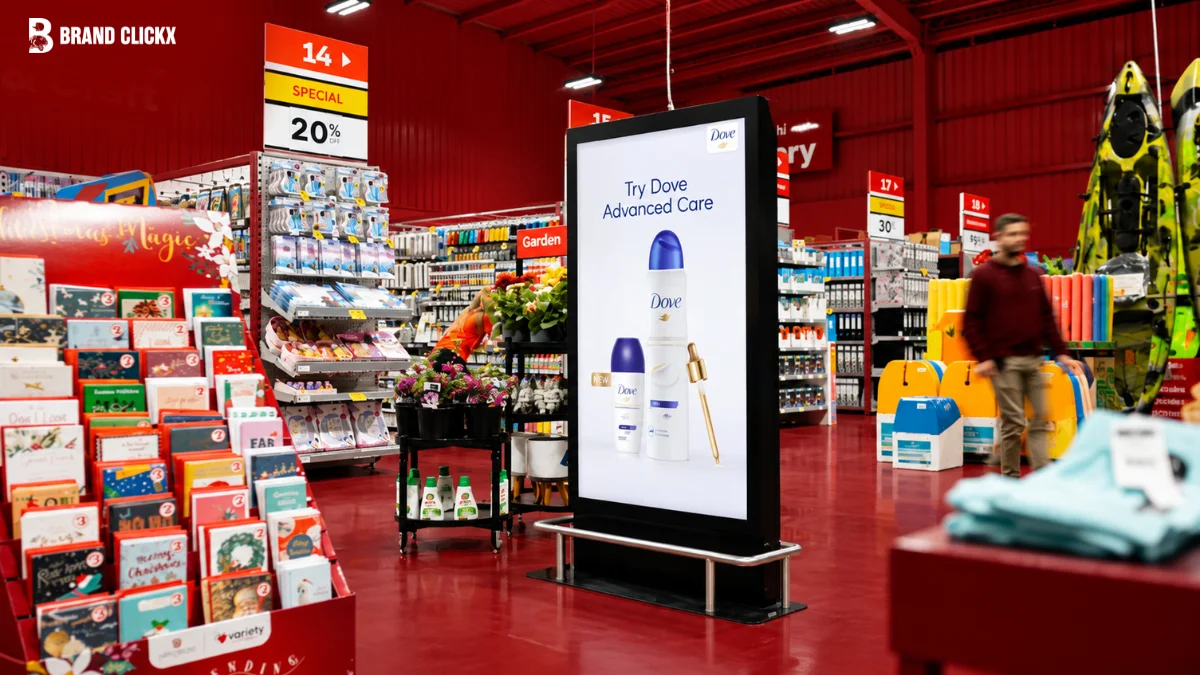
- Digital endcaps
- In-store screens
- Digital shelf displays
- Smart carts
- Kiosks
- In-store audio
- Checkout-area screens
In-store media has obvious potential because shoppers are physically close to products. But measurement is harder than on an ecommerce product page.
The IAB has specifically highlighted operational complexity, inconsistent standards and limited comparability as challenges for in-store media measurement.
Top Retail Media Networks in 2026
There is no single ranking that makes sense for every advertiser. A grocery brand, electronics company and beauty brand can have completely different priorities.
Still, several networks stand out.
1. Amazon Ads
Amazon remains the benchmark for retail media because its advertising business is deeply connected to ecommerce search and product discovery.
Sponsored Products, Sponsored Brands and display formats allow brands to reach shoppers throughout the purchase journey.
Amazon also has an advantage in scale and intent. When someone searches for a product on Amazon, there is often a very clear commercial reason behind that search.
2. Walmart Connect
Walmart Connect combines Walmart’s ecommerce audience with its enormous physical-store footprint.
That makes it particularly interesting for consumer packaged goods, grocery, household products and other categories where offline purchases remain important.
Walmart has also been expanding into social and connected TV, pushing its network beyond the Walmart website itself.
3. Target Roundel
Target’s network benefits from the retailer’s relationship with shoppers and its loyalty ecosystem.
It can be especially relevant for brands in categories such as beauty, home, apparel and consumer products.
The main attraction is not simply the number of people Target reaches. It is the ability to connect advertising with Target shopping behavior.
4. Kroger Precision Marketing
Kroger has an especially valuable asset for grocery and consumer brands: detailed purchase and loyalty data.
For brands selling products frequently bought in supermarkets, this type of data can be much more useful than broad demographic targeting.
5. Instacart Ads
Instacart sits directly inside online grocery shopping.
Its value comes from the connection between advertising and grocery purchase behavior across its retail ecosystem.
That makes it particularly relevant when the campaign objective is immediate product discovery and conversion.
Other notable networks
The market goes well beyond the largest names.
Home Depot Orange Apron Media, Lowe’s, Best Buy Ads, Ulta UB Media, Sephora and other retailer networks are building their own propositions around specific shopping audiences and categories.
That creates an important lesson for advertisers: the biggest RMN is not always the best RMN.
A smaller retailer can sometimes provide a more valuable audience for a specific category.
Retailer-Owned RMN vs. RMN Technology Platform
This distinction causes a surprising amount of confusion.
Amazon Ads, Walmart Connect and Target Roundel are examples of retailer-owned media businesses.
Companies such as Criteo, Pacvue, Skai and other retail-media technology providers can help advertisers manage campaigns, data, measurement or buying across multiple networks.
They are not necessarily the retailer owning the underlying shopper relationship.
A simple way to remember it:
The retailer owns the shopper relationship. The technology company may help you operate across that relationship.
This distinction matters when comparing vendors, contracts and measurement capabilities.
How Do Retail Media Networks Make Money?
The business model is straightforward.
Retailers sell advertising inventory to brands.
A brand pays for exposure, clicks, impressions, video, sponsored placement or another agreed advertising outcome.
The retailer can then monetize assets it already owns:
- Website traffic
- Search results
- Product pages
- Shopper data
- Loyalty audiences
- Store screens
- Off-site audiences
This is one reason retailers are interested in building media businesses. They are not starting with a blank advertising platform. They already have customers, products and shopping activity.
But advertisers should not assume that every available placement deserves a budget.
The question should always be: Does this placement influence a valuable business outcome?
How Much Does Retail Media Advertising Cost?

There is no universal RMN price.
Costs vary by:
- Retailer
- Category
- Ad format
- Competition
- Audience
- Placement
- Campaign objective
- Auction demand
- Minimum spend
- Agency or platform fees
Sponsored search is usually bought differently from premium display or CTV.
For that reason, be careful with articles promising a single average “RMN cost.” A number without the retailer, format and buying model behind it is rarely useful.
For planning purposes, compare the total cost of reaching the audience, not just the media rate.
Ask about platform fees, minimum commitments, creative costs, data fees and measurement costs as well.
How Is RMN Performance Measured?
Most advertisers start with familiar metrics:
- Impressions
- Click-through rate
- Cost per click
- Conversion rate
- ROAS
- Cost of sales
- New-to-brand customers
- Sales
These are useful, but they do not tell the entire story.
ROAS is not the same as incrementality
Suppose a retailer reports a 6x ROAS.
That sounds excellent.
But what if many of those shoppers would have purchased the product anyway?
The campaign generated attributed sales, but its true incremental impact could be much smaller.
This is one of the biggest measurement questions facing the industry.
IAB says commerce media gives advertisers access to more deterministic purchase data and closed-loop feedback, but that advantage also requires more sophisticated measurement.
That is why brands should ask RMNs:
- How is attribution defined?
- What attribution window is used?
- Can you measure new customers?
- Can you run a holdout or control test?
- Can you measure incremental sales?
- Can results be compared with other media channels?
A good dashboard tells you what happened.
A good measurement system helps you understand why it happened.
Why Are Retail Media Networks Facing Criticism?
RMNs have real advantages, but they are not perfect.
Fragmentation
Every retailer can have different dashboards, definitions, buying processes and reporting.
If a brand works with ten networks, the operational workload can become painful.
Walled gardens
Retailers naturally protect their customer and purchase data.
That creates useful privacy boundaries, but it can also make cross-network measurement difficult.
Rising costs
As more advertisers compete for valuable retail audiences, premium placements can become expensive.
Brands therefore need to judge whether additional spending is producing incremental value rather than simply buying more attributed sales.
Ad overload
Retailers have to balance advertising revenue with the shopping experience.
Too many sponsored placements can make a website feel more like an advertising platform than a store.
Transparency
Advertisers increasingly want to understand exactly how performance numbers are calculated.
That issue was visible at a September 2026 retail media event where advertisers raised concerns about data transparency and the meaning behind reported ROAS.
How to Choose the Right Retail Media Network
Don’t begin with the question, “Which RMN is biggest?”
Start with your customer.
1. Does the retailer have your shoppers?
Audience fit comes first.
A huge network is not useful if its shoppers rarely buy your category.
2. Does it have useful purchase data?
Look for data that helps you understand actual shopping behavior, not just broad demographics.
3. Does it offer the right inventory?
If your goal is conversion, on-site search may matter most.
If you need awareness, off-site video or CTV could be more relevant.
4. Can you measure the outcome?
Ask for clear definitions before spending heavily.
5. What are the minimums and fees?
A network can look attractive until platform fees, minimum commitments and creative requirements are included.
6. Can it fit your wider media strategy?
Your RMN budget should not operate in isolation.
Compare it with Google, Meta, programmatic, CTV, SEO and other channels based on the role each one plays.
Who Should Use a Retail Media Network?
RMNs are particularly useful when:
- Your products are already sold through the retailer.
- The retailer has a strong audience for your category.
- You want to reach shoppers close to purchase.
- You need sales-based measurement.
- You have enough budget to test and optimize.
- Your product has sufficient demand.
They may be less useful when there is weak retailer-product fit, little purchase demand or no realistic way to measure whether advertising is creating additional sales.
The best RMN strategy is not “be everywhere.”
It is be where the right shoppers are already buying.
What Is Changing in Retail Media in 2026?
The industry is moving into a more mature phase.
The early pitch was simple: retailers have valuable shopper data, so brands should spend more money with them.
Now advertisers are asking harder questions about incrementality, transparency, interoperability and profitability.
IAB’s 2026 outlook expects commerce media spending to grow 12.1% in the U.S., while also identifying fragmentation, measurement inconsistency and incrementality as continuing challenges.
Three changes deserve particular attention.
AI and automation
AI is increasingly being used for bidding, audience selection, campaign optimization and creative workflows.
The next step could be AI-mediated shopping itself. If shoppers increasingly use conversational assistants to research and purchase products, retailers will need to rethink where advertising fits into that experience.
More off-site and CTV
RMNs are no longer satisfied with owning the product-search page.
They want to follow shoppers beyond the retailer’s website through programmatic, social and connected TV.
That expands the opportunity but also makes measurement harder.
Better measurement standards
The industry is working toward more consistent definitions and measurement frameworks.
IAB’s Commerce Center is currently focused on areas including incrementality, in-store measurement, data collaboration and privacy-safe activation.
That standardization will matter because advertisers cannot efficiently compare ten networks if every network measures success differently.
The Future of Retail Media Networks
The next stage of retail media will probably be less about launching another network and more about making existing networks easier to buy, measure and compare.
Retailers will continue expanding beyond websites into stores, CTV and other channels.
Technology companies will work to make cross-network buying easier.
AI will automate more campaign decisions.
And advertisers will become more skeptical of impressive-looking ROAS numbers without evidence of incremental impact.
WARC expects retail media growth to slow to 9.8% in 2027 when Amazon is excluded, the lowest annual growth rate it has recorded for the category. That does not mean retail media is disappearing. It means the market is moving from rapid expansion toward a more mature phase where efficiency matters more.
That is probably a healthy change.
The winners will not simply be the retailers with the most advertising inventory. They will be the networks that can offer useful audiences, strong shopping experiences, credible measurement and enough transparency for brands to confidently keep investing.
Frequently Asked Questions
What is a retail media network?
A retail media network is an advertising platform operated by a retailer. It lets brands advertise to shoppers using retailer-owned data, websites, apps, stores and other media channels.
What are the biggest retail media networks?
Amazon Ads and Walmart Connect are among the largest. Target Roundel, Kroger Precision Marketing, Instacart Ads and several specialist retailer networks are also important.
What is the main benefit of an RMN?
The biggest advantage is access to shoppers close to a purchase. Retailers can also connect advertising activity with their own sales data.
Are retail media networks expensive?
They can be, especially in competitive categories. Costs depend on the retailer, format, audience, auction demand, minimums and additional platform fees.
What is closed-loop measurement?
It means connecting advertising exposure with purchases that happen within the retailer’s commerce ecosystem. It can provide stronger sales visibility than many traditional advertising channels.
Is ROAS enough to judge an RMN?
No. ROAS measures attributed revenue against advertising cost, but it does not necessarily prove that the advertising caused additional sales.
What is the difference between an RMN and an RMN technology platform?
An RMN is generally operated by the retailer that owns the shopper relationship and purchase data. A technology platform helps advertisers or retailers manage buying, data, optimization or measurement.
Will retail media keep growing?
Yes, current forecasts still show growth, but the market is maturing. Future growth will depend increasingly on measurement quality, efficiency, new inventory such as CTV and in-store media, and better cross-network operations.
Final Thought
Retail media networks have become much more than sponsored product listings.
They are becoming full advertising ecosystems built around something marketers have always wanted: a closer connection between advertising and actual buying behavior.
But that advantage comes with responsibility.
If an RMN cannot explain where its numbers come from, how its attribution works, or why its audience is valuable for your particular products, a big shopper database alone is not enough.
The smartest approach is to treat every network as an investment decision.
Look at the audience. Check the inventory. Understand the costs. Question the attribution. Test incrementality when possible.
Then decide where the network genuinely earns a place in your media mix.
That is where retail media networks become useful not simply because retailers can sell advertising, but because the right network can connect shopper intent, media and measurable commerce in one place.