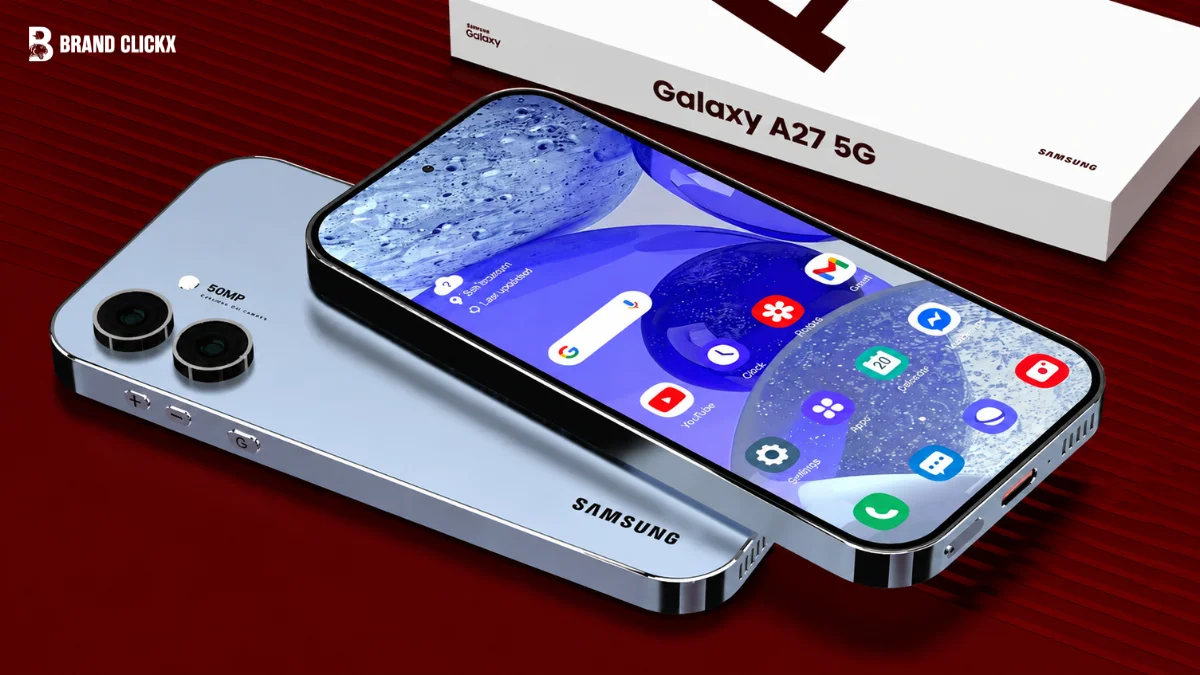
Samsung Galaxy A27 5G review covering its display, performance, cameras, battery, software, price, specifications, pros, cons and whether it is worth buying in 2026.
The mid-range smartphone market is increasingly competitive in 2026. Buyers can expect smooth displays, capable cameras, large batteries and years of software support without moving into flagship pricing. But better specifications don’t always add up to a better phone and the Galaxy A27 5G is a good example of that gap. It pairs a 6.7-inch 120Hz AMOLED display, 5,000mAh battery, 50MP OIS camera and best-in-class software support with a 5MP ultrawide, IP64 protection and 25W charging that all feel like steps backward from the phone it replaces.
Quick Verdict
- The good: display, software support, battery life, main camera.
- The bad: 5MP ultrawide, IP64 rating, 25W charging, mid-range performance.
- The catch: several of the weak points are actual downgrades from the Galaxy A26 it replaces, not just omissions.
Best for:
- Samsung fans and existing ecosystem users
- Streaming and social media
- Everyday, non-demanding use
- Long-term ownership
- Large-screen entertainment
- Buyers who want expandable storage
Not ideal for:
- Serious mobile gamers
- Heavy photographers
- Fast-charging enthusiasts
- Buyers seeking flagship-level performance
- Anyone who needs water-submersion protection
Key Specifications
| Feature | Galaxy A27 5G |
| Display | 6.7-inch FHD+ Super AMOLED, up to 120Hz |
| Resolution | 1080 × 2340 |
| Processor | Qualcomm Snapdragon 6 Gen 3 |
| RAM / Storage | 6GB/128GB or 8GB/256GB (market dependent) |
| Main camera | 50MP with OIS |
| Ultrawide / Macro | 5MP / 2MP |
| Selfie camera | 12MP |
| Battery | 5,000mAh, up to 25W charging |
| OS / Skin | Android 16 / One UI 8.5 |
| Software support | Up to 6 OS upgrades + 6 years security updates |
| Water/dust resistance | IP64 |
| Weight / Thickness | 200g / 7.8mm |
| Video | Up to 4K at 30fps |
| Expandable storage | microSD, up to 2TB |
Samsung’s official specifications confirm the display, chipset, camera hardware, battery, charging speed and IP64 rating. Memory, storage and connectivity configurations vary by market.
Design and Build
- Cleaner, more premium look than older budget Galaxy phones.
- Switches to an Infinity-O punch-hole camera, replacing the previous waterdrop notch gives the front a more modern, S-series-adjacent appearance.
- Key Island design continues on the side rail, with the fingerprint scanner built into the power button a natural landing spot for the thumb on pickup.
- Dimensions: 162.4 × 78.2 × 7.8mm, 200g substantial rather than light.
- The 6.7-inch display makes one-handed use a stretch for smaller hands; the usual trade-off of a large-screen device.
- Corning Gorilla Glass Victus+ on front and back adds real durability.
- Recessed rear camera bump protects the lenses when the phone is set face-up on a surface.
IP64 vs. the A26’s IP67: What Actually Changed
- The A27 carries an IP64 rating: protection against dust and water spray, but not submersion.
- The A26 carried IP67: protection up to 30 minutes in a metre of freshwater.
- IP64 will handle: rain, splashes, spills, dust.
- IP64 will not handle: a drop in the sink, a trip to the pool.
- For a phone that costs more than its predecessor, that’s a hard downgrade to justify.
Display and Speakers
- 6.7-inch FHD+ Super AMOLED panel, up to 120Hz refresh.
- 120Hz doesn’t add processing power, but it does make scrolling, menus and supported games feel noticeably smoother than the chipset specs alone suggest.
- Samsung’s Vision Booster helps outdoors though don’t expect flagship-level peak brightness in direct sun.
- Single bottom-firing speaker: fine for calls, podcasts and casual viewing.
- Easy to accidentally cover in landscape mode.
- Loses clarity if you push the volume too high.
- Anyone who cares about stereo sound should look elsewhere.
Performance and Gaming
- Snapdragon 6 Gen 3: a capable everyday chipset, not a performance-class one.
- Announced in 2024; already succeeded by a newer generation.
- Handles well: messaging, social apps, streaming, email, browsing.
- Struggles with: heavy multitasking, demanding 3D titles, sustained load.
- Real-world friction points: slower app switching, occasional lag opening the camera, dropped frames in graphically intensive competitive titles (PUBG Mobile, Call of Duty Mobile) even on lower settings.
Is the Galaxy A27 Good for Gaming?
- Casual and moderate games (puzzle, strategy, social, most mobile 3D titles) run acceptably, helped by the smooth 120Hz display.
- It’s suitable for gaming, not built for it.
- Skip it if gaming is your primary use case; it’s fine if gaming is occasional.
- Buying tip: the 8GB/256GB configuration (where available) should feel noticeably less sluggish day-to-day than the base 6GB model.
RAM, Storage and Expandability
- US configuration: 6GB/128GB. 8GB/256GB available in other markets.
Is 128GB Enough?
- Enough for: messaging, social media, streaming, moderate photography.
- Fills up faster than it used to: 4K video and larger apps eat into it quickly.
- Heavy photographers or anyone storing offline media on-device will notice the ceiling sooner.
Should You Buy the 256GB Model?
- Yes, if the price gap is reasonable.
- Better long-term choice for anyone keeping the phone several years.
- Where available, it pairs with 8GB of RAM a meaningfully smoother day-to-day experience than the base model.
microSD: Still a Genuine Advantage
- Supports cards up to 2TB increasingly rare on modern phones.
- Genuine point in its favour for long-term storage.
- Caveat: dual-SIM use shares a slot with the microSD card, so you can’t run both at once.
Cameras
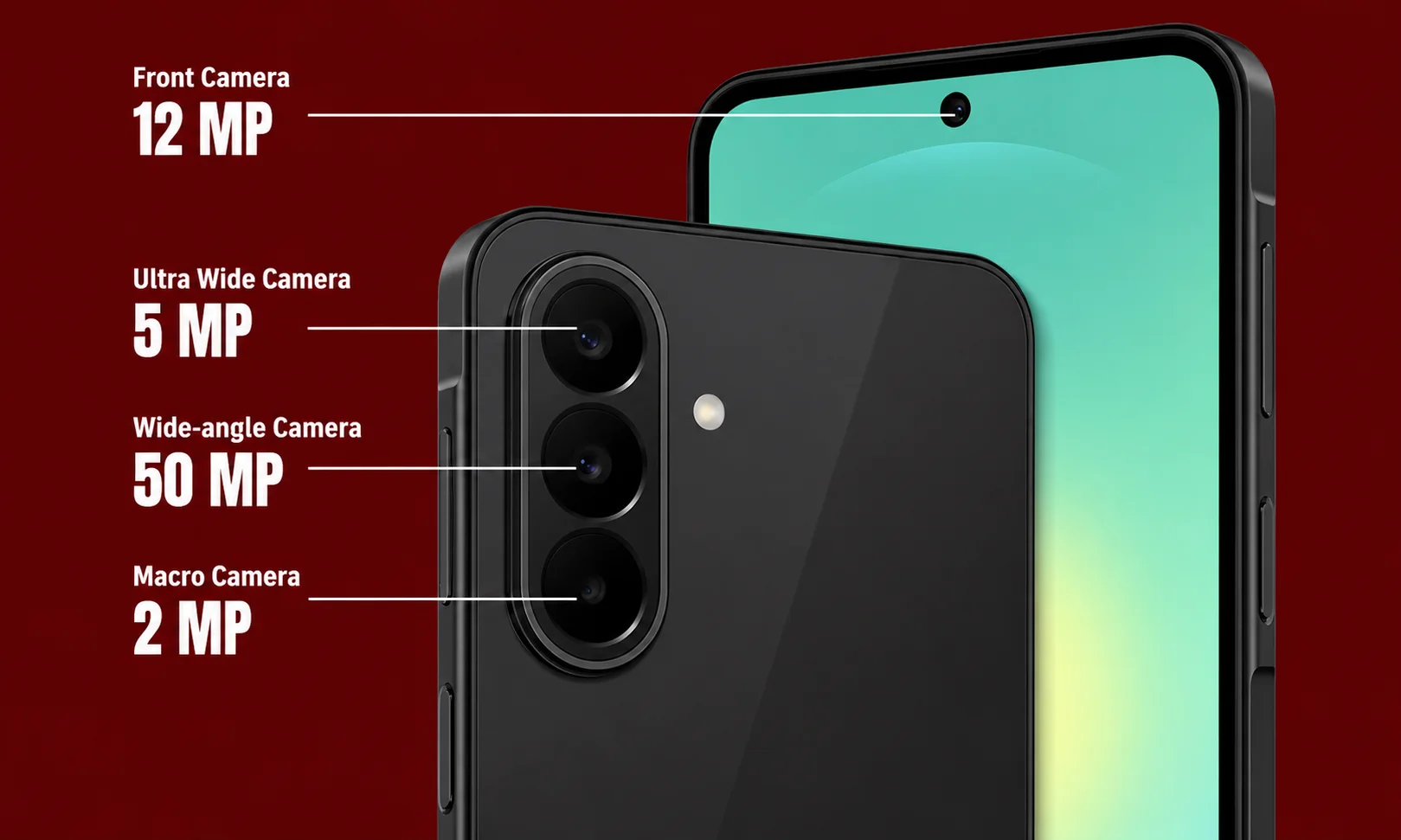
Rear setup: 50MP main (OIS) + 5MP ultrawide + 2MP macro. Front: 12MP. The three rear cameras are not equally useful.
Main camera (50MP, OIS)
- The camera worth buying the phone for.
- OIS steadies shots in daylight and moderate light.
- Solid results for the price: landscapes, food, people, architecture.
- Weaker in low light and overcast conditions — more noise, muddier detail.
- Camera app can be slow to launch, with noticeable shutter lag.
- Moving subjects (kids, pets) are prone to blur.
Ultrawide (5MP)
- The most questionable spec decision on the phone.
- Down from the A26’s 8MP ultrawide, despite the A27 costing more.
- Still useful for landscapes, group shots, tight interiors.
- Usable in good light, but detail, exposure and colour accuracy trail the main sensor — expect more muted colour and weaker shadow detail.
Macro (2MP) and zoom
- Macro is a fun extra for flowers and textures, not a reason to buy the phone.
- No dedicated telephoto lens.
- Zoom beyond 2x is digital, and detail drops off quickly.
- Best practice: shoot at 1x and move closer to the subject where possible.
Selfie camera (12MP)
- Solid for video calls, group selfies, casual social content.
- Improved HDR helps in mixed lighting.
- Not aimed at competing with premium selfie systems.
Video
- Up to 4K at 30fps on the rear cameras.
- Enough for casual content, travel clips, family video.
- Not a phone built around serious video creation.
AI Features
- Object Eraser removes distracting elements from photos; results depend heavily on the image.
- Voice Transcription turns recordings into text; useful for notes, interviews, meetings.
- Circle to Search search anything visible on screen.
- Availability varies by market and language.
- These features won’t turn the A27 into a Galaxy S-series phone, but they keep the software feeling current.
- Notable omission: no flagship-tier Galaxy AI agent (Now Brief, Now Nudge) Google’s Gemini handles AI tasks instead.
Battery Life and Charging
- 5,000mAh battery, rated for up to 23 hours of video playback under Samsung’s test conditions.
- Real-world results vary with brightness, 5G use, gaming, and signal strength.
- Typical mixed daily use (email, social, some streaming, light gaming): should comfortably last a full day with charge to spare.
- Lighter use: may stretch closer to two days.
- Charging capped at 25W; Samsung claims up to 45% in 30 minutes.
- Adequate for overnight top-ups, but conservative next to same-price rivals with faster wired charging.
- No wireless or reverse wireless charging at this price point.
Software
- Launches on Android 16 with One UI 8.5.
- Includes Quick Share, Samsung Account, Knox security, plus the AI features above.
- Some bloatware ships preinstalled depending on region expect a few social/streaming apps you’ll likely uninstall.
- Interface is clean and familiar to anyone who’s used a Samsung phone before.
The real headline: support length
- Up to 6 OS upgrades
- Up to 6 years of security updates
- Measured from the device’s global manufacturing date in Q2 2026; timing can vary by model and market.
- Class-leading for a mid-range phone — arguably the single biggest reason to choose the A27 over hardware-stronger rivals with shorter update windows.
Connectivity
- 5G, Wi-Fi, Bluetooth, NFC, GPS, USB-C, dual-SIM support.
- Exact configurations vary by market check your region’s specific listing if a particular feature matters to you.
Price and Value
- US starting price: $349.99 (around £319), available from July 14, 2026.
- A noticeable increase over the outgoing A26, part of a broader 2026 mid-range price trend.
- Sits below the Galaxy A37 ($449.99), competing with a strong field of similarly priced rivals.
Is the Galaxy A27 Good Value?
- Judged purely on hardware specs: hard to call it a value champion given the downgrades from its predecessor.
- Judged on Samsung’s software, AMOLED display, expandable storage and long-term updates: the value case holds up much better.
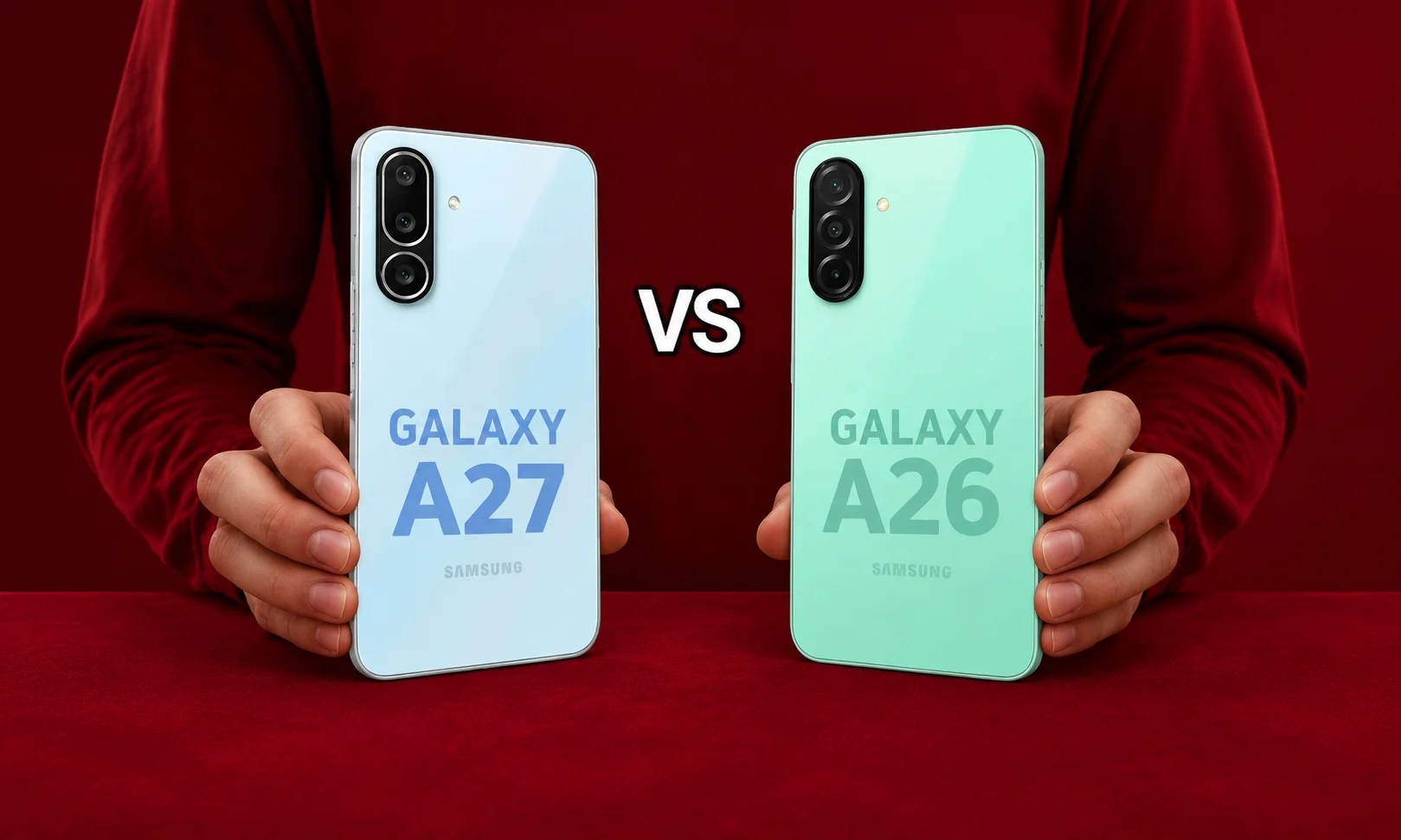
Galaxy A27 vs. Galaxy A26
- Gains: newer chipset, One UI 8.5 at launch, cleaner punch-hole design.
- Loses: ultrawide drops from 8MP to 5MP, water resistance drops from IP67 to IP64.
- Close in price → A27’s newer software and chipset make it the more logical buy.
- A26 at a real discount → its better ultrawide and stronger water resistance make it worth a second look.
Galaxy A27 vs Galaxy A37 vs Nothing Phone (4b)
| Feature | Galaxy A27 5G | Galaxy A37 5G | Nothing Phone (4b) |
| Position | Mid-range | Higher-tier mid-range | Alternative mid-range |
| Display | 6.7″ AMOLED, 120Hz | 6.7″ AMOLED, 120Hz | 6.77″ AMOLED, 120Hz |
| Processor | Snapdragon 6 Gen 3 | Higher-tier processor | Snapdragon 6-series |
| Main camera | 50MP OIS | Higher-tier camera system | 50MP OIS |
| Battery | 5,000mAh | 5,000mAh | Large battery |
| Charging | Up to 25W | Faster charging | Faster charging |
| Software support | 6 upgrades / 6 yrs security | Long-term Samsung support | Nothing’s own support window |
| Water resistance | IP64 | Higher-tier protection | Depends on model |
| US starting price | $349.99 | $449.99 | Varies by market |
- Choose the A27 if: large AMOLED display, One UI, long software support, expandable storage, staying near $350.
- Choose the A37 if: budget can stretch further, want stronger hardware, better cameras, faster charging the price gap is relatively small for what you gain.
- Choose the Nothing Phone (4b) if: distinctive design and a different software experience matter more than the Samsung ecosystem.
Pros and Cons
| Pros | Cons |
| Excellent 6.7-inch AMOLED display at 120Hz | Snapdragon 6 Gen 3 isn’t class-leading; can feel sluggish |
| Modern punch-hole design, solid build | 5MP ultrawide is a downgrade from the A26’s 8MP |
| 5,000mAh battery, reliable all-day use | IP64 is a real step down from the A26’s IP67 |
| Six OS upgrades, six years of security updates | 25W charging is conservative for 2026 |
| 50MP OIS main camera | No dedicated telephoto, no wireless charging |
| microSD support up to 2TB | Higher launch price than its predecessor |
Who Should Buy the Galaxy A27?
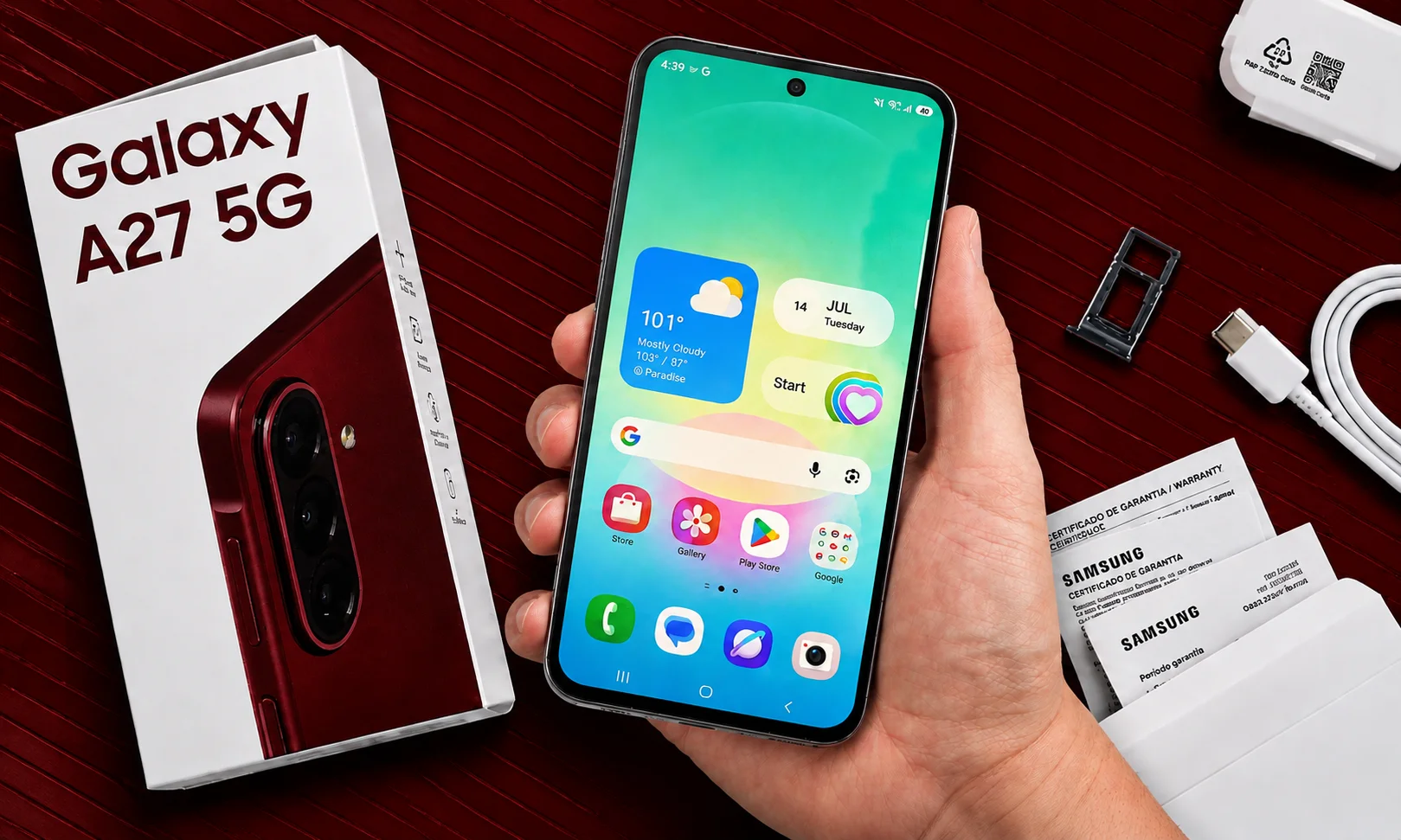
- Want a large, colourful AMOLED display for streaming and social media
- Value Samsung’s software and ecosystem (Galaxy Buds, Watch, Quick Share)
- Prioritise long-term software support over peak performance
- Want expandable storage via microSD
- Plan to keep the phone for several years
Who Should Skip It?
- Want flagship-level or fast mid-range performance
- Prioritise fast charging
- Prioritise photography, especially wide-angle or low-light shots
- Need real water-submersion protection, not just splash resistance
- Are a serious mobile gamer chasing high, stable frame rates
Final Verdict
- Real strengths: genuinely excellent display for the price, design that’s a step above older budget Galaxy phones, dependable all-day battery, and a six-year update commitment strong enough on its own to outweigh some hardware compromises for long-term owners.
- Real compromises: the 5MP ultrawide is a clear downgrade from the A26’s 8MP sensor, the IP64 rating trades away real water protection the previous model had, and 25W charging looks increasingly conservative next to similarly priced rivals. The Snapdragon 6 Gen 3 is capable for everyday tasks but shows its limits under any real load.
- The deciding factor is price. At full price, the A27 competes against phones that outdo it on hardware for similar money. At a discount or if the Galaxy A37 costs only a little more either alternative becomes easy to recommend over the A27 as configured here.
The Bottom Line
The Galaxy A27 5G is a solid pick if you value a great display, long software support and a dependable battery inside the Samsung ecosystem and are willing to live with a weaker ultrawide camera, slower charging and reduced water resistance to get it.
Frequently Asked Questions
Is the Samsung Galaxy A27 5G worth buying?
Yes, particularly if you value Samsung’s software, AMOLED display, expandable storage and long-term update support.Less compelling for serious gamers or buyers prioritising fast charging.
How long will Samsung support the Galaxy A27?
Up to six OS upgrades and six years of security updates.Availability and timing can vary by model and market.
Is the Galaxy A27 good for gaming?
Handles casual and moderately demanding games well, helped by the 120Hz display.Struggles with graphically intensive competitive titles even at lower settings.
What is the biggest weakness of the Galaxy A27?
Hardware value relative to price: the 5MP ultrawide, IP64 rating, 25W charging and mid-range chipset several of which are downgrades from its own predecessor.
What is the biggest strength of the Galaxy A27?
The combination of a genuinely excellent AMOLED display and class-leading long-term software support.
Should you buy the Galaxy A27 or Galaxy A26?
See the comparison above in short, the A27 if prices are close, a discounted A26 if water resistance and ultrawide quality matter more to you.
Should you buy the Galaxy A27 or Galaxy A37?
See the comparison above the A37 if you can stretch the budget, the A27 if you want to stay near $350.