Buyers are queuing in Ho Chi Minh City’s jewellery quarter clutching paperwork they no longer believe. PNJ has lost around 30% of its share price, and the industry’s core product was never the stone.
Published: Monday, 3 August 2026 | BrandClickX News Desk
Ongoing criminal investigation. All allegations described here are unproven. No individual named has been convicted, and the investigation remains active. PNJ maintains the diamonds it sold to customers were not among the smuggled stones.
Summary
Vietnamese police uncovered an alleged transnational diamond smuggling ring on 20 June 2026, implicating the former director of P-Lab, the gemstone certification arm of PNJ, Vietnam’s largest jeweller. Investigators allege GIA laser inscriptions were removed from smuggled stones and replaced with P-Lab codes and fresh certificates. PNJ shares have fallen around 30%, and consumers are selling diamonds at losses.
Key Takeaways
- Police uncovered an alleged diamond smuggling ring on 20 June 2026
- The former director of P-Lab, PNJ’s certification arm, is among those implicated
- Investigators allege GIA inscriptions were removed and replaced with P-Lab codes
- 141 shipments and more than 28,000 diamonds are alleged since 2024
- More than 30 people have been arrested or charged
- PNJ shares fell around 30%, losing roughly VND10 trillion in market value
- PNJ says its retail diamonds were not among the smuggled stones
- Three more jewellers were charged on 14 July; one suspended trading
- Consumers are reselling at around 20% below purchase price
What Investigators Allege
The mechanism is the story. It was not about smuggling stones — it was about laundering their identity.
According to the investigation, as reported by Dan Tri, the alleged scheme worked like this:
- Diamonds were sourced in India and consolidated in Hong Kong
- They were bought at discounted prices because their physical characteristics did not match their GIA grading reports
- Once in Vietnam, the original GIA laser inscriptions were removed
- New identification numbers were engraved under the P-Lab system
- Fresh P-Lab certificates were issued, legitimising the stones’ origin and raising their commercial value
- They were then sold to customers
The alleged organisers are Indian nationals operating mainly from Hong Kong.
| Detail | Figure |
| Shipments into Vietnam since 2024 | 141 |
| Diamonds involved | More than 28,000 |
| Estimated sales value | ~VND280 billion |
| Diamonds seized | ~1,100 |
| People arrested or charged | More than 30 |
A note on identification. Vietnamese outlets give the former P-Lab director’s name differently — some report Phạm Ngọc Thảo, others Đặng Ngọc Thảo. Both refer to the former director of PNJ Appraisal Company Limited, indicted by Thanh Hoa Provincial Police. We have not been able to reconcile the discrepancy and have used the role rather than the name where possible.
Why This Is Worse Than an Ordinary Fraud
A gemological laboratory sells one product, and it is not analysis. It is trust.
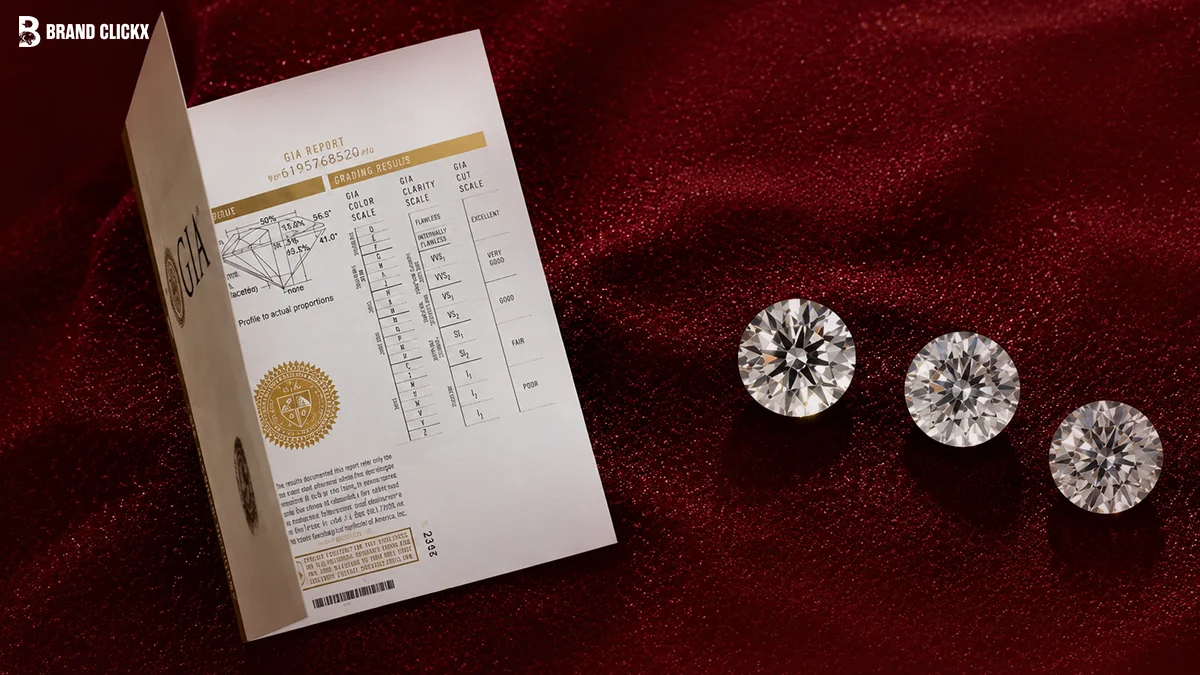
Unlike gold, diamonds have no publicly quoted market price. Value depends on colour, clarity, cut and carat — and on the grading certificate that verifies them.
Buyers who cannot assess a stone themselves are entirely dependent on the certifying body. A credible certificate turns an anonymous stone into a tradable asset. As one Vietnamese analysis put it, the certificate is the stone’s passport.
If certificates can be manipulated, the entire mechanism collapses — not just for the stones involved, but for every stone carrying the same paperwork.
That is why the damage extends far beyond 28,000 diamonds. Vietnamese experts have argued the biggest impact lies not in the value of the smuggled goods but in the erosion of confidence in domestic inspection services generally.
What Is Happening in the Market
Bloomberg reported on 2 August that Ho Chi Minh City’s jewellery quarter has fallen unusually quiet — with customers arriving not to browse but to sell.
Its description: buyers clutching old receipts and certificates, hoping to offload diamonds they no longer trust.
Nikkei Asia reported holders rushing to shops to sell over fears about provenance.
The losses are real. VietnamNet reported one buyer who sold her diamond and ring at roughly 20% below what she paid, saying that compared with buying gold at the same time, she had lost considerably more.
Retailers have started closing. On 14 July, authorities announced criminal charges against the owners of the Kim Ly, Ngoc Tam and Ngoc Chau Au jewellery businesses, along with a gemological appraiser, in connection with the same investigation. Ngoc Chau Au Diamond announced a temporary suspension of business.
Several well-known retailers suspending trade without warning is what converted a criminal case into a consumer panic. A buyer holding a stone from a suspended dealer has no buyback route at all.
Concerns had already been building. Debate intensified in mid-May 2026 after a social media livestream discussing the diamond business circulated widely.
The Cost to PNJ
PNJ is Vietnam’s largest jewellery retailer, and P-Lab is wholly owned by it.
| Metric | Figure |
| 2025 revenue | >VND35.4 trillion (~$1.35bn) |
| 2025 net profit | ~VND2.83 trillion (~$108m) |
| Total assets, end Q1 2026 | ~VND19.7 trillion (~$752m) |
| Share price fall to 20 July | ~30% |
| Market value lost | ~VND10 trillion |
PNJ has insisted the diamonds it sold to customers were not linked to the 28,000 smuggled stones.
The company is not a bystander in reputational terms, however. P-Lab is a wholly owned subsidiary, which means its operations and its leadership’s conduct attach directly to the listed parent. As one analysis framed it, the arrest of a subsidiary’s former director in a criminal investigation is a governance event for the parent company, not an arms-length one.
There is an additional irony. In early 2016 PNJ invested in advanced testing equipment supplied by GIA and De Beers — DiamondView, DiamondCheck and D-Sure systems — specifically to distinguish natural diamonds from lab-grown stones and simulants. P-Lab is also licensed to test gold purity nationwide, and its results have previously been used as evidence in domestic gold disputes.
One shareholder movement drew attention. Cao Ngoc Duy, younger brother of PNJ chairwoman Cao Thi Ngoc Dung, registered to buy 300,000 shares between 10 July and 7 August 2026, lifting his holding from about 2.64% to 2.7% of charter capital. It was framed as personal portfolio restructuring. It did not prevent a subsequent floor-limit trading session.
Timeline
| Date | Development |
| From 2024 | Alleged shipments begin, per investigators |
| Mid-May 2026 | Social media livestream intensifies transparency debate |
| 20 June 2026 | Police uncover the alleged smuggling ring |
| 2 July 2026 | Dan Tri publishes investigation details |
| 7 July 2026 | Chairwoman’s brother registers share purchase |
| 14 July 2026 | Charges announced against three more jewellers and an appraiser |
| 20 July 2026 | PNJ shares down ~30% from pre-scandal levels |
| 2 August 2026 | Bloomberg reports sellers queuing in Ho Chi Minh City |
The Structural Problem It Exposed
Vietnam’s domestic certification industry grew fast, for good reasons, and without matching safeguards.
In recent years, demand for both natural and lab-grown diamonds rose sharply, and domestic gemological laboratories emerged to reduce reliance on international bodies like GIA. That saved cost and shortened testing times — a genuinely positive development.
But as Vietnamese commentators have noted, market acceptance of a domestic lab requires three things: independence, transparency, and the ability to withstand commercial pressure.
The structural weakness is visible in the ownership model. When a certification laboratory is a wholly owned subsidiary of the country’s largest jewellery retailer, the incentive problem exists regardless of whether anyone acts on it.
A second gap matters for consumers. As one expert quoted by VietnamNet pointed out, a gemological certificate is not proof of a diamond’s origin. It describes the stone’s characteristics. Buyers frequently treat the two as the same thing.
What Comes Next
Recommendations circulating in Vietnamese coverage focus on three areas:
- Legally binding buyback and sales policies, particularly to protect customers if a company suspends operations
- Independent certification structurally separated from retail interests
- Clearer regulation distinguishing quality grading from origin verification
International experience is not encouraging on timing. Certification scandals in other markets have taken years to work through, and rebuilding trust consistently proves harder than establishing it in the first place.
The investigation remains ongoing.
Expert Analysis
The panic is rational, which is what makes it difficult to stop.
A consumer holding a diamond with a P-Lab certificate cannot personally verify the stone. They cannot check whether the laser inscription was original. They cannot establish provenance from the certificate, because the certificate was never designed to prove it. And several dealers who might have bought it back have suspended trading.
Selling at a 20% loss is not irrational under those conditions. It is the only action available.
The comparison with gold is doing a lot of work in Vietnamese coverage, and it is apt. Gold has a publicly quoted price and standardised purity testing. A diamond’s value is an assertion by a certifying body. Remove confidence in that body and the asset does not fall in value — it becomes difficult to price at all.
For PNJ, the reputational problem is harder than the legal one. Even if the company’s own retail stock is entirely unaffected, as it maintains, it owns the laboratory at the centre of the case. Customers are not distinguishing between the retailer and the lab, and there is no obvious reason they should.
The broader risk is to a legitimate policy goal. Building domestic certification capacity to reduce dependence on foreign institutions is sensible for any developing gemstone market. This case will make that considerably harder for every Vietnamese laboratory, including those with no connection to it.
Frequently Asked Questions
What happened in Vietnam’s diamond scandal?
Police uncovered an alleged transnational smuggling ring on 20 June 2026. Investigators allege smuggled diamonds had their GIA laser inscriptions removed and replaced with P-Lab identification numbers and fresh certificates before sale.
Who is P-Lab?
PNJ Appraisal Company Limited, the gemstone certification subsidiary wholly owned by PNJ, Vietnam’s largest jewellery retailer. It is also licensed to test gold purity nationwide. Its former director is among those implicated.
How many diamonds were involved?
Investigators allege 141 shipments brought more than 28,000 diamonds into Vietnam from 2024 onwards, with estimated sales of around VND280 billion. Approximately 1,100 diamonds were seized during the crackdown.
Has PNJ responded?
Yes. PNJ has insisted the diamonds it sold to customers were not linked to the 28,000 smuggled stones. The company’s share price has nonetheless fallen around 30%, wiping roughly VND10 trillion off its market value.
Why are buyers panicking?
Because diamonds have no publicly quoted price and their value depends on certification. If certificates can be manipulated, holders cannot verify what they own, and several retailers who might have bought stones back have suspended trading.
Are people losing money?
Yes. VietnamNet reported one buyer selling a diamond and ring at roughly 20% below purchase price. Resale values in Vietnam’s diamond market have long trailed retail prices, a gap the scandal has widened.
Does a certificate prove where a diamond came from?
No. As experts have pointed out, a gemological certificate describes a stone’s characteristics rather than proving its origin. Many buyers treat the two as equivalent, which is part of what this case exposed.
Is the investigation finished?
No. The investigation remains ongoing. All allegations are unproven, and no individual named in reporting has been convicted.
Conclusion
Nothing has changed about the physical properties of the diamonds Vietnamese consumers own. What changed is that the document describing them is no longer believed.
That is the peculiar vulnerability of an asset with no market price. A diamond is worth what a certificate says it is worth, and the certificate is worth exactly as much as the integrity of the laboratory that issued it.
Rebuilding that will take longer than the investigation. Vietnam’s domestic certification industry was built to reduce dependence on foreign institutions a reasonable goal that has just become significantly harder to achieve.