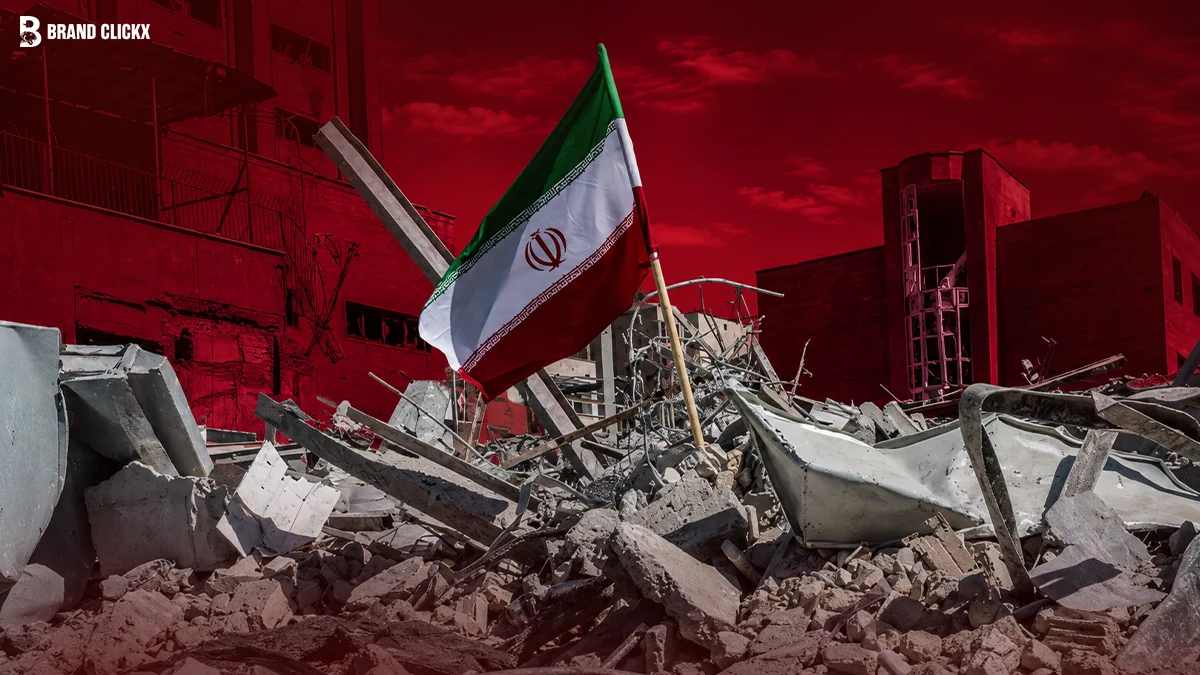
The Pentagon says $37.5 billion. Independent analysts say more than $100 billion. Trump said the war would take four weeks and has brought “Lower Oil Prices.” Here is what the evidence actually supports.
Published: Monday, 3 August 2026 | BrandClickX News Desk
Method note: Each claim below is assessed against named, dated sources. Where an organisation has a stated political orientation, we say so. Where evidence is incomplete, we say that rather than reaching a verdict. This is a live conflict and figures continue to change.
Summary
US Defense Secretary Pete Hegseth told Congress on 21 July 2026 that the war with Iran had cost $37.5 billion. Independent analysts put direct military costs above $100 billion, and Moody’s Analytics estimates around $150 billion in total economic costs. President Trump’s claim that the war produced “Lower Oil Prices” is contradicted by the available data. His claim that no US money will fund Iran’s reconstruction is so far supported.
Key Takeaways
- Hegseth told Congress the war has cost $37.5 billion as of 21 July 2026
- The Pentagon’s own early figures implied a far higher daily burn rate
- Independent estimates of direct military cost exceed $100 billion
- Moody’s Analytics estimates ~$150 billion in total economic costs
- Trump’s “Lower Oil Prices” claim is contradicted by fuel price data
- US drivers paid over $68 billion in extra fuel costs to 14 July
- Trump’s claim of no US payment for Iran’s reconstruction is so far supported
- The war has run more than five months against a stated four-week estimate
- No public government accounting of the war’s cost has been published
Claim 1: The War Has Produced “Lower Oil Prices”
Trump, Truth Social, 18 June 2026: “There is no 300 Billion Dollar payment to Iran by the U.S. That’s Fake News! All there is for the U.S. is Success, Lower Oil Prices, and Victory.”
Verdict: Not supported by the data
Fuel prices rose sharply after the war began and remained elevated.
| Measure | Figure | Source |
| National average, week before war | $2.98/gallon | Reported figures |
| National average, 15 June 2026 | $4.07/gallon | Reported figures |
| Gasoline price change, year over year | +40.5% | Reported figures |
| Extra US fuel costs to 14 July | >$68 billion | Brown University Iran War Energy Cost Tracker |
| Per-household extra fuel cost | >$500 | Brown University tracker |
| Gas and diesel vs pre-war | ~30% higher | Brown University tracker |
The Brown University tracker is an academic project, not an advocacy output, which makes it the strongest single source here.
In fairness to the claim: oil prices are volatile and fell back at points during the June ceasefire. A short-term dip may have preceded the statement. But across the war as a whole, US consumers have paid substantially more, not less.
Claim 2: “There Is No 300 Billion Dollar Payment to Iran by the U.S.”
Trump, Truth Social, 18 June 2026. Vice President JD Vance told the New York Times the same day: “Not a cent of American money goes to Iran.”
Verdict: Supported so far, but the mechanism is undetermined
This is the claim most often misreported, and Trump’s position is stronger than critics have suggested.
What the memorandum of understanding actually says: the US “undertakes with regional partners to develop a definitive, mutually agreed plan with at least $300 billion for the reconstruction and economic development of the Islamic Republic of Iran.”
It does not commit US taxpayer funds. It leaves the “mechanism for implementation” to a 60-day negotiation period, with the US committing to grant licences, sanctions waivers or other permissions.
PolitiFact examined this directly and found the administration said the US will not supply the money. Reuters reported, citing an anonymous source with direct knowledge, that the fund would consist of private-sector money.
The honest caveat: because the mechanism is undetermined, nobody can yet confirm that no US public money will be involved. The claim is currently unfalsified rather than proven.
Context that complicates it: the US has committed to granting sanctions waivers and licences, and the Wall Street Journal reported the US and Qatar working to give Iran access to billions in frozen cash. Those are not payments, but they are US actions with financial consequences.
Claim 3: The War Would Be a “Four-Week Process”
Trump, speaking to press, 1 March 2026: “It’s always been a four-week process.”
Verdict: False
The war began on 28 February 2026. It is ongoing as of early August more than five months, or roughly six times the stated duration.
Defense Secretary Pete Hegseth said at a Pentagon briefing on 4 March that the war could last about eight weeks. That estimate was also exceeded.
A separate Trump statement in Kentucky in March that “we won” the war but the US would “stay in the fight to finish the job” was internally inconsistent at the time and has not been borne out.
Claim 4: The Official Cost Figure of $37.5 Billion
Hegseth, congressional testimony, 21 July 2026: the war has cost $37.5 billion so far.
Verdict: Disputed, and difficult to reconcile with the Pentagon’s own earlier figures
This is the central number, and it does not sit comfortably alongside what the administration told Congress earlier in the war.
| Date | Figure | Implied daily rate |
| First 2 days (munitions only) | $5.6 billion | ~$2.8bn/day |
| First 6 days | $11.3 billion | ~$1.9bn/day |
| Preliminary Pentagon estimate | $1 billion/day | $1bn/day |
| Hegseth, day ~144 | $37.5 billion | ~$260m/day |
The early figures imply a burn rate between four and eleven times higher than Hegseth’s cumulative total suggests across the full period.
There is a legitimate explanation available. Intensity varied enormously. A ceasefire held from mid-June until early July, and the first days of any air campaign are the most munitions-intensive. An average daily rate across the whole war would naturally be far below the opening days.
What is not explained is why the administration has never published a public accounting. Reuters noted in March that the administration had not provided a public assessment of the cost or a clear idea of expected duration. That remained true when Hegseth testified in July, and CNN reported that experts consider the true bill much higher.
What Independent Analysts Estimate
These figures come from organisations with stated positions. We identify each.
| Source | Estimate | Orientation |
| Moody’s Analytics (via CAP) | ~$150 billion total economic cost, ~$1,100 per household | Commercial ratings and analytics firm |
| Arms Control Association | >$100 billion direct military costs | Arms control advocacy organisation |
| Brown University Costs of War | >$68 billion in extra fuel costs alone | Academic research project |
The Moody’s figure covers a wider basket than military spending — energy, airfare, groceries and borrowing costs, plus defence.
Lindsay Koshgarian of the National Priorities Project offered the most useful caution, telling CNN early in the war: “This is highly unpredictable, and so we won’t know the cost of it until it’s over. The cost of the war in Iraq ended up being almost $3 trillion.”
That is the strongest argument against treating any current figure — the administration’s or its critics’ — as final.
What the Budget Requests Show
The clearest evidence of scale is not what officials say but what they ask Congress for.
- An $88 billion supplemental war spending request, on top of a record $1 trillion military budget request
- $114 billion requested in the FY2027 appropriations request to replenish munitions stockpiles — nearly five times the enacted FY2026 munitions funding
- A further $60 billion for other munitions development and procurement
Budget requests are formal documents rather than rhetoric. A fivefold increase in munitions replenishment funding is a stronger indicator of expenditure than any spoken figure.
The Costs That Are Not Denominated in Dollars
Several verified effects sit outside the fiscal debate entirely.
- The World Bank cut its 2026 global growth forecast to 2.5%, the lowest since the pandemic
- Gulf economies are forecast to grow 1.3% this year, down from 4.5% in 2025
- The World Bank declined to forecast for Iran at all, citing “exceptionally high uncertainty”
- Flights from Dubai fell by two-thirds and from Doha by three-quarters, per the IMF
- Saudi Aramco profits rose 26% in Q1 2026 as oil prices climbed
Trump himself, at the G7 summit in France in June, acknowledged that the US and Israel had inflicted at least $1 trillion of damage on Iran since 28 February.
That figure is his own, and it is worth noting that it exceeds every estimate of what the war has cost the United States by roughly an order of magnitude.
Timeline of Cost Disclosures
| Date | Development |
| 28 Feb 2026 | War begins with coordinated US-Israeli strikes |
| 1 Mar 2026 | Trump: “It’s always been a four-week process” |
| 4 Mar 2026 | Pentagon preliminary estimate reported at $1bn/day |
| 10 Mar 2026 | $5.6bn in munitions over first two days reported to Congress |
| 11 Mar 2026 | $11.3bn over first six days, closed-door Senate briefing |
| 17 Jun 2026 | MOU signed; Trump cites $1 trillion damage inflicted on Iran |
| 18 Jun 2026 | Trump: “no 300 Billion Dollar payment”; cites “Lower Oil Prices” |
| 14 Jul 2026 | Brown tracker: $68bn+ in extra US fuel costs |
| 21 Jul 2026 | Hegseth testifies: $37.5bn cost to date |
Where the Evidence Is Genuinely Unclear
Good fact-checking requires saying what cannot be settled.
The true military cost. No public accounting exists. The $37.5 billion figure comes from testimony rather than published audited data, and independent estimates rely on modelling.
Who funds Iran’s reconstruction. The mechanism is undetermined by the text of the agreement itself. Both the administration’s denial and critics’ assumptions are currently claims about the future.
Long-term costs. Veteran healthcare, equipment replacement and interest on borrowing are the largest components of historical war costs and are not captured in any current figure. This is the basis of the Iraq comparison.
Attribution of energy prices. Fuel prices rose sharply and the war is widely identified as the primary driver, but oil markets respond to multiple inputs. The direction is clear; precise attribution is harder.
Frequently Asked Questions
How much has the Iran war cost the US?
Defense Secretary Pete Hegseth told Congress on 21 July 2026 that it had cost $37.5 billion. Independent analysts estimate direct military costs above $100 billion, and Moody’s Analytics puts total economic costs near $150 billion.
Did the Iran war lower oil prices?
No. The national average petrol price rose from $2.98 the week before the war to $4.07 by 15 June 2026. Brown University’s tracker put extra US fuel costs above $68 billion by 14 July.
Is the US paying $300 billion to Iran?
Not according to the agreement text or the administration. The memorandum commits the US to work with regional partners on a plan of at least $300 billion, without specifying funders. The mechanism remains undetermined.
How long was the war supposed to last?
Trump said on 1 March 2026 that it had “always been a four-week process.” Hegseth suggested about eight weeks on 4 March. The war began on 28 February and remains ongoing in August.
Why do cost estimates vary so widely?
Because they measure different things. Official figures cover direct military spending; independent estimates add energy, consumer prices, borrowing costs and economic drag. No public government accounting has been published.
What did the war cost per household?
Moody’s Analytics, cited by the Center for American Progress, estimates about $1,100 per American household in total costs. Brown University’s tracker attributes more than $500 per household to higher fuel prices alone.
How much damage was done to Iran?
Trump said at the G7 summit in June that the US and Israel had inflicted at least $1 trillion of damage on Iran since 28 February. The World Bank declined to publish an economic forecast for Iran, citing exceptionally high uncertainty.
What is the Pentagon asking Congress for?
An $88 billion supplemental war spending request alongside a record $1 trillion military budget request, plus $114 billion in the FY2027 request to replenish munitions nearly five times the enacted FY2026 level.
Conclusion
Three of the four claims examined here can be assessed against evidence, and they resolve differently.
The “four-week” estimate was wrong by a factor of six. The “Lower Oil Prices” claim is contradicted by consumer price data from an academic tracker. The “$300 billion payment” denial is, on the current text and reporting, supported a point critics have frequently overstated.
The fourth is the one that matters most, and it cannot be resolved. The government has not published an accounting. A defence secretary’s testimony is not an audit, and think tank modelling is not one either.
Until the administration publishes figures that can be checked, the honest answer to what the Iran war has cost is that nobody outside the Pentagon knows — and the Pentagon’s own numbers do not currently reconcile with each other.