

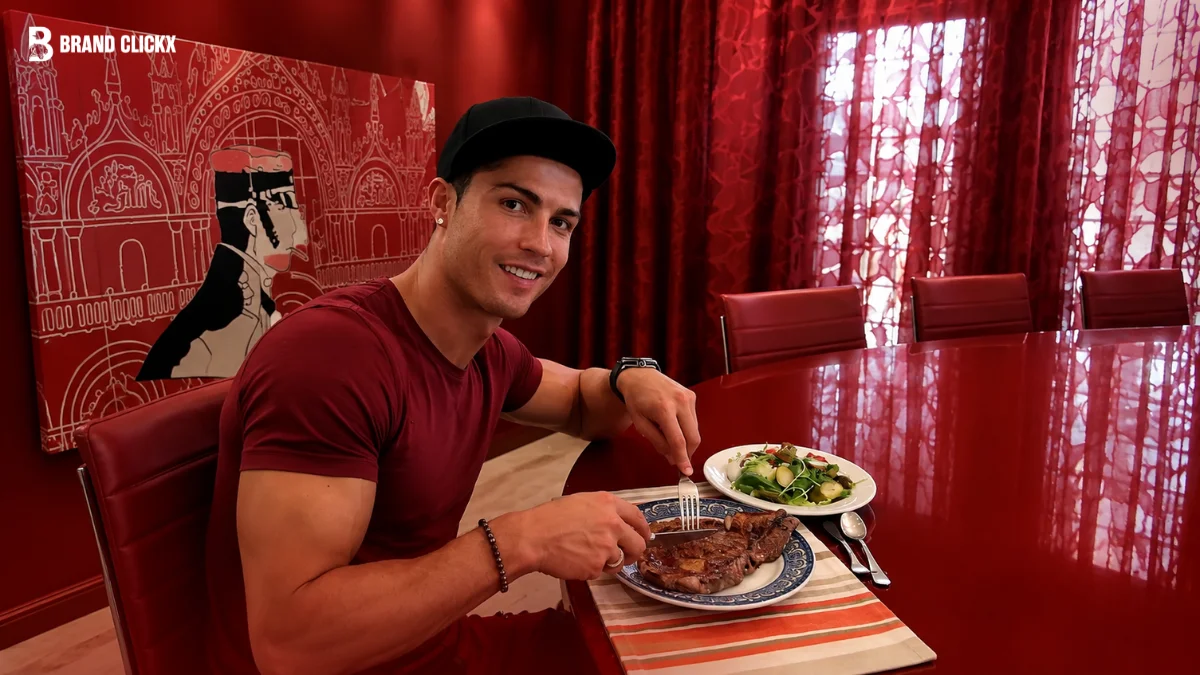
Most “Ronaldo meal plan” articles list yoghurt, brown rice and avocado toast. The only chef who has spoken on the record says he eats none of those things.
Published: Tuesday, 28 July 2026 | BrandClickX
This is sports reporting, not health advice. Ronaldo’s regimen is built around a full-time medical, nutrition and physiotherapy team. Nothing here is a recommendation. Speak to a doctor or registered dietitian before changing your diet or training.
Summary
Cristiano Ronaldo turned 41 on 5 February 2026 and started at the 2026 World Cup at 41 years and 132 days old. His former personal chef, Giorgio Barone, gave detailed interviews in 2026 describing a diet with no flour, no sugar and no dairy, built on fish, eggs, vegetables and black rice. Many widely shared “Ronaldo diet plans” contradict that account directly.
Key Takeaways
- Giorgio Barone, his former Juventus chef, is the only named on-record source on the diet
- Documented staples: fish, chicken, eggs, avocado, vegetables, black or red rice, olive oil
- Documented exclusions: flour, sugar, dairy, processed sauces, soft drinks, junk food
- Ronaldo reportedly does not weigh, measure or count intake
- He works with sleep coach Nick Littlehales on 90-minute cycles totalling around 7.5 hours
- The “biological age 28” figure comes from WHOOP, a paid commercial partner
- The “7% body fat” figure was cited by an academic who had not measured him
- No credible session-by-session workout program has been published
Who Is the Actual Source?
Giorgio Barone, Ronaldo’s personal chef during his Juventus years, is the only named insider to describe the diet in detail on the record.
He gave a series of interviews across 2026, reported by Gulf News, Hindustan Times, The Portugal News and others. That makes him the credibility anchor for this topic.
One caveat matters. Barone worked with Ronaldo at Juventus, roughly 2018 to 2021. He is describing that period, not necessarily what Ronaldo eats at Al-Nassr today.
Barone’s central claim is that there is no secret. “Let’s debunk this myth that footballers eat special things.” The food, he says, is ordinary. The consistency is not.
What Ronaldo Actually Eats
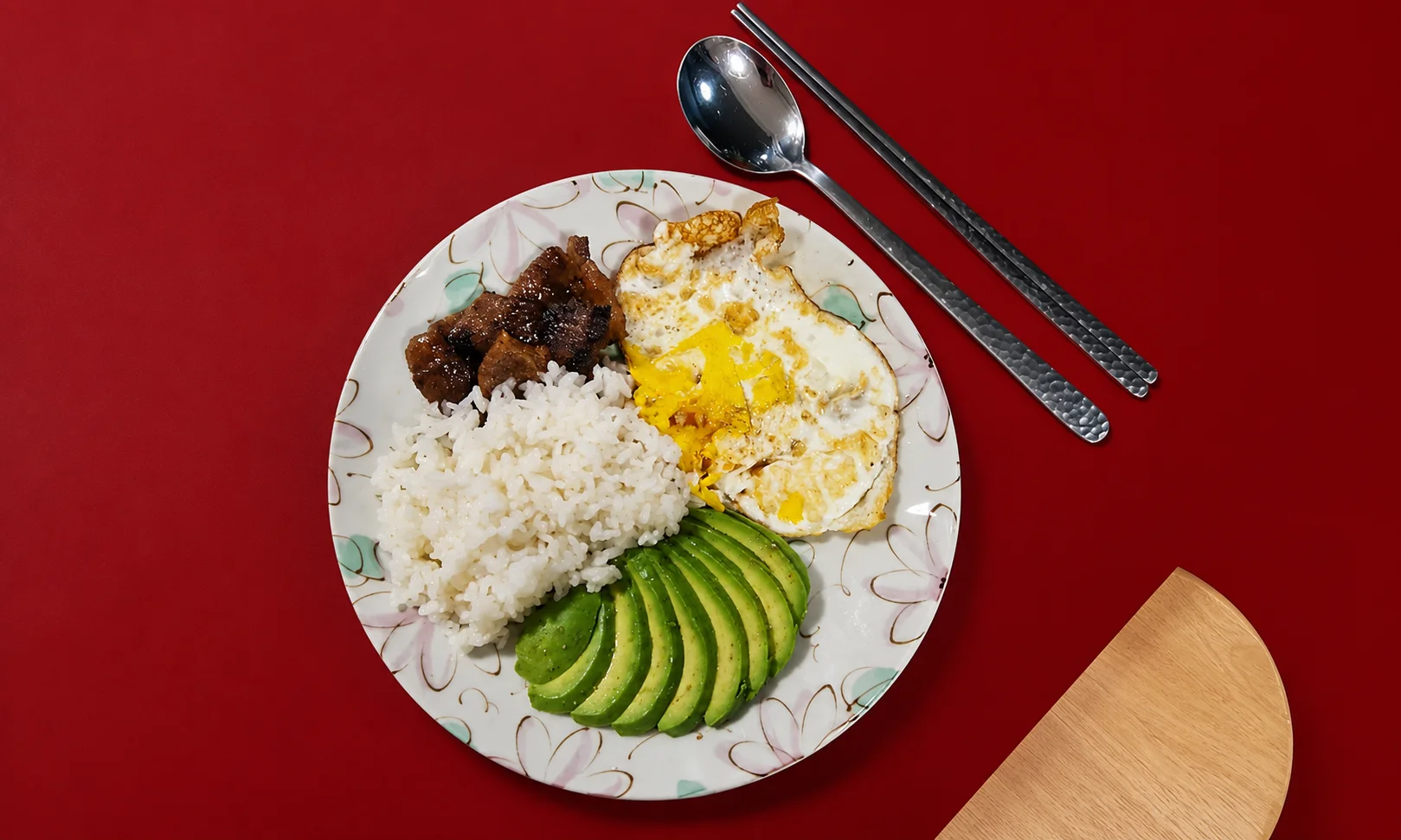
Lean protein, vegetables, eggs, avocado and low-starch rice cooked simply.
According to Barone, the staples are:
- Fish swordfish and sea bass feature regularly
- Chicken as the other main protein
- Eggs and avocado, often at breakfast
- Large portions of vegetables, which serve as his main carbohydrate source
- Black or red rice when a starch is needed
- Liver and organ meats, which Barone called superfoods
- Olive oil, lemon and light seasoning
- Coffee, without sugar
Breakfast, per Barone, is typically avocado, eggs and unsweetened coffee. Lunch is protein plus a large volume of vegetables.
He also said Ronaldo asked him to avoid supermarkets where possible, sourcing instead from local shops and smaller suppliers.
What He Cuts Out
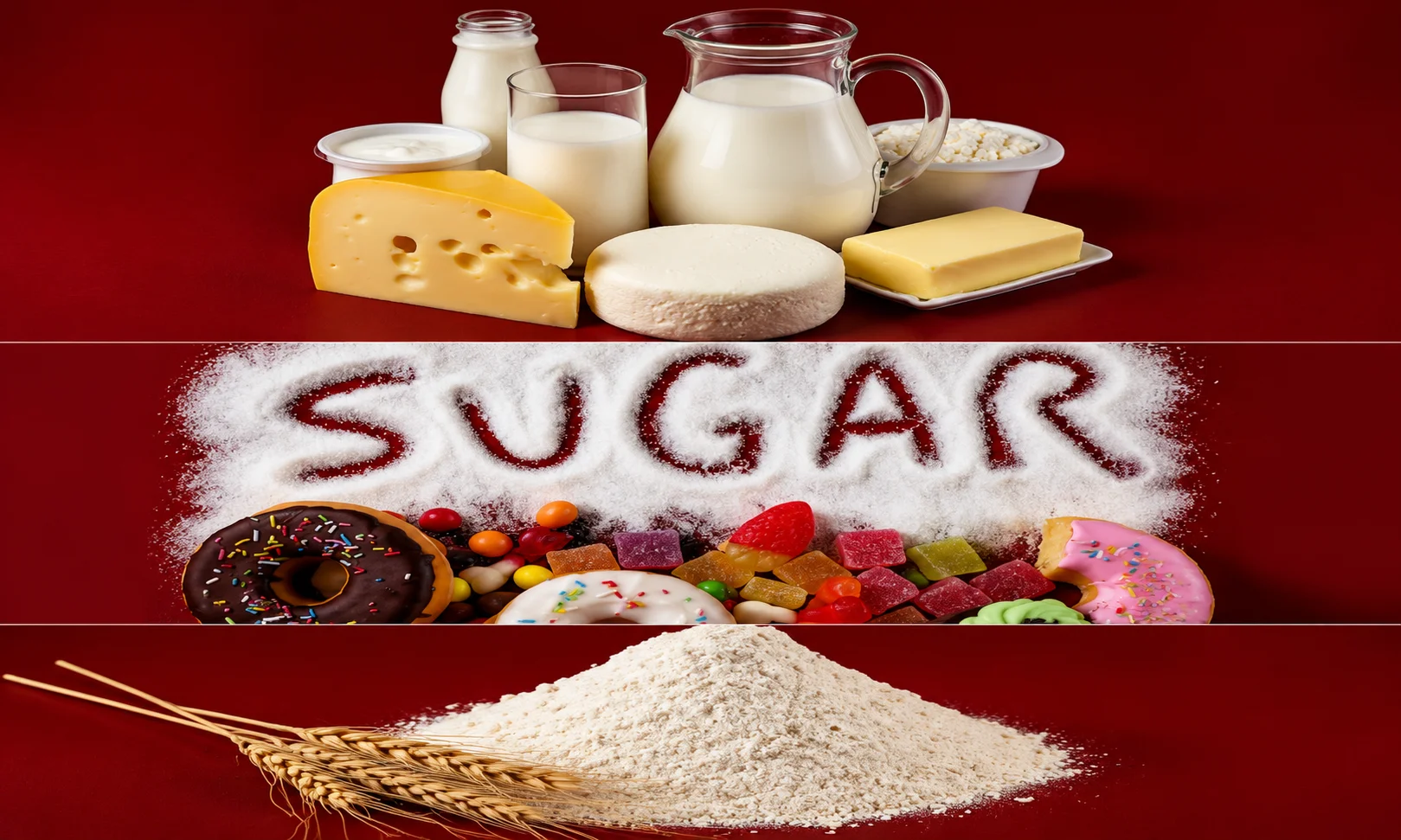
Flour, sugar, dairy, processed food and late heavy meals.
- No flour at all no pasta, no bread. Barone said carbohydrates come from vegetables instead
- No white rice, replaced by black or red rice for lower starch and a slower glycaemic release
- No sugar, including in coffee. Barone called sugar poison for the body
- No dairy. Barone argued milk is unnecessary for adults and suggested almond, oat or rice alternatives
- No jarred or packaged sauces, because of added fat, calories and stabilisers
- No soft drinks
- No junk food, ever Barone was explicit that this includes holidays
There is no cheat day. Barone framed it as lifelong habit rather than a training-camp phase.
The Detail Most Articles Miss
Ronaldo does not count anything.
Barone told The Portugal News that Ronaldo has no daily protein target and does not weigh or measure his protein or carbohydrate intake. Portions scale with training load instead.
“With Cristiano, I didn’t need a nutritionist. He knew what to do.”
That runs against how most “Ronaldo diet plan” content is written, which typically presents rigid gram-by-gram meal tables. The chef who cooked for him describes something looser and more intuitive.
Sleep: The Littlehales System
Ronaldo has worked with British sleep coach Nick Littlehales, who structures rest into 90-minute cycles rather than one long night.
The reported pattern is roughly five 90-minute cycles spread across night sleep and daytime naps, totalling about seven and a half hours. The approach aligns rest with the brain’s natural ultradian rhythm, prioritising cycle completion over total hours.
Littlehales is a genuine practitioner whose R90 method is published, which puts this on firmer ground than most claims in this space.
Reports also indicate Ronaldo avoids screens at night and naps are timed around double training sessions.
Speaking to WHOOP, Ronaldo said he now “prioritize recovery and sleep much more than before.”
Recovery and Daily Movement
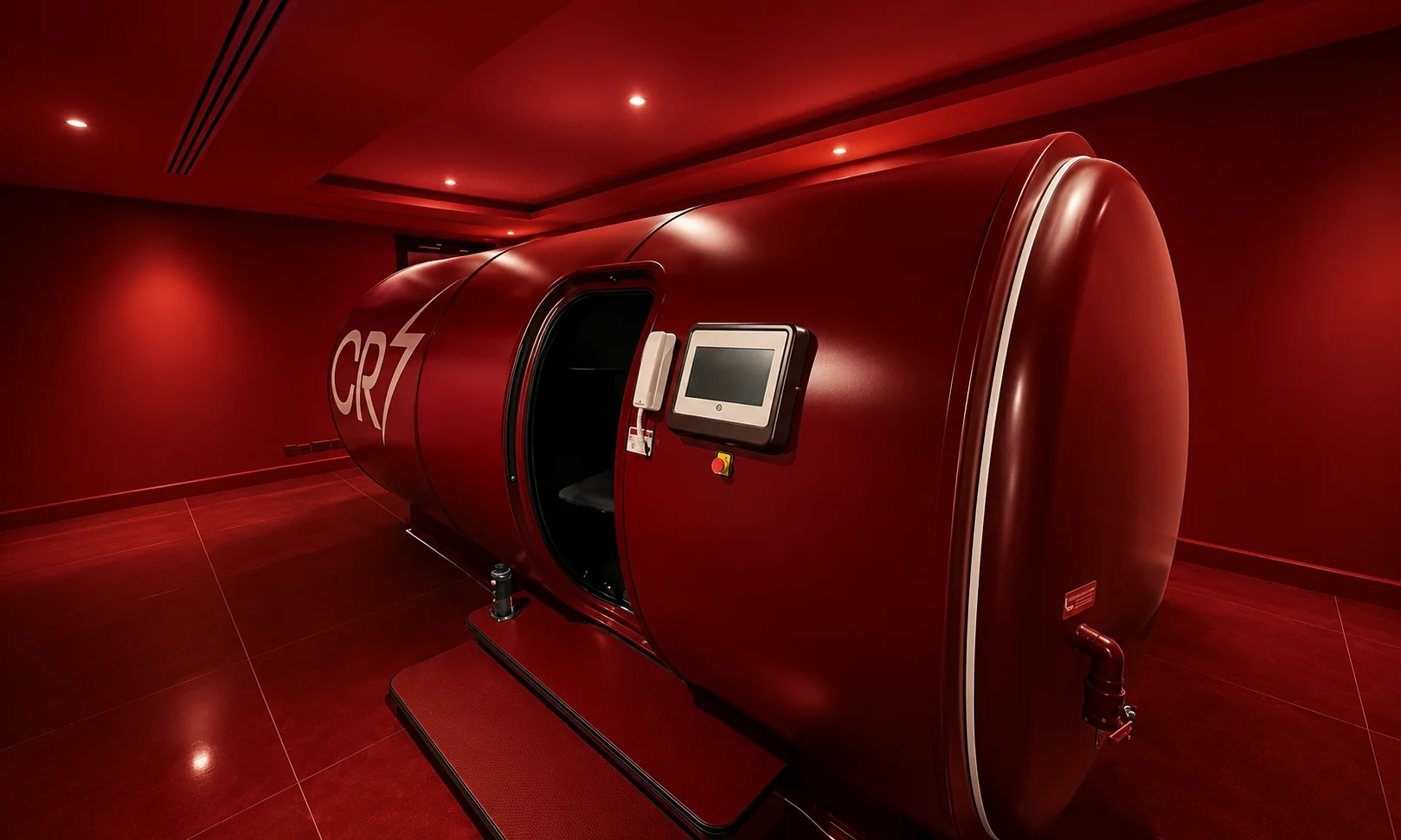
Ronaldo reportedly installed a cryotherapy chamber at home during his Real Madrid years and continues to use similar facilities in Riyadh. Sessions are short — around three minutes.
Alongside that: ice baths, compression boots, massage guns and sauna work, used routinely rather than occasionally.
HELLO! reported in April 2026 that he averages around 17,000 steps a day, separate from formal training.
Men’s Fitness described his working principle as treating recovery as equal to training rather than as its reward.
The Biological Age Claim: Read the Fine Print
The widely repeated “biological age of 28” figure comes from WHOOP a wearable company Ronaldo is paid to promote.
This is the single most important caveat on this topic, and almost no coverage includes it.
In late 2025, WHOOP’s platform assessed Ronaldo’s physiological age at 28.9 years and said he performs like someone twelve years younger. Ronaldo replied publicly: “The data doesn’t lie.”
He also joked that the result meant he could play another ten years.
What that figure is not: a clinical measurement, a peer-reviewed result, or an established medical assessment of biological ageing. “WHOOP Age” is a proprietary consumer-wearable metric produced by a commercial partner.
That does not make it worthless. It does mean it should be reported as a sponsor’s product output, not as a scientific finding.
Where the “7% Body Fat” Figure Comes From
It was cited by a Saudi academic who had not measured him and who was publicly asking for permission to do so.
Dr Al Ahmadi, Professor of Exercise Physiology at Taibah University, said on Saudi state television that Ronaldo’s biological age is in his twenties and referenced body composition of roughly 50% muscle mass and 7% body fat.
Read the same interview closely and he also volunteered to study Ronaldo’s body composition using anthropometric methods. In other words, he was quoting figures already in circulation, not reporting his own results.
Treat 7% as a widely repeated estimate of unclear origin, not a verified measurement.
Claims That Do Not Hold Up
This is where most of the internet gets it wrong. Several popular meal plans directly contradict the only on-the-record source.
| Common claim | Problem |
| Greek yoghurt as a snack | Barone says no dairy |
| Whey protein shakes | Also dairy |
| Avocado toast | Barone says no flour, no bread |
| Brown rice | Barone specifies black or red rice |
| Quinoa, coconut oil | Not traceable to any named source |
| “He drinks no coffee” | Misreading. He drinks it without sugar |
| Exact six-meal gram-by-gram plans | Barone says he doesn’t weigh or count |
One widely circulated “complete diet plan” I found is hosted on a fan-built page whose listed author is a joke persona, and it includes yoghurt, brown rice and avocado toast in the same plan. It also refers to his performance “at age 39.”
Another site publishes a detailed seven-day training split, then discloses in small print that the program was constructed by the site using general strength-and-conditioning guidelines not taken from Ronaldo.
On training specifically: there is far less verified public detail than the internet implies. Broad elements are reported strength work, sprint drills, core work, cardiovascular conditioning but no credible, current, session-by-session program has been published by Ronaldo or his staff. Anything presenting one as official is an invention.
Why This Matters in 2026
Ronaldo started Portugal’s opening 2026 World Cup match at 41 years and 132 days, among the oldest outfield players ever to do so. He had confirmed it would be his last World Cup.
Last season he scored 28 goals in 30 league games as Al-Nassr won the Saudi Pro League his first title in Saudi Arabia and his first major club trophy since 2020. He had passed 950 career goals by late 2025 and is chasing 1,000.
Portugal coach Roberto Martínez has credited his football intelligence and appetite rather than physical gifts alone.
Expert Analysis: What Actually Transfers
The most honest assessment I found came from Men’s Fitness, which pointed out that Ronaldo’s training volume is only sustainable because of a full-time support system of doctors, nutritionists and physiotherapists that ordinary people do not have. Copying the workload without the infrastructure is a route to injury, not longevity.
What does transfer costs nothing:
- Consistency over intensity. Barone’s entire argument is that the food is unremarkable and the repetition is the variable
- Treating sleep as training. Regular timing and completed cycles matter more than heroic single nights
- Recovery as scheduled work, not an afterthought
- Daily movement outside formal exercise
What does not transfer: cutting out entire food groups. There is no general health reason for most people to eliminate dairy or all flour. Those are one elite athlete’s preferences, filtered through a chef’s opinions, not clinical guidance.
Frequently Asked Questions
What does Cristiano Ronaldo eat in a day?
According to former chef Giorgio Barone: avocado, eggs and unsweetened coffee at breakfast; chicken or fish with large portions of vegetables at lunch; and black or red rice when a starch is needed. No bread, pasta or dairy.
Does Ronaldo eat six meals a day?
Multiple outlets report five to six smaller meals daily, but Barone says portions scale with training load rather than following a fixed schedule. He also says Ronaldo does not weigh or count protein and carbohydrates.
Is Ronaldo’s biological age really 28?
That figure came from WHOOP, a wearable company he is paid to promote, which assessed his physiological age at 28.9. It is a proprietary consumer metric, not a clinical or peer-reviewed measurement of biological ageing.
Does Cristiano Ronaldo drink coffee?
Yes, without sugar. Barone’s quote no sugar, “not even in coffee” has been widely misreported as meaning he avoids coffee entirely. Multiple accounts confirm unsweetened coffee is part of his breakfast.
How does Ronaldo sleep?
He has worked with sleep coach Nick Littlehales on a cycle-based approach: roughly five 90-minute sleep periods across night sleep and naps, totalling about 7.5 hours, with naps timed around double training sessions.
Should I follow Ronaldo’s diet?
Not without professional advice. His regimen is supported by a full-time medical team, and cutting out dairy or all flour has no general health justification. Consult a doctor or registered dietitian first.
Conclusion
The genuinely interesting thing about Ronaldo’s diet is how boring it is. Fish, eggs, vegetables, rice, olive oil. His own chef spent an interview insisting there is no secret ingredient.
What gets published instead is precision that nobody claimed exact gram counts, six-meal timetables, and foods the only named source says he does not eat.
At 41, starting a World Cup match, the story is two decades of repetition plus a support system almost nobody has. That is less shareable than a meal plan. It is also what actually happened.