AI Summary: At a Glance
The OPPO Reno 16 series combines flagship performance, compact elegance, and elite photography capabilities. Powered by advanced AI-driven ColorOS 16, the lineup features a groundbreaking 200MP Samsung main camera sensor on the Pro model, next-generation 6,700mAh Silicon-Carbon battery cells, and stunning 1.5K 144Hz AMOLED immersive displays housed in an aerospace-grade unibody framework.
Key Takeaways
- The Slim Density Record: OPPO utilizes advanced Silicon-Carbon (Si-C) chemistry to pack an unprecedented 6,700mAh battery into an incredibly slim 8.2mm chassis.
- Military-Grade Ingress Protection: The entire lineup breaks conventions by carrying a quad-certified IP66/IP68/IP69/IP69K rating, ensuring full survivability against high-pressure, hot water jets.
- Hardware-Driven Portraits: Unlike competitors that rely on digital cropping, the Reno 16 series integrates a dedicated 50MP 3.5x optical periscope telephoto lens across the standard and Pro tiers.
- Regional Silicon Fragmentation: The global Reno 16 shifts to the custom 4nm Qualcomm Snapdragon 7 Gen 4, whereas the premier Reno 16 Pro deploys MediaTek’s top-tier Dimensity 8550 SUPER.
The mid-range smartphone battleground has changed. It is no longer a race to see who can strip away fewer flagship features to meet a price point; it is a cutthroat war of engineering compromise. Enter the OPPO Reno 16 Series.
Announced globally with a massive focus on radical battery materials, professional triple-lens optics, and a highly distinct design language, OPPO is gunning directly for the premium segment. But with its price creeping into territory occupied by tier-one giants, does the engineering justify the invoice? Let’s strip back the marketing jargon and look at the raw reality.
1. THE ARCHITECTURE OF FIRST IMPRESSIONS: 3D POP PLANET DESIGN
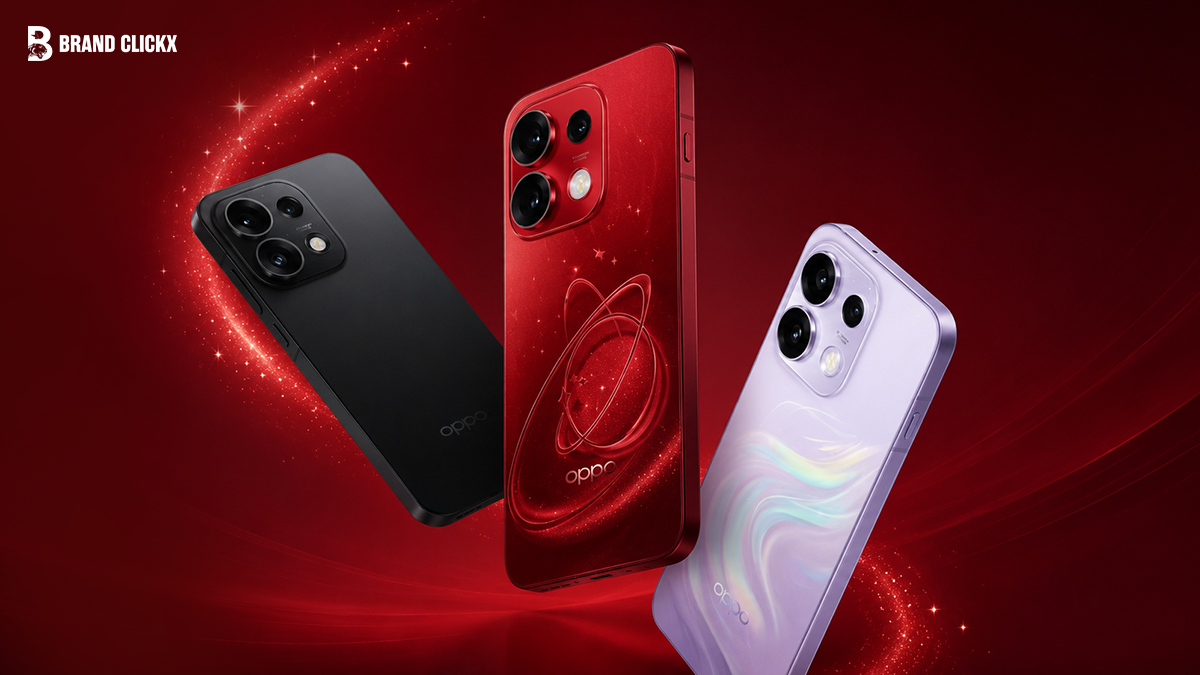
Most modern smartphones are visual echoes of one another monolithic rectangles with minor camera bump variations. OPPO breaks the monotony by introducing a mass-produced 3D Floating Planet effect on its rear glass cover, a proprietary aesthetic licensed from Shengyin Optoelectronics.
[Aerospace-Grade Aluminum Mid-Frame]
Front: Crystal Guard Glass (Mohs Level 4 Protection)
Back: Cold-sculpted Seamless Unibody Glass (3D Planet Film)
The vanilla Reno 16 shifts seamlessly from its back plate to the camera housing using a single piece of cold-sculpted glass. Framed by textured matte, aerospace-grade aluminum, the hand-feel avoids the slippery plastic composition frequently hidden in mid-range frames.
Dimensions, Ergonomics, and Ingress Protection
- The Compact Advantage: Measuring just 151.21 x 72.42 x 8.2mm (and weighing a lean 182g to 191g depending on the colorway), it stands out as an ergonomic, one-handed oasis in a market obsessed with phablets.
- Extreme Fortification: Both the standard and Pro models boast an IP69K rating. This surpasses standard IP68 immersion by certifying that the phone can withstand high-pressure, high-temperature water jets. It is effectively built to survive a pressure washer.
2. THE DISPLAY SPECIFICATION SPLIT: 120Hz VS 144Hz
OPPO equips both the standard and Pro variants with a 6.32-inch 1.5K AMOLED panel pushing a dense 2640 x 1216 resolution (460 PPI). Thin bezels grant a 93.4% claimed screen-to-body ratio, meaning your content floats edge-to-edge.
Brightness & Refresh Metrics
The panel hits a comfortable 600 nits typical brightness, scales to 1800 nits in High Brightness Mode (HBM) under direct sunlight, and flashes a staggering 3600 nits peak local brightness during HDR10+ content playback. However, a distinct commercial divider exists between the tiers:
- Reno 16 Standard: Capped at a 120Hz refresh rate, perfectly fluid for daily UI navigation, cinematic viewing, and everyday app cycling.
- Reno 16 Pro: Upgraded exclusively to a 144Hz refresh rate panel globally, reducing frame-to-frame latency for competitive mobile gaming.
Both displays are shielded by Crystal Guard glass, ranking at a Mohs hardness level 4, which offers improved scratch resistance over historical mid-range mineral glass solutions.
3. SILICON INSIDE: THE GLOBAL HARDWARE ALTERATION
If you are reading early tech leaks based on the Chinese market releases, throw them out. The global iterations feature a significant paradigm shift under the hood.
| Component | OPPO Reno 16 (Global) | OPPO Reno 16 Pro (Global) |
| Processor SoC | Qualcomm Snapdragon 7 Gen 4 (4nm) | MediaTek Dimensity 8550 SUPER (4nm) |
| CPU Configuration | 1x 2.8GHz (C720) + 4x 2.4GHz + 3x 1.84GHz | 8-Core Performance Matrix |
| Graphics (GPU) | Adreno 722 @ 1150MHz | ARM Mali-G720 MC8 @ 1500MHz |
| AnTuTu Score (v11) | ~1,457,989 | ~1,780,000+ |
| Base Memory Specs | 8GB / 12GB LPDDR5X | 12GB LPDDR5X Only |
| Internal Storage | 256GB / 512GB UFS 3.1 | 512GB UFS 3.1 Only |
Real-World Computational Performance
The standard Reno 16’s Snapdragon 7 Gen 4 platform is an efficient mid-tier runner. It clears day-to-day multitasking, high-bitrate streaming, and light gaming with absolute ease. Its AnTuTu score of 1,457,989 proves it is no slouch, but it runs into an optimization wall when tasked with extreme sustained graphic workloads like Genshin Impact at maxed settings.
The Pro’s Dimensity 8550 SUPER climbs much closer to flagship capabilities. It bumps up sustained frame rates and keeps the device cooler under stress due to superior thermal throttling thresholds within its custom GPU microarchitecture.
4. THE 200MP OPTICAL FLEX: THE CAMERA SYSTEMS
OPPO’s primary justification for the premium price tag resides squarely in its photographic hardware. Unlike competitors who slap a primary sensor down alongside useless 2MP macro filler lenses, the Reno 16 series deploys high-grade glass across every single focal length.
REAR CAMERA ARRAY (Reno 16 Pro)
Main Sensor: 200MP (Samsung S5KHP5, f/1.8, Dual-Axis OIS)
Ultra-Wide: 50MP (GC50F6, f/2.0, 116° FOV, Autofocus)
Telephoto: 50MP (Samsung JN5, f/2.8, 3.5x Optical Zoom, OIS)
The Pro Model vs. Vanilla Sensor Divide
The Pro variant features a monstrous 200MP Samsung S5KHP5 main sensor ($1/1.4$-inch class equivalent) supported by dual-axis optical image stabilization (OIS). Pixel-binning produces sharp, high-dynamic-range low-light outputs, while cropping into the sensor offers pixel-perfect lossless digital zoom well past its native limits.
The standard Reno 16 keeps the exact same secondary ultrawide and telephoto lenses but swaps out the main shooter for a 50MP Sony LYT-600 sensor. While daylight images remain nearly identical in clarity due to aggressive computational processing, the Pro model pulls significantly ahead in resolving raw textural details in challenging night scenes.
True Telephoto Power
Both units carry the 50MP Samsung JN5 Telephoto lens, giving you a native 3.5x optical zoom and up to 18x hybrid digital magnification (stretching to 120x computationally on the Pro). This completely outperforms the digital crop setups found on base iPhones or standard Galaxy models in this price tier.
The Front-Facing Setup
For creators, the selfie camera is a standout 50MP ultra-wide sensor with a 100-degree field of view and native Autofocus. It supports full 4K video recording at up to 60 frames per second with electronic stabilization, eliminating the soft, fixed-focus 1080p limitations common across competing front sensors.
5. SILICON-CARBON BATTERY EVOLUTION & 80W SUPERVOOC
The unsung hero of the Reno 16 series is its jump to Silicon-Carbon (Si-C) battery chemistry. By replacing traditional graphite anodes with a silicon composite, OPPO achieves immense energy densities within a highly compact space.
Traditional Lithium-Ion (Graphite Anode) ──► Lower Density, Thicker Profile
Silicon-Carbon Anode Technology (Si-C) ──► 20-30% Higher Energy Density, Slim Profile
Regional Capacity Variance
Pay close attention to where you buy your device, as OPPO has fragmented battery capacities globally:
- Global Standard & Pro: Ship with a massive 6,700mAh battery cell.
- European Variations: Scaled down to a 6,000mAh capacity due to localized regulatory constraints, though it retains the exact same chassis dimensions.
Charging Dynamics
The series features 80W SUPERVOOC wired charging. In direct laboratory testing, an 80W current juices the massive 6,700mAh reservoir from 1% to 100% in exactly 59 minutes.
- The Downside: There is zero wireless charging support present anywhere on the sheet. If you rely on Qi-charging pads on your desk or car mount, this omission hurts.
6. COLOROS 16 & THE “AI REMIX” ECOSYSTEM
Running ColorOS 16 natively over Android 16, the user interface focuses on contextual integration and cross-ecosystem parity. OPPO promises a sustainable lifecycle with 5 years of major Android version upgrades and 6 years of continuous security patches.
Key AI Modalities
- AI Mind Space: A contextual sidebar system designed to pull text, translate live audio streams, and summarize documents instantly on-screen.
- AI Remix Collage: A machine-learning photo suite built directly into the gallery app that lets you cleanly isolate subjects, reconstruct missing background plates, and generate custom layouts seamlessly without third-party design apps.
- Apple & Mac Cross-Compatibility: Through the specialized O+ Connect app, ColorOS 16 bridges the ecosystem gap, letting you drop files, pictures, and clipboard items seamlessly between your OPPO phone, iPhones, and MacBooks.
7. COMPETITOR ANALYSIS: THE ULTIMATE SHOWDOWN
To truly see if the OPPO Reno 16 earns its asking price, we must pitch it against the absolute best options in the current landscape.
| Feature / Metric | OPPO Reno 16 ($/€799 Base) | Samsung Galaxy S25 ($/€799 Base) | Google Pixel 10 (/€799Base)∣VivoV70( /€750) |
| Main Camera | 50MP Sony LYT-600 (OIS) | 50MP GN3 Sensor | 50MP Custom Sensor |
| Telephoto Lens | 50MP (3.5x Optical) | 10MP (3x Optical) | 10.5MP (5x Optical) |
| Battery Size | 6,700 mAh (Si-C) | 4,000 mAh (Li-Ion) | 4,700 mAh (Li-Ion) |
| Wired Charging | 80W SuperVOOC | 25W Wired | 27W Wired |
| Wireless Charge | No | 15W Qi | 15W Qi / Mag |
| Water Protection | IP69K (Max Level) | IP68 | IP68 |
| Silicon Chipset | Snapdragon 7 Gen 4 | Snapdragon 8 Elite | Tensor G5 |
The Analytical Breakdown: Where OPPO Wins and Fails
1. The Battery & Power Disparity
The standard Samsung Galaxy S25 crawls to the finish line with a meager 4,000mAh lithium-ion tank and archaic 25W charging speeds. OPPO completely demolishes this with its 6,700mAh si-c tank. You get nearly 70% greater battery storage capacity in a device that remains just 8.2mm thick. Combine that with 80W charging that fills a completely flat battery in under an hour, and OPPO easily wins the endurance category.
2. Optics Over Raw Performance
The Google Pixel 10 offers superior AI clean-up tools and a smarter Google Assistant integration via its Tensor G5 processor. The Samsung Galaxy S25’s raw processing performance tears past the Reno 16 via its premier tier-one chipsets.
However, if you shoot zoom photographs or portraits, the hardware on the Reno 16 is significantly better. Samsung and Google use low-resolution 10MP telephoto modules that rely on aggressive software upscaling. OPPO’s native 50MP optical 3.5x glass captures uncompressed raw photographic detail that competitors simply can’t match without heavy digital artifacts.
3. The Price Trap
The community consensus is clear: The Reno 16 series is facing heavy criticism regarding its pricing. At a starting point of €799 / ₹61,999, it sits directly adjacent to genuine flagship options. While you gain unmatched battery life, elite telephoto camera hardware, and ultra-durable IP69K sealing, you compromise on processing power (the Snapdragon 7 Gen 4 is distinctly upper mid-range) and lose premium conveniences like wireless charging.
THE FINAL VERDICT: SHOULD YOU BUY IT?
The OPPO Reno 16 Series refuses to play by traditional mid-range rules. It ignores the standard checklist by completely omitting wireless charging and prioritizing an upper mid-range processor, but it balances the scales by delivering the best battery longevity on the market and high-end telephoto optics.
Frequently Asked Questions (FAQs)
What is the price of the Oppo Reno 16 series?
The standard Oppo Reno 16 starts globally at €899 (with early bird pricing down to €799 / ₹61,999) for the high-end 8GB/512GB variant. The premium Reno 16 Pro model starts at €1,099 featuring a 12GB/512GB system trim.
Does the Oppo Reno 16 support wireless charging?
Wireless charging capabilities are exclusive to the premium Oppo Reno 16 Pro, which supports ultra-fast 50W wireless charging alongside its standard 80W wired charging system. The vanilla Reno 16 model relies purely on its 80W SuperVOOC wired fast-charging system.
Is the Oppo Reno 16 series waterproof?
Yes, the series delivers elite environmental protection. All devices feature concurrent IP66, IP68, IP69, and IP69K certifications, rendering them completely secure against dust ingress, high-pressure hot water washdowns, and continuous deep underwater exposure.
What is the battery capacity of the standard global Reno 16?
The global standard version of the Reno 16 features a massive 6,700mAh Silicon-Carbon battery. However, localized versions destined for European regions run a slightly smaller, albeit still immensely efficient, 6,000mAh power cell.
Does the Reno 16 series feature expandable storage?
No, the internal storage systems on the Reno 16 and Reno 16 Pro models are fixed and do not support expansion via external MicroSD cards. However, with base configurations offering hefty 256GB and 512GB variations, storage space remains highly abundant.