

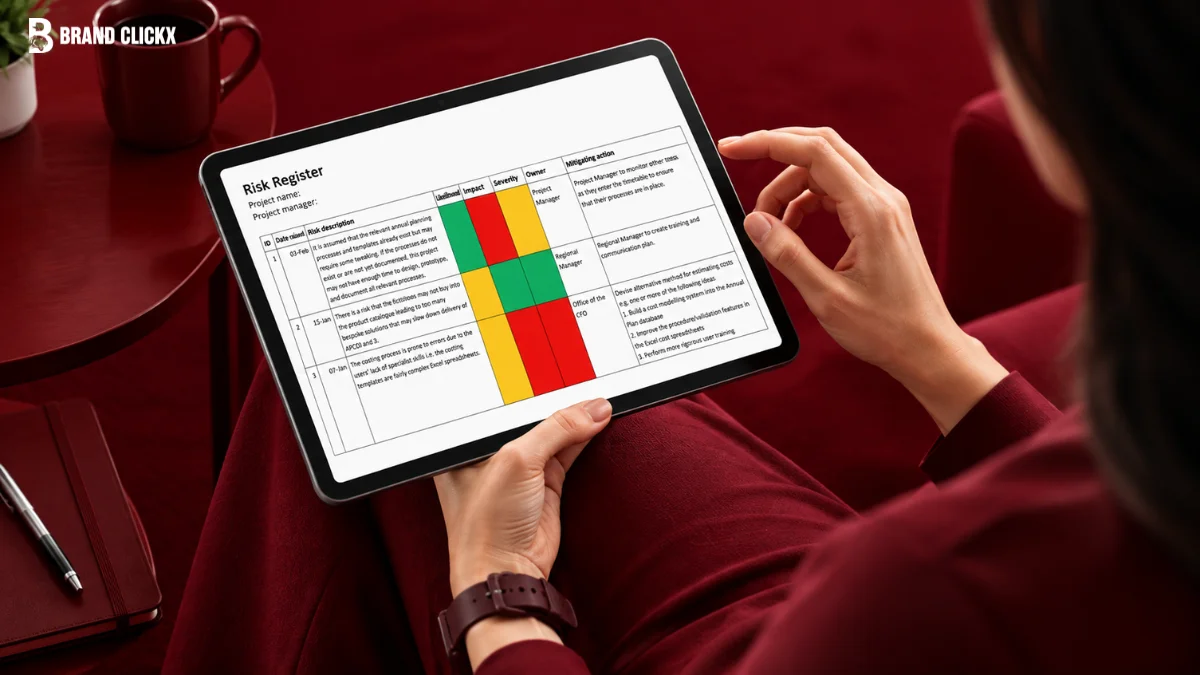
Risk register is a register that includes risks that a business may face. It helps teams to identify and fix risks before a big problem arises. It includes details of possible risks in a business and a plan to prevent them.
Each company faces different risks, so risk register is made according to it. A smaller company may have a small risk register, while a larger company may have risk register based on many spreadsheets.
Key Takeaways:
- Teams can find out the problems that a business may have to deal with in any project with the help of a risk register.
- It gathers all the details of risks in one place and makes it easy to understand the organization’s risks.
- Leaders can use information of risk to make decisions more informed and fast.
- A person or team can be made responsible for managing risks by assigning an owner.
- Teams and participants can see the risks and responses in one place.
- Organizations can track risks and help meet their risk management and regulatory requirements with the help of a risk register.
- Teams can devote their time, money, and effort to risks with better results.
Types of Risks in a Risk Register
Different types of risk registers, depending on the organization, industry, or project, are given below:
Strategic Risks
Strategic risks can affect long-term goals or directions of an organization. Changes in markets and business procedures can create these risks.
Operational Risks
Operational risks can affect daily business activities. Problems with people, processes, and systems can disturb normal operations.
Financial Risks
Financial risks can affect the money and financial performance of an organization. For example, unexpected costs, market changes, and financial losses.
Technical Risks
Technology, systems, software, or infrastructure can cause technical risks. System and technical problems can affect operations.
Compliance Risks
When an organization fails to meet laws or internal requirements, it may cause compliance risks. These risks can further give rise to losses and other business problems.
Project Risks
Project risks can affect project cost and expected results. Resource shortages, changing requirements, and unexpected problems can create project risks.
Positive Risks and Opportunities
Every risk doesn’t give negative outcome. Positive risks that are also called opportunities, can give benefits to an organization. Teams can save these risks in the register and plan actions.
How to Create a Risk Register
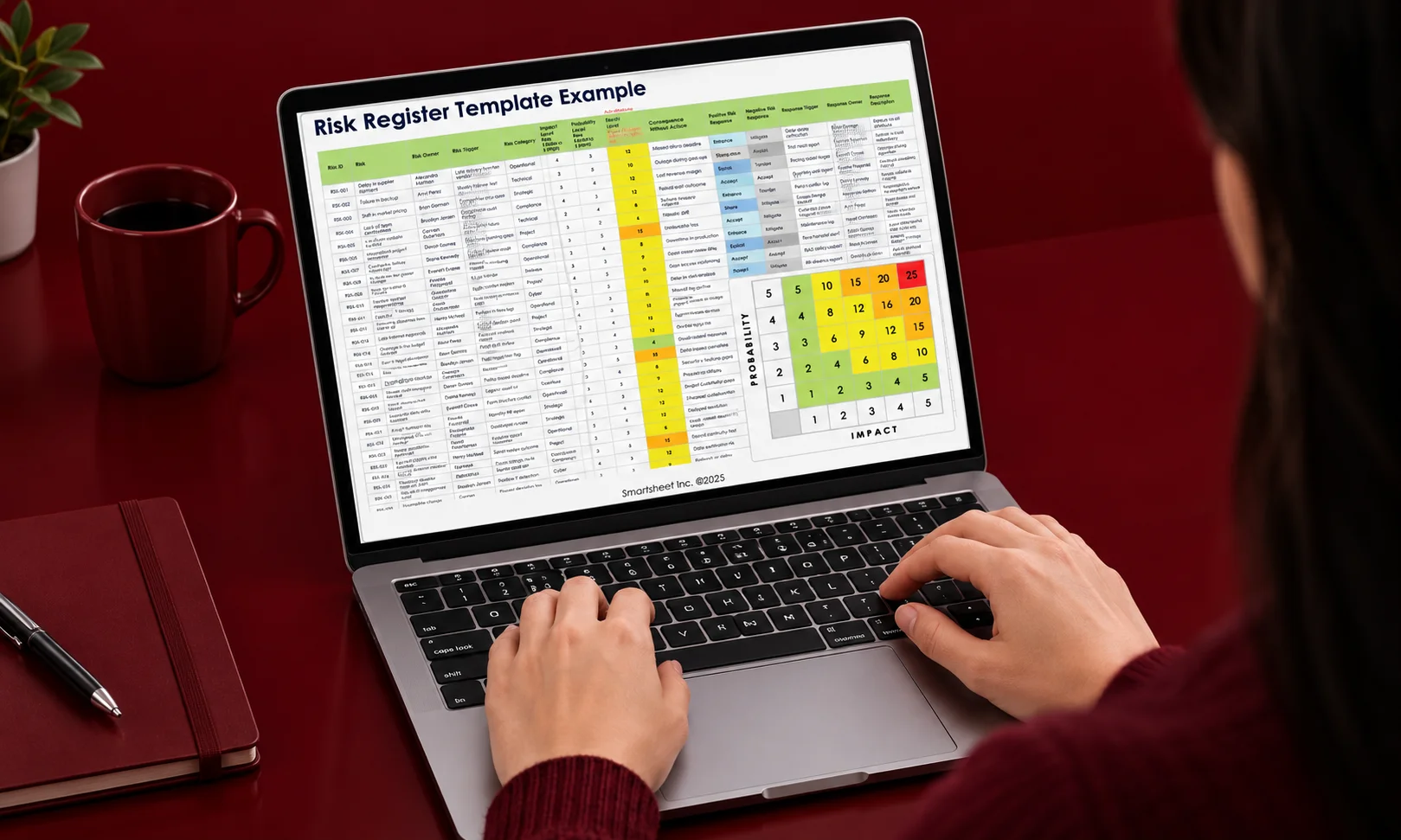
A risk register can be created by following these steps:
1. Define the Scope
First, define the scope of the risk register. Decide what it will cover: the entire organization, a specific department, or a particular project.
2. Identify the Risks
Find out the potential risks that could affect the project. Consider risks about operations, finances, and other relevant areas.
3. Describe and Categorize Each Risk
Give each risk a clear description so everyone can know about the problem. Then put it in a suitable category, such as operational, financial, technical, or project risk.
4. Assess Likelihood and Impact
Assess each risk based on its chances of occurring and impact. This helps the team to understand the seriousness of each risk.
5. Rate and Prioritize the Risks
Give each risk a rating. Prioritize risks that want greater attention and resources.
6. Create Risk Response Plans
Plan a response for each risk. In addition, the plan should explain the actions that the team will take to manage, transfer, accept, or avoid the risk.
7. Assign Risk Owners
Assign a risk owner to each risk. The owner becomes responsible for checking the risk and making sure the planned response actions are carried out.
8. Set Actions and Deadlines
List the specific actions that are required to manage each risk and set deadlines for completing them. This helps teams to track progress and maintain accountability.
9. Record the Risk Status
Record the current status of each risk, such as open, under review, controlled, or closed. Update the status as the risk or response plan changes.
How to Manage and Maintain a Risk Register
A risk register needs regular review and updates to remain useful. Teams should observe risks, track response actions, and update information as conditions change.
Review and Update Risks Regularly
Review the risk register regularly and update existing risks or add new ones as they arise. Remove or close risks that no longer require attention.
Track Risk Response Actions
Observe the actions planned for each risk. Check whether teams have completed the required actions and whether those actions are reducing the risk as expected.
Monitor Changes and Triggers
Check changes that can affect a risk and watch for warnings, which are signs that a risk may occur or require a response. Update the register when these changes happen.
Review Risk Owners
Check that each risk has a clear owner and that the assigned person or team continues to have responsibility for managing it.
Record Progress and Status
Update the status and progress of each risk. Record completed actions, ongoing responses, and changes in the risk level.
Keep the Register Relevant
Keep only useful and current information in the register. A related risk register gives teams a clear view of important risks and helps maintain risk management.
Risk Register Example
A simple risk register can show the main risks, their impact, responsibility, planned response, and current status.
| Risk | Likelihood | Impact | Priority | Owner | Response | Status |
| Project delay | High | High | High | Project Manager | Add resources and monitor deadlines | Open |
| Data loss | Medium | High | High | IT Manager | Create regular backups | Under Review |
| Budget increase | Medium | Medium | Medium | Finance Manager | Monitor spending and control costs | Open |
| Staff shortage | Low | Medium | Low | HR Manager | Prepare backup staffing options | Monitoring |
Common Risk Register Challenges
Organizations can face several challenges when creating and maintaining a risk register. These problems can reduce its usefulness and make risk management less effective.
Identifying Too Many or Too Few Risks
Including too many minor risks can make the register difficult to manage, while missing important risks can leave the organization unprepared therefore, teams should record risks that require meaningful attention.
Using Vague Risk Descriptions
Unclear descriptions make it difficult for teams to understand the risk and plan an appropriate response therefore, each risk should have a clear and specific description.
Failing to Prioritize Risks
Treating every risk equally can make it difficult to decide where to use time and resources therefore, teams should prioritize risks based on their likelihood and potential impact.
Ignoring Smaller Risks
Smaller risks may seem unimportant, but some can grow or combine with other risks; therefore, teams should check smaller risks when they could affect important objectives.
Ignoring Risk Interdependencies
Some risks can affect or increase other risks; therefore, teams should consider these links, meaning connections between risks, when examining and managing them.
Failing to Update the Register
An outdated register may no longer explain current risks therefore, teams should review and update it regularly as risks, actions, and conditions change.
Treating the Register as a Checklist
A risk register should not become a one-time checklist. Teams should actively use it to monitor risks, track responses, and support ongoing risk management.
Risk Register in Project Management and Organizations
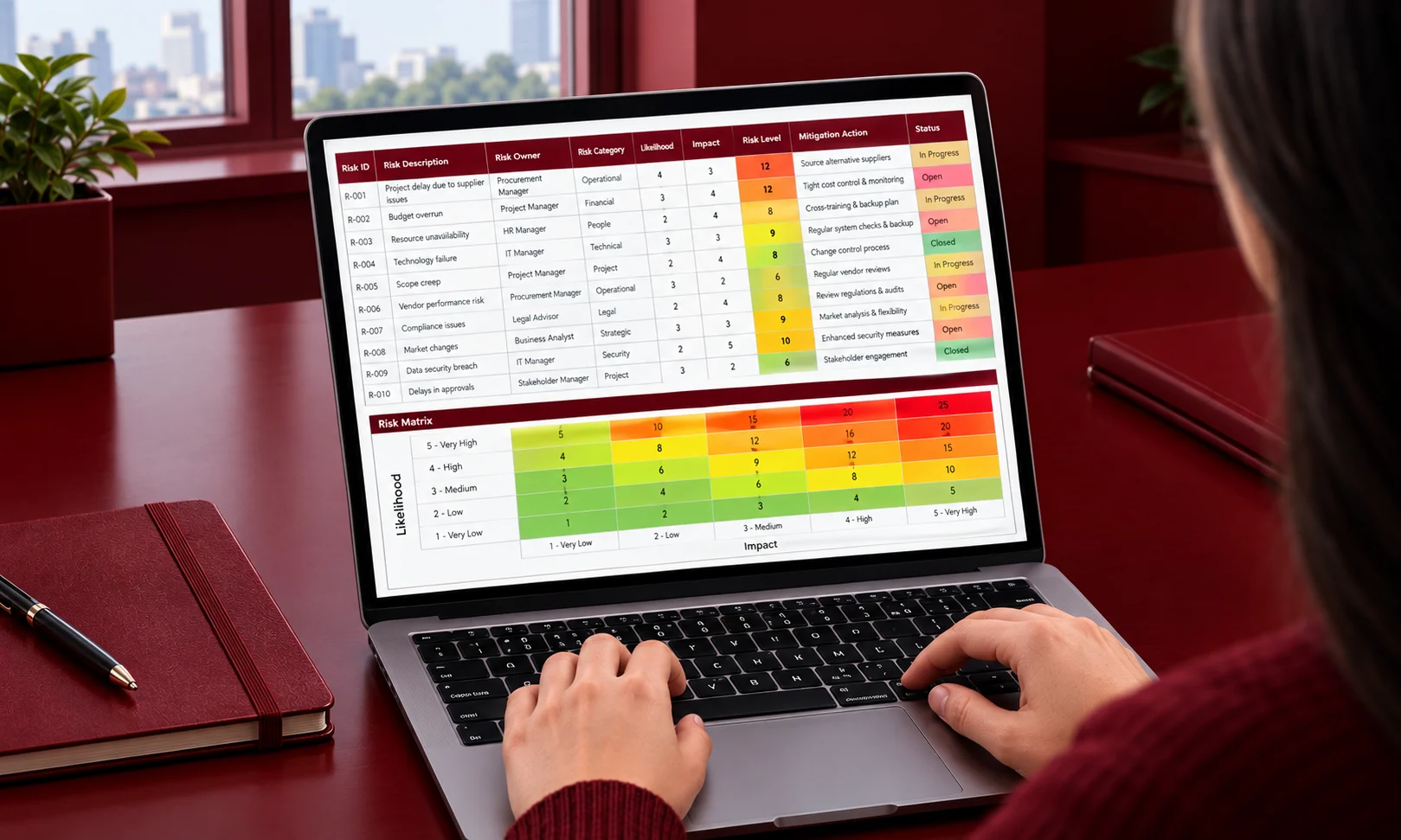
A risk register supports risk management at different levels of an organization. Teams can use it to record risks, give responsibility, plan responses, and track changes.
Project Risk Management
Project teams use a risk register to find risks that could affect the scope, schedule, budget, resources, or results of a project. It helps teams to plan responses before risks create major problems.
Enterprise Risk Management
Organizations use a risk register to maintain a broader view of risks across the business. Leaders can track major risks from different areas and manage responses across the organization.
Department-Level Risk Management
Departments can use a risk register to track risks related to their specific activities and responsibilities. This helps department teams to assign owners, monitor risks, and manage response actions.
Regulatory and Compliance Management
Organizations can use a risk register to record compliance-related risks and track response actions. It helps teams check requirements and maintain records of risks that could affect regulatory compliance.
Risk Register vs. Risk Matrix vs. Risk Assessment vs. Living Document
| Aspect | Risk Register | Risk Matrix | Risk Assessment | Living Document |
| Main purpose | Records and tracks risks and their management plans | Shows the risk level based on likelihood and impact | Evaluates the likelihood and impact of risks | Keeps risk information updated as risks change |
| Main focus | Detailed risk information and actions | Risk priority or level | Understanding and evaluating risks | Ongoing monitoring and updates |
| Includes | Risk, description, likelihood, impact, owner, response, status | Usually likelihood and impact levels | Likelihood, impact, and overall risk level | New risks, changing risks, actions, and status |
| Used for | Managing and tracking risks | Quickly viewing and prioritizing risks | Deciding how serious each risk is | Supporting continuous risk management |
| Example | A table listing a project’s risks and response plans | A grid showing low, medium, and high risks | Evaluating whether a delay is likely and how serious it could be | Updating the register when a new delay risk appears |
| Relationship | Can contain risk assessment results and a risk matrix | Can be part of a risk register | Provides information that goes into the risk register | Describes how the risk register should be maintained |
Benefits and Limitations of a Risk Register
A risk register can help organizations to understand and manage risks, but it also has certain limitations; its usefulness is based on accurate information and frequent updates.
Limitations
- It can become outdated since risks and conditions may change, which makes the original information less useful.
- Including an excessive amount of information might make it difficult to manage the register because so many minor risks are recorded.
- All depends on a correct risk assessment; if the likelihood or the impact is evaluated incorrectly, then poor risk priorities will result.
- The register has to be regularly monitored: the teams need to check it and make updates in order to keep it useful.
Final Thoughts
A risk register serves as a central place where teams can record, prioritize, and track risks. As a result, it helps teams clearly understand possible problems, assign responsibility, and plan suitable responses. In addition, regular reviews keep the register accurate and useful throughout the project.
FAQs About Risk Registers
What is the purpose of a risk register?
A risk register is used for recording and tracking risks together with their possible impact, the people who are responsible for them, and the response actions that have been planned. It enables teams to manage risks within an organization or a project.
What kind of information should a risk register include?
A typical risk register contains information on the risk description, category, likelihood, impact, priority, risk owner, response plan, actions, and status.
Who is to be held responsible for the risk register?
People who are responsible for risks look after individual risks, whereas a specific individual or group may be in charge of the main register. The amount of responsibility can differ according to the organization or project.
How Often Should You Update a Risk Register?
The risk register should be regularly updated as well as whenever there are important changes. How frequently it is reviewed will vary according to the organization, the project, and the level of risk.
Can a risk register contain positive risks?
That is correct; a risk register can include positive risks, which are known as opportunities, as well as negative risks or threats. Teams can list the actions they intend to take in order to benefit from possible advantages.
What is the difference between a risk register and a risk matrix?
A risk register includes detailed information on risks, such as who the owners are, the response plans, and the status. A risk matrix shows the level of risk by taking into account factors like likelihood and impact. It is possible to include a risk matrix as part of the risk register.