
Key Takeaways
- Due diligence means carefully verifying information before making an important business, investment, or deal decision.
- It helps identify financial, legal, operational, technology, tax, and other potential risks.
- Financial, legal, commercial, operational, technology, HR, tax, and transaction due diligence cover different areas of a business.
- A proper due diligence process includes defining the scope, collecting and verifying information, identifying risks, and documenting findings.
- A due diligence checklist helps ensure important records, contracts, ownership details, employees, customers, technology, and legal matters are reviewed.
- Stock due diligence focuses on financial performance, valuation, management, ownership, competition, and business risks.
- Startup due diligence examines the team, market, business model, financial position, funding, and legal matters.
- Common mistakes include relying on incomplete information, skipping important documents, rushing the process, and ignoring warning signs.
- Due diligence helps decisions rely on verified information rather than assumptions.
Due diligence is the process of carefully verifying and investigating information to confirm its accuracy before agreeing. It involves carefully reviewing all records before signing a contract with another party. Due diligence means carefully comparing the possibilities before making any decision.
What Is Due Diligence?

Due diligence gives us the idea that careful research must be done before signing any Pact or doing any important deal. It involves all the steps that are performed while inspecting any important deal. It gives the assurance that all the information is carefully examined and reviewed. Due diligence plays an important role in business, investing, stocks, and M&A.
Why Is Due Diligence Important?
Due diligence is important because it helps us determine whether all the information is verified, correct, and accurate, or if any risk is present in it. So, if any important problem is present, we know in time before incurring a loss. It also helps us in carefully examining the options and having a good deal. So it is important because it helps us to choose the right option before any commitment and prevents us from loss.
Types of Due Diligence

There are four important types of due diligence, which are as follows:
Financial Due Diligence
It involves looking at the financial strength of a company before investing. It also checks the costs, cash flow, profits, or possible losses. Overall, it checks the financial strength.
Legal Due Diligence
It involves checking the contracts, licenses, lawsuits, and regulations. It also examines whether any legal problems or obligations are present.
Commercial and Operational Due Diligence
It involves checking the company’s market, customers, competitors, products, and growth opportunities. It involves looking at the working principles of business, including its processes, suppliers, facilities, and daily operations.
Technology and Cybersecurity due diligence
It checks the company’s technology and cybersecurity systems. It helps in identifying any weaknesses or risks related to technology.
HR and Tax due diligence
It involves reviewing the employees, management, salaries, benefits, and workplace issues. It also looks at tax records.
Transaction Due Diligence
Transaction due diligence is the review that is performed before signing a business deal. It also includes financial, legal, commercial, operational, tax, and other checks to understand the risks and terms of the transaction.
How to Perform Due Diligence
Define the Scope
- Decide which thing needs checking.
- Set the purpose and goals
- Identify the important areas to investigate.
Collect and Verify Information
- Collect financial and business records.
- Check contracts, ownership documents, and tax records.
- Verify important information with verifiable and legal sources.
Identify Risks
- Identify financial problems and hidden obligations.
- Check for legal or regulatory issues.
- Identify operational, technology, and cybersecurity risks.
Review and Document Findings
- Organize the information you found.
- Record important risks and concerns.
- Prepare a final report to support the decision.
Due Diligence Checklist
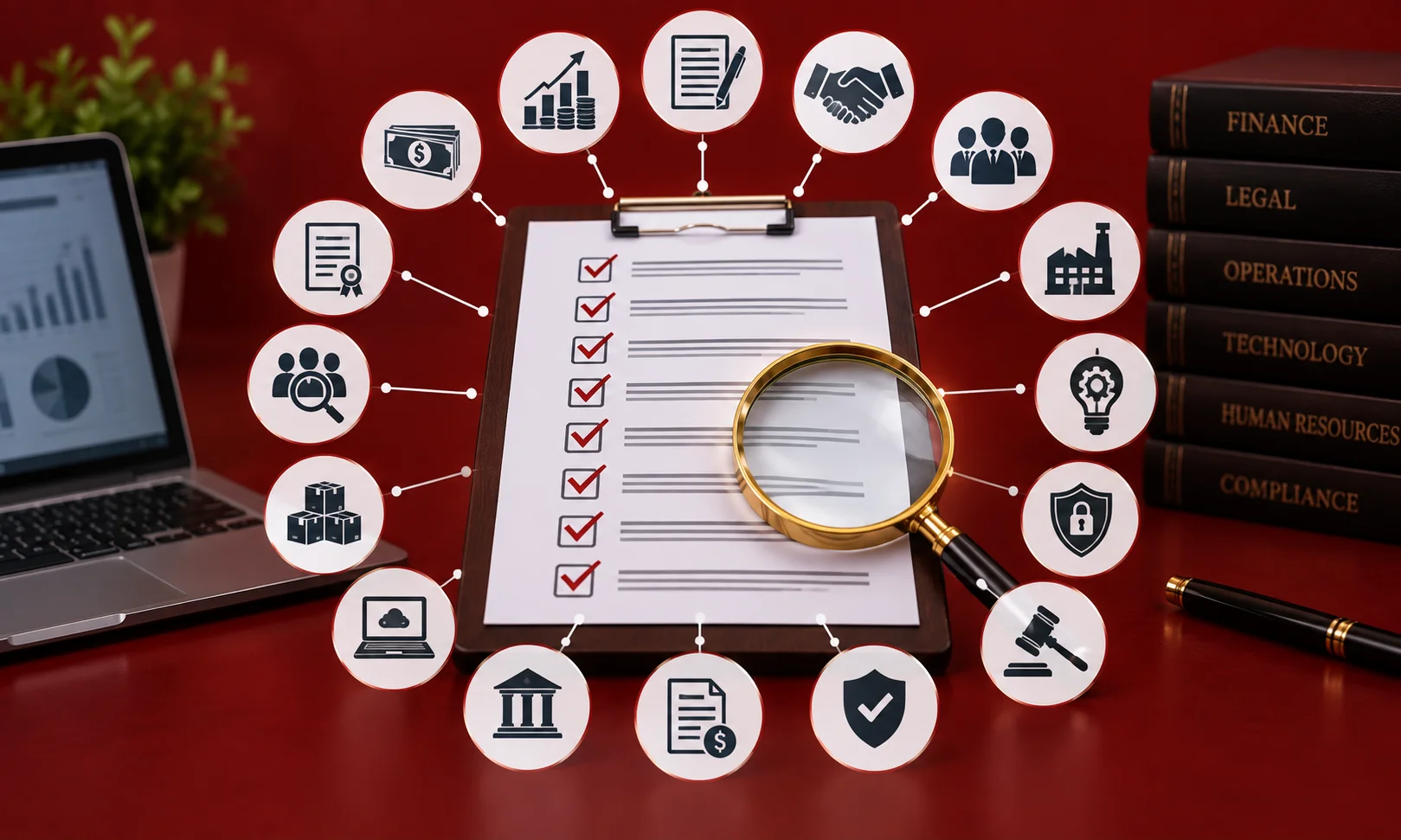
A due diligence checklist helps in giving assurance that all important areas are reviewed before making a business or investment decision. It includes financial statements, profit, cash flow, debt, and tax records. You should also review business licenses, contracts, ownership details, customers, suppliers, competitors, employees, management, and assets. Other important areas include intellectual property, technology, cybersecurity, lawsuits, regulatory issues, insurance, and any other potential liabilities.
Due Diligence for Stocks
Financials and Valuation
- Check the company’s revenue, profit, and cash flow.
- Review its balance sheet, assets, and debt.
- Compare valuation measures such as P/E and P/S ratios.
- Look at the company’s financial performance over several years.
Management and Ownership
- Review the experience of senior management.
- Check insider and major shareholder ownership.
- Look for changes in management or ownership.
- Review possible share dilution from new shares or stock options.
Competition and Risks
- Compare the company with its main competitors.
- Check its position and growth in the industry.
- Identify risks from competition, regulation, debt, or changing customer demand.
- Consider both short-term and long-term business risks.
Due Diligence for Startups
Team, Market, and Business Model
When reviewing a startup, check the experience and skills of its founders and key team members. Look at the target market, customer demand, competitors, and the startup’s business model. It is also important to understand how the company makes money and whether its growth plans are practical.
Financials and Legal Risks
Review the startup’s revenue, expenses, cash flow, funding, debt, and future financial needs. Check how much money the startup has and how long it can continue operating with its current funds. Legal checks should include contracts, ownership, intellectual property, licenses, lawsuits, and other legal obligations.
Common Mistakes
Common due diligence mistakes include relying on incomplete or incorrect information, skipping important documents, and focusing only on financial details. Another mistake is not checking legal, operational, technology, or tax risks. Some people also rush the process or ignore small warning signs that could become bigger problems later. A proper review should cover all important areas and verify key information before making a decision.
Conclusion
Due diligence helps you understand a business, investment, or deal before making an important decision. It gives you a clearer view of the company’s financial position, legal matters, market, operations, and possible risks. A proper due diligence process can help you in finding problems early and make decisions based on verified information rather than assumptions.
Frequently Asked Questions
What is M&A due diligence?
M&A due diligence is the review of a company before a merger to understand its financial, legal, commercial, and operational condition.
What is transaction due diligence?
Transaction due diligence is the review performed before completing a business deal, such as an acquisition, merger, or investment.
What is the main goal of due diligence?
The main goal is to understand the facts, verify important information, and identify potential risks before making an important decision.
What is the difference between due diligence and an audit?
Due diligence is usually performed to understand a business before a decision or transaction. An audit mainly checks whether financial statements are accurate and follow required accounting standards.