
Cornhole’s a simple, fun throwing game, easy enough to pick up that pretty much anyone can play, from kids to grandparents. Setup’s two boards, each with a hole cut near the top, and players toss small bags at the board across from them. The goal’s straightforward, get your bags in the hole, or at least keep them on the board.
Land it in the hole; that’s worth more points. Land it on the board; it still counts, just less. You can play it anywhere really: backyard, park, a party, family get-together, outside or inside if there’s enough room to throw. And it works fine with two players or four.
Cornhole Rules at a Glance
Basic rules, more or less:
- Set up two boards facing each other, split into sides, four bags each, and take turns throwing
- Hole’s 3 points, board’s 1, ground’s zero
- Once every bag’s thrown, tally it up; standard rules use cancellation scoring: subtract the lower from the higher and just add the difference. The game ends once someone hits or passes 21
- And stay behind the front edge of the board when you throw; that line’s not meant to be crossed
That is all you need to know to start a simple game.
Key Takeaways
- Cornhole’s about as simple as throwing games get: two or four players, four bags a side.
- A hole’s worth 3 points, a board’s worth 1; ground gets you nothing. Cancellation scoring just compares both sides each round and keeps the difference. Boards sit about 27 feet apart under standard rules, and you’re supposed to stay behind the front edge when you throw. The game usually ends at 21.
- Playing with kids, just shorten the distance; no need to stick to 27 feet. And like most things, practice actually helps your accuracy; it’s not just luck.
Tournaments tack on their own rules half the time; just ask ahead of the game instead of assuming. But really, it’s a backyard game at the end of the day; don’t overthink any of it, just play and have fun.
What Do You Need to Play Cornhole?
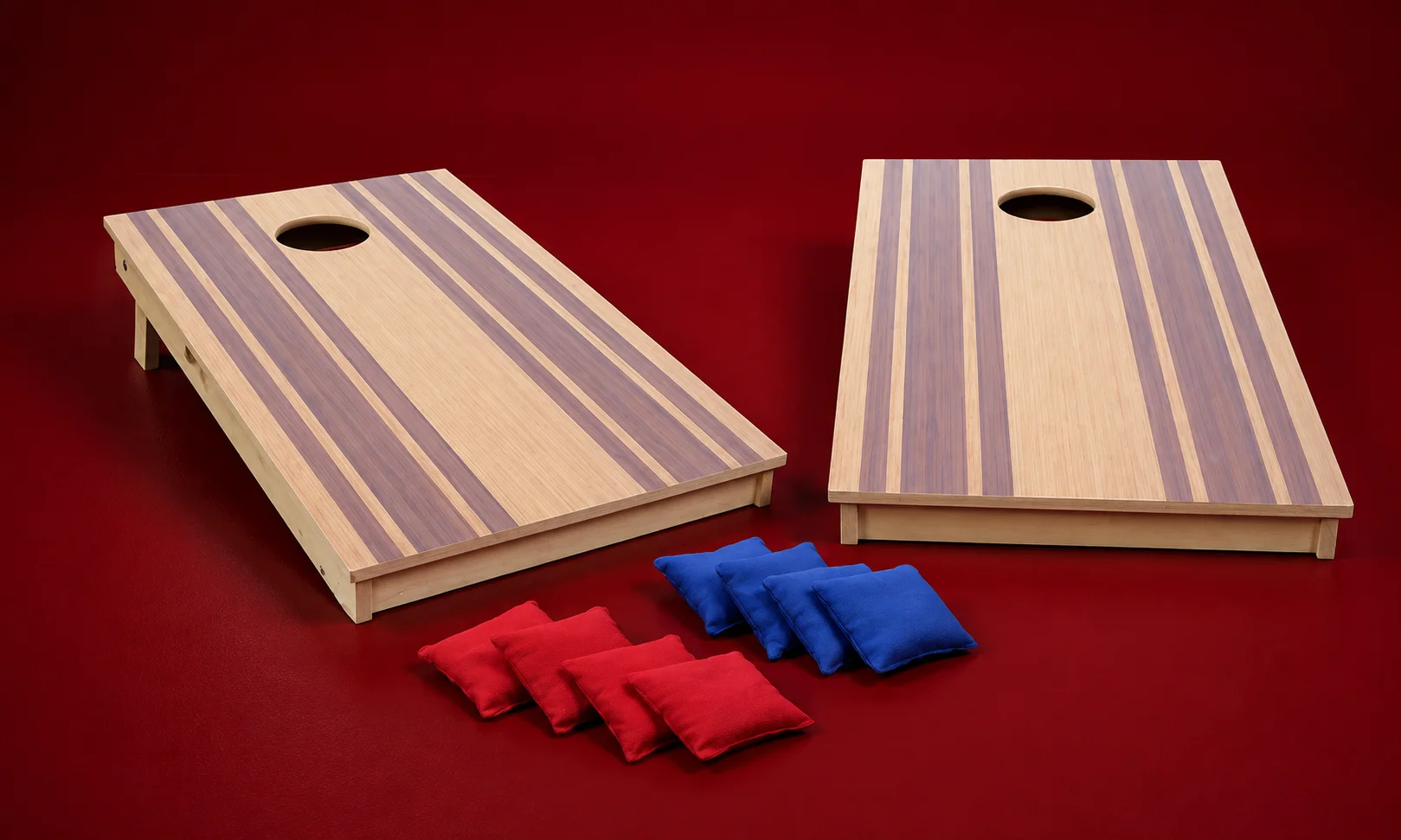
Not much, honestly; that’s part of the appeal.
Two Cornhole Boards
Two boards, each with a round hole cut near the top. They need to actually be sturdy, nobody wants a wobbly board mid-game, and a smooth surface helps too since it lets the bags slide instead of catching.
Eight Cornhole Bags
The standard game runs on eight bags total, four per side. Worth grabbing two different colors, makes it way easier to tell whose bag landed where without arguing about it.
Enough Space
You’ll need some open ground between the boards, about 27 feet from front edge to front edge for standard play. Got kids or beginners playing? Just pull the boards in closer; no rule says you can’t.
How to Set Up a Cornhole
Setting up the game is easy.
- Put one board on a flat surface.
- Put the second board opposite it.
- Make sure the boards face each other.
- Leave the right amount of space between them.
- Give each side four bags.
- Decide who will throw first.
- Start the game.
Make sure the boards do not move while people are playing.
How Far Apart Should Cornhole Boards Be?
Standard’s 27 feet, front edge to front edge; that’s the number official games stick to. Casual backyard game, though; you’re not locked into that. Move the boards closer if kids or beginners are playing.
Rough guide, really:
- Young kids, way shorter distance, no reason to make it hard
- Beginners, start closer, work your way out
- Experienced players, 27 feet is the standard
- Tournament players, just go with whatever that event’s rules say
Bottom line, keep it fun, keep it safe; the exact distance can flex around that.
How Many Players Can Play?
Cornhole is usually played with two or four players.
Two Players
One player plays against another player. Each player gets four bags.
Four Players
Four players make two teams. Each team has two players. Team members usually stand at opposite ends of the playing area. This makes doubles games more fun because everyone gets involved.
How Do You Play Cornhole?
The game is simple. Players take turns throwing their bags toward the other board.
Try to:
- Get the bag into the hole.
- Land the bag on the board.
- Keep the bag away from the ground.
Each player gets four bags. After everyone has thrown, count the points. Then start the next round. Keep playing until one player or team reaches the winning score.
How Do You Throw a Cornhole Bag?
Most people use an underhand throw. You do not need to throw the bag very hard.
Try this:
- Stand behind the front edge of your board.
- Hold the bag in one hand.
- Swing your arm gently.
- Aim at the other board.
- Let go of the bag.
- Watch where it lands.
Try to keep your throw smooth. Throwing too hard can make the bag go too far. With practice, you will learn how much force to use.
Cornhole Scoring Rules
Scoring is very easy.
| Where the Bag Lands | Points |
|---|---|
| In the hole | 3 points |
| On the board | 1 point |
| On the ground | 0 points |
Bag in the Hole
A bag that goes through the hole is worth 3 points. This is the best score you can get from one bag.
Bag on the Board
A bag that stays on the board is worth 1 point. You do not have to get the bag into the hole to score.
Bag on the Ground
A bag on the ground gets 0 points. A bag that bounces off the ground and then lands on the board also normally gets 0 points.
What Is Cancellation Scoring?
Cancellation scoring may sound difficult, but it is actually simple. You compare both teams’ scores for the round. The lower score is taken away from the higher score. The team with the higher score gets the difference.
Simple Example
Team A gets:
- Two bags on the board = 2 points
- One bag in the hole = 3 points
- Total = 5 points
Team B gets:
- Three bags in the hole = 9 points
- Total = 9 points
Now subtract:
9 – 5 = 4
Team B gets 4 points for that round. Team A gets 0 points. This is called cancellation scoring.
How Do You Win Cornhole?
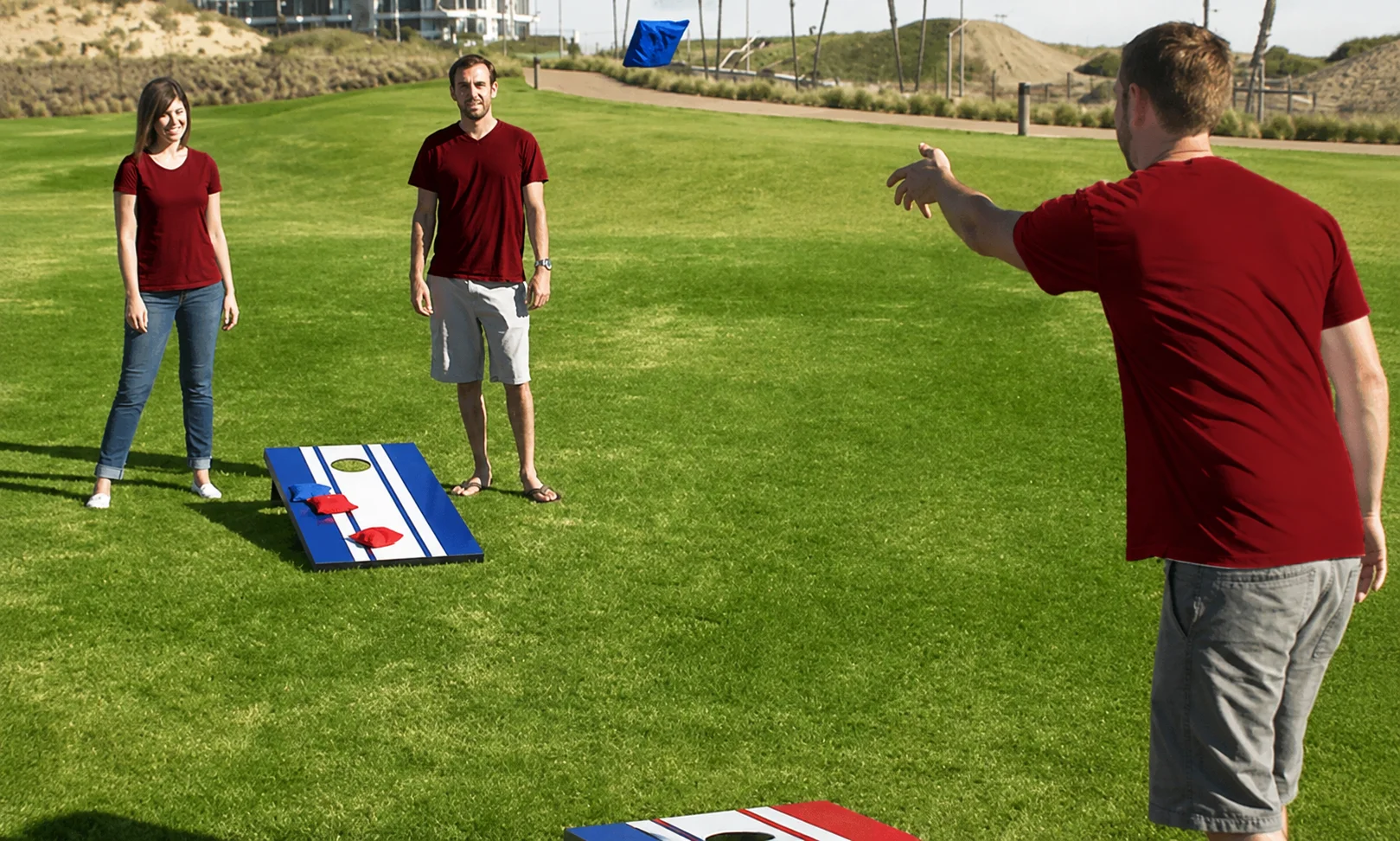
Twenty-one wins it, whoever gets there first once a round ends. Say you’re at 19 and score 3. Now you’re at 22. That’s a win, no do-over needed. You went over and it still counts.
Not every group plays it that way. Some make you bounce back down below 21 if you overshoot instead of just handing you the win. Worth figuring out which version you’re playing before anyone picks up a bag.
What Happens When the Score Is Tied?
A tie does not give either side extra points.
For example:
- Team A = 5 points
- Team B = 5 points
The difference is zero. So nobody gets points from that round. The next round continues as normal.
Who Throws First?
Players need to decide who goes first. For a casual game, you can use:
- A coin toss
- Rock-paper-scissors
- A random choice
You can also let the winner of the previous round throw first. In many standard games, the player or team that scored in the last round throws first in the next round. If the round was tied, the side that threw first can throw first again.
Cornhole Throwing Rules
A few things to keep straight while you’re throwing.
Stay behind the line. Feet stay behind the front edge of the board; don’t step past it mid-throw. Cross it, and that’s a foot fault.
Wait your turn. Don’t throw while someone else is mid-throw; just wait it out. Keeps things safe, keeps it fair too.
Throw underhand. Standard cornhole sticks to an underhand throw; the whole point’s control, getting the bag close to that hole rather than just chucking it.
What Is a Cornhole Foul?
A foul’s basically breaking a game rule while you’re playing. A foot fault is the common one, step over the front edge of the board before you actually let go of the bag; that’s a foul right there. When it happens, the throw usually doesn’t count. Tournaments can run their own version of these rules too, so worth checking beforehand rather than assuming.
Common Cornhole Mistakes
New players often make a few simple mistakes.
Throwing Too Hard
You do not need a very strong throw. A hard throw can make the bag fly past the board. Try a smooth throw instead.
Always Aiming for the Hole
Getting a bag into the hole is great. But you do not need to do it every time. A bag on the board still gives you 1 point. Sometimes a safe shot is better.
Forgetting the Other Player
Do not only look at your own bags. Look at your opponent’s bags too. You may be able to place your bag in a way that makes their next throw harder.
Standing Too Far Forward
Remember the throwing line. Check your feet before every throw.
Rushing
Take your time. Look at the board. Choose where you want the bag to land. Then throw.
Easy Cornhole Strategies

You can start using simple strategies once you understand the rules.
Aim Near the Middle
If you are new to the game, aim near the middle of the board. This gives you a good chance of keeping the bag on the board.
Try to Control the Bag
Do not focus only on speed. Try to control where the bag lands. A soft throw can sometimes work better than a hard one.
Block the Hole
You can place a bag in front of the hole. This can make it harder for your opponent to get their bag into the hole.
Play Safe
You do not always need to take a risky shot. If you are already ahead, a safe bag on the board may be enough.
Watch the Score
Always know the score. Your next throw may depend on whether you are ahead or behind.
Cornhole Rules for Kids
Cornhole is a great game for children. But the standard 27-foot distance can be difficult for young players. You can move the boards closer together.
You can also:
- Use lighter bags.
- Give children more time.
- Let them throw from a closer spot.
- Keep the scoring simple.
- Focus on fun instead of winning.
The goal is to help children enjoy the game.
Cornhole Rules for Beginners
Playing for the first time? Start with these simple rules:
- Put two boards opposite each other.
- Give each side four bags.
- Take turns throwing.
- Stay behind the front edge.
- A bag in the hole = 3 points.
- A bag on the board = 1 point.
- A bag on the ground = 0 points.
- Use cancellation scoring if everyone agrees.
- Keep playing until someone reaches or passes 21.
- Have fun.
You can learn the more detailed rules later.
How to Get Better at Cornhole
You do not need special skills to improve. Practice is the main thing.
Practise Your Throw
Try to use the same throwing motion each time. This can help you become more accurate.
Do Not Use Too Much Force
A gentle throw is often easier to control. Try different amounts of power and see what works for you.
Learn From Your Mistakes
Did the bag go too far? Use less force next time. Did it fall short? Try a little more power. Small changes can improve your throws.
Practice Different Shots
Try different types of throws.
You can practice:
- Short throws
- Soft throws
- Hole shots
- Blocking shots
- Straight throws
This will help you handle different situations.
Stay Calm
Sometimes you will miss. That is normal. Do not let one bad throw ruin your game. Take a breath and focus on the next shot.
Casual Cornhole vs Tournament Cornhole
There can be a big difference between a backyard game and a tournament.
| Rule | Casual Game | Tournament |
|---|---|---|
| Board distance | Can be changed | Follows event rules |
| Players | Flexible | Usually singles or doubles |
| Scoring | Can use house rules | Follows official rules |
| Winning score | Usually 21 | Depends on event rules |
| Fouls | Often relaxed | More strictly enforced |
| Equipment | Flexible | Must meet requirements |
If you are playing in a tournament, check its rules before the game.
Standard Cornhole Board Size
Standard cornhole boards are generally about:
- 48 inches long
- 24 inches wide
The hole is usually about 6 inches wide. Different organizations can have their own equipment rules. If you are buying a board for tournament play, check the rules of the organization first.
How Many Bags Do You Need?
A normal game uses eight bags. Each side gets four bags.
For singles:
- Player 1 = 4 bags
- Player 2 = 4 bags
For doubles:
- Team 1 = 4 bags
- Team 2 = 4 bags
Using two different colors makes the game easier to follow.
Is Cornhole Easy to Learn?
Yes. You can understand the basic game in just a few minutes. The main idea is:
Throw the bag → hit the board or hole → count the points → play the next round.
Getting good at cornhole takes more practice. At first, your bags may go too far or fall short. That is normal. After some practice, you will learn how much force to use.
Cornhole Rules Checklist
Before you start, check these things:
Two boards are ready.
The boards are facing each other.
The distance has been decided.
Each side has four bags.
Everyone knows the throwing line.
Everyone knows the scoring system.
Players agree on cancellation scoring.
Everyone knows the winning score.
The playing area is safe.
Everyone is ready to have fun.
Final Thoughts
Cornhole is a simple game that almost anyone can enjoy. You do not need to be an expert to play. The basic rules are easy to remember. Just keep these numbers in mind:
3 points = bag in the hole
1 point = bag on the board
0 points = bag on the ground
Four bags a side; the standard game runs to 21. New to it? Take it slow; get a feel for how the bag actually moves before worrying about accuracy. And honestly, that’s the main thing: enjoy it. Cornhole’s meant to be fun, whether it’s family in the backyard or you’re actually competing.
Frequently Asked Questions
What are the basic rules of cornhole?
You toss bags at the board across from you. Land it in the hole, that’s 3 points. Land it on the board, 1 point. Miss both and hit the ground, nothing.
How many points do you need to win cornhole?
Usually 21. Whoever hits or passes that first, at the end of a round, wins.
Is a bag on the board worth one point?
Yep. Stays on the board, you get 1 point for it.
How many points is a bag in the hole?
Goes straight through; that’s 3 points.
How many bags does each player get?
Four per player, each round.
How far apart should the boards be?
Roughly 27 feet, front edge to front edge.
Can kids play?
Definitely, and it’s easy too, just bring the boards in closer for younger ones.
What happens when a bag lands on the ground?
A bag on the ground normally gets 0 points.
What is cancellation scoring?
Simple enough: subtract the lower score from the higher one each round; only the difference goes onto the winning side’s total.
Can you go over 21?
Most standard rules, sure, going past 21 won’t disqualify you. Just know plenty of groups play with their own house rules, so it’s worth sorting that out before you start.