

AI Summary
This is a practical guide to the best group exercises you can do at home with friends, family members, roommates, kids, or a partner with no gym membership, no fancy equipment, and no professional trainer required. It walks through fifteen tested group workouts organized by group size, energy level, and space needed, from partner planks and family dance workouts to full-on backyard bootcamps.
It covers what actually makes a group workout work (structure, rotation, and a shared finish line), how to keep everyone engaged when fitness levels differ, and how to build a weekly rhythm your group will actually stick to. Written for anyone who wants to make working out feel less like a chore and more like showing up for people you like.
The Short Version
Working out alone is hard.
Working out with someone else is easier but you have to know what to do together.
This is the article for that.
Below are the fifteen best group exercises you can do at home, with real instructions, real tips, and no fluff. No equipment required for most of them. No gym. Just people, a floor, and forty-five minutes.
Key Takeaways
- Group workouts stick better than solo workouts because you show up for other people, even when you wouldn’t show up for yourself.
- The best group exercises need almost no equipment bodyweight, a timer, and a phone playlist is enough for 90% of them.
- Group size shapes the workout partner exercises work differently than family sessions of four to six, which work differently than a backyard bootcamp of ten.
- Structure matters more than intensity a workout with clear rotation, a shared finish line, and roles for everyone beats a harder workout with no plan.
- Mixed fitness levels are solvable modifications, partner-up systems, and time-based rounds let everyone work at their own pace without dragging anyone down.
- The right music does 30% of the work a shared playlist makes any group workout better.
- Consistency beats intensity three 20-minute group sessions per week outperform one epic weekend session that no one repeats.
Why Group Exercises at Home Actually Work
Something happens when other people are counting on you to show up.
The alarm goes off. You want to skip the workout. But you know your sister is already stretching in her living room across town, waiting for the video call to start. Or your roommate is standing in the kitchen already in workout clothes. Or your kids are yelling from the backyard because you promised them the dance workout after breakfast.
So you show up. Every time.
That’s the real magic of group exercise. Not the workout itself. The reason you actually do the workout.
Group workouts also produce something solo workouts almost never do a shared memory. The plank challenge you barely survived with your best friend. The dance-off that ended in tears of laughter. The morning your dad joined the family bootcamp and threw his back out doing a lunge. These become stories. And stories keep people showing up.
What You Actually Need
Almost nothing.
For most of the exercises in this guide, all you need is a clear space of about six square feet per person, a timer (your phone works), and something to play music through.
A few extras that help but aren’t required:
a yoga mat or towel, a set of resistance bands, and a jump rope. Total cost for all three: less than $30.
That’s it. No treadmill, no dumbbells, no fancy app subscription. Just space, time, and people.
The 15 Best Group Exercises at Home
For Two People (Partner Workouts)
1. Partner Plank Push
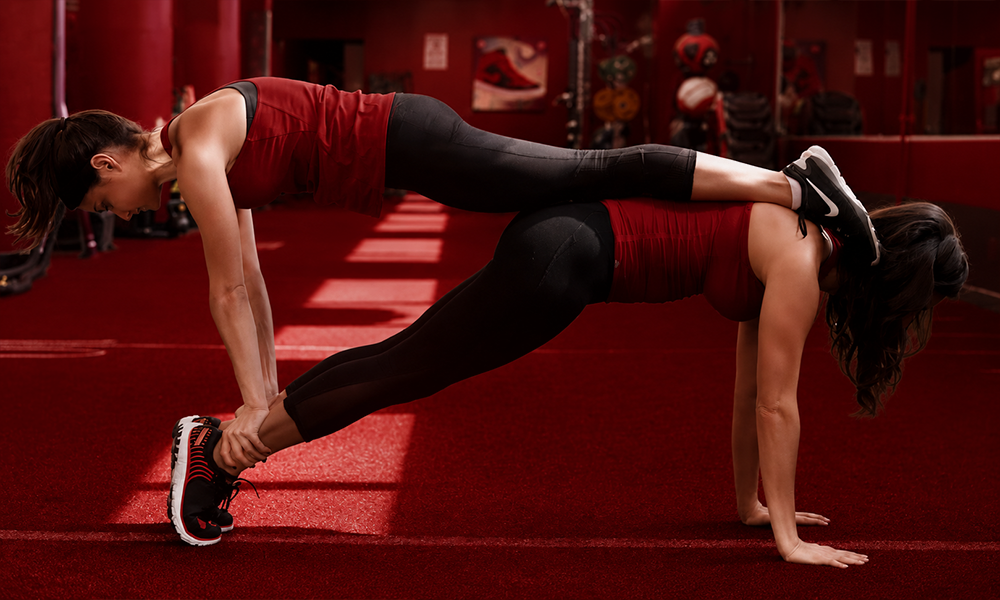
Both people get into plank position, facing each other. Reach out and gently push each other’s shoulders, trying to knock the other person off balance without letting yourself fall. Thirty seconds on, thirty seconds off. Three rounds.
It’s harder than it sounds and funnier than you’d expect.
2. Partner Squat Hold
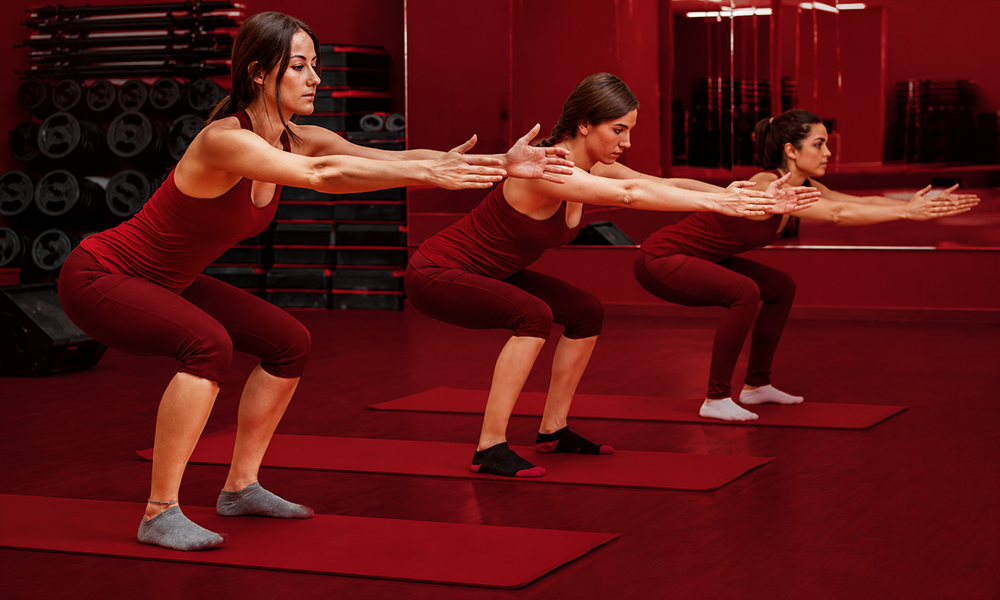
Stand back-to-back, then slide down until you’re both in a wall-sit position except the “wall” is each other. Hold for 30 seconds. Rest. Repeat five times.
You will laugh. You will also feel your quads for two days.
3. Medicine Ball Toss (or Just a Basketball)
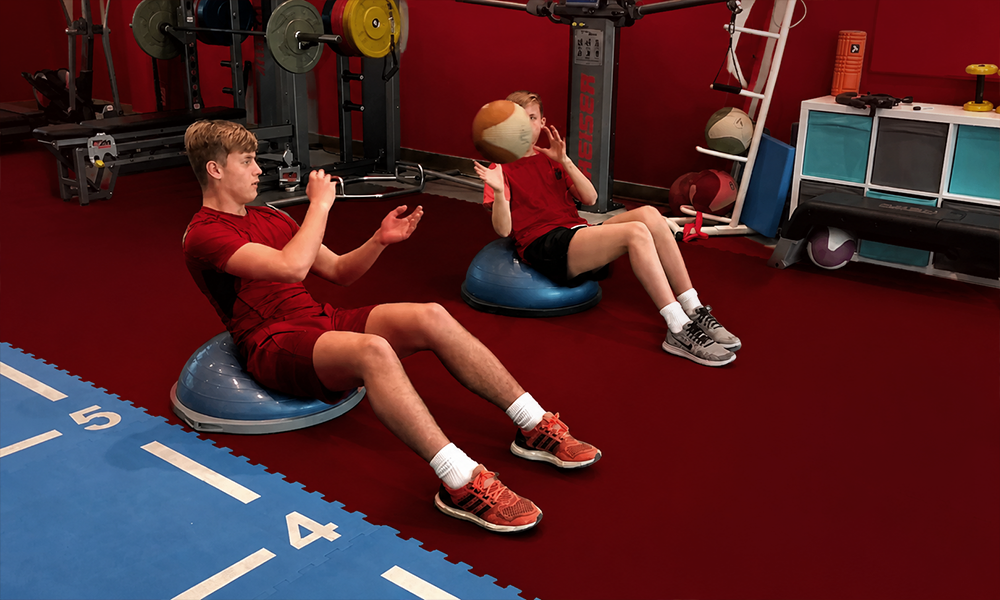
Stand about six feet apart, both in squat position. Toss a medicine ball back and forth, going into a full squat every time you catch it. Sixty seconds. Rest. Repeat three times.
If you don’t have a medicine ball, use a basketball, a rolled-up towel, or a wine bottle wrapped in a shirt. The workout doesn’t care.
4. The Buddy Sit-Up
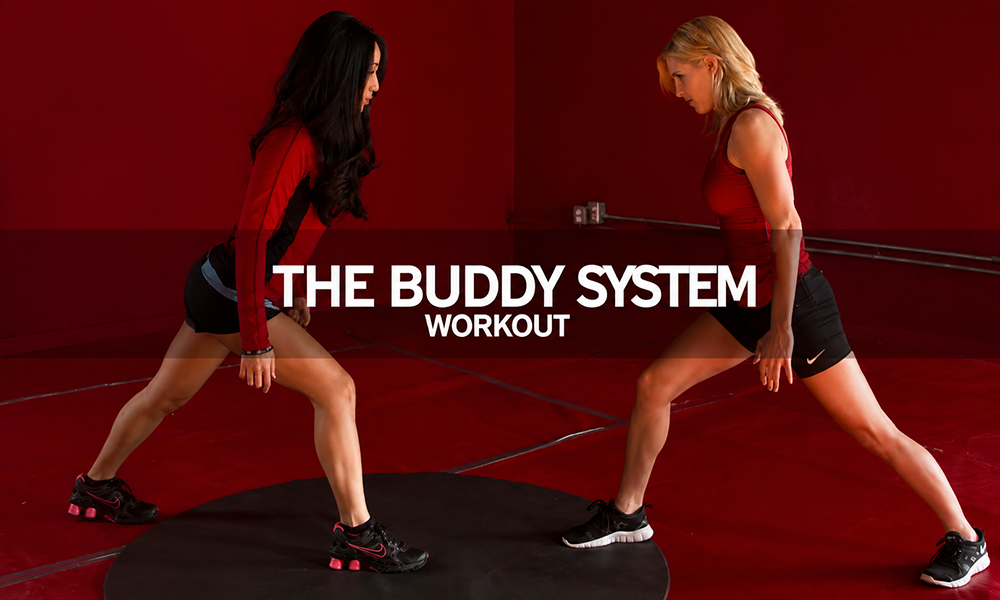
Sit facing each other, feet touching, knees bent. Each partner leans back into a sit-up. When you come back up, high-five each other at the top. Fifty reps together.
The high-five is not optional. It’s what makes this exercise a group exercise instead of just two people doing sit-ups near each other.
For Families (Three to Six People)
5. The Family Dance Workout
Pick five songs. Everyone takes turns picking one. Whoever picks the song leads a two-minute freestyle dance-along. Whoever refuses to dance does ten burpees.
Kids love this. Teenagers pretend to hate it, then love it. Adults will be tired in six minutes.
6. The Living Room Circuit
Set up four stations around the living room: jumping jacks, sit-ups, push-ups (modified if needed), and squats. Every family member spends 45 seconds at one station, then rotates. Do the full circuit three times.
The trick is that everyone rotates together, on the same timer. Nobody gets left behind. Nobody finishes early.
7. Follow the Leader
The oldest person goes first. They do any exercise they want for 30 seconds. Everyone else copies them. Then the next person takes over. Everyone gets a turn.
This is genius because it lets the youngest kid pick something ridiculous (like hopping on one foot) and the oldest person pick something serious (like planks). Both count. Both work.
8. The Countdown Ladder
Everyone does one push-up, one sit-up, one squat, one jumping jack. Then two of each. Then three. Keep going until you can’t go higher.
Whoever gets furthest wins bragging rights until the next session.
For Bigger Groups (Six or More)
9. Backyard Bootcamp
Set up six stations in the backyard or a big room. Every station is a different exercise: sprint, push-up, squat, plank, jump rope, lunge. One person per station, rotating every 45 seconds.
Do the full circuit three times. Someone plays music. Someone times it. Someone yells encouragement. It works.
10. Relay Race Workouts
Split into two teams. First person runs to a marker, does ten burpees, runs back. Tags the next person. First team to finish wins.
Vary the exercise. Vary the distance. Vary the teams. The competition does all the work.
11. Circle Time-Based Rounds
Everyone stands in a circle. Whoever the timer lands on has to do a specific exercise for 30 seconds while everyone else cheers. When their 30 seconds are up, the timer moves to the next person.
Great for warming up and for groups where fitness levels vary widely nobody’s exercise choice affects anyone else’s difficulty level.
For Any Group Size
12. The Music Video Workout
Pick a music video everyone knows. Do a specific exercise every time something happens in the video: a squat every time the chorus starts, a push-up every time the singer says a certain word, jumping jacks during the bridge.
Try it with a song like “Uptown Funk” or “Shake It Off.” You’ll be exhausted in four minutes and want to do it again.
13. The Deck of Cards Workout
Each card represents an exercise. Hearts are push-ups, spades are squats, diamonds are sit-ups, clubs are jumping jacks. Face cards are 10 reps, number cards are the number shown, aces are 25.
Flip cards one at a time. Everyone does the number and exercise. Go through the whole deck if you can survive it. Most groups won’t.
14. Yoga Together
Not every group workout needs to be intense. Set up mats or towels in a circle facing each other. Follow along with any beginner yoga video. Twenty minutes.
The value here isn’t just the yoga. It’s spending twenty minutes moving quietly together. Kids fall asleep. Adults feel human again.
15. The Cool-Down Walk
End every group workout with a five to ten minute walk together. Talk about anything except the workout. This is when the actual bonding happens.
The workout is the excuse. The walk is the reason.
How to Actually Get Your Group to Show Up
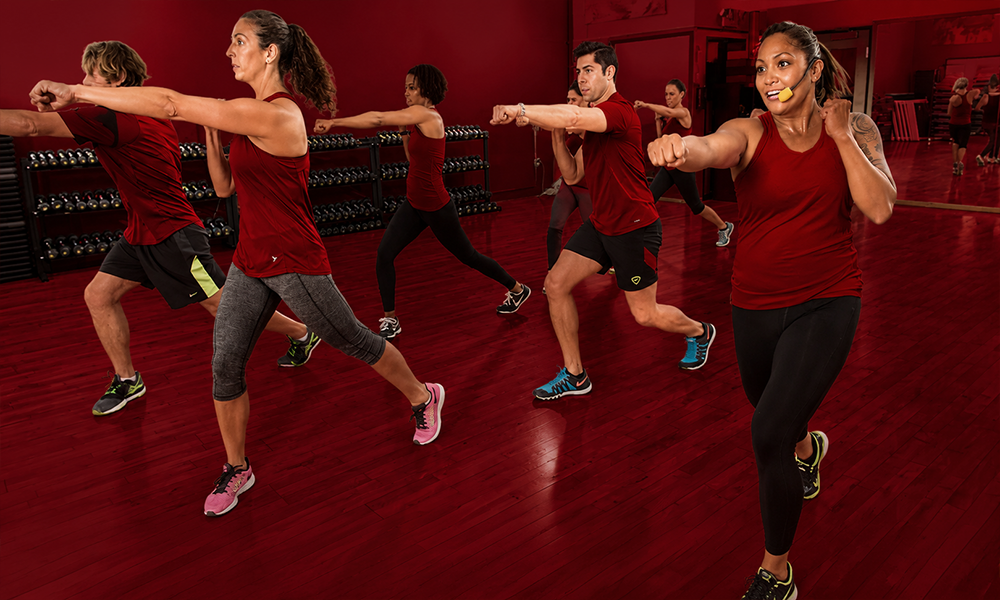
Getting people to work out together at home is 20% workout selection and 80% making the show-up easy.
Pick a time. Same day, same hour, every week. Not “Tuesday-ish” Tuesday at 7 p.m.
Assign roles. Someone controls the music. Someone starts the timer. Someone brings the snacks for after. When people have a job, they show up.
Keep it short. Twenty to forty minutes maximum. Nobody sticks with a 90-minute weekend workout. Everyone sticks with a 25-minute Wednesday-Sunday routine.
Track it visually. A whiteboard on the fridge, a shared calendar, a group chat that logs each session. Streaks build habit better than motivation does.
Celebrate the small stuff. First week done. Ten sessions in. First time everyone showed up on time. These matter more than fitness milestones.
What to Do When Fitness Levels Differ
This is the number one thing that kills group workouts. Grandma can’t do burpees. The teenager gets bored during modified push-ups. Solution: time-based rounds and modifications.
Instead of “everyone does 20 push-ups,” try “everyone does push-ups for 45 seconds.” The strong person does more reps. The person building up does fewer. Both finish at the same time. Both feel accomplished.
Offer modifications openly. “Push-ups on your knees count. Wall push-ups count. Doing them slower counts. Just move.” When the leader models this, nobody feels self-conscious about scaling.
Rotate who leads. When the strongest person always sets the pace, others burn out. When the weakest person leads sometimes, everyone gets a manageable day mixed in.
The Real Reason This All Works
The workouts in this guide aren’t magic. Most of them are simple.
What makes them work is the group.
Working out with people you like turns exercise from something you have to do into something you get to do. It replaces motivation with obligation, in the good sense the obligation of not letting your people down.
That’s why group exercises at home outlast solo routines almost every time.
The bodies get stronger. The friendships get stronger. And the workout that felt like a chore in January becomes something you actually miss when someone can’t make it in March.
That’s the whole point.
FAQs
Do I need equipment for group exercises at home?
No. Most of the fifteen exercises above use only body weight, a timer, and music. Optional extras like a yoga mat, resistance bands, or a jump rope cost less than $30 total.
How long should a group workout at home last?
Twenty to forty minutes is the sweet spot. Long enough to feel real, short enough that people actually show up consistently. Longer sessions get skipped.
How often should we do group workouts?
Three times a week is the pattern that works best for most groups. Consistent short sessions beat occasional long ones almost every time.
What if we have different fitness levels?
Use time-based rounds instead of rep counts, offer modifications openly, and rotate who leads. Everyone works at their own pace within the same shared timer.
Are group exercises at home really as effective as the gym?
For general fitness, cardiovascular health, and strength maintenance yes. For serious muscle building or specialized training, no. But for the vast majority of people, group workouts at home produce better long-term consistency than gym memberships.