AI Summary
This is a practical guide to every leg machine you’ll find at a standard commercial gym, written for the person who walks past them wondering what they actually do. It covers the leg press, hack squat, leg extension, leg curl (lying and seated), Smith machine, glute kickback, hip abductor and adductor machines, standing calf raise, seated calf raise, and belt squat with plain-English explanations of what each machine trains, how to set it up without asking anyone, common mistakes that make you look like a beginner, and which machines to prioritize if you only have twenty or thirty minutes. Written for anyone who wants to actually understand the leg section instead of pretending they do.
The Short Version
Walk into any gym.
Somewhere in the back corner, there’s an area everyone avoids for the first month. It’s got weird sleds, chairs with pulleys, and one machine that looks like a torture device from a medieval movie.
That’s the leg section.
This is the guide that tells you what all of it does and how to use it without anyone noticing you had no idea what you were doing.
Key Takeaways
- You don’t need every leg machine. Five or six of them will build strong, balanced legs faster than trying to use all twelve.
- The leg press is the beginner’s best friend — safer than a barbell squat, works the same muscles, and lets you push heavy weight without a spotter.
- Leg extension and leg curl are the essential pair — one trains the front of your thigh, the other trains the back.
- The hack squat is criminally underrated — it hits your quads harder than most people expect and is much easier to set up than a barbell.
- Calf raises matter more than you think — most people skip them entirely, then wonder why their calves stay small.
- Machines are not “worse” than free weights — they’re different tools for different jobs, and both belong in most training programs.
- Twenty minutes on three machines beats an hour on eight — pick fewer, go heavier, and actually finish the workout.
Why the Leg Section Feels Intimidating (And Why It Shouldn’t)
Every gym has one the aisle of contraptions that look like they were designed by someone who has never met a human body.
You walk past them. You wonder what they do. You promise yourself you’ll figure it out someday.
Someday never comes.
That’s not because leg machines are complicated. It’s because nobody explains them. Trainers assume you know. YouTube videos assume you know. Gym signs never actually tell you what a machine is for they just show a stick figure sitting in a chair looking uncomfortable.
So here’s the truth. Most leg machines are simple. Each one does one specific thing. Once you know what that thing is, you can walk up to any of them, adjust the seat, load some weight, and use it correctly on your first try.
That’s the whole point of this article.
The Big Ones: The Machines Everyone Should Know
The Leg Press
If you use only one leg machine in your entire life, make it this one.
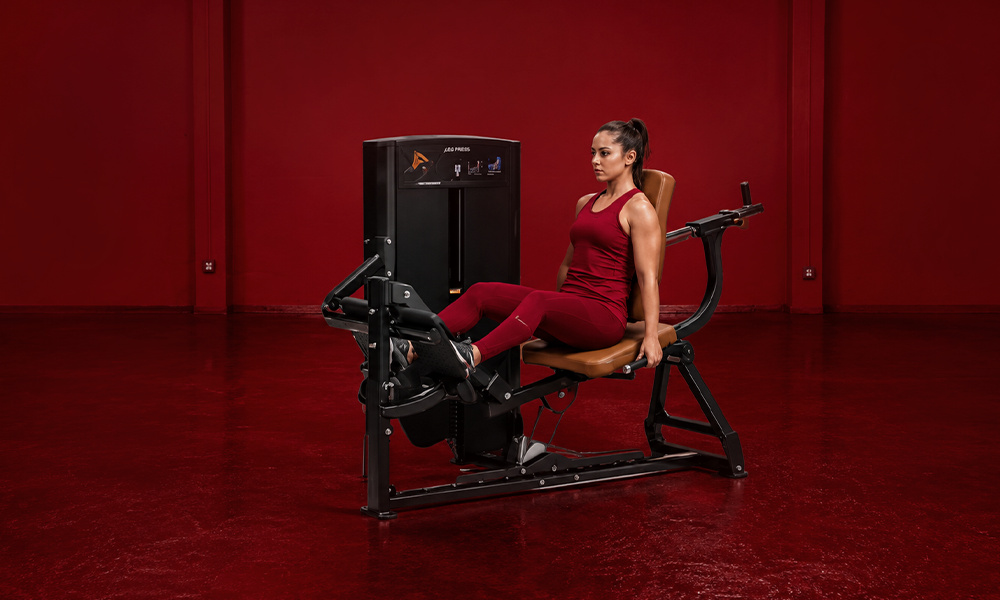
The leg press is the huge sled-and-platform machine that looks like it belongs in a car shop. You sit down, put your feet on a platform, and push the platform away from you. That’s the entire movement.
What it works: quads, glutes, hamstrings basically everything below your waist.
Why it matters: it’s the closest thing to a barbell squat without the risk of falling over or dropping a bar on yourself. You can go heavy, you can go safe, and you can go alone.
The trick: don’t lock your knees at the top. Keep a slight bend. Your knees will thank you in ten years.
The Hack Squat
The machine that looks like a slanted sled with shoulder pads at the top.
You stand on a platform, put your shoulders under the pads, and squat down and back up. The sled slides on rails at a fixed angle, which means you don’t have to balance anything.
What it works: primarily quads, secondarily glutes.
Why it matters: it trains the same movement as a barbell back squat but takes the balance out of the equation. Beginners can go heavy without wobbling. Advanced lifters use it to hit their quads harder than a regular squat allows.
The trick: put your feet lower on the platform to work your quads more, higher to work your glutes and hamstrings more.
The Leg Extension
The chair with a bar at the shin level.
You sit down, hook your ankles behind the bar, and straighten your legs. The bar goes up. That’s it.
What it works: the front of your thigh specifically the quadriceps muscles.
Why it matters: it’s the only common gym exercise that isolates the quads directly. Squats, presses, and lunges all involve other muscles too. Leg extensions target one thing.
The trick: don’t swing the weight up. If you can’t control it on the way down, it’s too heavy.
The Leg Curl (Lying or Seated)
The one where you lie face-down or sit upright with a padded bar behind your ankles.
You bring your heels toward your body by bending your knees. The bar comes with them.
What it works: the back of your thigh the hamstrings.
Why it matters: hamstrings are the muscles most people forget to train. Weak hamstrings are one of the top predictors of knee injury. This machine fixes that.
The trick: focus on squeezing the hamstring at the top of the movement, not just moving the weight.
The Underrated Ones
The Smith Machine
The barbell that’s fixed on rails.
Technically it’s not “just” a leg machine you can do bench presses, shoulder presses, and rows on it too. But for leg day, the Smith machine is where you do squats, lunges, and split squats without having to balance a real barbell.
What it works: whatever exercise you do on it. For legs, that’s usually squats or lunges.
Why it matters: it’s a bridge between machines and free weights. Safer than a regular barbell, harder than a fixed machine. Perfect for beginners transitioning to free weights.
The trick: the fixed bar path means your body has to adjust to the machine, not the other way around. Set your feet slightly in front of your body rather than directly under it.
The Belt Squat
The one where a belt goes around your waist and connects to weight hanging below.
You stand on a platform, adjust the belt around your hips, and squat down. The load pulls straight down from your hips, so your back doesn’t carry any of the weight.
What it works: quads, glutes, hamstrings same as a regular squat.
Why it matters: for anyone with a back that hates barbell squats, the belt squat is the answer. Same benefits, none of the spinal loading. Underused because most gyms only recently added them.
The trick: if your gym has one, use it. If not, ask your gym to buy one. Seriously.
The Standing Calf Raise
The machine with shoulder pads at the top and a raised platform for your feet.
You put your shoulders under the pads, stand on the balls of your feet with your heels hanging off the platform, and raise up onto your toes.
What it works: your calves specifically the larger gastrocnemius muscle.
Why it matters: most people never train their calves. Then they wonder why their calves stay skinny even after years of leg training. Calves need direct work.
The trick: go through the full range of motion. Heels below the platform on the way down, all the way up on the way up. Half reps do half the work.
The Seated Calf Raise
Same idea, but you’re sitting down with a bar across your knees.
What it works: the smaller soleus muscle in the calf.
Why it matters: sitting down changes which muscle does most of the work. The standing version hits the top of your calf. The seated version hits the lower, thicker part. Both matter.
The trick: use both machines if your gym has them. They’re not redundant.
The Machines Most People Should Skip
The Hip Abductor and Adductor (The “Good Girl / Bad Girl” Machines)
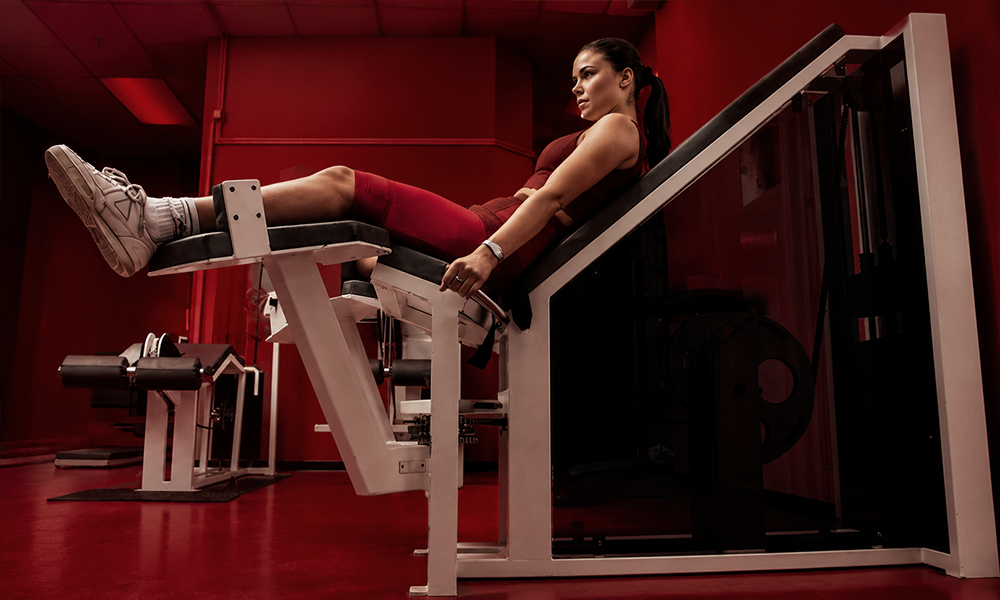
The two machines where you sit down and either push your knees apart or pull them together against pads.
What they work: the outer and inner thighs.
Why most people should skip them: they isolate small muscles that get plenty of work from squats, lunges, and every other leg exercise. Unless you’re rehabbing a specific injury or a serious athlete with a targeted need, the time is better spent on a big compound movement.
The exception: if you specifically want more glute activation, the abductor machine (pushing knees apart) does hit the glute medius directly. Some strength coaches love it for exactly that reason.
The Glute Kickback Machine
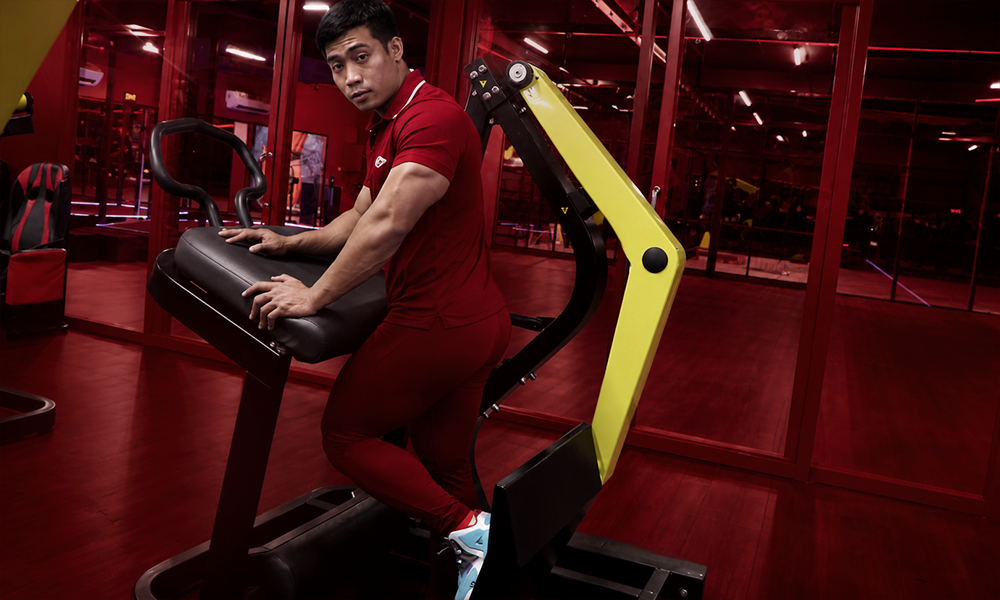
The one where you push a padded lever backward with one leg.
What it works: the glutes on the leg you’re pushing with.
Why most people should skip it: hip thrusts and Romanian deadlifts hit the glutes harder and more effectively. The kickback machine isn’t bad it’s just not efficient. If your gym has it and you have time, sure. If you’re choosing what to prioritize, choose something else.
What to Actually Do If You Only Have 30 Minutes
Most people won’t use every leg machine. Nobody needs to.
If you have 30 minutes and want a genuinely effective leg workout, here’s what to do:
Start with the leg press or hack squat. Three sets of eight to twelve reps. Go heavy enough that the last two reps are hard.
Then leg extension. Three sets of ten to fifteen reps. Focus on controlling the weight, not moving it fast.
Then leg curl. Three sets of ten to fifteen reps. Squeeze at the top.
Finish with standing calf raises. Three sets of fifteen to twenty reps.
That’s it. Four machines. Twelve sets. Under 30 minutes if you’re not scrolling your phone between sets.
You’ve hit every major muscle group in your legs. You’ve used the safest, most effective machines in the gym. You’ve built the foundation of every serious leg workout for the rest of your life.
The Real Reason Machines Get a Bad Reputation
You’ll hear people online say machines are “for beginners” or “not as good as free weights.”
They’re mostly wrong.
Machines are tools. Free weights are tools. Both build muscle. Both have advantages the other doesn’t. Free weights train stabilization and coordination. Machines let you push maximum weight without worrying about form breakdown or safety.
Most serious lifters use both. The people who look down on machines usually haven’t lifted long enough to know why the pros use them.
Use the machines. Use free weights when they make sense. Don’t let internet snobbery keep you away from the best tools in the gym
FAQs
What’s the best leg machine at the gym?
The leg press. It works every major muscle in your lower body, lets you go heavy without a spotter, and has the shortest learning curve of any leg machine.
Which leg machines should I skip as a beginner?
The hip abductor and adductor machines and the glute kickback machine they isolate small muscles that get plenty of work from bigger exercises. Start with the leg press, hack squat, leg extension, leg curl, and calf raise.
Are leg machines as good as squats?
For most training goals, yes. Machines let you push maximum weight safely, which builds muscle just as effectively as free weights for most people. Squats train coordination and stabilization that machines don’t both have their place.
How many leg machines do I need in one workout?
Four or five is the sweet spot. One heavy compound (leg press or hack squat), one quad isolation (leg extension), one hamstring isolation (leg curl), and calf raises. Under 30 minutes.
Do I need to use free weights for legs at all?
Not necessarily. Serious lifters mix machines and free weights, but you can build strong legs on machines alone. Start where you’re comfortable and expand later.