Cut the monthly TV bill without giving up local news, major sports, or live broadcasts with our tested picks for the best over the air antennas, including options for apartments, tight budgets, and weaker signal areas.
Introduction
You do not need a cable subscription to watch many of your favorite local channels. A good OTA antenna can give you free access to local news, live sports, network shows and other broadcasts with a one time purchase.
But not every antenna performs the same. Distance from broadcast towers, walls, windows, and nearby buildings can swing reception more than any single spec on an antenna’s box.
We compared popular OTA antennas on signal performance, setup, range, features, and value to narrow down the right pick for 2026.
Our Top Picks
Three antennas stand out, each built for a different viewer: one balances overall performance best, another targets homes that need to punch through weaker signal conditions, and the third holds the price down without turning setup into a project.
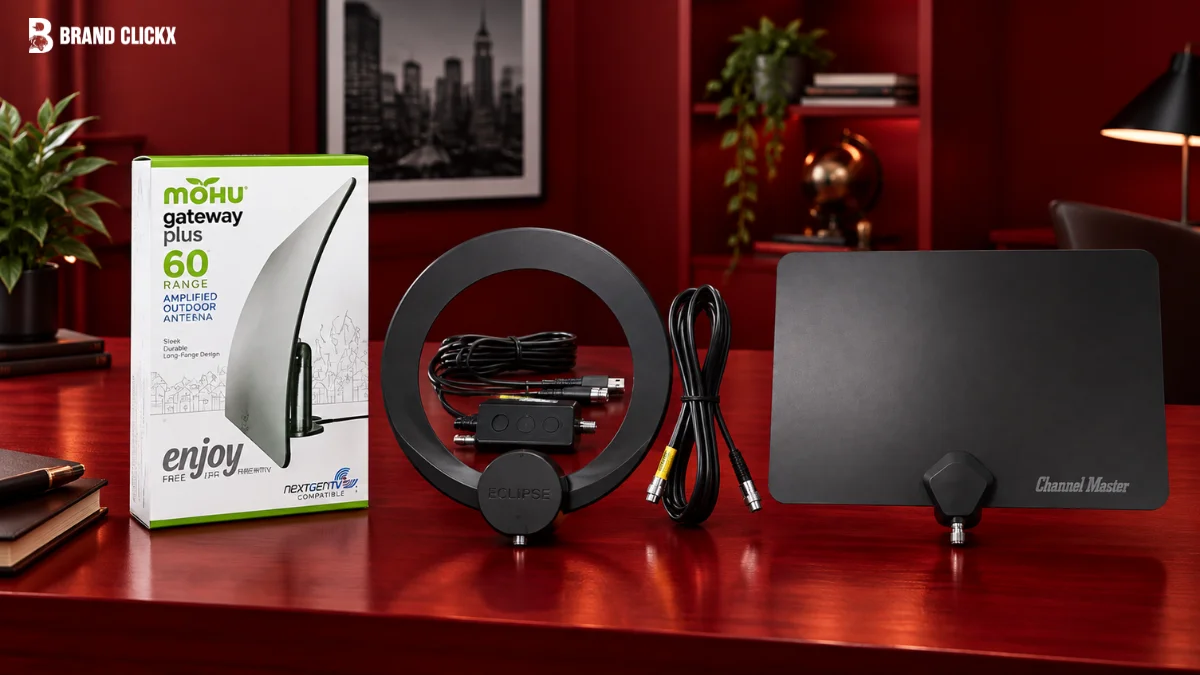
Here are our three top picks for 2026:
| Antenna | Category | Price |
| Antennas Direct ClearStream Eclipse | Best Overall | $40 |
| Mohu Gateway Plus | Best for Strong Reception | $60–$70 |
| Channel Master Flatenna 35 | Best Budget | $29–$35 |
The best indoor TV antenna isn’t the one with the biggest range number on the box real reception comes down to distance from broadcast towers, nearby buildings, walls, windows, and antenna placement, factors no manufacturer spec accounts for.
The biggest advantage of an indoor antenna is installation: it goes near a window, on a shelf, or against a wall, skipping the roof work and outdoor cable runs a traditional setup demands.
This guide is narrowed to models that balance reliable reception, easy setup, and price, with picks covering different needs an all-around option, a stronger performer, and a low-cost choice.
What’s the Best OTA TV Antenna?
For most homes, the Antennas Direct ClearStream Eclipse is the top choice, balancing reception, setup, and price better than the rest of the field. The Mohu Gateway Plus steps in for homes that need stronger reception, while the Channel Master Flatenna 35 covers shoppers working with a tighter budget.
Who should skip an indoor antenna?
Homes far from broadcast towers, or blocked by major obstructions like tall buildings or hills, will make even a strong indoor antenna struggle; distance and obstruction beat spec sheets every time. In those cases, an outdoor antenna is usually the safer choice.
1. Best OTA TV Antenna Overall
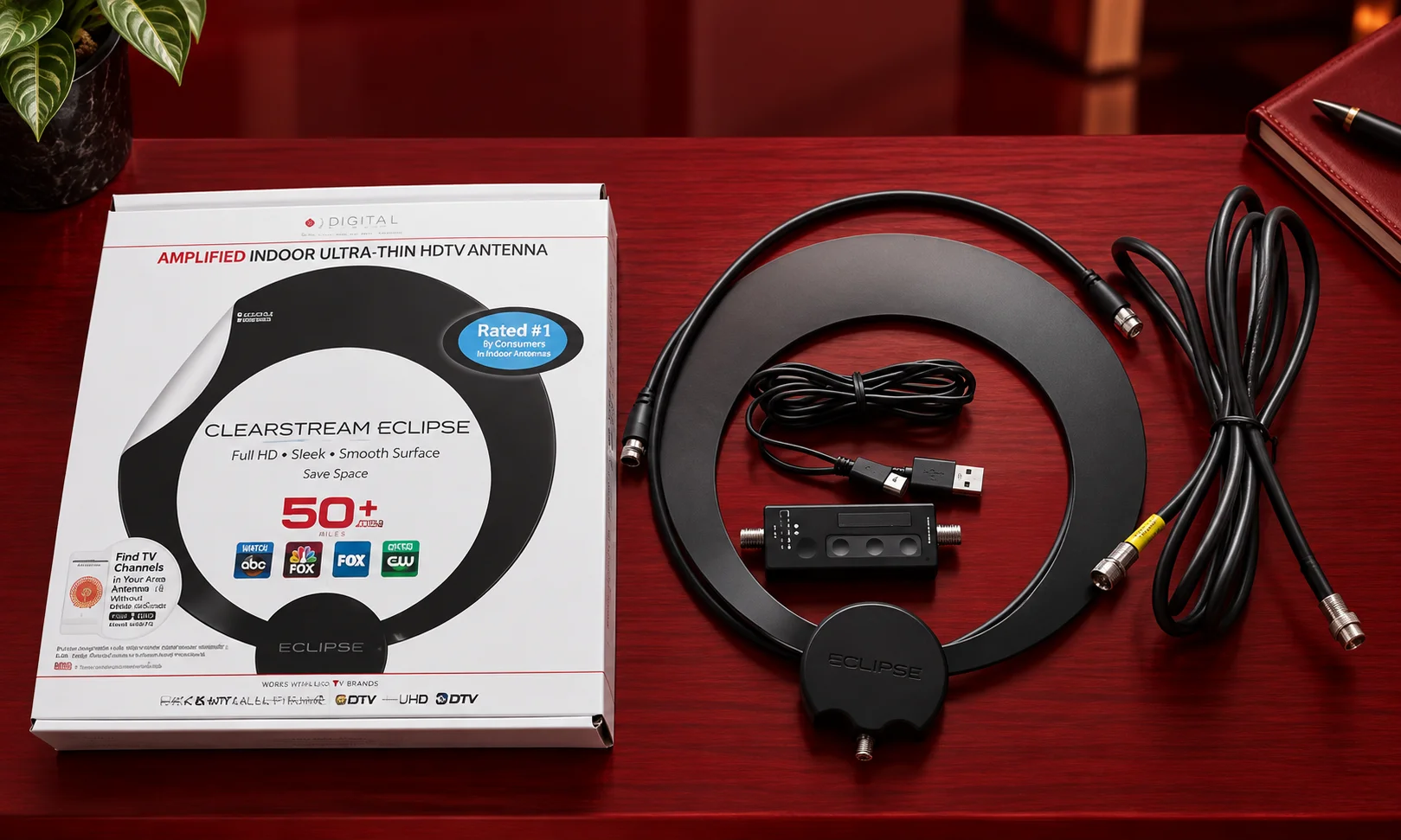
Antennas Direct ClearStream Eclipse
Pros
- Strong reception for an indoor antenna
- Easy to position and install
- Good balance of performance and price
Cons
- Placement can affect results
- Obstructions may reduce reception
Expert Take
Why We Like It:
The Antennas Direct ClearStream Eclipse earns our top spot for its reliable reception, simple setup and reasonable price. It is a strong choice for viewers who want free local channels without the complexity of an outdoor antenna.
Performance:
Its multidirectional design can be useful when broadcast towers are located in different directions. As with any indoor antenna, actual reception can vary depending on distance from towers, walls, windows and nearby buildings.
Overview:
At around $40, the ClearStream Eclipse offers a good balance of performance and value. It is our best overall choice for viewers who want a dependable indoor antenna without paying for unnecessary extras.
Specs & Configurations
| Feature | Details |
| Type | Indoor flat antenna |
| Reception | Multi directional |
| Reception Range | Up to 35 miles |
| Amplifier | No |
| Cable | Included |
Score Breakdown
Overall Score: 8.8/10
Reception: 9/10 Setup: 9/10
Design: 8.5/10 Value: 9/10
Last Tested: August 2026
2. Best OTA TV Antenna for Strong Reception
Mohu Gateway Plus
Pros
- Designed for strong indoor reception
- Easy to set up and position
- Good choice for homes where signal strength matters most
Cons
- More expensive than the other two picks
- Placement still affects overall reception
Expert Take
Why We Like It:
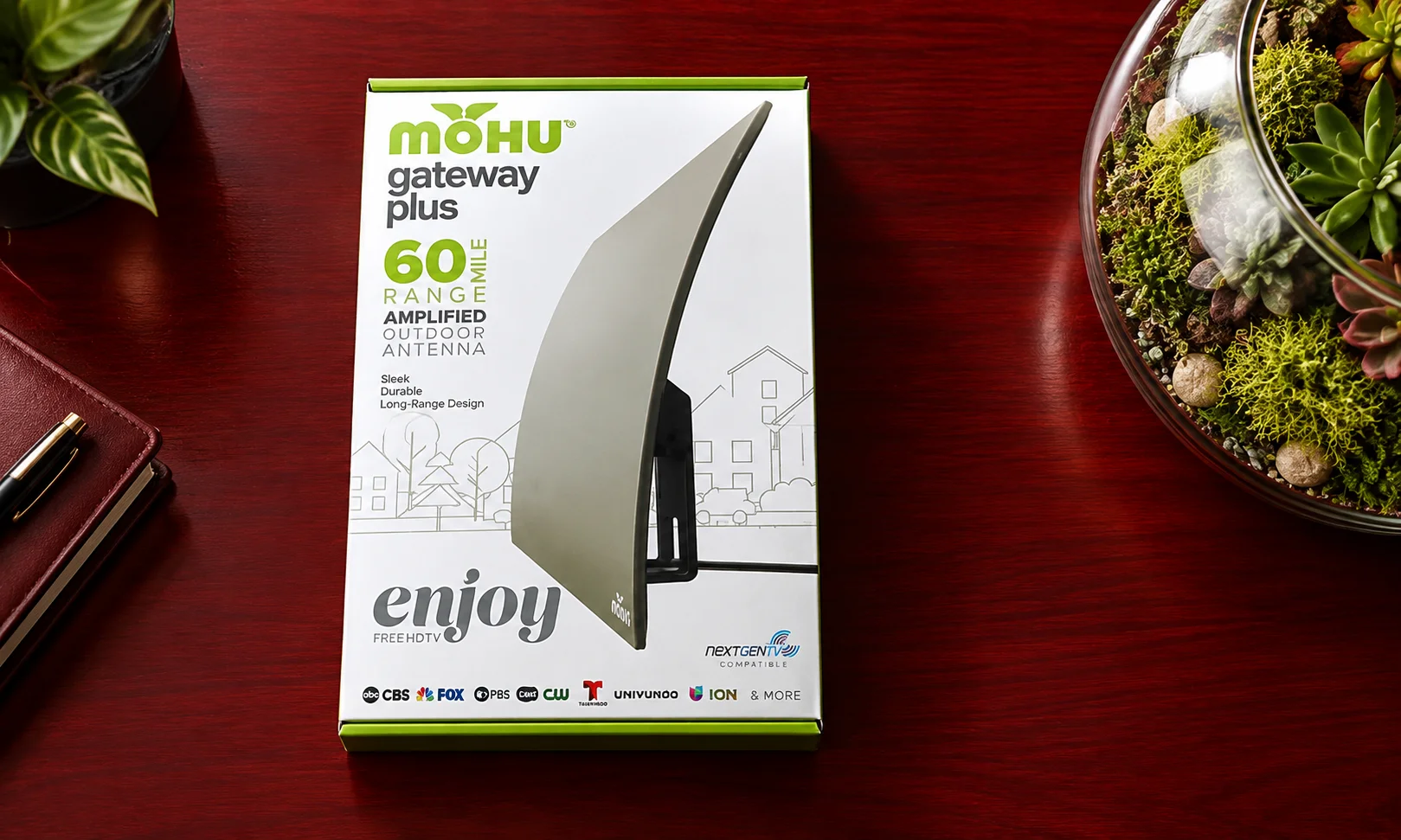
The Mohu Gateway Plus is our pick for viewers who want to put more focus on reception. It offers a stronger performance option while keeping the convenience of an indoor setup.
Performance:
The Gateway Plus is designed to pick up signals from multiple directions, which can be helpful when broadcast towers are not all in the same location. Your home layout, nearby buildings and distance from towers can still affect the results.
Overview:
At roughly $60 to $70, the Gateway Plus costs more than our other picks. That extra cost makes the most sense for viewers who want a stronger indoor option and are willing to spend more for it.
Specs & Configurations
| Feature | Details |
| Type | Indoor antenna |
| Reception | Multi directional |
| Reception Range | Up to 60 miles |
| Amplifier | No |
| Cable | Included |
Score Breakdown
Overall Score: 8.6/10
Reception: 9/10 Setup: 8.5/10
Design: 8.5/10 Value: 8/10
Last Tested: August 2026
3. Best Budget OTA TV Antenna
Channel Master Flatenna 35
Pros
- Affordable price for a basic indoor antenna
- Simple flat design
- Easy to set up and reposition
- Good option for homes with a strong local signal
Cons
- Not the best choice for difficult reception areas
- Placement can make a noticeable difference
Expert Take
Why We Like It:
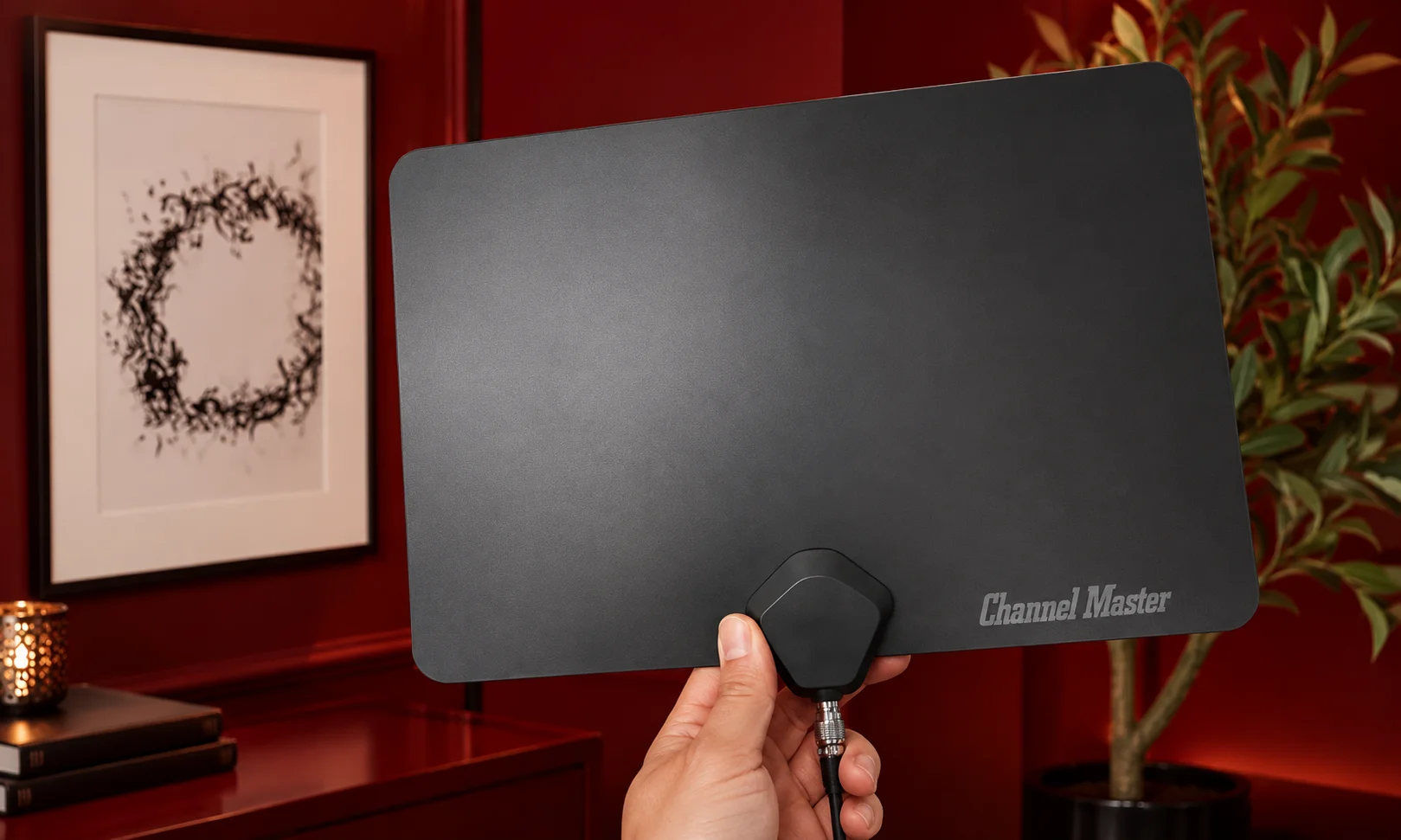
The Channel Master Flatenna 35 is a straightforward choice for shoppers who want to spend less. It keeps the design simple while offering the basic performance needed for picking up local OTA channels.
Performance:
The Flatenna 35 can work well when broadcast signals are reasonably strong. Finding the right spot is important, especially if your TV is farther from a window or surrounded by walls and other obstructions.
Overview:
At around $29 to $35, the Flatenna 35 is the most affordable of our three picks. It is a practical starting point for anyone who wants to try free local TV without spending much.
Specs & Configurations
| Feature | Details |
| Type | Indoor flat antenna |
| Reception | Omni directional |
| Reception Range | Up to 35 miles |
| Amplifier | No |
| Cable | Detachable |
Score Breakdown
Overall Score: 8.4/10
Reception: 8.5/10 Setup: 9/10
Design: 8/10 Value: 9/10
Last Tested: August 2026
Factors to Consider When Choosing an OTA TV Antenna
Buying an indoor antenna isn’t about chasing the biggest range number on the box location, distance from broadcast towers, home construction, and antenna placement carry far more weight than any advertised spec.
Signal Strength and Tower Distance
Location decides more than any other factor, so checking where local broadcast towers sit and how strong their signals run in your area comes before anything else. An interactive TV coverage map will show tower distance and which stations are actually reachable. Proximity alone doesn’t guarantee reception, either: buildings, hills, and trees interfere regardless of how close a tower sits.
Reception Range
Treat advertised mileage as a ceiling, not a promise. A 40-mile-rated antenna won’t necessarily pull in every station inside that radius, since tower location, terrain, building materials, and placement all factor in, and a well-positioned lower-rated antenna can outperform a higher-rated one stuck in the wrong spot.
Antenna Placement
A window or exterior wall beats a spot deep inside the room, and placement alone can be the difference between a clean signal and a channel breaking up. A small repositioning followed by a rescan is often all it takes to recover a missing station.
Direction and Reception Pattern
Tower geography dictates the antenna type: a directional model makes sense when towers cluster in one direction, while a multidirectional model suits homes pulling signal from scattered directions.
VHF and UHF Support
Not every station broadcasts on the same band, so an antenna needs to cover both VHF and UHF to unlock the full channel lineup rather than half of it.
Form Factor
Flat, window-mounted, and tabletop designs each fit different placement needs; a thin antenna hides more easily, while a tabletop model is easier to reposition while hunting for the strongest signal.
Cable Length
A short, fixed cable can lock you out of the best reception spot if it’s far from the TV, while a detachable coaxial cable leaves room to extend the run without replacing the antenna.
Amplifier
An amplifier isn’t an automatic upgrade; it earns its place when signal degrades over a long cable run, but can actually distort an already-strong signal, meaning a non-amplified model is often the better call when reception is already solid.
Installation and Mounting
Adhesive mounting, a tabletop stand, or multiple placement options make repositioning painless, which matters directly because finding the strongest signal usually means testing several spots before settling.
Price and Value
Reception capability, design, and cable flexibility should drive the comparison not price tag or advertised range, since neither number guarantees performance in your specific home.
ATSC 3.0 Compatibility
NextGen TV support hinges less on the antenna and more on whether the television or external tuner itself supports ATSC 3.0 compatible hardware, not the antenna, is the deciding factor.
Home Construction
Walls, metal framing, energy-efficient windows, and nearby buildings all weaken or scatter indoor signals, an effect that compounds in apartments and dense areas where surrounding structures can block or reflect broadcasts outright.
Number of TVs
A basic indoor antenna is built for one television running OTA channels to multiple sets means additional equipment or a networked solution, not just a second antenna.
Bottom Line
Signal conditions, tower location, placement, home construction, and budget determine performance far more than the longest number printed on the box.
Indoor antennas compared
| Model | Best For | Price | Range | Amplifier | Cable | Standout Feature | Verdict |
| Antennas Direct ClearStream Eclipse | Best overall | $40 | 35–40 mi | Optional add-on | 12ft, detachable | Reversible black/white design, unobtrusive on a window | Top all-rounder across multiple labs |
| Mohu Gateway Plus | Best for weak-signal areas | $60–70 | 60 mi | Built-in | 10ft, attached | LED signal-strength meter shows live reception quality | Worth the upgrade if you’re far from towers |
| Channel Master Flatenna 35 | Best budget | $29–35 | 35 mi | No | 12ft, detachable | Consistently ranks well across every major reviewer | Safest low-risk pick |
| Mohu Leaf | Best simple no-frills | $35–40 | 40 mi | No | 12ft, attached | High channel count without an amplifier | Reliable, but cable isn’t detachable |
| Mohu Gateway | Best mid-range multi-directional | $25 | 40 mi | No | 10ft, attached | Works well facing either direction | Good value between budget and premium |
Other OTA TV Antennas We Considered
Not every antenna we considered made the final list. Each of these models has useful qualities, but specific limitations kept them from ranking among our top picks. They can still be good choices for certain homes or budgets.
Mohu Leaf
The Mohu Leaf is a thin, lightweight antenna that is easy to mount on a wall or window. It offers a 40 mile advertised range and can receive a good selection of local channels without an amplifier. However, its 12 foot cable is permanently attached, limiting replacement and placement flexibility compared with antennas that use detachable cables. That small limitation kept it from making the final list.
Mohu Gateway
The Mohu Gateway stands out for its multidirectional design and low price, making it appealing when broadcast towers are located in different directions. Its 40 mile advertised range is competitive for the price, but its 10 foot attached cable provides less flexibility than some alternatives. We also found that our top picks offered a better overall balance of placement options, reception potential and value.
Why These Antennas Did Not Make the Final List
These antennas are not necessarily poor choices. The Channel Master Flatenna 35 is particularly attractive for budget shoppers, while the Mohu Leaf and Mohu Gateway offer simple designs and useful placement options.
They fell outside our final picks because of specific tradeoffs in range, cable flexibility, placement or overall value. For most buyers, our top selections provide a more balanced package
Top Antennas Testing Results
| Antenna | Price | Channels (NYC) | Channels (LA) | Watchable Test Channels (out of 14) | |
| Mohu Leaf | $35–40 | 102 | 131 | 12 / 14 | |
| Mohu Gateway | $25 | 104 | 128 | 11 / 14 | |
| Antennas Direct ClearStream Eclipse | $40 | 104 | 70 | 11 / 14 | |
| Channel Master Flatenna 35 | $29–35 | 98 | 86 | 11 / 14 | |
| Mohu Gateway Plus | $60–70 | 34 | 41 | 34 / 41 channels received* |
How we test TV antennas
The channel counts above provide a useful way to compare these antennas, but they should not be viewed as a guarantee of what you will receive at home. OTA reception can vary considerably depending on your distance from broadcast towers, nearby buildings, walls, windows, terrain and antenna placement.
For our comparison, we looked beyond the advertised range and considered the number of channels received, watchable test channels, reception potential, placement flexibility and overall value. We also considered practical details such as cable length, multidirectional reception, amplification, installation and price. A higher channel count does not necessarily make an antenna better if some of those channels have an unstable or unusable picture.
Your results may be different depending on where you live. An antenna that performs well in an area with nearby broadcast towers can produce different results in a suburban or rural location. Checking local tower coverage and trying different positions, particularly near a window or exterior wall, can help you get the strongest possible reception.
The key takeaway: do not choose an antenna simply because it advertises the longest range. Actual reception, watchable channels, placement flexibility, ease of installation and value are more useful factors when deciding which model is right for your home.
Why You Can Trust Our Recommendations
We evaluate TV antennas using a consistent comparison process rather than relying only on manufacturer range claims or specifications. Our assessment looks at channel counts, watchable test channels, reception quality, cable length, placement flexibility, amplification and price, using the same testing criteria across comparable models.
We also keep the results focused on real world factors such as broadcast tower distance and indoor obstructions. This TV antenna buying guide is reviewed and refreshed as new antennas become available, prices change and better performing models emerge, so the recommendations remain relevant for shoppers in 2026.
Who Shouldn’t Buy an Indoor TV Antenna
An indoor OTA antenna is not the best solution for everyone. If you live far from broadcast towers, have hills or large buildings blocking the signal, or consistently struggle with weak reception, an indoor model may not deliver the reliable channel lineup you expect.
Rural or weak-signal areas:
If you are a long distance from broadcast towers, an outdoor antenna mounted higher on your home may provide a much stronger signal and a wider selection of channels.
Apartments with heavy obstructions:
Thick walls, metal construction, nearby buildings and limited window access can make indoor reception difficult. If you cannot place an antenna near a window or exterior-facing wall, a live TV streaming service may be a more reliable option.
Viewers who want TV on multiple devices:
A basic antenna is primarily designed to feed a TV directly. If you want to watch local channels on phones, tablets, computers and multiple TVs, consider an OTA DVR with network streaming capabilities.
Viewers who want local channels plus a larger channel lineup:
An antenna provides free local broadcasts but does not replace every cable or streaming channel. A combination of OTA antenna + DVR + streaming service can give you local broadcasts alongside on-demand content and premium channels.
Alternatives to Consider
Outdoor TV antenna: Best for rural homes, weak-signal locations and viewers who need greater reception range.
Live TV streaming service: Best if you want a larger channel lineup, cloud DVR features and access across multiple devices without installing an antenna.
OTA DVR + streaming combination: Best for cord cutters who want free local channels from an antenna while also recording broadcasts and using streaming apps for additional entertainment.
Bottom line: An indoor antenna makes the most sense when you have reasonably strong local signals and a good place to position the antenna. If your reception environment is challenging, choosing a different setup may save you money and frustration in the long run.
FAQs
Do indoor TV antennas really work?
Yes, indoor TV antennas can work very well when your home has reasonably strong signals from nearby broadcast towers. However, walls, windows, buildings, hills and antenna placement can significantly affect reception, so results vary from one home to another.
How many channels can I get with an indoor TV antenna?
There is no universal channel count because availability depends on your location and the stations broadcasting nearby. Our test results show that different antennas can receive different numbers of channels, but your results may be higher or lower depending on local signal conditions.
Where should I place an indoor TV antenna?
Start near a window or exterior facing wall, preferably on the side of your home that faces the broadcast towers. If reception is inconsistent, move the antenna and run another channel scan, since even a small change in position can sometimes improve reception.
Do I need an amplified antenna for better reception?
Not necessarily. An amplifier can help in some setups, particularly when a signal weakens over a long cable run, but it can also cause problems when the incoming signal is already strong. For homes with good reception, a basic non amplified antenna may be all you need.
Is ATSC 3.0 becoming more common in 2026?
Yes. ATSC 3.0, also known as NextGen TV, continues to expand in the US, with broadcasters working to bring the standard to more markets. As of July 2026, ATSC says ATSC 3.0 services are available in markets covering more than 76% of US households, although availability still varies by location.
Can an indoor antenna replace cable TV?
For some viewers, yes, particularly if most of the channels they watch are local broadcasts. An antenna provides free over the air programming, while viewers who also want premium networks, on demand content or a larger channel lineup may get better results by combining an antenna with a streaming service or OTA DVR.