
An agency can look at an AI invoice and think the number is manageable. A few dozen seats, a creative subscription, an analytics platform and a meeting assistant can appear to add up to only a few thousand dollars a month. But the invoice is not the full cost. The real bill also includes usage, review time, training, security checks, governance and tools that never make it past the pilot.
For this article, consider a 60-person mid-sized agency with strategy, creative, media, account and operations teams. Its agency AI tooling stack includes general AI assistants, creative-generation software, research and analytics platforms, meeting tools and a governance layer. We will use that same agency throughout the analysis to show how apparently small licence decisions can accumulate.
The important question is therefore not simply, “How much does the software cost?”
It is: who ultimately pays for it?
What sits in an agency AI tooling stack

An agency AI stack is usually a collection of layers rather than one product.
General assistants sit at the centre. These cover drafting, research, analysis, coding, summarisation and everyday knowledge work. They are commonly per-seat. For example, ChatGPT Business currently lists standard seats at $20 per user per month when billed annually and premium seats at $100; Claude Team similarly lists standard seats at $20 and premium seats at $100 when billed annually.
Creative generation is a separate layer covering image, video, audio and design workflows. Adobe Firefly Pro for teams is publicly listed at $19.99 per licence per month, while higher-credit plans rise substantially. Runway’s Team plan is also seat-based, with each seat currently adding 6,900 monthly credits to a shared pool.
Media and analytics tools tend to be organisation- or workspace-based, although additional-user charges can apply. Semrush, for example, currently lists its Starter plan at $165.17 per month when billed annually, with additional users starting at $45 per month.
Research and transcription can be either seat- or usage-driven. Fireflies Business is $19 per seat per month annually, while its Enterprise plan is $39 per seat, with additional AI-credit charges possible.
Finally, there is the governance layer: security review, access controls, procurement, legal review, data policies and administration. That cost is often organisation-wide rather than tied neatly to a software seat.
How the pricing models work
There are three basic ways agencies encounter AI pricing.
1. Per seat
The arithmetic is simple:
number of seats × monthly price = monthly licence cost
If the 60-person agency gave 50 employees a $20 AI seat, that is:
50 × $20 = $1,000 per month
Or $12,000 per year.
The problem is that agencies rarely stop at one seat-based product. Add a second assistant, transcription software, creative generation and other specialist tools, and the same employee may represent several licences.
Premium seats can change the equation quickly. If eight power users require a $100 monthly premium seat rather than a $20 standard seat, those eight people alone cost $800 per month rather than $160.
2. Per usage
Usage-based pricing moves the risk elsewhere.
Instead of paying simply for access, the agency pays according to credits, generations, minutes, tokens, API calls or another consumption measure. That can be attractive when only a small team uses the tool heavily, but difficult to forecast when client demand changes.
This is particularly relevant to AI tool licensing agencies, because an account team may use relatively little AI in one month and then generate hundreds of assets or analyse large datasets in the next.
3. Enterprise agreements
At larger scale, vendors may move away from straightforward public pricing. Enterprise plans can add SSO, audit logs, security controls, data retention options, dedicated support and higher usage limits. Claude, for example, publicly describes Enterprise as a seat-plus-usage model, while Fireflies lists Enterprise at $39 per seat per month annually before additional AI-credit charges.
The important point is that public list pricing is not the same thing as an agency’s negotiated price.
What it costs, layer by layer
There is no reliable public database of agency AI budgets, so the following ranges are constructed estimates, not reported average agency spend. They use current public prices available in September 2026 as anchors and allow for different adoption levels.
| Stack layer | Indicative monthly range | Evidence type |
| General AI assistants | 20–100 per active seat | Public list pricing |
| Creative AI | 20–200+ per active seat | Public list pricing |
| Media/analytics | 165–550+ per workspace | Public list pricing |
| Research/data tools | 100–500+ per workspace | Constructed range from public plans |
| Transcription/meeting AI | 10–39 per seat | Public list pricing |
| Governance/admin | 500–3,000+ per month | Estimated internal cost |
The general-assistant range is anchored by current ChatGPT Business and Claude Team pricing. Creative pricing varies much more sharply: Adobe’s Firefly Pro for teams is $19.99 per licence, Pro Plus is $49.99 and Premium is $199.99.
For meeting tools, Fireflies provides a useful current benchmark: $10 per user per month for Pro and $19 for Business on annual billing, rising to $39 for Enterprise.
For our 60-person agency, suppose 40 employees receive standard AI seats, eight receive premium seats, six creative users have Firefly, four production users have Runway, two analytics workspaces are maintained and 12 people have a meeting assistant.
A simplified monthly calculation could look like this:
- General assistants: $1,600
- Creative tools: 396–476
- Analytics/research: 430–1,000
- Meeting AI: 228–468
- Governance and administration: 750–2,000
- Extra usage and specialist tools: 500–2,000
That produces an estimated 3,900–7,500 per month, or approximately 47,000–90,000 per year.
Again, this is a constructed agency scenario, not disclosed agency software spend.
At a smaller independent agency, a realistic constructed range could be 500–2,500 per month. For a large network office, it could reach 15,000–50,000+ per month, depending heavily on adoption, creative production and enterprise requirements.
Discounts at scale are common and are rarely disclosed publicly.
That makes the range more useful than pretending a public list price tells us what every agency pays.
The costs that never appear on the software line
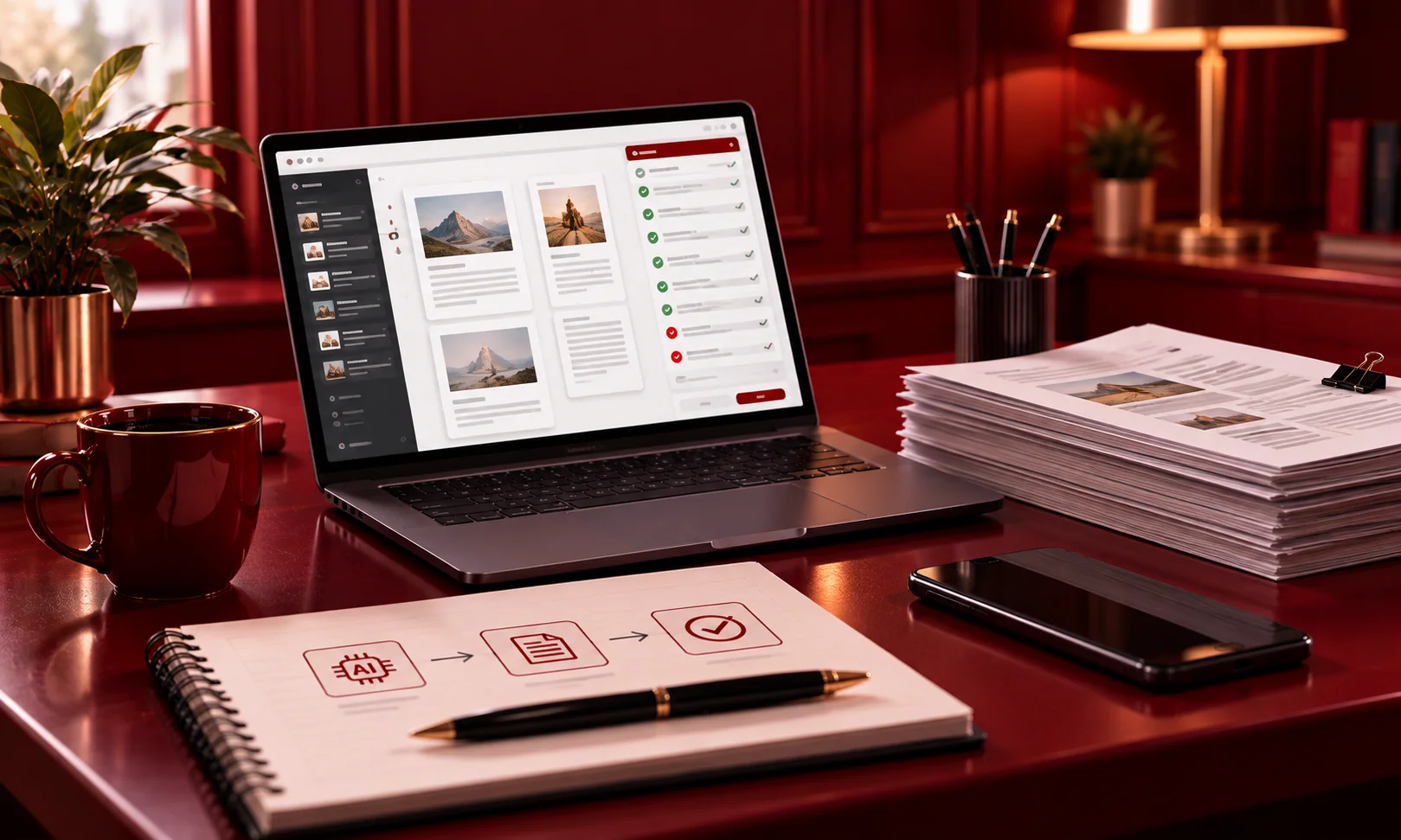
The software invoice is often the easiest cost to identify.
The harder one is review.
Suppose our 60-person agency uses AI to draft 500 pieces of content, analyse 100 campaign variations or produce hundreds of creative concepts. Someone still has to check the output.
If an employee spends 10 minutes reviewing each AI-generated deliverable, 500 deliverables represent more than 83 hours of labour.
That labour has an economic value even though the vendor never sends an invoice for it.
Then come the other hidden costs:
- Training: staff need time to learn acceptable workflows.
- Security and data review: legal or IT teams may need to assess what can be uploaded.
- Client approval: AI-generated work may require additional explanation or review.
- Insurance and indemnity: agencies may need to clarify responsibility for generated material.
- Procurement: enterprise tools can involve security questionnaires, contracts and vendor assessments.
- Abandoned tools: a pilot can become another recurring subscription if nobody owns the cancellation decision.
This is why an agency can increase its software budget while seeing less improvement in margin than expected.
The AI may make production faster, but review remains labour.
And if the agency has to add another layer of checking to maintain client quality, some of the theoretical saving disappears.
Who is actually paying for this
There are three broad commercial models.
1. Absorbed into the agency fee
The agency treats AI as an operating expense, just like laptops, project management software or office costs.
This keeps the client invoice simple, but the agency carries the cost.
If AI reduces production time but the agency does not increase its fee, the economic benefit may appear as higher agency margin, assuming the saved time is actually redeployed into billable work.
2. Billed as a pass-through cost
The agency identifies certain specialist tools as client-specific expenses.
This can make sense when a client requires a particular enterprise platform, data subscription or production environment.
But clients may push back.
If the agency previously completed the work within its existing fee, the client may ask why a new AI subscription should now appear as an additional charge.
3. Built into an output-based price
The agency changes what it sells.
Instead of selling hours, it sells a defined number of deliverables, campaigns, assets or outcomes. AI can then reduce the internal cost of production without automatically reducing the client’s price.
That creates another negotiation problem.
A client can reasonably argue that if AI makes production dramatically more efficient, some of the saving should return to them.
So the commercial question becomes bigger than “Should agencies charge clients for AI tools?”
There is no single answer. The agency can absorb the cost, explicitly pass through a justified client-specific expense, or incorporate the cost into its broader pricing model.
The critical issue is whether agency remuneration still covers the people, software, review and governance required to deliver the work.
The danger is paying for AI twice: once through the agency’s operating budget and again through discounts granted because the client expects AI-driven efficiency.
How to work out whether the stack pays for itself

Keep the calculation deliberately small.
Start with:
cost per seat per month → hours actually redeployed → fee actually realised
Take our 60-person agency.
Suppose its AI licences cost $6,000 per month.
If the agency assumes AI saves 600 hours, that sounds impressive.
But theoretical time saved is not the same as commercial value.
If employees actually redeploy only 250 hours into billable client work, and the agency realises an average of $100 in additional contribution from those hours, the commercial value is $25,000, not the theoretical value of 600 hours.
Conversely, if the 250 hours simply create spare capacity that never becomes revenue, the financial benefit is different.
This is the distinction agency leaders should track:
hours saved are operational data; hours redeployed are capacity data; fee actually realised is commercial data.
That is enough for a first check. A fuller treatment of AI return on investment belongs in a dedicated AI ROI analysis rather than being rebuilt here.
What to negotiate at renewal
- Usage-based pricing instead of seat-based pricing where possible
If only a fraction of employees use a tool heavily, ask whether pricing can reflect actual consumption. - Data and confidentiality terms
Confirm what happens to client information, prompts, outputs, retention and model training. Enterprise plans increasingly expose controls around these areas. (OpenAI) - Protection against pilot pricing expiring
Put promotional pricing, renewal increases and price-review mechanisms in writing. - Exit terms and data portability
Know what happens to projects, data, prompts, libraries and account history when the contract ends. - Volume tiers
If the agency is buying dozens or hundreds of seats, ask for volume economics rather than treating every seat as a standalone purchase.
The objective is not simply to negotiate the lowest licence price.
It is to prevent the stack from becoming an uncontrolled recurring cost.
The read
An Agency ai tooling stack is becoming another layer of agency overhead, but the traditional agency margin model was not designed around dozens of AI subscriptions, usage charges and governance requirements.
The important shift is therefore from software budgeting to margin accounting.
A $20 seat is cheap in isolation. Sixty seats across several platforms, plus premium users, creative credits, review time, security work and abandoned pilots, are a different proposition.
For the 60-person agency in this example, the first action before the next renewal should be simple: build one consolidated AI vendor register showing seats, actual usage, monthly cost, renewal date and the billable work that depends on each tool.
That turns a collection of subscriptions into a commercial decision.
FAQ
How much does an agency spend on AI tools?
There is no reliable published industry average. A constructed range based on current public pricing suggests a small agency could spend roughly 500–2,500 per month, a mid-sized agency 2,500–10,000, and a large network office 15,000–50,000+. Actual negotiated agency costs can be lower or higher.
Should agencies charge clients for AI tooling?
Sometimes, but it depends on the commercial model. Client-specific enterprise software or specialist production costs may be treated as pass-through expenses. General productivity tools are more commonly absorbed into overhead or reflected in the agency’s pricing. The key question is whether the fee covers the complete delivery cost.
Is per-seat AI pricing viable at agency scale?
It can be, particularly when usage is predictable. The problem appears when agencies license seats broadly but only a minority of employees use them heavily. Premium seats and multiple overlapping tools can also make per-seat pricing expensive as headcount grows.
What is in an agency AI tooling stack?
A typical stack can include general AI assistants, creative-generation tools, media and analytics platforms, research software, transcription and meeting tools, plus governance and security controls. The mix varies according to the agency’s services and client requirements.
Do AI tools improve agency margin?
They can, but faster production does not automatically mean higher margin. The agency must actually redeploy saved time into revenue-generating work or reduce delivery costs. Review, quality control, training and governance can also absorb some of the expected efficiency gain.
What should agencies negotiate in AI tool contracts?
Agencies should examine usage and seat structures, volume discounts, data and confidentiality provisions, renewal increases, pilot pricing, exit terms and data portability. They should also clarify what happens to unused credits, user accounts and client data when employees leave or the contract ends.