Honestly, there’s way more talk about perplexity referral traffic than there is actual traffic. Panels debate it, vendors sell dashboards for it, and most publishers still barely see it in their analytics. Chartbeat data reported in March 2026 put AI chatbots at under 1% of all publisher page-view referrals.
So maybe we’re asking the wrong question. Volume only tells you how many people showed up, not what they came to do. Someone who clicks through from a generated answer has usually already got the basic answer, so the visit might mean something different from a search click.
Whether that’s actually true is a question for the data, so I checked it against what’s been published. I’ll be upfront about where the evidence runs out.
Key Takeaways
- AI chatbots combined were under 1% of publisher referral page views in Chartbeat’s network data (year to December 2025).
- Estimates of Perplexity’s share of AI referrals run from about 1% to 15%, depending on who’s counting. Always ask who measured it and when.
- The big “higher-quality traffic” claims mostly come from software and B2B sites, not publishers. The publisher data is thinner and less flattering.
- You’ll need a custom channel group in GA4 to track Perplexity properly.
- For most publishers, checking your own numbers is cheap. A dedicated optimization plan isn’t worth it yet.
What Perplexity referral traffic volumes actually are
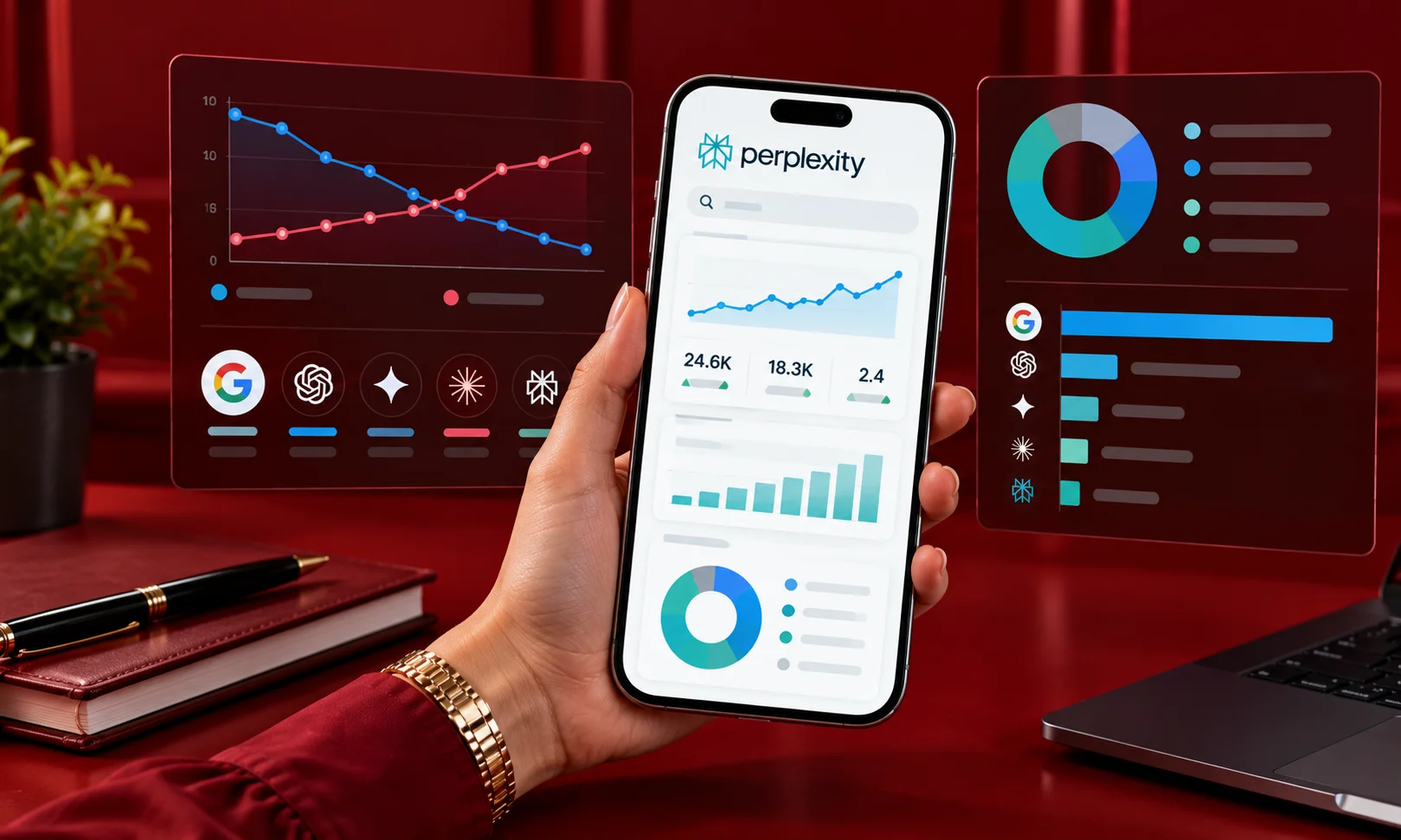
Start with the ceiling. Chartbeat data reported in March 2026 put AI chatbots under 1% of referral page views, while Google Search page views fell 34% between December 2024 and December 2025. Cloudflare Radar data, as compiled by TechnologyChecker.io, showed the four main AI chatbots combined at 0.29% of search referrals in May 2026, against 87.63% for Google.
Perplexity’s slice of AI search referrals depends on who you ask. StatCounter data gave it 7.07% of AI chatbot referrals in March 2026, and 7.67% in May 2026. BrightEdge, which tracks enterprise brand sites, had it at 1.1% for August 2026, and a Chartbeat-based summary puts it near 15% without giving a time window.
Those gaps come from different panels, not one right answer, and Perplexity publisher traffic almost never gets reported on its own. The numbers also change fast. BrightEdge saw Perplexity referrals drop 17% in August while ChatGPT’s jumped 36%, and StatCounter shows Perplexity sliding from second to third place between April 2025 and March 2026. If a share figure is more than a quarter old, treat it as history.
Why volume is the wrong measure right now
A generated answer does part of a search visit’s job before anyone clicks. The reader already has the headline fact, a rough summary of what most sources say, and often a short list of places to look. What’s left is whatever the answer didn’t settle: verification, depth, original data, a specific product or price.
That gives you two different ideas to test. In the first, clicks are rarer but more purposeful, so people who arrive read more, come back more, and convert more. In the second, readers who click are just checking a citation, skim one paragraph, and leave. Both are possible, and the answer probably depends on the site and the type of content.
Volume can’t tell these apart. Two channels can each send 1% of sessions and still be worth very different amounts. Engaged time, pages per session, return rate, and conversions per thousand sessions can settle it, and you can check every one of them yourself. So perplexity referral traffic deserves a proper test before it gets a plan. I’m not saying AI traffic is better. I’m saying stop assuming it doesn’t matter, too.
What the sessions actually do
Here’s the hard part: the evidence on Perplexity referral traffic quality is thinner than the debate makes it sound. I couldn’t get any primary publisher datasets for this draft, so this section leans on published studies.
Most of them measure software or B2B sites, define engagement differently, and come from vendors. I found nothing comparing Perplexity sessions with social on the same site, and nothing on return rates for referred sessions.
Where the studies point up, they point up clearly. A GA4 panel of B2B brands (January to April 2026) found AI referrals engaging about 30% longer than Google organic, though ChatGPT and Gemini looked a lot like organic on several individual metrics.
Ahrefs reported that AI search brought in 0.5% of its traffic but 12.1% of sign-ups over a 30-day window in mid-2025, and two summaries, one Chartbeat-based and one SE Ranking-based, put Perplexity sessions near nine minutes.
Publisher data is less flattering. Chartbeat found news and media sites get the most page views from AI platforms but the lowest engagement per article. A sign-up at a software company also isn’t the same thing as a subscription at a publisher. Until publishers share their own numbers, I’d call the quality premium unproven for editorial sites.
Published reference points on session quality
| Metric | Reported figure | Baseline | Source and date | Site type |
| Engaged time | AI referrals ~30% longer | Google organic | HiGoodie GA4 panel, Jan–Apr 2026 | B2B brands |
| Session length | Perplexity ~553 seconds | Not stated | Chartbeat via ALM Corp, ~Mar 2026 | Mostly news/media |
| Share of sign-ups | 12.1% from 0.5% of traffic | Total site | Ahrefs via Digital Bloom, 30 days, mid-2025 | SaaS |
| Per-article engagement | Lowest for news among AI-referred categories | Other content types | Chartbeat via PPC Land, 2024–2025 window | Publishers |
Which content gets the referrals
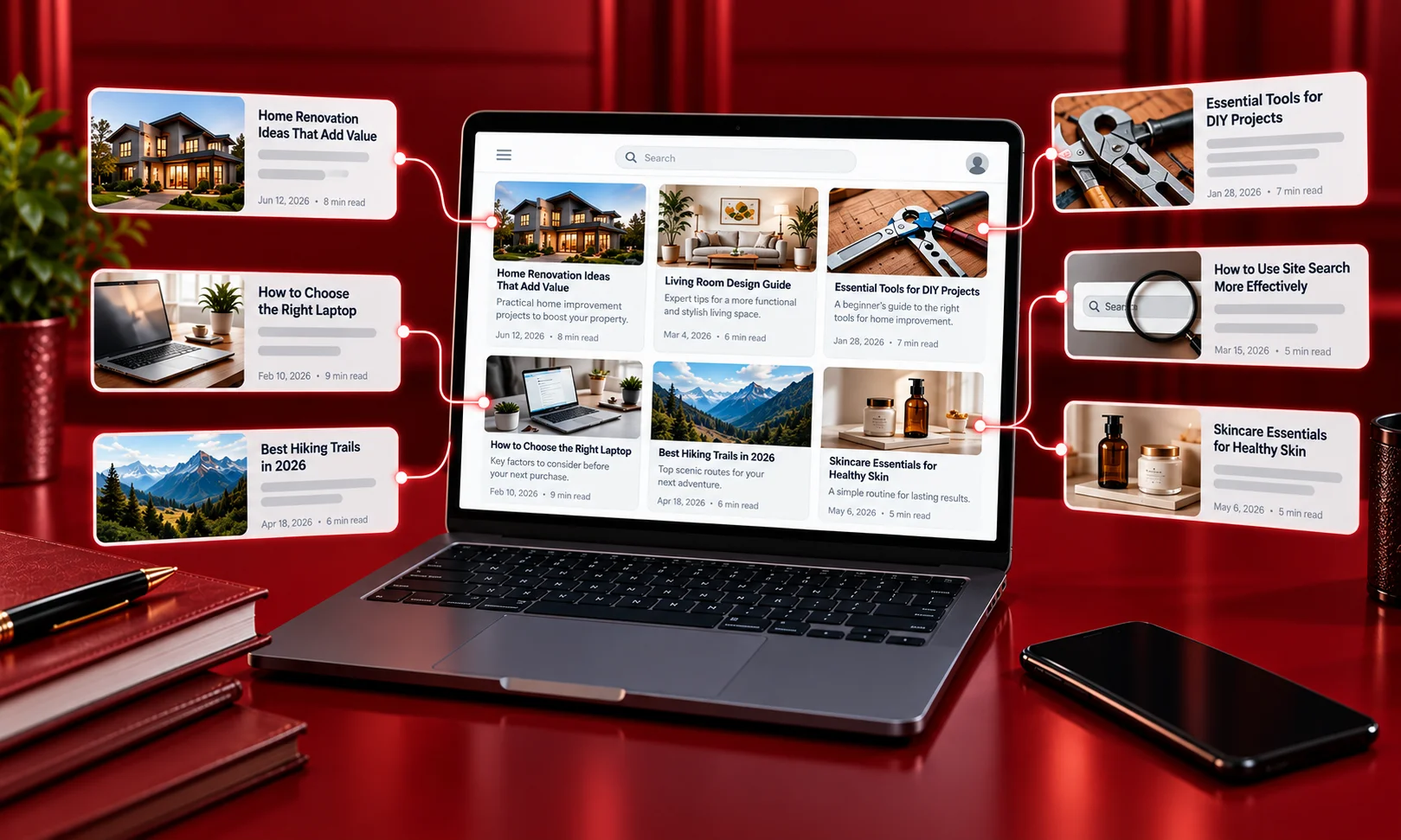
Most of the published patterns come from ChatGPT, so treat them as ideas to test for Perplexity, not answers. In a July 2026 VentureBeat roundup, Similarweb data showed 65% of ChatGPT-cited URLs sat two or three folders deep, yet 58.8% of referral traffic landed on homepages.
Ahrefs said over 80% of its AI referrals went to its homepage, product pages, and free tools, and a Previsible analysis of 6.77 million AI-referred sessions found 28.8% of ChatGPT referrals landed on internal site-search pages. The collection windows aren’t stated, so read these as a rough direction.
Put together, they suggest citation share and click share are different things. A page can get cited a lot and visited very little, because the answer soaks up its value. Chartbeat’s data leans the same way: how-to and home-improvement content earned more page views per article from AI chatbots than news did.
My read is that pages that get clicked offer something a summary can’t carry, like a tool, a dataset, a product, or a next step. Pages whose whole value is one quotable answer are the most likely to get cited and the least likely to get visited. Whether entity salience, meaning how clearly a page establishes what it’s about, changes any of this isn’t something these datasets test.
What publishers are doing about it
Publishers are mostly going one of three ways: partner, sue, or block selectively. Perplexity announced Comet Plus on August 25, 2025, promising publishers 80% of subscription revenue from a $42.5 million starting pool, with pay tied to visits, citations, and agent actions. It ended its ads program in February 2026. Time and Gannett signed licensing deals, while Dow Jones and the New York Post sued in October 2024 and CNN followed in May 2026.
Crawling is where the pressure sits. Cloudflare data showed Perplexity’s crawls per referral climbing from 54.6:1 in January 2025 to 194.8:1 in July 2025. Third-party compilations of Radar data put it near 186:1 in June 2026 and 289:1 in July 2026, against about 5:1 for Google. A September 2026 look at robots.txt files across Cloudflare’s network reports publishers increasingly block training bots while letting answer-focused ones in.
Blocking llm crawlers is a trade-off, not a fix. It can cut server load and protect your content, but it also takes you out of citations, and one analysis argues it can cost publishers with real citation share their slice of the Comet Plus pool. Some complaints also allege Perplexity’s crawlers bypass robots.txt, so a block might not even be honored. Robots.txt is a request, not enforcement.
Whether any of this is worth optimizing for yet
For most publishers, not with dedicated resources. Chartbeat’s under-1% ceiling means even a doubling wouldn’t move total sessions much, and BrightEdge’s August data showed Perplexity going down, not up.
What level would be enough to justify attention? No study sets a threshold, so this is my own judgment. I’d want AI referrals above low single-digit percentages of sessions, or clearly higher engaged time or conversion per thousand sessions than organic, on enough volume to be more than noise. That means hundreds of conversions, not dozens. Either signal alone would be a good reason to take a quick look at the landing pages getting that traffic.
To become a material channel, three things would have to change: volume that lasts beyond product-update spikes, clicks that reach editorial pages instead of just homepages, and attribution you can trust. On tracking, one guide reports GA4 added a native AI Assistant channel in May 2026 covering ChatGPT, Gemini, DeepSeek, Copilot, and Grok, but Perplexity still lands in generic Referral.
A custom channel group with a source regex like .perplexity.ai. fixes that, though sessions with stripped referrers land in Direct and can’t be recovered. Until the evidence shifts, checking costs almost nothing, and a full generative engine optimization program costs real money.
The read
Basically, the evidence supports a narrow conclusion. Perplexity referral traffic is small, unstable, and hard to measure, and nobody has shown on publisher data that its sessions behave differently from search sessions.
The strongest quality claims come from software and B2B sites, where a sign-up isn’t a page view, and the publisher-specific numbers hint at shallow per-article engagement for news. That’s not a reason to ignore it. It’s a reason to measure before you spend anything.
This week, in GA4, compare Perplexity sessions with organic search sessions landing on the same articles over the last 90 days: engaged sessions per session, and newsletter sign-ups per 1,000 sessions. If Perplexity only sends you a few hundred sessions, say so and wait.