Last updated : September 2026
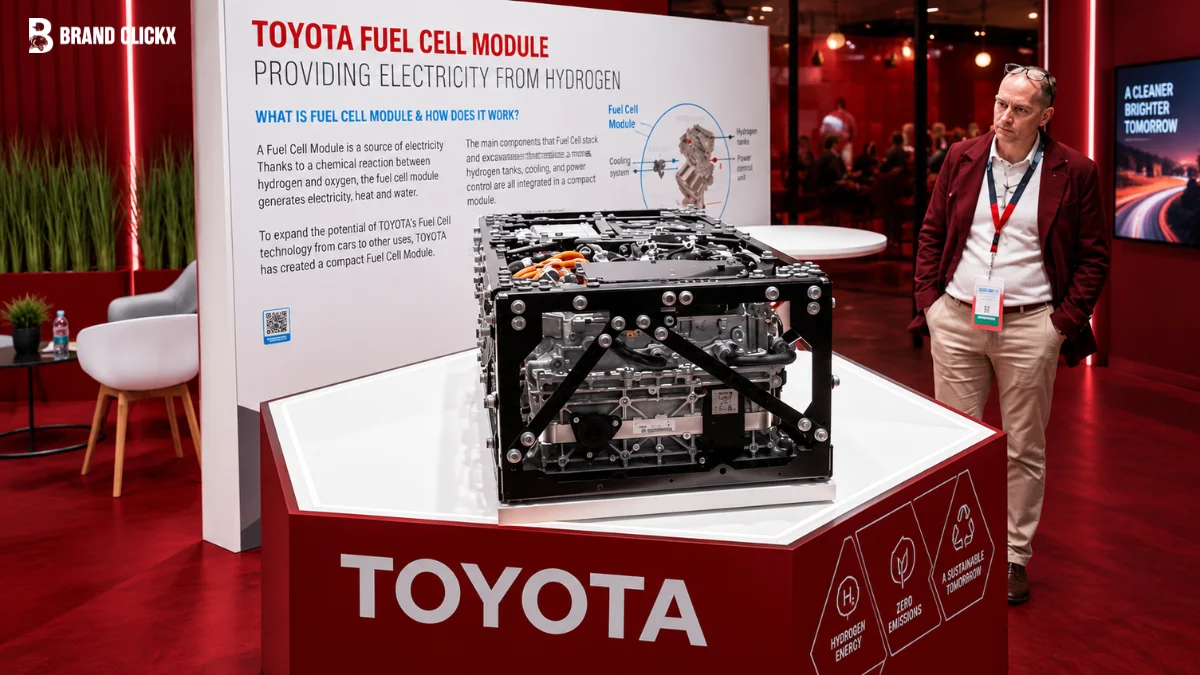
Toyota is looking into using hydrogen-powered trucks to move its car parts in Japan. This is a big change caused by global problems affecting energy supplies. High gas prices and supply issues from the Iran conflict are making Toyota see hydrogen as a safe energy choice, not just a green one.
In a Bloomberg interview, Toyota Vice Chairman Koji Sato explained this new plan. He said Toyota might even use hydrogen to power its own factories one day. Using hydrogen for the delivery networks of its parts suppliers is also a choice.
Since the Middle East conflict grew worse in February 2026, having a safe energy supply became very important for Japan’s factories. Sato said Japan needs to start making its own energy instead of just buying it from other places.
A New Focus on Delivery Trucks
Toyota’s focus on big delivery trucks is a smart change after regular hydrogen cars failed to sell well. Japan was the first country to make a big hydrogen plan. They wanted 200,000 hydrogen cars on the road by 2025 and 800,000 by 2030.
But buyers did not want them. By March 2025, there were fewer than 8,300 hydrogen cars in Japan. The main problems were high costs and how hard it is to move and store hydrogen.
Now, leaders are focusing on large commercial trucks. These trucks drive on set routes, making it much easier to build and use hydrogen fuel stations.
By choosing set shipping routes, Toyota is following its promise to the Japan Hydrogen Association (JH2A). The company promised to use hydrogen for 1 percent of all its local delivery, fuel, and materials transport. The JH2A group is growing, with 67 companies, insurance groups, and local governments joining by August 2026. Around the world, investments in clean hydrogen reached over $110 billion by July 2025.
Changing the Supply Chain and Working Together
Using new power types requires big changes. Sato is also the head of the Japan Automobile Manufacturers Association (JAMA). He is leading a push to update how Japan makes cars. Right now, Japanese car makers buy about 70 percent of their parts from other companies. Different car brands have their own special rules for quality, which costs suppliers a lot of time and money.
Sato says the industry needs to use fewer types of parts and share the same basic pieces. Sharing standard parts would let suppliers use robots and machines more easily, lowering costs for everyone.
This teamwork in Japan is a response to tough competition from other countries. Japanese car companies are losing sales in China the biggest car market in the world—because of cheap and smart Chinese electric cars. Toyota is still doing okay because people love its gas-electric hybrid cars, but the rest of the industry has to team up. Earlier this week, Honda and Nissan agreed to work together on car software, and Mitsubishi is expected to join them.
Growing Hydrogen Networks Worldwide
While Toyota fixes its local supply chain, it is also setting up big hydrogen truck networks in North America and Europe.
| Area | Main Partner(s) | Main Goal | Recent News |
| North America | Hyroad Energy | Truck Deliveries | Using 40 big hydrogen trucks in Southern California; building a fuel stop in Ontario. |
| Europe | Daimler Truck, Volvo Group | Big Truck Networks | Creating a huge network for trucks and stations; Toyota joining Cellcentric. |
| United Kingdom | UK Government, Ricardo | Smaller Work Trucks | Testing 10 hydrogen Hilux trucks in the real world. |
| Japan | JH2A | Parts Delivery | Promising to use hydrogen for 1% of local parts shipping to fight high fuel costs. |
In the United States, Toyota recently agreed to work with Hyroad Energy. They will put 40 big hydrogen trucks on the road in Southern California. Hyroad will provide the trucks and fix them, while Toyota will provide the hydrogen fuel from its new station in Ontario, California.
At the same time, Toyota is taking a big role in Europe. On September 3, 2026, a group of large companies—including Toyota, Volvo Group, Daimler Truck, Bosch, Air Liquide, and TotalEnergies announced a plan to build a complete hydrogen network for big trucks in Germany by 2030. This plan will match up the delivery of hydrogen trucks with the building of fuel stations along major highways. More details will be shared at a big truck show in Hanover on September 15.
Truck Details and Fuel Station Costs
To help these delivery networks, Toyota is making different sizes of hydrogen trucks.
| Truck Type | Hydrogen Capacity | Expected Range | Time to Refuel | Best Use |
| Big Semi-Truck | 70 kg | Up to 500 miles | 15–20 minutes | Port hauling, long deliveries |
| Hilux Truck | 7.8 kg | Up to 373 miles | Under 5 minutes | Smaller deliveries, rough roads |
The big trucks used in California can hold up to 70 kilograms of hydrogen. They can drive about 500 miles and take 15 to 20 minutes to refill. This is made to match the speed of regular diesel trucks, avoiding the long charging times of big electric trucks.
For smaller delivery jobs, Toyota’s UK team is testing 10 hydrogen Hilux trucks. These trucks use parts from the Toyota Mirai car. They store 7.8 kilograms of hydrogen in three tanks and can drive up to 373 miles (600 kilometers) without losing space in the truck.
These trucks will only work if there are enough fuel stations. The global hydrogen fuel station market was worth $1.16 billion in 2026. It is expected to grow to $2.47 billion by 2030. If Toyota and its partners can use set delivery routes, build more fuel cells together in groups like Cellcentric, and share standard truck parts, they might fix their energy problems and change how goods are shipped around the world.
FAQs
Why is Toyota using hydrogen trucks instead of electric trucks for shipping parts?
Toyota believes hydrogen is better for big trucks because they can refuel in just 15 to 20 minutes, exactly like diesel trucks. This avoids the long charging times and heavy battery weights of electric trucks, allowing them to carry more goods without delays.
How far can Toyota’s hydrogen trucks drive on a full tank?
The large semi-trucks used in California can drive up to 500 miles on a full tank of 70 kilograms of hydrogen. The smaller Hilux pickup truck can drive up to 373 miles on a smaller 7.8-kilogram tank.
Is Toyota working with other companies to build hydrogen trucks?
Yes. Toyota is working with Hyroad Energy in the United States to use 40 large trucks for deliveries. In Europe, Toyota is teaming up with Volvo Group, Daimler Truck, and large energy companies to build a complete hydrogen truck network.
Why did Toyota shift its focus from passenger cars to commercial trucks?
Hydrogen passenger cars like the Toyota Mirai did not sell well in Japan because the fuel is expensive and hard to find. Commercial trucks are easier to manage because they drive on set routes, making it much simpler to build fuel stations right where they are needed.
How does the Iran conflict affect Toyota’s switch to hydrogen?
The Iran conflict caused gas prices to go up and created worries about stable fuel supplies. This made Toyota look at hydrogen not just to stop pollution, but as a safe way for Japan to make its own energy and protect its business from global problems