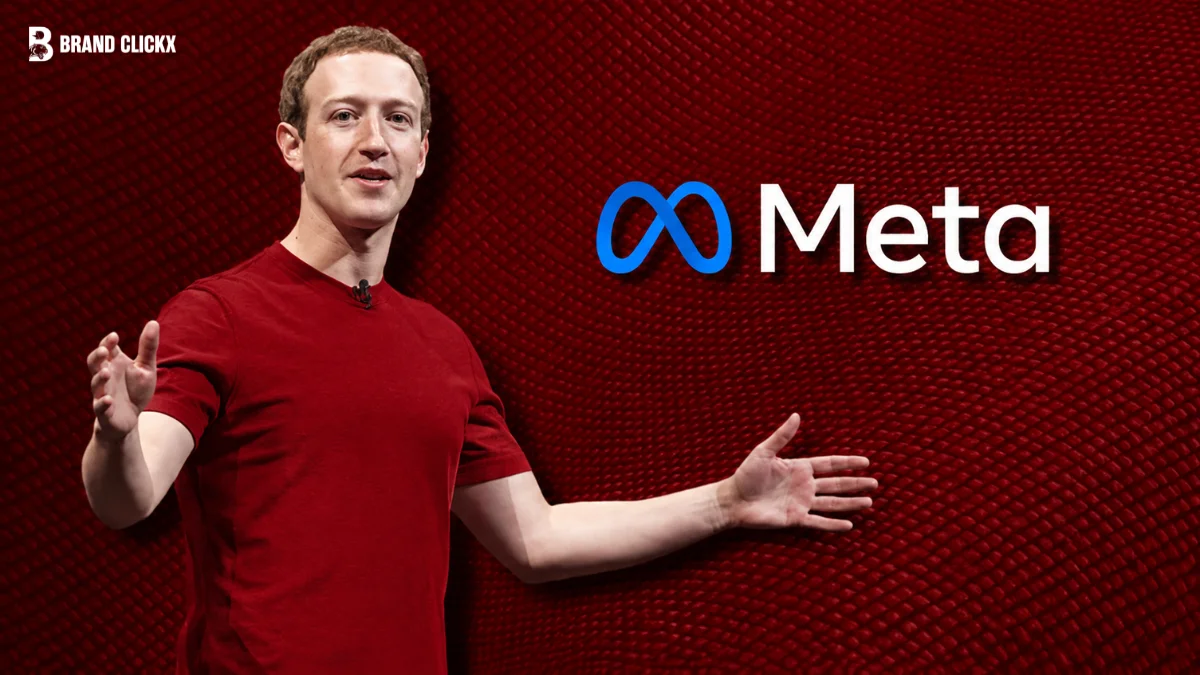
If you search who owns Meta, the simplest answer can also be misleading. Meta Platforms, Inc. is a publicly traded company, so its economic ownership is spread among shareholders. But voting control is concentrated with its founder, Mark Zuckerberg.
Meta’s latest 2026 proxy statement gives the clearest picture: Zuckerberg beneficially owned 341.8 million Class B shares and held 60.8% of Meta’s total voting power as of April 1, 2026. Class B shares carry 10 votes each, while Class A shares carry one.
That distinction explains why you may see Vanguard, BlackRock, Fidelity, and other large investors listed among Meta shareholders while Zuckerberg is still described as the company’s controlling shareholder.
Here is how the ownership structure actually works, how Facebook became Meta, who owns its major platforms, and what the latest 2026 filings tell us.
AI Overview: Who owns Meta?
Meta Platforms, Inc. is a publicly traded company whose shares are owned by shareholders. Mark Zuckerberg, Meta’s founder, Chairman, and CEO, has majority voting control because he holds almost all of Meta’s Class B shares, which carry 10 votes per share compared with one vote for Class A shares. Meta’s 2026 proxy reported Zuckerberg with 60.8% of total voting power as of April 1, 2026.
So, Zuckerberg does not own 100% of Meta economically, but he has decisive control over shareholder votes. Meta’s SEC filings say that this control extends to matters such as director elections and major corporate transactions.
Key Takeaways
- Meta Platforms, Inc. is publicly traded under the Nasdaq ticker META.
- Mark Zuckerberg is the controlling shareholder because of Meta’s dual-class voting structure.
- As of April 1, 2026, Zuckerberg held 60.8% of Meta’s total voting power, according to Meta’s proxy.
- Meta Class A shares have one vote per share, while Class B shares have 10 votes per share.
- Zuckerberg held 99.8% of the outstanding Class B shares reported in the 2026 proxy.
- Facebook, Instagram, WhatsApp, and Messenger operate within Meta’s Family of Apps.
- Meta reported $60.801 billion in revenue for the second quarter of 2026.
- Meta reported $15.848 billion in net income for that quarter, while Reality Labs reported a $4.619 billion operating loss.
Who actually owns Meta?
Meta is owned economically by its shareholders because it is a publicly traded company. However, Mark Zuckerberg controls Meta’s shareholder voting power through Class B shares that carry 10 votes each. Meta’s 2026 proxy reported that Zuckerberg held 60.8% of total voting power as of April 1, 2026, giving him effective control over major shareholder decisions.
Who Owns Meta Today?
The answer depends on what you mean by “owns.”
If you mean financial ownership, Meta belongs to its shareholders. Investors can own Meta shares and receive the economic benefits associated with those shares.
If you mean corporate control, Mark Zuckerberg is the key person. Meta’s SEC filings state that he can exercise voting rights over a majority of the company’s outstanding voting power.
That difference is the heart of the Meta ownership structure.
Meta is not privately owned by Zuckerberg in the ordinary sense. It is a public corporation with millions of shares held by investors. However, its dual-class stock structure gives Zuckerberg considerably more voting influence than his economic ownership alone would suggest.
How much voting power does Mark Zuckerberg have?
Meta’s 2026 proxy provides a precise snapshot.
As of April 1, 2026, Zuckerberg beneficially owned:
| Holding | Reported figure |
|---|---|
| Class A shares | 639,347 |
| Class B shares | 341,823,978 |
| Class B ownership | 99.8% |
| Total voting power | 60.8% |
The same filing explains that Class A shares have one vote per share, while Class B shares have 10 votes per share.
This is why simply looking at the percentage of Meta stock Zuckerberg owns does not tell you how much influence he has over corporate votes.
Does Mark Zuckerberg own 100% of Meta?
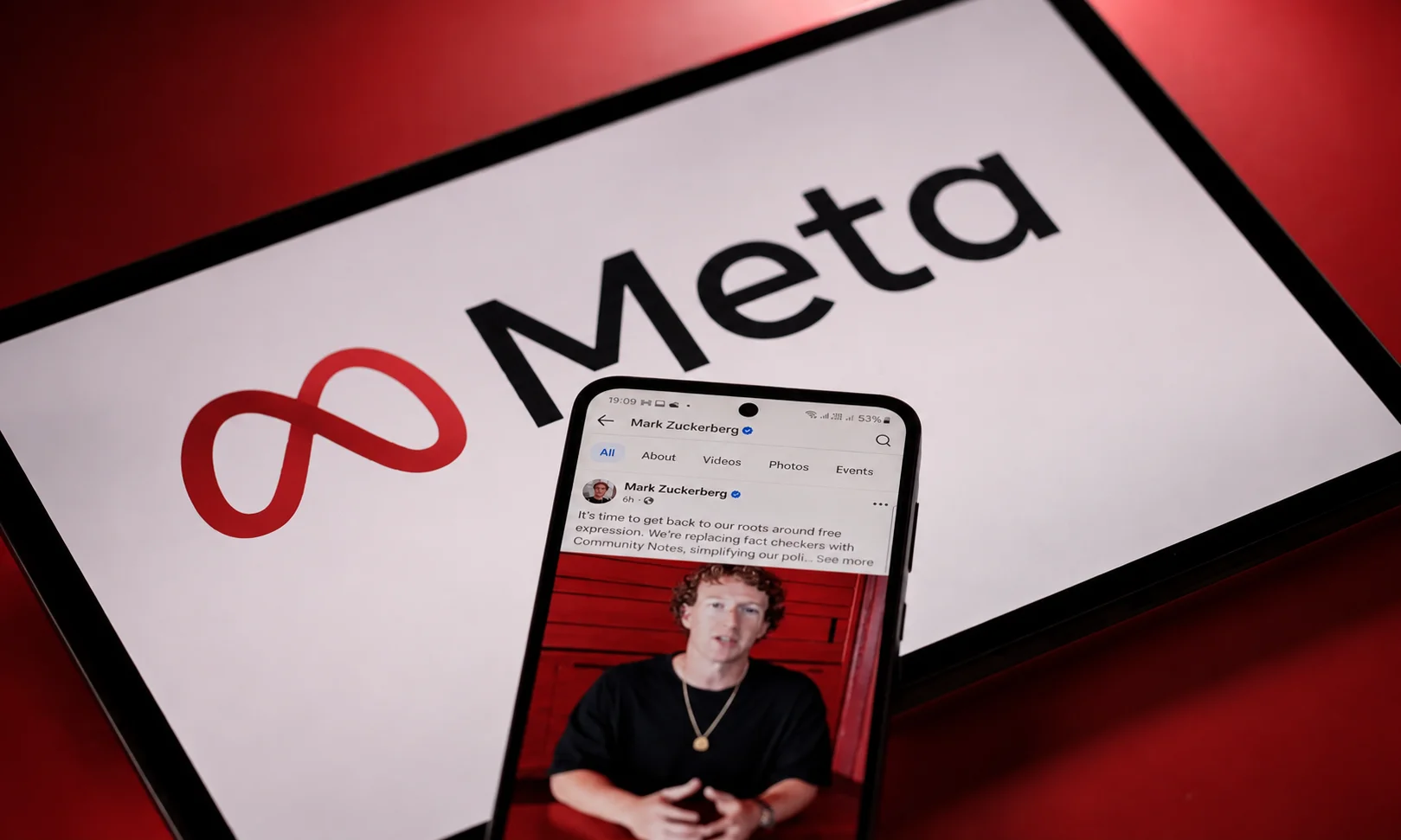
No.
Zuckerberg does not own all of Meta’s economic equity. The 2026 proxy shows that his voting power is much higher than his economic ownership because of the company’s dual-class structure.
This is an important distinction when answering who owns Meta. Zuckerberg controls the company, but he is not its only shareholder.
How Meta’s Class A and Class B Shares Work
Meta has two relevant common-stock classes.
Class A shares carry one vote per share and are the publicly traded shares ordinary investors can purchase on the market.
Class B shares carry 10 votes per share. Zuckerberg holds almost all of these shares, giving him a voting position that is far larger than his economic stake.
Meta itself warns investors that this dual-class structure concentrates voting control and can limit the ability of Class A shareholders to influence corporate matters.
The structure also explains why a large investment firm can own millions of Meta shares without controlling the company.
Why voting ownership matters more than share count
Imagine two shareholders owning different classes of stock.
One investor may hold many Class A shares, but each share gives one vote. Another shareholder holding Class B shares receives ten votes for every share.
The result is straightforward: economic ownership and voting power are not the same thing.
That is exactly what happens at Meta.
Who Controls Meta’s Board and Major Decisions?
Meta’s concentrated voting structure has consequences beyond shareholder statistics.
The SEC states that Zuckerberg can control the outcome of matters submitted to shareholders for approval, including director elections, mergers, consolidations, and a sale of all or substantially all of Meta’s assets.
That does not mean Zuckerberg personally performs every corporate function.
Meta still has a board of directors, executives, employees, legal obligations, and shareholders. The distinction is that Zuckerberg’s voting position gives him decisive influence over the shareholder vote that determines important corporate matters.
The 2026 annual meeting illustrates how the structure works in practice. Meta reported that shareholders voted on 12 proposals on May 27, 2026, with Class A and Class B shares voting together as a single class.
Who Owns Facebook, Instagram and WhatsApp?
If your question is really who owns Facebook, who owns Instagram, or who owns WhatsApp, the answer is Meta Platforms, Inc.
Meta reports Facebook, Instagram, Messenger, and WhatsApp within its Family of Apps segment. The company also operates Reality Labs as its separate reporting segment for immersive technology.
So the ownership chain is easier to understand this way:
| Product or business | Owner/operator |
|---|---|
| Meta Platforms, Inc. | |
| Meta Platforms, Inc. | |
| Meta Platforms, Inc. | |
| Messenger | Meta Platforms, Inc. |
| Threads | Meta |
| Meta AI | Meta |
| Reality Labs | Meta |
| Meta Glasses | Meta, with EssilorLuxottica partnership |
The important point is that Zuckerberg does not personally own Instagram or WhatsApp as separate companies. They sit within Meta’s corporate structure.
Why Is Facebook Called Meta Now?
The company did not simply rename the Facebook app.
On October 28, 2021, Facebook, Inc. announced that it was changing its corporate brand to Meta. Facebook itself remained a product within the company’s wider collection of apps and technologies.
Meta explained that the new corporate identity reflected a broader focus on social technology, augmented reality, virtual reality, and its metaverse ambitions.
The company’s financial reporting also changed to two operating segments: Family of Apps and Reality Labs.
That is why Facebook is still called Facebook even though the parent company is Meta Platforms, Inc.
How Big Is Meta in 2026?
The latest company-reported numbers show just how large Meta has become.
For the quarter ended June 30, 2026, Meta reported $60.801 billion in revenue, up 28% from $47.516 billion in the same quarter of 2025.
Meta reported $18.775 billion in operating income for the quarter, with an operating margin of 31%.
The company also reported $15.848 billion in net income for the quarter.
Its Family of Apps averaged 3.60 billion daily active people during June 2026, according to Meta’s July 2026 results.
Advertising remains the dominant source of Meta’s revenue. The company reported $59.363 billion in advertising revenue for the second quarter of 2026.
At the same time, Reality Labs reported a $4.619 billion operating loss, showing that Meta’s investment in immersive technology remains expensive.
What Does Zuckerberg’s Control Mean for Meta?
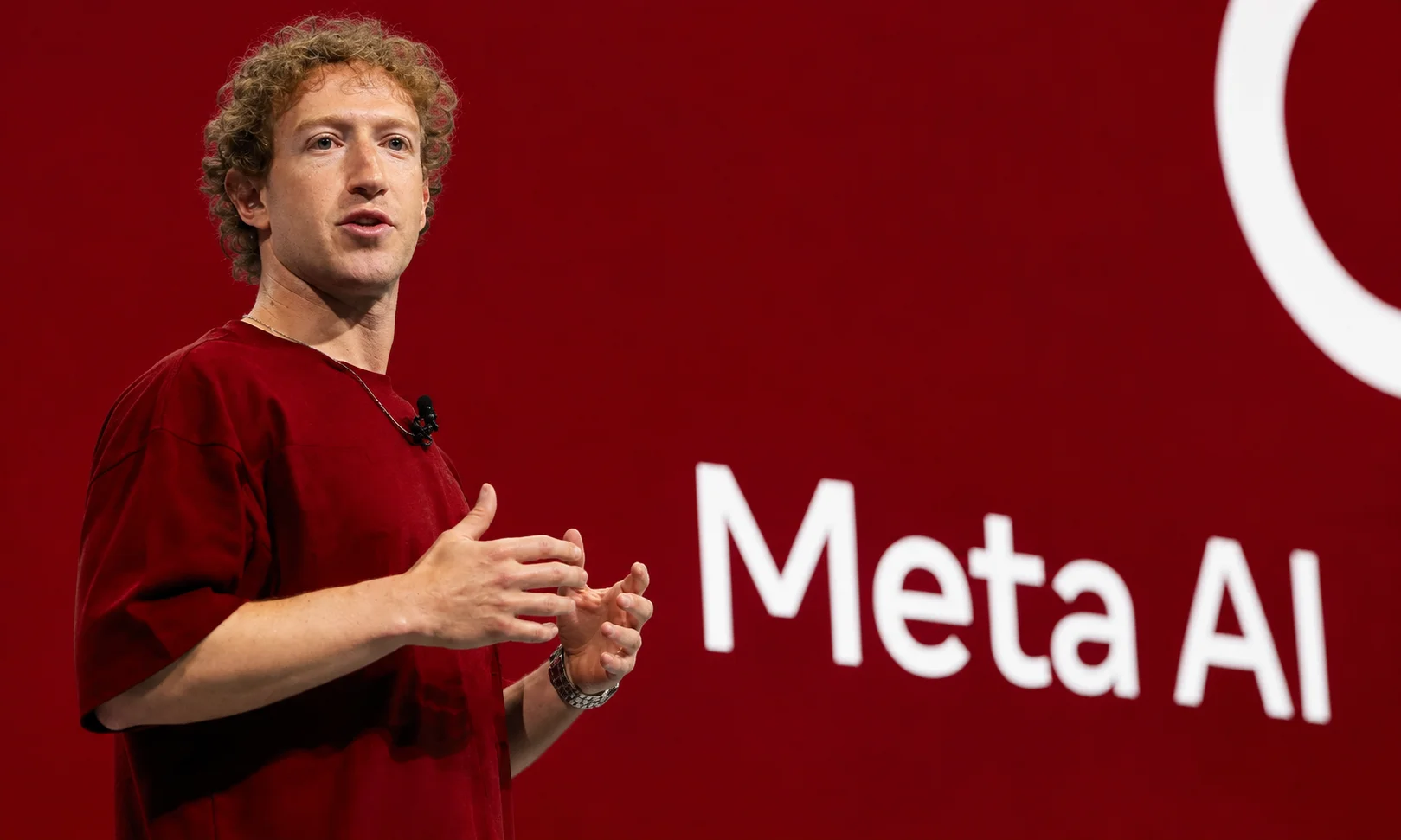
This is one of the less obvious parts of who owns Meta.
Zuckerberg’s voting control gives Meta continuity in corporate leadership. A dispersed group of shareholders cannot simply combine their Class A holdings and outvote his Class B voting block while he retains majority voting power.
That can make it easier for Meta to pursue long-term projects that require substantial investment.
For example, Meta reported $31.08 billion in capital expenditures in the second quarter of 2026 and expected full-year 2026 capital expenditures of $130 billion to $145 billion. Those figures show the scale of the company’s current investment plans.
However, voting control is not the same thing as a guarantee of business success.
Meta’s own disclosures identify risks involving regulation, litigation, privacy, safety, competition, advertising dependence, artificial intelligence, and Reality Labs.
The overlooked downside of concentrated control
There is a straightforward trade-off.
A founder with majority voting power can provide stability and maintain a long-term strategy. On the other hand, ordinary shareholders have less ability to change the company’s direction through voting.
Meta’s 2026 SEC filing explicitly describes the dual-class structure as limiting or precluding the ability of other shareholders to influence corporate matters.
That is a structural feature of Meta’s ownership model, not a prediction about what Zuckerberg will do.
What Other Investors Own Meta?
Large institutional investors can own substantial amounts of Meta stock.
Names such as BlackRock, Vanguard, Fidelity, and State Street appear in ownership discussions because major investment firms and funds can hold Meta’s publicly traded Class A shares.
But there is an important limitation when using these figures.
Institutional ownership numbers can change as funds buy, sell, rebalance portfolios, or report their holdings at different dates. Therefore, an old ownership table should not be treated as a permanent picture of Meta’s shareholders.
More importantly, owning a large Class A position does not automatically translate into control comparable to Zuckerberg’s Class B voting block.
Is Meta owned by Vanguard or BlackRock?
No.
Vanguard and BlackRock may own substantial Meta shares through investment funds, but neither is identified by Meta as the holder of majority voting control.
Meta’s 2026 proxy identifies Zuckerberg as the person with the majority voting position.
So if someone asks whether BlackRock owns Meta, the accurate answer is that BlackRock can be a significant shareholder without being Meta’s controlling owner.
Meta Compared With Other Ownership Models
The easiest way to understand Meta is to compare economic ownership with voting control.
| Company/model | Basic structure | What makes Meta different? |
|---|---|---|
| Meta | Public company with dual-class shares | Zuckerberg controls a majority of voting power |
| Alphabet | Public company with multiple share classes | Founder-related voting influence also exists |
| Snap | Public company with unequal voting rights | Founder-oriented voting structure |
| Disney | Public company | Does not have Meta’s disclosed founder-majority voting control |
| Warner Bros. Discovery | Public media company | Different ownership and governance structure |
The important comparison is not simply which company has the most shareholders.
It is who has enough voting power to determine corporate decisions.
For Meta, the answer is Zuckerberg.
What Changed in Meta Most Recently?
Meta’s ownership structure has remained the central governance story, but its business has continued moving rapidly toward artificial intelligence.
In April 2026, Meta announced Muse Spark, a large language model developed by Meta Superintelligence Labs, with planned integration across services including WhatsApp, Instagram, Facebook, Messenger, and Threads.
Meta also announced an expanded partnership with Broadcom to co-develop future generations of custom AI chips.
In June, Meta and EssilorLuxottica announced Meta Glasses in 26 styles.
Then, in July, Meta announced Muse Image, an image-generation model from Meta Superintelligence Labs.
These developments matter to the ownership question because they show where the company is directing resources under its current leadership. They do not, however, change the basic answer: Meta remains publicly owned while Zuckerberg retains majority voting control.
A Practical Way to Check Who Owns Meta
Ownership figures can become outdated quickly, so you should check the right documents rather than relying on an old “top shareholders” article.
Use this simple process:
- Check Meta’s latest SEC proxy statement. This provides beneficial ownership and voting-power information.
- Look at the Class A and Class B breakdown. The share classes have different voting rights.
- Check the reporting date. Ownership percentages are snapshots, not permanent figures.
- Separate economic ownership from voting control. They answer different questions.
- Check Meta’s latest investor-relations results for the company’s current financial and operating position.
For the current 2026 picture, the SEC proxy is particularly useful because it reports Zuckerberg’s holdings and voting power directly.
Common mistakes when researching Meta ownership
The most common mistake is saying “Zuckerberg owns Meta” without explaining what that means.
Another is treating his voting percentage as his economic ownership percentage.
A third mistake is assuming that a major institutional investor controls Meta simply because it owns millions of shares.
Finally, avoid using an old shareholder table as though it describes the company’s ownership today. Meta’s share counts and beneficial ownership figures can change.
Who Should Care About Meta’s Ownership Structure?
This information matters most if you are researching Meta as an investor, studying corporate governance, writing about Big Tech, or trying to understand how Zuckerberg can retain control while owning less than a majority of the company’s economic equity.
It is also useful if you are comparing founder-controlled public companies.
You do not need to memorize every institutional shareholder to understand the structure. The critical facts are the public listing, the two share classes, the voting difference, and Zuckerberg’s majority voting power.
Who Owns Meta? The Bottom Line
The next time you see a simple answer saying “Mark Zuckerberg owns Meta,” look a little closer.
Meta Platforms, Inc. is a public company with shareholders around the world. Zuckerberg does not own the entire company economically. What makes him different is the voting power attached to his Class B shares.
As of April 1, 2026, Meta’s proxy reported Zuckerberg with 60.8% of total voting power and 99.8% of the company’s outstanding Class B shares.
That is why who owns Meta and who controls Meta are not quite the same question.
And that distinction is probably the most useful thing to remember: on the stock market, ownership can be widely distributed while control remains concentrated in one person’s hands.
FAQ: Who Owns Meta?
Who is the main owner of Meta?
Mark Zuckerberg is Meta’s controlling shareholder because he holds a majority of the company’s voting power. Meta’s 2026 proxy reported that he had 60.8% of total voting power as of April 1, 2026. He does not, however, own 100% of Meta’s economic equity.
Does Mark Zuckerberg own 100% of Meta?
No, Mark Zuckerberg does not own 100% of Meta. Meta is a publicly traded company with many shareholders, while Zuckerberg holds a highly concentrated Class B voting position. His Class B shares give him much more voting power than his economic ownership alone would provide.
Who owns Facebook?
Meta Platforms, Inc. owns and operates Facebook. Facebook remains one of Meta’s major products within its Family of Apps rather than operating as a separately publicly traded company. Meta confirmed that its 2021 corporate rebrand did not change the identity of Facebook as one of its apps.
Who owns Instagram and WhatsApp?
Meta Platforms, Inc. owns and operates both Instagram and WhatsApp. Meta includes both services within its Family of Apps reporting segment. Zuckerberg controls Meta’s voting power, but Instagram and WhatsApp are not personally owned by him as separate public companies.
Why does Zuckerberg have more power than other Meta shareholders?
Meta uses a dual-class share structure. Class A shares have one vote per share, while Class B shares have 10 votes per share, and Zuckerberg holds almost all of the Class B shares. That structure gives him majority voting control despite not owning all of Meta’s economic equity.
Is Meta owned by Google or Microsoft?
No. Meta Platforms, Inc. is its own publicly traded corporation and trades on Nasdaq under the ticker META. Google is part of Alphabet, while Microsoft is a separate company, and neither owns Meta.
Can shareholders vote out Mark Zuckerberg?
Shareholders have voting rights, but Zuckerberg’s majority voting power gives him decisive influence over the election of Meta’s directors. The SEC states that his voting control allows him to control outcomes on matters submitted to shareholders, including director elections.
Is Meta still called Facebook?
The parent company is now Meta Platforms, Inc., while Facebook remains the name of its social-media platform. Facebook, Inc. announced the corporate rebrand to Meta on October 28, 2021.
Is Meta profitable?
Yes. Meta reported $15.848 billion in net income for the second quarter of 2026. However, profitability differs between its businesses: Reality Labs reported a $4.619 billion operating loss for the same quarter.
Can anyone buy part of Meta?
Investors can generally purchase Meta’s publicly traded Class A common stock through a broker where the security is available. Class A shares provide economic ownership and one vote per share, but they do not provide the same voting power as Zuckerberg’s Class B holdings.