
“Private jet rental” is the term most newcomers search for, but it covers a wider range of arrangements than people expect. Sometimes it means a single one-off flight. Sometimes it means a membership that locks in hours for a year. Sometimes it means a fractional share in an actual airplane. Each option has a completely different cost structure, commitment level, and ideal user. This guide breaks down what “renting” a private jet actually involves, what it costs, which option fits which type of traveler, and how the booking process works from first inquiry to touchdown.
What Does “Renting a Private Jet” Actually Mean?

Unlike renting a car, where you’re handed the keys and drive yourself, “renting” a private jet always comes with a crew, and it always comes in one of a handful of structured formats. There is no walk-up counter where you pick an aircraft off a lot. Instead, “rental” is shorthand people use for several distinct arrangements:
- On-demand charter, booking a single trip, one time, with no ongoing commitment
- Jet card / membership, prepaying for a block of flight hours you can draw down over time
- Fractional ownership, buying a partial share of a specific aircraft
- Full ownership with private management, buying the plane outright and having a management company handle everything else
Most people who search “private jet rental” are really looking for on-demand charter, a single trip, booked as needed, with no long-term obligation. That’s the focus of most of this guide, with the other formats compared later on.
How It Differs From Commercial Flying
| Factor | Commercial Airline | Private Jet Rental (Charter) |
|---|---|---|
| Pricing unit | Per seat | Per aircraft |
| Schedule | Fixed | Set by you, within crew/airport limits |
| Airports available | Major hubs | 3,000+ airports, including small regional fields |
| Check-in time | 1–3 hours | 15–30 minutes |
| Security | Standard TSA/equivalent lines | Minimal, often streamlined at the FBO |
| Routing | Point-to-point via hubs | Direct, multi-city in one day possible |
| Cabin | Shared | Private to your party |
What You’re Actually Paying For
The most common source of confusion for first-time renters is expecting the price to scale with passenger count, the way an airline ticket does. It doesn’t. When you rent a private jet, you’re paying for the whole aircraft, the crew, and the mission, not a seat.
A six-seat light jet flying one passenger costs the same as that same jet flying six passengers on the same route, because the plane still has to be flown, fueled, and staffed regardless of headcount. This is the single biggest mental shift required when moving from commercial thinking to private aviation thinking.
When Renting a Jet Is Worth It
- Same-day round trips, avoiding an unnecessary hotel night
- Multi-city days, visiting several cities without waiting on connections
- Access to smaller airports closer to your actual destination
- Time-sensitive travel, where working from the cabin replaces time lost to boarding and security
If your trip is really just “get from A to B as cheaply as possible,” commercial flying, even in a premium cabin, is almost always the better tool.
How Much Does It Cost to Rent a Private Jet?
Pricing Is Built From Several Line Items, Not One Number
- Hourly rate for the specific aircraft, the baseline flying cost
- Minimum billable flight time, many operators bill a minimum of around 2 hours per leg, regardless of the actual flight length
- Crew duty and positioning, pilots and cabin crew operate under legally mandated duty and rest limits
- Fuel surcharges, added to protect against price swings between quote and flight date
- Landing and handling fees, charged by each airport and each ground handler (FBO) along the route
- Repositioning (ferry) fees, the cost of flying the aircraft to your departure point if it isn’t already there
- Overnight or hangar costs, relevant on round trips where the aircraft waits at the destination
- Government taxes, including the U.S. Federal Excise Tax (7.5% on most domestic flights) and, internationally, customs and head taxes
Typical Hourly Rates by Aircraft Category
| Aircraft Category | Typical Hourly Rate (USD) | Passenger Capacity | Typical Range |
|---|---|---|---|
| Turboprop | $2,000+ | 4, 8 | 600–1,000 miles |
| Very Light / Light Jet | $2,000, $4,000 | 2, 7 | Up to ~1,500 miles |
| Midsize Jet | $3,500, $6,500 | 6, 8 | ~2,450 miles |
| Super-Midsize Jet | $6,000, $9,000 | 7, 9 | 3,000+ miles |
| Heavy Jet | $8,000, $11,000+ | 10, 16 | 4,000+ miles |
| Ultra-Long-Range Jet | $10,000, $20,000+ | 10, 19+ | 6,000+ miles, nonstop intercontinental |
Why a Short Rental Rarely Costs a Short Rate
A 45-minute flight can still be billed at a 2-hour minimum. If the nearest available aircraft is parked at a different airport, you pay for it to reposition empty before your trip even starts. And crew duty rules can force an overnight stay or an added crew member, both of which add to the bill. The quoted flight time and the billed time are rarely the same number.
Aircraft Categories: Matching the Rental to the Mission
Turboprops
Propeller-driven and fuel-efficient over short distances, turboprops are the most budget-conscious option for regional trips of 600–1,000 miles, and they can access shorter runways that jets can’t use.
- Best for: Short regional hops, remote or unpaved airstrips
- Trade-off: Slower cruise speed, smaller cabin
Light Jets
Seating 4– 8 passengers with a range up to roughly 1,500 miles.
- Best for: 1–3 hour trips, Los Angeles to Las Vegas, or London to Geneva
- Trade-off: Limited baggage space and headroom in some models
Midsize Jets
Seating 6– 8, generally with more cabin space and sometimes stand-up headroom.
- Best for: Nonstop transcontinental trips, such as New York to Los Angeles
- Trade-off: Higher hourly rate than light jets, but far more range and comfort
Super-Midsize Jets
Carrying 7– 9 passengers with better speed, higher-altitude cruising, and stronger connectivity.
- Best for: U.S. coast-to-coast routes, or Western Europe to the Middle East
- Trade-off: Meaningfully higher cost than light or midsize categories
Heavy Jets
Seating 10–16 with full stand-up cabins, lie-flat options, and dedicated cabin crew.
- Best for: Long-range travel and larger groups, boards, extended families, production crews
- Trade-off: Among the highest hourly rates outside ultra-long-range aircraft
Ultra-Long-Range Jets
Capable of true nonstop intercontinental travel, New York to Dubai, Los Angeles to Tokyo.
- Best for: Global business travel where a fuel stop isn’t acceptable
- Trade-off: The highest hourly rates in the industry
What’s Included in a Rental Quote, and What Isn’t
Usually Included
- The aircraft, captain, first officer, and cabin attendant (where applicable)
- Standard landing and handling fees on your itinerary
- Fuel at the operator’s contracted rate
- Standard ramp or parking time within the scheduled window
- Basic onboard refreshments
- Coordination with the FBO at each stop
Often Billed Separately
- Premium catering, chef-prepared meals, specific wine, dietary menus
- Ground transportation, chauffeured cars, vans, helicopter transfers
- Additional cabin staff, security, medical staff, childcare
- Wi-Fi surcharges, especially on longer international legs
- De-icing, can range from $$2,000 to over $10,000 at cold-weather destinations
- Schedule-change fees, triggered by last-minute changes or unusual airport restrictions
Because there’s no ticketless walk-up system, the rental agreement functions as your reservation, and payment is typically collected upfront.
The Full Breakdown of Rental Fees
Repositioning (Ferry) Fees
If the ideal aircraft isn’t already at your departure airport, the operator flies it there empty first, and that flight is billed to you, a significant factor in one-way pricing.
De-Icing, Hangar, and Overnight Fees
Winter operations at cold-weather or mountain airports (Aspen, Geneva, and similar) can add real cost. Some brokers offer de-icing insurance or arrange heated hangar space to limit exposure.
Landing and Handling Fees
Airports charge landing fees based on aircraft weight; the FBO or local handler separately charges for fueling coordination, ground transport, and crew facilities.
Overnight and Ramp Fees
On round trips, ramp fees cover parking the aircraft at the destination overnight or for an extended stay.
Fuel Surcharges
Because fuel prices move daily, a surcharge protects against the gap between quote and flight date.
Crew Salaries and Expenses
Most private jets fly with two pilots; midsize aircraft and larger typically add a flight attendant. Crew meals are covered by the operator and passed through in the quote, and crew accommodation is billed if the aircraft stays overnight at the destination.
Catering and Special Requests
Meals, drinks, event setups, and even temporary interior or exterior branding, fully customizable, all billed as add-ons.
Passenger and Government Taxes
- U.S. Federal Excise Tax (FET): 7.5% on most domestic flights
- Segment fees / international head tax: Per-passenger charges on flights touching the U.S., Alaska, or Hawaii
- International departure taxes: Vary by country, charged per-passenger on many routes
What Drives Rental Cost Up or Down
- Aircraft type and size, every step up in category brings a higher hourly rate, more range, and more space
- Total flight time and distance, longer flights mean more fuel, crew duty, and operating cost
- Positioning, an aircraft not already near your departure airport adds repositioning cost; comparing nearby airports (e.g., Teterboro, Westchester, Morristown for a New York-area trip) can help
- Timing and peak demand, holidays, major sporting events, and art fairs tighten availability and push prices up
- Domestic vs. international routing, domestic carries the Federal Excise Tax; international carries permits, customs, and local handling fees instead
- Onboard services, every optional add-on increases the quote above the base structure
Empty Leg Flights: The Budget-Conscious Rental Option
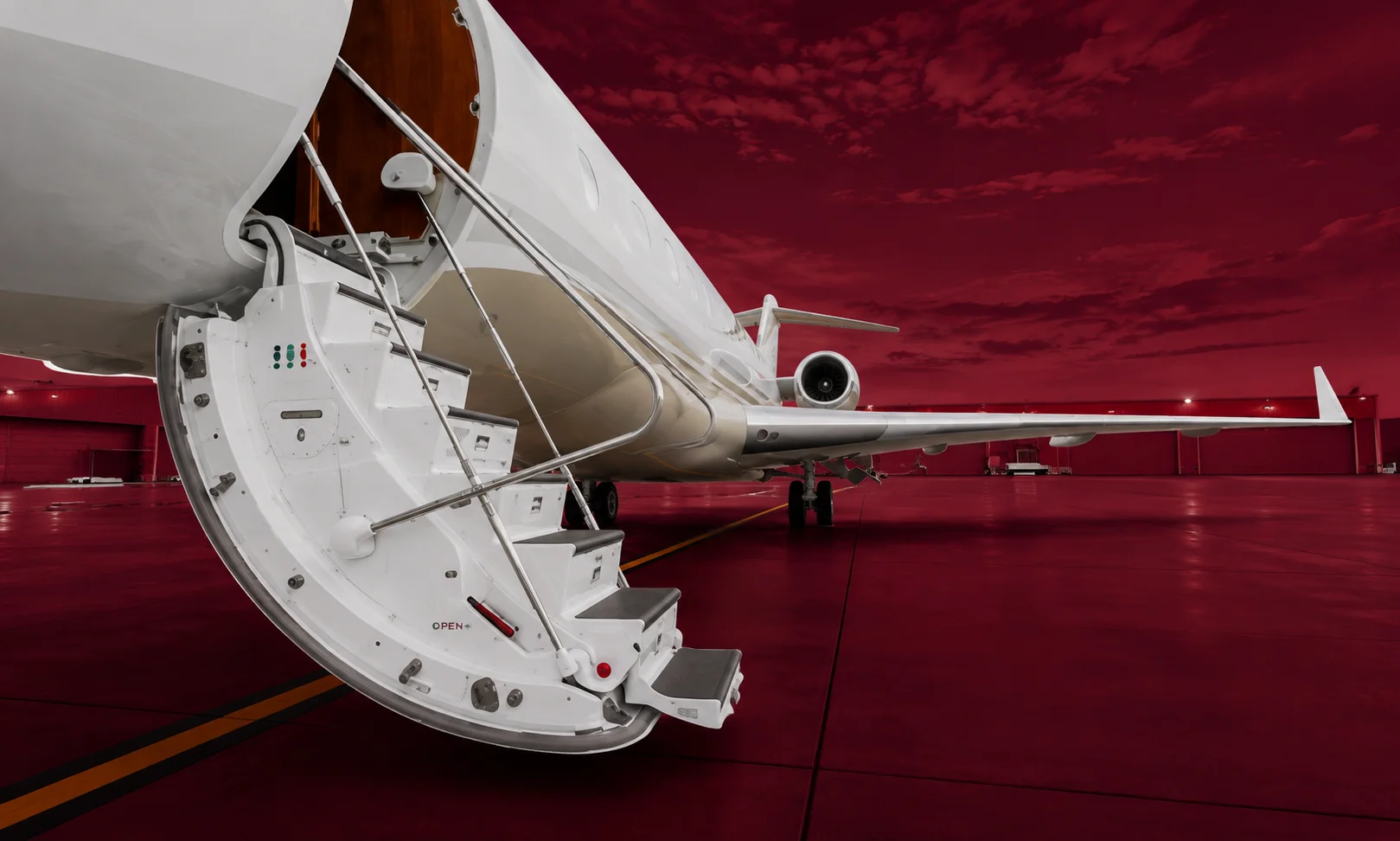
An “empty leg” is a repositioning flight the aircraft is already making without passengers, en route to its next assignment or home base. Because the plane is flying either way, these seats are often priced 50–75% below standard rates.
The Trade-Off
Date, time, departure airport, and destination are all fixed by the aircraft’s existing schedule, not yours. Some brokers offer rerouted empty legs, a small premium to adjust the route slightly, though this is still less flexible than a dedicated rental.
Who Empty Legs Work Best For
- Travelers with flexible dates comparing several possible days
- Occasional flyers looking for an affordable way to try private aviation
- Anyone booking well before their travel window, giving brokers time to match a suitable empty leg
Comparing Your Rental Options
On-Demand Charter (True “Rental”)
Pay-as-you-go, no long-term commitment. Best for travelers flying roughly under 25–30 hours a year, or anyone with irregular routes.
Jet Card / Membership Programs
Pay an upfront deposit or annual fee to lock in access across specific cabin classes at a predictable hourly rate. Simplifies budgeting for frequent flyers, often with priority booking, in exchange for upfront capital commitment.
Fractional Ownership
Purchase a defined share of a specific aircraft, a sixteenth, an eighth, a quarter, entitling you to a set number of annual flight hours. Management, crew, and maintenance are handled by a management company, but minimum notice periods and multi-year commitments reduce flexibility. Generally makes sense above roughly 100–150+ hours flown per year.
Full Aircraft Ownership
Complete control, but the full weight of costs: purchase price, maintenance, hangar rental, insurance, crew salaries, and depreciation. Annual operating costs alone can run from roughly €€500,000 to €1 million depending on the aircraft, a new seat can cost around €40,000, a replacement tire about €3,000. Ownership generally only makes financial sense above several hundred flight hours a year, and owners often offset fixed costs by making their aircraft available for charter.
How to Book a Private Jet Rental, Step by Step
Step 1: Inquiry and Instant Estimate
Share your departure and arrival airports, travel dates, requested departure time, passenger count, and luggage estimate. The more specific this is, the more accurate your first quote will be.
Step 2: Aircraft Selection
A broker or advisor narrows down aircraft options based on passenger count, baggage volume, cabin preferences, and any special considerations, pets, children, onboard meeting space, medical equipment.
Step 3: Quote Review
You’ll typically receive an itemized quote outlining aircraft options with their respective total costs, not just a single headline number. Compare aircraft types against your actual needs rather than defaulting to the cheapest line.
Step 4: Confirmation and Contract
Once you select an option, the aircraft, operator, and schedule are confirmed under the operator’s safety criteria. Payment is generally collected in full before departure.
Step 5: Day of Travel
Most private terminals (FBOs) allow check-in as little as 15–30 minutes before departure, no general security lines, no long walk to a gate.
Step 6: After the Flight
Reputable brokers provide post-flight billing documentation for expense or corporate accounting purposes, and retain your preferences (favorite aircraft, crews, catering) for future bookings.
Safety, Certification, and What to Verify Before Renting
Operator Certification
In the U.S., on-demand charter operations fall under FAA Part 135, which sets requirements for aircraft airworthiness, operations manuals, crew training, and maintenance programs. Internationally, look for the regional equivalent.
Third-Party Safety Audits
- ARGUS, one of the most widely recognized third-party charter safety rating systems
- Wyvern, audits operators against independent safety standards
- IS-BAO, the International Standard for Business Aircraft Operations
Pilot Standards
Look for type-rated, experienced pilots with recurrent training requirements and enforced duty/rest limitations, fatigue management is a real safety factor, not a formality.
Operational Oversight
A well-run operator or broker actively monitors weather, NOTAMs, airport slot restrictions, and seasonal constraints so plans can be adjusted before they become problems.
Sustainability Considerations
Private jets carry a higher per-passenger carbon footprint than commercial flights, simply because the same fuel burn is divided among far fewer people. Operators and brokers increasingly address this through:
- Carbon offsetting, some providers include verified offsets on every flight at no extra charge
- Sustainable Aviation Fuel (SAF), can meaningfully reduce lifecycle emissions depending on feedstock and production method
- Route and aircraft optimization, choosing the smallest suitable aircraft and avoiding unnecessary fuel stops
Common Use Cases for Renting a Private Jet

Executive Roadshows
A CEO and investor-relations team visiting three cities in 48 hours can compress a multi-day commercial itinerary, working from the cabin between stops.
Family and Leisure Travel
A family traveling with ski equipment, pets, and small children can access smaller regional airports closer to their destination, cutting ground transfer time.
International Board Meetings
An overnight flight with a late departure and lie-flat seating lets a group arrive rested for an early meeting, something a red-eye commercial flight rarely delivers.
Time-Critical Trips
Last-minute site visits, acquisition meetings, medical consultations, or major event attendance often require mobility a fixed commercial schedule can’t provide on short notice.
When Renting Isn’t the Right Fit
Very short distances. Trips under roughly an hour of flight time are usually cheaper and easier arranged another way, unless the destination is genuinely remote.
Price-driven decisions. If the deciding factor is beating a commercial ticket price, rental is very unlikely to win that comparison.
Inflexible one-way trips. Without a positioned aircraft nearby, repositioning costs can dominate the total price.
Last-minute requests with limited options. Aircraft availability is finite, and immediate-deadline requests narrow your choices.
Routes well-served by direct commercial flights. If a convenient nonstop commercial option already exists, there’s often little practical benefit.
The Broker’s Role in a Rental
A broker’s real value is filtering and shaping the request before it reaches an operator:
- Analyzing the itinerary for a more efficient routing option
- Checking whether a suitable aircraft is already positioned near the departure airport
- Suggesting schedule adjustments that reduce cost or improve timing
- Filtering out requests that don’t make economic sense, and explaining why
Broker vs. Direct Operator
A direct operator owns and manages its own fleet, which can mean no broker markup if they have a suitable plane already positioned. A charter broker works across a much larger network, often tens of thousands of aircraft worldwide, trading a modest service fee for significantly more choice.
International vs. Domestic Rentals
Domestic (U.S.)
Primarily affected by the 7.5% Federal Excise Tax and any per-passenger segment fees on flights touching Alaska or Hawaii.
International
Involves a longer list of variables: overflight and landing permits, customs and immigration handling, after-hours customs fees at certain airports, destination-specific security requirements, and local head or departure taxes. International trips benefit from more advance notice since permits and customs coordination take time.
Common Misconceptions About Renting a Private Jet
“It’s priced per seat, like a plane ticket.” It isn’t, you’re paying for the aircraft as a whole, regardless of passenger count.
“A short flight should be cheap.” Minimum billable time, repositioning, and crew logistics often make short flights proportionally more expensive per mile than longer ones.
“Any aircraft can fly into any airport.” Runway length, weight limits, and airport-specific restrictions all affect which aircraft category can actually use a given airfield.
“Booking last-minute is always possible.” Rental is more flexible than commercial aviation, but availability is still finite, especially during peak periods.
“Ownership is the ultimate flexible option.” In practice, ownership is the least flexible in terms of aircraft variety, you’re committed to the one model you bought, plus its full fixed costs.
Tips for Getting the Best Value
Be flexible on dates when possible. Even a one- or two-day window can unlock empty leg pricing.
Ask about nearby alternative airports. A slightly farther airport with a positioned aircraft can beat the closest one requiring a repositioning flight.
Get an itemized quote, not just a bottom-line number. Makes it easier to compare options and spot where the cost is coming from.
Book further ahead for international trips. Permit and customs processing benefits from lead time.
Match the aircraft to the mission, not the aspiration. A larger cabin than you need adds cost without adding value.
Frequently Asked Questions
Is renting a private jet much more expensive than flying commercial?
Yes, generally significantly more. On top of the base hourly rate, you’re covering crew costs, potential repositioning, fuel surcharges, and landing/handling fees a commercial ticket doesn’t reflect.
Can I rent a private jet for around $5,000?
Rarely realistic for on-demand rental. Minimum flight-time charges and fees typically push even short trips into the $10,000, $15,000 range. Empty leg flights are the main exception.
What is an empty leg flight, and is it a good option?
A repositioning flight the aircraft is already making without passengers, often discounted 50–75% off standard rates, great value if your dates align with the aircraft’s existing schedule, but with little flexibility to change timing or destination.
Is renting actually faster than commercial flying?
Not in raw flight time, a private jet doesn’t fly point-to-point faster than an airliner covering the same distance. The time savings come from skipping security lines, terminal congestion, and layovers.
How far in advance should I book?
A few days to a week ahead generally provides the best availability and pricing. Many requests can still be arranged within 24–48 hours, but options, and sometimes price, narrow closer to the date.
Does the number of passengers change the price?
Not directly. You’re paying for the aircraft as a whole, though passenger count and baggage do determine which aircraft category is appropriate.
Can I bring pets on a private jet rental?
In most cases, yes, subject to the operator’s policies, aircraft approval, and any destination-specific documentation.
What’s the difference between a broker and a direct operator?
A direct operator owns and flies its own aircraft. A broker works across a wider network to match your trip to the best available aircraft, typically meaning more choice, in exchange for a service fee built into the quote.
How does the Federal Excise Tax affect my total cost?
It’s a mandatory 7.5% tax on most U.S. domestic flights, and should be itemized clearly in any legitimate quote.
Can I rent a private jet for a one-way trip?
Yes, and one-way rentals are common. Pricing can include a repositioning fee if the aircraft needs to fly elsewhere before or after your trip.
What size aircraft do I actually need?
This depends primarily on passenger count, baggage volume, and flight distance. A good broker will match aircraft category to your specific mission.
Is de-icing always included in a quote?
Not always, it depends on the operator and season. Some brokers offer de-icing insurance to protect against these costs.
How early do I need to arrive at the airport before departure?
Most private terminals allow check-in as little as 15–30 minutes before departure, versus the 1–3 hours typically recommended for commercial flights.
Are there baggage limits on private jet rentals?
Yes, every aircraft has specific weight and volume limits, though private jets are generally more accommodating than commercial airlines. Unusual items like skis or golf clubs should be flagged during booking.
Is renting private actually safer than commercial airlines?
Safety depends heavily on the specific operator, its certification, crew training, and maintenance program rather than the category of travel itself. Verifying Part 135 (or international equivalent) certification and third-party ratings like ARGUS, Wyvern, or IS-BAO is the best way to evaluate this before booking.
Final Verdict
Renting a private jet isn’t about beating commercial airline prices, it’s about buying back time, flexibility, and control over how and when you travel. Understanding how pricing is actually assembled (aircraft rate, minimum time, positioning, fees, and taxes), which aircraft category genuinely fits your mission, and which rental format, charter, jet card, fractional, or ownership, matches your actual flying habits will help you get accurate quotes, avoid unpleasant surprises, and decide with confidence whether, and how, to rent private.