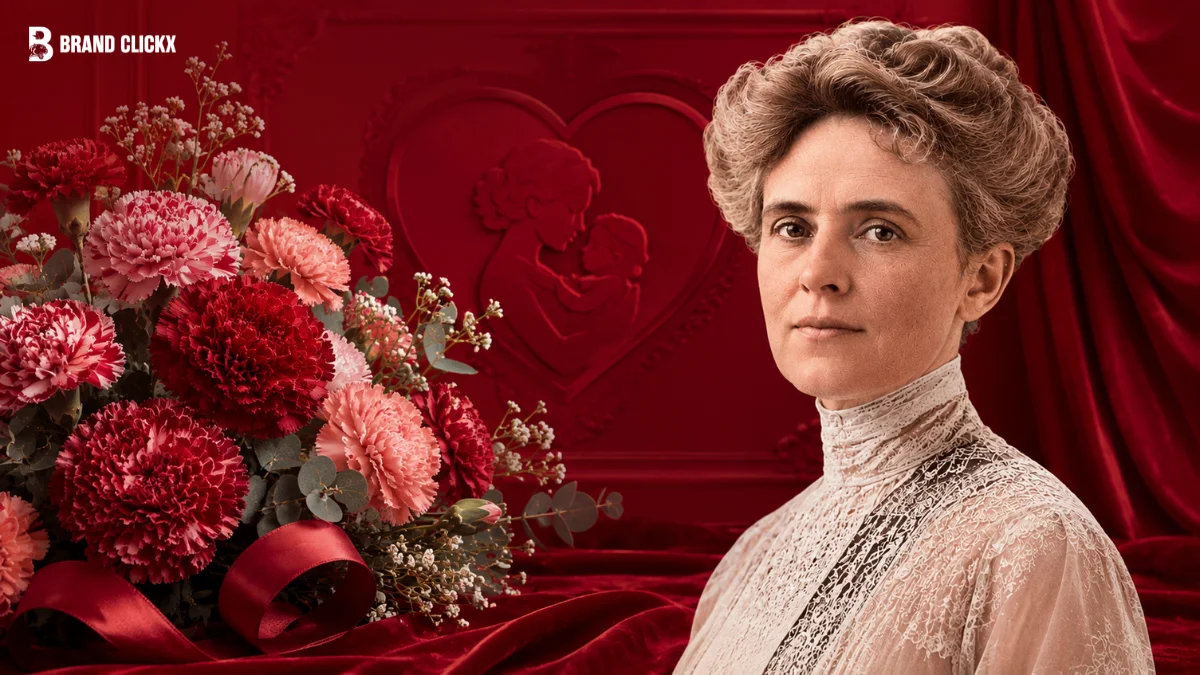
Mother’s Day is not really one holiday. It is more than forty holidays living under one name, scattered across almost every month of the calendar, rooted in different religions, different politics, and different centuries. Some versions are barely a hundred years old. Others, like Nepal’s mother-pilgrimage festival, are believed to predate the American holiday by hundreds of years. What unites them is not the date or the flower or the greeting card it is a single, near-universal human instinct: setting aside a day to say thank you to the woman who raised you.
This piece traces that instinct from its modern American origin, through the world’s major religions, across every continent, and into the commercial and political battles that have shaped how and why we celebrate mothers today.
How Mother’s Day Became a Modern Global Holiday
Anna Jarvis and the American Birth of Mother’s Day
The modern Mother’s Day most people recognize today began not with a government decree, but with a daughter determined to honor her mother.
In 1908, Anna Jarvis organized the first official Mother’s Day worship service at Andrews Methodist Episcopal Church in Grafton, West Virginia. The church, now known as the International Mother’s Day Shrine, became the symbolic birthplace of the modern American holiday.
Jarvis’s campaign had begun three years earlier, following the death of her mother, Ann Reeves Jarvis, in 1905. Ann Jarvis had already devoted much of her life to improving the lives of mothers and families.
She organized “Mother’s Day Work Clubs” to address public-health problems and, during the American Civil War, helped care for wounded soldiers from both the Union and Confederate sides.
Anna Jarvis wanted a day that would turn that personal legacy into a national act of remembrance.
From Local Memorial to National Holiday
The idea initially attracted skepticism.
In 1908, members of Congress even joked that if lawmakers approved a Mother’s Day, they might soon be expected to create a “Mother-in-Law’s Day.”
But Jarvis’s campaign continued to gain support.
- 1905: Anna Jarvis begins campaigning after her mother’s death.
- 1908: The first official Mother’s Day service is held in Grafton, West Virginia.
- 1911: Mother’s Day is being observed across every U.S. state in some form.
- 1914: President Woodrow Wilson officially establishes the second Sunday in May as a national holiday.
What began as a personal memorial had become an American institution in less than a decade.
When Anna Jarvis Turned Against Mother’s Day
The surprising part of Mother’s Day history came after Anna Jarvis helped make it a national holiday.
She did not want Mother’s Day to become a commercial event.
In 1912, Jarvis trademarked the name “Mother’s Day.” She wanted the holiday to be a personal day to honor your own mother, not a general celebration filled with business promotions and sales.
But as the holiday became popular, businesses began to see it as a way to sell cards, flowers and gifts. This was exactly what Jarvis had hoped to avoid.
From Personal Tribute to Commercial Industry
By the early 1920s, greeting-card companies, florists and retailers were turning Mother’s Day into a major consumer occasion. Companies such as Hallmark helped popularize greeting cards, while flowers and other gifts became increasingly associated with the celebration.
Jarvis regarded this transformation as a betrayal of her original idea.
She responded with increasingly aggressive opposition:
- She organized boycotts against commercial Mother’s Day activities.
- She threatened legal action against organizations using the holiday commercially.
- She publicly criticized greeting-card companies and florists.
- In 1925, she was arrested for disturbing the peace while protesting the sale of carnations at a meeting involving war mothers.
Jarvis spent much of the later part of her life attempting to reclaim the holiday from the commercial culture that had grown around it.
The twist is remarkable. The woman who helped create Mother’s Day eventually became one of its fiercest critics.
Mother’s Day Did Not Begin With Anna Jarvis
Although Anna Jarvis created the modern American holiday, the idea of honoring mothers is far older.
Across different civilizations, societies developed their own traditions celebrating motherhood, fertility, maternal figures and family relationships.
Ancient Roots of Maternal Celebration
In the ancient Mediterranean world, religious traditions honored powerful maternal figures.
Ancient Greece: Worshippers honored Rhea, associated with motherhood and the gods, while later traditions also connected maternal worship with Cybele.
Ancient Rome: The festival of Hilaria honored the goddess Cybele and included several days of religious celebration.
Medieval Britain: A Christian tradition known as Mothering Sunday developed around returning to one’s “mother church” during Lent.
These traditions were not the same holiday as the modern Mother’s Day, but they show that public recognition of mothers and maternal figures existed centuries before Anna Jarvis.
Mothering Sunday: Britain’s Older Tradition
One of the most important predecessors to modern Mother’s Day emerged in medieval England.
Mothering Sunday was observed on the fourth Sunday of Lent. Rather than originally being a celebration centered on gifts for mothers, it had a religious meaning: people who had moved away for work or other reasons were encouraged to return to their “mother church” — the church where they had been baptized or the principal church of their area.
Over time, the tradition developed a stronger family dimension. Children and workers returning home could reunite with their mothers, and the day gradually became associated with family gatherings and maternal appreciation.
The British Revival
In the early twentieth century, Constance Adelaide Smith helped revive Mothering Sunday as a broader celebration of motherhood.
Her efforts were partly influenced by the growing popularity of the American Mother’s Day. Rather than simply adopting the commercial American model, Smith promoted Mothering Sunday as a more traditional and family-centered observance.
That tradition ultimately became an important part of the way the United Kingdom and Ireland celebrate Mother’s Day today.
One Name, Several Historical Traditions
The modern Mother’s Day is therefore better understood as a family of traditions rather than a single invention.
Anna Jarvis gave the United States a modern secular holiday dedicated specifically to mothers. But the wider history of honoring mothers stretches much further back, through:
Ancient religious festivals → medieval Mothering Sunday → Anna Jarvis’s American campaign → the modern global Mother’s Day
That complicated history explains why Mother’s Day looks remarkably different from one country to another. Some celebrations are rooted in religion, others in family customs, national history or modern commercial culture.
The holiday has one familiar name, but its history is anything but singular.
Motherhood in the World’s Religions
Every major faith has developed its own relationship with the idea of honoring mothers — some through a formal holiday, others through scripture, ritual, or philosophy that operates independently of any calendar date.
Islam: Honoring Mothers as a Religious Duty
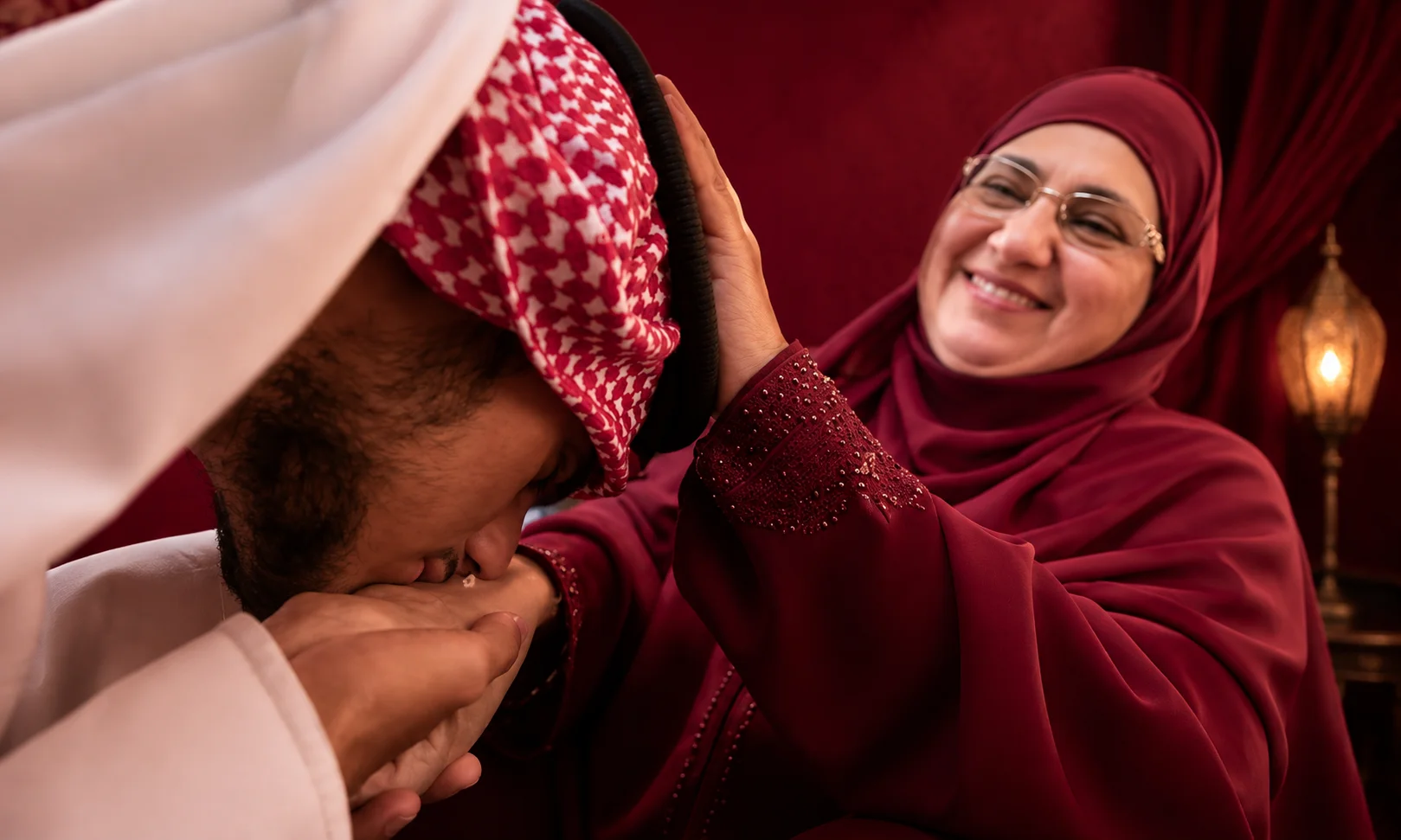
Islam does not have an official “Mother’s Day” in religious law, but it places an exceptionally high value on mothers.
A well-known hadith attributed to the Prophet Muhammad says that “Paradise is beneath the feet of mothers,” a teaching often cited to highlight the special status of mothers in Islam. The Quran also repeatedly calls on believers to treat their parents with kindness, gratitude and respect, with particular emphasis on the sacrifices made by mothers. These teachings appear in passages including Surah Al-Isra, Al-Ahqaf, Luqman and Al-Baqarah.
Because Islam does not set a specific religious date for honoring mothers, Muslim-majority countries have developed different traditions.
How Muslim Countries Celebrate
Egypt and much of the Arab world: Mother’s Day is observed on March 21, a secular tradition popularized by journalist Mustafa Amin in the 1950s.
Iran: Mother’s Day follows a different tradition, coinciding with the birthday of Fatimah, the daughter of the Prophet Muhammad, according to the Islamic lunar calendar. Because the Islamic calendar is lunar, the date moves each year on the Gregorian calendar.
Christianity: Mary, Mothering Sunday and May Traditions
Christianity’s connection to Mother’s Day is closely linked to the Virgin Mary, the mother of Jesus.
In Catholic tradition, May is traditionally dedicated to Mary, and this devotion influenced Mother’s Day traditions in several countries. Spain and Portugal, for example, celebrate Mother’s Day on the first Sunday of May.
Other Christian traditions have their own distinctive dates:
- Panama: Mother’s Day is celebrated on December 8, the Feast of the Immaculate Conception.
- Eastern Orthodox and Eastern Catholic traditions: Special prayers and services honor the Theotokos, a title meaning “Mother of God.”
- United Kingdom: Mothering Sunday has the clearest direct connection to historic Christian practice.
The result is a diverse Christian tradition in which honoring mothers is often connected with faith, family and devotion to Mary.
Hinduism: A Mother’s Day Rooted in Ancient Tradition
Nepal offers one of the world’s oldest traditions resembling a modern Mother’s Day.
The Hindu festival Mata Tirtha Aunsi, meaning “Mother Pilgrimage New Moon,” is believed to predate the modern Western Mother’s Day by centuries. It takes place during the new moon of Baishakh, usually in April or May.
The festival honors both living and deceased mothers.
Families traditionally travel to sacred ponds near Kathmandu, where religious rituals and prayers are performed. According to local folklore, pilgrims may see the face of a deceased mother reflected in the water.
Unlike the modern commercial Mother’s Day, Mata Tirtha Aunsi remains primarily a spiritual and family observance.
Buddhism: Motherhood, Filial Respect and Religious Tradition
Buddhist traditions also place strong importance on gratitude toward parents, particularly mothers.
One important connection comes from the Ullambana tradition, which tells the story of the Buddhist disciple Maudgalyayana and his efforts to help his mother.
Taiwan’s Buddhist Connection
Taiwan has developed a particularly distinctive form of Mother’s Day. The country celebrates Mother’s Day in May while also connecting the period with Buddha’s Birthday and the traditional “bathing the Buddha” ceremony.
This creates a celebration that combines:
- Respect for mothers
- Filial devotion
- Buddhist religious practice
- Family traditions
Mother’s Day in Taiwan therefore carries both family and religious significance.
Judaism: From Memorial to Family Day
Israel’s Mother’s Day has a very different history.
The tradition began as a memorial to Henrietta Szold, a Jewish leader who never had biological children but played an important role in helping Jewish children through Youth Aliyah, an organization that rescued and cared for children during the Nazi era.
After Szold’s death, the children she had helped began commemorating her as a mother figure.
Over time, the tradition changed. Israel eventually moved away from a Mother’s Day focused specifically on mothers and adopted Family Day, known as Yom HaMishpacha.
Today, the celebration is particularly common in preschools and schools, where children focus on family relationships rather than mothers alone.
China: Confucian Values and Filial Piety
China’s Mother’s Day tradition is strongly influenced by Confucian ideas of filial piety, or xiao — the belief that children should respect, care for and honor their parents.
Although Confucianism is a philosophy and ethical tradition rather than a religion in the Western sense, it has deeply shaped Chinese family values.
Some Chinese scholars and cultural organizations have promoted Meng Mu, the mother of the philosopher Mencius, as a traditional Chinese symbol of motherhood.
A Different Symbol of Motherhood
Supporters of a distinctly Chinese Mother’s Day have also promoted lilies as an alternative to the Western tradition of giving carnations.
The idea is linked to an old Chinese custom in which mothers planted lilies before their children left home.
Mother’s Day remains unofficial in China, but its popularity continues to grow, particularly in urban areas.
A Global Tradition With Different Roots
These traditions show why Mother’s Day cannot be understood as a single holiday with a single origin.
- Islam emphasizes religious duty.
- Christianity connects motherhood with Mary and church traditions.
- Hinduism preserves ancient pilgrimage practices.
- Buddhism links motherhood with filial devotion.
- Judaism developed a family-centered tradition from a historical memorial.
- China draws heavily on Confucian values.
The date may change, the rituals may differ, and even the meaning of “Mother’s Day” may vary — but the central idea remains remarkably consistent: honoring the people who give, protect and care for the next generation.
A World Tour of Mother’s Day Traditions
Mother’s Day may share a familiar name around the world, but its meaning changes dramatically from country to country.
Some nations follow the second Sunday of May. Others use fixed dates tied to religion, national history or important historical figures. In some places, the day is a commercial celebration of flowers and gifts; in others, it remains deeply connected to faith, family or national identity.
Here is how different regions celebrate it.
North America: The Modern Mother’s Day Model
The United States celebrates Mother’s Day on the second Sunday of May. It has become one of the busiest occasions of the year for flowers, greeting cards, restaurant dining and family gatherings.
Canada follows a similar tradition, although Quebec has its own custom of men giving flowers to the important women in their lives, not only their mothers.
Mexico takes a different approach by fixing Mother’s Day on May 10 every year. One of the country’s best-known traditions is waking mothers with “Las Mañanitas,” a traditional birthday and celebration song often performed by mariachi musicians.
Central America, the Caribbean and South America: Dates Shaped by History and Faith
Across Latin America, Mother’s Day dates vary widely.
- Costa Rica: August 15, coinciding with the Feast of the Assumption.
- Panama: December 8, the Feast of the Immaculate Conception.
- Nicaragua: May 30, a date associated with the birthday of a former president’s mother-in-law.
- Argentina: The region’s unusual October celebration is a legacy of an older Catholic calendar.
- Bolivia: May 27 commemorates women who died during the Battle of La Coronilla in the country’s struggle for independence.
- Brazil: The second Sunday of May has become one of the country’s biggest commercial holidays, behind Christmas.
The region demonstrates how Mother’s Day can evolve from religious traditions, political history and family customs rather than following one universal formula.
Western and Northern Europe: From Politics to Family Tradition
Europe has some of the most complicated Mother’s Day histories.
France: From Population Policy to Family Celebration
France’s Mother’s Day developed partly from concerns about declining birth rates in the early twentieth century. During the Vichy era, the government used motherhood and large families as part of its political messaging.
After the Second World War, the holiday gradually became the more personal family celebration familiar today.
Germany: A Troubled Political Past
Germany’s Mother’s Day also has a dark historical chapter.
Under the Nazi regime, motherhood was linked to state population policies. Mothers could receive the Mutterkreuz, or Mother’s Cross, depending on the number of children they had.
Today, Mother’s Day in Germany is primarily a family and commercial occasion, separated from that earlier political use.
Across Western Europe
Countries including the Netherlands, Belgium, Spain, Portugal and Italy generally celebrate Mother’s Day in May.
In several countries, the timing and traditions have been influenced by Christian devotion to Mary, local customs and the development of the flower industry.
The Nordic countries followed their own paths, gradually moving from earlier religious influences toward the family-centered celebrations common today.
Eastern Europe: Mother’s Day After the Soviet Era
In parts of Eastern Europe, Mother’s Day developed alongside another major celebration: International Women’s Day on March 8.
Russia, Belarus and Ukraine continue to recognize both occasions, although their historical meanings are different.
Some countries deliberately developed separate Mother’s Day traditions after the collapse of communism.
- Georgia: March 3 was established as Mother’s Day partly as an alternative to the Soviet-associated March 8 celebration.
- Poland, Romania, Czechia, Slovakia and Hungary: Mother’s Day traditions have been shaped by changing political systems and attempts to revive older family customs.
The region shows how a seemingly simple family holiday can also carry political and cultural history.
The Middle East: Secular and Religious Traditions
Egypt played a major role in spreading the modern Mother’s Day tradition across the Arab world.
Journalist Mustafa Amin helped popularize March 21 as Mother’s Day in the 1950s. The date was chosen to coincide with the first day of spring, and the tradition spread to many Arab countries.
Iran, however, follows a religious tradition instead. Mother’s Day is linked to the birthday of Fatimah, the daughter of the Prophet Muhammad, according to the Islamic lunar calendar.
The Iranian celebration has also taken on different political meanings under different governments, showing how national traditions can change as societies change.
Africa: Ancient Culture Meets Modern Celebration
Africa has some of the world’s most distinctive Mother’s Day traditions.
Ethiopia’s Three-Day Celebration
Ethiopia’s Antrosht is particularly unusual. Following the rainy season, families traditionally gather for a three-day celebration centered on food, music and family.
Children have traditionally taken different roles in preparing a special meal for their mothers, making the celebration as much about family participation as gift-giving.
Southern Africa
South Africa generally follows the second-Sunday-in-May tradition. Families often celebrate with breakfast, meals and time together, although Mother’s Day is not a public holiday.
Malawi also observes Mother’s Day as a public holiday, giving the occasion a more formal place on the national calendar.
South and Southeast Asia: A Western Date, Local Traditions
Countries including India, Pakistan, Bangladesh, Sri Lanka, Singapore and the Philippines generally celebrate Mother’s Day on the second Sunday of May.
The date largely spread through Western cultural influence, rather than emerging from a single shared Asian religious tradition.
In Bangladesh, the celebration has become increasingly visible among younger generations, with social media playing a growing role in how people express appreciation for their mothers.
Myanmar’s Traditional Calendar
Myanmar follows a different path. Mother’s Day is observed on the full moon of Pyatho, a month in the traditional Myanmar calendar that usually falls in January.
The celebration was officially added to the national calendar in 1997.
Indonesia: A Women’s History
Indonesia’s Mother’s Day is particularly distinctive.
December 22 commemorates the 1928 Indonesian Women’s Congress. The original meaning was closely connected to women’s rights, education and national independence rather than motherhood alone.
Over time, however, the day became increasingly associated with honoring mothers and women more broadly.
East Asia: Different Ways to Honor Parents
East Asia offers some of the clearest examples of how Mother’s Day can take different forms.
Japan
Japan now celebrates Mother’s Day on the second Sunday of May. Earlier Japanese observances were connected to the birthday of Empress Kōjun, before the modern May tradition became established.
South Korea
South Korea has chosen a different model altogether.
Instead of separate Mother’s and Father’s Days, the country celebrates Parents’ Day on May 8, honoring both parents together. The government adopted this combined observance in 1973.
Taiwan
Taiwan combines Mother’s Day with Buddhist traditions, creating a celebration that connects family devotion with religious observance.
North Korea
North Korea observes Mother’s Day on November 16. The holiday was established in connection with state messaging about the role of mothers in raising and educating the next generation.
Oceania: A May Tradition With Local Touches
Australia and New Zealand both celebrate Mother’s Day on the second Sunday of May.
Because May falls during autumn in the Southern Hemisphere, Australia developed a distinctive floral tradition: white chrysanthemums are commonly associated with Mother’s Day.
Samoa also recognizes Mother’s Day as a national holiday, with celebrations extending into the following Monday.
One Holiday, Hundreds of Meanings
The global story of Mother’s Day is not simply a story of one American holiday spreading around the world.
It is a story of local traditions adapting, merging and sometimes replacing one another.
In one country, Mother’s Day may be rooted in religion. In another, it may commemorate a national struggle. Elsewhere, it may honor parents together, celebrate women’s rights or simply bring families around the dinner table.
The date changes. The traditions change. Even the meaning changes. But the central idea remains the same: honoring the people who shape the next generation.
The Symbols and Traditions That Define Mother’s Day

Despite the enormous differences between countries, some Mother’s Day customs appear again and again. Flowers, food, family gatherings and acts of service have become some of the most recognizable ways to honor mothers.
Flowers: The Universal Gift
Flowers are perhaps the most widely recognized symbol of Mother’s Day, although the choice varies by country:
- United States and Japan: Carnations are strongly associated with the holiday.
- Australia: White chrysanthemums are a traditional Mother’s Day flower.
- China: Lilies are increasingly promoted as a culturally familiar alternative.
The flower may change, but the message is similar: love, gratitude and appreciation.
Food, Family and Acts of Service
Food is another important part of Mother’s Day traditions.
In Ethiopia, the Antrosht celebration centers on a communal feast. In Mexico, families often gather for a meal alongside music and serenades.
In English-speaking countries such as the United Kingdom, Canada, Australia and New Zealand, breakfast in bed has become a familiar way for children and families to give mothers a break from their usual responsibilities.
Some cultures go further, turning appreciation into a physical act of service. In Myanmar, traditional customs have included children washing or bathing their mothers as a gesture of respect. In Nepal, families may undertake a pilgrimage to honor mothers rather than simply exchanging gifts.
The Commercial Side of Mother’s Day
Mother’s Day has always existed between genuine affection and commercial opportunity.
Anna Jarvis saw this conflict early. After helping establish the modern holiday, she spent much of her later life criticizing the businesses that turned her idea into a major market for cards, flowers and gifts.
The same pattern appeared elsewhere.
In Germany and the Netherlands, florists helped promote Mother’s Day during the 1920s and 1930s. In Brazil, the celebration has grown into one of the country’s biggest shopping occasions, ranking behind Christmas in commercial importance.
But not everyone celebrates through spending.
A Return to Simpler Celebrations
Jarvis originally preferred personal messages and handwritten letters over commercial gifts. That idea still survives in many families.
A newer trend is also emerging in some countries, particularly among younger people. In Bangladesh, for example, social media messages, photographs and simple personal gestures have become increasingly common ways of expressing appreciation without spending heavily on gifts.
The result is a continuing debate over what Mother’s Day should really be about: the gift, or the gesture behind it?
When Mother’s Day Becomes Political
Mother’s Day has not always been used simply to celebrate family. Governments and political movements have sometimes used the holiday to promote their own ideas about motherhood, family and women’s roles.
Germany: Motherhood as State Policy
Under Nazi rule, Mother’s Day became part of the regime’s population policies. The government awarded the Mutterkreuz, or Mother’s Cross, to women based partly on the number of children they had.
Motherhood was therefore presented not simply as a personal role, but as a service to the state.
Mexico: A National and Religious Divide
In 1930s Mexico, the government of Lázaro Cárdenas promoted Mother’s Day as a patriotic celebration and sought to reduce the influence of the Catholic Church over women’s lives.
Many communities, however, continued to emphasize their own religious and family traditions.
Iran: A Holiday Reframed
Iran offers another striking example of how political change can reshape a holiday.
Under the Shah, Mother’s Day followed a more Western-style model. After the Islamic Revolution, the celebration was connected to the birthday of Fatimah, the daughter of the Prophet Muhammad, giving the holiday a stronger religious and traditional identity.
North Korea: Motherhood and the State
North Korea established its Mother’s Day through government decree. The celebration is closely connected to official messages about mothers’ responsibilities in raising children and contributing to the nation.
When a Family Holiday Reflects Society
Mother’s Day may appear to be a simple celebration of mothers, but its history reveals something much larger.
Flowers can represent affection. Food can represent family. Gifts can represent gratitude. At times, the holiday itself can reflect the political and cultural values of the society celebrating it.
That is what makes Mother’s Day more than a single annual occasion: it is also a mirror of how different societies understand motherhood, family and women’s roles.
When Is Mother’s Day 2026? Key Dates Around the World
| Country / Region | Date in 2026 |
|---|---|
| United States, Canada, Australia, New Zealand, India, Pakistan, most of Europe | Sunday, May 10 (second Sunday of May) |
| United Kingdom and Ireland (Mothering Sunday) | March 15 (fourth Sunday of Lent) |
| Egypt and the Arab world | March 21 |
| Russia, Belarus (Women’s Day overlap) | March 8 |
| Georgia | March 3 |
| Mexico | May 10 (fixed date) |
| Thailand | August 12 |
| South Korea (Parents’ Day) | May 8 |
| Indonesia | December 22 |
| Panama | December 8 |
| Argentina | October 18 (third Sunday of October) |
| North Korea | November 16 |
Mother’s Day by the Numbers
- In the United States, Mother’s Day is the busiest day of the year for dining out, and one of the top days for long-distance phone calls.
- Church attendance in the U.S. on Mother’s Day is typically third-highest of the year, behind only Christmas Eve and Easter.
- In Brazil, Mother’s Day ranks as the second-most commercially significant holiday, behind only Christmas.
- More than 40 countries around the world observe some version of the holiday.
What Different Cultures Say About Mothers
The importance of mothers is expressed not only through holidays and rituals, but also through proverbs, teachings and traditional sayings passed from one generation to the next.
Different cultures use different words and beliefs, yet many share a similar message: a mother’s love, sacrifice and guidance hold a special place in family and society.
- Islamic tradition: A well-known hadith describes Paradise as being beneath the feet of mothers, emphasizing the high status given to mothers.
- Chinese tradition: Confucian philosophy places strong emphasis on filial piety, teaching children to respect and care for their parents, including their mothers.
- African traditions: Across many African oral traditions, proverbs emphasize the lasting nature of a mother’s love and the bond between mother and child.
These traditions come from very different religious and cultural backgrounds, but they often reach the same conclusion: a mother represents love, sacrifice, guidance and a bond that can last throughout a lifetime.
Frequently Asked Questions About Mother’s Day
What is the original meaning of Mother’s Day?
Mother’s Day was originally intended as a personal day to honor and appreciate mothers, rather than as a commercial gift-giving occasion. Anna Jarvis wanted people to recognize their own mothers through personal expressions of love and gratitude.
Who started the modern Mother’s Day?
Anna Jarvis is widely credited with creating the modern American Mother’s Day. She organized the first official Mother’s Day service in 1908 in Grafton, West Virginia, and campaigned for national recognition until the United States officially recognized the holiday in 1914.
Why is Mother’s Day celebrated on different dates around the world?
There is no single global date for Mother’s Day. Different countries developed their traditions from religious calendars, national history, local customs and political movements. For example, the United States uses the second Sunday of May, while Mexico uses May 10 and the United Kingdom celebrates Mothering Sunday during Lent.
Which country has the oldest Mother’s Day tradition?
There is no universally accepted answer, because ancient cultures honored mothers and maternal figures in different ways. Nepal’s Mata Tirtha Aunsi is often described as one of the oldest traditions resembling a modern Mother’s Day and predates Anna Jarvis’s holiday by centuries.
Is Mother’s Day an Islamic holiday?
Mother’s Day is not an official Islamic religious holiday. However, Islam places a very high value on honoring mothers. Muslim-majority countries therefore have different approaches: some celebrate a secular Mother’s Day, while countries such as Iran connect the occasion with the birthday of Fatimah, the daughter of the Prophet Muhammad.
Is Mother’s Day the same as Mothering Sunday?
No. Mothering Sunday and Mother’s Day have different historical origins. Mothering Sunday began as a Christian tradition in Britain connected with returning to one’s “mother church.” The modern American Mother’s Day was developed by Anna Jarvis in the early 20th century.
Why does Mother’s Day have different flowers in different countries?
Flowers became one of the most recognizable Mother’s Day gifts, but the preferred flower varies by culture. Carnations are strongly associated with Mother’s Day in the United States and Japan, white chrysanthemums are traditional in Australia, while lilies have been promoted as a more culturally familiar Mother’s Day flower in China.
Why did Anna Jarvis oppose Mother’s Day?
Jarvis believed businesses had turned her personal tribute into a commercial holiday. She strongly criticized greeting-card companies, florists and retailers, and spent much of her later life trying to stop what she saw as the commercialization of her creation.
Which countries celebrate Mother’s Day in May?
Many countries celebrate Mother’s Day on the second Sunday of May, including the United States, Canada, Australia, New Zealand, India and Pakistan. However, several countries use different dates based on their own religious or historical traditions.
Why is Mother’s Day important around the world?
Although the date and customs differ, Mother’s Day generally provides an opportunity to recognize motherhood, family, sacrifice, care and gratitude. Its worldwide variations show how different societies express similar values through their own religious, cultural and historical traditions.
Which country celebrates Mother’s Day in October?
Argentina is notable for celebrating Mother’s Day in October, rather than May. Its date reflects an older Catholic calendar tradition that influenced the country’s observance.
Why does South Korea celebrate Parents’ Day instead of Mother’s Day?
South Korea celebrates Parents’ Day on May 8, honoring mothers and fathers together. The combined holiday replaced separate Mother’s Day and Father’s Day observances in 1973.
Is Mother’s Day a public holiday?
Not necessarily. In many countries, Mother’s Day is a widely observed cultural occasion but not an official public holiday. Whether schools, businesses and government offices close depends on each country’s laws and traditions.
Why is Mother’s Day so commercial?
Mother’s Day became a major commercial occasion because flowers, greeting cards, restaurants, chocolates and gifts became closely associated with the celebration. Ironically, this commercialization was exactly what Anna Jarvis opposed after helping establish the modern holiday.
A Final Reflection
Strip away the flowers, cards and commercial traditions, and the heart of Mother’s Day remains remarkably simple: taking a moment to honor the woman who helped shape your life.
The way that gratitude is expressed changes from place to place. It may be found in a religious teaching, a pilgrimage in Nepal, a family gathering, or a mariachi song in Mexico.
The traditions are different, but the message is much the same: love, gratitude and respect for mothers remain among the world’s most enduring family values.
And that may be the most remarkable part of Anna Jarvis’s story. She created a holiday meant to be personal and simple, only to watch it grow into a global tradition far larger and far more commercial than she ever imagined.