


Have you ever read a business report, academic paper, or news article and stopped at a word that looked familiar but carried a deeper meaning than expected? Words like aegis often create that moment because they connect ancient history with the way people communicate today.
Understanding Aegis Meaning helps you recognize how one Greek mythological symbol evolved into a modern expression for protection, support, and authority. In this article, you will learn what aegis means, where it came from, how to pronounce it, why “under the aegis of” is widely used, and how to apply it correctly in professional writing.
The word is more than an old mythological reference. It represents a powerful idea: the protection and credibility that come from being supported by a trusted authority.
AI Overview:
Aegis means protection, support, sponsorship, or guidance provided by a person, organization, or authority. The word originated from the Ancient Greek aigís, a protective object associated with Zeus and Athena. Today, “under the aegis of” means operating with the official support, protection, or sponsorship of an established organization.
Key Takeaways
- Aegis means protection, support, sponsorship, or authoritative guidance.
- The word comes from the Ancient Greek term aigís, connected with Zeus and Athena.
- The correct pronunciation is commonly EE-jis (/ˈiːdʒɪs/).
- “Under the aegis of” means working under the protection or sponsorship of a powerful organization.
- Modern usage appears in government, academia, business, and defense.
- The Aegis Combat System uses the same symbolic idea of protection in advanced naval defense technology.
- Aegis is a formal word best suited for professional, academic, and official communication.
What Does Aegis Mean?
Aegis means protection, support, or sponsorship provided by a powerful person, organization, or authority. Originally referring to the mythical shield associated with Zeus and Athena in Greek mythology, the word now describes situations where someone operates under the guidance, backing, or protection of an established entity.
What Does Aegis Mean? Simple Definition of Aegis
The word aegis is a noun that describes protection, backing, sponsorship, or guidance from a trusted and influential source.
When a project operates under someone’s aegis, it means that the project receives more than simple assistance. It gains the credibility, protection, and authority of the organization supporting it.
For example, a research program developed under the aegis of a major university suggests that the institution provides oversight, credibility, and institutional support.
The modern aegis definition has moved beyond physical protection. Today, it represents a protective relationship between an established authority and a person, project, or organization.
Literal Meaning vs Figurative Meaning of Aegis
The original meaning of aegis was connected to mythology. It referred to a protective garment or shield associated with Greek gods.
Over time, the meaning changed from a physical object into a symbolic idea.
The literal meaning:
- A mythical protective shield or cloak.
- A divine object associated with Zeus and Athena.
The figurative meaning:
- Protection from an authority.
- Institutional support.
- Sponsorship.
- Guidance from a respected organization.
This transformation explains why the word remains useful centuries after its mythological origins.
How Do You Pronounce Aegis? Correct Pronunciation of Aegis
The most widely accepted pronunciation of aegis is:
EE-jis
Phonetic pronunciation:
/ˈiːdʒɪs/
The first sound is similar to the word “see,” followed by “jis.”
Many people hesitate because the spelling does not immediately reveal the pronunciation. The combination of “ae” comes from its Greek and Latin history, which creates confusion for modern English speakers.
Why Aegis Pronunciation Confuses People
The spelling makes some readers pronounce it as “AY-jis” or even “age-is.”
The traditional pronunciation remains EE-jis, although an alternative “AY-jis” pronunciation has become common in some American contexts, particularly around military usage.
For formal writing and general English communication, EE-jis remains the safest pronunciation choice.
Aegis Origin and Etymology: Where Did the Word Come From?
Ancient Greek Roots of Aegis
The word aegis comes from the Ancient Greek word aigís (αἰγίς).
In Greek mythology, the aegis was a powerful protective object connected with Zeus, the king of the gods, and Athena, the goddess of wisdom and strategic warfare.
The original concept was linked with a protective goatskin cloak or shield that represented divine strength and defense.
The Greek connection is also related to the word for goat, aíx (αἴξ), which influenced the early meaning of the term.
How Aegis Changed Through History
The meaning of aegis developed gradually.
During Ancient Greece, it represented a divine object connected with protection and power.
The Romans adopted the word as aegis, maintaining its association with strength, authority, and defense.
When the word entered English between the 15th and 17th centuries, it was mainly used for the mythological shield of Zeus and Athena.
By 1793, according to historical language records, aegis developed its figurative meaning of general protection.
Later, during the 19th century, the word became associated with sponsorship, patronage, and institutional support.
Aegis in Greek Mythology: The Shield of Zeus and Athena
The Mythological Meaning Behind Aegis
The story of aegis begins with the ancient Greek idea that gods needed powerful symbols of authority and protection.
According to mythology, Zeus used the aegis as a symbol of divine protection and power.
The object was often described as an extraordinary protective covering capable of creating fear among enemies.
Athena and the Aegis
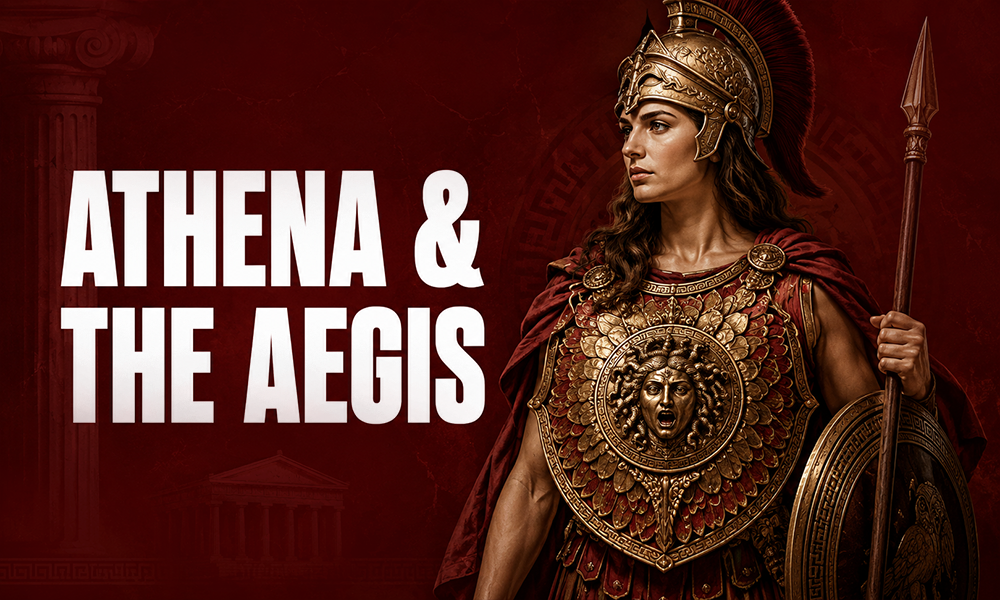
Athena became one of the most famous figures associated with the aegis.
In Greek artwork and mythology, Athena is often shown wearing or carrying the aegis as a symbol of wisdom, strategy, and protection.
The aegis was sometimes depicted with the Gorgoneion, the image of Medusa’s head, placed at its center.
This symbol represented a terrifying defensive power because Medusa’s gaze was believed to turn enemies into stone.
Why the Aegis Became a Symbol of Protection
The importance of the aegis was not only its physical protection.
It represented authority.
A person protected by the aegis of a powerful figure was considered safer because they carried the influence and strength of that protector.
This idea eventually moved from mythology into everyday language.
What Does “Under the Aegis of” Mean?
The phrase “under the aegis of” is one of the most common modern uses of the word.
It means operating under the protection, support, guidance, or sponsorship of a powerful person, institution, or organization.
When a project works under the aegis of a respected organization, that organization usually provides credibility, resources, oversight, or official backing.
For example:
“A medical research project was conducted under the aegis of a leading university.”
This means the university supported and supervised the project.
Why Is “Under the Aegis of” Used in Formal Writing?
The phrase appears frequently in professional, academic, diplomatic, and legal communication because it describes a clear relationship between a supporter and the entity receiving support.
It communicates more than simple help.
It suggests:
- Protection from a trusted authority.
- Official recognition.
- Institutional responsibility.
- Transfer of credibility.
A smaller organization may gain greater public confidence when operating under the aegis of an established institution.
Real-World Examples of “Under the Aegis of”
International Relations
A peacekeeping initiative may operate under the aegis of the United Nations Security Council.
This indicates that the organization provides official support, authority, and international recognition.
Academic Research
A scientific project may be created under the aegis of a university department.
The department provides institutional support, research standards, and professional credibility.
Public Policy
A national health program may operate under the aegis of a government ministry.
The ministry provides authority and administrative backing.
Modern Uses of Aegis in English
The modern aegis meaning extends far beyond mythology.
Today, the word appears in several important areas, including business, education, government, and technology.
Aegis in Business and Organizations

Companies often use aegis to describe leadership, protection, or support from a larger organization.
For example:
“A new initiative was launched under the aegis of the parent company.”
This suggests the parent company provides resources, reputation, and strategic direction.
The term is especially common when describing partnerships, subsidiaries, and organizational programs.
Aegis in Academic and Research Environments
Universities and research organizations frequently use the phrase because academic projects often require institutional support.
A laboratory, research group, or educational program operating under the aegis of an institution benefits from:
- Established reputation.
- Administrative support.
- Ethical oversight.
- Access to resources.
This usage closely reflects the original idea of a protective shield.
Aegis in Government and Diplomacy
Government organizations use aegis when describing programs supported by official authorities.
The phrase creates a sense of legitimacy and responsibility.
For example:
“A policy initiative was developed under the aegis of a national organization.”
This means the organization provides official guidance and authority.
Aegis in Defense and Technology
One of the most recognizable modern uses of the term is the Aegis Combat System.
Unlike the general word “aegis,” this is a specific defense technology system.
The name reflects the original meaning of a protective shield.
What Is the Aegis Combat System?
The Aegis Combat System is an advanced naval defense system developed by Lockheed Martin.
It uses powerful radar, computers, and missile systems to detect, track, and respond to threats.
The system includes technologies such as:
- AN/SPY-1 and AN/SPY-6 phased-array radars.
- Command and Decision systems.
- Mark 41 Vertical Launching System (VLS).
These components allow naval vessels to identify threats and coordinate defensive responses.
Aegis Combat System Statistics
According to the research data provided:
| Fact | Detail |
| Deployed vessels | More than 110 Aegis-equipped warships |
| Planned vessels | 71 additional ships planned or under construction |
| Operating navies | 7 major navies use the system |
| Land-based defense | 2 operational Aegis Ashore sites in Europe |
The seven major navies operating Aegis-equipped vessels include:
- United States
- Japan
- Spain
- Norway
- South Korea
- Australia
- Canada
Recent Aegis Technology Development
The Aegis system continues to evolve.
According to the research data, Lockheed Martin delivered the first Integrated Combat System software baseline (BL9.C3.0) to the U.S. Navy on May 28, 2026.
Later, during the Valiant Shield 2026 exercises on July 8, 2026, Lockheed Martin and the U.S. Navy demonstrated software-driven command-and-control integration using the virtualized Aegis framework.
Aegis Synonyms and Similar Words
Many people confuse aegis with words like protection, sponsorship, and auspices.
Although they are related, each word has a different meaning.
| Word | Meaning | Difference From Aegis |
| Aegis | Protection, authority, and sponsorship | Combines protection with institutional backing |
| Protection | Keeping someone safe | Focuses mainly on safety |
| Sponsorship | Financial or official support | Focuses on funding or promotion |
| Patronage | Support from a powerful individual | Often connected with financial or social influence |
| Auspices | Guidance or favorable support | More focused on coordination and approval |
| Support | General help or assistance | Less formal and less authoritative |
Aegis vs Auspices
These words are often confused.
Aegis suggests active protection and authority.
Auspices usually suggests supervision, favorable conditions, or coordination.
Example:
“The research was conducted under the aegis of the university.”
This suggests the university protected and supported the work.
“The conference was held under the auspices of the organization.”
This suggests the organization approved or coordinated the event.
Aegis vs Sponsorship
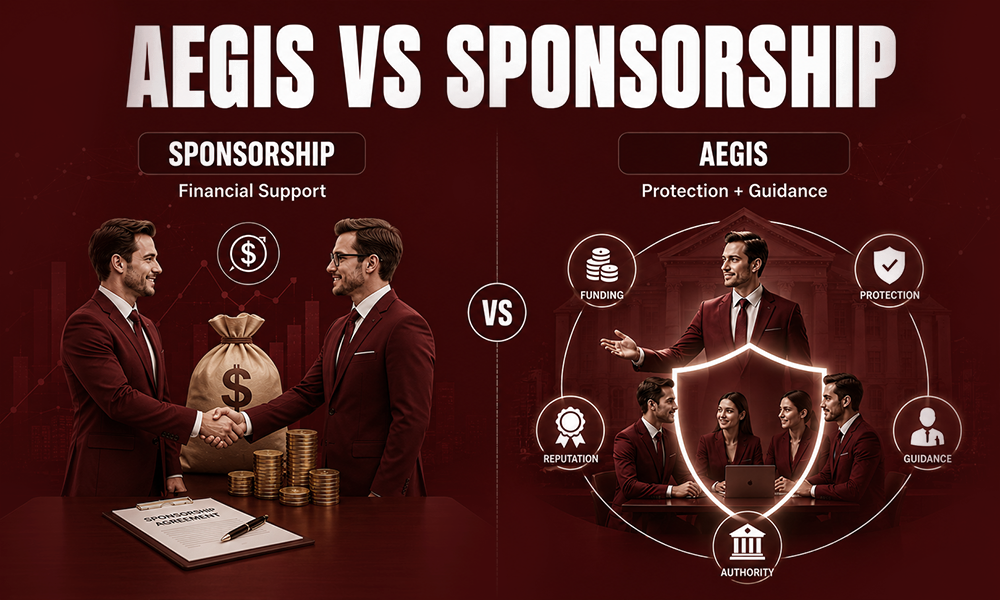
Sponsorship usually focuses on financial backing.
Aegis carries a broader meaning.
A project under someone’s aegis may receive:
- Funding.
- Protection.
- Reputation.
- Guidance.
- Institutional authority.
Common Mistakes When Using Aegis
Mistake 1: Thinking Aegis Only Means a Shield
The original meaning came from mythology, but modern English rarely uses aegis for an actual shield.
Today, it mostly represents symbolic protection or support.
Mistake 2: Using Aegis in Casual Conversations
Aegis is a formal word.
In everyday speech, people usually say:
- Support.
- Backing.
- Protection.
- Help.
Aegis works better in academic, professional, and official writing.
Mistake 3: Mispronouncing the Word
Because of its spelling, many people pronounce aegis incorrectly.
The standard pronunciation is:
EE-jis (/ˈiːdʒɪs/)
Practical Application:
How to Use Aegis Correctly
Understanding a word is different from using it naturally.
Here are practical steps for using aegis correctly.
Step 1: Identify the Relationship
Ask whether there is a clear authority providing support.
Good example:
“The research was completed under the aegis of the university.”
The university provides institutional support.
Step 2: Use It in Formal Contexts
Aegis works well in:
- Academic papers.
- Government documents.
- Business reports.
- Legal writing.
- Professional articles.
Avoid using it when a simple word like “help” communicates the idea better.
Step 3: Choose the Right Phrase
The most common structure is:
Under the aegis of + organization/person
Examples:
- Under the aegis of the United Nations.
- Under the aegis of a research institution.
- Under the aegis of a parent company.
Who Should Use the Word Aegis?
Suitable For:
- Students improving advanced vocabulary.
- Writers creating formal content.
- Researchers writing academic material.
- Professionals preparing reports.
- Organizations describing partnerships.
Who Should Avoid Using Aegis?
Avoid It When:
- Writing very simple content for beginners.
- Speaking casually with friends.
- A simpler word communicates the idea better.
Using advanced vocabulary does not automatically improve writing.
The best word is the one that makes your meaning clearer.
Conclusion
A word can survive for thousands of years when its meaning connects with something deeply human.
The aegis meaning began with a mythical shield carried by powerful Greek gods, but it evolved into a modern expression for protection, authority, and support.
The next time you see a project operating “under the aegis of” an organization, you will understand the deeper message behind those words: someone trusted is providing the shield.
From ancient mythology to modern institutions and defense technology, aegis remains a reminder that language often carries the stories of the past into the present.
Frequently Asked Questions About Aegis Meaning
What does aegis mean?
Aegis means protection, support, sponsorship, or guidance from a powerful person or organization. The word originally described a protective object connected with Zeus and Athena in Greek mythology. Today, it is mostly used to describe symbolic protection or official support.
What does “under the aegis of” mean?
“Under the aegis of” means operating with the protection, backing, or sponsorship of an established authority. It is commonly used for projects, organizations, and initiatives supported by universities, governments, or corporations. The phrase suggests both protection and credibility.
How do you pronounce aegis?
The standard pronunciation of aegis is EE-jis with the pronunciation /ˈiːdʒɪs/. Some speakers also use “AY-jis,” especially in certain American contexts. However, EE-jis remains the traditional and widely accepted pronunciation.
Where does the word aegis come from?
Aegis comes from the Ancient Greek word aigís, which referred to a protective goatskin object associated with Zeus and Athena. The word later entered Latin and English while keeping its connection with protection and authority. Over time, it developed a figurative meaning related to sponsorship and support.
Is aegis a formal word?
Yes, aegis is considered a formal and often academic word. It commonly appears in legal documents, research writing, diplomacy, and professional communication. In casual conversations, people usually replace it with simpler words like support or protection.
What is the difference between aegis and auspices?
Aegis focuses on protection, authority, and active support from a powerful source. Auspices usually refers to guidance, approval, or favorable conditions provided by an organization. Both words involve support, but aegis carries a stronger sense of protection.
Is aegis associated with Zeus or Athena?
Aegis is associated with both Zeus and Athena in Greek mythology. Zeus is often described as the original bearer of the aegis, while Athena became strongly connected with it through mythology and artwork. It represents divine protection and strategic power.
What does the Aegis Combat System do?
The Aegis Combat System is a naval defense technology developed by Lockheed Martin. It uses radar, computers, and missile systems to detect, track, and respond to threats. The system represents a modern technological interpretation of the protective idea behind the mythological aegis.