
Product-Led Growth is a SaaS strategy where the product itself does most of the heavy lifting, getting people in, converting them, keeping them around. Instead of forcing someone through a sales call just to understand what the software even does, a PLG company just lets people try it themselves.
The whole idea’s pretty simple, really: let the product speak for itself.
Someone finds a tool, creates an account, gets through a few setup steps, and within minutes they’re actually using the main feature. If it solves a real problem for them, they’ve got a reason to come back, bring in teammates, maybe eventually pay for the upgraded version.
Worth being clear here, PLG isn’t just a rebrand of “free trial.” A free trial can be part of it, sure, but the bigger idea’s making the entire journey easier through the product itself. Acquisition, activation, retention, expansion, all of it working together as one connected experience, not separate steps handled by separate teams.
Key Takeaways
- The product itself drives acquisition, activation, retention, and expansion, not a sales team pushing people through a funnel.
- A real PLG strategy starts with a genuine user problem and gives them a fast path to actually solving it.
- Free trials and freemium plans let people experience real value before they ever commit to paying.
- Simple onboarding, a genuinely useful experience, and low friction, that’s the whole game here.
- Track activation, retention, conversion, product-qualified leads, and expansion, signups alone don’t tell you much.
- Sales and customer success still matter, they just work off real usage data instead of cold calling blindly.
Why This Actually Works for SaaS
Traditional SaaS still leans hard on marketing and sales to push people through a funnel. That works fine, especially for complicated enterprise products, but it also creates friction, and friction loses people along the way.
Think about the actual path someone has to walk, fill out a form, wait for a sales rep to get back to them, schedule a demo, sit through a call or two, and only then finally get to actually try the thing. A lot of people just quietly drop off somewhere in that chain, they never even get to see if the product’s any good.
PLG skips most of that entirely. When people can just go explore the product themselves, they figure out fast whether it’s actually right for them. That closes the gap between “this looks interesting” and “okay, this is actually useful,” a lot faster than five sales calls ever could.
There’s another benefit too, one people tend to overlook. Real usage generates real data. A team can see exactly which features get used, where people get stuck, what usually happens right before someone decides to upgrade. That kind of signal ends up shaping product decisions, onboarding, marketing, even sales, all based on what people are actually doing, not what anyone’s assuming.
None of this means sales just disappears though. In a mature PLG company, sales and customer success actually get sharper, because now they’re working off real usage signals instead of cold-calling a list and hoping something sticks.
Step 1: Start With a Problem Worth Actually Solving
The first real step in PLG has nothing to do with pricing or onboarding flows.
Start with the problem the customer’s actually facing.
What are people trying to get done, and what makes that hard right now? The product needs to make that outcome easier, faster, cheaper, or just more convenient, one of those, ideally more.
Take a project management tool, for example. It shouldn’t open by bragging about task boards, dashboards, and notifications. It should just help a new user organize an actual project, fast, and let the features prove themselves along the way. The difference matters.
People do not usually fall in love with features. They value the result those features help them achieve.
Define the Core Value Moment
Every SaaS product should have an important action that shows users why the product is useful. This is often called an activation event or value moment.
For one product, it might be creating the first project. For another, it could be sending the first campaign, connecting a data source, inviting a teammate, or completing the first automation.
Find that moment and build the early user experience around reaching it quickly.
Step 2: Remove Friction From Signup
Once someone decides to try your product, do not make the signup process harder than necessary. Ask only for information you genuinely need. If possible, offer familiar sign-in options and avoid long forms. The goal is not to collect every possible customer detail before the user enters the product. The goal is to get the right person to the first useful experience.
This is especially important because every unnecessary step creates another opportunity for someone to leave. A practical PLG approach is to review the signup journey regularly and ask one simple question:
“Would a new user understand why they should complete this step?”
If the answer is no, simplify it.
Step 3: Build Onboarding That Actually Feels Useful
Good onboarding shouldn’t feel like homework, honestly nobody wants that. Instead of dumping a long list of features on someone right away, point them straight toward their first real win. Sensible defaults, quick examples, templates, sample data, anything that gets them there faster.
Take a design tool, for example, handing someone a ready-made template beats staring them down with a blank, intimidating canvas. A CRM’s the same idea, walk someone through importing contacts and setting up their first pipeline, don’t just drop them into an empty dashboard and wish them luck.
Good onboarding really just answers three things quickly: what can I actually do here, what should I try first, and why does any of this matter to me.
Cutting down time-to-value, that’s really the whole point behind most modern PLG strategies.
Step 4: Pick the Right Free Model
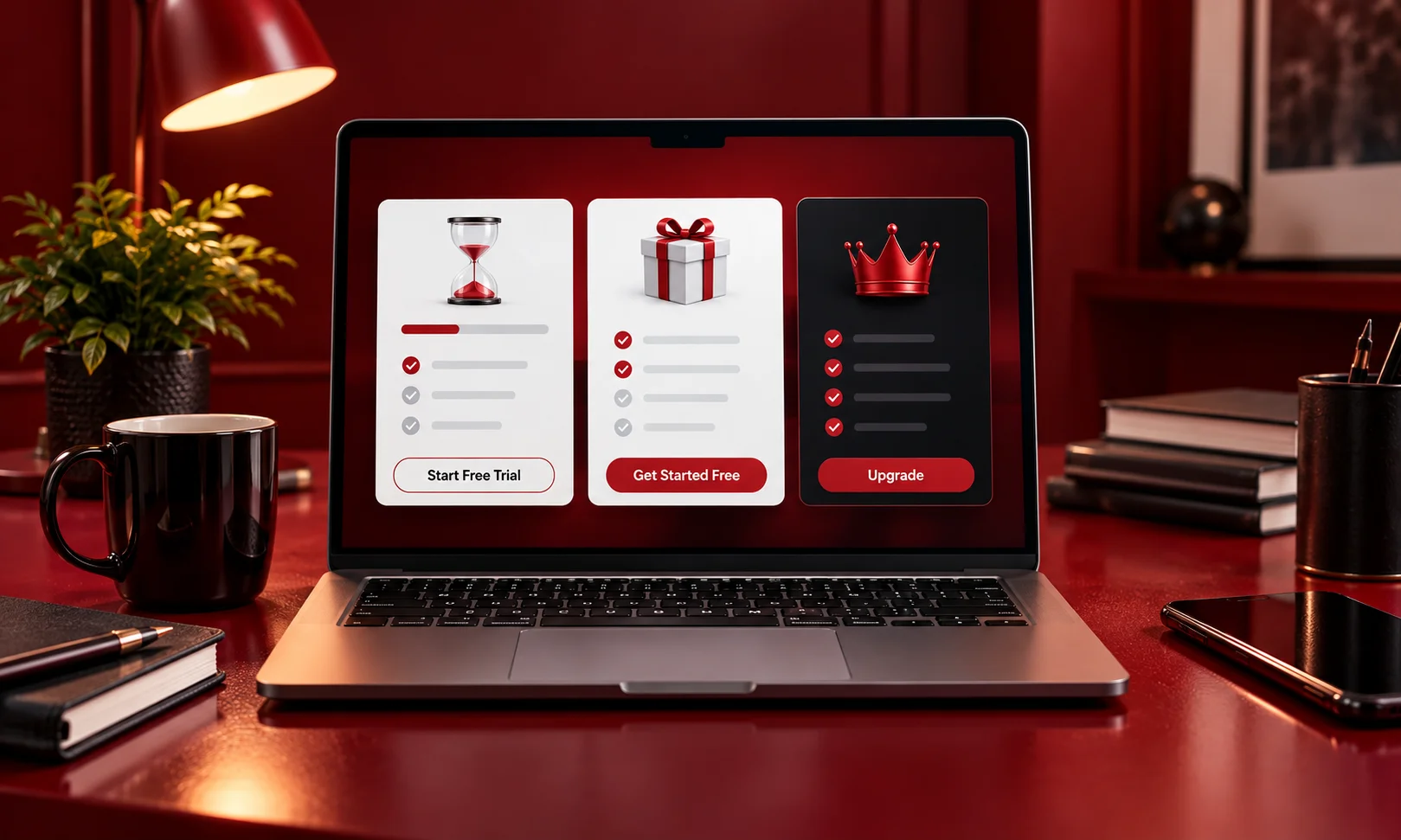
Most PLG companies run on either a free trial, a freemium plan, or some other self-serve setup. A trial gives people limited-time access, works well when the value’s obvious fairly quickly.
Freemium’s different, ongoing access to a basic version, with the advanced stuff locked behind a paywall. Tends to work well when one person can bring the product into their team, or when normal usage naturally pushes someone toward wanting more.
Neither one’s automatically the better choice. Depends entirely on how people experience value, how often they’d actually use the thing, and what would actually make them willing to pay for it.
Step 5: Build an Upgrade Path That Feels Natural
A pretty common mistake here, making the free version either too weak or way too generous. Too weak, and nobody sees real value, so why would they upgrade. Too generous, and people get everything they need forever, so again, why pay?
The better move’s tying pricing to increasing value as people go. Premium features might mean higher usage limits, more automation, collaboration tools, analytics, integrations, extra controls, whatever naturally makes sense as someone’s usage grows.
The upgrade should feel like the obvious next step, not some jarring interruption. Pricing page, in-product prompts, usage limits, all of that should make the path forward pretty obvious without anyone needing to think too hard about it.
Step 6: Turn Active Users Into Product-Qualified Leads
PLG changes how sales teams think too. Instead of treating every signup like an equal opportunity, look for the users actually showing real engagement, these are usually called Product-Qualified Leads, or PQLs.
A PQL might’ve finished setup, used a core feature repeatedly, invited teammates in, hit some usage milestone, whatever signals real buying intent for that specific product. The exact definition really needs to come from your own product data, not a generic template.
A solid PQL model combines the ideal customer profile with actual setup completion, a clear first moment of value, and a usage pattern that shows the product’s becoming part of someone’s routine. Gives sales a far better starting point than just cold-calling anyone who ever made an account.
Step 7: Build Retention Right Into the Product
Getting someone to sign up’s just the start. If people don’t come back, PLG stalls out no matter how good acquisition is. Worth studying what your actually successful customers keep doing, which features bring them back, what actions correlate with sticking around long-term, and where inactive users tend to just quietly disappear.
Then feed that back into the product itself. Helpful reminders, saved workflows, team collaboration, useful notifications, personalized suggestions, better feature discovery, all of it can support retention, but only when it genuinely helps the person. The goal was never to send more notifications. It’s giving people a real reason to actually come back.
Step 8: Measure What Actually Matters
A real PLG dashboard should tell the story of the customer journey, not just show a pile of numbers.
Worth tracking: signup rate, how many visitors actually become users. Activation rate, how many users reach that key value moment. Time-to-value, how long that actually takes. Retention, who’s still using it later. Free-to-paid conversion, how many free users become paying customers. PQL conversion, how often qualified users actually convert. Expansion revenue, how much comes from existing customers using more over time.
Don’t get too excited about a growing signup number if most of those users never actually activate. A smaller group of people who consistently get real value matters a lot more than a huge pile of inactive accounts sitting there doing nothing.
Product-Led Growth and Sales Can Work Together
PLG does not have to mean “sales versus product.” The strongest SaaS businesses can combine both. The product can attract users, help them discover value, and create buying signals. Sales teams can then step in when a customer has more complex needs, requires security reviews, wants enterprise support, or shows strong expansion potential.
This creates a more informed sales process because the conversation can begin with actual product behavior. The product opens the door. People help customers walk through it.
How SaaS Content Can Build Trust
For a topic like Product-Led Growth, trustworthy content should explain the strategy clearly without presenting every tactic as a guaranteed growth formula.
There is no universal activation rate, pricing model, or PLG funnel that works for every SaaS company. Product type, audience, market, pricing, sales complexity, and customer behavior all influence results.
Strong SaaS guidance should therefore focus on practical frameworks, explain why a tactic may work, and encourage teams to validate decisions with their own product data.
For BrandClickX, this people-first approach matters because useful content should help a reader make a better business decision rather than simply repeat popular SaaS terminology. Google specifically recommends content that demonstrates expertise, provides original value, and is created primarily to help people.
Conclusion
Product-Led Growth is not about removing humans from the SaaS buying process. It is about making the product good enough to demonstrate its value before a salesperson has to explain it.
The strongest PLG strategy starts with a real customer problem, gets users to value quickly, removes unnecessary friction, and gives them a clear reason to keep using the product. From there, product usage can guide upgrades, sales conversations, retention efforts, and expansion.
Frequently Asked Questions
Is PLG only for SaaS companies?
No, not exclusively. It can work across different digital products, but SaaS fits especially well since people can usually try the product online without any physical sales process getting in the way.
What’s actually the difference between PLG and a free trial?
A free trial’s just one pricing or acquisition mechanism. PLG’s the bigger go-to-market strategy, where the product itself drives acquisition, activation, retention, and expansion. A free trial can be part of that, but it’s not the whole thing.
What’s a PQL, exactly?
A Product-Qualified Lead is someone who’s shown real, meaningful product behavior, enough that it suggests they might be ready for a sales conversation or an upgrade. What counts as “meaningful” really depends on the product, it should come from actual customer behavior, not a guess.
How does a SaaS company actually get started with PLG?
Start small. Nail down the customer’s most important problem, define that first value moment clearly, simplify signup, fix onboarding, and check whether people are actually reaching activation. Once that foundation’s solid, then test pricing, expansion, and PQL-based sales on top of it.
What’s the single most important PLG metric?
There isn’t one that fits every business, honestly. Activation and retention tend to be strong starting points since they show whether people are getting real, ongoing value. Revenue metrics come after that, connecting actual usage back to real business growth.