AI Summary
This is a practical guide to the squat machine a category that actually includes several different pieces of gym equipment, each designed to help you squat safely without balancing a barbell on your back. It covers the four main types (the hack squat, the Smith machine, the belt squat, and the pendulum squat), what each one actually does, how to use them correctly, and why the fitness industry’s insistence that “real” squats only happen with a barbell is mostly nonsense. Written for anyone who has walked past the squat machines wondering what they do, or anyone who wants to squat heavy without the risk and complexity of a free-weight barbell.
The Short Version
Somewhere in every gym, there’s a machine that looks like a slanted sled with shoulder pads.
You’ve probably walked past it a hundred times.
That’s a squat machine. And it might be the single most underused piece of equipment in the whole gym.
This is the article that tells you what it does, how to use it, and why the people who look down on it are wrong.
Key Takeaways
- “Squat machine” isn’t one machine. It’s a category the hack squat, the Smith machine, the belt squat, and the pendulum squat all count.
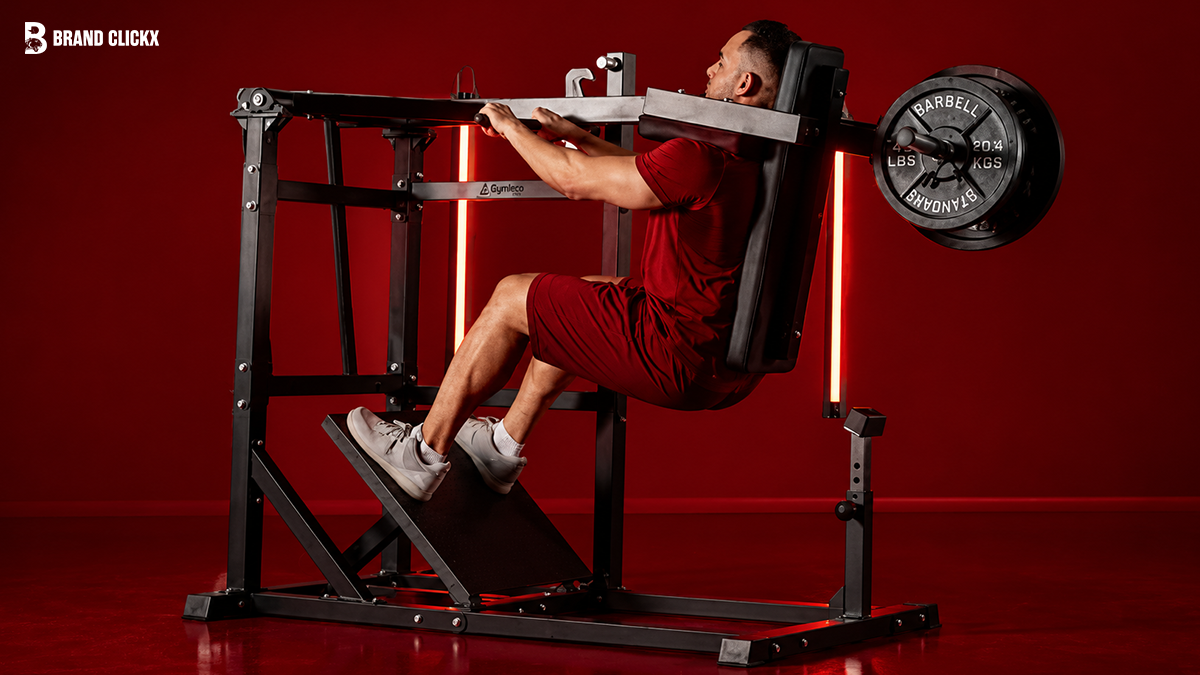
- The hack squat is the most common version. It’s a slanted sled that lets you squat heavy without balancing anything.
- Squat machines are not “cheating.” They train the same muscles as barbell squats, just with less balance required.
- They’re safer than free-weight squats for most people no risk of falling backward, no risk of being pinned under a bar.
- They let you go heavier faster because balance isn’t the limiting factor.
- Foot placement changes everything. Feet lower on the platform hits quads. Feet higher hits glutes and hamstrings.
- Beginners should start here before touching a barbell. Serious lifters keep coming back for the same reason.
What “Squat Machine” Actually Means
There isn’t one squat machine.
There are several. And the confusion happens because most gym-goers point at the biggest, most obvious one and call it “the” squat machine, when actually there are four common types each with its own strengths.
Here’s the honest version.
The Hack Squat
The one most people mean when they say “squat machine.”
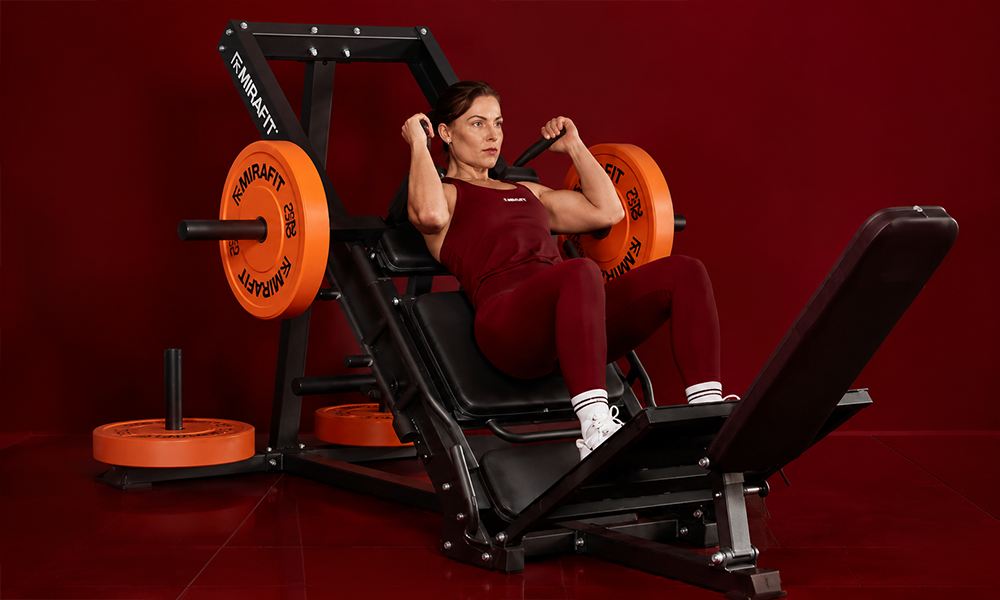
It looks like a slanted sled with shoulder pads at the top and a platform for your feet at the bottom. You step onto the platform, put your shoulders under the pads, unrack the sled by rotating small handles at the top, and squat down. The sled slides on rails at a fixed angle. You can’t fall over. You can’t drop anything on yourself.
That’s the whole appeal.
The Smith Machine
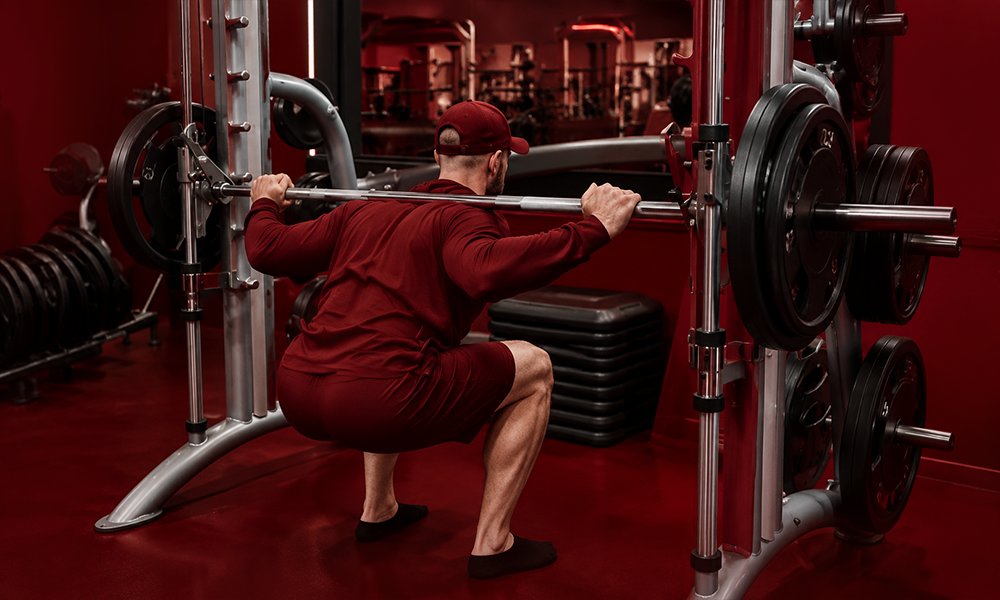
The barbell that’s fixed on rails.
Technically it’s not exclusively a squat machine — it does bench presses, shoulder presses, and rows too. But for legs, it’s where you squat when you want the feel of a barbell without the risk of falling over with 200 pounds on your back.
The Belt Squat
The newest addition to most gyms, and one of the best if you can find one.
A belt goes around your waist. The belt connects to weight hanging below you. You stand on a raised platform and squat down. The weight pulls straight down from your hips — not from your shoulders, not from your back.
Anyone with a bad back has been waiting their whole training life for this machine.
The Pendulum Squat
The rarest of the four. Mostly found in higher-end gyms.
It looks like a hack squat, but the sled moves on a curved arc instead of a straight rail. That curve changes the muscle emphasis and reduces knee stress compared to the standard hack squat.
If your gym has one, use it.
Why the Squat Machine Exists
Here’s the part nobody explains.
The barbell squat the “real” squat, according to the internet is a fantastic exercise. It’s also technically complex, requires years of practice, needs a spotter for heavy sets, and can seriously injure people who do it wrong.
The squat machine was invented to solve those problems.
Same muscles. Same movement. Different setup.
Your quads don’t know the difference between a barbell on your back and a sled on your shoulders. They just know they’re being asked to straighten your legs against resistance. That’s it. That’s the whole biological signal that builds muscle.
So when someone tells you the squat machine is “not a real squat,” what they usually mean is “I wasted years being intimidated by leg day and now I’m mad about it.”
Don’t listen to those people.
How to Actually Use the Hack Squat
The hack squat is the version you’ll use most often. So let’s walk through it.
Setup
Step onto the platform. Face the pads, not the sled.
Slide your shoulders under the shoulder pads. Adjust so the pads sit comfortably on your traps — not on your neck.
Place your feet on the platform in front of you, shoulder-width apart. Position them roughly in the middle of the platform to start.
Unrack
There are usually two small handles at the top of the sled — one on each side. Grab them. Rotate them outward (or inward, depending on the machine — most gyms have a sticker showing which way).
The sled is now free to move.
The Movement
Bend your knees. Lower yourself down slowly. Don’t just drop.
Go as deep as you can while keeping your lower back pressed against the pad. For most people, that’s until your thighs are roughly parallel to the platform.
Push through the platform. Come back up. Don’t lock your knees at the top — keep a slight bend.
That’s one rep.
Racking
When you’re done with the set, rotate the handles back to the locked position at the top. Step out.
Don’t leave the weight on for the next person. Wipe the pads.
Foot Placement: The Secret Nobody Tells You
Here’s the thing about the hack squat that most beginner guides miss.
Where you put your feet completely changes what you’re working.
Feet low on the platform, closer to your body: hits your quads hard. The front of your thigh. This is the classic quad-focused hack squat position.
Feet high on the platform, further from your body: hits your glutes and hamstrings. The back of your body. Some people prefer this for glute development.
Feet wide apart: more inner thigh and glute involvement.
Feet close together: more outer quad emphasis.
Play with all four positions. You’ll find what works for your body. The hack squat is one of the only machines where changing your foot position genuinely changes which muscles you’re training.
The Smith Machine Squat
The Smith machine deserves its own section because it’s controversial.
Some coaches love it. Some coaches hate it.
Here’s the honest breakdown.
Why People Love It
You can squat heavy without a spotter. The bar can’t tip over. If you fail a rep, you just rotate the bar into the safety hooks. Nobody dies. Nothing crashes to the floor.
For beginners, that safety net is priceless.
Why People Hate It
The bar moves in a fixed vertical path. Your body doesn’t move in a fixed vertical path when you squat. So the Smith machine forces your body to adapt to the machine, not the other way around.
This isn’t fatal. But it does mean you’re not training the exact same movement pattern as a free-weight squat.
The Compromise
Set your feet slightly in front of your body instead of directly under it. This tilts the movement so the Smith machine’s fixed bar path lines up more naturally with your body’s mechanics.
Do this and the Smith machine becomes a genuinely useful squat variation.
The Belt Squat: The Secret Weapon
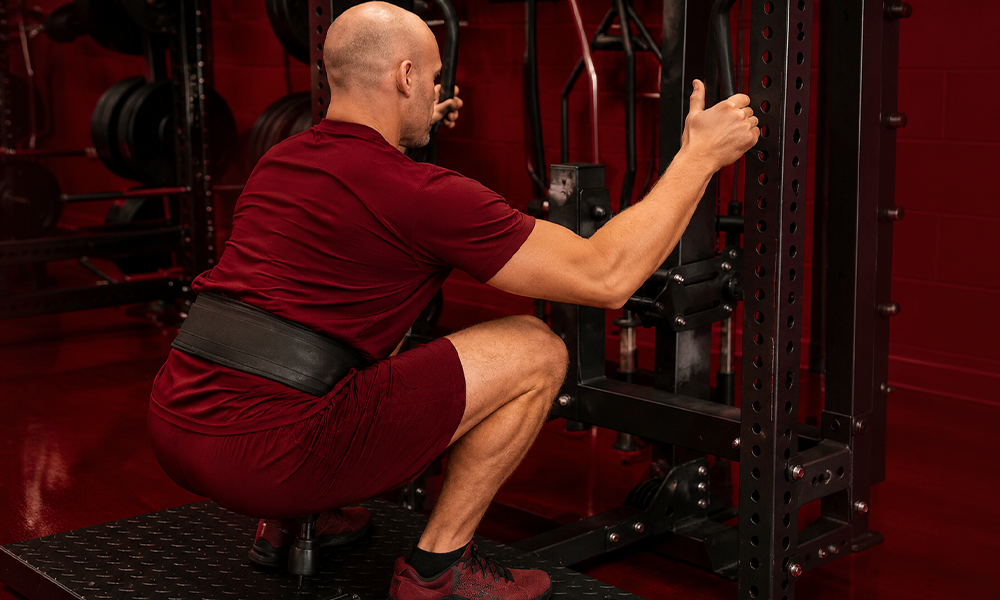
If your gym has a belt squat, and you have any back pain at all, use it.
A belt goes around your waist. The weight pulls straight down from your hips. Your spine carries zero load.
The muscles work the same as any other squat — quads, glutes, hamstrings. The only thing that changes is where the weight sits on your body.
For people with lower back issues, previous injuries, or anyone who just wants to squat heavy without paying for it the next day, the belt squat is life-changing.
Most gyms don’t have one. If yours does, you’re lucky. If yours doesn’t, ask them to buy one.
Why Beginners Should Start Here
The internet loves to tell beginners to squat with a barbell from day one.
The internet is wrong.
Barbell squats are a skill. Balancing a bar on your back, coordinating your hips and knees, keeping your spine neutral, and pushing through your heels while breathing correctly — all at the same time — takes years to master.
Meanwhile, your muscles just want to be worked.
The squat machine gives your muscles exactly what they want without asking you to master a skill you don’t have yet.
Six months on the hack squat will build more leg muscle than six months of bad barbell squats. Then, when you eventually try the barbell version, you’ll be much stronger, much more coordinated, and much less likely to hurt yourself.
Start on the machine. Graduate to the barbell when you’re ready. That’s the sensible path.
Why Advanced Lifters Come Back to It
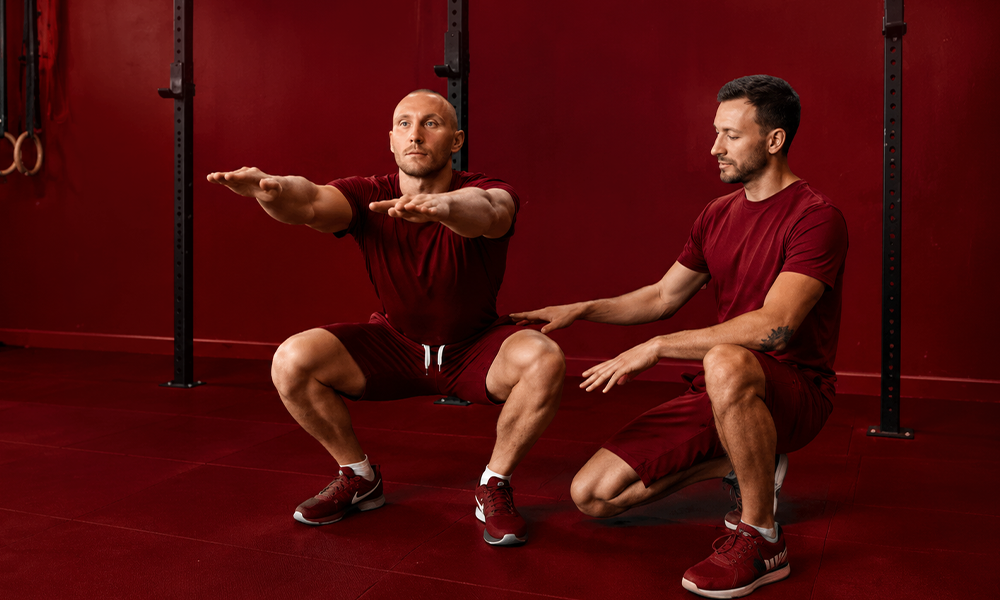
Here’s the funny thing about squat machines. The people who look down on them are usually intermediate lifters going through a phase.
The actual pros the bodybuilders, powerlifters, and strength coaches at the top of the sport all use squat machines regularly.
Why? Because when you’re training hard, you can’t always go all-out on barbell squats. The spine takes a beating. The nervous system fatigues. Recovery gets harder.
The squat machine lets serious athletes hit the same muscles at the same intensity without paying the same recovery cost.
That’s not “cheating.” That’s smart programming.
The Real Answer
The squat machine isn’t a beginner tool. It isn’t a replacement for barbell squats. It isn’t a shortcut.
It’s a different tool that trains the same muscles.
Sometimes it’s the better tool. Sometimes the barbell is. The people who master both build the strongest legs in the gym.
Now stop walking past the hack squat.
Go use it.
FAQs
Is the squat machine as good as a barbell squat?
For building muscle, yes. Squat machines train the same muscles as barbell squats. Barbell squats add coordination and stabilization benefits, but for pure muscle growth, machines are just as effective.
What’s the difference between the hack squat and the Smith machine?
The hack squat is a fixed sled on rails, with shoulder pads at the top and a platform for your feet. The Smith machine is a barbell that slides on vertical rails. Both let you squat safely, but they train slightly different movement patterns.
Is the squat machine bad for your knees?
Not when used correctly. The machine’s fixed path actually reduces knee stress compared to a free-weight squat where balance can throw off your form. Just don’t lock out at the top.
Should beginners use the squat machine or a barbell?
Start with the machine. Six months on the hack squat builds more leg muscle than six months of bad barbell squats and prepares you to eventually squat with a barbell much more effectively.
Where should I put my feet on a hack squat?
Feet low on the platform hits your quads more. Feet higher hits your glutes and hamstrings more. Feet wide hits inner thighs and glutes. Feet close hits outer quads. Play with all positions.