Launch by identifying one specific customer and an unmet need, then build a focused product and selling plan around that person. For U.S. founders, focus matters more than a large collection or polished visuals at the start. A clear customer profile can guide your design, production choices, price, and sales channel.
Your first offer should fit the time and money you can realistically commit. Start small, speak with likely buyers, and test their interest before ordering large quantities. This guide moves from early decisions to a first sale, then shows how to learn from customer behavior. A tech pack is a production blueprint that records a garment’s measurements, materials, and construction details so a factory can make it consistently.
A first release is most useful when it gives you clear evidence about what the target customer will buy. Keep that goal in view as you make each choice.
Key Takeaways
- Define a target customer and a need current products miss.
- Keep your first collection narrow and tied to one promise.
- Choose production that fits your cash and risk limits.
- Check U.S. labeling and safety rules before production.
- Use sales, returns, and customer comments to guide your next step.
Who Is Your Customer, and What Need Is Unmet?
A useful target customer is specific enough that you can describe what they wear, what they pay for, and what current options fail to provide. Build a profile that includes age, location, income, lifestyle, values, fit needs, shopping habits, and price sensitivity. Details beat guesswork when you decide what product to make.
Look for a gap in the market through product reviews, competitor ranges, and direct questions. The U.S. Small Business Administration explains how market research and competitive analysis can help you assess demand and make your offer distinct. A luxury clothing brand also needs a sharply defined buyer and a product-level reason for its price; a luxury label alone is not enough.
- Write a profile for one target customer.
- Compare competing product ranges, prices, and size options.
- Read reviews for repeated complaints about fit, fabric, price, or missing sizes.
- Compare search interest with Google Trends and review competitor ads in Meta Ad Library.
- Ask potential customers focused questions through a short survey or conversation.
Treat repeated requests from several customers as a stronger signal than a single viral post.
Reddit, TikTok, Instagram, and product reviews can reveal recurring requests that polished brand posts may miss. Record the exact problem people describe, such as sleeves that run short or a fabric that feels too warm. Then ask whether your planned product can solve it at a price your buyer accepts.
If you are learning how to start a luxury clothing brand, define the buyer’s taste and spending habits before choosing premium materials. A focused market position gives the price a clear purpose. Treat repeated requests from several customers as a stronger signal than a single viral post.
Which U.S. Business Structure Fits Your Launch?

An LLC is often the more protective starting point for an owner concerned about personal assets, while a sole proprietorship is the default when no other structure is registered. Your risk exposure and the work you can manage should shape the choice. A corporation can suit a business with more complex ownership or plans to raise investment.
A sole proprietor and an LLC owner face different legal and tax rules. An LLC generally protects an owner’s personal assets from business liabilities, though members count as self-employed and pay Social Security and Medicare self-employment taxes. A corporation has more formal duties and records, so it usually takes more administration.
| Structure | Personal-liability exposure | Administrative complexity | Practical fit |
|---|---|---|---|
| Sole proprietorship | Owner may be personally liable | Low | Small test with limited risk |
| LLC | Personal assets generally protected | Medium | Many first-time owners |
| Corporation | Shareholders generally have limited liability | High | More complex ownership or funding |
A sole proprietorship starts when someone conducts business without registering as another business type. Its simple setup can save time, but the owner can be personally liable for business debts and obligations. Review your state’s registration, tax, and permit rules before taking payments.
Federal law sets no minimum age for owning a business, but minors under 18 generally lack full capacity to enter binding contracts. Colorado, Illinois, Minnesota, and Oregon require LLC organizers to be at least 18. A parent or guardian and a qualified local professional may need to help handle agreements.
Starting a clothing brand as a teenager can work, but adult help may be needed for supplier, bank, or payment contracts. Check state rules before forming an LLC, and do not assume ownership gives a minor full authority to sign. The LLC liability protection does not replace tax or registration checks. Before a minor signs a supplier or payment contract, confirm who has legal authority to sign it in that state.
How Do You Protect a Brand Name and Identity?
Check a proposed name against existing marks before paying for a logo, domain, hang tags, or packaging. A clear identity starts with a name customers can recognize and you can use. It includes the name, logo, typography, colors, imagery, and voice.
Search relevant trademark records and check whether a useful domain is available. A name that looks open on social media may still conflict with a mark used for related goods. Before ordering labels or packaging, make sure the name fits the products you plan to sell.
Check the Name Before You Build Around It
Choose visual elements that support the customer and product, rather than copying a trend without a reason. A strong logo cannot fix a confusing offer or an unclear brand promise. The audience-focused branding approach in a separate brand strategy guide can help you keep the message consistent across channels.
Do not treat a domain search as a trademark search. Names can be similar in sound or meaning, and the goods or services tied to a mark affect the risk. A short list of possible names gives you room to adjust before your identity appears on physical products.
Understand the USPTO Application Fees
The USPTO base fee for a qualifying Section 1 or Section 44 trademark application is $350 per class. Trademark classes depend on the goods or services in the application. An intent-to-use filing under Section 1(b) can add later fees when you show use or request more time.
A Section 1(b) application later requires $150 per class for an amendment to allege use or statement of use. Each extension request costs $125 per class. Those charges apply only when the applicant uses that filing path and needs those steps.
Some application errors also add fees. Insufficient information incurs $100 per class. Free-form goods wording instead of the Trademark ID Manual incurs $200 per class, plus $200 for each affected class per additional 1,000-character group beyond the first 1,000 characters.
Using the Trademark ID Manual can avoid the free-form identification fee. The final total depends on the application’s classes and whether extra steps or corrections are needed. Review the goods identification and application fields carefully, because incomplete details and free-form wording can add class-based fees.
What Should the First Collection Include?
A first collection should make one recognizable promise through a small group of products that the same customer would plausibly buy together. Start with one hero product or a tightly related capsule. Every design needs a job, whether it solves a fit problem or supports the same use case.
Match silhouette, fabric, fit, color, and use to the customer’s needs. A relaxed cotton shirt and matching easy-fit pants may belong together; a formal coat may not. When you ask how to start a clothing line, the practical answer is to make fewer products with a clear connection.
Choose a Focused Assortment
Choose a product range you can describe in one plain sentence. If the promise is breathable workwear for warm days, choose fabric and cuts that support that use. A clear line helps a buyer understand why the pieces sit together.
Turn Each Design Into a Tech Pack
A tech pack records the product details a factory needs to make each garment the same way. An attractive sketch is not enough to show fit, measurements, or construction. Use the tech pack to turn design ideas into instructions a production team can follow.
- Front, back, and detail views of each design.
- A graded measurement chart across the size range.
- Fabric composition, weight, trims, and other material details.
- Color references, such as Pantone numbers, for consistent shades.
- Construction notes, including seams, stitching, and closures.
- Label and packaging requirements for the finished product.
Adobe Illustrator can help prepare artwork, while Pantone references can make color requests more precise. State the fabric composition and trim details rather than relying on a photo alone. Do not copy protected artwork from another brand; use original or properly licensed designs.
Keep the design notes clear enough that a maker can answer questions without guessing. A simple garment with complete instructions is easier to develop than a complex style with missing details. Remove any design that does not strengthen the collection’s central customer promise.
Which Production Model Fits Your Budget?
A founder with little inventory cash can begin with POD, while bulk manufacturing fits a founder who can fund stock and needs more control over fit and materials. Cash commitment is the main early difference. A small clothing business can run from home with an online store and outsourced fulfillment.
Printing and shipping orders yourself can require equipment, space, skills, and time. Outside production reduces those demands, though it can limit control or leave less room for custom details. Compare the models before deciding how much money to commit.
Compare How Each Model Uses Cash and Inventory
| Production model | Upfront inventory commitment | Customization or control | Best first-launch use |
|---|---|---|---|
| POD | Low, items made after orders | Limited to provider options | Test prints and designs |
| Dropshipping | Low, supplier holds stock | Often limited to listed products | Test demand without storing goods |
| Bulk manufacturing | High, stock paid for in advance | More choice in fit and materials | Custom products with proven interest |
| In-house production | Equipment and materials upfront | Direct control over making | Small runs with suitable skills |
Printify works with more than 140 printing facilities and routes a product to the selected provider, except when using Printify Choice. It integrates with Shopify, Etsy, Amazon, WooCommerce, eBay, and TikTok. These are product features, not a promise that every provider fits your needs.
Printify Premium costs $29 per month. Printify Choice uses U.S.-based providers for covered products and can include branding inserts, gift messages, and express shipping options. Compare the specific product, print provider, and customer experience before choosing a POD service.
Choose Funding That Matches the Risk
Savings keep ownership in your hands, but they limit how much you can spend without putting personal funds at risk. Crowdfunding can test buyer interest and bring in money before a larger run, though you must deliver what you promise. Loans require repayment, while investors may ask for shared ownership or a say in decisions.
Keep a written budget for samples, production, packaging, shipping, and returns. A home-based launch can lower retail-space costs, but it does not remove the work of managing orders. Match the production method to the amount you can afford to tie up in samples, inventory, and fulfillment.
How Do You Turn Designs Into Tested Samples?
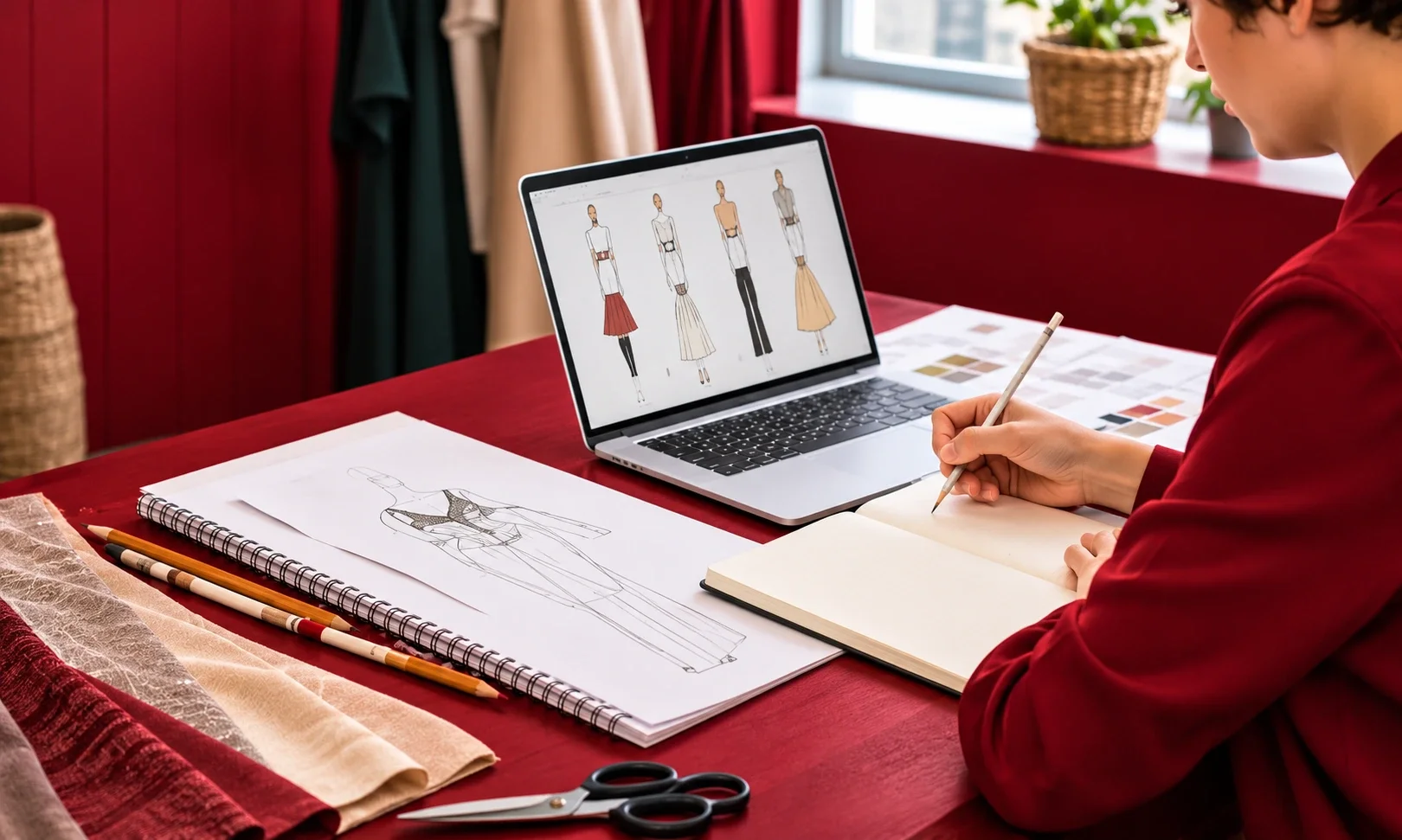
A physical sample can reveal fit and material problems that a sketch or screen mockup cannot. Try it on before you commit to a large order. A digital image cannot show fabric feel, stitching, garment fit, or true color accuracy.
Sample revisions are a normal part of product development. Traditional custom production from concept through sampling and bulk delivery typically takes about 4-8 months. Complexity, sourcing, revisions, and factory schedules can all change that timeline.
What to Check on a Physical Sample
Test the garment on people who match the intended size range, then record what needs to change. Be specific: name a measurement or visible defect instead of saying only that something feels wrong. Approve against the written specifications, not just the sketch.
- Fit and measurements across the intended size range.
- Fabric weight, feel, stretch, and opacity.
- Seam quality, loose threads, and construction consistency.
- Print or embroidery placement and color accuracy.
- How the garment looks and feels after washing.
How to Test Demand Before a Large Run
Show sample photos to likely buyers and ask focused questions about fit, color, and use. Invite a few people to try on the sample and share their size and comfort notes. Those responses can help you revise the product before you pay for a bulk run.
A preorder can test interest if you explain that the item is not ready to ship and state the expected production and shipping timing. Do not present a preorder as an in-stock purchase. Clear expectations protect trust while you learn whether buyers will commit.
Set aside time for more than one sample round if the first version misses key measurements or material needs. Keep each revision tied to a written note, so you can see whether the change worked. Approve a sample only after the garment matches the written specifications and the intended customer can wear it comfortably.
How Do You Choose a Clothing Manufacturer?
The right manufacturer is the one whose capabilities, order requirements, communication, and quality process fit the product and launch stage. Lowest unit price is not enough to make a factory the right choice. A cut-and-sew factory develops a garment from fabric, while a blank supplier offers existing products for printing or private labeling.
Ask for quotes using the same product details and quantity assumptions. Compare makers with experience in your garment type, not just a low price for a different kind of product. Early clarity can prevent delays and costly changes after you pay.
Shortlist Factories for Your Product Type
Check whether the manufacturer has made similar styles, fabrics, and size ranges. Review communication quality, product examples, references, and the way the team answers questions. If you plan to sell a custom jacket, a supplier focused only on blank T-shirts may not suit the work.
ISO 9001 is a quality-management system standard, not a guarantee of garment fit or construction. SGS and Intertek are examples of third-party inspection and testing organizations. An independent inspection can add another check, but it does not replace clear product requirements.
Compare Quotes and Production Terms
Ask each factory for the same information so you can compare the terms fairly. Keep the details in writing, including what happens if the finished goods do not match the approved sample.
- MOQ by style and color, plus access to the needed fabric.
- Sample charge, revision terms, and production lead time.
- Branding options for labels, trims, and packaging.
- Deposit schedule and balance payment timing.
- Quality-control steps and the process for handling defects.
Factory communication is part of the production process. A vague answer about measurements or defects can create trouble once materials are cut. Ask who will review the order and how the factory will record any changes.
Use physical samples and references to judge whether the supplier can meet your product needs. A certificate alone cannot prove that a specific garment will fit or hold up. Get the MOQ, delivery date, payment schedule, and defect remedy in writing before paying a production deposit.
How Should You Price Each Garment?
Start the retail price calculation with the full cost of getting one saleable garment to a customer, not just the factory’s unit quote. Landed unit cost includes the product and costs tied to bringing it into sellable stock. Your retail price must cover selling costs as well as the garment itself.
Include fabric, trims, manufacturing, packaging, and a share of sample costs. Add order-level shipping and fulfillment, returns, discounts, marketing, and platform fees when they apply. A wholesale apparel margin of 30%-50% and a direct-to-consumer margin of 55%-65% are reference ranges, not guarantees.
| Cost group | Examples | Pricing effect |
|---|---|---|
| Product and packaging | Fabric, trims, samples, manufacturing, packaging | Raises the unit cost before sale |
| Order shipping and fulfillment | Postage, pick-and-pack, returns | Changes the cost of each completed order |
| Fixed or selling costs | Marketing, platform fees, discounts | Must be covered across sales |
A price that covers cost still needs to make sense to your target customer. Compare it with the value buyers see and the prices of similar products. The SBA break-even guide explains how fixed costs, variable costs, and selling price affect the number of units needed to cover costs.
Estimate what remains after each order, not just what the garment costs to make. Recalculate the margin after shipping, discounts, returns, and marketing rather than approving a price from the production cost alone.
What Must a U.S. Clothing Label Include?
A U.S. textile label needs fiber content, country of origin, and the manufacturer’s identity. All three details matter even on a simple garment. Put the fibers in descending order by weight, and generally list fibers below 5% as “other fibers.”
Country-of-origin wording must appear in English. “Made in the U.S.A.” for textile goods is limited to products made in the United States with materials that also come from the United States. The claim needs both U.S. production and U.S. materials.
The manufacturer’s identity can be the company name or an FTC-issued registered identification number. Federal textile-labeling law does not require a clothing size label, though size information can still help customers choose. Keep the label conspicuous and clearly legible.
Attach the label so it stays with the garment until delivery to the consumer. A label that falls off before delivery does not serve the same purpose as one that remains attached. Check the final label on the actual garment for legibility and attachment before authorizing the production run.
What Extra Rules Apply to Children’s Clothing?
Children’s clothing needs more than an ordinary textile label because product-safety testing and traceability also apply. Age and intended use matter when deciding which rules cover a garment. Children’s apparel must meet applicable requirements for lead, phthalates, flammability, and children’s sleepwear.
Each garment item requires third-party testing by a CPSC-accepted testing company and a Children’s Product Certificate. Children’s clothing also follows textile fiber, wool, fur where applicable, care-labeling, and country-of-origin rules. Plan testing and certificates for each garment item, not just the collection as a whole.
Test and Certify Each Garment
Identify the garment’s age range and intended use before settling the test plan. Sleepwear has specific rules, so do not treat pajamas like ordinary daywear. Keep the test reports and certificate tied to the item they cover.
The CPSC’s children’s product requirements include third-party testing and certification. CPSC eFiling for children’s clothing is required starting July 8, 2026. Build that filing step into your import process if your products fall within the rule.
Add Tracking and Label Information
A tracking label must be attached to both the clothing item and its packaging. It must include a batch number so the product can be traced to its production group. Confirm the placement during product development rather than adding it after packaging is printed.
Check Amazon Drawstring Requirements
Amazon prohibits covered upper outerwear in sizes 2T-12 with hood or neck drawstrings when the garment is generally meant to be worn over other clothing. Waist or bottom drawstrings in sizes 2T-16 may extend no more than 3 inches outside the channel when fully expanded.
Free ends on those waist or bottom drawstrings cannot have toggles, knots, or attachments. A continuous string must be bar-tacked. Amazon also requires compliance with ASTM F1816-18, CPSIA 101, 16 CFR 1610, and CPSA Section 14(a)(5), plus accepted-lab test reports and a Children’s Product Certificate.
- Check whether children’s sleepwear rules apply.
- Confirm fiber, care, and origin labeling.
- Place a batch-number tracking label on the garment and packaging.
- Arrange accepted-lab testing and a Children’s Product Certificate.
- Review drawstring and other rules for each sales channel.
Children’s product rules can affect design, labeling, testing, and sales channels at once. A detail that looks small, such as a hood cord, may change whether a style can be listed. Confirm the garment’s exact age range, intended use, drawstring design, and sales channel before approving children’s production.
How to Launch a Fashion Brand With a Defined Customer Online: Which Sales Channel Comes First?

Start with the channel your target customer already uses and that you can operate consistently, then add other channels when fulfillment is reliable. One well-run channel is better than several neglected storefronts. Your main choice should match buyer habits and your capacity to handle orders.
Compare brand control, discovery, and daily work before choosing a platform. A branded store gives you more control over presentation, while marketplaces may bring shoppers who are already browsing. Social commerce can make discovery easier but still needs a clear order process.
Choose a Primary Storefront
| Channel | Customer discovery | Brand presentation control | Operational consideration |
|---|---|---|---|
| Shopify store | Mostly your own marketing | High | You manage setup and traffic |
| Etsy | Marketplace browsing | Medium | Fit the product to Etsy buyers |
| Amazon | Marketplace search | Low to medium | Meet marketplace listing rules |
| Social commerce | Social feeds and discovery | Medium | Keep content and order handling active |
Shopify Basic costs $39 per month with monthly billing or $29 per month with yearly billing in 2026. Its standard online card rate through Shopify Payments is 2.9% plus 30 cents per transaction. Basic charges a 2% third-party transaction fee when you use another payment provider.
For a branded store, the retail website checklist can help you plan navigation and mobile use. A separate Shopify store setup guide covers key storefront features and testing.
Make Product Pages Answer Buyer Questions
Use clear photos that show the garment from several angles and on a person, when possible. Write descriptions that explain the fit, fabric, care, and intended use. Give practical size guidance so shoppers can choose without guessing.
State delivery information and make the return policy easy to find. Test the checkout on a phone, since a hard-to-use mobile page can interrupt a sale. Check the full checkout cost using the intended payment provider before setting the final retail price.
How Will You Build Demand Before Launch?
A prelaunch plan works best when every post gives the intended customer a reason to notice, trust, or remember the product. Plan with a purpose rather than posting at random. Use product details to answer concerns and show why the garment belongs in the buyer’s closet.
Choose content that reflects the product you can actually deliver. Instagram, TikTok, Pinterest, and email are useful options, but you do not need every channel. A website planning guide can help you keep your online presence clear as you prepare to sell.
Plan Content Around the Product
Build a mix that covers fit, fabric, styling, and how the product is made. Campaign images can catch the eye, while close-up product photos show seams, texture, and details. Try-on clips can answer questions about movement and fit.
Give each piece a role: discovery, trust, or purchase interest. Behind-the-scenes posts can show the work behind a garment, and founder-led messages can explain why you chose the design. Keep the message tied to a real product detail instead of relying on vague claims.
Build a Direct Audience and Earn Trust
Email signup gives interested buyers a direct way to hear about the launch. Tell them what updates they will receive and send useful news, such as a launch date or a new fit video. This list can reach people without relying only on social feeds.
Influencers can help introduce a product to an audience, but paid or gifted promotions need clear disclosure of the connection. The FTC’s endorsement guidance explains how material ties should be disclosed. Review each influencer brief for a clear disclosure before any paid or gifted promotion goes live.
How Will You Fulfill Orders Reliably?
A reliable fulfillment plan tells the customer when an order will ship and gives the founder a clear process for packing, tracking, and exceptions. Clear timing builds trust before the parcel leaves your hands. Map each order from checkout through delivery and support.
Confirm the order and inventory, pack the garment, hand it to a carrier, and send tracking details. USPS, UPS, and FedEx are common U.S. parcel carriers. Set a routine for returns, damaged packages, and customer questions so no order gets lost in a busy day.
The FTC shipment rule requires shipment by the time stated to buyers, or within 30 days when no time is stated. If a delay occurs, contact customers and offer the legally required options. Keep the order record and customer update together, so your team can answer questions with the same facts.
Leave enough room for production delays and carrier handoffs when setting a shipping promise. A date that works only when every step goes perfectly is not a reliable date. Do not advertise a delivery date that production and carrier handoffs cannot realistically support.
How Should You Use Early Customer Feedback?
The first useful post-launch question is not whether the brand feels successful, but which customer behaviors show where the product or process is working. Look for patterns in orders and comments. Analytics show what shoppers do, while direct conversations can explain why they did it.
Shopify Analytics and Google Analytics 4 can help track store behavior. Reviews, return reasons, customer questions, and repeat purchases each offer a different view. A repeated issue deserves more weight than a one-off preference.
Track Useful Signals
- Conversion by product page.
- Questions about sizes, fit, and garment measurements.
- Returns grouped by reason.
- Review themes and repeat purchases.
- Social content that leads to site visits.
Compare these signals over time rather than reacting to one busy day. A spike in page visits may show interest, but orders and repeat purchases tell you more about buying behavior. Note which product page or content item led to the visit.
Turn Feedback Into Product Decisions
If several buyers report tight shoulders, compare the complaint with your fit notes and size guidance. You may need a garment change, clearer sizing details, or better service before shipping. A single request for an unusual color may be a personal preference, not a broad demand.
Ask customers to describe the problem in plain terms, then connect it to a possible fix. A poor review about fabric may point to a product issue, while a question about care may call for clearer instructions. Record the issue, how often it appears, and the change you will test before making a broad redesign.
When Is It Time to Expand the Line?
Add another style only when the first product has shown repeatable demand and the business can fund its next production cycle. Evidence should lead growth, not boredom with a first product. Check repeat sales, contribution margin, consistent production, and cash for replenishment.
Deepening a proven category, such as adding another fit to a popular shirt, carries a different risk from adding unrelated styles. A new size or color adds a product variant; a distinct style adds another SKU. More sizes and colors mean more stock choices and more work to track inventory.
Do not expand just because one launch day went well. Look for sales that continue and enough margin to cover the next order. A product that sells but leaves too little cash for replenishment can slow the business.
Keep expansion tied to repeat demand, sound margins, reliable production, and cash for the next run.
Physical sales can add another way to meet customers, but they bring location costs and daily duties. Shopify POS Pro costs $89 per month per location in 2026. Before opening a physical location, include the per-location POS subscription in the operating budget.
Conclusion
A focused launch gives a new label a clearer chance to earn trust and learn from real buyers. A narrow product range can serve a specific customer better than a broad collection built on guesswork. Keep growth tied to what buyers purchase and what the business can afford to make.
Your first product does not need to answer every market need. It needs to solve one real problem well enough that customers choose it, wear it, and tell you what should change. Write a one-sentence profile of the customer you want to serve and use it to assess your first product idea this week.