Build the program around a clearly defined high-value segment, a shared customer profile, and useful outreach from trained associates. Customer lifetime value (CLV) is the total revenue a business expects from a customer over the course of the relationship. A practical approach combines these pieces to support personalized service, not simply more promotional messages.
For retail leaders, the goal is to connect retail loyalty with what shoppers experience across in-store shopping and digital discovery. Your associates need enough context to make a helpful recommendation, while customers need a clear reason to keep engaging with your brand. A thoughtful program can support repeat purchases by making each interaction feel relevant to the person, not just the sale.
A strong program earns the right to follow up by making each interaction relevant to the shopper. Start with a useful service standard and give associates clear guidance they can use in real conversations.
Key Takeaways
- Choose a priority segment using customer behavior and expressed interests.
- Build customer profiles around relevant information and a clear purpose.
- Help associates use customer context to offer personal service.
- Make digital follow-up specific, timely, and easy to decline.
- Measure customer responses and lasting purchase behavior.
What Does Clienteling Add Beyond CRM and Customer Service?
CRM keeps customer interactions organized, while clienteling helps an associate use relevant details in a personal conversation. The difference is action: clienteling turns useful context into one-to-one support, while customer service commonly responds to an immediate question or issue.
CRM is a shared record, clienteling is an associate-led relationship practice, and customer service handles a current need. These approaches can work together, but they serve different moments in the customer relationship.
| Approach | Typical trigger | Primary focus | Main user |
|---|---|---|---|
| CRM | A purchase or service interaction | Organizing customer records | Retail teams |
| Customer service | A question or issue | Resolving an immediate need | Service staff |
| Clienteling | A relevant customer need or opportunity | Personal, ongoing relationships | Store associates |
In practice, CRM may hold a record of a past purchase, a return, or a customer’s contact with the business. An associate can use a relevant detail from that record to shape a conversation, rather than repeat questions the shopper has already answered. The customer still controls whether they want to continue the conversation.
Use clienteling to continue a relationship, not to relabel every customer-service interaction.
Clienteling interactions can happen with associates or stylists in stores, by phone, email, app, or text. NewStore’s description of clienteling channels reflects this mix of in-person and remote contact. A service request can also lead to a longer relationship, but solving the immediate issue remains the first task.
Keep the handoff clear when one interaction shifts into another. If a shopper asks about a delayed order, resolve the delivery question before offering a product suggestion. That distinction protects the trust that makes later sales conversations welcome. Use clienteling to continue a relationship, not to relabel every customer-service interaction.
Which High-Value Customers Should Your Team Prioritize?

Start with shoppers whose purchase patterns and expressed interests give associates a genuine reason to stay in touch. Look for a relationship that can grow over time, rather than ranking customers by one large transaction.
Use purchase frequency, recency, category interest, and relationship potential together. These signals can help your team decide which customer profiles call for proactive attention and which need a different kind of support.
Purchase frequency shows whether someone returns, while recency helps you see whether the relationship is active. Category interest adds context, such as a shopper who regularly explores running shoes or fine jewelry. A high-value tier based on customer lifetime value should reflect expected value over time, not just one unusually large sale.
- Repeat purchase behavior across relevant product categories.
- Category-specific interest shown through questions or purchases.
- Stated preferences that can guide future recommendations.
- Likely need for follow-up after an interaction or purchase.
Use these signals to make a practical list, then review whether the chosen group receives useful attention. A shopper may have high potential even without frequent purchases, especially when they have shared a clear interest or asked for help with a future need.
Millennials and Gen Z were projected to account for roughly 45% of the luxury retail market by the end of 2025. The 45% luxury market projection is a reason to consider how younger shoppers engage, not a reason to treat age as a measure of customer value.
Some younger luxury shoppers may begin with digital discovery before visiting a store, while others may prefer in-person advice. Your team can learn from those choices through actual interactions and stated interests. A loyalty program built around behavior can also help your team consider which shoppers’ future actions may still change.
Keep the segment criteria tied to observed behavior and stated interests rather than assumptions about age or income. A short, clear set of signals gives associates a fairer basis for deciding where personal attention may help.
What Customer Data Should You Collect and Protect?
Collect only the details that help an associate serve a shopper better, and make the purpose clear. Useful customer data can include purchase history, product preferences, sizes or fit where relevant, communication preferences, and brief interaction notes.
Gather information for a clear purpose, handle it in line with consent and applicable rules, and keep it only as long as needed. Luxury clienteling can use preferences, purchase history, and lifestyle information to anticipate needs, but each detail should have a practical reason.
Keep interaction notes focused on what will help with service, such as a requested appointment or a preferred fit. Avoid personal details that do not support the customer’s experience. A profile should make the next conversation more useful, not collect information simply because a system has a field for it.
- Explain why you collect each type of information.
- Collect only details that support relevant service.
- Honor applicable consumer rights and requests.
- Set a retention rule for stored information.
As of January 1, 2026, comprehensive consumer privacy laws were in effect in 20 U.S. states. The 20-state privacy law count reflects a patchwork: as of 2026, the U.S. had no single comprehensive federal data privacy law, while state and sector-specific federal requirements applied.
California law has specific rules for covered businesses and consumers. Under the CCPA, as amended by the CPRA, covered consumers can know about, access, correct, and delete personal information. They can also opt out of its collection or sale. The California Attorney General’s CCPA guidance explains these rights and how consumers can submit requests.
The CPRA limits retention to what is necessary and proportionate to the purpose for which information was collected. That standard gives your team a reason to set a retention schedule, rather than keeping every profile forever. Make the schedule fit the purpose and the rules that apply to your business.
Give customers a clear way to exercise applicable privacy rights and keep access to personal information limited to appropriate staff. A profile that only the right team members can view is easier to manage and less likely to be used out of context.
How to Build a Clienteling Strategy for High-Value Customers Step by Step
Begin by choosing one service outcome your team can recognize in a real customer interaction. Start with the customer experience, then decide how associates and clienteling software can support that outcome.
A focused goal gives your business a clear way to test whether the strategy helps customers. For example, you might aim to make post-purchase support more useful or help shoppers find products that match their stated needs.
Set an objective and define the service standard
Describe the service you want an associate to provide, not just the sales result you hope to see. A standard might ask associates to learn what the shopper needs before suggesting an item. It should also make clear when not to follow up.
Write down what a useful interaction looks like in your stores. If the goal is better product guidance, name the details an associate should learn and the kind of help they can offer. A simple standard is easier to coach than a broad request to “personalize” every conversation.
Connect the customer view across channels
Map where customer records live, including your POS, online store, and customer service systems. Then decide how permitted store, online, and service interactions can appear in a usable view for associates.
Look for gaps that force shoppers to repeat basic details. An associate who can see a recent online order may be better prepared to help with a related in-store question. Keep the view focused on information that supports the service goal, rather than displaying every record by default.
A shared view also helps teams keep the experience steady across channels. Useful personal follow-up works best when it responds to what a customer has already done or asked about.
Train the team and start with a pilot
Train associates in product knowledge, active listening, and using mobile point-of-sale devices. Give them practice with realistic situations, such as helping a shopper choose between two fits or answering a question after an online order.
Test the workflow in a limited pilot before expanding it across the business. Ask staff what slows them down and whether the guidance feels natural. Gather customer feedback through normal interactions, then adjust the steps that cause confusion or unwanted contact.
- Set the service goal.
- Map customer-data touchpoints.
- Prepare approved outreach guidance.
- Train associates and run a pilot.
- Review feedback and refine the process.
Keep the pilot small enough for managers to observe how the work fits into a normal shift. A process that looks tidy on paper can still feel awkward when a store is busy or a customer needs quick help.
Expand only after associates can use the process confidently without making the experience feel scripted. Give the team room to speak in its own voice while meeting the service standard.
How Can Associates Personalize Each Customer Interaction?

A helpful recommendation starts with a detail the shopper has already shared or demonstrated. Use that context with care, then ask whether the suggestion fits instead of assuming you know what the customer wants.
A personal interaction feels attentive when it connects a known preference to a useful next step. The best recommendation can be a product, a service, or a chance to learn more before deciding.
Make in-person recommendations feel attentive
If a shopper has asked about lightweight layers, show options that match that interest and explain the differences. If they have shared a preferred size or fit, use it to make the search easier. Let the customer guide how far the conversation goes.
Customization can make the choice feel personal without requiring an associate to guess. Burberry Bespoke lets shoppers choose details such as fabric, lining, buttons, and embroidery. Cartier lets shoppers add custom engravings to jewelry. These options work best when you explain what can change and let the customer choose.
Luxury shoppers also use digital channels to explore products before they visit. Nearly half of luxury shoppers aged 18-34 use social platforms to research high-end purchases. Clear, tailored communication can help keep a brand’s tone steady across channels.
Choose digital outreach that adds value
Digital outreach can bring an in-store style of service to a customer who is not nearby. Gucci Live offers personalized video appointments with real advisors, close-up product views, and interactive conversation. An associate can answer questions while showing details that may not come through in a product photo.
Other brand examples show different ways to use customer context. Vuori’s “Personalized Picks for You” recommends products based on shopper behavior. Alo uses email personalization to re-engage shoppers who abandon carts, and it uses purchase history and stated preferences in personalized marketing and targeted advertising.
Tools can also help customers make informed choices. Estée Lauder’s Virtual Foundation Tool uses a phone camera to help identify a Double Wear foundation shade. Social research is one possible discovery behavior, though it does not give a retailer permission to contact someone on every platform.
Make each outreach specific, timely, and easy to decline. A cart reminder may suit a recent shopping action, while a product-care tip may be more useful after a purchase. Personal email follow-up should respond to the customer’s interest, not repeat the same message to everyone.
Keep the message short enough to understand on a phone, and make the next step clear. Paid ads can also respond to browsing or cart activity, but an ad is different from an associate’s personal conversation. Relevant cart follow-up should match what the shopper viewed and avoid making a routine search feel like unwanted attention.
Before sending a message, make sure it offers a clear benefit and fits the customer’s chosen channel. A shopper who prefers email should not need to respond to a text to get help.
What Should Clienteling Software Make Easier?
Choose software by asking whether an associate can find the right customer and product information during a live interaction. Useful tools reduce searching, so the associate can focus on the person in front of them.
Clienteling software should bring customer context and product details into a clear, usable view. It should support a conversation, not send irrelevant messages in place of an associate’s judgment.
Give associates a useful customer and product view
Look for a customer profile that shows relevant information and a cross-channel history of customer interactions. Associates also need clear product details and real-time inventory, including available sizes and colors.
NewStore’s clienteling technology can show associates customer profiles and brand interactions across online and offline touchpoints. Its tools can also show real-time availability for products, sizes, and colors. The system is designed to integrate with a mobile POS system, which can help associates work from the sales floor.
| Capability | Associate need | System connection | Problem it prevents |
|---|---|---|---|
| Customer profile | Relevant preferences and history | CRM records | Repeated questions |
| Product and inventory lookup | Product details, sizes, and colors | Product catalog and inventory | Outdated availability |
| Messaging and follow-up tasks | Approved messages and reminders | Email, text, or app tools | Missed follow-up |
| CRM/POS integration | Customer and transaction context | CRM and POS systems | Separate work records |
Check integration, usability, and responsible access
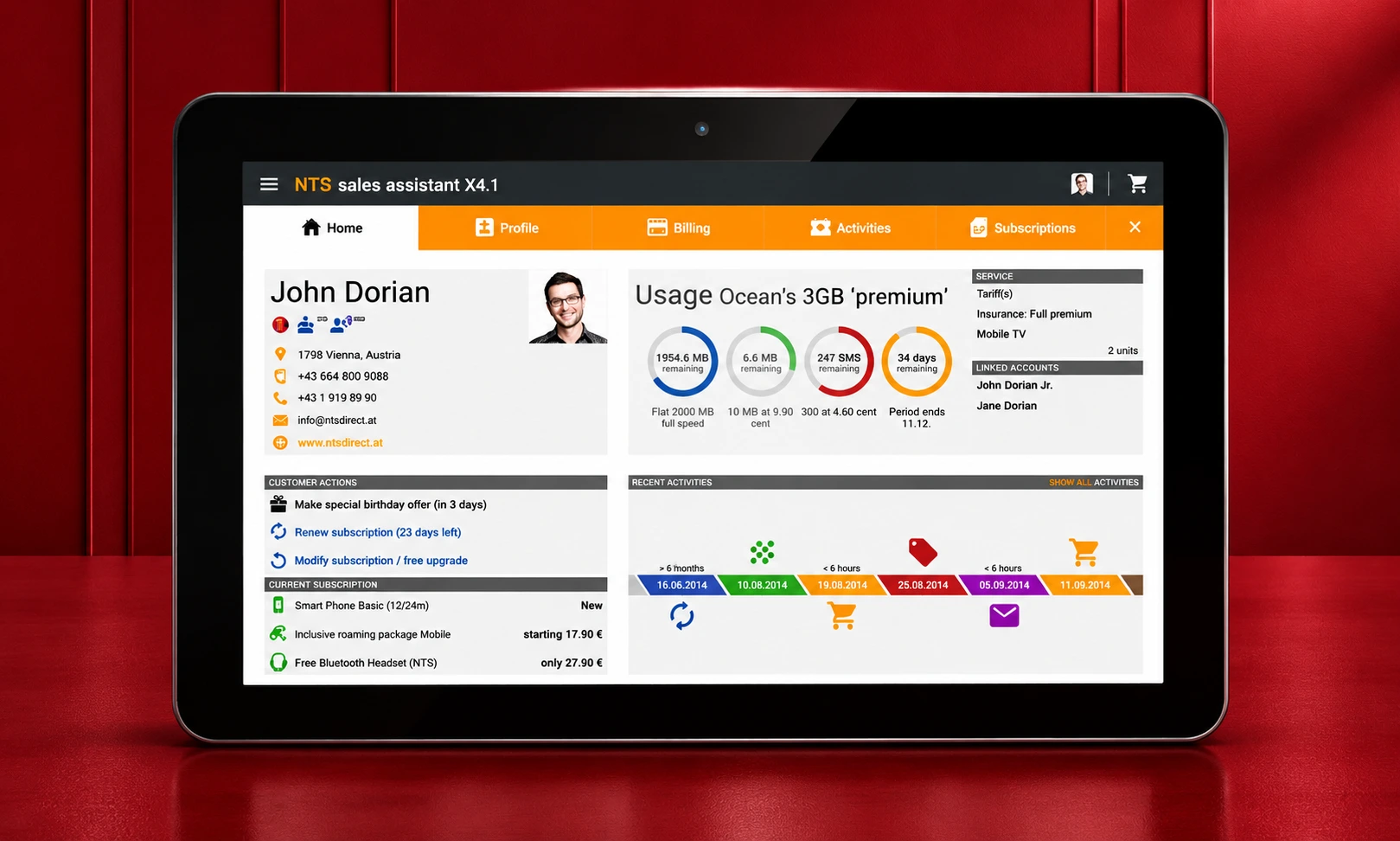
Test the tool on a mobile device in the places associates will use it. Menus should be easy to scan, and common tasks should not take so many steps that staff avoid them. Clear access controls also help ensure that customer records reach only appropriate users.
Check whether the software fits your retail systems without forcing staff to move between disconnected screens. It should support human judgment by helping associates choose a relevant next step. An automated prompt is not useful if it repeats a message that the customer already received.
Search behavior is changing, too. In Deloitte’s 2026 personalization surveys, 63% of consumers had used AI-powered search tools or assistants to find products and services in the prior year. One in five consumers began a search with an AI-powered tool. Deloitte’s 2026 personalization figures point to new discovery habits, not the end of in-person advice.
Associates can still help shoppers compare fit, feel, and service options in ways a search result may not answer. Use technology to bring useful details into reach, then let the associate decide what matters to the customer.
Test the tool in the actual store workflow before committing to a broad rollout. Watch an associate use it during a real shift, not only in a quiet demo.
How Will You Know Whether Clienteling Is Working?
Measure whether the program creates useful customer responses and lasting purchasing behavior, not just messages sent. Count the quality of customer interactions alongside sales and repeat purchases.
Activity measures show what associates do, while outcome measures show what customers do afterward. Use both to understand whether outreach supports lasting relationships without crediting every sale to one message.
Clienteling reporting can track interactions, sales influenced, average order value, and associate proactivity. Those figures can show whether the team is using the process, but a high message count alone does not prove that customers value the contact.
- Meaningful customer interactions.
- Customer replies or appointments.
- Sales influenced by clienteling.
- Repeat-purchase behavior.
- Average order value or customer lifetime value.
Compare activity with longer-term outcomes, such as repeat purchases, customer lifetime value, and sales by channel. A rise in customer replies may show that messages are relevant, while repeat buying can suggest a stronger relationship over time. Neither measure proves that one contact caused a purchase.
Look at the full customer journey when reading the results. A shopper might see a product online, ask about it in a store, and buy later through another channel. Sales by channel can help you see how those paths work without assigning the whole sale to the last associate who spoke with the customer.
Use a review cadence that fits the retailer’s reporting cycle. If managers already review sales and customer interactions monthly, add clienteling measures to that meeting. A less frequent review may fit a business with longer purchase cycles, while a fast-moving category may call for closer checks.
Managers should also review a small set of examples alongside the numbers. A reply that leads to a useful appointment may matter more than several unopened messages. That context helps the team decide what to keep, adjust, or stop.
Do not treat every sale after an outreach message as proof that the message caused the purchase. Compare interaction activity with repeat buying and channel-level sales to spot stronger patterns.
Set targets that reflect the service goal and the way your business reports performance. Keep the measures focused enough that a manager can act on what the team learns.
Conclusion
A sustainable clienteling program makes customers feel recognized without making every interaction feel like a sales pitch. Relevant customer context matters most when an associate uses it with care and gives the shopper room to choose.
That kind of service can strengthen relationships and support loyalty over the customer lifetime. It can also help your business make customer value clearer than a single purchase total.
Choose one priority segment this week and draft one service-first outreach scenario for associates to test. Keep the message useful, respectful, and easy to decline.