A new luxury brand can earn credibility without inherited history by making its product, point of view and customer experience consistently prove its value. A founder can build trust today through a clear position and verifiable product value, not fabricated dates, family lore or borrowed symbols.
That distinction matters in a crowded market, where customers can question a story as quickly as they can inspect a product. Your brand does not need decades behind it to offer a reason to believe. It needs repeated proof that its choices match its promises.
This guide gives you a practical way to define that promise and carry it through the business. You will focus on evidence customers can see, feel and describe, then build a consistent experience around it. Credibility grows with each honest interaction.
Treat every public claim about the brand’s past as something you must be able to document.
Key Takeaways
- Build credibility through a clear position and proof, not a made-up past.
- Define the target customer by taste, values and motivation.
- Make product quality visible through design, materials and construction.
- Set a price that customers can connect to the value they receive.
- Keep service, sales channels and brand touchpoints consistent.
- Track customer response and delivery, not another brand’s legacy.
How to Position a New Luxury Brand Without Inventing Heritage

Luxury legitimacy can come from a recognizable design and product truth, even when a brand has no inherited history. Symbolic value means the meaning and status customers associate with a brand beyond its functional use.
A new identity can earn that meaning through choices people recognize and trust. Present-day proof can support a luxury position without a fabricated lineage. Your storytelling can explain why you began, what you make, and what you refuse to compromise.
A 2026 BCG and Altagamma survey analyzed more than 10,000 responses across over 100 questions about luxury consumers. Respondents valued product, design and aesthetics, craftsmanship, quality of execution, and lasting appeal. Logo visibility ranked lowest across product categories.
The findings point toward substance over borrowed status cues. A 2025 review of brand heritage research describes heritage through a brand’s track record, values, symbols, and the meaning attached to its history.
Build meaning from what your brand can prove today, then let customers decide what that proof comes to mean over time.
Honest founder purpose is different from invented heritage. You can say what inspired your first design or why you chose a particular craft. You cannot claim generations of family skill if that history does not exist.
The Row, founded by Mary-Kate and Ashley Olsen, offers one example of a current identity shaped by restrained design. Its approach is not a formula for every new brand. Your own point of view should fit your product and customer.
A specific, demonstrable point of view can grow meaningful through repeated use. For brand identity and audience decisions, see this guide to building a clear brand strategy.
Write a one-sentence origin story that describes what actually led you to create the brand.
Choose a Position Your Company Can Prove
A credible luxury position passes three tests: customers want it, your company can deliver it, and competitors cannot convincingly say the same. Positioning is the distinct place your brand aims to hold in the market.
Your marketing promise must match what your business can do every day. The Three Cs test whether a position connects with consumer wants, fits company capability, and stands apart from competitor claims.
Test the position against the Three Cs
Start with the consumer. Identify a desire or problem that matters enough to shape a purchase. Then look at your company: can your team make, sell and support the offer at the promised standard?
Last, examine competitors. If several brands can use your sentence without changing a word, the position lacks a clear contrast. Your strategy should show why your business can make the promise more believable.
Use this short set of checks before you settle on a position:
- Name the buyer’s unmet want in plain language.
- Identify the company capability that proves your promise.
- State the competitor contrast without jargon.
A position fails when operations cannot deliver what marketing claims. A campaign cannot fix a product that misses its promised fit or a service team that cannot meet its stated standard.
Find a niche with a defensible difference
Narrow your audience, category and distinctive value. “For everyone who wants quality” is too broad to guide product choices. A niche gives your brand a sharper reason to exist.
Bang & Olufsen, a Danish design and electronics brand, has built symbolic value beyond a device’s basic function. Its design identity helps customers recognize a point of view, not just a technical feature.
Use the same logic without copying the look. Your difference might come from a particular use, craft method or design choice that matters to a defined customer.
Focused positioning can also help a small team avoid spreading effort across too many audiences and messages. Reject any positioning sentence that depends on a capability your business does not yet have.
Define the Customer Before You Define the Brand
Start with a specific kind of person and the meaning they want from a purchase, not an age-and-income spreadsheet. Target customer means the intended buyer whose needs and choices guide your brand.
A useful customer profile explains motivation, taste and desired identity. Income may affect what someone can spend, but it cannot tell you what they value or why they choose one product over another.
Separate buyers by motivation, not just income
Look for the reason a person chooses a certain bag, watch, garment or home object. They may value quiet design, visible status, repairable construction, or a connection to a place or maker.
These motivations can separate customers with similar incomes. They also help you decide which product details deserve attention and which claims will sound irrelevant.
In a July-August 2026 survey of 903 Gen Z consumers in the United States and Canada, 64% said they stuck with a liked brand instead of switching to a cheaper or newer one “always” or “most of the time.”
Only 17% of U.S. Gen Z respondents felt brands understood them “really well,” compared with 6% of Canadian respondents. Among those who felt understood, 45% said they were always loyal. That fell to 5% among those who felt brands missed the mark.
Find the moments that create loyalty
Those results link feeling understood with stronger loyalty, but they do not prove that one causes the other. Gen Z is also not a stand-in for every luxury buyer.
Use a brief interview to hear how customers make choices. Ask what they compare, what feels worth paying for, and what would make your brand feel made for them.
Then listen for moments that shape a return visit. A clear product explanation, an easy alteration or a thoughtful follow-up may matter more than a polished slogan.
Validate the customer profile through real conversations before building a collection around assumptions.
Make the Product Difference Tangible
A luxury product earns its premium through details a customer can verify, not through a materials list alone. Physical proof turns your positioning into qualities people can see, feel and use.
Choose design and materials that support the promise customers already understand. A rare fiber or costly finish is not a differentiator if it adds no useful quality or meaning.
Choose materials and design customers can recognize
Connect the silhouette, surface and performance to your actual point of difference. A travel coat might need weather protection and room for layers. A formal jacket might depend on a clean shoulder and a strong line.
Ask whether the material fits the item’s purpose and expected use. Bemberg is a cupro lining material that can offer a smooth lining option, but the name alone does not prove a garment is well made.
Design should make the product’s purpose clear. A useful pocket, a balanced handle or a shape that works across settings can matter more than an unusual detail customers cannot explain.
Inspect construction from the inside out
Check seam finishing, lining, buttons, fit and pattern matching. French seams can enclose raw edges, while hand-finished details may show care in the final work.
Generous seam allowances of one inch or more can leave room for later alterations. Pattern matching across a seam takes planning and can make a print look more deliberate.
Use this quality checklist on each sample:
- Check interior seams and lining for loose threads or rough edges.
- Test closures and stress points for wear during normal use.
- Confirm that a tailor can repair or alter the item.
- Assess fit across the body or intended use, not just on a mannequin.
- Compare pattern placement at visible joins.
Judge the item, not the label alone. This guide to assessing fashion quality and value also focuses on materials, construction and use.
Inspect a sample inside and out before approving the production version.
Set a Price the Product Can Justify
A luxury price works only when customers can explain what makes the value worth paying for. Value comes from the benefits a customer sees in the product and experience, not from a markup by itself.
Set price with costs, craft, customer value and competitive position in view. A margin matters to your business, but it cannot make a weak offer feel fair to the buyer.
In a 2026 survey of 903 Gen Z consumers in the United States and Canada, price and value kept 82% coming back to a brand. Product quality mattered to 80%, while values alignment mattered to 36%.
Influencer recommendations mattered to 9% of respondents. These loyalty factors can help you judge what customers notice, but they do not set a price for every product or buyer.
| Loyalty factor | Respondents naming it |
|---|---|
| Price and value | 82% |
| Product quality | 80% |
| Alignment with values | 36% |
| Influencer recommendations | 9% |
The comparison shows why a customer may question a price that does not match the value they experience. In a 2026 luxury consumer survey, 70% had walked away from a purchase because the price felt unjustified.
Estimate the cost of materials, labor, production, packaging and delivery. Then consider whether the product’s finish, performance and service support the amount you plan to charge.
Look at competing offers for context, not as a command to match them. A lower price may weaken your position if customers expect a different level of work. A higher one needs clear reasons they can notice.
Ask a target customer to explain the value they perceive before treating your planned price as validated.
Make Scarcity Real, Not Theatrical
Scarcity supports luxury when it reflects a real limit or a meaningful choice, not a marketing trick. Selective availability can make access feel special when customers understand what shapes it.
Use a waitlist or limited run only when a real constraint supports it. Small production capacity and individualized work can limit supply for honest reasons.
A countdown timer does not prove that a product is scarce. Neither does a stock warning that appears for every visitor, every day. Such signals can damage trust when customers see them as pressure tactics.
Rolls-Royce limits production and offers customization, linking access to choices customers can make about a vehicle. The example shows how a product option can give scarcity a real basis.
Limited editions work when the run has a clear size or a defined feature. A waitlist can help manage demand when a maker needs time to produce each order.
Do not promise a rare product simply to make a customer act faster. Explain whether availability depends on production time, a small batch, or work tailored to the buyer.
Be ready to tell a customer exactly what limits availability and what they can expect next.
Design a Service Experience That Builds Trust

A luxury experience is built through the way customers are treated at each moment, not just through the sale. Considered service makes the brand’s promise clear before, during and after a purchase.
Give staff a shared service standard, then let them adapt it to each customer. A consistent level of care does not mean everyone wants the same amount of attention.
Make every interaction feel considered
Personal attention can start with a useful greeting and a good question. Clear communication should cover timing, order details and what the customer can expect next.
Thoughtful delivery might include careful packing and simple care instructions. After-sale care can answer questions about fit, cleaning, repairs or an order without making the customer start over.
Singapore Airlines created the Singapore Girl in 1973 around a promise of consistent service. The example shows the value of a clear service idea, not a script every new brand should copy.
Customer needs can change with age and buying context. A first-time buyer may want help comparing options, while a returning customer may prefer a fast, quiet visit.
Turn customer feedback into better service
Notice the same point of friction across messages, returns and staff notes. If customers keep asking when an order will arrive, the problem may be unclear timing rather than poor manners.
In the 2026 Gen Z survey, customer service was a loyalty driver for 22% of respondents aged 18-20 and 38% of those aged 25-29.
Those differences are a reason to pay attention to context, not to assume that every buyer wants a different standard. Fix recurring issues and tell affected customers what changed.
For more on service and customer experience in luxury marketing, read these luxury brand marketing ideas.
Give staff a clear way to resolve a small service failure without making the customer repeat the problem.
Tell an Honest Story and Substantiate Every Claim
Tell the strongest true story your product can support, and substantiate its express and implied promises before publishing them. Evidence first keeps storytelling persuasive without asking customers to trust claims you cannot support.
The FTC requires advertisers to support express and implied claims before they make them. The kind of evidence depends on the claim, so a broad promise needs careful review.
Build a narrative from real founder intent, the way an item is made, and the values behind a business choice. Explain a material’s role or a maker’s skill in concrete terms. Avoid turning a small detail into a sweeping claim.
Use this claims check before publishing:
- Write down the exact claim customers will see.
- Decide whether it is subjective or objective.
- Gather evidence suited to the claim.
- Review website and product-label wording as well.
Consumer in-home use testing may support some subjective product claims. Objective performance claims may need clinical testing. Health and safety claims need competent and reliable scientific evidence.
A brand website or product label can count as national advertising when it aims to prompt a sale or persuade people about a product’s value or use. Review the full impression, not just one sentence.
Sustainability had its greatest reported influence in luxury auto, at 22%, and champagne and wine, at 19%. Those figures are a reminder to connect a claim to customer relevance and proof, rather than borrowing a trend.
Remove or qualify any claim whose evidence does not match the level of certainty in its wording.
Build a Digital World Without Losing the Human Touch
A digital luxury experience should answer serious product questions without making the brand feel like a mass-market catalog. Useful discovery helps customers learn while keeping the identity distinct.
Make online information clear, then keep a human route open for deeper help. Digital tools should make the product easier to understand, not flatten its character.
Make discovery useful and transparent
Give product pages clear names, sizes, materials, care details and useful images. A customer should be able to see how an item works, not just how it looks in a campaign.
Keep visual identity consistent across the site and social channels. Content can explain a design choice, show how an item is used, or answer a question customers often have.
Jacquemus has used storytelling and social media to build cultural relevance. That approach shows what visibility can do, but your brand’s tone and audience may call for a quieter presence.
For ideas on digital content and human-led marketing, see these content marketing trends.
Use AI to support, not replace, the experience
In a 2026 BCG and Altagamma survey, 87% of high-end consumers used AI weekly, and as many as 40% used it daily. Around 80% already used AI to research luxury.
AI tools can help customers compare products, find care details or explore options. Keep access to staff who can answer nuanced questions and offer personal expertise.
Be direct about what a tool does and what information it uses. Protect customer privacy by limiting data collection to what the service needs.
Give customers a clear route from online discovery to informed human help.
Choose Channels That Preserve the Brand Experience
Choose a sales channel for the experience you can consistently deliver, not for its prestige alone. Selective distribution means controlled access to sales channels.
Your channel mix should fit target-customer behavior and your operating capacity. A physical store can add personal contact, but it also brings ongoing costs and staffing needs.
In the United States, 57% of luxury shoppers still prefer brick-and-mortar stores and real-world experiences. That preference is a reason to consider in-person contact, not a rule that every new brand must open a store.
| Channel | Customer experience control | Customer access | Main trade-off |
|---|---|---|---|
| Brand-owned retail | High, staff and setting are yours | Local, tied to store location | High costs for space and staff |
| Direct e-commerce | High, site and service are yours | Broad, available online | Less hands-on product trial |
| Selective multi-brand retail | Shared, retailer shapes the visit | Retailer’s existing shoppers | Less control over display and service |
Brand-owned shops give you control over staff, product display and the pace of a visit. Direct e-commerce can reach customers beyond one city, while requiring a strong online service and order process.
Multi-brand retailers such as Bergdorf Goodman, Harrods and Selfridges can put a product beside established labels. You share control with the retailer, so the fit between its setting and your position matters.
Start with the channel your team can run well, and learn how customers respond before adding more complexity.
Pilot a channel with a limited assortment before committing to a broader rollout.
Keep the Brand Consistent at Every Touchpoint
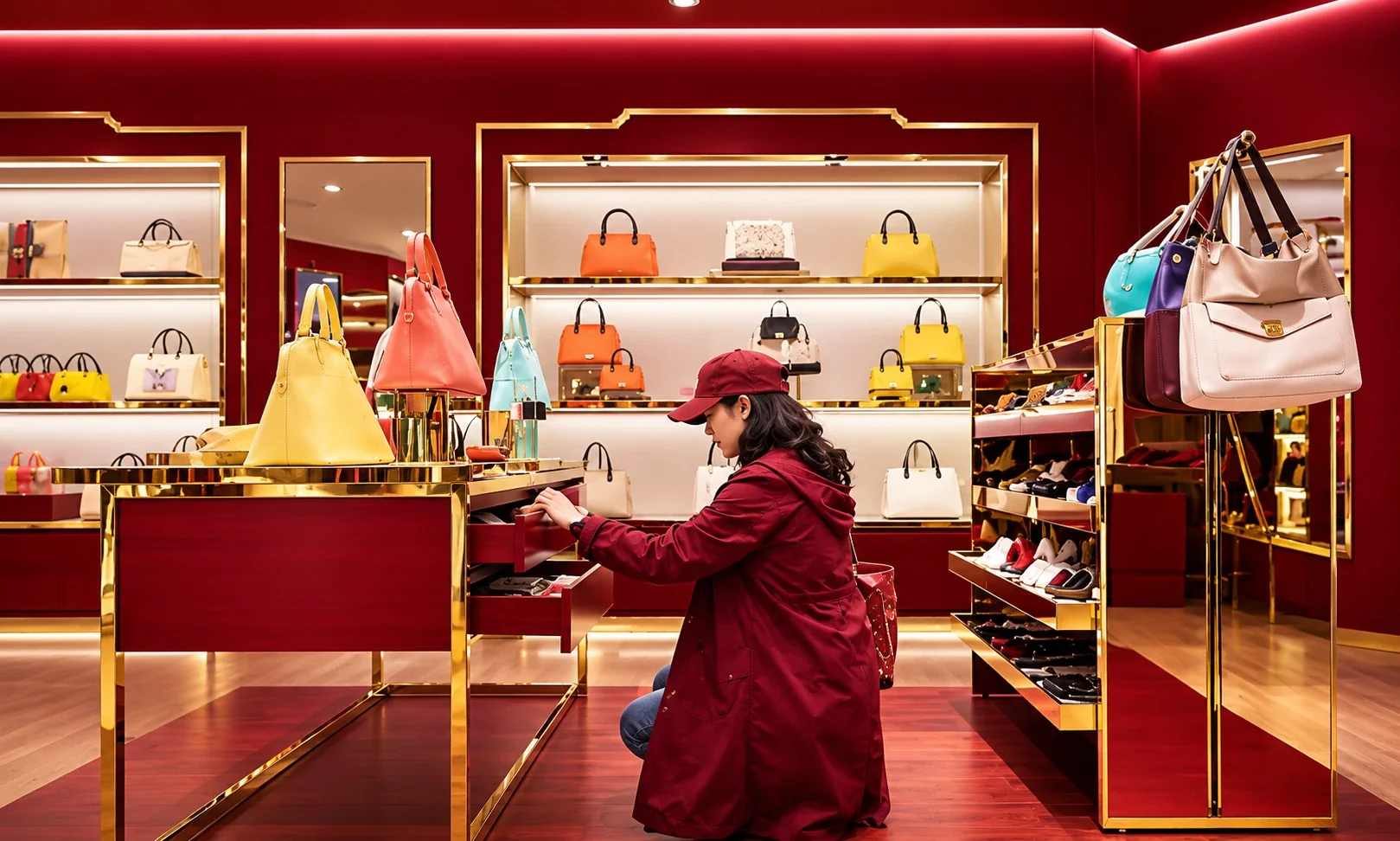
Customers judge a brand through the whole experience, so a single off-position touchpoint can weaken the impression. Consistency means the product, language and behavior feel like parts of the same promise.
Audit the customer’s path from product discovery through aftercare. A useful check looks for clear connections, not identical details at every point.
Review the product, packaging, website, retail setting and aftercare. Ask whether each one reflects the same quality, tone and level of attention.
Aman properties connect design with their natural surroundings. Amangiri in Utah and Amanyara in Turks and Caicos offer examples of place shaping the guest experience, though a hospitality approach is not a template for every brand.
Use this short touchpoint audit:
- Language: do product descriptions and staff use the same terms?
- Visual cues: do colors, shapes and materials feel related?
- Product information: does each setting explain the offer clearly?
- Staff behavior: does service match the stated experience?
- Follow-up: does aftercare feel connected to the purchase?
A founder may notice a mismatch only after a customer points it out. Ask someone unfamiliar with the brand to follow the full path and share where the experience feels confusing or out of place.
Have someone unfamiliar with the brand complete the touchpoint audit and note where the experience feels inconsistent.
Measure Progress Without Chasing Someone Else’s Legacy
Measure whether customers understand, choose and return to your brand before comparing your progress with global leaders. Early signals should track customer behavior and your ability to deliver.
Watch customer understanding, repeat behavior, quality feedback, full-price demand and delivery consistency. Those measures can help you spot what works while your business is still small.
Brand Finance’s 2026 Luxury & Premium 50 ranked Porsche first at USD35.2 billion, down 15%; Chanel second at USD34.3 billion, down 9%; and Louis Vuitton third at USD28.8 billion, down 12%.
Hermès had a brand value of USD21.2 billion, up 6%, while its Leather Goods and Saddlery division grew 13%. Dior scored 91.5 out of 100 for brand strength and received an AAA+ rating.
| Brand | 2026 brand value | Year-over-year direction | Rank where supplied |
|---|---|---|---|
| Porsche | USD35.2 billion | Down 15% | First |
| Chanel | USD34.3 billion | Down 9% | Second |
| Louis Vuitton | USD28.8 billion | Down 12% | Third |
| Hermès | USD21.2 billion | Up 6% | Not supplied |
Brand value is not a new company’s sales or valuation, and a global ranking is not a startup’s operating plan.
Apparel made up 70% of luxury and premium brand value, at USD204.5 billion, down 7%. Cosmetics and personal care brand value fell 10% to USD20.5 billion.
Personal luxury growth was expected at 2-5% CAGR in 2026 and 4-7% by 2029. Apple ranked first in Kantar BrandZ’s 2026 global ranking, valued at $1.3 trillion, up 28%.
Review a small set of customer and delivery measures regularly, then change the execution without abandoning the position.
Conclusion
A new luxury brand earns its place through what it proves, not the history it pretends to have. A truthful point of view, inspectable product value and steady delivery give customers real reasons to trust your brand.
Building luxury takes time because customers need to experience the promise, not just hear it. You can begin with a one-page position statement that names your target customer, your difference, the proof behind it and the experience standard you will meet.
Keep the statement specific enough to guide a real decision. Write the position statement, then test it with three people who match your target customer before committing to the next major brand decision.