
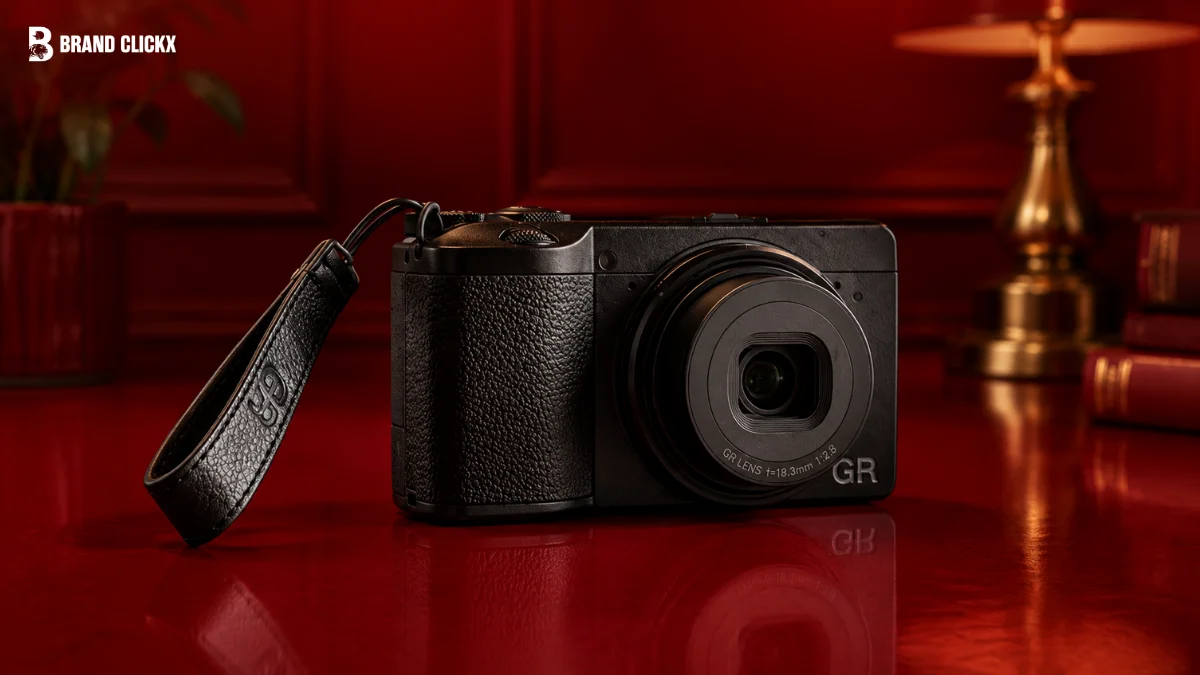
Big camera bag? Not really the Ricoh GR IIIx thing. This one’s for people chasing genuinely good image quality without hauling gear around all day. Look at it, and you’d think it’s nothing special, small, plain, unassuming. That’s deceptive, though. There’s a full-size APS-C sensor crammed in there, quietly doing all the real work.
The lens is the big departure here. GR III keeps things at 28 mm; the IIIx trades that in for a 40 mm-equivalent f/2.8 prime. Doesn’t sound like much on paper, but it changes the whole feel of a shot, narrower, more deliberate, closer to what your eye naturally focuses on rather than a wide sweep of the scene.
Specs-wise, nothing else feels like an afterthought either.
You’re getting a 24.2MP APS-C sensor in here, autofocus that moves fast thanks to its hybrid setup, and shake reduction that’s just built into the body rather than bolted on. RAW shooting is fully supported, and getting files off the camera is easy enough with Wi-Fi and Bluetooth both on board, and a touchscreen too, for what it’s worth.
Key Takeaways
- 24.2 megapixels, APS-C size sensor, that’s what’s powering the GR IIIx, and for something this small, it’s a decent amount of resolution to work with.
- Fixed lens, 26.1mm, f/2.8, comes out to roughly a 40mm equivalent once you do the full-frame math.
- That particular focal length just happens to work really well for street shooting, travel, everyday photos, nothing forced about it.
- Handheld shots get a boost from built-in shake reduction, no external stabilizer needed.
- RAW shooters aren’t left out either, 14-bit DNG is supported alongside standard JPEG.
- Autofocus is hybrid and smart enough to lock onto faces and eyes on its own.
- Grabbing a split-second street shot? That’s what Full Press Snap is actually built for.
- There’s a two-stop ND filter tucked in too, useful for squeezing out extra exposure control.
- Want a tighter frame without a new lens? Crop modes simulate 50 mm or 71 mm.
- Wi-Fi, Bluetooth, both present, both make phone syncing simple.
- Video caps out at Full HD, so don’t expect 4K from this one.
What Is the Ricoh GR IIIx?
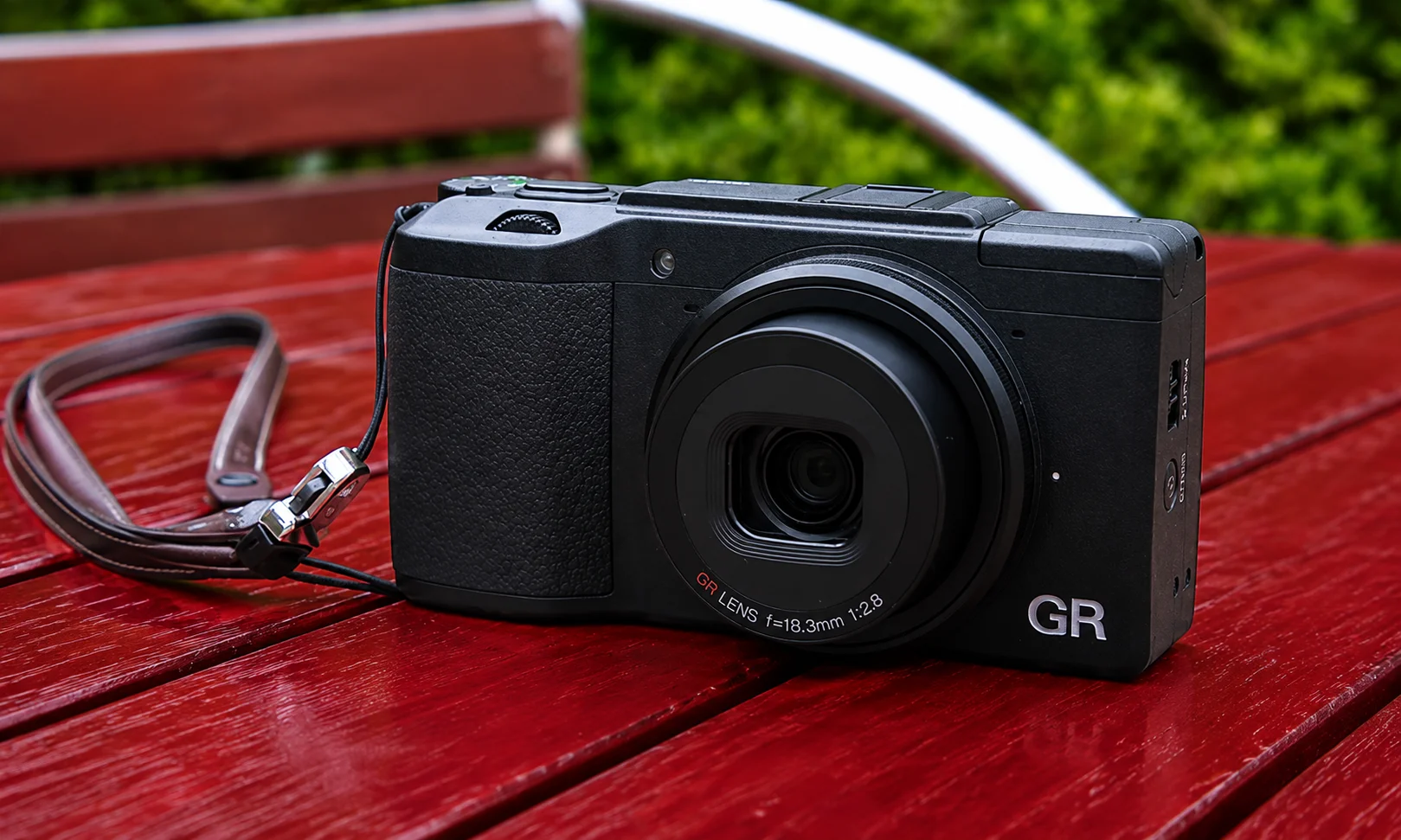
The GR IIIx sits comfortably at the premium end of Ricoh’s GR range. Compact, sure, but it’s really not playing in the same league as your average point-and-shoot. The sensor’s the reason why. Most compacts get by on tiny sensors; this one’s carrying a much larger APS-C chip instead, which buys you a lot more headroom for image quality, fine detail, and how it handles low light. Worth knowing before you buy — the lens is fixed. Ricoh built it just for this camera, and it isn’t going anywhere.
That 26.1mm lens translates to roughly 40mm once you convert it to full-frame equivalent, a bit tighter than the 28mm you’d find on the standard GR III. That shift tends to appeal to photographers who’d rather lock focus on a single subject than try to cram a whole wide scene into one frame.
The 40mm-Equivalent Lens
For most people, the lens is really what tips the scale toward the GR IIIx over the rest of the lineup. 26.1mm focal length, f/2.8 max aperture, work that into full-frame terms and it lands close to 40mm.
Day to day, what that translates to is a view that just feels right good for people, street scenes, travel shots, food, all the small everyday moments too. There’s less background clutter competing for attention, so whatever you’re actually shooting gets the chance to stand out properly.
Why 40mm Can Be Useful
A 40mm lens really does land in that sweet spot, wider than a traditional 50mm portrait lens, yet nowhere close to a true wide-angle either. That in-between character is exactly what makes it so useful across everyday shooting situations.
Think of things like:
- People walking around on the street
- Travel scenes
- Cafes, restaurants
- Cars, buildings
- Food shots
- Small, close-in details
- Casual, relaxed portraits
- Everyday family moments
The trade-off is that it’s not as wide as 28mm, so if you’re trying to capture something genuinely massive, a huge landscape or a packed room, you might have to work a bit harder to fit it all in frame.
Lens Design
The lens is really the deciding factor for most people who go with the GR IIIx over the rest of the lineup. 26.1mm focal length, f/2.8 max aperture, translate that into full-frame terms and you land right around 40mm.
Day to day, what that actually gives you is a view that just feels natural, works well for people, street scenes, travel shots, food, all those small everyday moments too. Less background clutter pulling your eye away, and whatever you’re actually shooting gets to stand out the way it should.
Macro Photography
There’s also a dedicated macro mode built into the GR IIIx, meant for getting up close with smaller subjects. Working distance runs somewhere around 4.7 to 9.4 inches, which is plenty for close-in shooting.
Comes in handy for stuff like:
- Flowers
- Food
- Small products
- Watches
- Jewellery
- Items on your desk
- Fine, small details
So even with a fixed lens that can’t be swapped out, the GR IIIx still manages to handle close-up work reasonably well.
Built-In ND Filter
There’s a built-in two-stop ND filter on the camera too. What that does, essentially, is cut down the amount of light hitting the lens — genuinely useful on bright days when you want to shoot with a wider aperture without everything blowing out. It also comes in handy if you’re after a slower shutter speed, say to create some intentional motion blur.
You could use it, for instance, to smooth out moving water in a shot, or add a bit of blur to a busy street scene to give it more of a sense of motion.
50mm and 71mm Crop Modes
The GR IIIx also offers built-in crop options. These modes can give you views similar to 50mm and 71mm lenses. You do not actually get a different lens. Instead, the camera crops the image to provide a narrower field of view. This can be useful when your subject is a little farther away and the normal 40mm view feels too wide.
24.2MP APS-C Sensor
There’s a 24.2MP APS-C CMOS sensor sitting inside the GR IIIx, and that’s really a big reason the camera manages such strong image quality despite how tiny it is. Paired with Ricoh’s GR Engine 6 processor, it turns out sharp JPEGs and 14-bit DNG RAW files alike. ISO ranges from 100 up to 102400, leaving you plenty of room to adjust as the lighting shifts around you.
Anti-Aliasing Filter-Free Design
The sensor does not use a traditional anti-aliasing filter. This design helps preserve fine details and allows the camera to make good use of its resolution. However, very fine repeating patterns can sometimes create unwanted patterns in a photo. This can happen with certain fabrics or other high-frequency subjects. To deal with this type of situation, the camera can use its shake reduction system to simulate an anti-aliasing filter.
Shake Reduction
The GR IIIx has a three-axis shake reduction system. It uses sensor movement to help reduce the effect of camera shake. This is useful when you are shooting handheld, especially in places where the light is not very strong.
For example, it can help when taking photos:
- At night
- Indoors
- In restaurants
- During evening walks
- In museums
- On cloudy days
Remember that stabilisation helps with movement from the camera itself. It cannot completely stop a moving person or car from becoming blurry.
Image Control
The camera comes with 11 image control modes. These modes give your photos different looks without requiring you to edit every image on a computer. You can also adjust settings such as:
- Colour
- Contrast
- Saturation
- Hue
This gives you more control over the final appearance of your photos. If you like getting a finished JPEG straight from the camera, these options can be useful.
Multiple Exposure Mode
The GR IIIx includes a multiple exposure feature. It allows you to combine several exposures in the camera. There is no fixed frame limit for the sequence, so you can experiment with different layers and effects. This feature can be fun for creative photography and unusual compositions.
Metering Modes
The camera gives you several ways to measure light.
These include:
- Multi-Segment
- Centres-Weighted
- Spot
- Highlight-Weighted
The highlight-weighted mode is useful when bright areas are important. It gives priority to keeping highlights within the camera’s dynamic range. This can leave the darker areas of the photo deeper and more dramatic.
Autofocus Performance
The GR IIIx runs on a hybrid autofocus system, blending contrast detection with phase detection to lock focus quickly. It’s also capable of picking up faces and eyes on its own.
Once it spots a face or eye, you’ll see exactly what it’s locked onto right on the screen. And in a group shot, it doesn’t just guess — it can actually pick out the main subject from everyone else in the frame, which comes in handy when you’re trying to grab a quick photo of someone in a crowd.
Full Press Snap
Full Press Snap is probably one of the more interesting features on the GR IIIx. It’s especially handy for street photographers — instead of waiting on autofocus to hunt around every single time, you set a focus distance ahead of time. Then, when you fully press the shutter, the camera just snaps right at that preset distance without pausing to think about it.
Sounds like a small thing on paper, but it can genuinely save you those few precious seconds when you’re racing to catch a moment before it disappears. You can also access Full Press Snap right from the touchscreen. Once you get the hang of it, it’s the kind of feature that quietly becomes indispensable for street shooting.
Compact Body
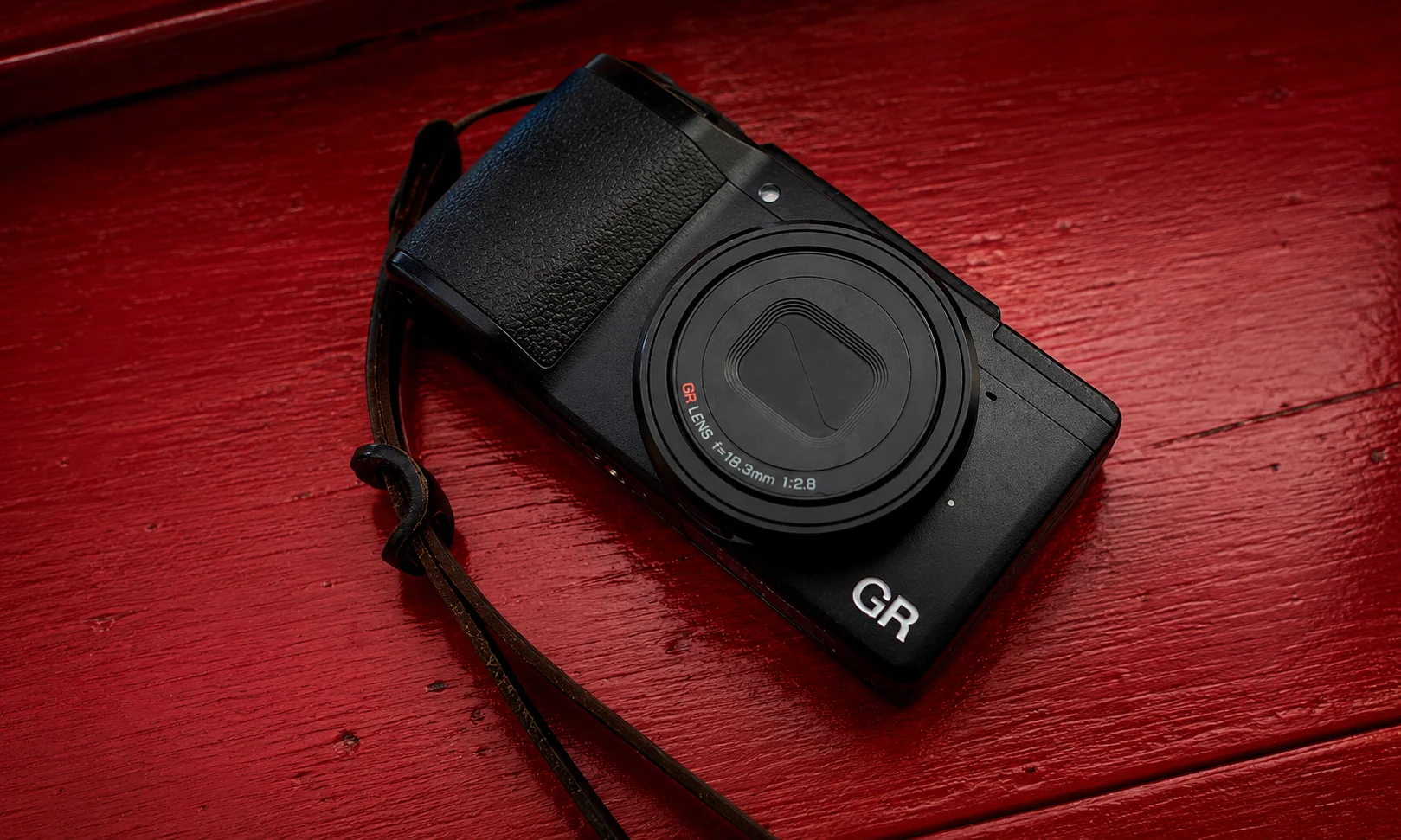
The GR IIIx is designed around one simple idea: make a serious camera small enough to carry every day. The body is compact and lightweight. This is helpful for photographers who do not want to carry a large camera and several lenses. You can keep the GR IIIx with you while:
- Travelling
- Walking around a city
- Going to events
- Exploring new places
- Meeting friends
- Taking daily snapshots
A camera that is easy to carry is more likely to be available when an unexpected photo opportunity appears.
3-Inch Touchscreen
The camera has a 3-inch LCD touchscreen with around 1.037 million dots. The touchscreen makes it easy to:
- Select a focus point
- Review photos
- Move through menus
- Change certain settings
- Use touch autofocus
The screen is also useful for photographers who are already comfortable using touch controls on smartphones.
Magnesium Alloy Construction
The GR IIIx uses a magnesium alloy body. This keeps the camera relatively light while giving it a solid and durable build. The body is also shaped with a comfortable thumb area on the back. Physical controls are placed where you can reach them without taking too much time away from shooting.
Custom Controls
The camera includes controls that can be customized. The ADJ lever and FN button can be assigned to different functions. Touch autofocus can also be used as part of the shooting process. This means you can set up the camera around the features you use most often.
For example, a street photographer may want quick access to focus settings, while another photographer may prefer direct control over exposure or image settings.
Quick Startup
The GR IIIx has a startup time of around 0.8 seconds. This is useful when you want to take a photo quickly after switching the camera on. For street photography, everyday moments can disappear quickly. A short startup time helps you get ready sooner.
Storage
The GR IIIx has one SD memory card slot. It also comes with around 2GB of built-in memory. The internal storage can hold about 140 JPEG photos, so it can be useful as a backup if you do not have a memory card available. For regular photography, however, using an SD card is the better option.
Wi-Fi and Bluetooth
The camera has built-in Bluetooth LE and Wi-Fi. These features allow the camera to connect with a compatible smartphone or other mobile device. You can use the wireless connection to transfer photos and work with mobile features.
Location information can also be added to image files through the paired mobile device. Another useful feature is that wireless transfer can work even when the camera is switched off, depending on the connection and settings being used.
USB-C Connection
There’s a USB-C port on the GR IIIx, handling both file transfers and charging. That’s a real convenience while traveling USB-C chargers and power banks are everywhere these days, so you’re not stuck carrying some separate, camera-specific charging setup.
Battery Life
The camera runs on a DB-110 rechargeable lithium-ion battery, good for roughly 200 shots per charge on paper. In practice, that number shifts depending on how you actually shoot. Keep the screen on a lot, lean heavily on autofocus, or use Wi-Fi and Bluetooth often, and you’ll burn through it faster. Shooting all day? Just pack a spare battery cheap insurance against running dry halfway through.
Ricoh GR IIIx for Street Photography
This is really where the GR IIIx feels right at home. Being this small means you can carry it around all day without a second thought, and it doesn’t draw the kind of attention a bigger camera would on the street. The 40mm-equivalent lens helps too — it frames things tighter than the 28mm on the standard GR III.
That tighter framing comes in handy when you want to zero in on a person or just a small piece of a bigger scene. Full Press Snap adds another layer to that: once you’re comfortable with preset focus distances, you can just react in the moment instead of waiting for autofocus to catch up every time.
Ricoh GR IIIx for Travel
Travel photography’s actually where the GR IIIx tends to shine. Its biggest strength, hands down, is just how small it is. No need to lug around a full camera body plus a bag of lenses; you’ve got one fixed lens here that handles most everyday situations perfectly well on its own.
Works nicely for things like:
- City photography
- Markets
- Cafes
- Travel portraits
- Street scenes
- Food
- Architecture details
- Everyday, casual snapshots
Where it falls short is that fixed focal length. If you’re chasing something far off in the distance or need a genuinely wide shot, you’ll probably want a different camera in your bag for that.
Ricoh GR IIIx for Portraits
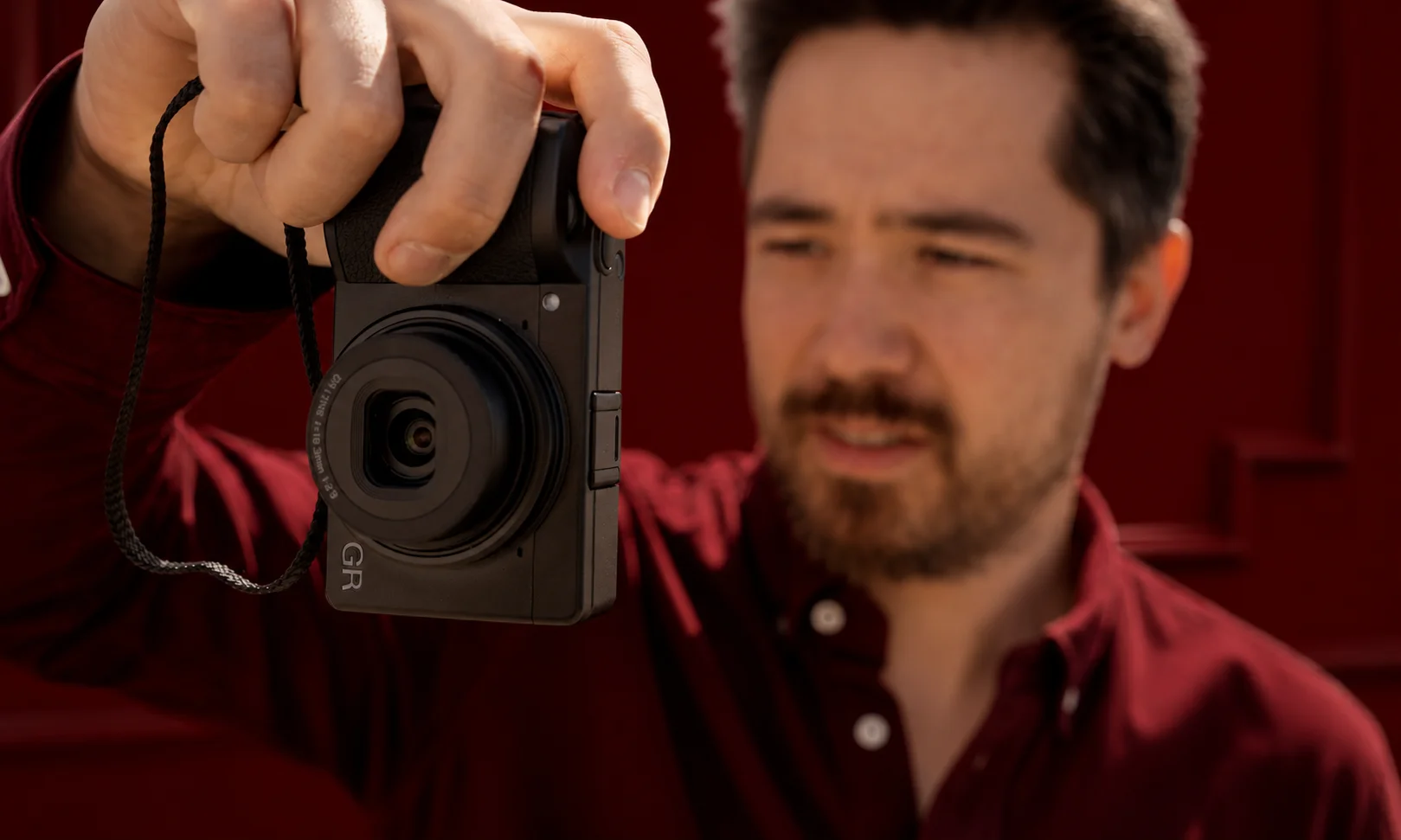
That 40mm-equivalent field of view actually lends itself well to casual portrait work too. You get just enough room to bring in a bit of the surroundings, without losing focus on the person in front of the lens.
The f/2.8 aperture helps you get close enough to your subject, and you’ll start to see some nice separation from the background. That said, if strong, heavy background blur is really what you’re after, you’re probably better off with a larger camera paired with a fast dedicated portrait lens.
GR IIIx Video
The GR IIIx is mainly a still photography camera, but it can record video. It supports Full HD 1080p recording at:
- 60p
- 30p
- 24p
This is enough for casual video clips and simple travel footage. However, people who mainly shoot video may want a camera with stronger video features. The GR IIIx makes more sense when photography is your main priority.
Pros and Cons
Pros
- Small and easy to carry
- 24.2MP APS-C sensor
- 40mm-equivalent f/2.8 lens
- Good option for street photography
- Built-in Shake Reduction
- 14-bit DNG RAW support
- Face and eye detection
- Full Press Snap
- Built-in ND filter
- Macro mode
- Wi-Fi and Bluetooth
- USB-C charging
- Customisable controls
Cons
- Fixed lens
- No optical zoom
- No built-in viewfinder
- Battery life is not especially long
- Video is limited to Full HD
- Not designed mainly for sports photography
- Distant subjects can be difficult to capture
- A wider lens may be better for large interiors and landscapes
Ricoh GR IIIx vs GR III
The main difference between the two cameras is the lens. The GR III uses a 28mm-equivalent lens, while the GR IIIx uses a 40mm-equivalent lens.
| Feature | Ricoh GR III | Ricoh GR IIIx |
|---|---|---|
| Lens | 18.3mm | 26.1mm |
| Full-frame equivalent | 28mm | 40mm |
| Maximum aperture | f/2.8 | f/2.8 |
| Sensor | APS-C | APS-C |
| Resolution | 24.2MP | 24.2MP |
| Stabilisation | Yes | Yes |
| Best for | Wider scenes | More selective framing |
Choose the GR III if you prefer wider photos. Choose the GR IIIx if you like a more natural and slightly tighter view.
Who Should Buy the Ricoh GR IIIx?
The GR IIIx can be a good choice if you want a small camera that still offers serious image quality. It is worth considering if you:
- Enjoy street photography
- Travel often
- Want a camera for everyday use
- Prefer a fixed lens
- Like the 40mm perspective
- Want an APS-C sensor in a small body
- Shoot mostly still photos
- Want quick access to manual controls
- Prefer carrying a small camera
Who Should Not Buy It?
The GR IIIx may not be the right fit if you need a flexible camera system. You may want another option if you need:
- A zoom lens
- Interchangeable lenses
- A built-in viewfinder
- Advanced video features
- Very long battery life
- Strong sports tracking
- A very wide field of view
The fixed lens is the biggest thing to think about before buying.
Tips for Using the GR IIIx
Learn the 40mm View
Spend some time shooting with the 40mm-equivalent lens. After a while, you will start to understand exactly how much of a scene fits into the frame.
Try Full Press Snap.
If you enjoy street photography, test different preset focus distances. It may take some practice, but it can make quick shooting much easier.
Use RAW When Editing
If you plan to edit your photos later, DNG RAW gives you more flexibility. For quick sharing, JPEG is usually simpler.
Keep the ND Filter in Mind
Do not forget about the built-in ND filter. It can be useful when you want a wider aperture or a slower shutter speed in bright light.
Carry an Extra Battery
Around 200 shots per charge may not be enough for a long photography day. An extra battery can save you from missing photos.
Common Mistakes to Avoid
Expecting a Zoom
The GR IIIx does not have an optical zoom. The lens is fixed, so you need to move yourself to change the framing.
Ignoring the Focal Length
The 40mm view is not ideal for every type of photography. Think about your usual subjects before choosing the GR IIIx.
Expecting Professional Video
This camera is made mainly for photography. If video is your main focus, look for a camera with stronger video features.
Forgetting About Battery Life
Small cameras can have limited battery capacity. Keep a spare battery or charging option nearby when shooting for long periods.
Using Autofocus for Everything
Full-press snap can be very useful in the right situation. Learn how it works instead of relying on normal autofocus for every street shot.
Final Verdict
The Ricoh GR IIIx is a camera for photographers who want to keep things simple. It does not have interchangeable lenses or a zoom. Instead, it gives you one carefully designed 40mm-equivalent lens, a 24.2MP APS-C sensor, fast autofocus, stabilisation, RAW shooting, and a very small body.
That combination makes it especially attractive for street photography, travel, and everyday shooting. The fixed lens will not suit everyone. If you regularly photograph wide landscapes, large interiors, sports, or distant subjects, another camera may make more sense.
But if you like the idea of carrying a small camera everywhere and using one focal length to build your photography skills, the GR IIIx is a very interesting option. Its biggest advantage is simple: it gives you serious photography features in a body that is easy to carry.
FAQs
Is the Ricoh GR IIIx good for everyday photography?
Yes. Its small body makes it easy to carry, while the APS-C sensor and 40mm-equivalent lens provide strong options for everyday photos.
Is the Ricoh GR IIIx good for street photography?
Yes. The compact body, 40mm view, fast operation, and Full Press Snap feature make it well suited to street photography.
Does the Ricoh GR IIIx have a zoom lens?
No. It has a fixed 26.1mm f/2.8 prime lens with a 40mm-equivalent field of view.
Can the Ricoh GR IIIx shoot RAW?
Yes. The camera can record 14-bit DNG RAW files as well as JPEG images.
Does the GR IIIx have image stabilisation?
Yes. It uses a three-axis shake reduction system to help reduce camera shake.
What is the difference between GR III and GR IIIx?
The main difference is the lens. The GR III has a 28mm-equivalent view, while the GR IIIx provides a 40mm-equivalent view.
Does the GR IIIx have a built-in viewfinder?
No. The camera uses its rear LCD screen for framing and shooting.
Can the Ricoh GR IIIx record video?
Yes. It can record Full HD 1080p video at 60p, 30p, and 24p.
How long does the GR IIIx battery last?
Ricoh rates the included DB-110 battery for approximately 200 shots per charge. Actual battery life can change depending on settings and usage.
Is the Ricoh GR IIIx good for travel?
Yes. Its small size is one of its biggest advantages for travel. The fixed 40mm-equivalent lens works well for many street scenes, people, food, and everyday travel photos.