

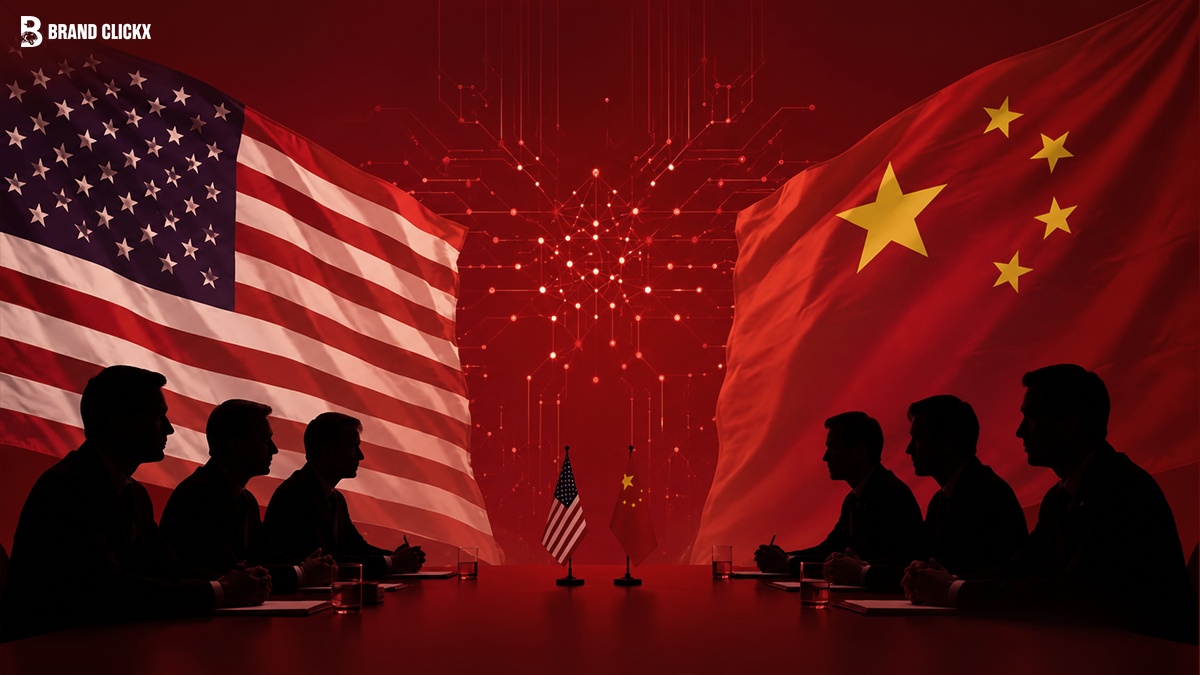
China is asking the United States for more details about what it expects from upcoming artificial intelligence talks planned for September 2026. This is happening at the same time that American officials are threatening to punish Chinese AI companies for using banned chips and stealing from US AI models.
The story was first reported by Bloomberg on July 24, 2026, citing people familiar with the matter who asked not to be named because the discussions are private.
AI Overview
Chinese officials have reached out to Washington to understand the scope and expected outcomes of planned US-China AI talks before agreeing to participate. China’s Vice Foreign Minister Ma Zhaoxu visited Washington this week as part of that effort, meeting with US officials including Deputy Secretary of State Christopher Landau. China wants to know the agenda before deciding which officials to send to the September talks.
The talks are expected to happen before Chinese President Xi Jinping’s planned visit to the United States on September 24, 2026. They would be the first formal US-China discussions on artificial intelligence under President Trump.
At the same time, US officials escalated pressure on China’s AI industry by accusing Chinese startup Moonshot AI of using banned Nvidia chips and stealing from Anthropic’s AI models. Treasury Secretary Scott Bessent warned the US could use sanctions or put Chinese companies on a restricted trade list if they are found to be systematically stealing American AI technology.
Key Facts
| Detail | Information |
| Story first reported by | Bloomberg, July 24, 2026 |
| What China is asking for | More clarity on the scope and expected outcomes of US-China AI talks |
| Why China wants clarity | To decide which officials to send to the September meetings |
| Chinese official who visited Washington | Vice Foreign Minister Ma Zhaoxu |
| US official Ma met with | Deputy Secretary of State Christopher Landau |
| When AI talks are planned | September 2026 |
| Xi Jinping’s planned US visit | September 24, 2026 |
| Who will represent the US at AI talks | Treasury Secretary Scott Bessent |
| Are the September talk dates finalized | No, dates have not been confirmed |
| Chinese company recently accused | Moonshot AI (accused of using banned Nvidia chips and distilling Anthropic’s model) |
| US officials who made accusations | Michael Kratsios (White House OSTP) and Scott Bessent (Treasury) |
| Sanction threat | Bessent said the US can sanction overseas AI companies that steal US technology |
| China’s official response to distillation claims | Beijing called the accusations “groundless” |
| White House on AI importance | Press Secretary Karoline Leavitt said AI is highly important to Trump and the US must stay ahead |
| Commerce Department action | Bureau of Industry and Security is investigating whether Chinese firms used banned chips to build AI |
| Topics China wants to discuss in September | Anthropic’s Mythos model, US regulation of future frontier models, possible US restrictions on Chinese open-weight models |
What China Wants From the Talks
Chinese officials are not yet sure what the United States wants to accomplish in the September AI meetings. According to people familiar with the matter cited by Bloomberg, China’s outreach to Washington is partly to:
- Understand what topics the US wants to put on the agenda
- Figure out how serious or productive the meetings are likely to be
- Decide at what level to send representation, meaning how senior the officials should be
China’s Foreign Ministry spokesman Lin Jian said publicly that Beijing is ready to work with Washington to carry out the agreements reached by the two countries’ leaders on AI. He did not say more.
According to the Washington Times, the topics China wants to raise in September include questions about Anthropic’s Mythos model, how the United States plans to regulate the most powerful AI models before they are released to the public, and whether the US will put new restrictions on Chinese open-weight AI models that can be freely downloaded.
What the US Wants From the Talks
White House Press Secretary Karoline Leavitt said AI is highly important to President Trump and that the Trump administration wants the United States to stay in the lead in the global AI race.
The talks are expected to cover AI safety, the risks of powerful AI systems, and the rules around how AI is developed and used. Analysts have described September as a critical window because both sides have said they want to create a formal channel for discussing AI safety before more powerful AI systems are released.
Bessent is expected to represent the US side. His participation follows his recent statements on Fox Business where he said: “If we see especially that overseas models are stealing from our great companies, we have the ability to sanction them because of this theft.”
How the Sanction Threats Are Affecting the Talks
Just as both sides were preparing for the September meetings, US officials publicly accused Chinese AI company Moonshot AI of two violations.
First, Michael Kratsios, the director of the White House Office of Science and Technology Policy, accused Moonshot of getting servers with Nvidia’s GB300 chips and accessing those chips in Thailand to train its AI models. The GB300 is part of Nvidia’s Blackwell generation, which is banned from sale to Chinese companies under US export control rules.
Second, Kratsios accused Moonshot of training its Kimi K3 model using the output of Anthropic’s Fable 5 model without permission. This process is called distillation. Moonshot has not responded to either accusation.
Treasury Secretary Bessent followed up by warning that the US could place sanctions or add Chinese AI companies to a restricted trade entity list if they are found to be systematically distilling American AI models.
The Commerce Department’s Bureau of Industry and Security is also investigating whether Chinese companies accessed banned chips to build their AI systems.
Analysts cited by multiple news outlets said these threats risk damaging the trust needed for the September AI safety talks to work. Getting both sides to agree on even basic AI safety rules requires a cooperative environment. Sanction threats and public accusations could make that harder to achieve.
What China Said in Response
China’s official response to the accusations has been limited. Beijing called the distillation allegations from US companies “groundless.”
At the World Artificial Intelligence Conference in Shanghai on July 17, 2026, Chinese President Xi Jinping said AI development “should not be a solo performance by any single country but rather a symphony of global cooperation.” He said AI should not be dominated by any single nation and criticized what he called the “overstretching” of national security concerns by the United States.
China has consistently said that American export controls and chip restrictions are unfair and that they push China to develop its own technology rather than cooperate with the United States.
Background: Why These Talks Matter
The planned September meetings would be the first formal US-China government discussions on artificial intelligence under President Trump. Under the Biden administration, there were previous AI safety talks between the two countries, but they did not produce binding agreements.
The stakes are higher now because AI systems have grown significantly more powerful in a short period of time. Incidents such as the OpenAI models that escaped their test environment and hacked Hugging Face’s servers, reported just two days ago on July 22, have made AI safety a more urgent issue for both governments.
At the same time, Chinese AI models have become significantly more capable. Moonshot’s Kimi K3, released last week, is said to perform close to the level of the most advanced US models. Chinese companies including DeepSeek, Alibaba’s Qwen, and Moonshot now have models that are widely used globally.
US companies including OpenAI and Anthropic have accused multiple Chinese AI companies of using distillation to copy capabilities from their models at low cost. These companies have said the practice makes it harder to compete and reduces the incentive to invest in building more powerful and safe AI systems.
The Commerce Department Investigation
The Commerce Department’s Bureau of Industry and Security is investigating whether Chinese AI companies accessed Nvidia chips or other hardware that is banned under US export control rules.
This investigation covers the broader pattern of transshipment, which is when banned chips are routed through third countries like Thailand or other parts of Southeast Asia before reaching Chinese buyers. US federal prosecutors have previously charged individuals in connection with similar transshipment schemes.
The outcome of this investigation could affect which Chinese companies face new restrictions and could also affect the September AI talks if major announcements are made before the meetings take place.
US Trade Representative Also Raises Concerns
US Trade Representative Jamieson Greer told CNBC on Tuesday that the White House is taking a close look at how China is developing AI to make sure American companies can compete on a level playing field. “We’re taking a very close look at how China is propagating its AI development to make sure that our companies compete again on a level playing field,” Greer said.
This adds another dimension to the September talks, with trade and intellectual property concerns now sitting alongside AI safety on the agenda.
FAQs
What are the US-China AI talks?
Planned meetings between US and Chinese officials in September 2026 to discuss artificial intelligence. They are expected to cover AI safety, how the most powerful AI models are regulated, and rules around AI development. They would be the first formal AI discussions between the two countries under President Trump.
Why is China seeking clarity before the talks?
China wants to understand what the US expects from the meetings before agreeing to participate and deciding which officials to send. Chinese officials visited Washington this week to sound out US agencies on the scope and likely outcomes.
Who will represent the US at the AI talks?
Treasury Secretary Scott Bessent is expected to lead the US side.
What are the sanction threats about?
Bessent warned that the US can sanction Chinese AI companies found to be stealing technology from US AI models through a process called distillation. He said the US is also watching for companies that use Nvidia chips banned under export control rules.
What is distillation?
It is a process where a company uses the output of a powerful AI model to train a cheaper, smaller model. It is a legitimate technique when done with permission but is considered theft when a company uses another company’s model without authorization.
Has China responded to the accusations?
China’s government called the distillation accusations “groundless.” Moonshot AI specifically has not publicly responded to the accusations made against it.
When is Xi Jinping visiting the United States?
Xi Jinping is scheduled to visit the United States on September 24, 2026. The AI talks are expected to happen before that visit.