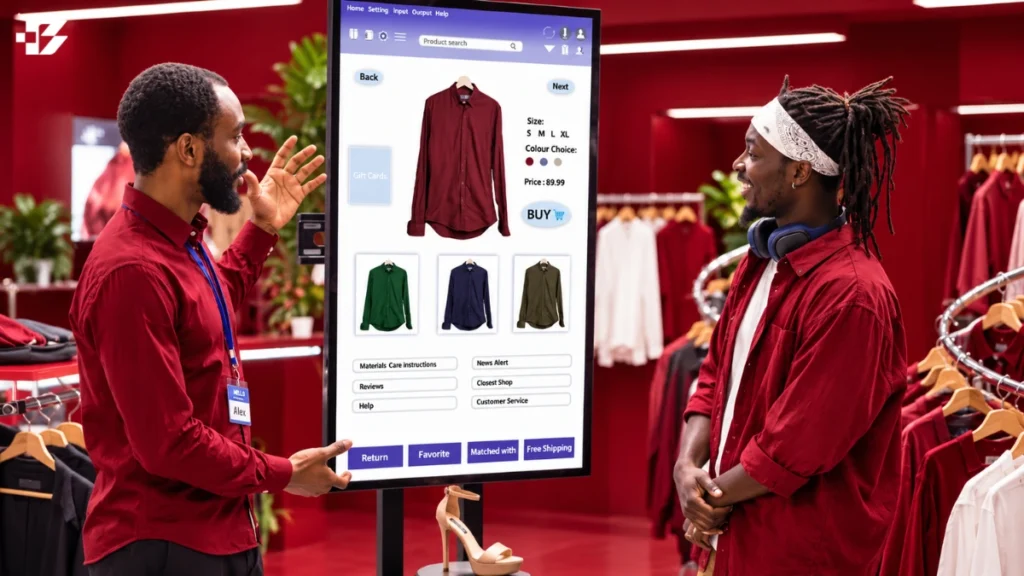
A fashion campaign works commercially when its creative idea, audience, product, and launch plan all serve one measurable business result. Your creative choices should support the same priority as your sales plan, channel mix, budget, and measurement.
A coordinated launch is more than a photoshoot. It connects the image customers see with the product they can find and buy, whether they arrive through social media, email, press, or a store.
You may be balancing a new collection, limited stock, a fixed launch date, and a budget that cannot cover every idea. Good planning helps you protect the brand experience while making the customer’s route to purchase clear. The first useful decision is to choose which business result the campaign must change.
Key Takeaways
- Choose one measurable commercial objective with a clear deadline.
- Set the target audience using real customer behavior, not age alone.
- Build a creative idea around a product truth customers can believe.
- Plan different assets for discovery, consideration, and checkout.
- Keep production, usage rights, and distribution inside the budget.
- Compare results with the original objective and review window.
How to Plan a Fashion Campaign Around Commercial Goals
Start by naming the single commercial result the campaign must deliver, then attach a target and deadline to it. A useful objective says what will change, by how much, and within which period.
For example, aim to sell a 40-piece capsule in six weeks. Before choosing the target, check the available inventory, expected replenishment, and product margin. Sell-through means the share of available units sold during a defined period.
Sales volume counts units or revenue. Sell-through compares sold units with available stock, while margin tracks what remains after costs. Acquisition focuses on first-time customers; retention looks at repeat buyers. These goals need different creative and metrics.
A sales target fails if the product cannot stay in stock during the campaign. A direct-to-consumer campaign sends shoppers to product pages. A wholesale push needs buyer appointments and line sheets instead. The Campaign Resource Centre’s objective guidance also stresses clear targets and measures.
| Objective | KPI | Commercial decision | Measurement window |
|---|---|---|---|
| Sell-through | Units sold | Inventory focus | Campaign period |
| Acquisition | First-time customers | Prospecting | Repeat-purchase period |
| Brand building | Reach and branded search | Future demand | Full brand window |
Write a brief with seven decision lines. Keep each line clear enough that creative, sales, and production teams can use it without guessing.
- Objective: the result, target, and deadline.
- Audience: the customer group the work must reach.
- Proposition: the main reason to consider the product.
- Reasons to believe: product facts that support the claim.
- Deliverables: the work needed for each planned use.
- Budget and mandatories: the spending limit and required details.
- Success metrics: the measures and review period.
Use the same scorecard in planning and reporting. A consistent marketing budget scorecard can help connect proposed spend with agreed business outcomes.
Do not set a sales target for a product that cannot be stocked through the campaign window.
Confirm that the featured product can meet the target before approving the brief.
Who Is the Target Audience, and What Matters to Them?

Define the target audience through what people do, want, and buy, not through a broad label alone. A useful profile gives your team specific clues for casting, message, and placement.
Age or gender by itself is not a complete customer profile. Combine demographic, psychographic, geographic, and purchase behavior to understand who is likely to care and why.
Build a buyer profile from behavior and customer data
Spend a week reviewing customer DMs, product reviews, and post-purchase surveys before production. Look for what customers save, wear, ask about, and name as a reason to buy or return an item.
Note where people discover products, such as a creator’s post, a store visit, or a friend’s recommendation. Record what they cross-shop, too. A useful audience profile can identify three brands the customer considers alongside yours.
Those details help you shape casting and channel choices without reducing a person to a trend. A customer may care about fabric feel, workwear styling, and local shops all at once. An age range alone would miss those links.
For a practical look at creator fit, review Instagram influencer strategies based on audience relevance. A creator’s community can matter more than a large follower count when the campaign needs trust.
Find the tension that makes the message timely
A timely insight often sits between what a customer wants and what holds them back. They may want a standout jacket but hesitate over fit, price, or whether it works beyond one occasion.
Look for a current reason that makes the desire feel urgent. A shift in how people dress, an event, or a seasonal need can make an old product truth newly useful. The insight should explain why this audience might care now.
Heaven by Marc Jacobs showed how casting can signal a clear subculture. Creative lead Ava Nirui and photographer Shoichi Aoki worked with musicians including beabadoobee and Vegyn. That choice helped frame the brand’s world, but celebrity reach alone does not promise sales.
Avoid building a mood board before checking what customers actually respond to. Write the insight in language a real customer might use, then check that it fits the launch moment.
What Should the Campaign Say and Show?
A strong campaign idea gives the audience one memorable reason to care about this product now. Tie that reason to a verifiable product truth, such as fit, fabric, construction, origin, or price logic.
The claim must fit the product customers can actually buy. A striking image cannot repair a promise that the garment fails to meet.
Turn the product truth into a proposition, then express it in one clear sentence. The creative idea should feel distinct and recognizable as your brand, even when a customer sees only one placement.
Jacquemus offered a simple visual premise in April 2023: an eight-second CGI clip showed Bambino bags appearing as buses in Paris. Ian Padgham created the clip through Origiful. It is an example of surprise and clarity, not a template every fashion brand should copy. Read the PAPER interview with CGI artist Ian Padgham for details on the work.
Test the idea with three questions before you approve the direction:
- Can you summarize the idea in one sentence?
- Can it adapt into distinct placements without losing its meaning?
- Can customers recognize it without a borrowed trend doing the work?
Keep the message close to what the product offers. If the campaign talks about lasting construction, show the seams or explain the materials. If the price reflects a special fabric, make that link easy to see.
A common mistake is choosing a fashionable visual reference with no meaningful link to the product or brand. Keep the proposition narrow enough that every execution can make the same promise.
Which Channels Need Their Own Creative Assets?

Give each priority channel assets made for its role, because customers see different formats during discovery, consideration, and checkout. The right channel mix depends on where your audience looks and what action you need next.
Do not treat one hero image as a complete campaign asset set. A platform like Instagram, an email inbox, and a product page each place different demands on the image.
Match each format to its channel and funnel role
Awareness assets can use editorial imagery and motion to introduce the campaign world. Consideration assets can answer fit questions with styling, behind-the-scenes footage, or creator looks. Conversion assets should make the product and purchase path clear.
Keep color, typography, styling, and message aligned across social media, email, paid placements, product pages, retail, and press. The details can change by placement while the brand still feels like itself.
Nike’s 2024 Paris Olympics campaign used one anthem film narrated by Willem Dafoe, individual athlete films, and out-of-home executions. The structure shows how one central idea can support different media, rather than forcing every placement into one format.
Creator work can add a personal point of view. For short-form ideas, small-business TikTok content ideas include product demos, behind-the-scenes videos, and customer-led stories.
Build the asset matrix before writing the shot list
An asset matrix is the channel-by-format deliverables grid. It shows the asset, commercial role, and composition needs for every priority placement before the crew plans the shoot.
| Channel | Asset | Commercial role | Composition check |
|---|---|---|---|
| PDP | 5-8 product images | Conversion | Product detail |
| Organic social | 9:16 video and 4:5 stills | Discovery | Vertical framing |
| Paid social | 3-5 video hooks | Testing | Text-safe space |
| 600-pixel-wide crops | Launch or reminder | Narrow-screen legibility |
For out-of-home work, check that the artwork reads at 50 meters and within 50 milliseconds. That fast glance calls for a clear image and very little copy.
Do not assume one horizontal hero image can serve every placement. Do not approve the shot list until every priority placement has a named asset.
How Do Casting, Crew, and Timing Affect Production?
A shoot plan protects the launch date by assigning an owner and deadline to every production decision. Choose casting, location, and crew to support the idea, then schedule the work backward from launch.
Start with an owner for production and a fixed launch date. Without both, approvals and sample delays can quietly push the work off schedule.
Choose talent, locations, and crew for the idea
Cast models and other talent for audience relevance and credibility, not just appearance. Their presence should make the campaign claim feel believable to the people you want to reach.
A location also says something about the brand. Aimé Leon Dore has used New York settings such as corner delis and basketball courts to build a recognizable brand world. That approach suits its story; it does not mean every label needs an on-location shoot.
Approve the treatment before production begins, and give one producer ownership of the plan. Practical roles may include a stylist, hair and makeup artists, and a digital tech who checks images during the shoot.
Agree on usage rights for the intended channels, territory, and duration before the shoot. A Copyright Alliance guide to photographer copyright explains why a license for certain uses differs from giving away copyright.
Work backward from the fixed launch date
A workable example calendar spans 12 weeks. It leaves time for creative approval, samples, production, post-production, and final delivery.
- Weeks 1-2: brief and concept.
- Weeks 3-4: hire creatives and start scouting.
- Weeks 5-6: confirm casting and usage terms; finalize the shot list.
- Weeks 7-8: fittings and pre-production.
- Week 9: shoot.
- Weeks 10-11: edit and retouch; week 12: traffic final assets.
Scout locations 2-3 weeks before the shoot. Leave two retouching rounds and 1-2 weeks for talent approvals, so review time does not vanish at the end.
Before the shoot, check three things: samples and fit, permits and a weather backup, and signed talent usage terms. Late samples can force retouching around incorrect trims, even when the shoot itself goes well.
Keep the launch date fixed and surface sample, permission, or approval delays as soon as they appear.
How Should You Allocate the Campaign Budget?
Divide campaign spending into production, usage and licensing, and distribution. Keep the media allocation separate from the total budget so a strong shoot does not consume the money needed to reach customers.
Protect funds for both usable creative and distribution. Production covers crew, talent, location, set, styling, and post-production. Usage and licensing cover permission to use images, models, and music. Distribution pays for paid reach and other campaign placements.
A production quote depends on crew size, talent, location, set needs, styling, post-production, and usage scope. Each choice changes the work and the rights you need, so compare quotes by what they include.
Les Binet and Peter Field’s IPA-published media allocation finding is approximately 60/40 between brand building and sales activation over time. Treat that as a long-term planning reference, not a rule for every campaign.
Your split should reflect the objective, launch window, and business context. A short stock-clearing push may need a different media balance from a campaign meant to build future demand.
Set aside a contingency for production changes, such as a location shift or a product sample that arrives late. The amount should fit the risks in your plan, not an arbitrary standard.
A common mistake is spending the whole budget on the shoot and leaving no distribution funds. For planning support, YouTube marketing guidance for B2B teams offers a useful reminder to match video work and measurement with the goal.
Compare each proposed expense with the objective it is meant to support before committing the spend.
How Will You Launch and Measure Success?

A rollout is a planned sequence, not a single post on launch morning. Coordinate the few channels you can support well, and measure results against the signed objective.
Make sure campaign imagery appears on product pages before external clicks arrive. A customer should land on a page that matches the message and makes the product easy to understand.
Sequence the rollout across the channels you can support
Use three stages to organize the release:
- Pre-launch tease: share a detail or short preview that builds interest.
- Launch day: coordinate the main campaign across selected channels.
- Sustained follow-up: use remaining assets to answer questions and prompt action.
Bottega Veneta deleted its social media accounts in January 2021 and launched the quarterly digital journal Issued that spring, debuting with a Missy Elliott film. The case shows deliberate channel choice, not a tactic every brand should copy.
A small brand may do better with a few channels it can manage well than with a thin budget spread everywhere. Check that product pages load well on phones and that each page gives a clear next step. These local search tips for clear landing pages cover useful page basics.
Compare results with the original objective
Use the signed objective to judge success, not a new definition chosen after results arrive. The next section’s objective-based scoreboard helps you compare the right measure over the right window.
If you use creators, plan how their posts fit the rollout and how you will track response. A separate e-commerce retargeting plan can help follow up with product viewers or cart abandoners.
Check that the destination page and product availability are ready before sending campaign traffic.
Which Metrics Show Whether the Campaign Worked?
A campaign worked if its results match the objective it was designed to achieve. Choose a small scoreboard that pairs each goal with a KPI, a comparison, and a review window.
Do not judge a brand campaign on first-week last-click return alone. Some customers respond later, and brand building can shape demand before a sale appears.
| Objective | KPI | Comparison | Review window |
|---|---|---|---|
| Brand building | Reach and branded search | Prior period | Full campaign window |
| Acquisition | First-time customers | Business-as-usual creative | Acquisition period |
| Sell-through | Units sold and PDP conversion | Prior period | Inventory period |
| Email conversion | Revenue per send | Business-as-usual creative | Launch sequence |
Skims’ January 2024 Valentine’s campaign featured Lana Del Rey and photographer Nadia Lee Cohen, with 29 limited-edition collections. It earned $13.7 million in media impact value within four days, including more than $4 million from one Instagram post by Del Rey.
Media impact value measures attention, not proof that every impression caused a sale. Combine it with sales and customer measures that fit your objective.
Do not change the definition of success after launch to make weak results look successful.
Keep the agreed measurement window long enough to assess both response and sales.
Conclusion
The strongest fashion campaigns make the creative idea and the business goal feel like parts of the same decision. Commercial discipline does not limit good storytelling; it gives the story a clear customer action to support.
Open a working brief before commissioning creative work. Write down the commercial objective, audience, launch date, and success measure so the team can make informed choices.
Before booking a shoot, put the objective, launch date, and primary KPI on one page and get the decision-makers to approve them.