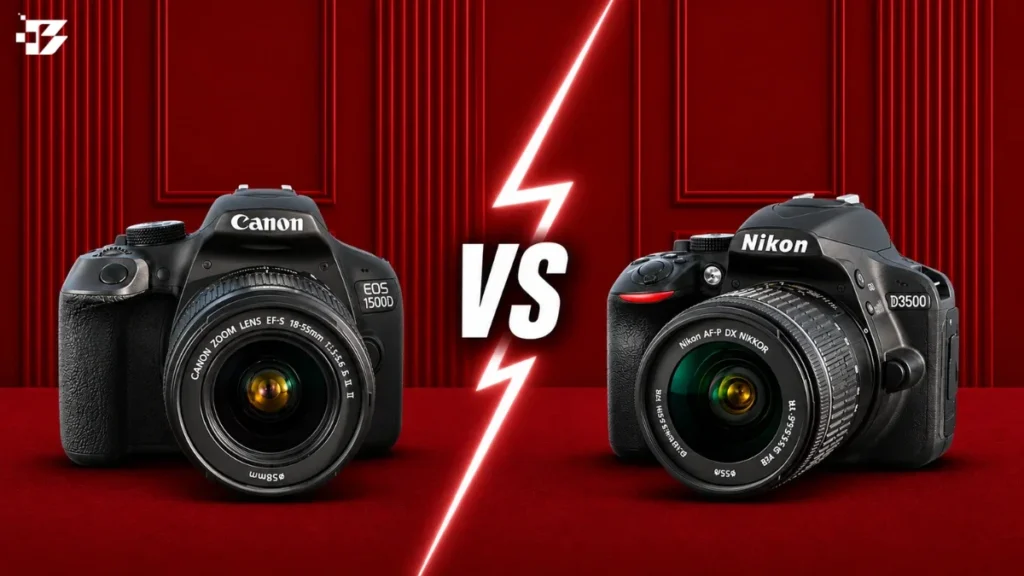
Kodak filed for bankruptcy in January 2012, thirty seven years after one of its own engineers invented the technology that killed it. That is the version of the story everyone knows.
Here is the version worth reading: the company that once controlled 90% of American film sales is still alive in 2026, still trading on the New York Stock Exchange, and just posted its strongest film year since 2014. The fall was real. So is the comeback.
This is the complete story, from a bank clerk’s kitchen to a $31 billion empire to bankruptcy court and back.
Key Takeaways
- George Eastman founded what became Kodak in 1881 and put photography in ordinary people’s hands with the 1888 Kodak camera and the slogan “You press the button, we do the rest.”
- Kodak engineer Steve Sasson built the world’s first digital camera in 1975. Management’s response, as Sasson later recalled: “that’s cute, but don’t tell anyone about it.”
- At its peak in 1976, Kodak sold roughly 90% of the film and 85% of the cameras in America. Bankruptcy followed in January 2012.
- The company emerged from Chapter 11 in 2013 and rebuilt around commercial printing, specialty chemicals, film and pharmaceuticals.
- FY2025 revenue was $1.069 billion, up 2%, and 2025 was Kodak’s best film sales year since 2014, driven by Gen Z’s analog revival and Hollywood’s return to celluloid.
- A pension reversion completed in December 2025 delivered over $1 billion, leaving Kodak with more cash than debt for the first time in the modern era.
The Bank Clerk Who Democratized Memory
George Eastman was a high school dropout supporting his widowed mother when he started experimenting with photographic chemistry in her kitchen. He kept his day job at the Rochester Savings Bank and ran experiments at night, which tells you something about how empires actually start.
In 1880 he patented a method for making dry photographic plates. On January 1, 1881, he and investor Henry Strong formed the Eastman Dry Plate Company. Then Eastman made the leap that defined everything: he stopped trying to sell better equipment to photographers and decided to sell photography to everyone.
In 1888, the Kodak camera arrived. It cost $25, came loaded with film for 100 exposures, and worked like this: you pointed, you pressed the button, and you mailed the entire camera back to Rochester. For $10 more, the company developed your photos, reloaded the camera and sent it all back. “You press the button, we do the rest” was not a slogan. It was the business model, and it invented snapshot photography overnight.
Eastman made up the word Kodak from thin air, because he wanted a name that meant nothing and could not be misspelled. He registered the trademark in 1888, incorporated Eastman Kodak on May 23, 1892, and then built the razor and blades model decades before anyone called it that: sell the camera cheap, own the film forever. The Brownie in 1900 put a camera in children’s hands for a dollar. Kodachrome in 1935 defined color photography for generations. The Instamatic in 1963 sold tens of millions of units. By mid-century, “Kodak moment” had entered the language itself.
The Peak Nobody Thought Could End
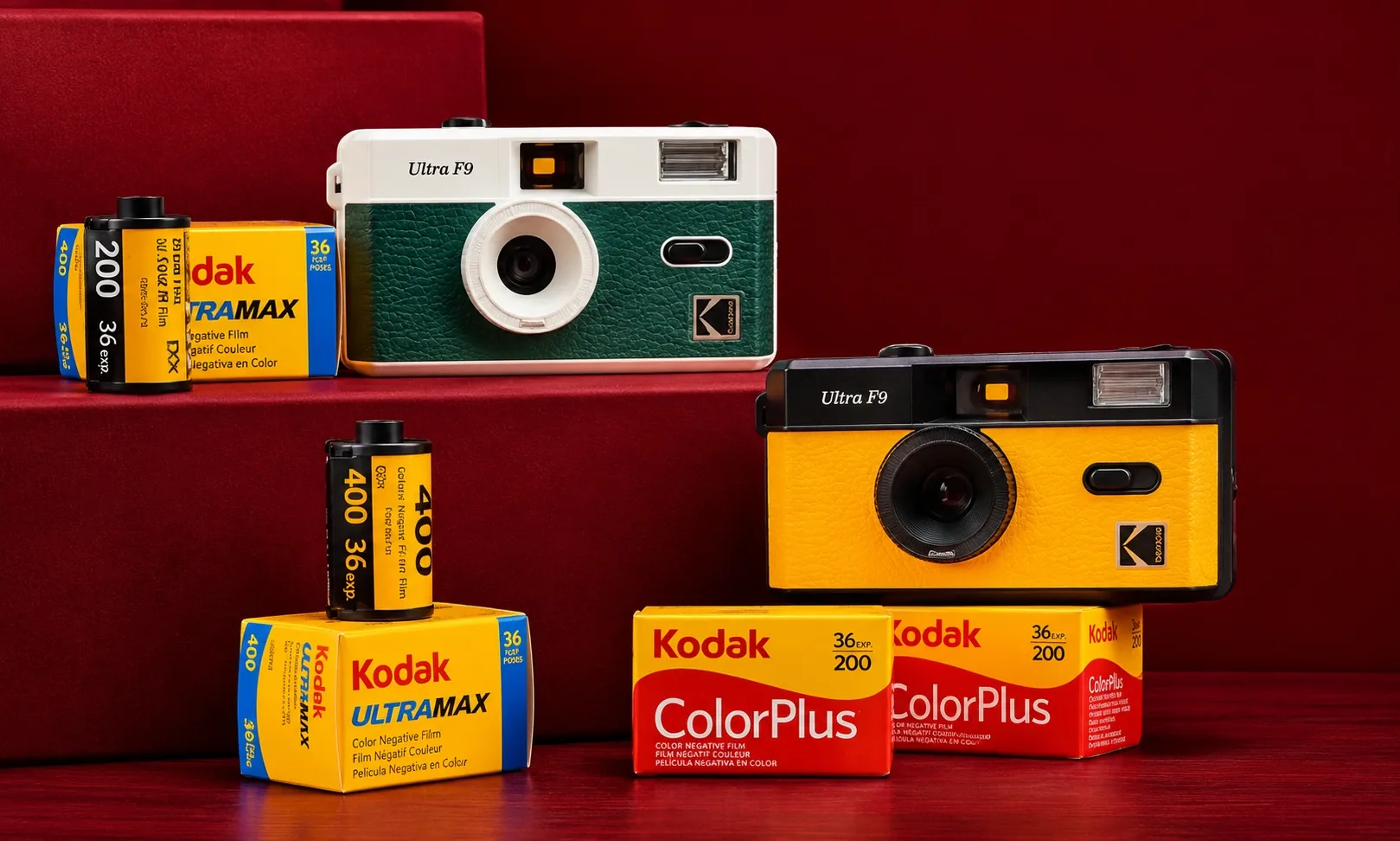
The numbers from Kodak’s prime still look impossible. In 1976, the company sold about 90% of the photographic film and 85% of the cameras in the United States. Through the 1990s it employed over 140,000 people worldwide, posted peak annual revenue near $16 billion, and carried a market value around $31 billion. Its film shot Hollywood’s movies, its satellites photographed the Cold War, and its name was synonymous with memory itself.
And here is the detail that makes business students wince a century later: Kodak’s research labs were extraordinary. The company won nine Academy Awards of Merit for technical achievement. It was not a lazy monopoly. It was a brilliant one, which is exactly what made the next part possible.
1975: The Invention In The Lab
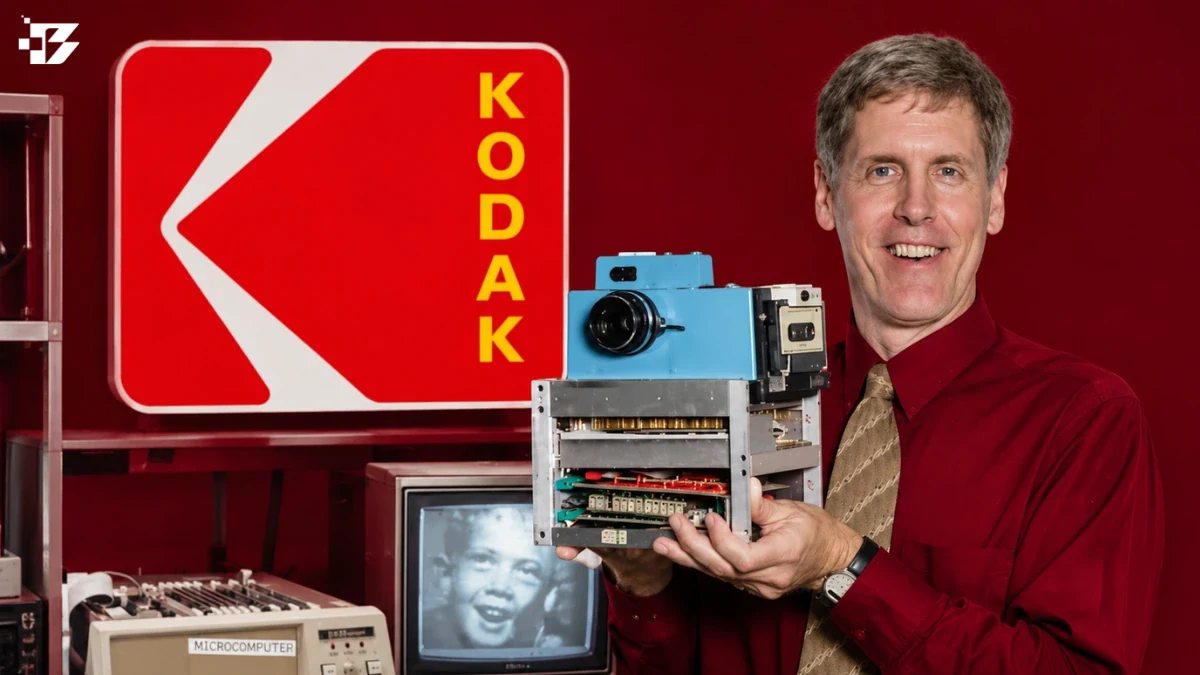
In 1975, a 25 year old Kodak engineer named Steve Sasson was handed a broad assignment: see if you can build an electronic camera using one of the new charge coupled device sensors.
What he built was absurd and magnificent. It weighed eight pounds. It captured a 0.01 megapixel black and white image, a grid of 100 by 100 pixels, and it needed 23 seconds to record that single image onto a cassette tape. It was, by any measure, a terrible camera.
It was also the first digital camera in history, and it worked.
Management’s reaction became the most quoted verdict in corporate history. As Sasson later told the New York Times: “it was filmless photography, so management’s reaction was, that’s cute, but don’t tell anyone about it.”
Here is what most retellings get wrong. Kodak’s leaders were not stupid, and they were not blind. They ran the numbers correctly. Digital imaging in 1975 was worse than film in every measurable way, and Kodak made money on film at margins digital could not touch. Every rational spreadsheet said protect the core business. The flaw was not arithmetic. It was the assumption that the future would arrive on Kodak’s schedule. It arrived on everyone’s schedule instead.
The Long Fall
Kodak did eventually build real digital cameras, and good ones. It even led the US digital camera market in sales for a stretch of the mid-2000s. But digital cameras were a hardware business with brutal competition and thin margins, not a consumables empire. Every digital photo taken was a roll of film, a packet of paper and a processing fee that Kodak would never sell again.
The pattern repeated everywhere we now cover it: the same collapse logic shows up in our file on the biggest tech brand failures, and it rhymes with what we documented in acquisitions that destroyed tech brand value. The innovator’s dilemma is not a theory. It is a body count.
Sasson’s digital camera patent expired in 2007. Five years later, on January 19, 2012, Eastman Kodak filed for Chapter 11 bankruptcy. The company sold a portfolio of over 1,000 digital imaging patents to a consortium that included Apple and Google for roughly $525 million, a fraction of what the patents were once thought to be worth. It emerged from bankruptcy in September 2013 as a smaller, stranger company: no more consumer cameras, no more photo kiosks, just commercial printing and a famous name.
The Second Act Nobody Predicted
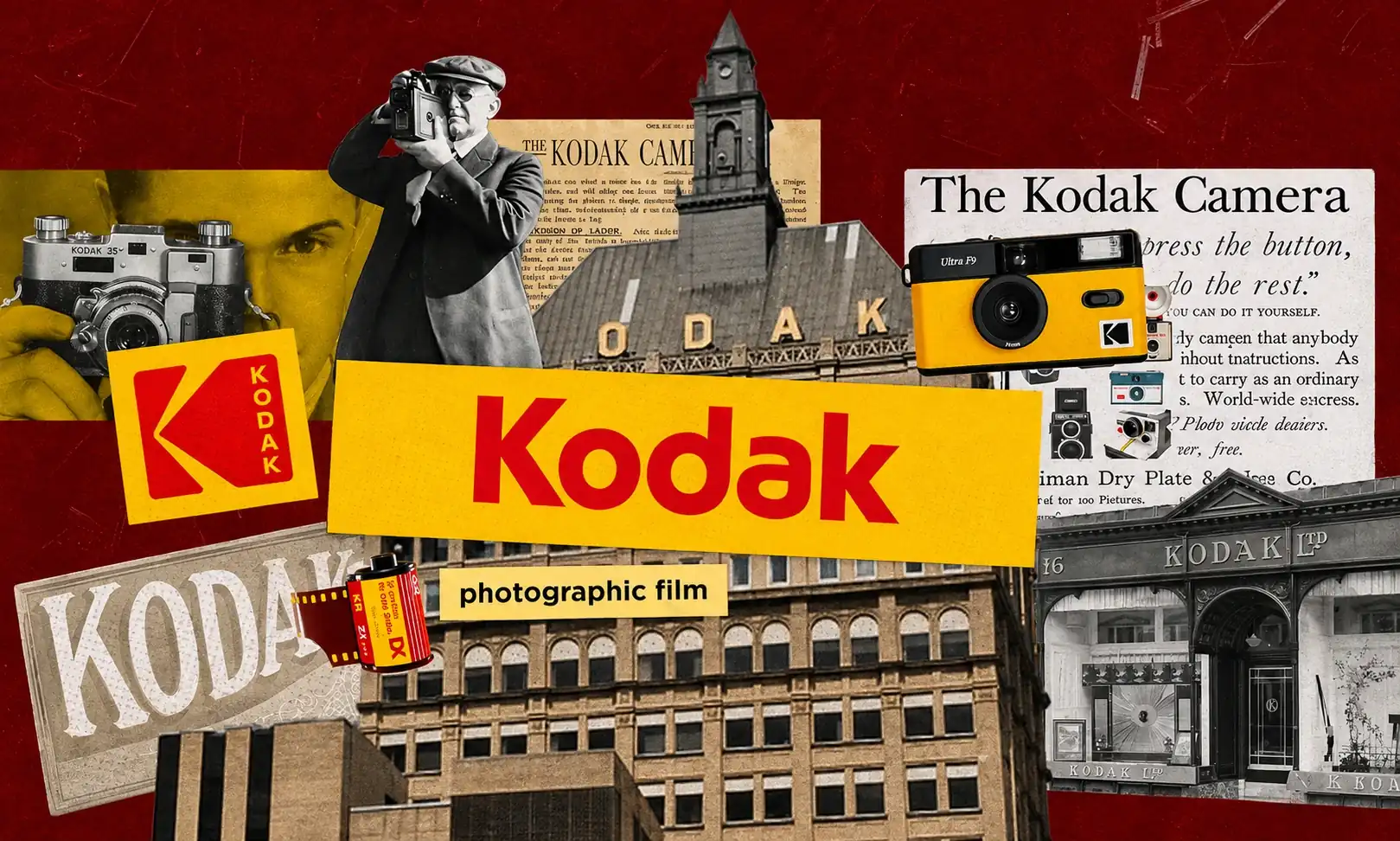
Now the part that makes this story worth telling in 2026 instead of just retelling in business school.
Kodak today runs on four engines. Commercial printing is the largest, selling presses plus the plates and inks those presses consume, recurring revenue in its purest form. Advanced materials and chemicals, the fastest growing division, up 25% year over year in the fourth quarter of 2025, turns a century of precision coating expertise into specialty chemicals and an FDA registered pharmaceutical operation. Brand licensing lets other manufacturers put the Kodak name on cameras and electronics. And then there is film.
The film deserves its own paragraph, because something strange happened. Gen Z discovered analog photography the way it discovered vinyl, and Hollywood directors never really left celluloid. Many of this decade’s Oscar nominated films were shot on Kodak stock, and seven features shot on Kodak film competed for the Palme d’Or at Cannes in 2026. Kodak’s response was decisive: it pulled still film distribution back in house in 2025 after more than a decade of outsourcing, committed to film production through 2028, and in 2026 rebranded its professional stocks, with the legendary Portra reappearing as Ektacolor Pro.
The financial reset came from an unlikely place. Kodak’s pension plan held far more assets than it owed, and a reversion completed in December 2025 delivered over $1 billion. The company used it to pay down debt and ended 2025 with $337 million in cash, more cash than debt for the first time in its modern history, cutting annual interest costs by roughly $40 million.
The results: FY2025 revenue of $1.069 billion, up 2%, with Q4 up 9%. Three consecutive quarters of growth into 2026. And a stock that, per Forbes, rallied roughly 96% in 2026 as investors realized the zombie had a pulse.
The Rise, The Fall, The Comeback In One Table
| Year | Moment |
|---|---|
| 1881 | Eastman Dry Plate Company is founded in Rochester, New York. |
| 1888 | The Kodak camera launches and the Kodak trademark is registered. |
| 1900 | The $1 Brownie camera makes photography accessible to children and ordinary consumers. |
| 1935 | Kodachrome launches and transforms color photography. |
| 1975 | Steven Sasson builds the first digital camera in a Kodak laboratory. |
| 1976 | Kodak reaches peak dominance, controlling approximately 90% of US film sales and 85% of camera sales. |
| 1996 | Kodak revenue peaks at nearly $16 billion. |
| 2007 | Kodak’s digital camera patent expires. |
| January 2012 | Kodak files for Chapter 11 bankruptcy protection. |
| 2013 | Kodak emerges from bankruptcy and shifts its focus towards commercial printing and imaging. |
| 2025 | Kodak records its strongest film year since 2014 and announces a pension-related transaction exceeding $1 billion. |
| 2026 | Kodak reports a positive net cash position, expands its pharmaceutical business and sees a significant stock rally. |
The Lessons Every Brand Should Steal
Profit is the worst innovation advisor. Kodak’s spreadsheet was right about 1975 and wrong about everything after. When the math says protect the core business, ask what the math cannot see.
“Good enough” beats “best” when it is cheaper and easier. Digital was worse than film for twenty years. It did not matter. Convenience won, as it almost always does. The same force is why your customers increasingly shoot with the devices in our best camera phones of 2026 guide instead of dedicated cameras.
A brand is an asset that outlives its products. Kodak stopped making consumer cameras, and the name still sells cameras. Licensing works because the meaning survived the product.
Comebacks are built from boring cash flows. Printing plates and specialty chemicals are not glamorous. They are also why Kodak is alive to enjoy the film revival. The nostalgia economy, including tools like AI restoration for old photos, only rewards brands that survive long enough to be nostalgic.
Frequently Asked Questions
Who invented the digital camera?
Steve Sasson, an engineer at Kodak, in 1975. The prototype weighed eight pounds, captured 0.01 megapixel black and white images, and took 23 seconds to record one photo to a cassette tape.
Why did Kodak go bankrupt if it invented digital photography?
Kodak’s profits came from film, paper and processing, a consumables model digital photography eliminated. Management shelved the invention to protect film margins, competitors commercialized digital instead, and Kodak filed for Chapter 11 in January 2012.
Is Kodak still in business in 2026?
Yes. Kodak trades on the NYSE as KODK, reported $1.069 billion in revenue for 2025, and runs commercial printing, specialty chemicals, pharmaceutical manufacturing, film production and brand licensing businesses.
Is Kodak film still made?
Yes, and sales are growing. 2025 was Kodak’s strongest film year since 2014, production is committed through 2028, and much of modern Hollywood, including multiple Oscar nominees and Cannes contenders, still shoots on Kodak stock.
What is Kodak’s biggest business today?
Commercial printing: presses, plates, inks and workflow software. The fastest growing segment is advanced materials and chemicals, which includes its new pharmaceutical operation.
The Bottom Line
Kodak is two cautionary tales and one redemption story in a single company. It proved that inventing the future means nothing if you refuse to sell it. It proved that a business model can be a prison even when it is profitable. And in 2026, with more cash than debt, film flying out of Rochester and a pharma plant coming online, it is proving something rarer: that the obituary can be wrong too.
The company that taught the world to press the button is, improbably, still doing the rest.