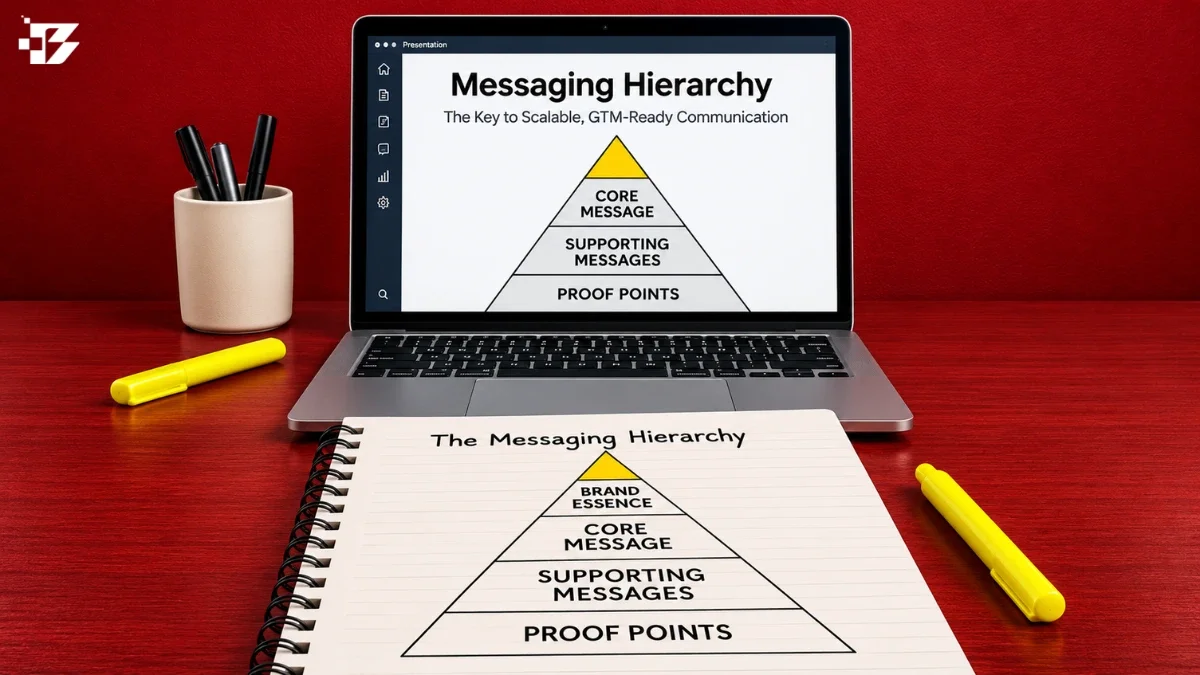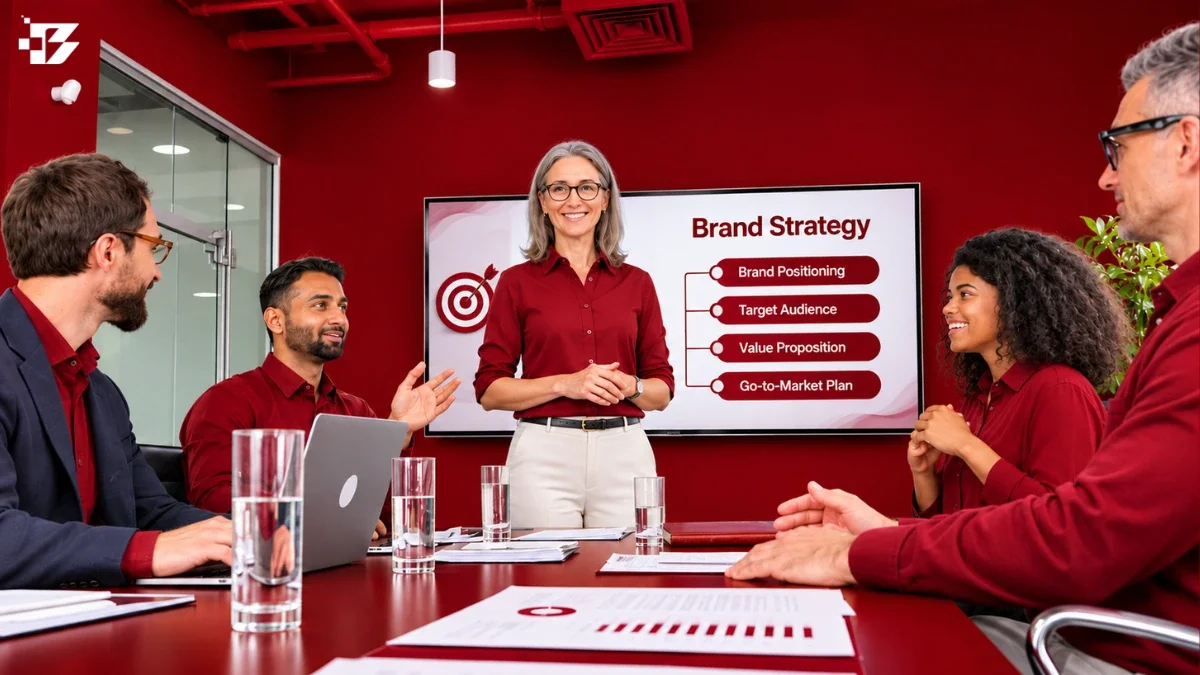
A brand strategy workshop produces decisions when the team agrees in advance what it must choose, who can decide, and what evidence will count. As facilitator, define the decision, gather relevant evidence, and name the accountable decider before inviting stakeholders. A positioning territory is a distinct strategic direction the team could choose to express the brand’s value.
Without those choices, a meeting can fill a whiteboard with ideas but leave no one responsible for acting. Your team needs a clear business goal, a decision it can make, and a way to tell evidence from opinion. This process helps you set a useful scope, run the session, and hand off the work. A useful finish is one clear direction, a named owner for each follow-up, and a date to check progress.
Key Takeaways
- Write one decision question before planning activities.
- Name one accountable decider before sending invitations.
- Bring customer evidence, not only internal opinions.
- Choose exercises that support the decision.
- Record the choice, open questions, owners, and review date.
What Decisions Should the Workshop Make?

A brand workshop is the right tool when a business decision about its identity or market direction is unsettled. It helps your team choose where the brand stands, not brainstorm the next campaign. Write one primary decision and one usable output for each workshop objective.
A marketing or advertising brainstorm focuses on campaigns or individual content. A brand strategy workshop addresses broader choices, such as whom the company serves and what value it should claim. A new business launch, rebrand, internal disagreement, or customer confusion can all signal a need for shared direction.
Turn a broad goal like “align the team” into an observable decision, such as choosing a priority audience or approving a position.
That translation makes the work concrete. If people describe the problem in different ways, write down the disagreement and the business choice it blocks. Then define an output the team can use, such as a chosen audience, a position to test, or a clear brand promise.
Brand direction can shape later campaigns, but it does not replace campaign planning. Your business may need both sessions, held at different times and with different goals. BrandClickX covers brand positioning and business outcomes alongside other marketing topics.
Keep the question narrow enough for the group to answer with the information and authority in the room. Before building activities, write the decision as a question the group can answer in one session.
How Much Time Does the Decision Need?
A focused 2-hour session can set direction, while a 3-4-hour half-day is the practical choice when the team must decide and draft a position. The decision’s complexity sets the time you need. A full day gives the group more room for debate and cross-functional alignment.
Use the shortest session that leaves enough time to compare choices and record the result. A two-hour workshop can set a directional starting point. It may not leave enough room to resolve a complex disagreement or draft a position everyone can use.
| Session length | Best use | Decision status |
|---|---|---|
| 2 hours | Directional starting point | Directional |
| 3-4 hours | Decide and draft | Final draft possible |
| Full day | Deeper debate and cross-functional alignment | Deeper alignment |
A half-day gives the group time to compare alternatives, discuss evidence, and shape a draft. A full day may suit several linked decisions or teams with sharply different views. The right format depends on the scope, the number of open questions, and how much agreement the decision needs.
Do not call a session a decision meeting if the person with final authority cannot join. The group can still review information, map disagreement, and identify questions for that person. It should not present discovery as approval.
For strategy goals that extend beyond the meeting, decide which questions belong in the room and which need later work. If the accountable decider cannot attend, label the session discovery-only before anyone blocks time.
What Evidence Should You Gather Beforehand?
Bring recent customer evidence into the room so the team tests its assumptions against what buyers said and did. Gather real buyer language from sales conversations, interviews, and feedback. Do not rely on polished brand materials alone, because they can hide the words customers use.
Assemble the customer and competitor evidence
For a B2B brand strategy workshop, gather these four items before the session:
- At least 5 win/loss interview summaries.
- 3-5 recent closed-won sales recordings or transcripts.
- 2-3 closed-lost sales recordings or transcripts.
- A messaging audit of 5-7 alternatives.
Then build a broader workshop evidence pack. Include 20 “why we won” notes, 20 “why we lost” notes, 10-15 verbatim customer quotes, and 4-6 alternative homepages with pricing and packaging screenshots.
Look for recurring feedback, confusion about what the offer does, and the reasons buyers chose or rejected it. A data-driven content plan can also start with audience questions and performance information.
Send focused pre-work
Ask participants to review the materials and note what surprised them. A discovery survey should take no more than 30 minutes to complete. Ask what customers misunderstand, what feedback keeps appearing, and why buyers select or reject the offer.
Keep customer statements separate from your team’s explanation of them. A quote is evidence of what someone said; it does not prove why every buyer acts the same way. Mark each item as customer evidence, internal interpretation, or an assumption still needing proof.
Who Needs to Be in the Room, and Who Decides?
Invite the smallest cross-functional group that has the evidence and authority to resolve the decision. A focused team makes room for useful debate without turning the workshop into a town hall. Name one accountable decider, usually the CEO or GM.
Include people who know customers, sales, product, and marketing. They bring different views of the same business and can spot gaps in the team’s assumptions. Participants contribute evidence and expertise; they do not vote on the final choice.
| Group type | Participant count or condition | Authority or outcome |
|---|---|---|
| Fast decision room | 4-7 participants | One accountable decider |
| Enterprise alignment | 6-15 stakeholders | Cross-functional stakeholder input |
| Discovery session without the decider | Decision-maker absent | Discovery only |
A smaller group can let each person share what they know and challenge a claim with useful detail. A wider enterprise group may need more time to surface how a decision affects different teams. Choose participants based on their knowledge and role, not their title alone.
The accountable decider listens, weighs the evidence, and resolves the choice. If the group cannot answer a question, give it an owner and a date rather than letting it hang over the discussion. This keeps one unresolved detail from stopping every other decision.
Tell invitees what they are there to contribute and what authority they do not hold. Make the accountable decider’s role explicit before invitations go out, so discussion does not become an unstructured vote.
What Should a Decision-Focused Agenda Include?
A 3-hour, 15-minute agenda gives a half-day session enough structure to move from evidence to assigned follow-up. The sequence matters: review what buyers said, compare alternatives, then make and record choices. Keep the closing block intact so the group leaves with owners and dates.
Use a single agenda that gives each task a clear output. The blocks below follow a positioning session from evidence review through the final handoff. Keep the discussion tied to the decision rather than letting each exercise grow into a separate meeting.
| Agenda block | Activities with exact minutes | Decision output |
|---|---|---|
| Evidence and ground rules | Evidence and ground rules, 15 minutes | Shared view of the facts and session rules |
| Alternatives and “Only-we” test | List alternatives, 20 minutes; “Only-we” test, 40 minutes | Alternatives and candidate differences |
| 2×2 map and who the brand is not for | 2×2 mapping, 40 minutes; identify who the brand is not for, 20 minutes | Market map and audience boundary |
| Draft and follow-up | Draft positioning sentence and proof points, 45 minutes; assign owners and dates, 15 minutes | Sentence, proof points, owners, and dates |
The seven activities total 195 minutes, or 3 hours and 15 minutes. The alternatives discussion helps the team see the choices buyers already have. The map makes competing claims easier to compare, while the audience boundary keeps the draft focused.
Use a visible timer and name the output before each exercise starts. That small cue helps participants tell the difference between open discussion and a decision task. If one block runs long, trim debate rather than the final ownership work.
A 5-10-minute break can fit if the schedule allows it without cutting decision time or the ownership block. Protect the final 15 minutes for named owners and dates instead of letting discussion consume the close.
How to Create a Brand Strategy Workshop That Produces Decisions

A useful brainstorming exercise begins with individual ideas, then narrows them using customer evidence and business fit. Start with the brand’s core, connect it to customer needs, and give the chosen direction a clear voice. Brainstorming creates options; evidence and business fit help your team choose.
For a wider view of brand strategy, the American Marketing Association explains David Aaker’s 5Bs branding framework, which connects brand equity with relevance, image, loyalty, and the brand portfolio.
Establish the brand core
Give people a few minutes to write what the business exists to do before anyone debates a mission statement. Simon Sinek’s Golden Circle frames purpose through why, how, and what. Ask why the business matters, how it creates value, and what it provides.
Ask the group to picture where the brand should be in 5, 10, or 15 years. Treat each point as a prompt, not a required forecast. A vision should help people make present-day choices, rather than promise a future the team cannot control.
Values become useful when they guide action. Ask what a value would change in a sales call, product decision, or customer service response. If the team cannot name a behavior, the word may be too broad to guide the brand.
Connect the audience to the market
Compare customer needs and pain points with the brand audit and alternatives in the market. Ask which problem matters most, who feels it, and what buyers use instead. A financial services branding strategy also starts with customer needs, competitor research, and clear messaging.
Invite each participant to write ideas before sharing them. This gives quieter people time to think and reduces the pull of the first opinion spoken aloud. The brainstorm can surface audience choices, needs, or value claims worth checking.
Then test those candidate ideas against what customers said and what the business can deliver. A phrase that sounds fresh in the room may not match buyer language or actual service. The team should keep useful options and set aside claims that lack support.
Choosing a priority audience can help a business focus its message and channel choices. The focus strategy approach makes those decisions part of a broader plan rather than isolated campaign choices.
Shape personality and voice
Turn selected traits into words the team would use and words it would avoid. If “warm” is a chosen trait, describe a sample reply: “I can help you sort this out.” Then name language that would feel cold, stiff, or unlike the brand.
One 2026 framework groups nine exercises into Brand Core, Brand Positioning, and Brand Persona. Each exercise takes 20 minutes when all nine run in one sitting, or 30-40 minutes across three sessions. Use only the exercises that serve the decision at hand.
SMART goals are Specific, Measurable, Achievable, Relevant, and Time-bound. Use that test when a brand goal needs a clear measure and deadline. Finish each exercise by recording the decision, the unresolved assumption, and the person responsible for checking it.
Which Exercises and Templates Help the Team Choose?
A template is useful when it helps the group make a specific choice, not when it adds activities for their own sake. Match the exercise to the decision and the way people will work. Exercises can surface ideas, but they do not prove customer demand on their own.
Use exercises to surface options
Choose exercises that help the team compare offers, customer needs, and brand claims. Each one should give participants a clear task and leave a result they can discuss.
- Five-circle sweet-spot exercise: compare where the brand’s strengths and opportunities overlap.
- Revenue-by-offer review: see which offers contribute revenue and deserve closer focus.
- Customer-pain-point exercise: name the problems an audience needs solved.
- Promise challenge: draft and question claims the business might make to customers.
These exercises are starting points for discussion. A team’s view of customer pain may be wrong, and a revenue review cannot show demand by itself. Compare the ideas with actual customer evidence before using them to guide a decision.
Pick a tool that fits the session
Free brand strategy workshop options include Milanote templates, which are free to sign up for. Its templates cover a positioning map, customer persona, SWOT analysis, brand personality, and moodboard. They suit teams that need a focused prompt without a paid canvas.
The Brand Thinking Canvas costs $10 and includes a 22-page manual and eight examples. It has A0- and A4-size PDFs for “Who are you?” and “Who is your audience?” Teams can print it or work digitally in Miro or Canva.
The d.labs Minimum Viable Brand Workshop template is built for a two-hour remote session. It includes 5 minutes for “why,” 5 for audience, 15 for brand name, 30 for brand values, and 30 for brand personality.
It also assigns 15 minutes to positioning and 10 minutes to the design brief. Compare those blocks with your decision and session goals before adopting the template. Before sharing a tool, check that every participant can access it and that its exercises match the decision on the agenda.
How Do You Turn the Options Into a Position?
Choose the position that links a relevant customer problem to a difference the business can actually prove and deliver. A positioning territory is one distinct strategic direction the team could choose to express the brand’s value. Approve one internal positioning sentence supported by 3-5 evidence-backed proof points.
Use a 2×2 map and the “Only-we” test to compare alternatives. The map helps show where offers differ, while the test asks what the brand can claim that others cannot. Then name who the brand is not for, so the position has a useful boundary.
Check each candidate position against four questions:
- Does it matter to the customer?
- Can the team support it with credible evidence?
- Can the business deliver it consistently?
- Does it stand apart from alternatives?
A B2B brand positioning project may produce a competitive positioning matrix, customer portrait and tension, core belief, 3-7 positioning territories, an internal positioning statement, and an external messaging hierarchy. These outputs give the team material for comparing choices without mistaking a long list for a final decision.
The team’s final internal positioning sentence should make the choice plain. Attach 3-5 proof points that show why customers can trust the claim. Those proof points can help connect brand work to business outcomes, as in marketing budget planning.
Use a pain-point promise exercise to draft three testable promises around one customer problem. Keep each promise specific enough to test later against customer response and the company’s ability to deliver.
Look for a meaningful difference, not a clever phrase that could describe any competitor. If the proposed distinction could describe any alternative on the map, sharpen it before approving the sentence.
How Can You Test a Brand Message With Evidence?

Decide what response would count as a useful result before showing the team competing messages. Set a clear decision rule so the test has a purpose beyond finding a favorite. Keep modeled preference separate from real-world response.
Define the test before comparing messages
Write down the decision, accountable owner, existing evidence, open questions, alternatives, response endpoint, and rule for choosing. The response endpoint is the action or signal you will measure. A preference study can show which option respondents favor in a model; it does not show how people act in a live setting.
Define the audience and compare messages in a way that fits the question. If the team changes several parts at once, it may be hard to tell which part shaped the response. A disciplined ad creative test separates concept tests from execution tests and calls for a clear primary measure.
Choose a rule before results arrive. For example, decide which measure matters most and what outcome would justify selecting a message. If the results do not meet that rule, record the test as inconclusive instead of naming a forced winner.
Interpret results without overclaiming
A 2026 River City Federal Credit Union case used 140 digital-twin respondents in a discrete-choice study. A staff-proposed slogan ranked weakest in the modeled comparison. It later performed worst in live Facebook and Instagram ads.
The case reported a 42% increase in Result Rate, from 0.52 to 0.74. Result Rate measured landing-page link clicks per impression. The comparison did not isolate the effect of the slogan or the incentive.
That limit matters when you report a result to your team. The ad result reflects the tested comparison, not proof that a slogan alone caused the change. Treat a measured lift as evidence about the tested comparison, not proof that one slogan alone caused it.
What Should the Team Leave With and Do Next?
The workshop’s value depends on whether people can use its decisions in their next piece of work. Leave with a clear handoff that makes the choice and remaining work easy to find. Every unresolved question needs an owner and a date.
Use these four handoff checks before the team leaves:
- Record the final decision and the reason behind it.
- Separate evidence from assumptions.
- Assign an owner and date to each unresolved question.
- Translate the approved direction into the next customer-facing work.
A three-column decision log can make open questions actionable:
| Assumption | Owner | Proof Needed |
|---|---|---|
| What the team still believes but has not proved | Person responsible for checking it | Evidence that could confirm or change it |
| Which customer response may be misunderstood | Person reviewing customer feedback | Relevant customer comments or test results |
| Which delivery claim needs support | Person checking the offer or service | Proof the business can deliver the claim |
Share a concise internal summary with the teams responsible for product, sales, customer service, and marketing. State the chosen direction and what it changes in their work. For next customer-facing steps, inbound lead generation strategies can help turn a clear position into useful marketing activity.
Keep the summary short enough that people can use it while planning, writing, or speaking with customers. Record which questions remain open, instead of blending them into the approved direction.
Set a specific review date for checking whether the assigned proof changed or confirmed an open assumption.
That review gives each owner a deadline and gives the team a reason to revisit its choice. Put the date in the decision log while the discussion is still fresh.
Conclusion
A decision-focused workshop needs a clear choice, evidence to support it, and someone accountable for acting on the result. A long list of exercises cannot replace a decision that the business can use. The same is true of a strong opinion without customer proof.
Your first action can take one sentence. Write the decision the workshop must resolve, then confirm who has the authority to make it. That simple step gives the team a firm starting point and keeps the session tied to the business need.
Keep the follow-up small and clear enough to complete. Name the people who will check open questions, and set a date to review what they learn. Write the decision question and confirm the accountable decider before you send the first invitation.