For most U.S. businesses, the right network is the one that meets the payment’s cost, finality, asset, and compliance needs without creating a harder integration than the flow is worth. Compare the payment route as a whole, not just a token price or a headline transaction-per-second figure.
For cross-border payments, the route can affect when a supplier receives funds, how much arrives, and how finance teams reconcile the payment. A payment provider can simplify access to blockchain rails, but it does not remove the need to check the underlying network and payment path. Match the network to the payment flow, then weigh delivered cost, settlement finality, asset support, security, compliance, and integration.
Start with one recurring payment problem and compare realistic routes against the same business requirements. Treat a network and the provider routing through it as separate choices, because each can affect the payment outcome.
Key Takeaways
- Choose a network for a specific payment flow, not a token’s price or a single speed claim.
- Compare the recipient’s delivered amount, not only the network fee.
- Distinguish transaction confirmation from protocol-level finality.
- Check that the asset, wallet, recipient, and payment provider support the same network.
- Test one difficult payment flow before changing broader business operations.
What Is a Blockchain Payment in Business Terms?
A blockchain payment transfers a digital asset through a shared ledger, while the blockchain network determines how that transfer is recorded and validated. The asset and the network are separate choices: sending the same stablecoin on two networks uses two different ledgers and payment paths.
A blockchain is a shared digital ledger replicated across computers on a network. Those computers, called nodes, check proposed transactions against the network’s rules. A payment is recorded on the ledger only after the network accepts and includes its transaction.
Choose the asset you intend to send separately from the ledger that will record its transfer.
How a payment moves across a ledger
A sender uses a wallet to authorize a transaction to a recipient’s wallet address. The address identifies where the asset should go on a particular network. Nodes validate details such as whether the sender has enough funds and whether the transaction follows the network’s rules.
Once accepted, the transaction is broadcast across the network and included in a block. That inclusion is called confirmation. A recipient may see a transaction notice before the business considers it final, and the recipient’s ability to spend or convert funds can depend on the network and payment provider.
How stablecoins differ from volatile crypto
A stablecoin is a digital asset designed to maintain a stable value by tracking a reserve asset such as the U.S. dollar. Stablecoins are designed to track fiat currencies, but the asset’s target value does not make every network transfer instant. Issuer and custody considerations also remain.
Bitcoin is a volatile crypto asset, unlike dollar-pegged stablecoins. A central bank digital currency is a digital form of money issued by a central bank, while a tokenized bank deposit represents a bank deposit recorded in token form. These asset types are not interchangeable, and their availability for business payments differs.
For businesses, the choice affects both the value being transferred and the system that records the transaction. A stablecoin can be designed to track the U.S. dollar, but its network transfer still depends on validation and the recipient’s ability to access the asset.
Before comparing networks, identify both the asset you will send and the ledger that will record it.
Which Business Payment Flows Benefit Most?
A business payment flow is a strong candidate when banking cutoffs, correspondent-bank delays, or difficult payout access are a recurring operational problem. Start with a recurring friction point, such as a supplier payment that waits several days for a bank transfer to arrive.
Some international wire transfers take 3-5 business days. Blockchain payments can support international payroll, supplier payments, customer payouts, and treasury transfers, but the recipient still needs a usable way to receive, hold, or convert the asset.
Cross-border supplier and contractor payments
Supplier and contractor payments can be worth testing when a business repeatedly sends funds across borders or faces limited banking access. Stablecoin payments may let the recipient receive value outside regular bank processing hours. The benefit depends on whether the recipient can use the asset or convert it locally.
A contractor who needs local currency may not benefit from a faster on-chain transfer if conversion is slow or difficult. Ask whether the recipient can receive the asset, keep it safely, and access an off-ramp that suits their needs. An off-ramp converts a stablecoin to local currency.
Customer checkout and payouts
Blockchain payments can support customer checkout, refunds, and payouts when customers already want to use a compatible digital asset. A payout may be useful when a customer lives in a market with limited access to traditional payment services. Still, retail acceptance is not automatically a better choice if customers do not want to pay this way.
Checkout also needs clear instructions, support for refunds, and a process for matching each transaction to an order. A business that introduces an unfamiliar payment option may add support work without changing customer behavior. Test demand before adding it as a standard checkout method.
Treasury transfers and conditional payments
Treasury teams may use blockchain transfers to move assets between business wallets or across time zones. Smart contracts can release or route funds when defined conditions are met. For example, a contract could trigger a payment after a specified event is recorded.
Those conditions need careful design. A contract may follow its code exactly even when the code does not reflect the intended business outcome. Make sure the operational team understands what activates a payment, who can change the conditions, and how exceptions are handled.
Choose one costly or delayed flow to evaluate first rather than trying to move every payment onto a blockchain.
How to Compare Blockchain Networks for Business Payments: A Practical Framework
A useful network comparison starts with the payment’s required outcome and applies the same measures to every candidate. Use one scorecard for Ethereum, Polygon PoS, and Solana rather than comparing one network’s fee with another’s peak speed.
Record the expected fee per transfer, observed and peak throughput, block or inclusion time, and finality. Throughput measures transactions processed over time, not completed, irreversible payments. Treating TPS as a direct measure of payment completion can lead to a poor choice.
Measure cost and performance under real conditions
Network activity changes the conditions in which a transaction is processed. Compare fees during similar congestion periods, and note when demand was measured. Separate a momentary observation from a network’s claimed capacity, since a capacity figure does not tell you how the network performs during your payment window.
Use the same payment size, asset, and business scenario for each candidate. Record the observed result and peak capacity in separate fields. This makes a short-lived busy period less likely to distort the comparison.
Check finality, governance, and access
Confirmation, finality, and a payment provider’s status notice describe different events. Identify how long the network takes to reach finality and what evidence your business will use before releasing goods or marking an obligation paid. Then check who can validate transactions and who can access the network.
Public permissionless networks allow broad participation under their rules. Private permissioned networks restrict access and validation to authorized participants. A controlled participant group may suit some business processes, but it also changes who governs the ledger and how changes are made.
Match asset support and integration to the flow
A network that performs well is not useful for your payment if it does not support the required asset or connect to your payment software. Confirm that the sender’s and recipient’s wallets can use the asset on the same network. Check that your payment systems can create, monitor, and reconcile the transaction.
Use a short checklist: record the payment requirement, compare candidates under similar conditions, confirm finality expectations, check governance and access, and test asset and software compatibility. Keep separate records for observed throughput, advertised capacity, and finality because they answer different questions.
What Do Network Fees Really Cost?
A low network fee is only one part of what a business pays to send and receive value. Compare the complete route, including the blockchain charge, provider charges, conversion, and the receiving rail.
Under low-congestion conditions described for 2026, an ERC-20 transfer on Polygon PoS costs about $0.002, while one on Ethereum costs about $0.06. Those figures are network fees, not guaranteed end-to-end payment prices. Both networks can charge more during demand spikes.
| Network and transfer | Low-congestion ERC-20 fee | Condition |
|---|---|---|
| Polygon PoS | About $0.002 | Fees can rise during demand spikes |
| Ethereum | About $0.06 | Fees can rise during demand spikes |
| FX spread | No fixed network-fee figure | May be included in the exchange rate |
The amount delivered to a recipient may also reflect a payment provider’s charges, conversion costs, and the fees or conditions of the receiving rail. For example, a route that converts a stablecoin to local currency can include an exchange-rate spread even when the price quote shows no separate FX fee.
A rate without a separate fee line is not necessarily free of conversion cost. Compare the starting amount with the recipient’s delivered amount, using the same transfer size and destination. Include any fixed provider charges and the cost of the final payout method.
Keep the test payment consistent across routes. A comparison of different transfer amounts, currencies, or payout methods can make a higher-cost route appear cheaper. Record the amount sent, every stated charge, the exchange rate, and the amount the recipient actually receives.
For a fixed test payment, request a quote that shows the conversion rate and the destination amount, even when the provider bundles charges into its rate. Compare the recipient’s delivered amount on the same test payment before treating two routes as equally priced.
How Fast Is Settlement, and What Counts as Final?
A fast confirmation tells you a transaction entered a block, but it does not by itself tell you when the payment is final. Confirmation and finality are distinct: confirmation is inclusion in a block, while finality is the protocol-level point when the ledger treats that block as irreversible.
A provider’s notification may arrive before protocol finality, and neither event automatically means the recipient can spend or convert the funds. Set the release rule around the finality behavior your payment route actually provides.
Confirmation is not always finality
Ethereum takes about 15 minutes to finalize a block under its current consensus mechanism. Finality requires validators representing at least two-thirds of total staked ETH to attest. Reversing a finalized Ethereum block would require burning at least 33% of total staked ETH.
These measures describe Ethereum’s protocol, not the moment every business system updates. Your payment provider may display a transaction as received earlier, while a recipient’s wallet or off-ramp may apply its own availability rules.
| Network or measure | Timing or requirement | What the measure means |
|---|---|---|
| Ethereum finality | About 15 minutes | Block finalization |
| Ethereum validator threshold | At least 2/3 of total staked ETH | Attestation requirement |
| Polygon PoS | About 1.5-second blocks; checkpoints roughly every 30 minutes | Block production and checkpoint cadence |
Match settlement expectations to the network
Polygon PoS produces blocks in about 1.5 seconds and checkpoints its state to Ethereum roughly every 30 minutes. Polygon PoS checkpoint timing describes a separate event from the creation of each block. A quick block time is not, on its own, proof of equivalent finality.
Build business rules around the event that matters to the transaction. A supplier may accept a different release threshold from a business delivering high-value goods. Your finance team should also distinguish a provider’s payment status from the network’s protocol state in its records.
When one route has several settlement milestones, document what each status means in plain language. Set the business rule for when funds may be released against the network’s actual finality behavior.
How Should Businesses Assess Network Security and Control?
Security depends on both the network’s validation and the business’s control of the keys that authorize spending. Assess both layers: a ledger can operate as designed while a business still mishandles wallet access.
Public networks allow open participation under shared rules, while permissioned networks restrict participation to authorized entities. Consortium networks are governed by multiple organizations. Restricted access changes who participates, but it does not remove the need to assess operator concentration or governance changes.
Public and permissioned governance
Open participation can offer broad access and a public transaction record, but a business may have limited influence over network changes. A permissioned setup can provide more controlled access and privacy, though it relies on a selected operator group to validate or govern activity.
Hyperledger Fabric, Hyperledger Besu, Quorum, and Corda Enterprise are examples of permissioned blockchain platforms. Compare who operates the network, how decisions are made, and what happens if an operator leaves or the governance rules change.
Wallet custody and approval controls
With a custodial wallet, a provider manages key functions and the business depends on that provider’s controls and procedures. With self-custody, the business takes direct responsibility for key access and recovery. Enterprise wallets can use multiparty computation, or MPC, to split key operations across participants.
MPC is a key-management approach, not a guarantee against every failure. Before funding a business wallet, check four areas: key control; role-based permissions; approval thresholds or multi-signature controls; and recovery and incident procedures. Confirm that staff can explain who handles each step.
Security review should cover both normal operations and unusual events, such as a lost device, a staff departure, or an attempted unauthorized transfer. Verify who can approve, pause, recover, and change permissions before funding a business wallet.
Which Networks Fit Different Payment Needs?
Polygon PoS is a plausible choice for lower-cost Ethereum-compatible transfers, while Ethereum or Solana may fit better when ecosystem or transaction requirements take priority. Choose by the job, since one network’s strengths do not make it the right fit for every payment.
In a recent one-hour 2026 comparison, Polygon PoS processed roughly 67 transactions per second and Ethereum 25. Observed maximum throughput was 537 TPS for Polygon PoS and 75 TPS for Ethereum, with results varying by demand. Throughput is not a guarantee of business payment speed.
Ethereum for ecosystem compatibility
Ethereum can suit a business that values its ecosystem and compatibility with Ethereum-based assets and software. Its block finality behavior may also fit a business that can wait for the relevant settlement threshold. Measure the network using the business payment, rather than assuming general network activity predicts your result.
Ethereum throughput in the one-hour comparison was about 25 TPS, with an observed maximum of 75 TPS. Those are comparison results under specific 2026 conditions, not a promise of future performance or of a particular transfer’s completion time.
Polygon PoS for lower-cost Ethereum-compatible transfers
Polygon PoS can fit a business that prioritizes lower-cost Ethereum-compatible transfers. It is a sidechain with its own validator set and a 105-validator cap, not an Ethereum rollup. That structure brings governance and validation tradeoffs that a business should weigh alongside compatibility.
In the same recent one-hour 2026 comparison, Polygon PoS processed roughly 67 TPS and reached an observed maximum of 537 TPS. Demand affects results, and a maximum reading does not establish a steady rate for every payment period.
Solana for high-throughput use cases
Solana may suit high-throughput use cases when its transaction formats and software fit the payment application. Its maximum transaction size is 4096 bytes, increased from 1232 bytes and live on mainnet from September 15, 2026.
Solana v1 transactions are opt-in. They require applications to set explicit compute-unit and loaded-account-data-size limits, so existing software may not support them automatically. The @solana/web3.js 3.x version 3.0.2 supports reading and sending v1 transactions.
A business should test that transaction format with its actual application rather than assuming an upgraded network feature works across all payment tools. Run compatibility tests with the exact wallet, software library, asset, and payment flow you intend to use.
Does Stablecoin Support Change the Network Choice?
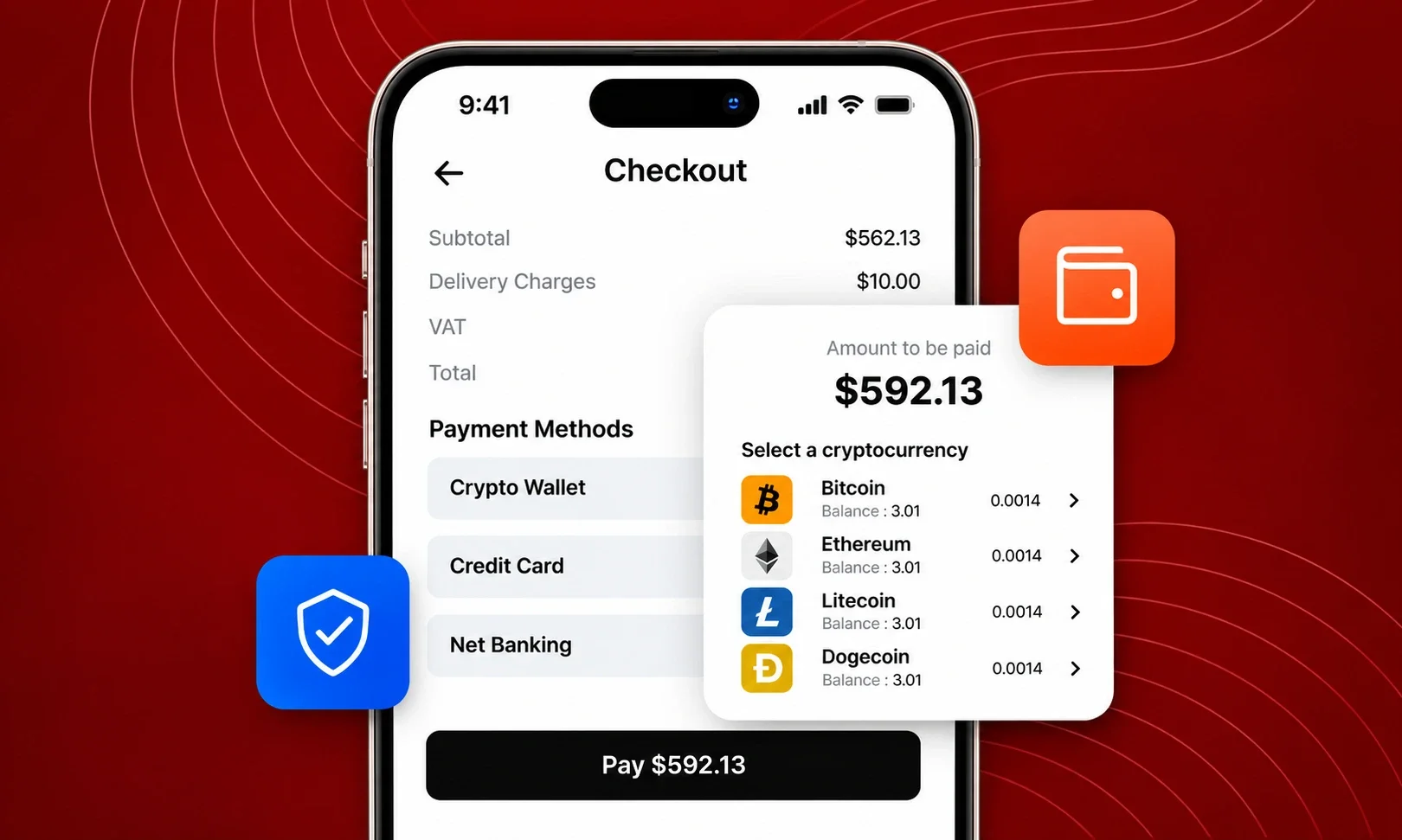
A stablecoin only works for a payment route when the sender, recipient, wallet, and provider all support that asset on the same network. Check the exact chain, not only the token name shown in an account or payment screen.
As of September 16, 2026, Circle natively supports USDC on 38 blockchain networks. Issuer support, network compatibility, wallet support, and redemption access are separate checks. A token with the same name on another network may not travel through the same payment route.
Check that the asset is supported on the exact chain
Confirm that the sender’s wallet, the recipient’s wallet, and any payment provider recognize USDC on the selected network. A wallet may display assets on several chains, but that does not mean every address accepts every network’s version of a token.
Sending a token to a wallet on the wrong network can leave the funds inaccessible to the recipient. Ask for the exact network and token instructions used by the destination wallet, not just the ticker symbol.
Assess the issuer and redemption route
Circle says USDC is backed 100% by highly liquid cash and cash-equivalent assets, is redeemable 1:1 for U.S. dollars, and has monthly reserve attestations conducted by a Big Four accounting firm. Reserve backing does not remove network, issuer, custody, or depeg risk.
Direct access to redemption also depends on eligibility. Circle Mint is for eligible businesses and is not available to individuals or small businesses. A business that cannot use that route may need another method for receiving or converting the asset.
Confirm the destination network and the recipient’s exact token instructions before sending a test transfer.
What Should You Compare in a Payment Provider?
Choose a payment provider by the job it must perform, such as issuing stablecoins, providing wallets, or converting payouts to local currency. Start with the role, then compare the rails, custody model, and integration your payment flow needs.
One provider may connect a business to on-chain transfers, while another may focus on wallets, local payouts, or checkout. Compare responsibility as carefully as price: know which party handles custody, conversion, compliance, and settlement.
Match the provider’s role and payment rails
Circle is listed for issuer-level USDC minting, redemption, and transfers over on-chain rails and U.S. wires. Zero Hash serves U.S.-focused fintechs embedding crypto, with on-chain, ACH, and wire rails and U.S. money transmitter licenses. These roles do not make either service a universal fit.
Fireblocks provides institutional self-custody infrastructure with on-chain settlement and tooling used under the customer’s licenses. Bridge supports stablecoin pay-ins and payouts over on-chain, ACH, wire, and SEPA rails, with U.S. money transmission handled through Stripe.
| Provider | Stated fit | Rails or network | Operating detail |
|---|---|---|---|
| Circle | Issuer-level USDC services | On-chain; U.S. wires | Minting, redemption, and transfers |
| Zero Hash | Crypto embedded by U.S.-focused fintechs | On-chain; ACH; wire | U.S. money transmitter licenses |
| Fireblocks | Institutional self-custody infrastructure | On-chain settlement | Tooling used under the customer’s licenses |
| Bridge | Stablecoin pay-ins and payouts | On-chain; ACH; wire; SEPA | U.S. money transmission handled through Stripe |
| BlindPay | Stablecoin-to-local-fiat payouts and collections | Pix; SPEI; ACH; SWIFT; on-chain | Local payout and collection rails |
BlindPay supports stablecoin-to-local-fiat payouts and collections through Pix, SPEI, ACH, SWIFT, and on-chain rails. Compare whether the provider supports the recipient’s local payout method, not merely whether it can accept an on-chain payment.
Compare custody, settlement, and integration
Cobo offers payment APIs, wallet-as-a-service infrastructure, MPC custody, and cold storage. That makes its capabilities relevant when you are weighing wallet infrastructure and custody options. Check which functions your team will operate and which the provider will perform.
Stripe supports USDC and USDB on Ethereum, Base, and Polygon, credits settlement in U.S. dollars, and lists a stablecoin payment fee of 1.5% with no additional fixed fee. Coinbase Payments is a Base-based product with checkout, e-commerce APIs, and smart-contract settlement components.
Compare custody, off-ramps, supported rails, APIs, compliance responsibilities, and fee structure against your specific flow. A quoted rate can exclude conversion or payout steps, while an integrated service may combine several costs in one price.
Get written clarity on which party handles custody, conversion, compliance, and settlement before evaluating the quoted rate.
Which U.S. Compliance Rules Apply?
U.S. MSB registration is a question about the business’s activities and role, not a blanket requirement for every company that uses a blockchain. Start by classifying the activity, because the registration duties apply if the business is a money services business.
FinCEN requires most money services businesses to register with the U.S. Department of the Treasury, with few exceptions. An MSB owner or controlling person must file FinCEN Form 107 within 180 days after the business is established.
Determine whether the business is an MSB
Using blockchain payments alone does not determine whether a business is an MSB. The business’s activities and role matter. A person acting as an MSB solely as an agent of another MSB is not required to register with FinCEN.
That exception is specific to an agent acting solely for another MSB. Do not assume it applies merely because a provider is involved in a payment. Map what the business does and who performs each part of the transaction.
Keep registration records and renewal dates
If registration applies, FinCEN requires renewal every two years. The MSB must keep a copy of its registration form and supporting documentation at a U.S. location for five years. MSB recordkeeping requirements include both the form and its supporting documents.
Use four checks to organize the work:
- Map the business’s activities and payment role.
- Identify the owner or controlling person responsible for filing.
- Calendar the two-year renewal date.
- Retain the form and supporting documents at a U.S. location.
These requirements provide a starting point, not a full assessment of every legal duty a business might have. Confirm the business’s specific status and any other jurisdictional obligations with qualified counsel.
Have qualified counsel assess the business’s exact activities before relying on an MSB exception.
How Can You Pilot a Network Without Disrupting Finance?
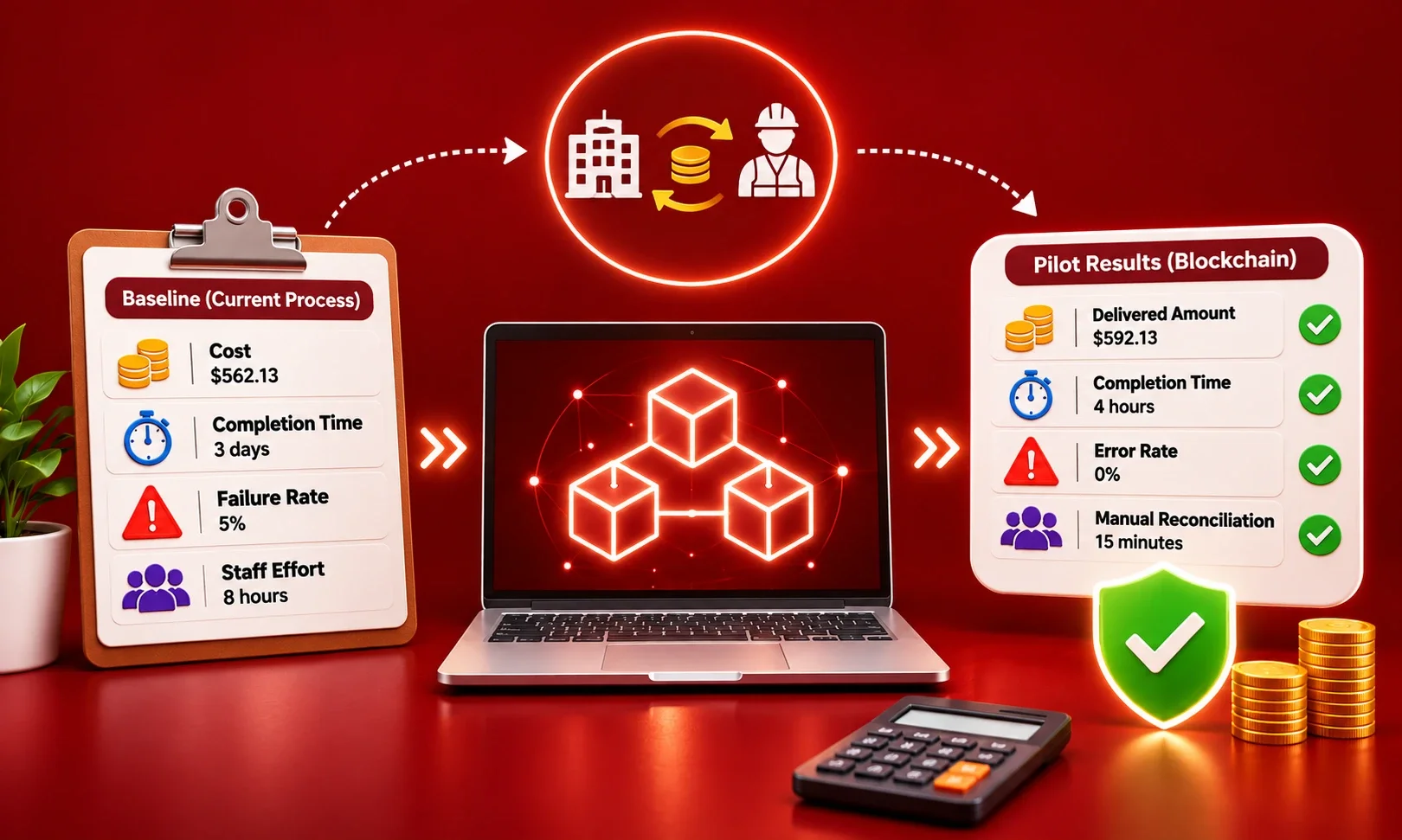
Before a pilot, write down the current cost, completion time, failure rate, and staff effort for the same payment flow. A documented baseline lets you compare the blockchain route with the process your finance team already uses.
Start with one high-friction flow, such as a supplier payout or contractor payment. Measure delivered amount, completion time, error rate, and manual reconciliation effort against the baseline. Keep the test small enough for the team to review every transaction.
Set the baseline and success measures
Record the current payment’s amount sent and received, the time from initiation to availability, any failures, and staff time spent reconciling it. Define what counts as a successful completion before the test begins. A lower network fee alone does not establish that the business process improved.
Include the time required to correct errors and answer payment questions. If a blockchain route changes the work from bank follow-up to wallet troubleshooting, record that effort too. The comparison should reflect the whole payment process.
Run a limited payment test
Send a small payment through the full route, from business approval through receipt or conversion. Confirm that the recipient can use the chosen asset and that each status update matches the payment’s actual progress. Test the exception path as well as the successful payment.
Plan for controls such as MPC wallets, KYC/AML checks, and FATF Travel Rule processes where they apply to the business and its providers. Assign staff to monitor the test, document any issue, and decide when a payment should be paused or escalated.
Connect payment records to finance systems
Finance integrations may connect blockchain records to ERP, treasury, and accounting workflows, as well as ACH, Fedwire, SEPA, or SWIFT processes. Middleware or a payment provider may translate blockchain transactions into familiar accounting events, but the business still needs to check that the entries match its records.
Use this integration checklist: map transaction records to ERP or accounting entries; confirm treasury reporting and bank on/off-ramps; assign approval roles; test monitoring and audit records. Reconcile the payment amount, transaction status, recipient, and any conversion in the same workflow.
Keep the test results with the finance team’s operating records, including exceptions and reconciliation corrections. Scale only after the test matches the business’s success measures and the finance team can reconcile it reliably.
What Risks Could Make a Network the Wrong Fit?
A blockchain payment is a poor fit when its irreversibility, asset exposure, or operational requirements outweigh the problem it is meant to solve. Check the downside first, especially when an error would be hard to correct.
Bitcoin and Ethereum are volatile crypto assets compared with dollar-pegged stablecoins. Stablecoins have different value goals, but businesses still face issuer and custody considerations. A blockchain transfer generally has no card-style chargeback process, so an incorrect destination or amount can be difficult to recover.
Operational and asset risks
Smart-contract code can contain vulnerabilities, and a contract may carry out a payment condition exactly as written even when the code does not reflect business intent. A wrong address or wrong network can also send funds somewhere the intended recipient cannot access.
Do not treat a blockchain transfer like a card payment: an incorrect destination or amount may be difficult to recover through a chargeback.
Provider and legacy-system complexity can add steps for approvals, reporting, conversion, and reconciliation. A route that looks simple at the wallet may require new operational work elsewhere. Measure that work as part of the business case instead of treating it as an implementation detail.
Asset price exposure matters when a business or recipient must hold a volatile cryptocurrency. Even a short holding period can make the value received differ from the value expected. A stablecoin route changes that exposure but does not eliminate every asset-related risk.
Cases where another payment rail may work better
Another payment method may be preferable in four cases:
- The recipient cannot use the selected asset.
- Required privacy or governance does not fit the network.
- Operational and conversion costs erase the expected benefit.
- The business needs a familiar, reversible dispute process.
Bank rails or card payments may be a better fit when the recipient needs a different access model or a familiar way to dispute a transaction. A blockchain is not automatically more secure or cheaper than a bank payment for every business use.
Keep a bank or card option available when a recipient needs a payment method with a different access or dispute model.
Conclusion
The best business payment network is the one that clears the required payment safely and predictably within the business’s real operating constraints. A fast or low-cost headline figure does not settle whether the full route fits your asset, finality, access, and control needs.
Start with one payment that creates recurring delays or manual work. Record the current process, then compare the full route using a small, controlled test. Keep the result tied to what the recipient receives and what your finance team can reconcile.
Choose one payment flow, define its success measures, and test the complete route with a small, controlled payment.