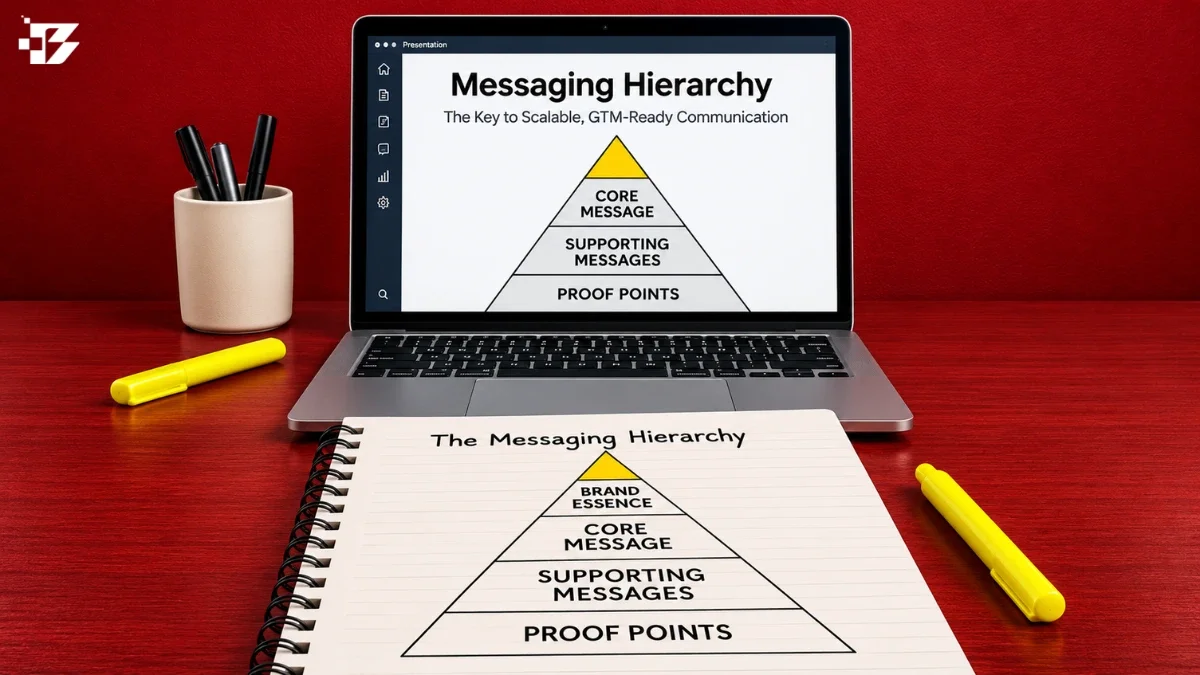
A complex business needs one shared core message, with modular proof and audience-specific emphasis underneath it. A benefit pillar is a recurring customer outcome that organizes the supporting messages and evidence for a brand or product. That structure helps you explain one value across different products without making every buyer hear the same pitch.
Without a shared core, teams can improvise separate stories for the company, product, and customer. One corporate promise might focus on helping customers work with confidence. A finance product can support it with cost controls, while an operations product can show faster task completion. The promise stays steady as the proof changes.
For marketing and product marketing teams, the challenge is to meet customers across a complex buyer journey. You need enough structure to keep the brand recognizable and enough room to make each offer relevant. The framework should make it easy to adapt a message without changing the underlying promise.
Key Takeaways
- Anchor each product story in one shared company promise.
- Build benefit pillars around outcomes customers care about.
- Use evidence to support every customer-facing claim.
- Tailor message order and proof to each buyer’s needs.
- Keep approved claims in a shared team resource.
Why Does a Complex Business Need a Messaging Hierarchy?
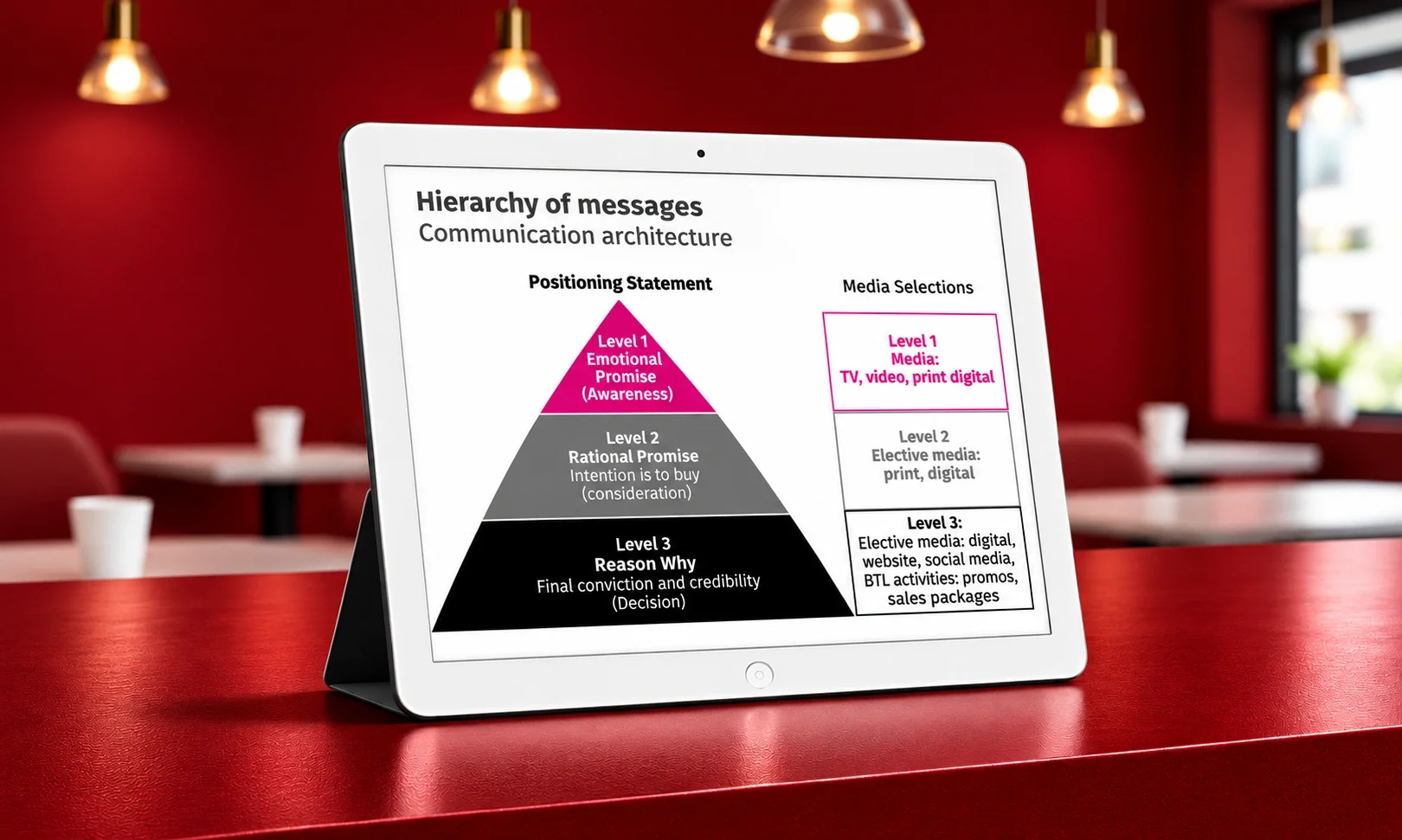
A buying group can encounter a company through AI search, a website, and a sales conversation before anyone compares offers directly. A messaging hierarchy keeps the meaning consistent across those touchpoints, even when the wording changes. Every team should support the same core promise with claims the business can prove.
In 2025, 94% of business buyers used AI in their buying process, and 61% used private AI tools from their organization. Twice as many buyers named generative AI or conversational search as an important source than any other source, including vendor websites, product experts, and sales.
Forrester’s 2025 buyer research also shows why discovery can feel fragmented. Buyers may gather information in different places, then check claims with people inside and outside their company.
Consistency means keeping the claim true, not forcing every team to use identical words.
That distinction matters because repetition without context can leave buyers unsure what makes one offer different. In 2025, 77% of buyers described their last purchase as complex or difficult. Buying groups commonly include 6 to 10 stakeholders, and buyers spend 17% of evaluation time meeting with suppliers.
When marketing promises one outcome and sales describes another, customers must decide which version to trust. Product teams can add another mismatch if feature language makes a different promise from the brand. A shared message gives teams a base, while genuine differences between products or industries still deserve clear explanation.
Audit one live customer journey for a claim that changes meaning between the website and the sales conversation.
How to Build a Messaging Hierarchy for a Complex Business in Six Steps
Start with customer language and deal evidence, not a list of features the company wants to promote. Your goal is to find repeatable outcomes, then turn them into specific claims with proof points. Begin with a practical sample, then expand research when your business question needs more depth.
Collect Customer and Deal Evidence
One B2B framework recommends interviewing 10 customers, reviewing the last 20 won deals, and analyzing the last 10 lost deals. Treat those numbers as a starting point, not a universal research target. Use five evidence inputs to find recurring outcomes and objections:
- Customer interviews
- Won-deal reviews
- Lost-deal analysis
- Sales-call notes
- Observed product use
Review the evidence for pain points customers describe in their own words. Compare those comments with sales notes and product use, so a repeated phrase is not mistaken for a proven result. A useful SaaS product marketing approach also ties customer needs to a clear value proposition and customer stories.
Turn Repeated Outcomes Into Benefit Pillars
Group similar problems by the customer outcome they point toward. For example, long handoffs might become “Keep Work Moving,” while unclear costs might become “Control Operating Costs.” Name each benefit pillar in four to six words, explain it in one sentence using customer language, and connect it to at least one proof point.
Separate a true outcome from a feature. “Automated approvals” describes a product function; “approve routine work sooner” describes a customer result. Keep the feature as a supporting message when evidence shows that the result matters to buyers.
Attach Proof to Every Customer-Facing Claim
Choose evidence that directly supports the claim, such as a customer example, product data, or a documented capability. Avoid unsupported superlatives like “best” or “fastest.” A 10-customer interview starting point can help teams organize early research, but it does not prove that every customer group has the same needs.
Research saturation depends on method and goal. Theme saturation estimates include 9 interviews or 4 focus groups; meaning saturation estimates include 24 interviews or 8 groups. Theoretical saturation estimates range from 20 to 30 or more interviews.
Other methods use 20 to 40 interviews per site for metatheme saturation, or 10 exhaustive free lists for saturation-in-salience. Empirical qualitative studies reached saturation within 9 to 17 interviews or 4 to 8 focus group discussions, especially with similar participants and narrow goals.
A review of 23 articles found that 17 used empirical data and 6 used statistical modeling to assess saturation. Treat saturation figures as research-design guidance, not a quota that overrides a narrowly defined business question.
What Belongs in Each Level of the Messaging Hierarchy?
A useful hierarchy connects a company-wide promise to specific, supportable reasons a buyer should believe it. It can use five stages, though teams may shorten the working version for daily use. Each level should make the next claim clearer and easier to support.
Set the Core From Promise to Proof
The table shows one practical structure, from the broadest company idea to the evidence behind a claim. Some teams combine levels, but the audience, use cases, and proof still need a clear place.
| Hierarchy level | Its job | Supporting material |
|---|---|---|
| Brand promise | State the lasting company commitment | Brand values and customer outcome |
| Positioning statement | Define the market choice | Audience, category, differentiation |
| Value proposition | Explain a product’s value | Audience need and use case |
| Key messaging or pillars | Express customer-facing outcomes | Benefit pillars and supporting messages |
| Proof points | Show why a claim is credible | Product evidence and customer examples |
One five-stage model runs from proof points to key messaging, value proposition, positioning statement, and brand promise. Another product messaging framework includes a target audience and use cases alongside its value proposition, pillars, and proof points.
Separate Positioning From Customer-Facing Messages
Positioning is the internal strategic choice about whom you serve, what value you offer, and how you differ. Messaging is the customer-facing expression of that choice. A financial services brand strategy can use this distinction to keep claims clear for buyers who need trust and specific value.
Some frameworks set 2 to 4 core value propositions, each supported by 3 to 5 messages. Use that as a workable range, not a rule for every product. Keep the promise concise, but retain enough detail below it for a buyer to verify each claim.
How Should You Adapt Messages for Different Buyers and Offers?
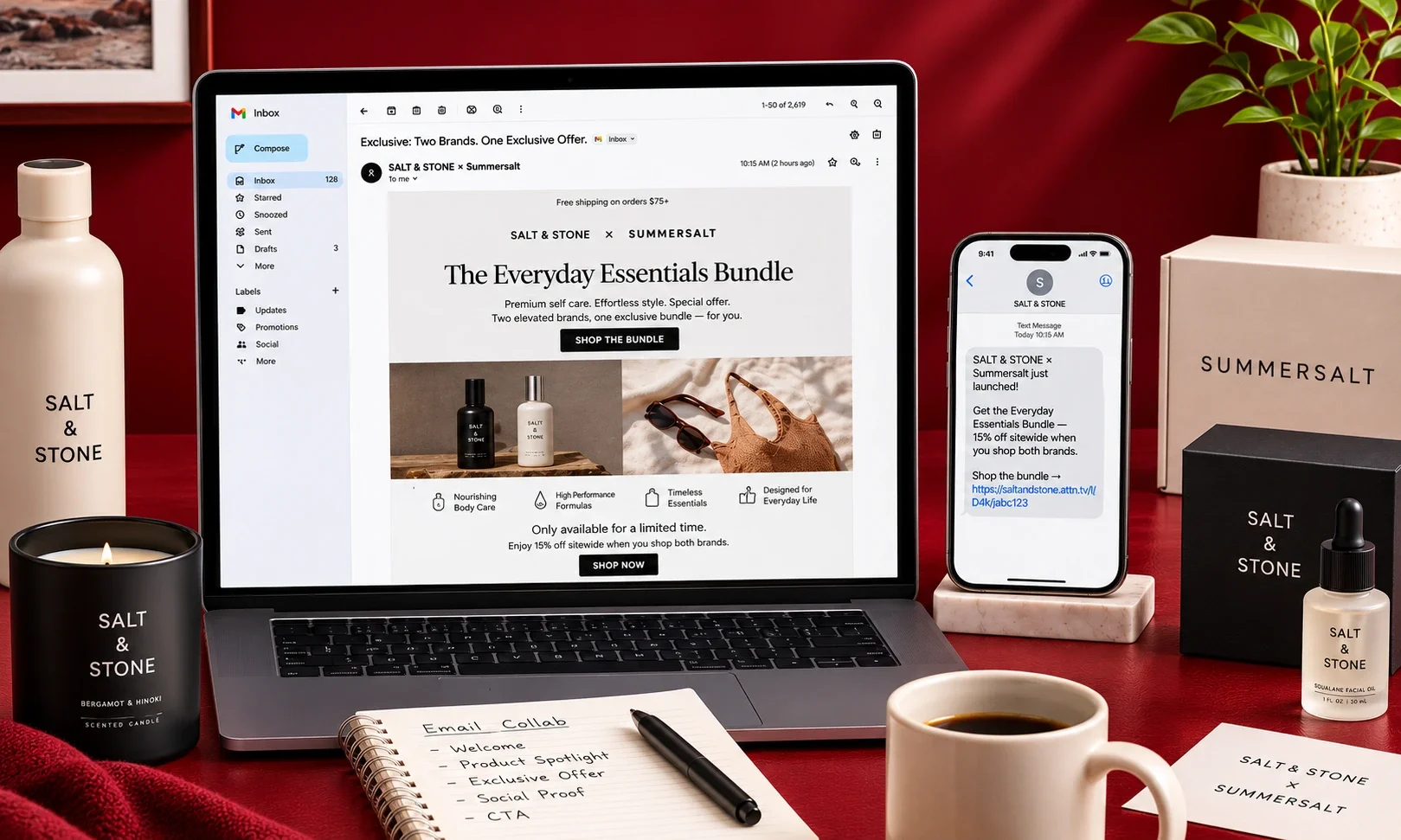
A finance leader and an operations leader can need different first messages while evaluating the same product. Keep the shared pillars, then change their order and proof to match the buyer’s priority. Create distinct product value propositions when the offer delivers a meaningfully different outcome.
For an illustrative example, a finance buyer may care first about cost control or risk. An operations buyer may care more about fewer delays in a daily workflow. Both can hear the same benefit pillars, but each needs the most relevant outcome first.
That choice can help customers see why your offer fits their needs. In one buyer study, 67% could not clearly distinguish brands in their consideration set, while persona-specific messaging produced 4.2 times higher recall. Use that finding as a reason to sharpen relevance, not to create a new framework for every person.
Keep the company promise and core positioning stable across product lines. Add a product-specific value proposition when offers solve different problems, serve different use cases, or rely on different proof. A product page for analytics software may need a clear data insight outcome, while a workflow product may need to show how it handles routine tasks.
For more on shaping content around buyer needs at different stages, see this guide to the B2B SaaS marketing funnel. It can help you connect audience segments with the right kind of message without changing the underlying strategy.
A separate hierarchy is justified when audience needs or product value genuinely differ, not simply because a team requests fresh copy. Create a new message only when it reflects a real difference in buyer priorities, product value, or proof.
How Can Teams Test and Govern Their Messages?
Test whether a buyer understands the message before asking whether the buyer prefers it. A comprehension check shows if the point is clear; a preference or conversion test shows which version performs better against a chosen outcome. Change one meaningful message variable at a time in an A/B test.
Test Comprehension Before Persuasion
A five-second test checks whether a target reader can identify what a company does, whom it serves, and why it matters after brief exposure. Ask readers these four questions:
- What is the product?
- Who does it help?
- What outcome does it deliver?
- What proof makes the claim credible?
If readers give different answers, clarify the wording before comparing preference. In an A/B test, compare two message versions against a relevant outcome, such as qualified responses. The 2025 study of ad A/B tests found that different audience delivery can distort results, so interpret a test in light of who saw each version.
Marketing teams that measure AI work can also compare results with a baseline and track quality alongside speed. A guide to measuring AI marketing returns explains why saved time and financial savings are not the same outcome.
Set Ownership and Update Rules
Give one person ownership of the messaging framework, even when many teams contribute. That owner can keep a source-of-truth document with approved claims, product details, and the proof behind each claim.
Set a review trigger for a material product change, a new market, or a shift in audience needs. Record who approved each proof point and when teams should revisit it. A short AI writing policy can also clarify review and approval rules for customer-facing copy.
Keep examples easy to find, including approved customer stories and product facts. Remove or rewrite a phrase when target readers repeatedly interpret it in a way the business cannot support.
Where Should Each Message Appear in the Buyer Journey?
A message earns its place when it answers the buyer’s question at that moment in the journey. Use a focused message for early discovery, a sharper value case for a shortlist, and confidence-building proof near a decision. A short ad or sales opener can use one pillar instead of the full framework.
| Buyer moment | Buyer’s likely question | Message emphasis | Useful touchpoint |
|---|---|---|---|
| Early buying | Does this fit my experience? | Relevant customer outcome | Social post or website page |
| Shortlist | Why choose this offer? | Portfolio value or differentiation | Product page or email |
| Final selection | Can I trust this choice? | Values, proof, and confidence | Sales meeting or case study |
Use a clear website structure to help visitors find the page that matches their question. On social channels, a B2B LinkedIn strategy can share useful expertise for a specific audience.
Choose the proof that fits the buyer’s question, rather than repeating every approved claim at every stage.
Give sales and marketing one shared source of approved claims, then let each touchpoint choose the relevant proof.
Conclusion
A usable messaging hierarchy gives every team the same foundation without forcing every buyer to hear the same pitch. The core promise stays stable, while relevant proof makes each product and audience feel specific.
Start with one priority product and audience. Draft a customer-outcome pillar, then gather the evidence that makes its claim credible. Keep the first version simple enough for sales and marketing to use in real conversations.
Choose one priority audience today and write its most important customer outcome beside the proof that makes it credible.