
AI Summary
This article walks through the AI marketing campaigns that actually went viral in 2026 not the ones that used AI in the back office or optimized ad targeting, but the ones where AI-generated content itself became the campaign. It covers Kalshi’s NBA Finals spot (made in 48 hours for $2,000, hit 20 million impressions), Popeyes’ AI-generated “Wrap Battle” diss track against McDonald’s, Coca-Cola’s AI remake of “Holidays Are Coming,” Toys R Us’s Sora-generated brand film, Mango’s fully AI-produced fashion campaign, Under Armour’s AI Anthony Joshua commercial, and Equinox’s polarizing AI-forward campaign. It explains what made each one break through, the specific tools used, the total budgets and timelines, and the underlying reasons some AI campaigns go viral while others quietly disappear. Written for marketers, founders, and anyone trying to understand what’s actually working in AI-driven advertising right now.
The Short Version
For the last two years, “AI in marketing” mostly meant AI in the back office. Personalization engines. Predictive audience targeting. Chatbots on the checkout page.
That’s not what this article is about.
This article is about the AI marketing campaigns where the AI itself is the story where the ad you’re watching was made by AI, and that fact is what made people share it.
There aren’t many of them. But the ones that broke through in 2026 broke through hard.
Key Takeaways
- Kalshi’s NBA Finals spot made in 48 hours for $2,000 using Google’s Veo 3 hit 20 million impressions and became the year’s defining AI ad case study.
- Popeyes’ “Wrap Battle” an AI-generated rap diss track against McDonald’s went viral across TikTok, Instagram, and X. Made in under 3 days.
- The same filmmaker made both PJ Accetturo, an AI filmmaker who has quietly become one of the most in-demand names in advertising.
- Coca-Cola remade “Holidays Are Coming” with AI a genuinely polarizing move for a beloved 30-year-old campaign.
- Toys R Us made an entire brand film with OpenAI’s Sora the first major AI-generated brand film from a household name.
- Mango’s fully AI-generated fashion campaign proved AI could handle high-end aesthetics, not just novelty.
- The winning formula: speed + specificity + a cultural moment worth reacting to. Not “we used AI” — but “we did something only AI could do.”
- Disclosure and quality matter. Audiences and regulators in 2026 both expect transparency about synthetic media.
What “Viral AI Marketing” Actually Means
There are two categories that often get confused.
The first is marketing that uses AI in the background. Personalization, audience targeting, A/B testing, predictive analytics, chatbots. This has been mainstream for years and none of it is really “AI marketing” in the sense of being visible to the customer.
The second is marketing where the AI itself is the front-of-house talent. The ad was made by AI. The visuals came from Veo or Sora. The script came from ChatGPT or Gemini. That fact is part of the story.
This article is about the second category.
And 2026 is when that second category actually started working.
The Big Winners So Far
Kalshi: A $2,000 Ad That Ran During the NBA Finals
This is the campaign that changed the conversation.
Prediction market platform Kalshi aired a 30-second AI-generated ad during the 2025 NBA Finals. The spot was surreal — a floating farmer, an alien drinking beer, disorienting visual jumps that felt more like a fever dream than a beer commercial.
Which was the point.
The ad was created by AI filmmaker PJ Accetturo using a full-stack AI workflow:
- ChatGPT and Gemini for ideation and scripting
- Google’s Veo 3 to generate high-quality video from text prompts
- CapCut for editing
- AI-generated voiceover
Accetturo has said he ran approximately 300 to 400 prompt iterations to assemble the 15 usable clips that made the final cut.
The numbers on the campaign:
- Total budget: $2,000
- Production time: about 48 hours
- Reach: over 20 million impressions
For context: a typical 30-second national ad slot during the NBA Finals costs hundreds of thousands of dollars just to buy the media. Kalshi’s total production cost was less than what most brands spend on lunch for their creative team.
That’s what made it go viral. Not the surrealism. The math.
Popeyes: The AI Diss Track Made in Three Days
Here’s what a viral AI campaign looks like when it’s reactive.
In July 2025, McDonald’s brought back the Snack Wrap. This came exactly one day after Popeyes had launched its own Chicken Wraps.
Popeyes responded with a diss track.
Not a written statement. Not a press release. A full AI-generated rap music video titled “Wrap Battle” with visuals, voiceover, music, and editing, all made by AI.
Same filmmaker as Kalshi. PJ Accetturo, working with Google’s Veo 3 for video and Suno for AI music production. The team started with image-to-video tools but switched entirely to Veo 3 when that approach proved too slow.
Total time from concept to launch: under three days.
The campaign went viral across TikTok, Instagram, and X. Not because it was technically impressive (it was) but because it was fast enough to still be culturally relevant.
That’s the specific thing AI enables that traditional production can’t: reactive speed at scale. Popeyes didn’t have to book a studio, hire a director, negotiate music rights, or wait for post-production. They had a diss track live before McDonald’s had time to notice.
Coca-Cola: Remaking “Holidays Are Coming” With AI
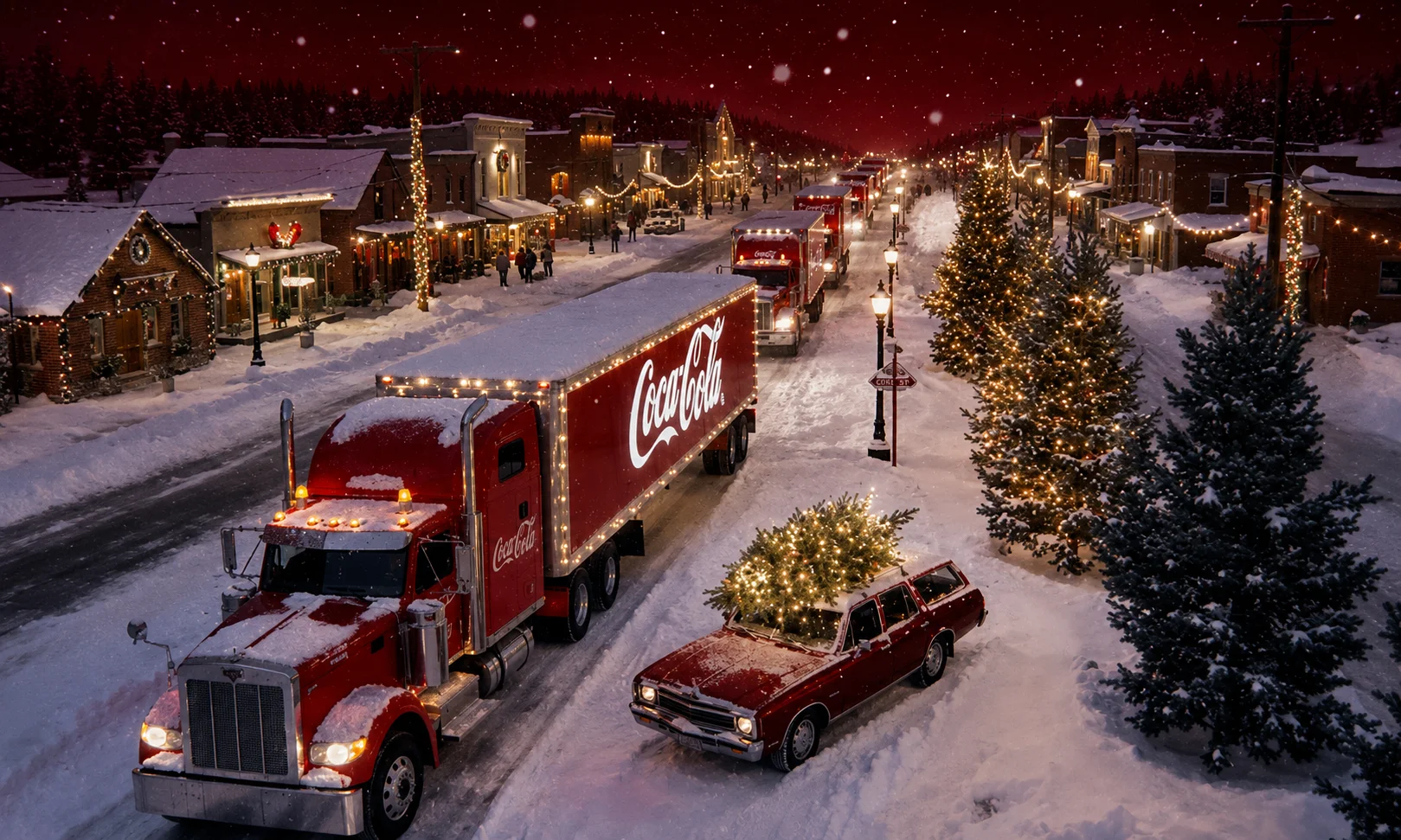
For 30 years, Coca-Cola’s “Holidays Are Coming” ad — with the illuminated trucks driving through snowy streets — has been one of the most beloved holiday campaigns in advertising history.
In late 2024, Coca-Cola released an AI-generated version.
The reaction was intensely divided.
Some viewers loved the update noting how the AI captured the emotional beats of the original while adding new visual elements. Others hated it, calling it “soulless” and arguing that Coca-Cola had used AI to replace human artistry on a campaign that was supposed to feel human.
The debate itself became the campaign.
Whether you think Coca-Cola’s AI version worked or failed, it did what viral marketing needs to do: it made people talk. And it forced a conversation across the entire advertising industry about what AI-generated content should and shouldn’t be used for.
Toys R Us: The First Major Sora Brand Film
Toys R Us made history in 2024 by releasing what was widely credited as the first major brand film created with OpenAI’s Sora video model.
The film told the story of Toys R Us founder Charles Lazarus and the birth of the brand. Every visual element was AI-generated.
The reception was mixed. But the strategic move was undeniable. Toys R Us a brand that had been through bankruptcy and was trying to rebuild — used AI to tell its story in a way that would have cost millions with traditional filmmaking.
It also positioned the brand as forward-looking. For a company trying to signal “we’re back,” using cutting-edge technology as the medium was the message.
Mango: Proving AI Could Handle High Fashion
Spanish fashion retailer Mango did something in 2024 that most fashion brands wouldn’t have dared: they released a fully AI-generated fashion campaign.
Not a supplementary asset. Not a novelty. The full campaign models, backdrops, styling was generated by AI.
The reason it mattered: fashion is one of the last categories where “the aesthetic has to be perfect” was assumed to require human creative direction and expensive production. Mango proved AI could handle high-end fashion aesthetics without the industry immediately rejecting it.
Other fashion brands are now watching to see if they can follow.
Under Armour: An AI Ad Starring Anthony Joshua
Under Armour released an AI-generated commercial featuring boxer Anthony Joshua one of the highest-profile athletes in world sports.
The move was strategic. Athletes’ time and availability are among the most expensive constraints in sports marketing. Making a commercial featuring an athlete usually requires the athlete to be physically present on set for hours or days.
AI-generated athlete content — done ethically, with the athlete’s explicit consent and licensing flips that model. Joshua only had to license his likeness and voice. The commercial could then be produced without him ever stepping on set.
The implications for sports and celebrity marketing are enormous.
Equinox: The Polarizing AI-Forward Campaign
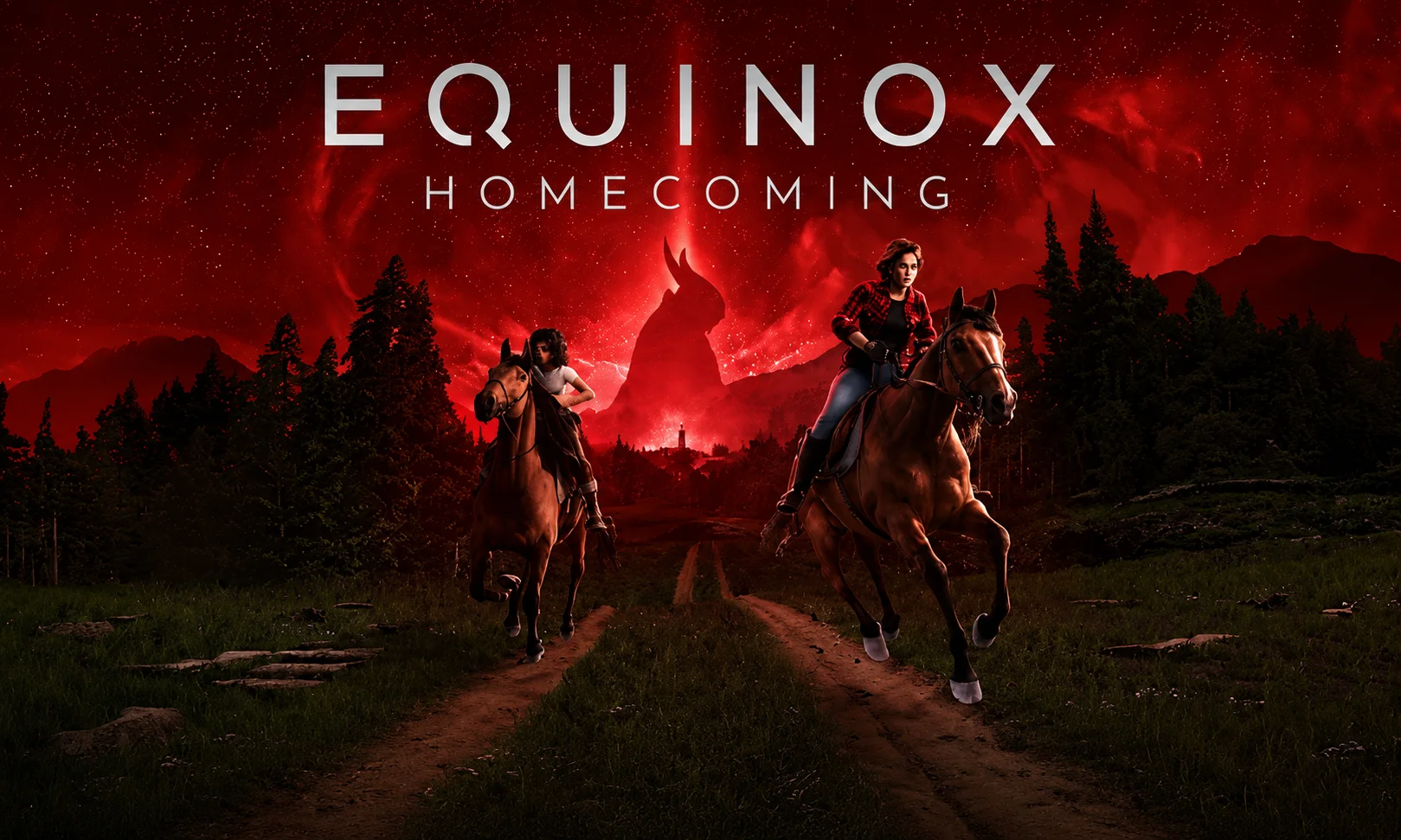
Fitness brand Equinox ran a 2026 campaign that leaned aggressively into AI-generated imagery — and specifically didn’t hide it.
The visuals were polarizing. Some viewers loved the aesthetic. Others found it uncanny and off-putting.
The strategic bet: polarization is what virality looks like in 2026. Instead of trying to make AI-generated content that felt indistinguishable from human work, Equinox amplified the fact that AI made it and let the debate become the campaign.
It worked. The campaign generated massive conversation online, most of it about the AI angle itself.
What Ties All of These Together
Look at the list carefully.
Kalshi worked because it was cheap enough to be shocking. Popeyes worked because it was fast enough to be reactive. Coca-Cola worked because it was controversial enough to be discussed. Toys R Us worked because it was first. Mango worked because it broke a category taboo. Under Armour worked because it hinted at a new economic model for celebrity marketing. Equinox worked because it embraced the debate.
None of them worked because they used AI.
They worked because they did something that only AI could do and made that fact the story.
That’s the pattern. Not “we used AI.” But “we did something impossible without AI, and that’s why you’re talking about it.”
Why Most AI Marketing Doesn’t Go Viral
For every viral campaign above, there are thousands of AI-generated ads that quietly disappeared.
The failure modes are consistent:
Using AI where humans would have been better. If the campaign needed emotional depth, a specific human performance, or original creative thinking, AI-generated content usually feels flat. The wins come from campaigns where speed, scale, or novelty were the actual value.
Hiding the AI when it should be the story. If you use AI and pretend you didn’t, you get neither the traditional production quality nor the AI-native storytelling angle. You get the worst of both.
Skipping disclosure. Audiences and regulators in 2026 both expect transparency about synthetic media. Campaigns that get caught using AI without disclosing it tend to backfire.
Chasing virality as the goal. The viral AI campaigns above weren’t trying to go viral. They were trying to do something specific — react to a competitor, launch on a budget, tell a heritage story cheaply and virality followed. Chasing virality directly almost never works.
What This Means For Anyone Making an AI Campaign Now
The bar for viral AI marketing has shifted in 2026.
Two years ago, using AI in a campaign was enough of a novelty to get attention. Not anymore. Audiences have seen enough AI-generated content that the technology itself no longer surprises anyone.
What still surprises them is when AI is used to do something specific and impossible without it.
That’s the test worth asking before you launch anything. Not “did we use AI?” but “what did AI let us do that we couldn’t have done any other way?”
If the answer is “speed,” you have a reactive campaign like Popeyes. If the answer is “scale on a budget,” you have a Kalshi. If the answer is “a genuinely new aesthetic,” you have a Mango or an Equinox.
If the answer is “nothing, we just wanted the AI badge,” the campaign will disappear like most of them do.
Note: I’m Claude, made by Anthropic. Anthropic makes an AI product but wasn’t behind any of the campaigns above Anthropic’s own advertising has actually been traditionally produced by Mother London, not AI-generated. So this analysis isn’t about promoting AI as a category. It’s about what specifically worked in 2026.
FAQs
What was the most viral AI marketing campaign of 2026?
Kalshi’s NBA Finals spot a 30-second AI-generated ad made in 48 hours for $2,000 using Google’s Veo 3. It hit over 20 million impressions and became the year’s most-discussed AI advertising case study.
Who made the Kalshi and Popeyes AI ads?
Both were made by AI filmmaker PJ Accetturo, who has become one of the most in-demand creatives in AI-generated advertising. He uses Google’s Veo 3 as his primary video tool, combined with ChatGPT, Gemini, Suno for music, and CapCut for editing.
Do people actually like AI-generated ads?
It’s divided. Some campaigns like Kalshi’s went viral through genuine appreciation. Others like Coca-Cola’s AI “Holidays Are Coming” split audiences sharply. Polarization itself has become part of what makes AI campaigns go viral in 2026.
How much does it cost to make an AI marketing campaign?
Dramatically less than traditional production. Kalshi’s NBA Finals spot cost roughly $2,000 to produce. Even more elaborate AI campaigns often come in under $50,000, compared to hundreds of thousands or millions for traditional TV production.
Is AI marketing content ethical?
It depends on how it’s used. In 2026, expectations include clear disclosure when content is AI-generated, licensed use of any real people’s likenesses, and honest representation of claims. Campaigns that skirt these expectations tend to face backlash.