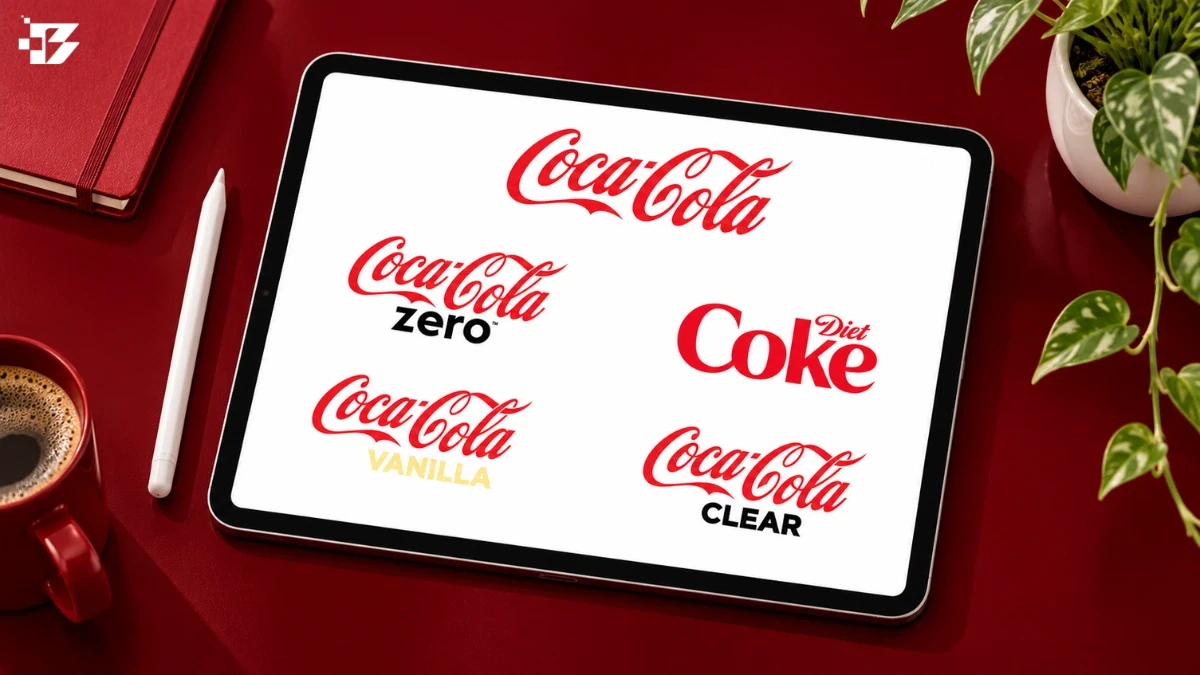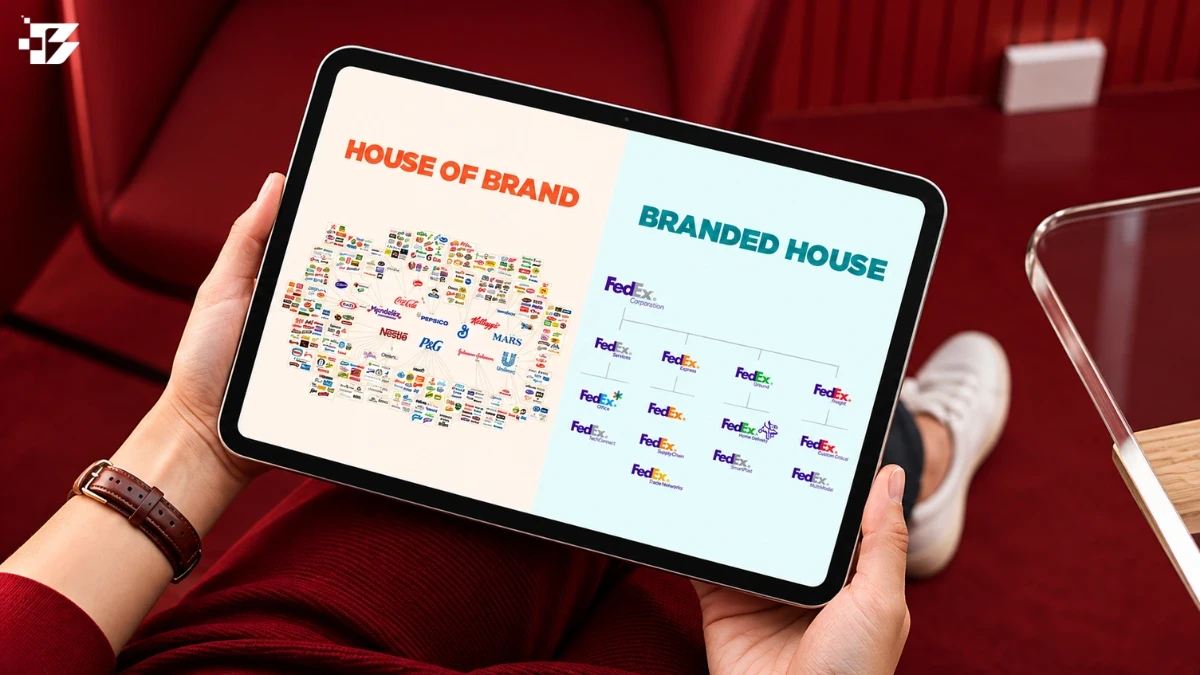
The branded house vs house of brands decision becomes real when a company launches its second offer. Should the new product borrow the name customers already know—or earn recognition under a name of its own?
One route asks customers to connect the offers. The other asks them to learn a separate identity. Both can work, but they create different obligations for the business behind them.
A branded house gives a shared masterbrand the leading role across its offers. A house of brands gives distinct brands the leading role in their individual markets, with the parent company less central to the immediate purchase presentation.
The choice turns on two practical questions: what relationship helps the customer, and what identities can the company sustain?
Key Takeaways
- A branded house concentrates customer recognition around a shared name.
- A house of brands gives individual offers more freedom to develop distinct meanings.
- Neither arrangement guarantees lower acquisition costs, higher sales or protection from reputational damage.
- Shared branding and shared operations are separate decisions.
- Existing brand recognition can make an acquisition different from a new launch.
- Compare the ongoing work behind each option before committing to more names.
What Is the Difference Between a Branded House and a House of Brands?
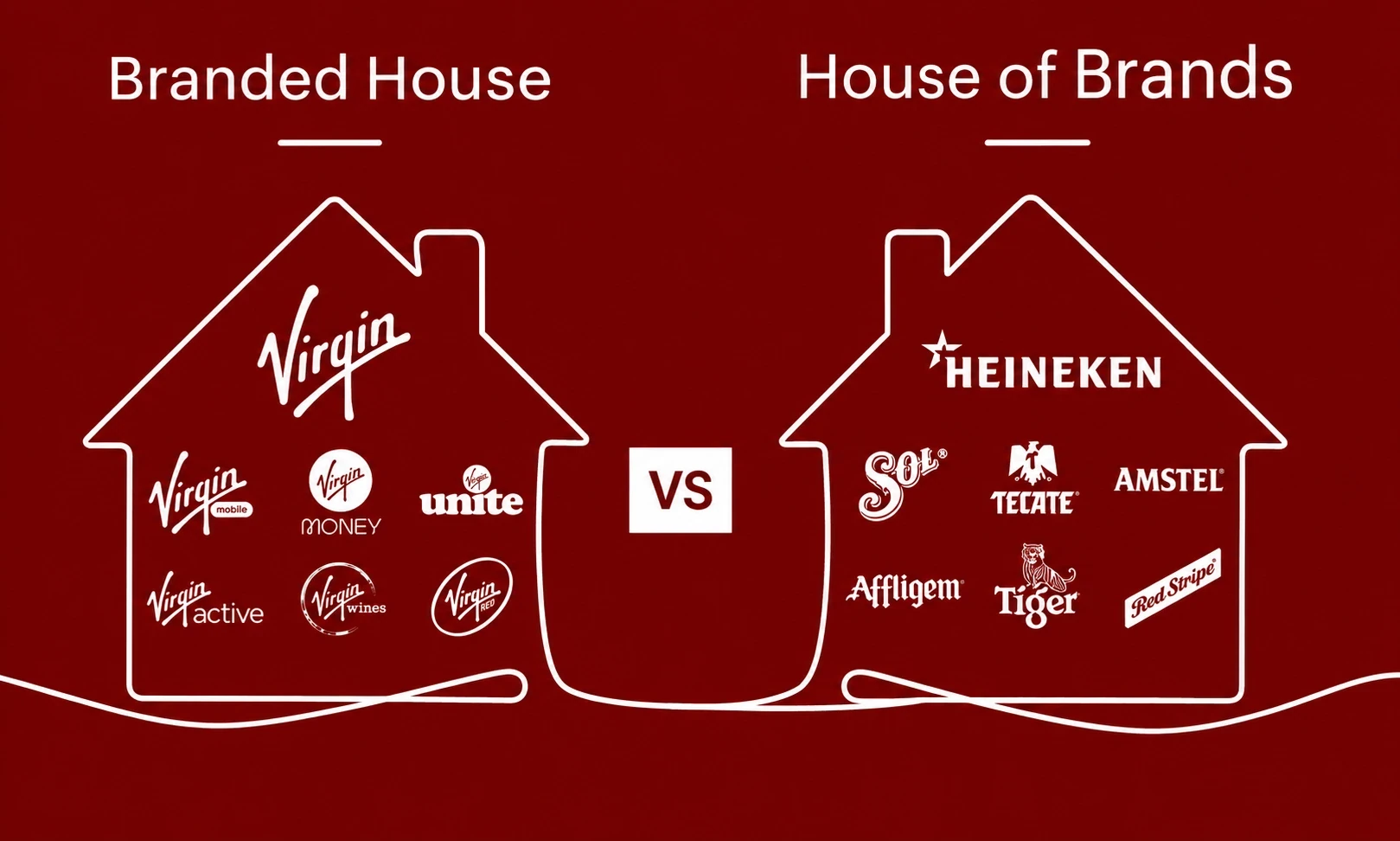
In a branded house, the masterbrand does much of the identifying work. Product and service names explain the particular offer while maintaining a prominent family connection.
In a house of brands, individual brands carry more of their own positioning and recognition. The parent still owns or supports the portfolio, but buyers may encounter the product brand as the main identity.
The distinction concerns what customers see and understand. It does not establish whether the businesses share staff, manufacturing, software, procurement or financial reporting.
A portfolio with independent brands can have extensive shared operations. A portfolio with one visible name can still contain operationally separate units.
| Question | Branded house | House of brands |
| Which name leads? | A shared masterbrand | Individual brands |
| What does a new offer build on? | An explicit connection to the existing identity | Its own identity, possibly with limited parent visibility |
| How much positioning freedom is available? | Bounded by what the masterbrand can credibly mean | More scope for distinct promises and audiences |
| What must marketing maintain? | A coherent shared identity and clear offer distinctions | Several identities with defined portfolio roles |
| Where can confusion arise? | Buyers may assume offers are more similar than they are | Buyers may miss useful relationships between offers |
| What happens to reputation? | Connections between offers are explicit | Connections may be less prominent but remain discoverable |
| How should costs be assessed? | Shared work plus offer-specific needs | Shared operations plus brand-specific needs |
These are tendencies to investigate. They are not guaranteed outcomes.
What Do Real Examples Show?
FedEx’s official shipping materials use names including FedEx International Priority and FedEx International Priority Express. The shared name makes the relationship visible while the service names distinguish the offers.
P&G’s official directory lists distinct brands including Tide and Pampers. They illustrate a portfolio in which individual product brands have their own names across different categories.
These are examples of visible naming relationships, rather than proof that either company fits one perfectly pure model across every activity. They also do not tell a smaller business which approach will perform better for it.
Large companies arrive at their portfolios through years of investment, acquisitions and operational decisions. Copying the shape of the portfolio does not reproduce those conditions.
Where do endorsed brands fit?
An endorsement makes the parent relationship explicit while retaining a distinct name. Courtyard by Marriott, listed in Marriott’s official portfolio, illustrates that naming arrangement.
This creates another option when complete consolidation and complete separation both seem unsuitable. The company can preserve an individual identity while telling customers who stands behind it.
The endorsement still needs a purpose. Adding another name to a logo does little if customers cannot understand why the relationship matters.
When Does a Branded House Make Sense?

A shared name is worth considering when the offers address related needs and the parent promise remains credible across them.
For a firm selling accounting advice and related reporting tools, an explicit connection may help customers understand the family of services. The firm would still need evidence that buyers trust its ability to deliver the software.
The strongest argument is customer relevance: recognition of the parent helps explain or support the new offer. “We already own the name” is an operational convenience, not a complete strategy.
Review your brand positioning. Does it have enough scope for the new offer while retaining a specific meaning? If the shared promise has to become so broad that it says very little, the portfolio may be asking too much of one identity.
Can related offers still need different messages?
Yes. One name does not require identical copy for every audience.
A shared brand can support different use cases, plans and buying journeys. Clear descriptors and relevant messages may provide enough distinction without creating another independent identity.
Before separating brands, test whether the problem is simply unclear communication. A new name cannot compensate for an offer people do not understand.
When Does a House of Brands Make Sense?
Separate brands deserve consideration when offers require materially different meanings, serve different buying contexts or bring established recognition that would be costly to discard.
An offer aimed at buyers seeking a highly personalised service may need a different promise from one designed around standardisation and low effort. Whether those promises can sit under one name depends on the audience and execution.
Review each value proposition: the benefit, alternatives, reasons to believe and expected experience. Differences in those areas can provide a stronger reason for separation than a product team’s preference for its own identity.
Separation also creates obligations. Each brand needs a role, a recognisable presentation and enough attention to remain useful. A company that creates several identities but supports only one may leave customers with more names and less clarity.
Is a Branded House Always Cheaper?
No. It can reduce duplicated identity work, but shared branding does not eliminate product-specific marketing, customer education or sales support.
A masterbrand website may still need substantial sections for different offers. A shared campaign may reach one audience well and another poorly. Governance can become demanding when several teams compete for the same brand’s attention.
Equally, a house of brands does not require duplicating every operational function. Brands may share infrastructure while keeping distinct customer-facing identities.
Compare the work required by each option. Avoid treating the logo count as the cost model.
A worked cost comparison
Consider a fictional company evaluating three related offers. The figures below are invented planning assumptions, not market rates or expected results. All amounts use the same currency.
For a shared-brand approach, assume annual work comprises:
- Shared identity, website framework and governance: 36,000.
- Offer-specific content and sales materials: 12,000 per offer.
- Total for three offers: 36,000 + 36,000 = 72,000.
For separate brands, assume:
- Shared operational tools and coordination: 18,000.
- Brand-specific identity maintenance, content and materials: 24,000 per brand.
- Total for three brands: 18,000 + 72,000 = 90,000.
Under those assumptions, the separate-brand approach requires 18,000 more per year. That is a planning difference, not proof that the shared approach is more profitable.
The estimate excludes media, product development and migration costs. Those require their own assumptions. If distinct positioning produces enough additional commercial value, the extra work may be justified; if it does not, the portfolio carries unnecessary overhead.
Change the inputs and the conclusion can change. The useful calculation makes the assumptions visible so the team can replace them with estimates grounded in its own operations.
Does a House of Brands Protect the Parent From Risk?
It may make the connection less prominent in everyday shopping, but it cannot guarantee reputational separation.
Ownership can be visible in company materials, reporting and public discussion. Customers may connect businesses after a problem, even if they rarely thought about the relationship before it.
A separate brand also does not change the underlying quality of the product, service or operating controls. Those need attention regardless of naming strategy.
A shared brand makes relationships explicit, which can spread both positive and negative associations. Assess the actual exposure and the quality of delivery rather than assuming that a name structure solves a risk problem.
What Changes When You Acquire an Existing Brand?
An acquisition brings an identity that may already have recognition, customer relationships and a place in distribution. Starting a new brand does not automatically provide those assets.
Before consolidating, investigate what buyers recognise and value. Review customer language, purchase journeys, partner references and the role of the acquired name in finding and choosing the offer.
Retention can preserve useful meaning. Consolidation can make relationships clearer and reduce redundant work. Neither result follows merely from a change in ownership.
A transition may involve endorsement or a gradual shift, with clear communication about what changes for customers. Assess operational dependencies such as account access, support, billing and web migration separately.
A renamed website still needs a sound technical migration. A new parent logo does not resolve broken links or unfamiliar payment descriptions.
How Would a Company Choose Between the Two?

Consider the fictional company Vale, which supplies workplace software. It has three related tools used by similar teams and is considering buying an established specialist product.
For its existing tools, assume buyers recognise Vale, understand the shared promise and regularly use more than one product. A branded-house approach is a reasonable starting hypothesis: the visible relationship appears useful.
For the acquisition, assume the specialist product has an established name, a different primary buyer and little customer overlap with Vale. Immediate renaming could discard recognition without providing much benefit to those buyers.
A provisional decision could retain the specialist identity while testing a parent endorsement. That would create a hybrid portfolio rather than forcing every offer into one model.
The next step is research. Can existing users recognise their product? Do prospective buyers understand the endorsement? Does the Vale connection reassure them, create confusion or make little difference?
These fictional assumptions illustrate why a company can reach different answers within one portfolio. They do not demonstrate that a hybrid will outperform either pure model.
How Should You Test the Choice With Customers?
Show realistic encounters with each option: a search result, product page, comparison, proposal or renewal message.
Ask people to explain who provides the offer, what they expect from it and how it relates to other products. Observe whether the architecture helps them identify the right option.
Compare misunderstandings as well as preferences. Someone may like a name while drawing the wrong conclusion about compatibility or support.
Qualitative research can reveal interpretation problems and their context. It does not by itself estimate market-wide preference or prove that one architecture will increase revenue. Use an appropriate study design for stronger commercial claims.
What Should You Agree Before Committing?
Use this decision checklist before approving new identities or consolidating existing ones:
- What customer problem does the proposed relationship solve?
- Which offers can credibly share the same promise?
- What existing recognition would be retained or lost?
- Could descriptive names solve the issue without another brand?
- Who will fund and maintain each identity?
- What work can genuinely be shared?
- Where might customers misunderstand service, compatibility or accountability?
- What migration costs and dependencies have been included?
- What evidence would change the recommendation?
- Who approves future additions and exceptions?
Record the outcome in a portfolio decision document and carry the naming rules into each creative brief. Otherwise, individual launches can gradually undo the agreed structure.
Which Model Should You Choose?
Choose a branded house when a shared identity helps buyers understand related offers and the business can deliver a credible common promise.
Consider a house of brands when distinct meanings create enough customer and commercial value to justify maintaining separate identities. Consider endorsement or another hybrid when some relationships deserve visibility and others need more independence.
The right choice is the one the customer can understand and the business can support. Its success shows up in clearer expectations, easier navigation and a portfolio with a reason for every name it asks people to remember.
Frequently Asked Questions
Is a branded house the same as an umbrella brand?
The terms often overlap. An umbrella brand generally covers several offers, while branded house describes the broader prominence of a shared identity across a portfolio. Define the relationship explicitly when using either term.
Can a house of brands share one website?
Yes. Website structure and brand relationships are connected decisions, but they are not identical. Assess what arrangement helps people find, understand and use the offers.
Does a premium product need a separate brand?
No. Premium positioning can sometimes work through a clearly differentiated range within an existing identity. A separate brand needs a stronger reason than a higher price alone.
Can a small business operate a house of brands?
It can, but it should assess whether each identity has a distinct purpose and adequate support. Limited resources make unnecessary duplication harder to sustain.
Can the architecture change later?
Yes. Growth and acquisitions can justify a review. Changes still require evidence, customer communication and a migration plan; flexibility does not make transition costless.