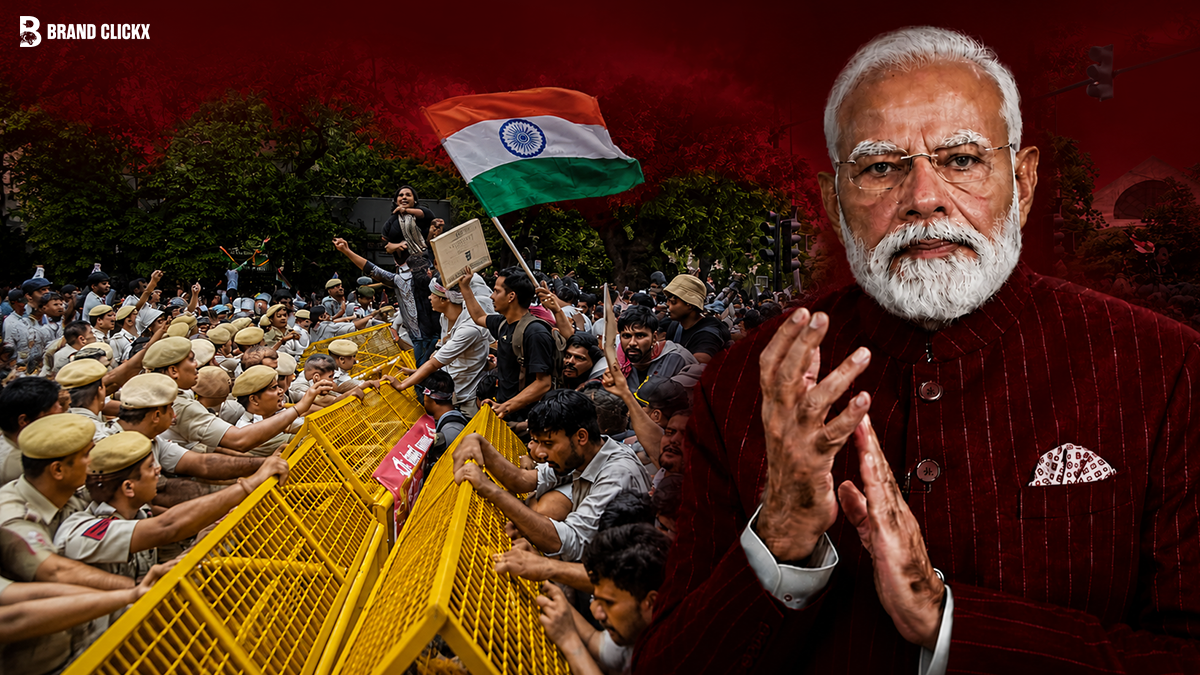
India’s Education Minister Dharmendra Pradhan resigned on Saturday July 25, 2026, after 36 days of nationwide youth protests forced a rare defeat on Prime Minister Narendra Modi’s government. Thousands of young people, led by a movement called the Cockroach Janta Party, celebrated in the streets of New Delhi after the resignation was announced. The protest leaders said all their demands had been met and called off the demonstrations immediately.
This is the first time in Modi’s 12 years in power that a cabinet minister has been forced out by street protests.
AI Overview
India’s Gen Z launched one of the biggest protest movements in the country’s recent history after allegations of exam paper leaks in the country’s most competitive entrance exams for medical colleges and government jobs. The movement, which called itself the Cockroach Janta Party (CJP), went viral on social media and gathered more than 22 million followers before the account was taken down. Protesters spread from New Delhi to Mumbai, Hyderabad, Bengaluru, and Ahmedabad.
Police used tear gas and batons to disperse crowds twice this week near India’s Parliament building in New Delhi. Opposition leader Rahul Gandhi was briefly detained for protesting in solidarity with students. One activist went on a 26-day hunger strike.
On Saturday July 25, Education Minister Dharmendra Pradhan announced his resignation on X, just as police fired tear gas at protesters in New Delhi. Hours later, the CJP said all their demands had been accepted and called off all protests. Modi has not yet publicly accepted the resignation.
Key Facts
| Detail | Information |
|---|---|
| Date of resignation | Saturday, July 25, 2026 |
| Minister who resigned | Dharmendra Pradhan, India’s Education Minister |
| Protest movement name | Cockroach Janta Party (CJP) |
| How long the protests lasted | 36 days |
| Where protests were held | New Delhi (Jantar Mantar), Mumbai, Hyderabad, Bengaluru, Ahmedabad |
| What the protests started over | Alleged paper leaks in major entrance exams for medical colleges and government jobs |
| CJP social media following | More than 22 million followers before account was taken down |
| Who started the CJP | Abhijeet Dipke |
| Why it is called Cockroach | Named after India’s Chief Justice Surya Kant who compared unemployed youth to “cockroaches” |
| Police response | Tear gas and batons used twice this week near Parliament |
| Who was detained | Rahul Gandhi, leader of opposition, briefly detained for protesting in solidarity |
| Gandhi’s claim | 152 exam paper leaks over 10 years, affecting more than 75 million students |
| BJP response to Gandhi’s claim | Said the government will investigate |
| Longest hunger strike | One activist went on a 26-day hunger strike |
| Modi’s response | Announced fast-track courts for exam leak cases; wrote “Nothing is more important than the welfare and future of our youth” on X |
| Has Modi accepted the resignation | Not yet as of Saturday July 25 |
| Is this the first time this has happened | Yes: first cabinet resignation forced by street protests in Modi’s 12-year rule |
| What the CJP demanded | Minister’s resignation, 10 million rupees compensation to families of students who died by suicide, no punitive action against protesters, review of five-point exam reform plan |
| Government agreement | Accepted all CJP demands, agreed to meet to discuss exam reform plan |
| Protests status | Called off on July 25 after demands were met |
How the Protests Started
The Cockroach Janta Party movement began more than a month ago after allegations emerged that exam papers had been leaked for some of India’s most competitive entrance exams. These tests are taken by millions of students every year to get into medical colleges and to qualify for government jobs.
When it became clear that some exam papers had been leaked and some results were going to be canceled, millions of students who had spent years studying for these exams found their futures put on hold. For many young Indians, these exams represent their only path to a stable career.
The CJP was created by Abhijeet Dipke. The name “Cockroach Janta Party” was chosen in direct response to a remark by India’s Chief Justice Surya Kant, who had compared unemployed young people in India to “cockroaches.” The protesters turned the insult into a symbol of pride and resilience.
Dipke’s social media posts about the movement went viral. The CJP account grew to more than 22 million followers. On Wednesday July 23, the account was taken down. Dipke blamed Prime Minister Modi for the removal in a post on X.
What the Protesters Did
The protest movement was notable for how it used social media. Prime Minister Modi has spent more than a decade using social media to project a powerful and almost untouchable image. India’s Gen Z protesters turned those same platforms against him.
Young protesters made videos, memes, and social media posts mocking Modi that reached millions of people. In one widely viewed video, a group chanted about the prime minister as a “56-inch monkey,” a reference to his past claims about having a 56-inch chest. Protesters defaced Modi’s image on billboards and shared the photos online.
The Oman Observer and Bloomberg reported that the strongman leader, who had usually been criticized only in whispers, suddenly found himself the subject of open jokes and taunts.
Protesters called the government’s communication style “WhatsApp Uncle-speak,” referring to the way Modi’s Bharatiya Janata Party (BJP) dominates India’s WhatsApp messaging platform to push one-way messaging that supporters forward to each other. The young protesters said this style of communication talks at people rather than with them.
The demonstrations at Jantar Mantar, a designated protest site in central New Delhi, became the center of the movement. Protests spread to Mumbai, Hyderabad, Bengaluru, and Ahmedabad.
Police Crackdown and Political Response
Authorities struggled to contain the growing protests. Police used tear gas and batons to disperse crowds near India’s Parliament building in New Delhi. This happened twice this week, on July 20 and again on July 25.
The police response made the movement bigger, not smaller. What had started as a demand for accountability in the exam system grew into a broader anti-government movement after the crackdowns were filmed and shared on social media.
Education Minister Pradhan initially dismissed the protesters, calling them a “B-team of terror groups.” That response made things worse. Protesters and opposition politicians said the comment showed how out of touch the government was with the concerns of young Indians.
Rahul Gandhi, the leader of India’s opposition, joined the protests. He was briefly detained on Tuesday July 22 for protesting in front of the prime minister’s official residence in solidarity with the students. After his detention, Gandhi held a press conference in which he claimed that 152 exam paper leaks had taken place over the last 10 years, affecting more than 75 million students. The BJP said the government would investigate his claims.
Modi’s Public Response
Modi was largely silent in the early days of the protests. When he did speak, he posted on X: “Nothing is more important than the welfare and future of our youth.”
He also announced that fast-track courts would be created to handle exam paper leak cases. Fast-track courts are special courts created to speed up cases in India’s justice system, which is known for being very slow. The announcement was seen as an attempt to calm the protests, but protesters said it was not enough and continued their demonstrations.
The Resignation
On Saturday July 25, Education Minister Dharmendra Pradhan posted his resignation on X in Hindi. He wrote: “I am pained to see the events of the past 10 days. This is not a matter of personal prestige for me. I have sent my resignation letter to the prime minister.”
He also wrote: “I hold deep respect for the aspirations, sentiments, and rightful expectations of the youth of this country.”
The resignation was announced while police were still firing tear gas at protesters at Jantar Mantar in New Delhi. Hours after the resignation, CJP leaders met with federal ministers and came out of the meeting saying all their demands had been accepted.
CJP spokesman Ashutosh Ranka addressed reporters at a press briefing in New Delhi: “All our demands have been accepted, so we request the protesters to withdraw immediately and return home peacefully.”
CJP founder Abhijeet Dipke said the protest had succeeded but added there was still more to be done.
As of Saturday afternoon, Modi had not yet publicly accepted the resignation.
What the CJP Demanded and What the Government Agreed To
The CJP had four main demands when it entered talks with the government.
Demand 1: The resignation of Education Minister Dharmendra Pradhan. Status: Met. Pradhan announced his resignation on July 25.
Demand 2: Compensation of 10 million Indian rupees (approximately $103,554) to the families of every student who died by suicide after being told their exam results were canceled and they would need to retake tests. Status: Agreed to by the government, according to the CJP.
Demand 3: No punitive action against people who took part in the protests. Status: Agreed to by the government, according to the CJP.
Demand 4: A review of the CJP’s five-point exam reform plan, with a follow-up meeting between CJP members and government ministers to discuss this. Status: Agreed to by the government, according to the CJP.
Why This Is Significant for Modi
CNN, Al Jazeera, and NBC News all described Pradhan’s resignation as a rare defeat for Modi’s government.
Modi has been in power for 12 years. In that time he has built a reputation as a politically invincible leader. No cabinet minister under his government had previously been forced to resign as a result of street protests.
The protest movement also challenged something that Modi has built very carefully: his image on social media. For more than a decade, Modi’s team has used social media as a tool to project strength, authority, and a sense of national progress. India’s Gen Z protesters used the same tools to mock, challenge, and undermine that image.
CNBC reported that analysts noted the protests exposed “the strongest anti-incumbency narrative seen in his 12 years in power, ahead of the 2029 election.”
The BJP’s national president Nitin Nabin said Pradhan’s resignation “reflects the highest standards of integrity and selfless service in public life” and that the party “stands firmly” with him. The BJP did not characterize the resignation as a defeat.
The Movement and Social Media
The CJP used social media in ways that bypassed traditional media gatekeepers. Young protesters filmed confrontations with police and shared them immediately. Memes went viral. The movement’s social media account grew faster than most traditional political parties could grow their following.
When the CJP’s account was taken down on Wednesday, Dipke said it was political interference. The account’s removal was itself covered by media outlets globally and drew further attention to the movement.
One protester at Jantar Mantar was quoted by Al Jazeera saying: “We have erased the fear that Modi spent years building. Cockroaches are crawling all over you, Modi.” After the resignation announcement, protesters danced in the streets.
The wider message of the movement, as reported by multiple international outlets, is that India’s Gen Z is politically engaged, digitally skilled, and willing to challenge authority in ways that previous generations did not.
FAQs
What is the Cockroach Janta Party?
A youth protest movement started in India by Abhijeet Dipke. It is named after a remark by India’s Chief Justice who compared unemployed young people to “cockroaches.” The protesters reclaimed the insult as a symbol of their movement. It is described as a “pseudo-political” or satirical outfit, not a formal political party.
Why did Indian students protest?
They were angry about paper leaks in major entrance exams for medical colleges and government jobs. When exam results were canceled and students were told to retake tests, it created a crisis for millions of young people whose futures depend on these exams.
What happened to India’s Education Minister?
Dharmendra Pradhan resigned on July 25, 2026, after 36 days of youth-led protests. He said he was pained by the events of the past 10 days and had sent his resignation to Prime Minister Modi. This is the first cabinet resignation in India forced by street protests under Modi’s government.
How did Modi respond to the protests?
Modi initially said nothing publicly. He later posted on X saying nothing is more important than the welfare of youth and announced fast-track courts for exam leak cases. He has not yet publicly accepted Pradhan’s resignation.
What did the government agree to?
According to the CJP, the government agreed to all four of their demands: Pradhan’s resignation, compensation to families of students who died by suicide, no punishment for protesters, and a review of the CJP’s five-point exam reform plan.
How big were the protests?
Thousands of protesters gathered in New Delhi at the Jantar Mantar protest site. The movement spread to Mumbai, Hyderabad, Bengaluru, and Ahmedabad. The CJP’s social media account had more than 22 million followers before it was taken down.
Is this the first time something like this has happened under Modi?
Yes. This is described by CNN, Al Jazeera, and NBC News as the first time street protests have forced a cabinet minister to resign under Modi’s 12-year government.